Wiping Out Indigenous

Preface: Welcome to this quick recap of the history of immigration of US. Celebrating 250 years of USA.
1502/ Ovando’s Crew
Ovando’s 2,500 colonists were not adventurers. They were a deliberate cross-section of Castilian society, selected function by function. Each category did a specific job in the machinery.
Notaries. Escribanos. Men trained in Spanish legal drafting, licensed by the Crown to produce legally binding documents. Every land grant, every will, every contract, every court testimony, every marriage, every encomienda assignment was written into a notary’s book, in duplicate, with signatures and seals. In 1502 Hispaniola had no functioning legal record. By 1504 every transaction on the island was on paper, and copies were sent to Seville. This is why we know as much as we do about the early colonial period — because the notaries were writing everything down from day one, and the Casa was archiving it.
The royal treasury officers. Three offices, appointed directly by the Crown and answerable only to the Crown — not to the governor. This was deliberate. The Crown wanted its own eyes on the money.
The contador — comptroller. Kept the accounts. Recorded every transaction affecting Crown revenue.
The tesorero — treasurer. Held the physical specie. Received the quinto real on gold and disbursed royal payments.
The factor — commercial agent. Managed Crown property, ran royal trade goods, oversaw the storehouses.
Together, these three men were the accounting apparatus of the empire. This structure — contador, tesorero, factor, all reporting to Seville, all independent of the governor — would be replicated in every Spanish colony from Mexico to the Philippines.
Judges. Ovando himself held the combined title of governor and supreme justice. Below him, subordinate magistrates — alcaldes ordinarios — heard cases at the town level. A defendant unhappy with a local ruling could appeal to Ovando. A defendant unhappy with Ovando could, in theory, appeal to the Crown. In practice the appeal had to cross the ocean. In practice most cases ended with the governor.
Franciscan friars. Thirteen of them, under Fray Alonso del Espinal. They joined about a dozen Franciscans already on the island, bringing the total to twenty-five — the first organized religious order in the Americas. They opened the first monastery on the island, established parish churches in the new villas, ran the first schools — teaching the sons of caciques Latin, doctrine, and the practical skills the Spanish needed them to have. The Franciscans were the moral face of the colony. They were also, for the first decade, willing to accept encomienda grants themselves.
Tradesmen. Masons who could cut and set stone. Carpenters who could frame buildings. Blacksmiths who could forge tools and horseshoes. Potters, tanners, coopers, wheelwrights, shipwrights. Ovando needed a working urban economy, not just a mining camp.
Farmers, with their wives and children. Ovando was explicit in his instructions to the Crown: he wanted married households, not single soldiers. He wanted the colony to reproduce itself. He wanted Castilian villages, planted whole, that would grow wheat, raise pigs, and stay put.
Miners. Experienced hands from the Andalusian silver mines around Guadalcanal and Rio Tinto. They brought the technical knowledge to systematize gold panning and, later, hard-rock mining. This expertise would move with them — first to Hispaniola, then to Mexico, then to Potosí, where it would produce the largest silver strike in world history.
Also on the fleet, unremarked in the manifests:
Bartolomé de las Casas, eighteen years old, traveling with his father Pedro. He would receive an encomienda on Hispaniola and hold it for eleven years.
Francisco Pizarro, in his mid-twenties, from Extremadura, illiterate, ambitious. He would settle in Hispaniola, cross to Panama with Balboa in 1513, and thirty years after leaving Sanlúcar be sitting in the throne room of the Inca in Cajamarca.
By the end of Ovando’s first full year on the island, the physical city was rising, the notaries were writing, the treasury officers were counting, the friars were preaching. What was still missing was legal authorization for the labor system that was making all of it possible. That came on December 20, 1503, in a royal decree — a cedula — signed by Isabella at Medina del Campo. The cedula formally instituted the repartimiento. The text framed it as a Christian obligation. Because the Taíno were “free vassals” of the Crown, and because they were also idle and pagan and needed to be taught to work and worship, the Crown authorized the governor to compel them — under royal supervision — to labor for Spanish settlers who would provide, in exchange, religious instruction and a nominal wage. The Spanish settler was called an encomendero. He received a written grant — a repartimiento — assigning him a specific number of Taíno, from a specific village or district, under a specific cacique. The grant listed names.
The obligations were reciprocal on paper. The Spaniard would Christianize them, protect them, provide food and shelter during working hours, and pay a nominal wage. The Taíno would work — panning gold, planting cassava, building roads, carrying loads, serving in Spanish households — for stated hours. The obligations were fictional in practice. The wage was never paid. The Christianization was cursory. The protection did not exist. The stated hours were ignored. Taíno men were worked in the mines until they collapsed. Taíno women were assigned to Spanish households and used as domestic labor and sexual property. Taíno children were separated from parents. But now it was legal. Before December 20, 1503, the extraction system was improvised. After December 20, 1503, it was a Crown-authorized institution with a paper trail. Six months later the repartimiento would be refined, renamed, and reissued under a different word — encomienda — with more elaborate rules and stricter accounting. Same mechanism. Better paperwork. Harder to escape.
1503/ The Casa de Contratación
On January 20, 1503, at Alcalá de Henares, Queen Isabella signed a royal cedula — a decree with the force of law — establishing the Casa de la Contratación de las Indias. The House of Trade of the Indies. Its headquarters would be in Seville. This was the first colonial ministry in European history.
Spain was not the first European kingdom to run overseas trade. Portugal had been running West African voyages for seventy years by 1503, extracting gold from the Guinea coast and shipping enslaved Africans to Lisbon and Madeira. Portugal already had a bureaucracy for it — the Casa de Ceuta, founded in Lisbon in 1434, followed by the Casa da Guiné in 1443, both consolidated into the Casa da Índia by Manuel I in 1500. By 1503 this was a functioning colonial ministry with decades of institutional muscle memory, registering every ship, cargo, and passenger going to Africa.
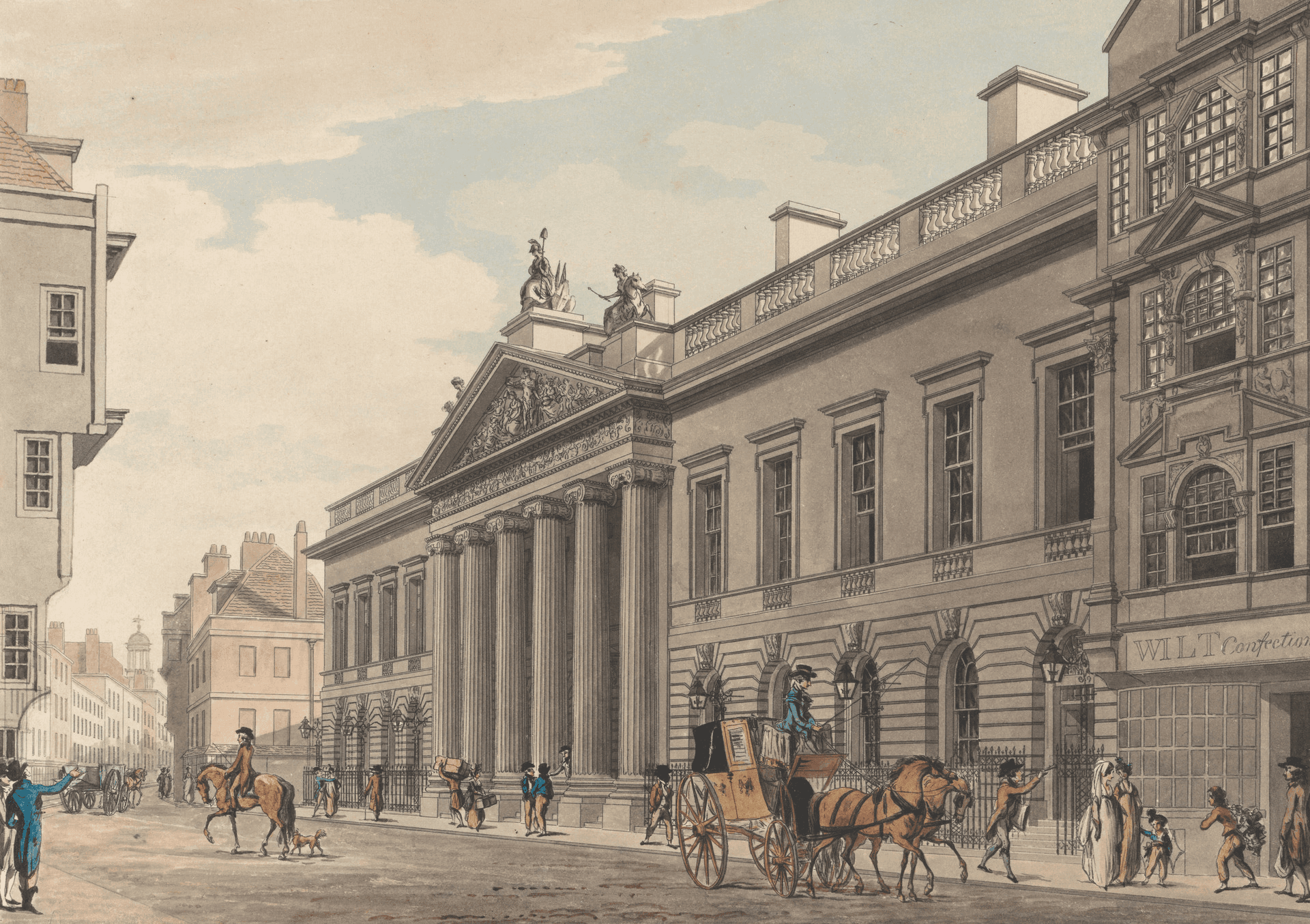
Isabella and Ferdinand copied it. The Casa de Contratación was, in its first form, a direct imitation of the Portuguese model — the same structure, the same three offices, the same monopolistic principle. The Spanish innovation was scale. Portugal was running a trading network along an African coastline. Spain was about to run an intercontinental empire. The Casa was the instrument that would let them.
The founding decree was short. It ordered the establishment of a single office, in a single city, that would handle every legal aspect of trade with the Americas.
Every ship sailing to the Indies had to register with the Casa before departure
Every ship returning had to unload at Seville and clear customs at the Casa
Every passenger — settler, priest, soldier, sailor, merchant — had to be recorded in the Casa’s books
Every ounce of gold coming back paid the royal fifth — the quinto real — at the Casa’s counting-house
Every commercial dispute between Atlantic traders would be heard by the Casa’s court
The Casa’s founding officials were three men, appointed directly by the Crown:
A factor — commercial agent. Bought goods for the Crown, ran the royal storehouses, provisioned outgoing fleets.
A tesorero — treasurer. Received and held the specie. Physically counted the quinto real when it came in.
A contador — comptroller. Kept the books. Reconciled cargo manifests against customs declarations.
The first head of the Casa was Juan Rodríguez de Fonseca, Isabella’s chaplain and the man who had organized every one of Columbus’s expeditions since 1493. Fonseca was not a merchant. He was a Church-trained administrator with a personal hatred of Columbus and a talent for institutional detail. He ran the Casa, in one form or another, for the next twenty years. Almost every major early colonial decision passed across his desk.
The Casa was housed at first in the Reales Atarazanas — the Royal Shipyards of Seville, on the east bank of the Guadalquivir. Within a few years it moved into the Alcázar, the royal palace complex, where it occupied a wing beside the throne room. It stayed there for two centuries. The Casa was not a merchant guild. It was an organ of the Crown, working inside the walls of the Crown’s own residence in Seville. Every transaction it approved carried royal authority.
Seville was fifty miles inland, on the Guadalquivir. Ocean-going ships had to unload at Sanlúcar de Barrameda at the river mouth and transfer their cargo to river barges to reach the city. By funneling all Atlantic commerce through a single inland chokepoint, the Crown could inspect every crate, tax every ounce, license every passenger, and archive every document. A coastal port — Cádiz or Málaga — would have been faster but harder to control. Seville was slower and totally controllable.
There was also a legal reason. The Americas were, from the beginning, a possession of the Crown of Castile, not of Spain as a whole. Ferdinand’s own kingdom of Aragon — with its Mediterranean merchant cities of Barcelona and Valencia — was legally excluded from the Indies trade. Only Castilians could sail. Only Castilian merchants could invest. Only Castilian ports could receive American cargo. Seville was the largest port in Castile. This exclusion held for most of the sixteenth century. Barcelona would not get a legal share of American trade until the 1770s.
The 1503 decree established the Casa as a customs and licensing office. What it became was something much larger. Within a decade the Casa was also:
Training and licensing every pilot who sailed to the Americas
Maintaining the Padrón Real — the master map of the New World, updated from returning pilots’ reports and kept as a Crown secret. Foreign copies were considered espionage.
Running probate for Spaniards who died overseas
Adjudicating commercial disputes as a specialized court
Collecting the almojarifazgo (import-export duty), the avería (fleet-defense tax), and the quinto real
Coordinating the annual armed convoys — the Flota de Indias — that would carry silver back to Spain from 1560 onward
Amerigo Vespucci was employed by the Casa as Chief Pilot (Piloto Mayor) from 1508 until his death in 1512. It was Vespucci who standardized navigational instruction. Sebastian Cabot succeeded Vespucci’s line as Pilot Major decades later. Every skilled navigator in the early Spanish empire passed through the Casa. By the end of the sixteenth century, the Casa’s archives held millions of documents — the accumulated paper of a hundred years of imperial commerce. Those documents survive today in the Archivo General de Indias in Seville, still occupying the building the Casa moved into in 1785. It is one of the largest and most complete imperial archives in the world.
Every ship sailing to the Americas registered here on the way out. Every ship returning cleared customs here on the way back. Every passenger, sailor, priest, notary, and settler crossing the Atlantic had their name in the Casa’s books. Every barrel of oil, every roll of cloth, every horse, every cannon, every slave was manifested here. Every ounce of gold coming back paid the quinto real — the royal fifth — right at the door, before anything moved further inland. For the next three centuries, no legal transatlantic movement of anything happened outside this building.
By the end of 1503, the machinery was fully assembled:
A stone city on a grid, with a fortress, a hospital, and a paved street.
A colonial ministry in Seville controlling every ship, cargo, and passenger.
A treasury office on the island collecting the quinto real and reporting directly to the Crown.
A notary system putting every transaction on paper.
A judicial system with local magistrates and an appeal path to the governor.
A religious establishment building parish churches and schools.
A settler population of masons, farmers, miners, and their families.
A legal instrument authorizing the forced labor of the Indigenous population.
The system Columbus had improvised in 1497 to buy off Roldán’s rebellion was now formal Crown policy, backed by a European bureaucracy, enforced by resident magistrates, and documented in duplicate.
1503/ Xaragua Massacre
Anacaona was born around 1474 in the western part of the island, in the chiefdom of Xaragua. Her name was Taíno for Golden Flower — ana, flower, caona, gold.She was the sister of Bohechío, cacique of Xaragua. She was married to Caonabo, cacique of Maguana. This marriage joined two of the five great chiefdoms of Hispaniola — the largest political alliance the Taíno world had ever produced. Caonabo had wiped out La Navidad in 1493. He had been captured by Ojeda’s manacle ruse in 1495 and had died at sea on the way to Spain. Bohechío had died around 1500 of natural causes. By 1502, Anacaona was ruling Xaragua alone. She was the last independent paramount ruler of a Taíno chiefdom on the island.
Spanish sources — even the hostile ones — describe her carefully. Bartholomew Columbus, who had visited her court in 1497, called her “a wise woman, of good manners and pleasant address.” Las Casas, who never met her, called her the most gracious sovereign he had heard of in the Indies. She was a poet. She was a composer of areítos — the long ceremonial songs, half sung, half chanted, that Taíno society used to record history, honor the ancestors, and communicate with the zemis, the spirit figures. She was famous across the island for the areítos she had composed. Spanish soldiers who attended her court remembered them decades later.
She was a diplomat. In 1497, when Bartholomew Columbus marched into Xaragua looking for tribute, Anacaona and her brother Bohechío received him without resistance. They explained that Jaragua had no gold. The mountains of Xaragua did not produce it. What they had was cassava and cotton — the finest cotton on the island — and they offered to pay tribute in those instead. Bartholomew Columbus accepted. For six years after that, Xaragua paid tribute peacefully. Bales of spun cotton, sacks of cassava bread, loaded onto Spanish carts and hauled east to Santo Domingo. No gold quota. No mutilations. No village raids. A functioning diplomatic arrangement. Xaragua was the one chiefdom on Hispaniola that had figured out how to survive Spanish rule without being destroyed by it.
In the spring of 1503, some of the former followers of Francisco Roldán — the Spanish settler-rebel who had drowned in the 1502 hurricane — began telling Ovando that Anacaona was plotting a rebellion. There was no evidence. There is still no evidence. Modern historians agree the accusation was fabricated. Anacaona had paid her tribute on time for six years and had no motive to break an arrangement that was working. But the Roldán settlers wanted Xaragua’s land, and they wanted the labor of Xaragua’s people, and the tribute arrangement was keeping them out. A rebellion the Crown had to suppress would end the arrangement.
Ovando listened. In July 1503, he announced a state visit to Xaragua. He would come, he said, to celebrate the friendship between the Spanish Crown and the caciques of the western chiefdom. Anacaona should prepare a reception. He arrived with 300 Spanish soldiers, including some 60 horsemen. Anacaona did what a paramount cacica was expected to do for a state visit. She summoned her subordinate caciques from across the chiefdom. About eighty of them came. The senior nobles of Xaragua, gathered from every district, arriving at Anacaona’s court with their retinues.
She hosted them, and Ovando, for several days. There were feasts. There were the areítos she was famous for — the ceremonial songs, danced by hundreds of women in formation. There were ball games in the plaza. There was a batey ceremony. Ovando reciprocated. He announced a Spanish tournament — a juego de cañas, a game of canes, in which mounted riders would charge each other with reed lances. It was a courtly Spanish entertainment. He invited the eighty caciques into the great bohío — the large council house — to watch it from inside. The eighty caciques gathered in the bohío. Anacaona was with them.
Ovando gave a prearranged signal. Spanish soldiers took up positions around the bohío. They barred the doors. Anacaona was taken outside separately, under guard. The eighty caciques were burned alive inside. Some contemporary accounts say the Spanish also fired crossbow bolts through the walls at any cacique who tried to escape. Others say they simply let the fire finish them. Outside, other Spanish soldiers were riding through the town, killing Taíno who tried to flee. Men, women, children. The numbers are not recorded because nobody was counting.
Anacaona was arrested. She was accused of conspiring to lead a rebellion against the Crown — the fabricated charge the Roldán settlers had planted. According to Las Casas, Ovando offered her a way out. If she would agree to become the concubine of one of his officers, her life would be spared. She refused. She was taken in chains to Santo Domingo. She was tried. She was condemned. She was publicly hanged in the plaza of the town Ovando had just built. She was about twenty-nine years old. The choice of hanging was itself an insult. Under Castilian law, a noble prisoner would customarily be beheaded — a “dignified” execution reserved for the aristocratic class. Hanging was reserved for commoners and criminals. Ovando hanged her deliberately, to deny her the rank she had held her entire life.
Spanish soldiers continued through Xaragua for six months. They called it pacification. Villages were burned, populations were enslaved and marched to the gold mines, resistance was hunted through the mountains. Anacaona’s nephew Guaora, who had fled into the interior at the first news, was tracked down and hanged. On the site of the massacre, Ovando founded a Spanish town. He named it Santa María de la Verdadera Paz. Saint Mary of the True Peace.
When word of the Xaragua massacre reached Spain, Queen Isabella was dying. She had spent the last year of her life increasingly disturbed by reports from the Indies. Xaragua was one of the last things she heard about. According to some accounts, on her deathbed in November 1504 she asked that Ovando be removed from the governorship. Whatever she said, Ferdinand did not act on it. Ovando kept his post for five more years. Isabella died on November 26, 1504. Her testament included a clause instructing her heirs to treat the Indians of the Indies “well and justly” and to Christianize them peacefully. It became the founding document of every future Spanish law protecting Indigenous personhood. It was largely ignored.
For the Taíno of Hispaniola, Xaragua was the end of an argument. For six years, Anacaona had demonstrated that diplomacy with the Spanish was possible. Tribute could be negotiated. Peace could be kept. A chiefdom could survive if it played the game correctly.Ovando burned that possibility down with the bohío. After Xaragua, no Taíno paramount cacique on Hispaniola believed Spanish diplomacy was real. The last independent chiefdom — Higüey, in the far east — went into open resistance the following year. Cotubanamá knew what a Spanish reception was for. He fought from the mountains.
For the Spanish, Xaragua was a template. It would be reused.Cortés at Cholula in 1519 — inviting the Cholula nobility into a courtyard for a “farewell ceremony” and then slaughtering them.Pizarro at Cajamarca in 1532 — inviting Atahualpa into a plaza for a diplomatic reception and then attacking his unarmed retinue. Alvarado in Guatemala — repeatedly. The trap Ovando set at Xaragua became the standard Spanish tactic for decapitating an Indigenous polity. Invite the leadership to a diplomatic reception. Isolate them. Kill them all at once.
1504/ Higüey
Higüey was far east of Hispaniola. Limestone hills, dry forest, karst caves, the eastern coast facing Puerto Rico across the Mona Passage. It was the smallest of the five chiefdoms and the poorest in gold. It was also the most defensible. Its cacique was Cotubanamá. Spanish sources agree on his size. Las Casas — who fought against him — describes him as a physical giant, well over six feet, with limbs “as thick as a man’s thigh.” His name in Taíno meant something like “great warrior” — a battle name, not a birth name. He had taken it when he assumed the paramount cacique’s title.
He was famous for something else, too. He had exchanged names with several Spaniards in the pact the Taíno called guaitiao — a ceremonial name-brotherhood, the deepest bond Taíno society recognized. A guaitiao pair carried each other’s names and were bound to protect each other’s lives. Cotubanamá had entered into guaitiao with Spanish officers he trusted. Those Spaniards had broken the pact. By 1502, Cotubanamá had watched the other four chiefdoms fall. He knew what Spanish diplomacy meant. He had also seen his sacred island Saona — called Adamanay by his people, renamed Saona by Columbus after Michele de Cuneo, his Ligurian friend from Savona — turned into a Spanish stopover point. Saona was full of ceremonial caves. Petroglyphs. Ball courts. Ritual sites his ancestors had used for centuries. He was not going to lose Higüey the way Anacaona had lost Xaragua.
A group of Spanish soldiers was hunting on Saona Island with attack dogs — large mastiffs bred to bring down men. The dogs got loose. They killed a subordinate cacique of Cotubanamá’s who was fishing on the shore. Cotubanamá’s response was measured. He waited. When the next Spanish party landed on Saona — a group of eight Spaniards on their way to Puerto Plata, stopping to rest — his warriors ambushed them. All eight were killed. The war was on.
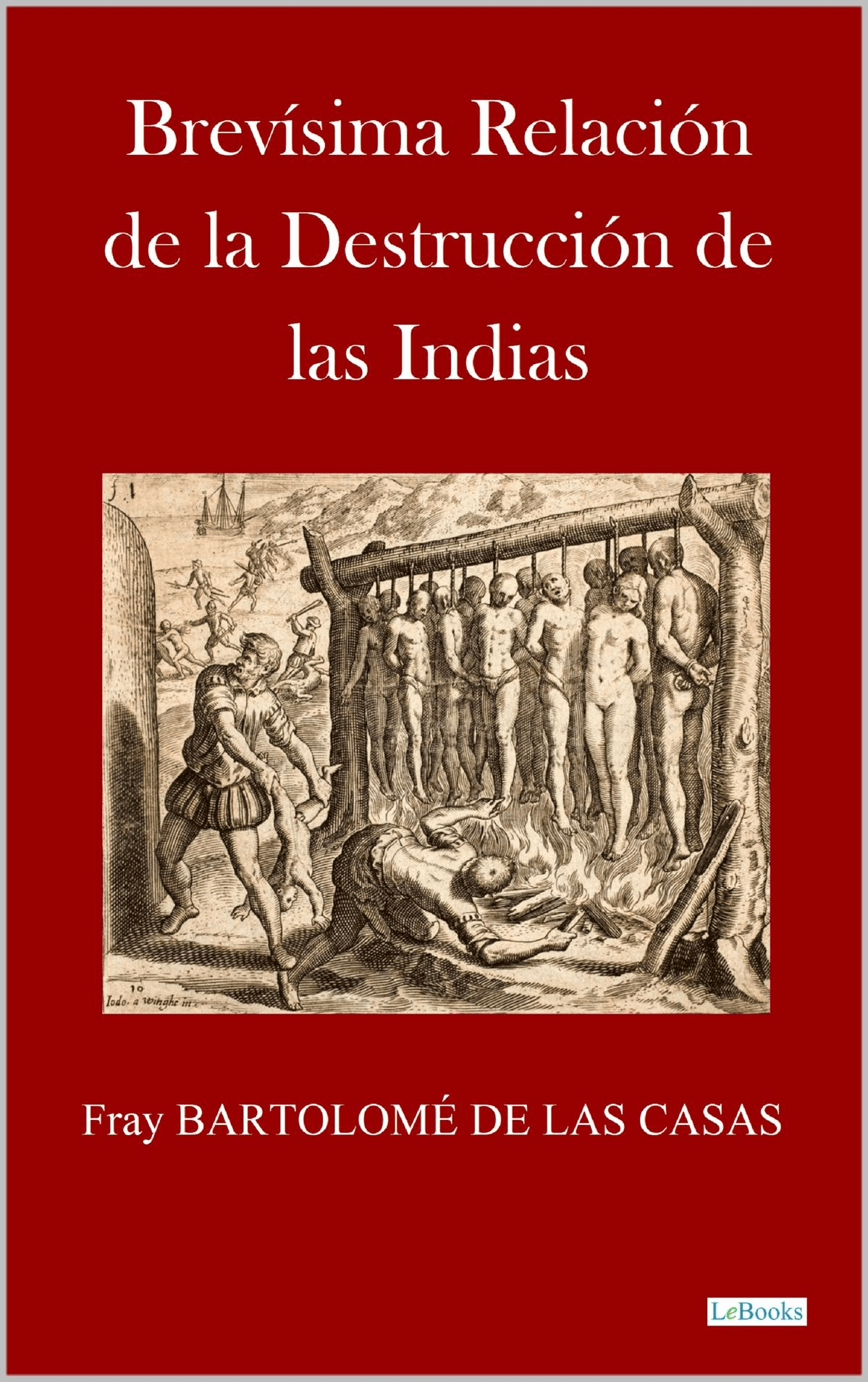
Ovando dispatched Juan de Esquivel with 300 to 400 men to break the resistance. Esquivel had come to the island in 1502 as one of Ovando’s officers. He had steel, cavalry, crossbows, war dogs. Cotubanamá had wooden spears and stone axes and a chiefdom of maybe 30,000 people spread across the eastern hills. Among Esquivel’s men, as a soldier, was Bartolomé de las Casas. He was nineteen. He had come out with Ovando’s fleet the previous year. Higüey was his first war. He fought against Cotubanamá. Fifty years later he would write the Brevísima relación — “A Short Account of the Destruction of the Indies“ — the book that would build the entire European critique of Spanish colonialism. The scenes he described in it — the massacres, the mutilations, the burning villages — were scenes he himself had helped make.
The First War ended in a peace treaty. Cotubanamá agreed to Spanish presence and Spanish tribute. Esquivel built a small fort in Higüey and garrisoned it with nine Spanish soldiers under a Captain Villamán. Then Esquivel left. The nine men at the fort behaved the way Spaniards on Hispaniola always behaved. They raided villages for women. They demanded gold that didn’t exist. They ignored the treaty. They insulted the cacique they were supposed to be at peace with. Cotubanamá waited again. When he moved, he moved fast. His warriors attacked the fort at night. Eight of the nine Spaniards were killed. One escaped to carry the news to Santo Domingo. Cotubanamá had chosen the war.
Ovando sent a larger force this time — Las Casas says several hundred more men, with Esquivel returning to command, though some sources say Esquivel had left for Spain and it was Diego Velázquez de Cuéllar who led the campaign. Either way, Las Casas was among them again. The Spanish expected another set-piece war. What they got was something they had not seen before. Cotubanamá refused to fight a pitched battle. He fought from the mountains. He fought from the caves. He fought from the offshore island of Saona. He fought at night. He struck Spanish supply lines and disappeared. He hid his people in the karst hills where cavalry could not follow. He fed them from concealed cassava caches his people had prepared for the possibility. The Second War lasted eight or nine months. The Spanish had steel and horses. Cotubanamá had geography and terrain knowledge. Every Spanish attempt at a decisive engagement dissolved into pursuit through the hills, ambushes on the return, and diminishing supplies. This was the first sustained Indigenous mountain war in the Americas.
The Spanish wore Higüey down the way they always wore down guerrilla campaigns — by destroying the villages, the food supplies, and the population that supported the fighters. They burned settlements. They took thousands of Taíno as slaves and shipped them to the mines. They killed anyone who couldn’t produce evidence of loyalty. By the end of 1504, Cotubanamá had retreated to Saona with a small band of survivors. Spanish scouts eventually tracked him to a cave. Some sources say he was betrayed by a captured Taíno under torture. Others say a scout stumbled across the hideout by accident. He was seized. He was taken across the strait to the mainland. Then, in chains, overland to Santo Domingo. He was publicly hanged in the plaza of Santo Domingo. The same plaza where Anacaona had been hanged eighteen months earlier. The region was declared “pacified” in 1505. The chiefdom of Higüey no longer existed as a political entity. Its population had been reduced by enslavement, killing, and flight to a small fraction of what it had been in 1500. In 1506, Esquivel founded a Spanish town on the site of Cotubanamá’s former center. He named it Salvaleón de Higüey — Salvation of Higüey.
The town exists today. It is the seat of La Altagracia province, the eastern tip of the Dominican Republic. Saona Island is now the centerpiece of Cotubanamá National Park, named for the cacique the Spanish hanged. The caves he hid in are open to visitors. The petroglyphs his people carved are still on the walls.
All five Taíno chiefdoms were now gone. Marién had been absorbed. Maguana was destroyed with Caonabo. Maguá was broken with Guarionex. Jaragua was drowned in Anacaona’s blood. Higüey was starved out with Cotubanamá. The island was fully Spanish territory in a way it had not been before 1504. No independent Indigenous polity remained. Every Taíno on Hispaniola was now legally the subject of a Spanish encomendero, or a slave being shipped elsewhere, or a fugitive in the mountains. The population was already collapsing. The Alburquerque census of 1514 would find 26,000 tributaries. It would be less than half of that ten years later. The Indigenous polities of Hispaniola had been destroyed in twelve years, from Caonabo’s capture in 1495 to Cotubanamá’s hanging in 1504. 🇺🇸