Who Holds the Frame

SFMOMA, Floor 3 · May 16, 2026–February 28, 2027
The usual story about dance photography is that the camera freezes what the body cannot hold still. A leap becomes a monument. A gesture that lasted half a second becomes permanent. In this story the dancer moves and the photographer captures, and the relationship runs in one direction.
Feel the Beat: Dance in Photographs starts from a different claim. Roughly eighty photographs from SFMOMA's collection, organized by assistant curator of photography Shana Lopes, are arranged to show photographers as participants in dance, not spectators of it. The exhibition moves through three rooms. The first is devoted to Anna Halprin and the San Francisco Dancers' Workshop. The second gathers trained performers working with photographers around the world, centered on Eikoh Hosoe's collaboration with the Butoh founder Tatsumi Hijikata. The third leaves the stage for clubs and parties, anchored by Malick Sidibé's pictures of young dancers in Bamako.

The claim holds for some of these pictures and fails for others. The difference comes down to one question. Who controlled the room when the shutter opened: the dancer, the photographer, or someone neither of them could see?
1931 — Martha Graham Before the Lens
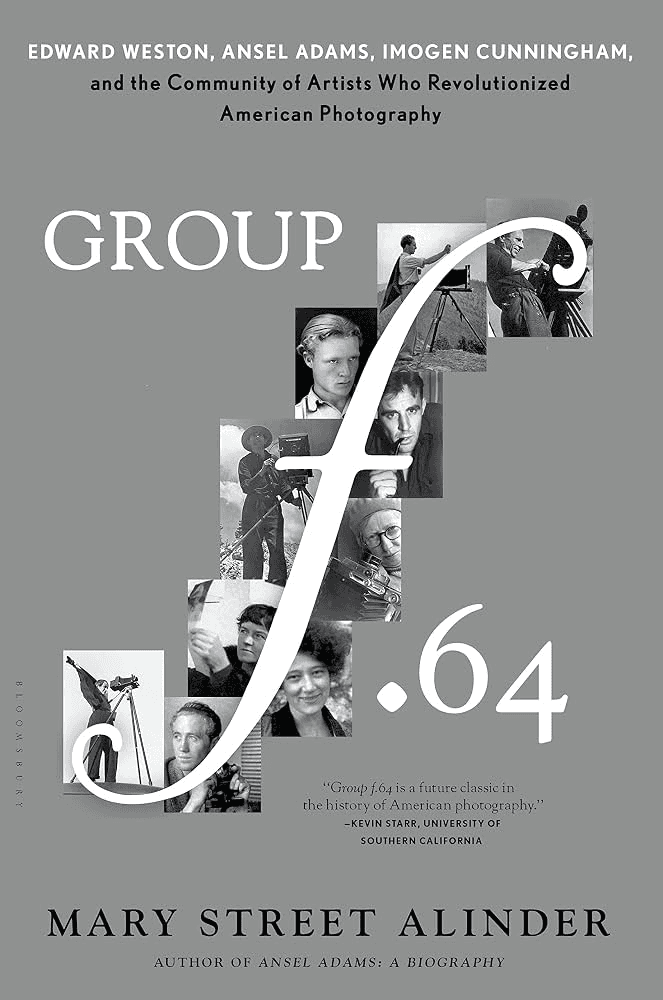
In 1931 Imogen Cunningham photographed Martha Graham. Graham had founded her company five years earlier and was building the vocabulary of contraction and release that would become the grammar of American modern dance. Cunningham, then in her late forties, was a Bay Area portraitist and botanical photographer. The following year she would become a founding member of Group f/64, the circle of California photographers committed to sharp focus and unmanipulated prints.
The picture belongs to the earliest model of dance photography, the one the exhibition text describes as serving an advertising function. The dancer arrives with a finished form. The photographer's job is to render that form clearly enough for a magazine page or a program. Authority sits with Graham. Cunningham contributes precision, framing, and light. She does not contribute choreography.

This is the baseline the rest of the exhibition argues against. It is also the arrangement that most dance photography in the 20th century continued to follow.
1952–1953 — Merce
Robert Rauschenberg's Merce (1953, printed 1981) comes from a different arrangement. In the summer of 1952, at Black Mountain College in North Carolina, John Cage staged an untitled event in which several things happened at once: Cage lectured, music played, Rauschenberg's white paintings hung overhead, and Merce Cunningham danced through the audience. The event is now treated as one of the first happenings.

The following year Rauschenberg photographed Cunningham. From 1954 he spent a decade designing sets, costumes, and lighting for the Merce Cunningham Dance Company.
This is a photograph made from inside a working partnership. Rauschenberg was not documenting a performer from the outside. He was photographing a collaborator whose stage he would help build. The second gallery places Merce alongside work by Barbara Morgan and Richard Avedon, photographers who also helped shape how 20th-century dance looked to the public. The difference is one of position. Rauschenberg was already inside the work.
1955 — The Dance Deck
Anna Halprin was born in 1920 outside Chicago. She studied dance at the University of Wisconsin, where she met the landscape architect Lawrence Halprin. They moved to San Francisco in the late 1940s.
In 1955 she broke from the studio she had been running and founded the San Francisco Dancers' Workshop. Her husband built her an outdoor dance deck on the wooded slope behind their home in Kentfield, in Marin County, cantilevered among existing trees. Halprin later said the deck taught her to take theater to where people were.
The students who worked on that deck in the late 1950s included Trisha Brown, Simone Forti, and Yvonne Rainer. All three moved to New York and carried Halprin's methods into the Judson Dance Theater, the group that defined postmodern dance in the 1960s. Halprin's premise was that dance did not require trained virtuosity. Walking, eating, dressing, and undressing could be choreography.
In 1965 she made Parades and Changes, in which dancers repeatedly dressed and undressed. When it was performed at Hunter College in New York in 1967, the performance was banned and arrest warrants were issued for its participants. Halprin also built one of the first dance companies to integrate Black and white dancers, in the late 1960s.
The first gallery includes ephemera from the Dancers' Workshop's events at SFMOMA in the 1970s. Halprin's influence on the region was institutional as well as artistic. She died in Kentfield in 2021, at one hundred.
1957–1963 — Bamako After Dark
Malick Sidibé was born in the mid-1930s in Soloba, a village in what was then French Sudan. He trained as a draftsman in Bamako and in the mid-1950s was hired to decorate the shop of a French photographer, Gérard Guillat. He stayed on as an apprentice. By 1957 he was photographing Bamako's nightlife. Sources give either 1958 or 1962 for the opening of his own Studio Malick in the Bagadadji neighborhood.
Mali became independent from France in 1960. In Bamako, young people organized themselves into clubs, many named after foreign music and idols, and held surprise parties that lasted until dawn. They danced the twist, rock and roll, and Cuban rhythms from imported records, dressed in Western clothes, and continued on Sunday at the banks of the Niger.
Sidibé was invited to these parties because he was useful to them. He could cover several in one night. He developed the negatives, glued numbered contact prints onto folders, and hung them in his studio window for the dancers to find and order the next day.

Nuit de Noël (Happy-Club) (1963, printed 2014) is the image the final gallery is built around. The subjects knew the camera was there and performed for it. The arrangement made the photographer a guest whose presence the party wanted, and the photographs a product the dancers bought. The dancing belonged to the dancers. The record of it was a service.
Sidibé stopped photographing parties in the late 1970s, when young people moved from clubs to nightclubs that were not his territory. He continued making studio portraits and repairing cameras. He died in Bamako in 2016.
1959–1969 — Akita
Butoh (ankoku butō, "dance of darkness") is a postwar Japanese avant-garde dance form that Tatsumi Hijikata developed from the late 1950s. In 1959 Eikoh Hosoe saw Hijikata perform a piece adapted from Yukio Mishima's novel Forbidden Colors. Hosoe later recalled that he had never seen dancing so ferocious. He began photographing Hijikata in what he called a photographic theater, staged scenes made for the camera rather than for an audience.

In 1965 the two men traveled to the countryside of Tōhoku, around Hijikata's hometown in Akita Prefecture. Hosoe had grown up in Yamagata and had been evacuated to the rural north as a schoolchild during the war. The trip was a return for both of them.
Hijikata played the kamaitachi, a weasel spirit from regional folklore with sickles for arms, said to cut people in the rice fields. He ran across paddies, leapt in front of groups of farm children, hid, and at one point snatched a farmer's baby and ran off with it. Hosoe ran alongside, shooting while moving and from unstable angles. Hosoe later continued the series in Tokyo, in Shibamata and Sugamo. The book Kamaitachi was published in 1969 in a numbered edition of one thousand, its large plates folded inside gatefolds that had to be opened by hand. Hijikata danced at the Tokyo opening of the exhibition.
This is the series where the exhibition's claim is strongest. Photographer and dancer built the work together. Neither could have made it alone. Hijikata later credited Hosoe with making him famous.
But the frame holds a third party. The villagers in Kamaitachi were not collaborators. They were an audience that did not know it was in a performance, startled into roles they had not agreed to play. The collaboration had two authors and a cast of unwitting extras. Some of those extras remembered the shoots for decades.
1967 — The Bath
The exhibition opens with fourteen photographs by Irving Penn. They are the most controlled images in the show, and the most compromised.
In September 1967, after the Summer of Love, Look magazine sent Penn to San Francisco to photograph the city's counterculture. He photographed Hells Angels, hippie communes, the Grateful Dead, Big Brother and the Holding Company, and members of Halprin's Dancers' Workshop. He wanted, in his framing, to study these people in a daylight studio against a plain backdrop, removed from their everyday surroundings.
Halprin's dancers re-staged her 1966 piece The Bath for him, nude and entwined. Penn was a fashion photographer at Vogue and one of the most exacting printers in American photography. Halprin's practice was built on improvisation and ordinary movement. In Penn's studio, that practice was placed inside the most disciplined frame available.
Look published its essay, "The Incredibles," in January 1968. The Dancers' Workshop pictures were not in it. They were judged too daring. The negatives sat for nearly three decades until Halprin contacted Penn in 1995 asking for the photographs for her archive. Penn printed them that year. SFMOMA's The Bath (A) (Dancers' Workshop of San Francisco) is dated 1967, printed 1995.
Lopes describes the dancers as strong and graceful without appearing posed, echoing Halprin's idea that everyday gestures could become their own kind of dance. That reading is accurate to the pictures. It does not account for the conditions. Three parties controlled this image: the choreographer who built the movement, the photographer who built the frame, and the editor who decided neither would be seen. The prints exist because the choreographer asked for them back.
1977–1980 — Studio 54 and a Birthday Party
The last room places Sidibé beside American nightlife. Larry Fink photographed Studio 54 in 1977, the year the club opened. Nan Goldin photographed Twisting at my birthday party, NYC in 1980. Pictures by Weegee and Janine Gordon extend the room in both directions.
Seventeen years separate Sidibé's dancers in Bamako from Goldin's friends doing the twist in New York. The positions of the photographers are not the same. Fink was an observer inside a room defined by who was let through the door. Goldin was the host, photographing her own circle at her own party. Sidibé was the hired guest, invited because he could sell the night back to the people who danced it.
The Terms of Each Contract
The exhibition argues that photographers are full participants in dance. Rauschenberg, Hosoe, and Goldin support that reading. Each made pictures from inside the work, as collaborator, co-author, or host.
The rest complicate it. Cunningham served the dancer's form. Fink watched from inside a club that excluded most of the city. Sidibé worked on commission, and his subjects controlled when the picture was worth buying. Hosoe's villagers participated without consent. Penn's studio reversed Halprin's terms, and Look overruled them both.
A dance photograph is a contract with more than two signatures. The exhibition opens with the one that went unpublished for twenty-seven years. 🌁
Timeline — Feel the Beat
1920 — Anna Halprin is born outside Chicago.
1926 — Martha Graham founds her dance company.
1931 — Imogen Cunningham photographs Martha Graham.
1932 — Cunningham becomes a founding member of Group f/64.
Mid-1930s — Malick Sidibé is born in Soloba, French Sudan (sources give 1935 or 1936).
Late 1940s — Anna and Lawrence Halprin move to San Francisco.
1952 — John Cage's untitled event at Black Mountain College brings together Merce Cunningham and Robert Rauschenberg.
1953 — Rauschenberg photographs Merce.
1954–1964 — Rauschenberg designs sets, costumes, and lighting for the Merce Cunningham Dance Company
1955 — Halprin founds the San Francisco Dancers' Workshop; Lawrence Halprin builds her dance deck in Kentfield. Sidibé is hired by the photographer Gérard Guillat in Bamako.
1957 — Sidibé begins photographing Bamako's nightlife.
Late 1950s — Trisha Brown, Simone Forti, and Yvonne Rainer study with Halprin on the dance deck.
1958 or 1962 — Sidibé opens Studio Malick in Bagadadji (sources differ).
1959 — Eikoh Hosoe sees Tatsumi Hijikata perform an adaptation of Mishima's Forbidden Colors.
1960 — Mali becomes independent from France.
1963 — Sidibé photographs Nuit de Noël (Happy-Club).
1965 — Hosoe and Hijikata begin Kamaitachi in Akita. Halprin creates Parades and Changes.
1966 — Halprin choreographs The Bath.
1967 — Parades and Changes is banned after its Hunter College performance in New York. In September, Irving Penn photographs the Dancers' Workshop performing The Bath in San Francisco for Look.
January 9, 1968 — Look publishes "The Incredibles" without the Dancers' Workshop photographs.
1968 — Hosoe completes the Kamaitachi photographs.
1969 — Kamaitachi is published as a book in an edition of 1,000.
1970s — The Dancers' Workshop holds events at SFMOMA.
1977 — Larry Fink photographs Studio 54 in its opening year.
Late 1970s — Sidibé stops photographing parties and turns to studio portraits.
1980 — Nan Goldin photographs Twisting at my birthday party, NYC.
1981 — Rauschenberg's Merce is printed.
1995 — Halprin asks Penn for the Bath photographs; Penn prints them.
2014 — Nuit de Noël (Happy-Club) is printed.
2016 — Sidibé dies in Bamako.
2021 — Halprin dies in Kentfield at 100.
May 16, 2026 — Feel the Beat opens at SFMOMA.
February 28, 2027 — Feel the Beat closes.