Created on
Updated on
Filmmaking in the Age of AI(20): Belle Époque / Van Gogh
all the great artists that emerged during that time
Preface: Co-written with Claude. I will return back to the filmmaking bit after going deep into Belle Epoque. Apologies, it's good interesting of a topic to pass on.
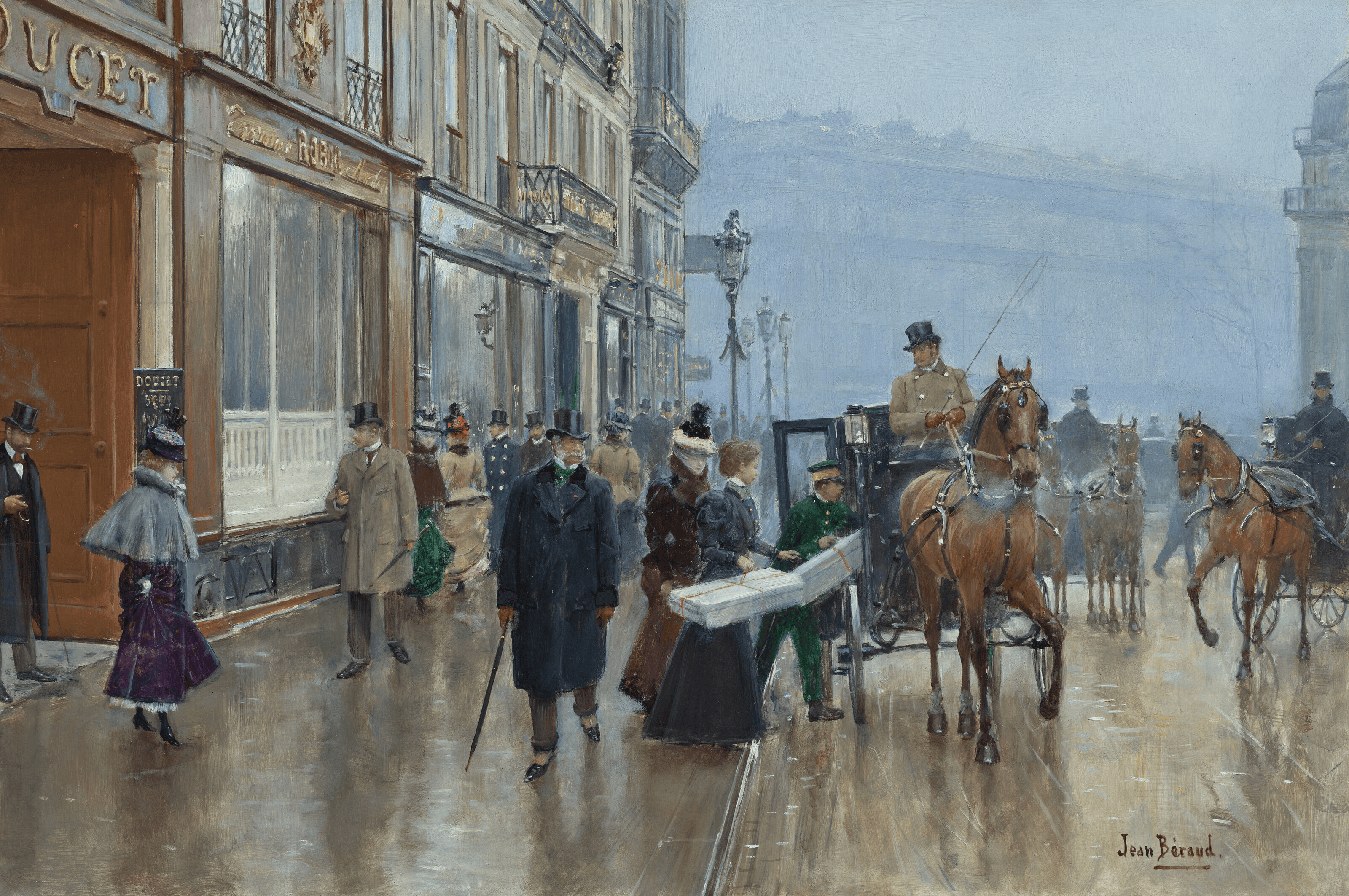
As mentioned earlier, Belle Epoque is when all the famous artists went to this shady, duty-free hill called Montmartre that had bars, and dace halls, and prostitutes and an amazing night life, and spent some of their most important years producing some of the greatest art in history. Belle Epoque, like the Renaissance, when you think of it, it's such a blink of an eye in our human history, yet it's the brightest blink in terms of the explosion of art, culture, music, literature etc. We are going through a similar time around the world right now, at least that's what I hope. I'm going back to this time and finding similarities between then and now. It sounds like a very exciting and chaotic time back then. Anyways, there are few more paintings I want to get to, just to give you a perspective of how it was, before going back to the filmmaking bit of my stories.
As mentioned previously, Le Chat Noir which means a black cat was a hot spot back then, where all the artists, dancers, writers, painters, musicians gathered and talked about art, drank wine. It was the first "cabaret", which means it was a mixture of performances, bar, and art saloon. It opened in 1881 at Montmartre, closed in 1897. It was only open for 16 years, yet it was a glorious sixteen years. This sort of establishment was quite novel and experimental at the time, sort of like some of bars or weed shops try to do now: they sell substance, but also offer a lounge or place for people to hang out, and they are open late so that people can argue about a painting all night. Imagine all these hipsters just drinking and painting and hanging out all night and all day, they refused to work, they only wanted to produce and talk about art. Man, what a time to be alive. I am totally romanticizing this, since it's not that secretive that everyone was probably too depressed that they had to choose such a precarious way of living.
Moulin Rouge opened in Montmartre in 1889, eight years after Le Chat Noir opened. It's still operating today, since it's a fucking legend. There were big dance performances, lavish costumes and stage design, the crowds usually a mix of working-class and sometimes wealthy visitors. Performances were designed to entertain at scale, a spectacle, not just experiment. Just like the black cat cafe, Moulin Rouge pulled in major creatives, such as Henri de Toulouse-Lautrec mentioned previously, with deformed legs, and sometimes indulged in prostitution, was able to examine the nights while remaining an bystander view. His paintings make me feel like I was peeking through a life I wasn't supposed to peek through: everyone was so lively, unhinged, raw and real.
Vincent van Gogh and his brother Theo lived in Montmartre from 1886 to 1888, only two years. When he was there, the black cat cafe was open, but Moulin Rouge didn't explode yet. Van Gogh transformed completely as an artist in Paris. Before Paris, he had dark, heavy, brown tones, depicting a peasant life. After he moved to Paris, he started absorbing Impressionism, Japanese prints, and bright color theory. Where he used to live is still a pilgrimage site. During his time there, he painted a series depicting Montmartre's famous hills and windmills. He was essentially an unknown during his life, as we probably all know by now, he's only became famous long after he's dead.
Van Gogh was born in Zundert, on March 30th, 1853 (Aries), which is a small town in the Netherlands, the population is still small today, of about 22,000 people. He's completely Dutch in origin, grew up in a religious, middle-class family. His father was a protestant minister. His early life was quite, structured, provincial. Very different from the chaotic energy of Paris. Between 1968-1867, he worked for an art firm. He started working for Goupil & Cie, which was a major 19th-century French art dealership and publishing house headquartered in Paris. He first start when he was 16, which is really young, at The Hague, which is the administrative capital of the Netherlands, population there is around 560,000 in 2023. He was selling prints and artworks, learning what the art market values, and being exposed to mainstream taste. This surprises me. I always thought he was someone that didn't understand mainstream taste, but he actually came from a background of selling mainstream art, yet he chose such an experimental and pioneering art style of impressionism, that made him absolutely no money or fame. He later moved to London when he was 20, lived there for a year and a half, working for the same company. He fell in love with a boarding house owner's daughter, yet it was unreciprocated, so he became increasingly lonely and withdrawn. He started turning inward, spiritually and emotionally.
After London, he went to Paris for the first time when he was 22 in 1875, a year later, he quit his job. He became a teacher, for a little bit, then a religious worker, tried to become a preacher, wasn't really his thing. In 1880, he finally couldn't resist his calling, and decided to become an artist. He went back to the Netherlands, with no formal art education, he started learning drawing seriously on his own. He was 27 years old. This should inspire you. Van Gogh didn't start painting until he was 27. But it should also discourage you, as he eventually died by suicide.
Nuenen, a small, rural village north of the Netherlands, where he was living with his parents. Population of this town is around 23,00- people today. This is where Van Gogh trained himself seriously for a few years, though since he lived with his parents, his paintings were peasants, weavers, rural life, with very dark, heavy palette. Ok, I know you are like, I came here for the filmmaking, why am I reading about art. Stay with me, everything you are reading will benefit you in becoming a great filmmaker, I promise. Let's just go through this poor man's life and see what we can learn.
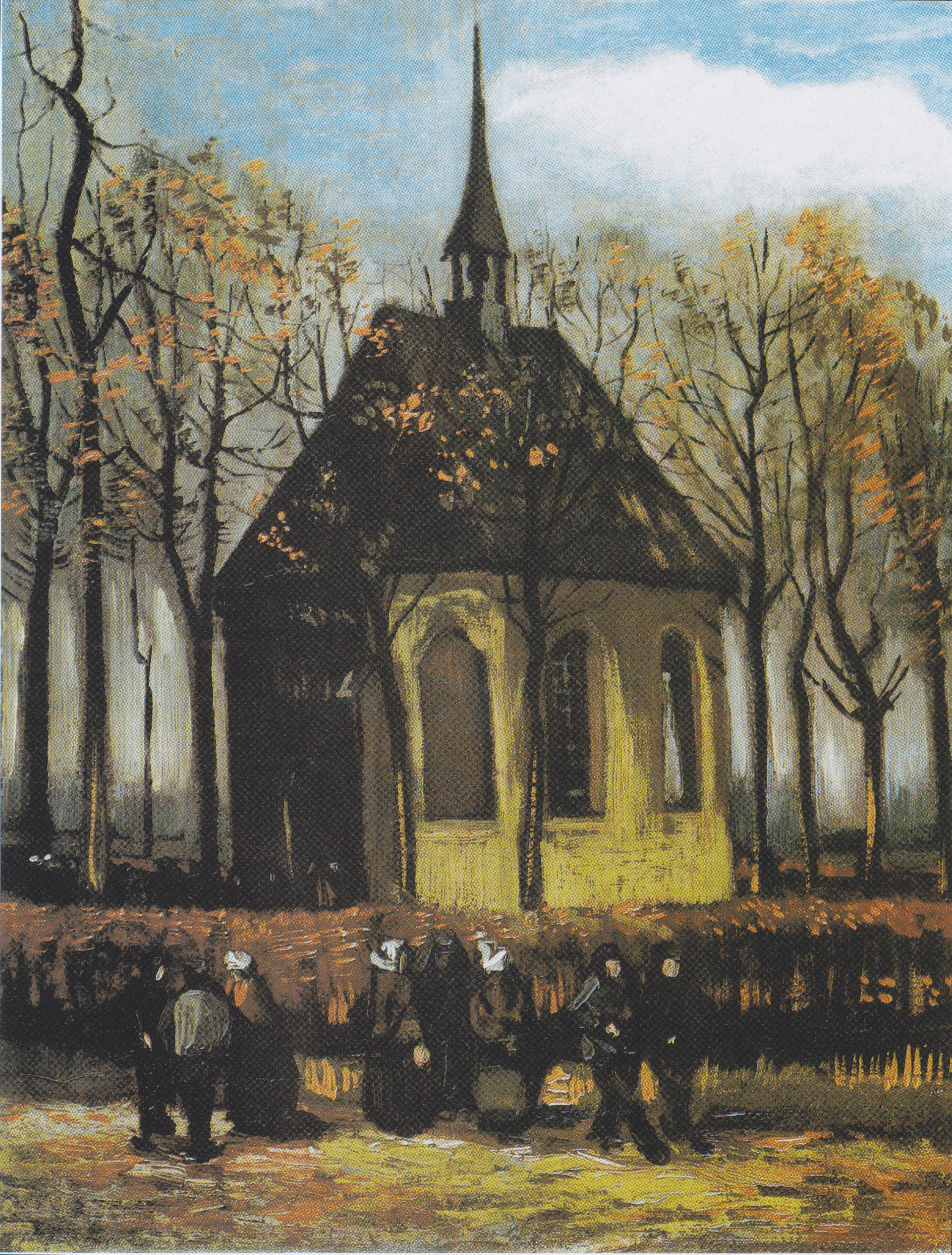
He made The Potato Eaters during this time, in 1885. As you can see is very dark. This is considered Van Gogh's first mature masterpiece of his career. It portrays a peasant family sharing a modest meal by lamplight, embodying Van Gogh's empathy for rural laborers and his ambition to become a "peasant painter". Though, this peasant painter ambition didn't last as we all know, since he later became the impressionist master instead.
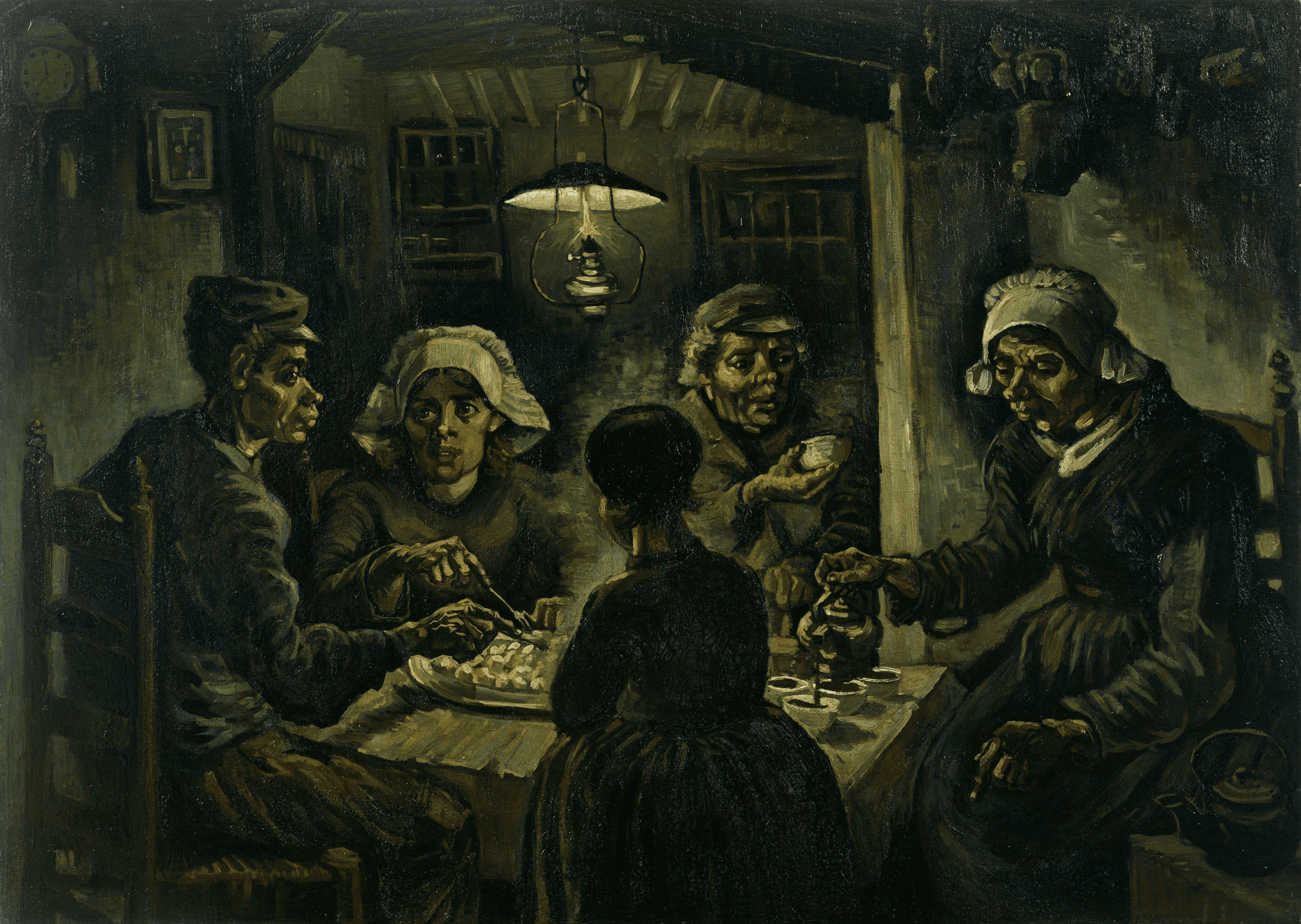
When he moved to Paris for the second time, with his brother Theo in 1886, he was 33 years old. This time permanently for his major artistic transformation. He discovered impressionism, met modern artists, abandons dark tones for bright color, and completely rebuilds his painting style. It went from early Dutch Realism, to late modern Expressionism.
Self-Portrait with Grey Felt Hat
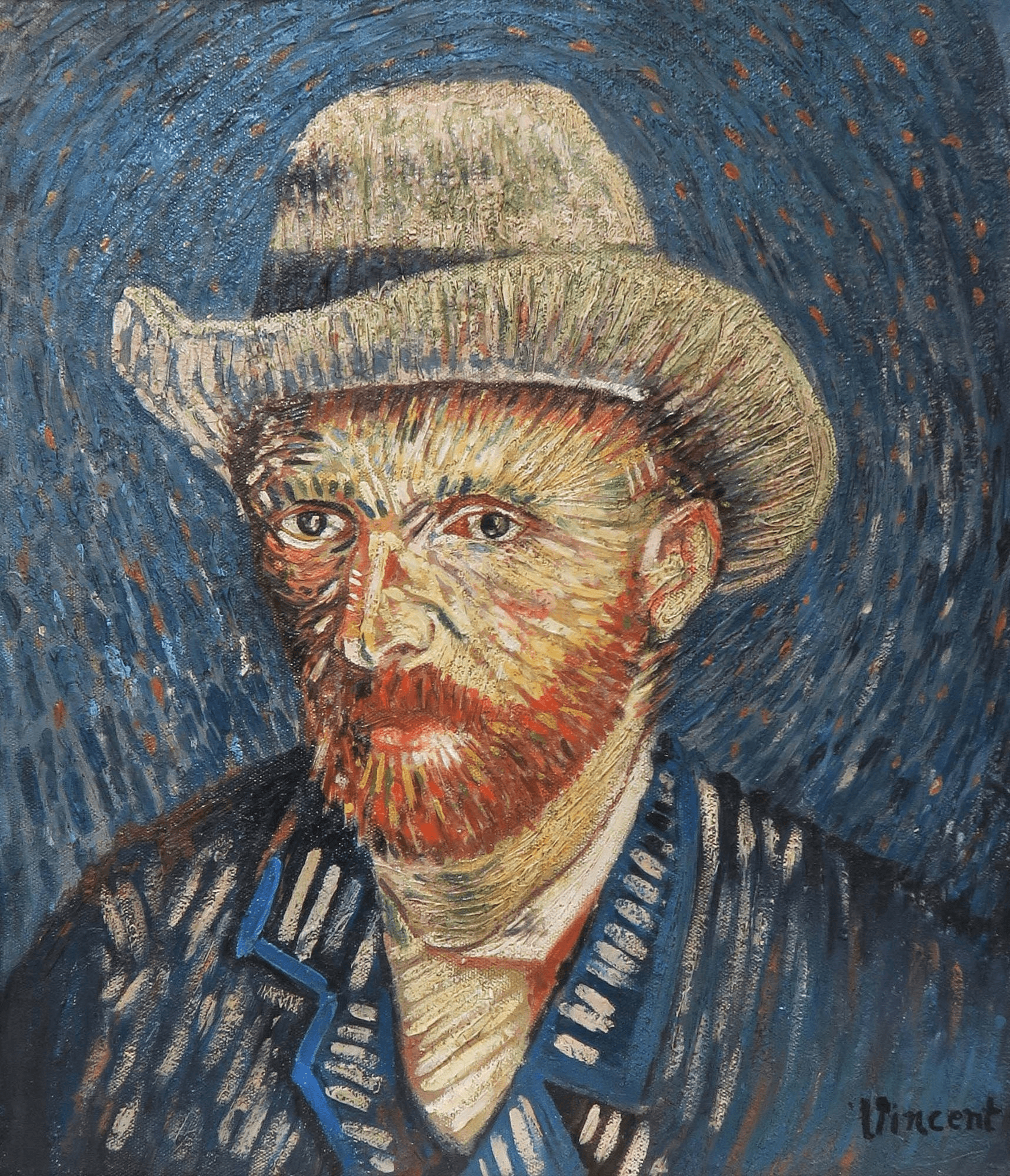
He painted this self-portrait in 1887, a year after he moved to Paris. It's part of a series of self-portraits he did to practice his technique. He was experimenting with color theory, brushtroke direction, light reflection etc etc. The surface is build from short, directional strokes, layered textures, almost "woven" paint. It's very stylistic if you ask me. The dark browns are gone, the heavy shadow is reduced, all these are replaced by blues, greens, light grays. You can see he's getting inspired.
Boulevard de Clichy
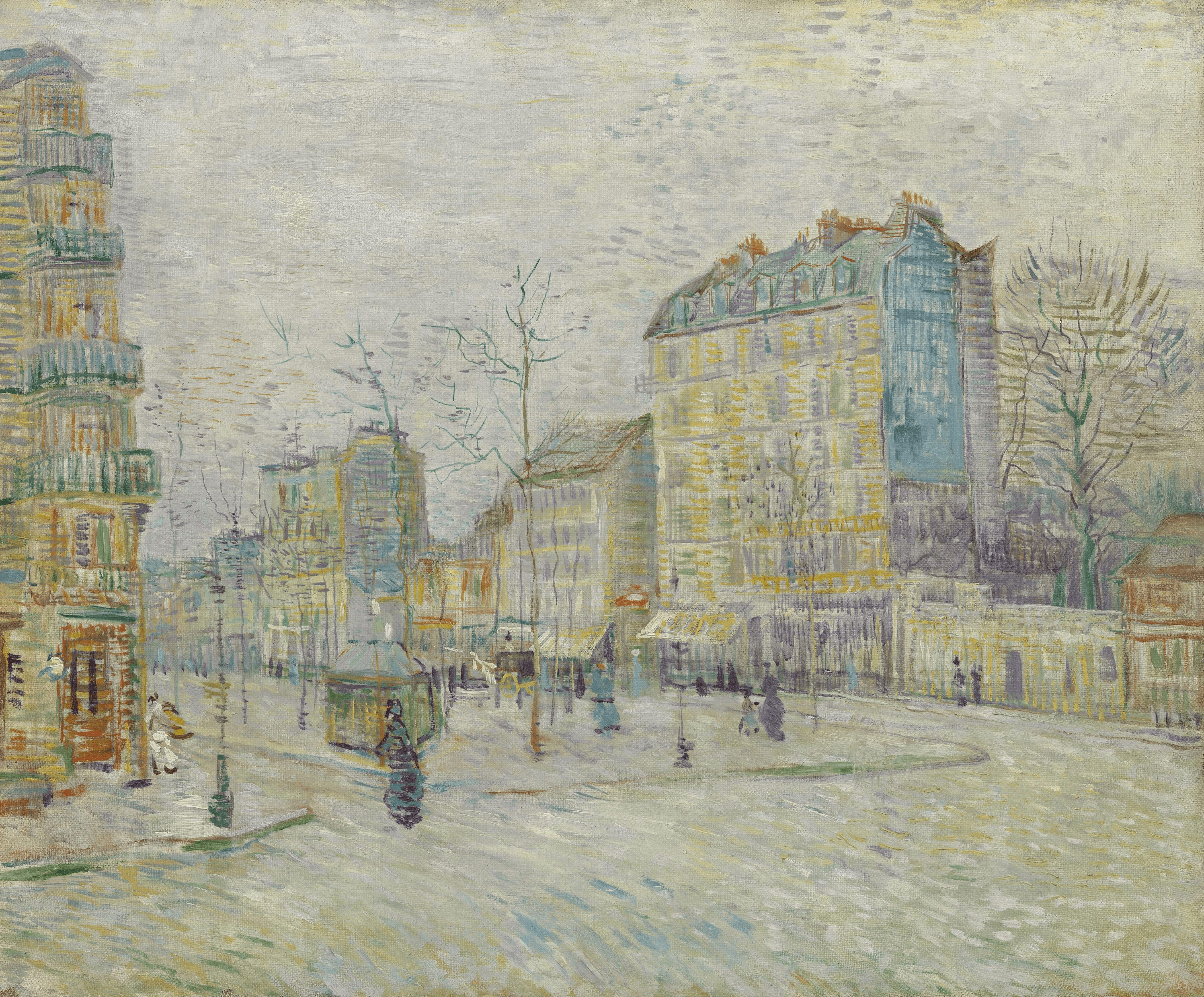
This was painted in 1887, specifically the Montmartre / boulevard de Clichy area, this was the area that's buzzing with cafes, cabarets, and nightlife. This is one of the most revealing "everyday Paris" works by him. At first glance, it seems simple: a street scene, buildings lining a boulevard, a muted urban atmosphere. People are barely emphasized here. Unlike his later work, there's no swirling sky, no emotional distortion, no intense symbolism, instead, it's a controlled observation. There's very minimal emphasize on people, different from the Moulin Rouge from last post, where I felt present, inside the world, this feels very sad, cold, detached. You can see the looser brushwork than his Dutch period, lighter. palette, interest in modern urban life versus rural peasant life.
Other than Van Gogh, Pierre-Auguste Renior is basically one of the core visual architects of the Belle Époque mood. More on this in the next post. ☀️