Created on
Updated on
Filmmaking in the Age of AI(30): Star Wars (1977)
the industry was in crisis
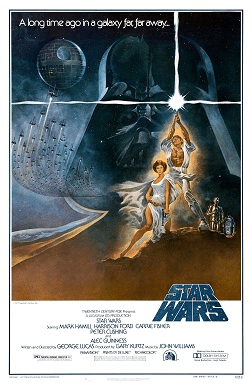
Preface: Co-written with Claude.
The Accident and the College Life
On June 12, 1962 — the day before he was due to graduate high school in Modesto, California — Lucas was in a near-fatal car accident. He was driving his Autobianchi Bianchina, a small Italian car, near his home when another vehicle struck him at high speed and sent his car into a walnut tree. The car rolled several times. Lucas was thrown clear only because his seatbelt snapped on impact — if it had held he would have been crushed. He spent two weeks in hospital with severe chest injuries and bruised lungs. He later said the accident changed everything. Before it he had been drifting — a mediocre student, interested in cars and racing, with no particular direction. The collision produced what he described as a fundamental reorientation. He became intensely aware that he was alive when he shouldn't have been, and that awareness produced a seriousness of purpose he hadn't had before.
He enrolled at Modesto Junior College, discovered photography and cinema, and transferred to USC's film school in Los Angeles. The USC film school in the mid-1960s was an unusual place at an unusual moment. Hollywood was in crisis. The studio system that had operated since the 1920s was collapsing — audiences were shrinking, television was eating into cinema's cultural dominance, and the major studios were making expensive films that nobody wanted to see. Quite like today. The industry didn't know what it was anymore or who it was making films for. Into that vacuum came a generation of young filmmakers who had grown up watching not just Hollywood but European cinema — Fellini, Godard, Truffaut, Bergman, Kurosawa. They had seen what film could do when it was treated as an art form rather than a product. They wanted to make that kind of cinema in America. USC was one of the two schools at the center of this — UCLA was the other. The students were serious, competitive, and intensely aware that they were entering a profession in transition. The question wasn't just how to make films. It was what American cinema was going to become.
Lucas arrived in 1964 and found his environment immediately. The technical side of filmmaking absorbed him completely — cameras, editing, sound, the physical mechanics of how images were made and assembled. He was less interested in performance or narrative in the conventional sense than in what the camera itself could do. His early student films are almost purely visual — rhythmic, edited to music, concerned with motion and light rather than story. His most important student film was Electronic Labyrinth THX 1138 4EB, made in 1967. It was shot in fifteen hours on a budget of almost nothing, using locations around the USC campus and editing techniques borrowed from the French New Wave — jump cuts, fragmented chronology, a cold electronic soundtrack. It won first prize at the National Student Film Festival. More importantly it announced a specific sensibility — dystopian, formally controlled, interested in systems of power and the individual trapped within them.
The film brought him to the attention of Warner Bros., which was running a scholarship program placing promising student filmmakers as observers on professional productions. Lucas was assigned to the set of Finian's Rainbow, a musical being directed by Francis Ford Coppola. It was a miserable production — an old-fashioned studio musical being made at exactly the wrong cultural moment — and both Lucas and Coppola recognized each other immediately as kindred spirits who were somewhere they didn't belong. Coppola was seven years older than Lucas and already a professional director, but the two formed a friendship and working relationship that would define both their early careers. Coppola was everything Lucas wasn't — voluble, socially confident, comfortable with chaos and risk. Lucas was precise, reserved, quietly certain of his own vision. They complemented each other.
Coppola effectively took Lucas under his wing. When Coppola formed American Zoetrope in San Francisco in 1969 — an attempt to create an independent production company outside Hollywood — Lucas was part of the founding group. Warner Bros. gave Zoetrope a development deal, and Lucas used it to develop THX 1138 into a feature film. THX 1138 as a feature — released in 1971 — is the clearest expression of the pre-Star Wars Lucas. It's set in an underground future society where emotion is suppressed by mandatory medication, sex is illegal, and citizens are monitored by android police. Robert Duvall plays THX, a worker who stops taking his medication and tries to escape the system with a woman he's fallen in love with. The film is cold, precise, and uncompromising. It has almost no conventional dramatic warmth. The performances are deliberately affectless. The environments — shot largely in the then-unfinished tunnels of the BART subway system in San Francisco — are bleached white and geometrically oppressive. It looks unlike anything Hollywood was making.
Warner Bros. hated it. They took the film away from Lucas and re-edited it without his permission — removing footage, tightening sequences, softening what they saw as its most alienating qualities. Lucas was furious. The experience reinforced everything he already believed about the need for creative independence from studios. The film failed commercially. Zoetrope collapsed under the weight of Warner Bros. withdrawing its funding. Coppola was suddenly deeply in debt. The San Francisco experiment was over almost before it began. Lucas retreated, regrouped, and made American Graffiti — a film that could not have been more different from THX 1138 in tone, warmth, and commercial appeal. It was as if he had deliberately set out to prove he could make something people actually wanted to see.
American Graffiti
American Graffiti changed everything, but not immediately and not easily. Getting it made was its own battle. Lucas had the concept — a semi-autobiographical film about one night in Modesto in 1962, teenagers cruising, the last summer before adulthood arrived and changed everything. It was personal in a way THX 1138 wasn't. It was warm, funny, nostalgic, built around a wall-to-wall rock and roll soundtrack. Commercially it made obvious sense in a way his previous film hadn't. But nobody wanted to finance it. He and his producer Gary Kurtz took the project to every major studio. They were rejected everywhere. The reasons varied — the soundtrack clearances would be too expensive, the ensemble structure was too loose, there was no star, there was no conventional plot. One studio executive reportedly told Lucas that films set in the past didn't make money. Eventually Universal agreed to finance it, largely on the strength of Coppola's name attached as producer. The budget was $775,000 — tiny even by early 1970s standards. Lucas had to agree to shoot the entire film in twenty-eight days.
The shoot was chaotic in ways that went against every instinct Lucas had. Twenty-eight days across multiple locations in Marin County and San Petaluma, shooting nights, managing a large ensemble cast, dealing with equipment failures and location problems. Lucas later said it was the most miserable professional experience of his life up to that point — which is saying something given what came next with Star Wars. The studio screening was a disaster. Ned Tanen, the Universal executive overseeing the film, told Lucas in front of the cast and crew that it was unreleasable. Coppola — who had just come off The Godfather and was at the peak of his industry power — reportedly offered to buy the film outright rather than let Universal release a cut version. Universal eventually released it more or less as Lucas made it. In August 1973 American Graffiti opened and became one of the most profitable films in the studio's history. Made for $775,000, it grossed $140 million worldwide. The return on investment was extraordinary — one of the highest ratios in Hollywood history to that point.
Overnight Lucas went from a failed art film director whose previous film had been taken away from him to one of the most commercially validated filmmakers in Hollywood. He was nominated for an Academy Award for Best Director. The film was nominated for Best Picture. More importantly he had leverage. He used it immediately. While American Graffiti was still in production — before he knew how successful it would be — he had already been developing Star Wars. He went to Universal first, as the studio that had just made a fortune from his previous film. They passed. They didn't understand the project and didn't believe science fiction was commercially viable.He went to Alan Ladd Jr. at 20th Century Fox. Ladd was one of the few studio executives of the era who responded to filmmakers instinctively rather than analytically. He didn't fully understand Star Wars either — almost nobody did from the script alone — but he trusted Lucas's track record and Ladd's own gut. Fox greenlit the film in 1973 for a budget of approximately $8.25 million.The decision Fox made based on almost nothing — a script nobody could fully visualize, a director whose biggest success was a small nostalgic film with no obvious connection to space opera — turned out to be one of the most consequential greenlight decisions in Hollywood history.
Star Wars and ILM
The conceptual origins go back to his admiration for a specific set of influences. He loved the Flash Gordon serials of the 1930s and 1940s — Saturday morning adventure serials with spaceships and ray guns and clear moral stakes. He had wanted to make a Flash Gordon adaptation but couldn't acquire the rights. So he decided to make something that captured the same feeling from scratch. He was also deeply influenced by Joseph Campbell's work on mythology — particularly The Hero with a Thousand Faces, which mapped the structural similarities between hero myths across cultures and centuries. Lucas has been explicit about this. The hero's journey structure in Star Wars — the ordinary world, the call to adventure, the mentor, the ordeal, the return — is Campbell's framework applied directly to a space opera setting. Akira Kurosawa was the other major influence. The Hidden Fortress — a 1958 Kurosawa film about two bumbling peasants escorting a princess and a general through enemy territory — is the most direct structural ancestor of Star Wars. R2-D2 and C-3PO are directly modeled on the two peasant characters. The widescreen compositions, the transitions, the way the story is told from the perspective of its least powerful characters — all Kurosawa. So the conceptual DNA of Star Wars is: Flash Gordon serials plus Joseph Campbell plus Kurosawa, filtered through a generation of filmmakers who had been trained to think of cinema as art but who also understood viscerally what made popular entertainment work.
Lucas spent nearly two years writing drafts that kept expanding beyond any manageable scope. The mythology he was building — the Force, the Empire, the Rebellion, the Jedi — was enormous, and he kept trying to fit too much of it into a single film. The early drafts ran to over 200 pages. A standard screenplay is 90 to 120. He was essentially trying to compress an entire universe into one story and couldn't find the right entry point. His wife at the time, Marcia Lucas, was a film editor — she later edited Star Wars and won the Academy Award for it — and she was one of the few people who gave him honest feedback during the writing process. She told him repeatedly that the emotional stakes weren't clear, that the audience needed someone to follow, that the mythology was getting in the way of the story. Lucas wrote four drafts between 1973 and 1976. They changed enormously between versions. The first draft — called The Star Wars — bears almost no resemblance to the finished film. It's set in a different part of the galaxy, has different characters, a different structure. The Force doesn't exist yet. Darth Vader is a minor character. Han Solo is an alien. Each subsequent draft stripped away complexity and moved the story closer to its mythological core. By the fourth draft — essentially the shooting script — the film had found its shape.
Pre-production revealed the second problem: nobody could make what Lucas was imagining. The space battle sequences he had in mind — fast, kinetic, modeled on World War II aerial combat footage he had studied obsessively — required camera movements and compositing techniques that didn't exist. The existing visual effects facilities in Hollywood were equipped for the slow, deliberate space sequences of films like 2001. Nothing could produce the speed and complexity Lucas needed. He approached existing effects houses. They either couldn't do it or quoted prices that were impossible. John Dykstra — a young effects technician who had worked on some experimental projects — told Lucas he could build the technology needed from scratch. In 1975 Lucas founded Industrial Light and Magic in a warehouse in Van Nuys, California. He gave Dykstra the mandate to build a motion-controlled camera system that could film spacecraft models in repeatable, precisely programmed passes — so that multiple elements could be filmed separately and composited together with exact spatial consistency. The machine Dykstra built became known as the Dykstraflex. It was essentially a camera mounted on a computer-controlled rig that could move through a precisely programmed path and repeat that path identically as many times as needed. This meant you could film a spaceship model on one pass, film the background starfield on another pass, film laser blasts on another — and because every pass followed exactly the same camera movement, all the elements would line up perfectly in the composite. Before the Dykstraflex, motion control at this level of precision didn't exist. The space battle sequences in Star Wars — the trench run, the dogfights over the Death Star — are only possible because that machine was built specifically to make them.
The production itself was a disaster. Filming began in Tunisia in March 1976 for the Tatooine sequences. The sand was the wrong color. The equipment kept breaking down in the heat. The Tunisian army — hired as extras — showed up with the wrong vehicles. A freak rainstorm hit the desert location, which apparently hadn't seen significant rain in decades. The giant Jawa sandcrawler vehicle broke down and couldn't be moved. Production moved to Elstree Studios in England for the interior sequences. The British crew was professional and experienced but largely baffled by what they were being asked to make. Lucas was directing a science fiction film full of aliens and robots and they couldn't visualize the finished product from what they were seeing on set. The actors weren't much easier. Alec Guinness — cast as Obi-Wan Kenobi — thought the film was childish and said so. He took the role for the money and was professional about it but made no secret of his reservations. Anthony Daniels, cast as C-3PO, was uncomfortable in the costume and difficult on set. Harrison Ford — cast as Han Solo after an extensive search that included Kurt Russell, Christopher Walken, and Bill Murray among dozens of others — was skeptical about the dialogue and reportedly told Lucas you can write this stuff but you can't say it. Lucas was shooting six days a week and falling behind schedule almost immediately. He was physically unwell — he developed hypertension during production and was warned by doctors that he was at serious risk. He was quiet and uncommunicative on set in a way that unnerved the cast and crew. He gave minimal direction. Actors didn't know if what they were doing was right because Lucas rarely told them. Every day he fell further behind. Every day the budget climbed. Fox was getting nervous. The reports coming back from the set were not encouraging — a director who seemed overwhelmed, actors who weren't sure what film they were making, special effects that existed only in a warehouse in California and hadn't been tested at scale.
While Lucas was struggling in England, the Van Nuys warehouse was struggling independently. Dykstra and his team were building technology that had never existed before — which meant constant setbacks, failed experiments, equipment that didn't work as intended. The first year of ILM's existence produced almost no usable footage. The budget was being spent. The technology was being developed. But the actual effects shots that the film needed weren't materializing at the rate the production schedule required. By the time principal photography wrapped in July 1976, Lucas was exhausted, ill, and deeply uncertain the film would work. He had a rough cut that he and Marcia edited together. Early screenings for friends were mixed — Brian De Palma, who saw an early cut, reportedly mocked it. Others were more encouraging but nobody was certain.
One of the few areas where the production was going right was sound design. Lucas had hired Ben Burtt — a young sound designer from USC — to create the sonic world of the film from scratch. Burtt spent two years recording and manipulating real-world sounds to create the audio language of Star Wars. R2-D2's voice was baby sounds combined with electronic tones. The lightsaber hum was a television set's interference pattern picked up by a microphone combined with a film projector motor. Darth Vader's breathing was a scuba regulator. The blaster sounds were telegraph wires hit with a hammer recorded in specific acoustic environments. Burtt's work gave the film a physical, tactile sonic reality that the visual effects alone couldn't provide. You believed in the world partly because it sounded absolutely real. Lucas hired John Williams to score the film. Williams had just come off Jaws — he and Spielberg had an established relationship — and was at the peak of his commercial viability. Lucas gave him almost complete freedom over the musical approach. Williams chose to write a full orchestral score in the tradition of late Romantic film music — sweeping, thematic, melodically driven. In an era when film scores were often electronic or jazz-influenced, this was a deliberate anachronism. It matched the serial adventure tone Lucas was going for and gave the film an emotional weight and grandeur that the visuals alone might not have sustained. The main title theme — recorded in one of the first sessions — was immediately recognized by everyone in the room as something extraordinary. Williams knew it. Lucas knew it. The score gave the film a confidence and scale it badly needed.
Lucas edited the film with Marcia and with Richard Chew, who was brought in when the initial edit wasn't working. John Jympson had been editing during production but his cut wasn't satisfying Lucas. Chew and Marcia rebuilt significant portions of the film's structure. The Death Star trench run — the climactic sequence — wasn't working in early cuts. It was too long, too repetitive, not tense enough. The editors restructured it, intercut it differently, changed the rhythm. The sequence that exists in the finished film is substantially different in its editing from what Lucas had originally assembled. Fox scheduled a release for May 25, 1977. ILM was still finishing effects shots days before the print had to be locked. Some theaters on opening day received prints with incomplete effects sequences — placeholder shots that hadn't been finished in time.
Fox had low expectations on the opening day. They hadn't screened the film widely for press. The advertising was modest. The studio had so little confidence in the film that several Fox executives had given away their profit participation points — a share of the film's earnings — in exchange for other compensation. Those executives lost millions of dollars. Star Wars opened on May 25, 1977 in 32 theaters. Lines formed around the block before the theaters opened. By the end of the first weekend it was clear something unprecedented was happening. Within weeks it was the highest grossing film ever made, surpassing Jaws. It eventually earned $775 million worldwide on its original release — on a production budget of approximately $11 million, having started at $8.25 million before overruns. The executives who had given away their profit points lost fortunes. John Dykstra and the ILM team had negotiated profit participation. Alec Guinness — who thought the film was childish — had negotiated a percentage of the gross. He earned millions from it for the rest of his life and reportedly never stopped being slightly embarrassed about it. We will move onto the VFX breakthrough for this franchise next. ☀️