注意力

Preface: Following the previous #AI series and #MarvinMinsky series. This post is co-written with Claude.
The "attention" in machine learning is a borrowed word. Before it was borrowed, psychologists had been studying it for more than a century. In 1890, William James of Harvard published The Principles of Psychology. The two-volume work took him twelve years to write. Psychology had only just split off from philosophy to become a discipline of its own; in Germany, Wilhelm Wundt had set up the world's first psychology laboratory only in 1879. James ran few experiments. His method was mainly introspection: observing how his own mind worked, then writing it down.
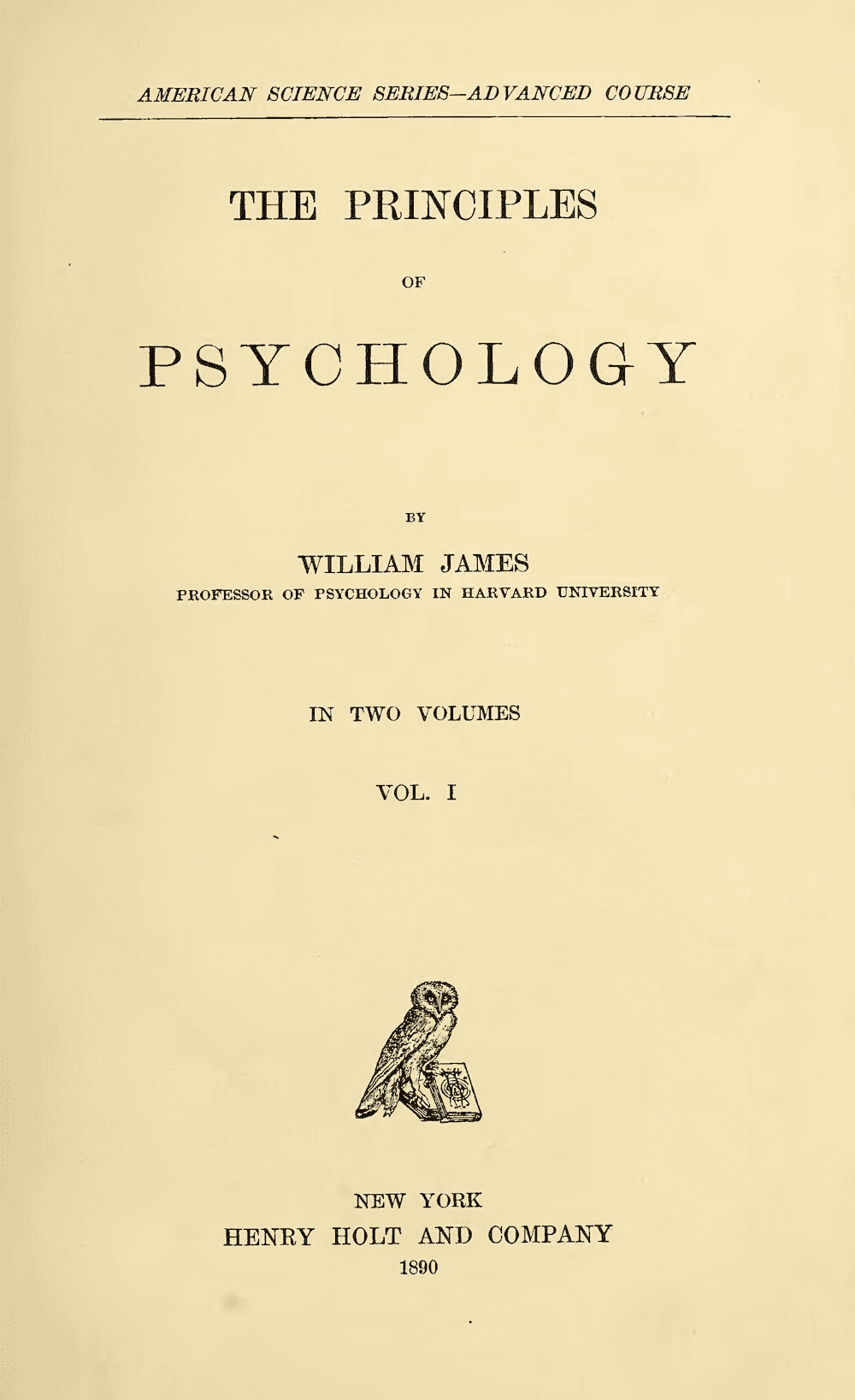
The book has an entire chapter on attention, and it opens with a passage that has been quoted ever since: "Everyone knows what attention is. It is the taking possession by the mind, in clear and vivid form, of one out of what seem several simultaneously possible objects or trains of thought. Focalization, concentration, of consciousness are of its essence. It implies withdrawal from some things in order to deal effectively with others."
The passage can be taken apart. First, the objects of attention aren't only things out in the world; they include trains of thought. You can attend to a sound outside the window, or to something you're thinking about. Second, "simultaneously possible." At any given moment, several things in front of your eyes, in your ears, and in your head are competing to be noticed. Attention doesn't happen in a vacuum. It happens in the middle of a competition.
Third, "clear and vivid." What gets attended to isn't just selected; it becomes sharper. Focus on one person talking in a noisy room, and their voice seems louder and clearer than everyone else's, even though the sound itself hasn't changed. Fourth, "withdrawal." To do one thing well, you have to pull back from others. That's the cost. The things you let go of don't disappear because you've stopped noticing them. You've just stopped processing them for now.
James also wrote about attention's opposite. Its real opposite, he said, is "the confused, dazed, scatter-brained state which in French is called distraction, and Zerstreutheit in German." The German word means, literally, "scattered." Attention gathers the mind together; distraction scatters it. In the same chapter he wrote something bolder: "My experience is what I agree to attend to. Only those items which I notice shape my mind." Far more happens in the world than we ever experience, and what sorts the one from the other is attention.
James also distinguished two kinds of attention. One is active: you decide to finish reading the page, so you have to keep dragging your thoughts back to it. The other is passive: a loud bang, a flash of light, a familiar name, and your attention is pulled toward it without your deciding anything. More than a century later, neuroscientists found two systems in the brain that correspond to these two kinds of attention. From the very beginning, attention was defined as a trade-off.
But for the next half century, the subject all but disappeared from psychology. Behaviorism, which rose in the early twentieth century, held that psychology should study only observable behavior; things like "attention" and "consciousness," which could only be described through introspection, didn't count as science. Attention didn't return to the laboratory until after the Second World War. The war left behind a set of very practical problems: radar operators had to watch several screens at once, and pilots had to pick out instructions from the control tower amid a din of radio chatter. How much information can a person actually handle at once? That question brought psychologists back to attention.
1953: The Cocktail Party
Real experimental research wouldn't begin for more than half a century, and its starting point was a scene everyone has lived through: at a noisy party, you can make out just what the person across from you is saying and shut out every other voice in the room. The cocktail party effect is the ability to focus attention on one voice in an environment where many voices are speaking at once.
In 1953, Colin Cherry, in Britain, brought this scene into the laboratory. He had subjects put on headphones and played two different spoken passages at the same time, one in the left ear and one in the right, and asked them to repeat aloud only one of them. Afterward, they remembered almost nothing of what the other ear had heard. When the passage in that ear switched partway through from English to German, they didn't notice; when it switched to a recording played backward, they only sensed that something was a little off. But if the voice in that ear switched from a man's to a woman's, they caught it. The unattended ear wasn't hearing nothing. It heard the pitch of the voice, but not the meaning of the words.

Cherry's experiment raised a question psychologists would argue over for nearly twenty years: at what stage does the brain shut out the information it isn't attending to?
1954: Donald Broadbent's Filter Model
The first answer came from the British psychologist Donald Broadbent. He had trained as a pilot in the Royal Air Force during the Second World War, and after the war he joined the Applied Psychology Unit in Cambridge, where he worked on exactly the kind of problem the war had left behind. Take air traffic controllers: radio calls from several aircraft come out of the same loudspeaker at once, and the controller has to pick out the one that needs an answer.
In 1954, he ran an experiment. Subjects put on headphones and heard a string of digits in both ears at once: 7, 3, 2 in the left ear and, at the same moments, 9, 4, 5 in the right, two digits at a time, three pairs in all. Then they were asked to repeat every digit they had heard. Most people didn't recite them in the order they arrived, pair by pair: "7, 9, 3, 4, 2, 5." They finished one ear first, then the other: "7, 3, 2, 9, 4, 5." When they were made to recite pair by pair, their accuracy dropped sharply.
Broadbent's explanation was that the brain doesn't process both ears at once. It listens to one channel at a time. The digits from the right ear are held somewhere while the left ear is dealt with, and only then does the brain switch over to retrieve them. Switching back and forth between channels has a cost, which is why reciting pair by pair is so hard.
In 1958, in his book Perception and Communication, he drew these findings as a diagram. It may be one of the first "boxes and arrows" models of the mind in the history of psychology.

The diagram has four parts. The first is a short-lived buffer: everything the senses take in is held here very briefly, for a second or two. The second is a filter, which selects only by physical features, such as which ear a sound comes from, whether its pitch is high or low, whether the voice is a man's or a woman's. One channel is let through; the rest are blocked and quickly fade from the buffer. The third is a channel of limited capacity: only information that has made it through the filter gets understood here, its meaning recognized. The fourth is long-term memory.
Filter theory holds that before meaning is understood, the brain picks out a single channel by its physical features, and only the information on that channel goes on to be understood. Because the filtering happens so early, theories of this kind are also called "early selection" theories.
Why a filter? Because the channel that does the understanding has limited capacity and can handle only one stream of information at a time. If every sound poured in, it would jam. The filter is the gate in front of the bottleneck.
Behind this model is the shadow of Claude Shannon, from the start of this series. Shannon's information theory of 1948 treated communication as a channel of limited capacity: information goes in one end and comes out the other, and there is a ceiling on how much can pass through. Broadbent carried the idea over to people: the human mind, too, is a channel of limited capacity.
That explains Cherry's results neatly. The sound in the unattended ear enters the buffer but is blocked at the filter and never reaches understanding. So when it switches from English to German, subjects don't notice, because telling languages apart requires understanding meaning. But a switch from a man's voice to a woman's is a physical feature, exactly what the filter is looking at, so subjects catch it.
But counterexamples soon turned up, and more than one.
1960s: Counter Examples
The first came from Neville Moray, a colleague of Broadbent's in Cambridge. In 1959 he repeated Cherry's experiment: subjects shadowed one ear while the other played something else. In the unattended ear, a set of words was played over and over, thirty-five times, and at the end of the experiment subjects didn't recognize the words at all. That fit filter theory. But when an instruction containing the subject's own name was slipped into that ear, something like "John, now switch to the other ear," about a third of them heard their name.

In filter theory, that makes no sense. A name isn't a physical feature; to recognize a name, you have to understand it. If the unattended sound were blocked at the filter and never reached understanding, how could anyone recognize their own name?
The second counterexample came from Jeffrey Gray and Alexander Wedderburn at Oxford, published in 1960 in the Quarterly Journal of Experimental Psychology. What they wanted to know was this: was the ear-by-ear recall in Broadbent's experiment built into the brain, with no alternative, or was it a habit, something people did simply because they'd found it easiest?
They kept Broadbent's setup: both ears listening at once, two items arriving together each time, three pairs in all, and then a full recall of everything heard. The difference was that this time they hid a phrase inside. A three-word phrase was broken into its three words, which alternated between the ears; whenever an ear was free, a digit filled the gap. Everything was recorded in the same voice, so the sound itself gave nothing away.

The best-known set went like this. The left ear heard, in order: Dear, 5, Jane. At the same moments, the right ear heard: 3, Aunt, 4. Grouped by ear, the recall should have come out as "Dear 5 Jane, 3 Aunt 4," two meaningless strings. But ignore the ears and group by meaning, and a complete phrase emerges, "Dear Aunt Jane," with the digits 3, 5, 4 left over. They used the same trick on words of several syllables, splitting a word's syllables between the two ears. Many subjects reported "Dear Aunt Jane" first, then the digits. Grouping by meaning wasn't just possible; it was no harder than grouping by ear, and just as accurate.
By Broadbent's theory, this couldn't happen. The filter recognizes only physical features and lets in one ear at a time. To assemble "Dear" from the left ear, "Aunt" from the right, and "Jane" from the left again into one phrase, the brain would have to switch back and forth between the ears, and every switch takes time. Yet subjects didn't just switch; they switched smoothly. More to the point, how did the brain know when to switch? Only by having already understood what ought to follow "Dear" could it know to look for the next word in the other ear.
The experiment did not go unchallenged. In 1964, Broadbent and his colleague Margaret Gregory repeated it and found that even when all the same material went into one ear, alternating between words and digits was harder than hearing one kind through and then the other. Gray and Wedderburn's result, they argued, didn't necessarily show that switching between ears was easy; it might instead show that staying on one ear while jumping back and forth between words and digits was hard in its own right. No single experiment settled the argument.
The third counterexample came from Anne Treisman herself, also at Oxford, also in 1960, in a paper titled "Contextual Cues in Selective Listening."
The experiment used Cherry's shadowing method: each ear played a different passage, and subjects repeated aloud only the one in a single ear. The difference was that Treisman tampered with it midway. In the middle of a sentence, she swapped the two passages. The story the subject had been shadowing suddenly carried on in the other ear, and the ear being shadowed switched to the second half of the other passage.

A textbook example gives the idea. The subject is shadowing the left ear, which says: "After she finished the porridge, Goldilocks went upstairs and saw three..." At that point the story moves to the right ear, which continues: "...beds." Meanwhile the left ear picks up the back half of a different story: "...put on Grandma's clothes."
By Broadbent's theory, the subject understands only the left ear; the right ear has been blocked at the filter. So the subject should dutifully keep shadowing the left ear and say "put on Grandma's clothes," even though it makes no sense after what came before.
Yet at the moment of the switch, subjects sometimes followed the meaning across and said a word or two from the right ear, "beds," say, before returning to the left. They never stayed with the story in the wrong ear for long, a word or two at most. But a word or two was enough to make the point: the voice in the right ear, the one they "weren't listening to," had been understood well enough to continue what came before.
Treisman found a pattern, too: the more predictable the next word was from what preceded it, the more likely this jump became. In a smoothly flowing passage, where the next word is all but obvious halfway through a sentence, subjects were more easily pulled over by the "right" word in the other ear. It's the same predictability Shannon measured at the start of this series.
All three experiments point to the same thing: in the unattended ear, meaning isn't completely shut out. At least some of the information is understood well enough to recognize a name, assemble a phrase, or follow a story. The filter is not the locked gate Broadbent imagined. More on this in the next post. 🧪
Timeline
1879: Wilhelm Wundt sets up the world’s first psychology laboratory in Leipzig
1890: William James publishes The Principles of Psychology, with a full chapter on attention
Early 20th century: Behaviorism rises, and attention all but disappears from psychology
1939–1945: The Second World War raises practical questions about how much information radar operators, pilots, and air traffic controllers can handle at once
1953: Colin Cherry’s dichotic listening experiments bring the cocktail party problem into the laboratory
1954: Donald Broadbent’s split-span experiment shows subjects recalling digits ear by ear
1958: Broadbent publishes Perception and Communication, setting out filter theory
1959: Neville Moray finds that subjects can hear their own name in the unattended ear
1960: Jeffrey Gray and Alexander Wedderburn’s “Dear Aunt Jane” experiment shows subjects grouping by meaning across the ears
1960: Anne Treisman’s “Contextual Cues in Selective Listening” shows subjects briefly following a story into the unattended ear
1964: Broadbent and Margaret Gregory repeat Gray and Wedderburn’s experiment and offer a different explanation
Sources
William James — The Principles of Psychology, Chapter XI: Attention (1890)
Cherry — Some Experiments on the Recognition of Speech, with One and with Two Ears (1953)
Broadbent — The Role of Auditory Localization in Attention and Memory Span (1954)
Moray — Attention in Dichotic Listening: Affective Cues and the Influence of Instructions (1959)
Gray & Wedderburn — Grouping Strategies with Simultaneous Stimuli (1960)
Broadbent & Gregory — Stimulus Set and Response Set: The Alternation of Attention (1964)
Preface:接续之前的 #AI 系列和 #MarvinMinsky 系列。本文由我和 Claude 合作完成。
机器学习里的"注意力",是一个借来的词。在它被借走之前,心理学家已经研究了它一百多年。1890 年,哈佛的 William James 出版了《心理学原理》。这部两卷本的书,他写了整整十二年。当时心理学刚刚从哲学里分出来,成为一门独立的学科;德国的 Wilhelm Wundt 在 1879 年才建立了世界上第一个心理学实验室。James 没做多少实验,他的方法主要是内省:观察自己的心智是怎么运作的,再把它写下来。
书里有一整章专门讲注意力,开头是一段后来被反复引用的话:"每个人都知道注意力是什么。它是心智以清晰而生动的形式,从看起来同时可能的几个对象或思路中,占据其中一个。意识的聚焦和集中是它的本质。它意味着为了有效地处理某些东西,必须从另一些东西上撤离。"
这段话可以拆开来看。第一,注意力的对象不只是外面的东西,也包括脑子里的思路。你可以注意窗外的声音,也可以注意自己正在想的一件事。第二,"同时可能"。同一时刻,眼前、耳边、脑子里,总有好几样东西在争着被注意。注意力不是凭空发生的,它发生在一场竞争里。
第三,"清晰而生动"。被注意的那一个,不只是被选中,还会变得更清楚。在嘈杂的房间里盯着一个人说话,他的声音会显得比别人的更响、更清晰,虽然声音本身并没有变大。第四,"撤离"。要把一件事做好,就得从别的事上退出来。这是代价。被放弃的那些东西,并不会因为你没注意就消失,你只是暂时不再处理它们。
James 还写到了注意力的反面。他说,它真正的对立面,是"那种混乱、发懵、心不在焉的状态,法语叫 distraction,德语叫 Zerstreutheit"。这个德语词的字面意思是"被打散了"。注意力是把心智聚拢,分心是把它打散。在同一章里,他还写了一句更大胆的话:"我的经验,就是我同意去注意的东西。只有我注意到的那些,才塑造了我的心智。"世界上发生的事情远远多于我们经历的事情,在两者之间做筛选的,就是注意力。
James 还区分了两种注意力。一种是主动的:你决定要读完这页书,就得不断把思绪拉回来。另一种是被动的:一声巨响、一道闪光、一个熟悉的名字,不用你决定,注意力就被它们拽了过去。一百多年以后,神经科学家在大脑里找到了对应这两种注意力的两套系统。注意力从一开始,就被定义为一种取舍。
但在接下来的半个世纪里,这个话题几乎从心理学里消失了。20 世纪初兴起的行为主义认为,心理学只应该研究看得见的行为,像"注意力""意识"这类只能靠内省描述的东西,不算科学。注意力重新回到实验室,要等到第二次世界大战以后。战争留下了一批非常实际的问题:雷达操作员要同时盯着好几块屏幕,飞行员要在一片嘈杂的无线电里听清塔台的指令。人一次到底能处理多少信息?这个问题,把心理学家重新带回了注意力。
1953:鸡尾酒会
真正的实验研究,要到半个多世纪以后才开始,出发点是一个谁都经历过的场景:在一个人声嘈杂的派对上,你能只听清对面那个人在说什么,把满屋子别的声音都挡在外面。鸡尾酒会效应,是指在许多声音同时出现的环境里,人能把注意力集中在其中一个声音上。
1953 年,英国的 Colin Cherry 把这个场景搬进了实验室。他让受试者戴上耳机,左耳和右耳同时播放两段不同的话,要求他们只跟着一边大声复述。结果,另一边说了什么,他们几乎什么都不记得。那一边中途从英语换成了德语,他们也没注意到;换成倒着播放的录音,他们也只觉得有点怪。但如果那一边的声音从男声换成了女声,他们会察觉。没被注意的那只耳朵,并不是什么都没听到。它听到了声音的高低,却没听到话的意思。
Cherry 的实验引出了一个问题,心理学家为它争论了将近二十年:大脑是在哪一步,把没注意的信息挡在外面的?
1954:Donald Broadbent 的过滤器模型
第一个答案来自英国心理学家 Donald Broadbent。他二战时在英国皇家空军受训当飞行员,战后进了剑桥的应用心理学研究所,研究的正是战争留下的那类问题。比如空中交通管制员:好几架飞机的无线电通话,从同一个扬声器里同时传出来,管制员要从里面挑出该回应的那一个。
1954 年,他做了一个实验。受试者戴上耳机,两只耳朵同时听到一串数字:左耳听到 7、3、2,右耳在同一时刻听到 9、4、5,每次两个数字一起出现,一共三对。然后让受试者把听到的数字全部复述出来。大多数人不会按照数字出现的先后顺序,一对一对地说"7、9,3、4,2、5"。他们会先把一只耳朵的说完,再说另一只:"7、3、2,9、4、5"。如果硬要他们按一对一对的顺序复述,正确率就会明显下降。
Broadbent 的解释是:大脑并不是同时处理两只耳朵的声音,而是一次只听一个通道。右耳的数字先在某个地方存着,等左耳的听完了,再切过去取出来。在两个通道之间来回切换是要花代价的,所以一对一对地复述才会那么难。
1958 年,他在《知觉与交流》一书里,把这些发现画成了一张图。这可能是心理学史上最早的一批"方框加箭头"的心智模型之一。
图里有四个部分。第一个是一个短暂的缓冲区:所有感官收到的信息,都先在这里停留很短的时间,大约一两秒。第二个是一个过滤器:它只按照物理特征挑选,比如声音从哪只耳朵来、音调高还是低、是男声还是女声。被挑中的一个通道可以通过,其余的被挡在外面,在缓冲区里很快消失。第三个是一条容量有限的通道:只有通过了过滤器的信息,才会在这里被理解、被识别出意思。第四个是长期记忆。
过滤器理论认为,大脑在理解意思之前,先按照物理特征选出一个通道,只有这个通道上的信息才会进入理解。 因为过滤发生在很早的阶段,这类理论也叫"早期选择"理论。
为什么要有过滤器?因为那条负责理解的通道容量有限,一次只能处理一路信息。如果所有的声音都涌进来,它就会被堵死。过滤器就是挡在瓶颈前面的那道闸门。
这个模型背后,有这个系列开头那位 Claude Shannon 的影子。Shannon 1948 年的信息论,把通信看成一条容量有限的信道:信息从一头进去,从另一头出来,中间能通过多少,是有上限的。Broadbent 把这个想法搬到了人身上:人的心智,也是一条容量有限的信道。
这正好解释了 Cherry 的结果。没被注意的那只耳朵,声音进了缓冲区,可在过滤器那里被挡住了,没有进入理解。所以它从英语换成德语,受试者察觉不到,因为分辨语言需要理解意思。但从男声换成女声,这是物理特征,过滤器本身就在看这个,所以受试者能察觉。
但很快就有人发现了反例,而且不止一个。
1960 年代:反例
第一个来自 Broadbent 在剑桥的同行 Neville Moray。1959 年,他重复了 Cherry 的实验:受试者跟读一只耳朵,另一只耳朵播放别的内容。没被注意的那只耳朵里,有一组词被重复播放了三十五遍,实验结束后,受试者完全认不出这组词。这符合过滤器理论。可是,如果在那只耳朵里插进一句带有受试者自己名字的指令,比如"约翰,现在换到另一只耳朵",大约三分之一的人会听到自己的名字。
这在过滤器理论里是说不通的。名字不是物理特征,要认出一个名字,就得理解它。如果没被注意的声音在过滤器那里就被挡掉了,根本不进入理解,受试者怎么可能认出自己的名字?
第二个反例来自牛津的 Jeffrey Gray 和 Alexander Wedderburn,1960 年发表在《实验心理学季刊》上。他们想知道的是:Broadbent 实验里那种"一只耳朵一只耳朵地复述",到底是大脑结构决定的,没得选;还是一种习惯,人们只是发现这样做最方便?
他们沿用了 Broadbent 的做法:两只耳朵同时听,每次两个东西一起出现,一共三对,听完以后把听到的全部复述出来。不同的是,这一次他们在里面藏了一句话。一个由三个词组成的短语,被拆成三个单词,在两只耳朵之间交替出现;另一只耳朵空着的时候,就补上一个数字。所有内容都用同一个人的声音录制,声音本身没有任何区别。
最有名的一组是这样的。左耳依次听到:Dear、5、Jane。右耳在同一时刻依次听到:3、Aunt、4。如果按耳朵分组,复述出来应该是"Dear 5 Jane,3 Aunt 4",两串都是毫无意义的组合。但如果不管耳朵,按意思分组,就能拼出一句完整的话:Dear Aunt Jane(亲爱的珍妮阿姨),剩下的是一串数字 3、5、4。他们还用同样的办法拆过多音节的单词,把一个词的几个音节分散到两只耳朵里。结果,很多受试者复述出来的是"Dear Aunt Jane",然后才是那几个数字。按意思分组不但能做到,而且并不比按耳朵分组更难,准确率一样高。
按照 Broadbent 的理论,这是不可能的。过滤器只认物理特征,在一个时刻只放一只耳朵进去。要把左耳的 Dear、右耳的 Aunt、再回到左耳的 Jane 拼成一句话,大脑就得在两只耳朵之间来回切换,每一次切换都要花时间。可受试者不但切了,还切得很顺。更关键的是,大脑是怎么知道该在什么时候切的?只有已经听懂了 Dear 后面应该跟着什么,才知道下一个词要去另一只耳朵里找。
不过,这个实验后来也有争议。1964 年,Broadbent 和同事 Margaret Gregory 重复了它,发现就算把同样的内容全都放进同一只耳朵里,一会儿单词、一会儿数字交替着听,也比先听完一类、再听另一类要难。他们认为,Gray 和 Wedderburn 的结果,未必说明在两只耳朵之间切换很容易,而可能说明一直盯着一只耳朵、在单词和数字之间来回跳,本身就很难。这场争论,没有一个实验能一锤定音。
第三个反例来自 Anne Treisman 本人。她当时也在牛津,同样是 1960 年,论文题目叫《选择性倾听中的语境线索》。
实验用的还是 Cherry 的跟读法:两只耳朵各播放一段不同的文章,受试者只跟着其中一只耳朵大声复述。不同的是,Treisman 在中途做了手脚。在某一句话的中间,她把两段文章对调了:受试者正在跟读的那个故事,突然接到了另一只耳朵里继续讲下去;而受试者正在跟读的那只耳朵,换成了另一段文章的下半截。
可以用一个教科书里常用的例子来想象。受试者跟读左耳,左耳听到的是:"吃完了粥,金发姑娘走上楼,看见了三张……"话说到这里,故事被切到了右耳,右耳接着说"……床"。而左耳这时候接上的,是另一个故事的后半句:"……穿上了外婆的衣服。"
按照 Broadbent 的理论,受试者只听得懂左耳,右耳在过滤器那里就被挡掉了,所以他应该老老实实地接着复述左耳,念出"穿上了外婆的衣服",哪怕这句话跟前面完全接不上。
可在故事被切换的那一刻,受试者有时候会跟着意思跳过去,念出右耳里的一两个词,比如"床",然后才回到左耳。他们从来没有跟着故事在错误的那只耳朵里待太久,最多也就一两个词。但是这一两个词,已经足以说明问题:右耳里那个他们"没在听"的声音,其实已经被理解到了足以接上前文的程度。
Treisman 还发现了一个规律:前文越能预测下一个词,这种跳过去的情况就越容易发生。如果这是一段很连贯的文章,读到一半,下一个词几乎呼之欲出,受试者就更容易被另一只耳朵里那个"对的"词拽过去。这跟这个系列开头 Shannon 测量的可预测性,是同一件事。
三个实验指向同一件事:没被注意的那只耳朵里,意思并没有被完全挡掉。至少有一部分信息,已经被理解到了足以认出名字、拼出句子、追着故事走的程度。过滤器不像 Broadbent 想的那样,是一道关死的闸门。下一篇接着讲。🧪
Timeline
1879 年:冯特(Wilhelm Wundt)在莱比锡建立了世界上第一个心理学实验室
1890 年:威廉·詹姆斯(William James)出版《心理学原理》,其中有整整一章讲注意力
20 世纪初:行为主义兴起,注意力几乎从心理学里消失
1939–1945 年:第二次世界大战带来了一个现实问题:雷达操作员、飞行员和空中交通管制员一次到底能处理多少信息
1953 年:科林·切利(Colin Cherry)的双耳分听实验,把"鸡尾酒会问题"带进了实验室
1954 年:唐纳德·布罗德本特(Donald Broadbent)的分段记忆广度实验发现,受试者是一只耳朵一只耳朵地回忆数字的
1958 年:布罗德本特出版《知觉与传播》,提出过滤器理论
1959 年:内维尔·莫雷(Neville Moray)发现,受试者能在没被注意的那只耳朵里听到自己的名字
1960 年:杰弗里·格雷(Jeffrey Gray)和亚历山大·韦德伯恩(Alexander Wedderburn)做了"亲爱的简阿姨"实验,发现受试者会跨过两只耳朵,按意思把内容归在一起
1960 年:安妮·特雷斯曼(Anne Treisman)发表《选择性倾听中的上下文线索》,发现受试者会短暂地跟着故事,听进没被注意的那只耳朵
1964 年:布罗德本特和玛格丽特·格雷戈里(Margaret Gregory)重复了格雷和韦德伯恩的实验,给出了另一种解释
来源