Created on
1
/
19
/
2026
,
23
:
16
Updated on
1
/
20
/
2026
,
13
:
43
Location
Oakland, CA
Communication Studies (iii): “Legitimized" Transgression
传播学(iii): 合理化的越界
写在前面:接上篇,本文和chatgpt合作完成。
Bernays 非常明确地认为,谎言在长期传播中是低效的工具。谎言容易被拆穿,一旦被识破,就会迅速侵蚀信任,而失去信任的传播结构无法长期运作。因此,他真正追求的从来不是“一时奏效的欺骗”,而是能够长期、稳定运转的舆论结构。在这个意义上,他对谎言的态度并非道德性的拒绝,而是功能性的否定——谎言不具备系统可持续性。
基于这一判断,Bernays 进一步提出一个关键前提:事实本身并不会自动产生意义。在他看来,事实总是零散的、碎片化的,而意义并不内嵌于事实之中,而是被赋予的。公共意见也从来不是事实的简单叠加或统计总和,而是一个被组织、被结构化的结果。因此,propaganda 的工作重点不在于编造事实,而在于选择哪些事实被呈现、如何排序这些事实、用什么方式解释它们,以及如何将它们连接成一个连贯的叙事。意义并非来自事实本身,而来自事实之间被设计出来的关系。
在这一层面上,Bernays 进一步指出,“选择”本身是不可避免的。即便你宣称自己在做“客观报道”,你仍然无法逃脱选择:你决定报道什么、不报道什么,用什么标题,放在什么版面、什么位置。这些都是选择,而选择本身就已经在塑造意义。Bernays 所做的,并不是发明这种偏向,而是把这件事彻底摊开来讲——所谓中立,并不意味着没有结构性取舍。
这也引出了一个常被误解的问题:Bernays 所说的 propaganda,并不等同于“洗脑”。在他看来,“洗脑”这个概念本身就是一个错误设想,因为它假定人是被动的容器,可以被直接灌输观点。但他的判断恰恰相反:人并不是被动接受信息的对象,你无法简单地把一个观念塞进他人的大脑。人只会在既有的心理结构、情绪模式与社会认同中做选择。因此,他的目标从来不是改造人的思想,而是激活、放大、重新排列那些本来就存在的心理倾向。
正因如此,Bernays 在实践中大量使用的并不是逻辑论证,而是恐惧、认同、羞耻、荣誉和从众心理。他并不试图创造新的欲望,而是调用和重新布置既有的欲望与情绪资源,让某种态度成为最自然、最省力的选择。
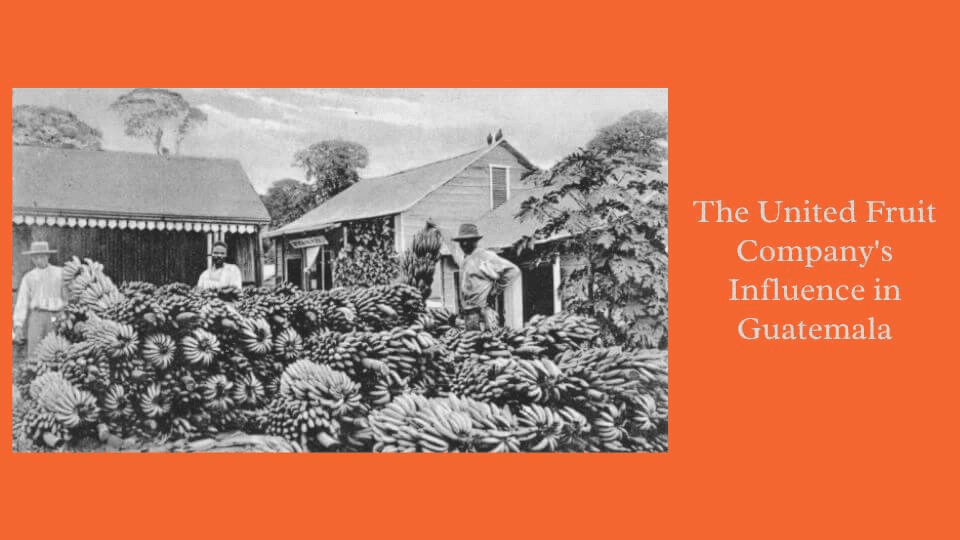
下面用他操作过的实例:联合果品公司在危地马拉发生的事件,作为辅助解释。
在 19 世纪末到 20 世纪初,Guatemala 的核心困境不是意识形态,而是国家能力不足:财政薄弱、基础设施匮乏、对外贸易高度依赖单一出口。政府急需资本、技术与交通网络,于是以特许权的方式引入外国公司,换取修铁路、建港口、扩出口。
United Fruit Company 正是在这一窗口期进入,并迅速获得超出一般商业范畴的权利:土地优惠、税收减免、长期特许、对关键节点的独占经营。起初,这是“以企业补国家”的交易;很快,它变成了企业替代国家。
首先是土地层面。联合果品并不是零散购地,而是通过政府授予的优惠条款,集中占有全国最优质、最适合出口作物的低地沿海与河谷土地。这些土地中,相当一部分并未投入生产,而是被长期闲置,用作战略囤地。一方面,这阻断了本地农民和竞争者进入高价值农业的可能;另一方面,也使国家在推进农业政策或土地分配时缺乏可操作空间。土地在名义上属于私有,但在功能上已经脱离社会生产与公共调配,成为公司控制市场结构的工具。
其次是交通与物流层面。联合果品通过其关联公司控制了连接种植区与港口的铁路系统,并直接运营关键港口设施。这意味着,香蕉不仅是联合果品生产的,也是由联合果品运输、装船和出口的。国家对外贸易的命脉——出口通道——事实上掌握在企业手中。政府即便制定贸易或运输政策,也无法绕开这套私人基础设施执行。交通网络在形式上是商业资产,在功能上却承担着国家级公共设施的角色,但其决策权完全不在国家手中。
第三是通信与信息层面。铁路与港口的控制,往往伴随着对电报与通信节点的控制。这并不只是技术问题,而是信息不对称的来源。谁能更快获得运输、价格、市场变化的信息,谁就掌握了谈判与决策优势。国家在信息获取上处于滞后位置,进一步削弱了其治理能力。
第四是财政结构。联合果品长期通过低估土地和资产价值进行税务申报,从而将税负压缩到最低水平。由于国家财政本就薄弱,这种低税并不是“优惠”,而是直接导致国家公共预算长期匮乏。更关键的是,税制在这里不再是国家调节经济的工具,而变成了企业自行定义的成本变量。国家对财政的调控权,被企业的申报制度结构性掏空。
第五是劳工制度。联合果品在其控制区域内实行高强度、低保障的用工体系,工人高度依赖公司提供的工作、住房与生活物资。这种“公司城镇”式结构,使劳工权利问题很难通过国家法律体系得到解决。国家在劳动监管上的角色被企业内部制度取代,社会冲突被压制在公司体系内部,却持续积累。
这五个层面叠加起来,产生了一个关键结果:国家在形式上仍然存在主权与法律,但在实际运作中,已经无法对土地、交通、财政、劳工和出口作出独立决定。政府的政策空间被压缩到不触碰公司利益的狭小范围内。一旦触及,便会引发系统性反弹。
因此,当危地马拉政府开始尝试通过法律手段恢复对土地、税收和公共资源的裁量权时,这并不是一次“政策调整”,而是对既有结构的根本性挑战。在这种条件下,冲突的性质必然超出普通商业纠纷的范畴。因为对联合果品而言,问题已不在于某项利益是否受损,而在于国家是否重新成为国家。
而当时的总统Jacobo Árbenz ,正是促进改革的人。Jacobo Árbenz 并非通过革命或军事政变上台,而是在危地马拉既有宪政框架内,通过选举成为民选总统(1951–1954)。这一出身背景决定了他政策取向的基本性质:他并不是要推翻私有制或重塑社会意识形态,而是试图在一个长期被扭曲的经济结构中,恢复国家最基本的治理能力。危地马拉在 20 世纪中叶面临的核心问题,并非“资本主义或社会主义的选择”,而是国家是否仍然具备对土地、税收与公共资源进行调配的能力。
阿本斯改革的中心是土地制度,这并非偶然。长期以来,危地马拉的农业结构呈现出高度失衡的状态:少数大型地主与外国公司占有大量最优质土地,而绝大多数农民缺乏可耕地,只能依附于低薪、季节性的劳作。更关键的是,相当比例的土地被长期闲置,既不用于生产,也不服务公共利益,却阻断了农业扩张与社会稳定的可能性。在这种条件下,农业生产率低下、农村贫困加剧、社会紧张不断累积,成为国家治理无法回避的结构性问题。
因此,阿本斯提出的土地改革并不是全面征收或否定私有产权,而是针对“长期闲置的大地产”这一具体问题进行干预。法律明确区分了正在生产的土地与闲置土地,后者才进入征收范围。这一限定本身,已经表明改革的目标是提高土地利用率,而非意识形态式的财产再分配。土地是否被征收,不取决于所有者身份,而取决于土地是否承担了生产功能。
在补偿机制上,改革采用了土地所有者自行申报的税务估值作为依据。长期以来,大型地主和企业为了减少税负,普遍将土地价值低报,这在既有制度中被默许。阿本斯改革只是按既有申报记录执行补偿,并未引入新的估价标准或惩罚性条款。从政府的角度看,这是一种制度内的一致性操作:既然低估值在税务上被接受,那么在征收补偿中同样应当适用。正是在这一点上,改革暴露并触发了既有制度的内在矛盾。
被征收的土地随后被分配给无地或少地农民,目的并不只是社会公平,而是恢复农业生产能力与农村社会稳定。获得土地的农民可以进行自给与市场生产,从而扩大国内粮食供给,降低对单一出口作物的依赖,并逐步形成更稳定的税基与内需结构。土地改革在这里承担的是经济修复与社会稳定的双重功能,而非政治动员。
整体来看,阿本斯的土地改革并不是对既有制度的否定,而是对长期扭曲结构的一次纠偏。它试图把土地从囤积性资产重新变为生产性资源,把国家从被动旁观者重新拉回到公共资源配置者的位置。正因如此,这项改革的真正触发点不在于意识形态对立,而在于它直接触及了那些依赖于制度扭曲而获利的既得结构。一旦国家开始按规则行使主权,冲突便不可避免。
正是在这一结构性冲突中,Edward Bernays 进入了历史舞台。Bernays 并不参与土地争议的法律谈判,也不直接介入危地马拉的国内政治。他的作用位于更高一层:重塑冲突的叙事框架,使一场“国家主权 vs 私人公司利益”的经济冲突,被理解为“自由世界 vs 共产主义威胁”的意识形态问题。
最初的冲突,本质上是一个典型的经济与治理问题。一方面,United Fruit Company 的土地、税收与垄断利益因改革受到冲击;另一方面,Jacobo Árbenz 推动土地改革,试图恢复国家对公共资源的裁量权。在正常的国际秩序中,这类冲突属于“国家主权 vs 私企利益”的范畴,理应通过法律、外交或谈判来解决。Bernays 的第一步操作,正是将这一经济治理问题升级为意识形态与安全问题。在他设计的叙事中,土地法、税值申报与补偿规则被系统性地移出讨论中心,取而代之的是“左翼政府”“共产主义渗透”“苏联势力进入西半球”等标签。由此,问题发生了质变——从国内治理争议,转化为美国的国家安全议题。
紧接着,Bernays 采取的第二步,是让企业利益从叙事中消失。他非常清楚,如果美国公众意识到这是“一家美国公司为了自身利润推动对他国政府的打击”,任何干预都将失去道德与政治合法性。因此,联合果品被刻意隐藏在叙事背后,不直接发声。取而代之的,是记者报道、学者分析、“拉美问题专家”的评论以及智库文章。这些声音在形式上彼此独立,却在内容上指向同一结论。公众看到的,不是企业游说,而是“多个独立来源一致认为危地马拉存在严重问题”。
第三步,是制造一种“政策前共识”。Bernays 的目标并不主要是普通公众,而是三层关键人群:主流媒体编辑、政策圈与官僚体系,以及国会和行政部门的整体理解环境。通过持续的报道与评论,“危地马拉不稳定”“政府受极端思想影响”“威胁中美洲安全”“美国不能坐视不管”等判断逐渐固化为默认前提。这一步至关重要,因为它意味着,当政策讨论真正开始时,争论的焦点已经不再是“是否应当干预”,而是“应当以何种方式干预”。
在这一认知环境已经成熟的情况下,CIA 随后启动 Operation PBSUCCESS 时,便拥有了充足的“政治空气”。在政府内部,不需要重新证明威胁是否存在;在国会层面,没有形成强烈的反对压力;在公众舆论中,这一行动被理解为防御性、预防性的举措。这里的因果顺序非常关键:并非 CIA 先决定政变再寻找理由,而是威胁叙事已经成熟,使政变成为一个可被接受的选项。Bernays 在行动发生之前,已经完成了心理与舆论层面的基础设施建设。
正因为如此,这种影响并不是“旁观式”的。在美国的制度环境中,军事或情报行动从来不是自动发生的,它们需要舆论可承受、政治上可辩护、官僚系统愿意配合。Bernays 解决的,正是这三项前提。他没有决定政变一定会发生,但他决定了,一旦发生,它不会被立即视为越界、丑闻或非法。
将整个过程压缩成一条结果链,可以清楚地看到他的作用位置:联合果品利益受损;Bernays 将冲突意识形态化;美国媒体形成“危地马拉威胁”的共识;企业利益从叙事中消失;政策系统默认“必须回应”;CIA 行动获得合法空间;最终,1954 年阿本斯下台,政变成功。
Bernays 没有推翻危地马拉政府,他只是让“推翻它”在美国变得合理。在大众民主国家,往往正是这种“合理性”,而非直接命令,决定了历史事件的走向。
Preface: Continuing from the previous piece. This article was co-written with ChatGPT.
Bernays was very explicit in his view that lies are an inefficient tool in long-term communication. Lies are easily exposed, and once uncovered they quickly erode trust; a communication structure that loses trust cannot operate over time. What he pursued, therefore, was never short-term deception that happens to work once, but a public-opinion structure capable of operating steadily and sustainably. In this sense, his rejection of lies was not a moral stance but a functional one: lies lack systemic durability.
From this judgment, Bernays advanced a further key premise: facts do not automatically generate meaning. In his view, facts are always scattered and fragmented; meaning is not inherent in facts but assigned to them. Public opinion is never a simple accumulation or statistical sum of facts, but the outcome of organization and structuring. Consequently, the work of propaganda does not lie in fabricating facts, but in selecting which facts are presented, determining how they are ordered, deciding how they are interpreted, and linking them into a coherent narrative. Meaning does not arise from facts themselves, but from the relationships deliberately constructed among them.
At this level, Bernays further emphasized that “selection” itself is unavoidable. Even if one claims to practice “objective reporting,” one cannot escape selection: deciding what to report and what not to report, choosing headlines, determining placement and prominence. All of these are acts of selection, and selection itself already shapes meaning. What Bernays did was not invent this bias, but lay it bare—so-called neutrality does not mean the absence of structural choices.
This leads to another commonly misunderstood point: what Bernays called propaganda is not equivalent to “brainwashing.” In his view, the very notion of brainwashing rests on a false assumption—that people are passive containers into which ideas can simply be poured. His judgment was the opposite: people are not passive recipients of information, and one cannot simply insert an idea into another person’s mind. People make choices within preexisting psychological structures, emotional patterns, and social identities. Accordingly, his aim was never to remake people’s thinking, but to activate, amplify, and rearrange psychological tendencies that already existed.
For this reason, Bernays relied far more on fear, identification, shame, honor, and conformity than on logical argument. He did not attempt to create new desires, but to mobilize and reorganize existing desires and emotional resources, making a particular attitude feel like the most natural and least effortful choice.
Below, I present a case he worked on are used as illustrative examples: the events involving the United Fruit Company in Guatemala.
From the late nineteenth to the early twentieth century, Guatemala’s central predicament was not ideological but institutional: weak public finances, inadequate infrastructure, and heavy dependence on a single export. The government urgently needed capital, technology, and transportation networks, and thus introduced foreign companies through concessionary arrangements, trading privileges for the construction of railways, ports, and export capacity.
The United Fruit Company entered during this window and rapidly acquired powers far beyond normal commercial activity: land concessions, tax exemptions, long-term privileges, and exclusive control over key nodes. Initially, this was an exchange in which companies compensated for state weakness; it soon became a situation in which the company replaced the state.
First was the issue of land. United Fruit did not acquire land piecemeal, but concentrated ownership—under favorable government terms—of the country’s most fertile lowlands and river valleys suited for export crops. A substantial portion of this land was not put into production but kept idle as strategic reserves. This blocked local farmers and competitors from entering high-value agriculture and left the state with little room to maneuver in agricultural policy or land distribution. Land remained privately owned in name, but functionally detached from social production and public allocation, becoming an instrument through which the company controlled market structure.
Second was transportation and logistics. Through affiliated companies, United Fruit controlled the railway system linking plantations to ports and directly operated key port facilities. This meant that bananas were not only produced by United Fruit, but also transported, loaded, and exported by it. The lifeline of national foreign trade—the export corridor—was effectively in corporate hands. Even when the government formulated trade or transport policies, it could not implement them without passing through this private infrastructure. The transport network was a commercial asset in form, but a national public utility in function, with decision-making power entirely outside the state.
Third was communication and information. Control of railways and ports often entailed control over telegraph and communication nodes. This was not merely a technical matter but a source of structural information asymmetry. Whoever could obtain data on transport, prices, and market shifts more quickly held the advantage in negotiation and decision-making. The state lagged in information access, further weakening its governing capacity.
Fourth was the fiscal structure. United Fruit consistently minimized its tax burden by undervaluing land and assets in its tax declarations. Given the state’s already fragile finances, this low taxation was not simply a concession but a direct cause of chronic public-budget shortfalls. More importantly, taxation ceased to function as an instrument of state economic regulation and instead became a cost variable defined by corporate accounting practices. The state’s fiscal authority was structurally hollowed out by corporate self-reporting.
Fifth was the labor regime. In areas under its control, United Fruit imposed high-intensity, low-protection labor systems, with workers heavily dependent on the company for employment, housing, and basic goods. This “company town” structure made labor-rights issues difficult to address through national legal institutions. The state’s role in labor regulation was replaced by internal corporate rules, while social tensions were suppressed within the company system and accumulated over time.
Taken together, these five dimensions produced a critical outcome: the state continued to exist formally, with sovereignty and law intact, but in practice could no longer make independent decisions regarding land, transport, finance, labor, or exports. Government policy space was compressed into a narrow zone that did not touch corporate interests. Once it did, systemic backlash was inevitable.
Thus, when the Guatemalan government attempted to restore discretion over land, taxation, and public resources through legal means, this was not a mere “policy adjustment,” but a fundamental challenge to the existing structure. Under such conditions, the conflict necessarily exceeded the scope of an ordinary commercial dispute. For United Fruit, the issue was no longer whether a particular interest was harmed, but whether the state would once again become a state.
At that time, President Jacobo Árbenz was the figure advancing reform. Árbenz did not come to power through revolution or military coup, but through election within Guatemala’s constitutional framework (1951–1954). This background shaped the nature of his policies: he did not seek to abolish private property or remake social ideology, but to restore the state’s basic governing capacity within a long-distorted economic structure. Guatemala’s core problem in the mid-twentieth century was not a choice between capitalism and socialism, but whether the state retained the ability to allocate land, taxation, and public resources.
Land reform lay at the center of Árbenz’s agenda for good reason. For decades, Guatemala’s agricultural structure had been severely imbalanced: a small number of large landowners and foreign companies controlled vast areas of prime land, while the majority of farmers lacked arable land and depended on low-wage, seasonal labor. Crucially, a significant share of land remained idle—neither productive nor serving any public purpose—blocking agricultural expansion and social stability. Under such conditions, low productivity, rural poverty, and mounting social tensions became structural challenges to governance.
Accordingly, Árbenz’s land reform was not a comprehensive expropriation or a rejection of private property, but a targeted intervention aimed at the specific problem of long-idle large estates. The law clearly distinguished between land in production and idle land, with only the latter subject to expropriation. This limitation alone shows that the reform aimed to increase land utilization, not to pursue ideological redistribution. Whether land was expropriated depended not on ownership identity, but on whether it fulfilled a productive function.
In terms of compensation, the reform relied on land values as declared by owners for tax purposes. For years, large landowners and corporations had systematically undervalued their holdings to reduce tax burdens, a practice tolerated under the existing system. Árbenz’s reform simply applied those declared values in compensation, introducing no new valuation standards or punitive measures. From the government’s perspective, this was an internally consistent application of existing rules: if low valuations were accepted for taxation, they should also apply in expropriation. It was precisely here that the reform exposed the system’s internal contradictions.
Expropriated land was then distributed to landless or land-poor farmers. The objective was not merely social equity, but the restoration of agricultural productivity and rural stability. With access to land, farmers could engage in subsistence and market production, expand domestic food supply, reduce dependence on a single export crop, and gradually form a more stable tax base and internal market. Land reform thus served both economic repair and social stabilization, rather than political mobilization.
Overall, Árbenz’s land reform was not a negation of the existing system, but a correction of long-standing structural distortions. It sought to transform land from a speculative asset back into a productive resource, and to reposition the state from a passive bystander to an active allocator of public resources. For this reason, the true trigger of conflict lay not in ideological confrontation, but in the reform’s direct impact on entrenched interests that profited from distortion. Once the state began to exercise sovereignty according to its own rules, conflict became inevitable.
It was within this structural conflict that Edward Bernays entered the historical stage. Bernays did not participate in legal negotiations over land, nor did he intervene directly in Guatemalan domestic politics. His role operated at a higher level: reshaping the narrative framework of the conflict so that an economic dispute of “state sovereignty versus private corporate interests” came to be understood as an ideological struggle of “the free world versus the communist threat.”
At its core, the initial conflict was a straightforward issue of economics and governance. On one side, United Fruit Company’s land, tax, and monopoly interests were challenged by reform; on the other, Jacobo Árbenz sought to restore state discretion over public resources. In a normal international order, such conflicts would fall under the category of “state sovereignty versus private interests,” to be addressed through law, diplomacy, or negotiation. Bernays’s first move was to elevate this governance dispute into an ideological and security issue. In his narrative design, land law, tax declarations, and compensation rules were systematically removed from the center of discussion and replaced with labels such as “leftist government,” “communist infiltration,” and “Soviet presence in the Western Hemisphere.” In this way, the issue underwent a qualitative transformation—from domestic governance dispute to a matter of U.S. national security.
Bernays’s second move was to remove corporate interests from the narrative altogether. He understood that if the American public perceived the issue as “a U.S. company pushing to attack a foreign government for profit,” any intervention would lose moral and political legitimacy. United Fruit was therefore kept out of the foreground, while journalists, scholars, “Latin America experts,” and think-tank commentators took center stage. These voices appeared independent in form but converged on the same conclusion. What the public saw was not corporate lobbying, but “multiple independent sources agreeing that Guatemala posed a serious problem.”
The third move was to manufacture a “pre-policy consensus.” Bernays’s primary targets were not ordinary citizens, but three key groups: major media editors, policy and bureaucratic circles, and the overall interpretive environment of Congress and the executive branch. Through sustained reporting and commentary, claims such as “Guatemala is unstable,” “the government is influenced by extremist ideology,” “it threatens Central American security,” and “the United States cannot remain passive” gradually hardened into default assumptions. This step was decisive, because once policy debate began, the question was no longer whether to intervene, but how.
When this interpretive environment had fully matured, the CIA’s subsequent launch of Operation PBSUCCESS encountered ample “political oxygen.” Within government, there was no need to reestablish the existence of a threat; in Congress, there was little organized opposition; in public opinion, the action was perceived as defensive and preventive. The direction of causality matters here: it was not that the CIA decided on a coup and then searched for justification, but that a threat narrative had already crystallized, making the coup an acceptable option. Bernays had completed the psychological and discursive infrastructure in advance.
For this reason, his influence cannot be described as mere observation. In the U.S. institutional context, military or intelligence operations do not occur automatically; they require public tolerance, political defensibility, and bureaucratic cooperation. Bernays addressed precisely these prerequisites. He did not decide that a coup must happen, but he ensured that if it did, it would not immediately be perceived as an overreach, a scandal, or an illegality.
Compressed into a single causal chain, his role becomes clear: United Fruit’s interests were threatened; Bernays ideologized the conflict; U.S. media formed a consensus around the “Guatemalan threat”; corporate interests disappeared from the narrative; the policy system assumed that a response was necessary; the CIA gained legitimate operational space; and in 1954, Árbenz was removed from power and the coup succeeded.
Bernays did not overthrow the Guatemalan government. He simply made overthrowing it seem reasonable in the United States. In mass democracies, it is often this sense of “reasonableness,” rather than direct command, that determines the course of historical events.