Created on
1
/
8
/
2026
,
22
:
1
Updated on
1
/
14
/
2026
,
22
:
58
Location
Oakland, CA
Puritans(viiii): The Remainder of the Volume 1
清教徒(viii):第一卷的余下内容
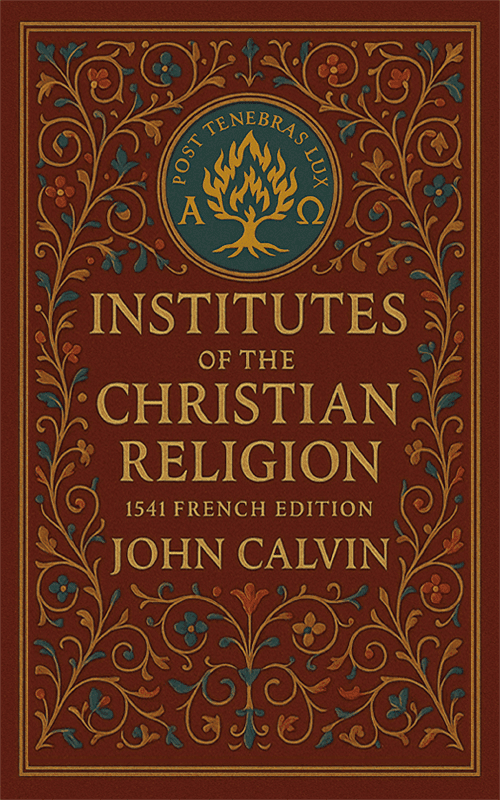
前言:接上篇,和chatgpt合作完成。
在第六章确立“只能通过圣经认识上帝”之后,《基督教要义》随即进入一个更根本的问题:圣经本身的权威从何而来。加尔文在这里切断了一条看似合理、实则危险的路径——圣经不是因为“教会承认”才成为真理。恰恰相反,教会之所以存在,是因为圣经先存在。圣经的权威并不建立在制度、历史判断或理性论证之上,而是建立在一个更不可回避的前提上:上帝在其中说话。人之所以会“确信”,并不是因为逻辑被说服,而是因为圣灵在人的内心中完成了确认。理性与证据可以辅助,却永远不能成为根基。
在确认认识上帝的权威来源之后,加尔文转而讨论上帝“是谁”。这里的重点并不在于哲学式的定义,而在于提醒人:上帝的属性只能在祂的作为中被认识。上帝是独一的、永恒的、自有的、全能而公义的,但这些词不是供人反复把玩的概念,而是要求人以敬畏来回应的现实。任何出于好奇、试图窥探上帝本体的冲动,在加尔文看来,都会把人带离真正的认识。
正是在这种背景下,他对“神像”的态度显得异常强硬。将上帝变成可见形象,不是形式问题,而是本质问题。所有神像,本质上都是对无限者的压缩和歪曲。人类天然渴望看得见、摸得着的对象,于是不断试图把上帝拖入感官世界。但这种行为并不会让人更接近上帝,反而会制造一个可被操控的替代物。偶像崇拜从来不是历史遗留问题,而是人性结构的问题。
由此,加尔文进一步强调:敬拜的对象只能是上帝本身,而且必须是完整、不被分割的上帝。真正的敬拜不是仪式的堆砌,也不是情绪的高涨,而是内心对上帝主权的承认。一旦人把终极意义、荣耀或依附投向任何受造物——无论是个人、权力、制度还是理念——敬拜就已经发生了偏移。上帝的荣耀在这里不是道德口号,而是一条不可协商的界线。
在论及三位一体时,加尔文并未试图“解释清楚”上帝,而是努力避免错误。他拒绝将父、子、圣灵混为一体的模糊论,也拒绝把子与圣灵视为次等存在。他坚持一个张力结构:上帝在本体上是一,在位格上有区分。这不是逻辑游戏,而是为了防止人用简化模型替代真实信仰。三位一体在这里并不是神秘装饰,而是对上帝真实存在方式的最低限度尊重。
随后,视角从上帝本身转向受造世界。世界不是偶然形成的舞台,而是被秩序、智慧与目的所塑造的整体。天使是真实的受造灵体,其存在意义并不在于被研究或崇拜,而在于执行上帝的旨意;魔鬼同样真实,但其地位始终是被限制的、堕落的受造物。加尔文在这里刻意压低一切神秘主义冲动,拒绝把属灵世界变成猎奇对象。
当讨论回到“人”时,加尔文强调,人最初是按上帝的形象被造的。这种形象并非外在形态,而是体现在理性、道德能力与对上帝的回应能力之中。人原本具有尊严与秩序,但这一章并未急于展开堕落,而是先确立一个对照坐标:人不是一开始就“如此败坏”,堕落是后来发生的断裂。
在谈到上帝对世界的持续管理时,加尔文明确否定“命运”“偶然”作为终极解释。上帝不仅创造世界,也在每一个细节中行使主权。有时通过工具,有时绕过工具,有时甚至与人的预期相反。即便是混乱、痛苦与恶,也不意味着世界失控,而意味着人的理解受限。
最后,加尔文把这一切拉回现实生活。他指出,这套教义的目的并不是让人获得哲学安慰,而是塑造人的生活态度。真正理解上帝的护理,应当使人学会忍耐、节制与谦卑,而不是滑向宿命论,或把责任推给“上帝的安排”。在这里,信仰不再是抽象体系,而是对世界和自身位置的重新校准。
这便是第一卷的全部内容,第二卷和第三卷我没力气看了,好奇可以自己找来看看。我得把文章拉回我最初的问题:新教徒怎么就跑到新大陆来了?这些根本的信仰如何塑造了这片土地的文化?后来又对政治结构造成了什么影响?
(to be continued)
Preface: This article is the original text of Chapter Five reinterpreted in plain English by ChatGPT.
After Chapter Six establishes that God can be known only through Scripture, Institutes of the Christian Religion immediately moves to a more fundamental question: where does the authority of Scripture itself come from. Here, Calvin deliberately cuts off a path that appears reasonable but is ultimately dangerous—the idea that Scripture becomes truth because it is “recognized by the Church.” The relationship is precisely the reverse. The Church exists because Scripture exists first. The authority of Scripture is not grounded in institutions, historical judgment, or rational argument, but in a more unavoidable premise: God speaks in it. Human beings come to “certainty” not because logic has persuaded them, but because the Holy Spirit completes the confirmation inwardly. Reason and evidence may assist, but they can never serve as the foundation.
Once the source of authority for knowing God is established, Calvin turns to the question of who God is. The emphasis here is not on philosophical definition, but on a corrective: God’s attributes can only be known through His actions. God is one, eternal, self-existent, omnipotent, and just—but these are not concepts to be endlessly handled and refined. They describe a reality that demands a response of reverence. Any impulse driven by curiosity to probe God’s essence, Calvin argues, inevitably leads away from genuine knowledge.
It is in this context that his stance toward images becomes unusually uncompromising. Rendering God visible is not a matter of form, but of substance. Every image is, by nature, a compression and distortion of the infinite. Humans instinctively long for what can be seen and touched, and thus repeatedly attempt to drag God into the sensory world. Yet this does not bring people closer to God; it produces a substitute that can be controlled. Idolatry, in Calvin’s account, is not a historical relic but a structural feature of human nature.
From this follows a further insistence: the object of worship can only be God Himself—and God in His entirety, not divided or diluted. True worship is neither the accumulation of ritual nor the heightening of emotion, but the inward acknowledgment of God’s sovereignty. The moment ultimate meaning, glory, or allegiance is directed toward any created thing—whether a person, power, institution, or idea—worship has already shifted. God’s glory here is not a moral slogan, but a non-negotiable boundary.
When addressing the Trinity, Calvin does not attempt to “explain” God so much as to prevent error. He rejects both the blurring of Father, Son, and Spirit into an indistinct unity, and the reduction of the Son and Spirit to secondary beings. Instead, he maintains a deliberate tension: God is one in essence, yet distinct in persons. This is not a logical game, but a safeguard against replacing faith with simplified models. The Trinity functions not as mystical ornamentation, but as the minimum respect owed to the reality of God’s mode of existence.
The focus then shifts from God Himself to the created world. The world is not a stage formed by accident, but an ordered whole shaped by wisdom, purpose, and design. Angels are real created spiritual beings, whose significance lies not in being studied or venerated, but in carrying out God’s will. Demons are equally real, yet remain fallen, limited creatures—not forces equal to God. Calvin intentionally suppresses all mystical excess here, refusing to turn the spiritual realm into an object of fascination.
When the discussion returns to humanity, Calvin emphasizes that human beings were originally created in the image of God. This image does not refer to outward form, but to rational capacity, moral responsibility, and the ability to respond to God. Humanity was created with dignity and order. Rather than immediately unfolding the doctrine of the Fall, this chapter first establishes a point of contrast: humans were not “always this broken.” Corruption is a rupture that came later.
In addressing God’s ongoing governance of the world, Calvin explicitly rejects “fate” and “chance” as ultimate explanations. God not only creates the world but exercises sovereignty over every detail. Sometimes He works through instruments, sometimes without them, and sometimes in ways that contradict human expectations. Even chaos, suffering, and evil do not imply a loss of control, but rather the limits of human understanding.
Finally, Calvin brings the discussion back to ordinary life. The purpose of these doctrines, he insists, is not philosophical consolation, but the formation of human posture. Properly understood, God’s providence should cultivate patience, restraint, and humility—not fatalism, and not the displacement of responsibility onto “God’s will.” Faith here ceases to be an abstract system and becomes a recalibration of one’s position within the world.
This concludes the entirety of Book One. I do not have the energy to read Books Two and Three; anyone curious can seek them out independently. I need to return to my original question: how did Protestants end up in the New World? How did these foundational beliefs shape the culture of the land—and how did they later reshape its political structures?
(to be continued)