Created on
Updated on
Running Out of School: The Demis Hassabis Guide to Ignoring the Rules
Lessons on "tuning" a life, mastering the 16-bit grind, and why the most profound learning happens in the chaos of the real world.
Preface: Co-written with Gemini.
Hassabis completed his A-levels two years early, finishing at age 16. I'm very jealous of this. In the UK school system, you technically don't have to go at the "school's pace" if you are academically gifted and have the support of your school or parents. When I was going to school Monday through Saturday, yes you saw that right, Saturday as well, and going to school at 7:30am, getting off at 5:30pm, Damis had the freedom to study whenever he wanted, with all the free time to explore whatever else it was that he was interested in, including Chess. I imagine his parents had to take him to tournaments and fly around, and they were very supportive of him. While my dad was eager to put me in Math Olympian after schools, while I had shown absolutely no gift in math, and even after the teacher told him that this was a very advanced class not recommended for kids with no foundational background, he still used his connections to pull some strings to put me in. Each day, I was dreading going to that math class after school. I'd always sit there nervously when everyone was busy working on problems, and I could only stare at the question, not knowing where to start. Having a very scary math teacher when I was in sixth grade didn't hep either. She'd scream at us, and put us on the podium, criticizing our work. It sort of scared me for the rest of my life, I couldn't bring myself to take an interest in math until maybe later in college. As for things I was actually interested in, such as arts and film, my dad only allowed me to enjoy up until junior high. I'd go see plays and concerts at the theater nearby, yet I was unable to watch movies after I got into junior high.
But, Demis Hassabis, on the other hand, managed to finish his A-levels at 16 (two years ahead of the standard age of 18) through a mix of high-level grammar school education and a period of homeschooling. Between the ages of 12 and 14, Demis attended Queen Elizabeth's School, Barnet, an elite boys' grammar school in North London. Grammar schools in the UK are known for being highly academic and often allow top-tier students to sit exams like GCSEs early. By 13, he was already a Chess Master, so his school was aware his cognitive pace was significantly faster than his peers. According to biographical records, Hassabis was homeschooled by his parents for a year after he left Queen Elizabeth's. This year of homeschooling was crucial. It allowed him to bypass the rigid, year-by-year structure of a standard classroom. He was able to focus exclusively on the subjects he excelled in (primarily math and sciences) and cover the syllabus in a fraction of the time it takes in a traditional school setting.
In the UK, A-levels are typically taken over two years (Year 12 and Year 13). However, there is no law preventing a student from taking the exams whenever they feel ready. After his homeschooling stint, he attended Christ's College in Finchley to finish his studies. Because he had already mastered the material, he sat his A-level exams at 16. He didn't just pass; he excelled, which is why he was accepted into Cambridge University at an age when most kids were just starting their final two years of high school. Even though he had the grades, Cambridge University actually refused to let him start right away because he was 16. They felt he was socially and emotionally too young for university life and mandated that he take a gap year. This "forced" break is exactly what led him to apply for the competition at Bullfrog Productions. He walked into the professional world at 16, not because he was a dropout, but because he had literally run out of school to do so.
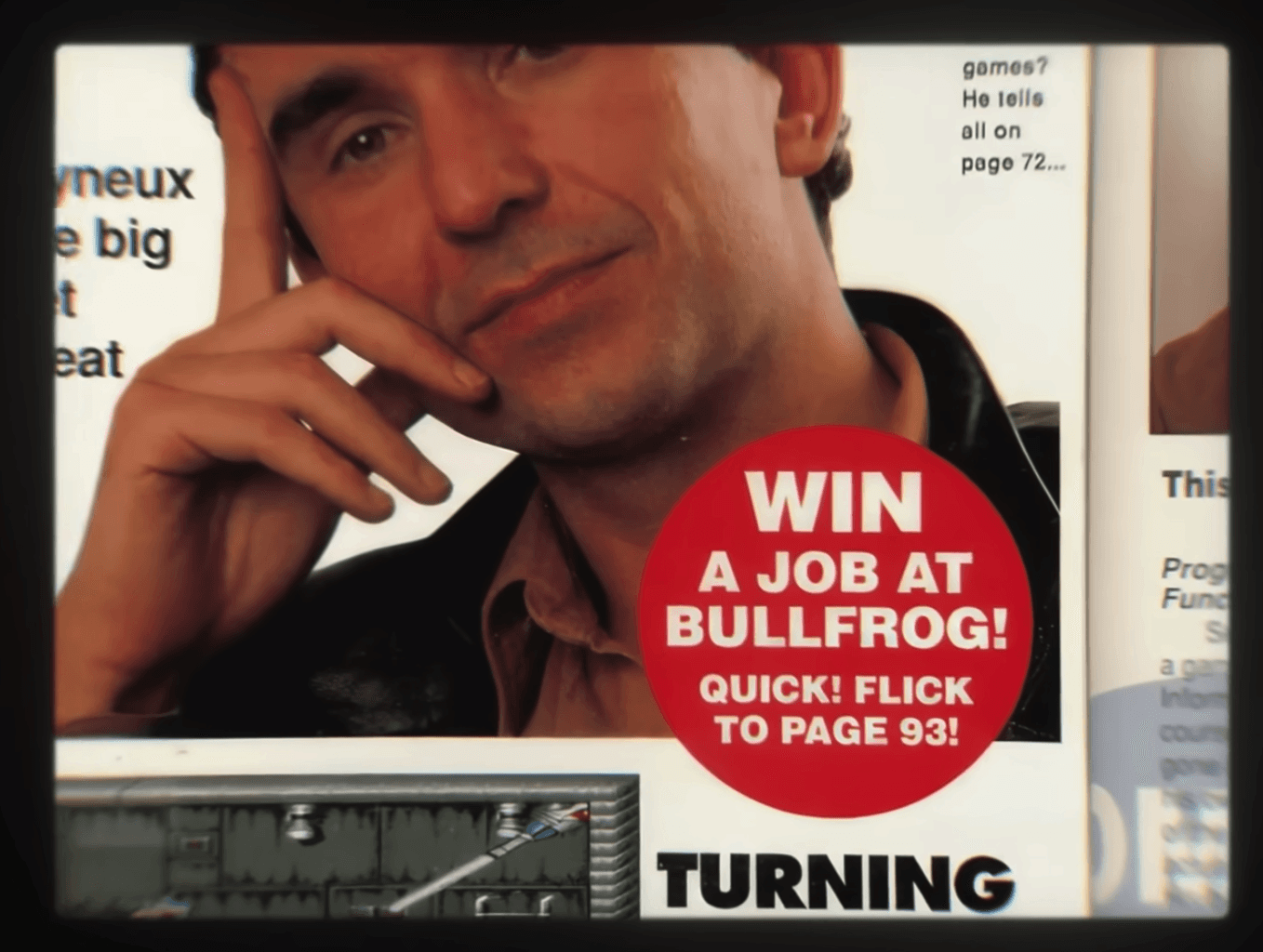
Because he was considered too young to immediately enter Cambridge University, he took a gap year and joined Bullfrog Productions. Hassabis got his job at Bullfrog Productions through an unusual and highly competitive route: a video game magazine competition. When Hassabis was 15, he entered a competition in Amiga Power (a popular gaming magazine at the time) titled "Win-a-job-at-Bullfrog." For his entry, he programmed a game from scratch—a Space Invaders-style game that had a clever twist: players had to shoot at chess pieces falling from the top of the screen. In the original Space Invaders, you control a laser cannon at the bottom of the screen and shoot at rows of descending aliens. Instead of aliens, the "invaders" descending from the top of the screen were chess pieces. I cannot stress the importance of trying everything you can when you have the time, especially at an early age, or just at any stage in life. If Demis was like, I'm too young to work because i'm already too young to go to Cambridge, then he wouldn't have gotten exposure to games which helped him greatly later on when developing AI. It is worth noting though, other than knowing what you can do, it's also important to not underestimate the amount work you have to put in, even if you are a genius. You cannot be lazy.
To win the competition and land his job at Bullfrog Productions in 1992, 15-year-old Demis Hassabis had to master the hardware and software limitations of the Commodore Amiga. Building a game from scratch on this platform was significantly more difficult than modern game development, as there were no pre-built engines (like Unity or Unreal). Programming for the Amiga meant working with a 16-bit architecture. He had to write code for the Motorola 68000 processor, which ran at a clock speed of about 7 MHz (for comparison, a modern smartphone is thousands of times faster). He had to fit the entire game—graphics, sound, and logic—into just 512 KB or 1 MB of RAM. While some hobbyists used BASIC, winning a professional competition at Bullfrog required the speed of 68000 Assembly Language or C. Hassabis likely used Assembly because it allowed him to talk directly to the Amiga's custom chips (the "Blitter" for moving graphics and "Copper" for controlling the display). To handle a "Space Invaders" style game with multiple "chess piece" enemies moving at once without the game lagging, every line of code had to be manually optimized for speed. The "dev kit" of a 15-year-old in 1992 was minimalist. He likely used a tool like Devpac (a popular assembler for the Amiga) or Lattice C to turn his text-based code into a playable file. Since he had to create his own art, he likely used Deluxe Paint (DPaint), the industry-standard pixel art tool of the time, to draw the descending chess pieces. There was no Stack Overflow. He learned these skills by studying technical manuals and books on 68000 programming, essentially teaching himself "computer science" before he ever stepped foot in a university. The "scratch" part of the programming wasn't just making things move; it was the math of collision detection. He had to write the algorithms that checked if a "bullet" coordinate overlapped with a "chess piece" coordinate. His entry came in second place, which technically only entitled him to a week of work experience. When he showed up at the studio, his coding was so advanced that the week of work experience turned into a full-time job (paid in cash because he was too young for a legal contract).
When Demis arrived for his "work experience" week, Peter Molyneux (the head of Bullfrog) gave him a test to see if the teenager was actually useful. He was asked to write a routine for a game called Syndicate that would handle how characters moved around corners and obstacles (pathfinding). He finished it in a single afternoon—a task that usually took experienced developers days. Molyneux realized he had a "one-in-a-million" talent on his hands. When the studio began working on Theme Park, Molyneux decided to pair his own creative vision with Demis’s technical brilliance, effectively making a teenager the technical lead of the company’s biggest bet.
Hassabis has often said that his year at Bullfrog was "worth more than a degree." I can't agree with this more. Instead of going to film school, I started out as a PA on set which taught me so much more than I could ever learn in film school in four years in a year and a half. It's always to have hands-on experience working in real world and the actual industry than learning in a safe, programmed, organizational-sanitary environment. Real world is chaos, is a mess, is problem-solving from all fronts and aspects, and it's way more thought-provoking and exciting than school.
He learned three critical things that would later define DeepMind. In Theme Park, you didn't just program the people to walk in a line. You gave them attributes (hunger, happiness, budget, fatigue). He learned that if you give simple entities simple rules, they can produce complex, unpredictable behavior as a group. This concept is known as Emergence (or Emergent Behavior) as discussed in a previous post, and it’s a cornerstone of how both natural systems and advanced AI work. In the documentary The Thinking Game, this is highlighted as a foundational lesson Hassabis learned while programming the "little people" (AI visitors) in the game Theme Park. Instead of programming a "Master Plan" for how the entire crowd should move, Hassabis gave each individual visitor a tiny set of Local Rules. Simple Rule A: If you are hungry, look for the nearest food stall. Simple Rule B: If the line at a stall is more than 10 people long, get "angry" and keep walking. Simple Rule C: If you just ate something salty (like fries), your "thirst" level increases rapidly. When you put 1,000 "little people" into a park with these rules, you don't just get people eating; you get a living ecosystem. If a player puts too much salt on the fries (to make more money), thousands of visitors suddenly get thirsty at once. They all rush to the drink stalls, creating massive lines. Because the lines are too long, Rule B kicks in—they get angry and leave the park, causing the player's rating to crash. This "Angry Mob" behavior wasn't a specific piece of code Hassabis wrote. It emerged naturally from the interaction of many simple agents.
He learned how to "tune" a system. Hassabis didn't just write code; he built a world with hundreds of "knobs" he could turn. Every visitor in the park had a set of invisible stats. Tuning involved adjusting these specific numbers. How fast does a "little person" get hungry? Too fast, and they spend the whole day at the burger stand. Too slow, and the park goes bankrupt. At what exact price point does a visitor go from "Happy to buy a balloon" to "Thinking this park is a rip-off"? Tuning the exact mathematical relationship between the salt level in the fries and the probability of a visitor buying a drink. Tuning is a repetitive, experimental process that looks like this. "Let’s make the rollercoasters twice as scary." Let the game play itself for 1,000 "virtual hours" at high speed. Do the visitors start throwing up? Do they stop riding other rides because they are too dizzy? "Okay, maybe 1.5x scary is the sweet spot." He spent thousands of hours watching the game play itself to see where the logic broke. This was his first exposure to reinforcement learning in a practical sense—seeing how a system improves when you tweak the rewards and penalties.
He wasn't just coding in a bedroom anymore; he was responsible for a product with a massive budget and a global release date. He learned how to lead a team of older artists and designers, a skill that was vital when he eventually had to lead hundreds of the world’s top PhDs at DeepMind. Perhaps most importantly, he learned the limits of what he was doing. He realized that while the Theme Park visitors seemed smart, they were just following a "script." He left that year with the burning desire to create an AI that could learn for itself, rather than just following the rules he wrote. By the time he left for Cambridge at age 18, Theme Park was a global smash hit, and he was already a wealthy young man. ☀️