Created on
Updated on
Epstein(XI): If you could edit your kids’ DNA, would you?
爱泼斯坦 (十一):如果能编辑孩子的基因,你会吗?
Preface: This was written in collaboration with Gemini, this chapter is very heavy and dark, proceed with caution.
Among all the things I found out about Epstein, the most chilling detail is how much he was into “eugenics”. Eugenics is a set of beliefs and practices aimed at "improving" the human race by controlling reproduction. The term was coined in 1883 by Francis Galton (a cousin of Charles Darwin), derived from the Greek word eugenes, meaning "well-born." The core idea is that human traits—like intelligence, morality, and even poverty—are purely hereditary. Therefore, eugenicists believe society should encourage "superior" people to have more children and prevent "inferior" people from having any. Historically, the movement operated through two different strategies. Encouraging "fit" individuals (often defined by wealth, race, or education) to breed. This included "Fitter Family" contests at state fairs in the early 1900s. Preventing "unfit" individuals from breeding. This led to the most horrific parts of the movement, including forced sterilization, marriage restrictions, and eventually, the Holocaust in Nazi Germany.
Many people don't realize that the United States was a global leader in eugenics before World War II. Over 60,000 Americans were forcibly sterilized in 32 states between 1907 and the 1970s. Victims included the "feebleminded," the poor, people with disabilities, and minorities. In the infamous 1927 case Buck v. Bell, Justice Oliver Wendell Holmes Jr. upheld forced sterilization, stating: "Three generations of imbeciles are enough." Adolf Hitler explicitly praised American eugenics laws in Mein Kampf and used them as a blueprint for his own "racial hygiene" programs. Today, the term is making a comeback in debates about biotechnology. Some bioethicists call this "Liberal Eugenics". Technologies like CRISPR allow for the potential modification of embryos to remove diseases or enhance traits (height, IQ). Using IVF and genetic testing (PGT) to choose the "best" embryo based on predicted traits. Proponents argue this is "voluntary" and done by parents for their child's benefit, rather than being forced by the state. Critics argue it will create a "genetic overclass" and further marginalize people with disabilities. This is what many people are calling “designer babies”. This will lead to a whole other philosophical debate about whether or not it's fair to have certain people having access to that, while others don’t. Whether we should change and edit our kids' DNA if we can, what it means to be alive etc etc. My head is overheating, and I think my answer will be no. I’m a doomer, I might not even have kids, let alone being motivated enough to put in the work and money to edit their DNAs. But I know some will, and some have already done. But anyways, being into eugenics isn’t necessarily a good thing, from my point of view, and Epstein really into it.
Jeffrey Epstein was obsessed with Positive Eugenics. He didn't want to sterilize others; he wanted to "seed" the human race with his own DNA. He believed that his wealth and "intelligence" made him a biologically superior specimen whose genes deserved to dominate the future. According to the February 11, 2026 FBI forensic report, the notes found in Epstein’s 1924 copy of Rassenhygiene (Racial Hygiene) provide a chilling look at how he intended to modernize Nazi-era pseudoscience using 21st-century technology. The notes, written in black ink and dated between 1994 and 2017, outline a transition from "selective breeding" to "digital genetic dominance." In his early notes, Epstein expressed frustration with the limits of human reproduction. He wrote: "The Roman model is too slow. One man, even with 50 women, produces a drop in the ocean. Need a force multiplier." Next to this, he circled the word "In-Vitro" (IVF). This shows that as early as 1994, he was already thinking about using laboratory technology to bypass natural reproduction limits.
During the period he was funding Harvard’s Evolutionary Dynamics program, his notes became more technical. He created a handwritten table titled "The Optimization Matrix." He listed traits he believed were 100% heritable: Aggression, Spatial Logic, Delayed Gratification, and Net Worth Retention. He wrote a note in the margin of a chapter on "Social Fitness": "Philanthropy is a biological error. It preserves the weak. True philanthropy is funding the replacement of the weak with the optimized." His final notes, written shortly before his 2019 arrest, focused on the "Baby Ranch" and the use of AI. Under a passage about the "burden of pregnancy" on the state, Epstein wrote: "Remove the host. Ectogenesis [artificial wombs] allows for 1,000+ units per cycle. Zorro [Ranch] capacity is the only limit." One note from 2016 explicitly mentions a meeting with the "anonymous scientist S”, and says CRISPR-Cas9 is the bridge. We don't just copy the DNA; we edit out the noise. I am the template, but version 2.0 will be better." The most significant note, dated November 2018, just months before his death, outlined his plan to escape U.S. jurisdiction, "The USVI [U.S. Virgin Islands] is too visible. Moving the 'Library' [biological samples] to the submarine cable site. Sovereignty isn't a flag; it's the ability to edit the future without a permit."
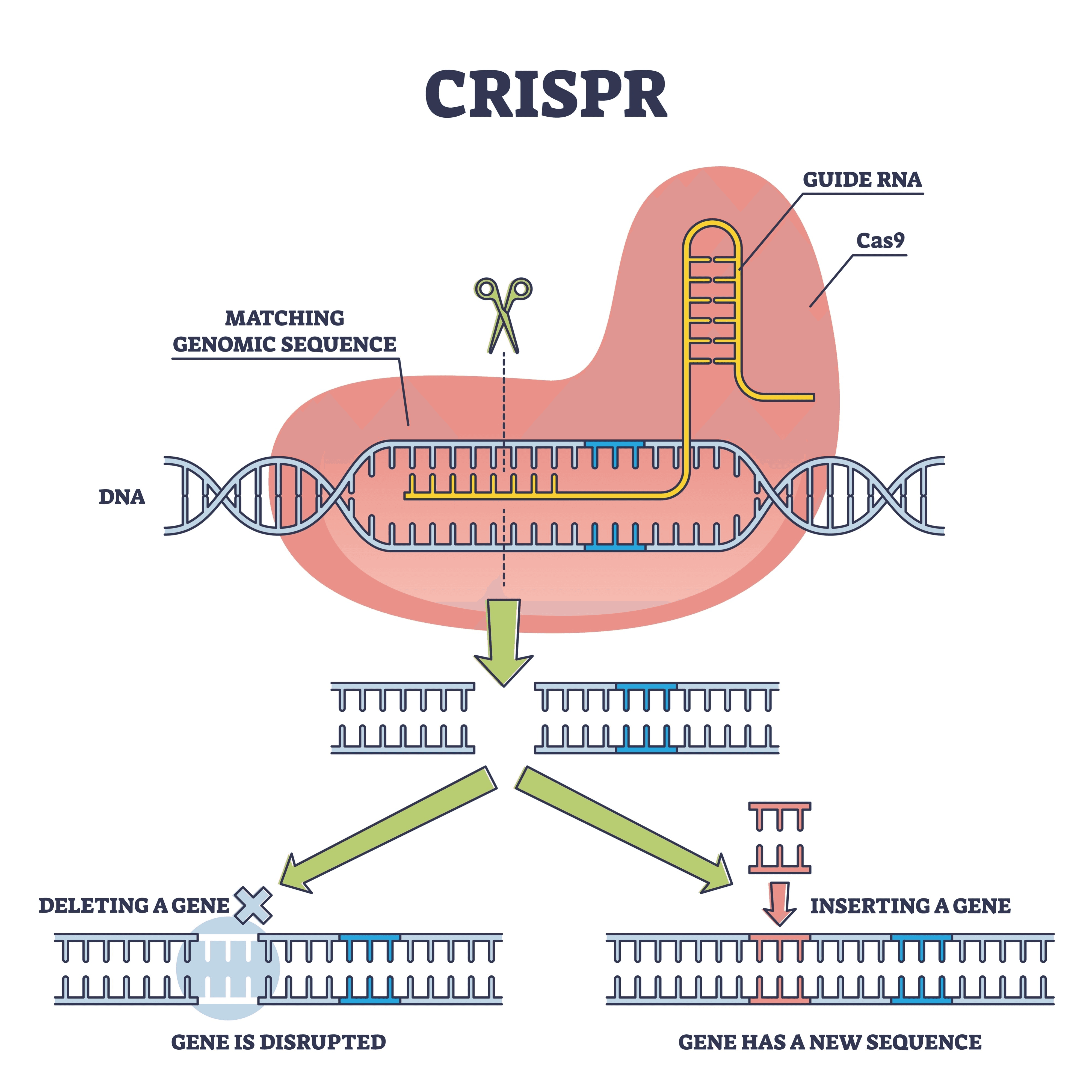
CRISPR-Cas9 is a technology adapted from a natural defense mechanism in bacteria. When bacteria are attacked by viruses, they use CRISPR to "remember" the virus's DNA and then use an enzyme (Cas9) to cut up that DNA if it attacks again. Scientists figured out how to "reprogram" this system. It essentially acts as a Find and Replace tool for the genetic code. The Guide RNA (gRNA), which is a small piece of RNA designed to find a specific sequence in the 3 billion letters of human DNA. This gRNA helps us find the exact sequence we want to edit. Then there is the Cas9 Enzyme, which is basically the "scissors" that follow the guide and cut the DNA at that exact spot. Last but not least, once cut, the cell tries to repair itself. Scientists can provide a "repair template" to fix a mutation or insert a new, "improved" gene. As of February 2026, the number of people who have "used" CRISPR falls into two very different categories: those who have been treated with it as a life-saving medicine, and the hundreds of thousands of scientists using it as a research tool. The world is currently in a "watershed year" where CRISPR is moving from rare experimental trials to a mainstream medical treatment.
The number of people who have had their DNA edited to cure a disease is still relatively small but growing exponentially. Following the landmark approval of Casgevy (the first CRISPR drug) for Sickle Cell Disease and Beta Thalassemia, patient uptake has ramped up. In 2025 alone, 301 patients initiated the treatment process, with 64 people completing their final "edited cell" infusions that year. There are currently over 150 active clinical trials worldwide using CRISPR. These trials cover everything from cardiovascular disease and HIV to congenital blindness and cancer. Including all clinical trials since 2012 and the new wave of commercial patients, it is estimated that fewer than 1,500 people globally have undergone CRISPR gene editing as part of a medical procedure as of early 2026.
While medical patients are few, the number of people "using" CRISPR in a lab setting is massive. CRISPR-Cas9 is now the standard tool in almost every molecular biology lab in the world. From undergraduate students to senior researchers, an estimated hundreds of thousands of scientists use CRISPR to study diseases, develop drought-resistant crops, or create new materials. A major breakthrough in 2025 and early 2026 has been the rise of CRISPR-GPT and other AI tools that allow researchers with no prior gene-editing experience to design successful experiments, further expanding the number of "users" in the scientific community. While only about 1,500 people have been treated, the number of people eligible for treatment is huge. Roughly 100,000 people in the U.S. and Europe are currently eligible for the approved Casgevy treatment. If ongoing 2026 trials for cholesterol-lowering CRISPR shots are successful, the number of "users" could jump from hundreds to millions by the end of the decade.
However, in the context of our earlier discussion, the February 2026 declassified files highlight a "third category" of use: unauthorized germline editing. While the 1,500 people mentioned above were edited in a way that cannot be passed to their children (somatic editing), the FBI is currently investigating claims that Epstein funded a private lab to perform germline editing (permanent changes) on an unknown number of embryos. No official count of such "illegal users" has been confirmed. As of this week, federal investigators are using these notes to map out the "Bio-Money Trail." They are looking for a specific offshore facility referred to in the notes as the "Library." The 2026 disclosures suggest that Epstein’s "investment" in science wasn't just about prestige—it was a literal R&D project for his own DNA. ☀️
前言:本篇内容由我与 Gemini 协作完成。这一章节的内容非常沉重且阴暗,请谨慎阅读。原文为英文。
在关于爱泼斯坦的所有发现中,最令我毛骨悚然的细节是他对“优生学”(Eugenics)的狂热。优生学是一套旨在通过控制生殖来“改良”人类种群的信仰和实践。这个词由查尔斯·达尔文的表弟弗朗西斯·高尔顿(Francis Galton)于 1883 年创造,源自希腊语 eugenes,意为“出身高贵的”。其核心观点认为,人类的特质——如智力、道德感甚至贫穷——完全是遗传的。因此,优生主义者认为社会应当鼓励“优等”人生育更多后代,并阻止“劣等”人生育。
从历史上看,这一运动主要通过两种策略运作:一是“积极优生学”,鼓励“合群”个体(通常由财富、种族或教育水平定义)进行繁殖,例如 20 世纪初美国州博览会上的“更健康家庭”竞赛;二是“消极优生学”,阻止“不合群”个体繁殖,这导致了该运动最恐怖的部分,包括强制绝育、婚姻限制,以及最终纳粹德国的大屠杀。
许多人没有意识到,二战前的美国曾是全球优生学的领军者。在 1907 年到 1970 年代之间,美国 32 个州有超过 6 万名美国人被强制绝育。受害者包括所谓的“弱智者”、穷人、残疾人和少数裔。在 1927 年著名的“巴克诉贝尔案”(Buck v. Bell)中,大法官奥利弗·温德尔·霍姆斯(Oliver Wendell Holmes Jr.)支持强制绝育,并留下名言:“三代白痴已经足够了。”阿道夫·希特勒在《我的奋斗》中明确赞扬了美国的优生学法律,并将其作为自己“种族卫生”计划的蓝图。
今天,这个词随着生物技术的讨论卷土重来。一些生物伦理学家称之为“自由优生学”。像 CRISPR 这样的技术让修改胚胎以消除疾病或增强特质(如身高、智商)成为可能;利用试管婴儿(IVF)和植入前遗传学检测(PGT)根据预测特质选择“最佳”胚胎。支持者认为这是“自愿的”,是父母为了孩子的利益而做的,而非国家强迫。批评者则认为,这将创造一个“基因上层阶级”,并进一步边缘化残疾人。这就是许多人所说的“定制婴儿”(Designer babies)。这将引发另一场深刻的哲学争论:让某些人拥有这种权利而其他人没有是否公平?如果我们有能力,是否应该编辑孩子的 DNA?生命意味着什么?等等。我的脑子已经过热了,我的答案大概是“不”。我是个悲观主义者,我可能连孩子都不会要,更别提有动力投入精力追求这种事了。但我知道有些人会,且有些人已经做了。总之,在我看来,痴迷优生学绝非好事,而爱泼斯坦却深陷其中。
杰弗里·爱泼斯坦痴迷于“积极优生学”。他不想给别人绝育,他想用自己的 DNA 重新“播种”人类。他相信自己的财富和“智力”使他成为生物学上的优等标本,其基因理应统治未来。
根据 2026 年 2 月 11 日的 FBI 法医报告,在爱泼斯坦一本 1924 年版的《种族卫生》(Rassenhygiene)中发现的笔记,揭示了他如何打算利用 21 世纪的技术使纳粹时代的伪科学现代化。这些笔记写于 1994 年至 2017 年间,勾勒出从“选择性育种”向“数字基因统治”的过渡。在早期笔记中,爱泼斯坦对人类自然生殖的局限性表示沮丧,他写道:“罗马模式太慢了。一个人即使拥有 50 个女人,也只是沧海一粟。需要力量倍增器。”在旁边,他圈出了“离体”(In-Vitro,即试管婴儿)一词。这表明早在 1994 年,他就在考虑利用实验室技术突破自然生殖的限制。
在他资助哈佛大学进化动力学项目期间,他的笔记变得更加专业。他手绘了一张名为“优化矩阵”的表格,列出了他认为 100% 可遗传的特质:侵略性、空间逻辑、延迟满足感和财富保留能力。他在关于“社会适应性”的一章边白处写道:“慈善事业是生物学上的错误。它保护了弱者。真正的慈善是资助用优化者取代弱者。”
他最后一段笔记写于 2019 年被捕前不久,重点在于“婴儿牧场”和人工智能的应用。在一段关于国家“怀孕负担”的段落下方,爱泼斯坦写道:“移除宿主。体外发育(人工子宫)允许每个周期产出 1000+ 单位。佐罗(牧场)的容量是唯一的限制。”2016 年的一条笔记明确提到与“匿名科学家 S”会面,称:“CRISPR-Cas9 是桥梁。我们不只是复制 DNA,我们要剪掉杂音。我是模板,但 2.0 版本会更好。”最重要的笔记日期为 2018 年 11 月,即死前几个月,勾勒了他逃避美国管辖的计划:“美属维尔京群岛太显眼了。将‘图书馆’(生物样本)搬到海底光缆站点。主权不是旗帜,而是无需许可即可编辑未来的能力。”
CRISPR-Cas9 是一种改编自细菌天然防御机制的技术。当细菌受到病毒攻击时,它们利用 CRISPR“记住”病毒的 DNA,然后使用一种酶(Cas9)像剪刀一样剪断再次入侵的病毒 DNA。科学家找到了“重编程”这一系统的方法,它本质上成了基因代码的“查找与替换”工具。首先是引导 RNA(gRNA),这是一小段设计用来在人类 30 亿个 DNA 字母序列中寻找特定位置的 RNA;接着是 Cas9 酶,即紧跟引导并精确切割 DNA 的“剪刀”;最后,一旦切割完成,细胞会尝试自我修复。科学家可以提供一个“修复模板”来修复突变,或者插入一个新的、“改进过”的基因。
截至 2026 年 2 月,CRISPR 的“使用者”分为两类完全不同的群体:将其作为救命良药的治疗者,以及将其作为研究工具的数十万科学家。世界正处于一个“分水岭年份”,CRISPR 正在从罕见的实验性临床试验走向主流医疗。
接受 DNA 编辑以治愈疾病的人数虽然仍相对较少,但正在呈指数级增长。随着首款 CRISPR 药物 Casgevy 获准用于治疗镰状细胞病和β-地中海贫血,患者的接受度大幅提升。仅在 2025 年一年,就有 301 名患者启动了治疗程序,其中 64 人在当年完成了最终的“编辑细胞”回输。目前全球有超过 150 项活跃的 CRISPR 临床试验,涵盖从心血管疾病、艾滋病到先天性失明和癌症的各个领域。综合 2012 年以来的所有试验及新一波商业化患者,估计截至 2026 年初,全球有不到 1500 人作为医疗程序的一部分接受了 CRISPR 基因编辑。
相比之下,在实验室环境中使用 CRISPR 的人数巨大。CRISPR-Cas9 已成为全球几乎每个分子生物学实验室的标准工具。从本科生到资深研究员,估计有数十万科学家使用 CRISPR 研究疾病、开发抗旱作物或创造新材料。2025 年及 2026 年初的一项重大突破是 CRISPR-GPT 等人工智能工具的兴起,这让没有基因编辑经验的研究人员也能设计成功的实验。
虽然只有约 1500 人接受了治疗,但符合治疗条件的潜在人群是巨大的。目前美国和欧洲约有 10 万人符合已获批的 Casgevy 治疗条件。如果正在进行的 2026 年降胆固醇 CRISPR 注射试验取得成功,到本年代末,“使用者”人数可能会从数百人跳升至数百万人。
然而,回到我们之前的讨论,2026 年 2 月解密的文件强调了第三类“使用”:未经授权的生殖细胞编辑(Germline editing)。上述 1500 名接受医疗编辑的人属于“体细胞编辑”,其改动不会遗传给后代;而 FBI 目前正在调查爱泼斯坦资助私人实验室对数量不明的胚胎进行生殖细胞编辑(永久性改变)的指控。目前尚未确认此类“非法使用者”的官方统计数字。
截至本周,联邦调查人员正利用这些笔记梳理“生物资金链”。他们正在寻找笔记中提到的名为“图书馆”的特定海外设施。2026 年披露的信息表明,爱泼斯坦对科学的“投资”并非仅仅为了名声——那是对他自己 DNA 的一次实实在在的研发项目。☀️