Created on
Updated on
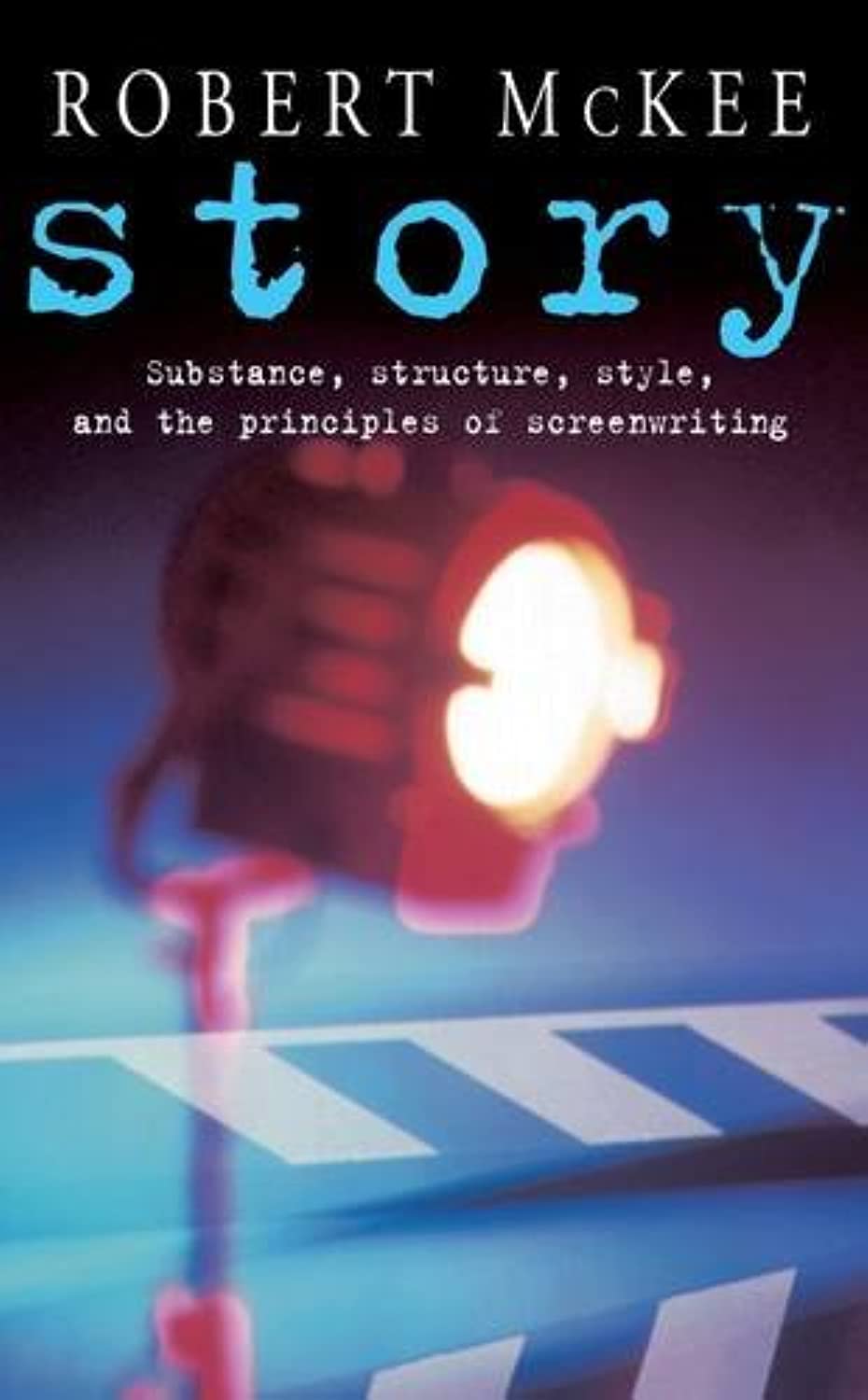
Filmmaking in the Age of AI(11): Story by Robert McKee
The Screenwriting Bible That's Both Essential and Insufferable
Preface: Re-teaching myself the new filmmaking pipeline, now with AI (netflix please notice me). co-written with Claude. NOW WITH AUDIO.
Let me start with a scene. You're in a 400-seat auditorium in Los Angeles. It's day one of a three-day, $450 seminar. The man at the front doesn't take questions. He doesn't do warmth. He paces. He lectures. He occasionally fixes someone in the crowd with a look that suggests they personally destroyed cinema by enjoying a mediocre film. At the end of Sunday night, he gets a standing ovation. That's Robert McKee in his natural habitat — and Story, published in 1997, is essentially those thirty hours of performance compressed into a book. It has sold millions of copies. Over 65 Academy Award winners have passed through his seminars. The terminology he invented — inciting incident, value charge, the gap between expectation and result — became the shared language of Hollywood development. When a showrunner and a studio executive argue in a notes meeting, there's a decent chance they're arguing in McKee's vocabulary. So is it worth reading? Yes. Unambiguously. But it's worth knowing exactly what you're getting into.
First, let's clear something up: Story is not a how-to manual. McKee hates how-to manuals. He opens the book by drawing a hard line between rules and principles — rules tell you what you must do, principles illuminate why things work. That distinction is the spine of the entire book, and it's the reason serious writers keep coming back to it while dismissing nearly every other screenwriting guide. McKee's argument, built over nearly 500 dense pages, is this: story is not a craft skill layered on top of a good idea. Story is the idea. The structure and the meaning are the same thing. You cannot separate what happens from what it means, because in a well-told story, every event is also an argument about how the world works. That's heavier than it sounds. It means that every scene needs to do more than advance the plot — it needs to shift a value. Not a moral value, but what McKee calls a charged value: life/death, love/hate, freedom/slavery, hope/despair. A scene where a character enters in one value state and exits in the same value state is not a scene. It's description. It's furniture. Cut it. This is the idea that changes how you watch movies, and it's worth the price of the book on its own.
The Inciting Incident. Something happens early in the story that radically upsets the balance of the protagonist's life. Not just an interesting event — a rupture. The inciting incident raises a dramatic question that the entire story then exists to answer. In Finding Nemo, Nemo is taken. The question: will he be found? The climax answers it. Everything between is the journey toward that answer.
Value Charge and The Gap. Every beat — the smallest unit of story — is a unit of action and reaction. The character wants something, takes an action expecting a result, and the world responds in a way they didn't expect. This gap between expectation and result is where story lives. If a character does something and the world responds exactly as expected, nothing has happened. Drama is the space between intention and outcome.
Structure IS Character. This is McKee's most important insight, and the one most people skip over. He argues that character is not revealed in what a person says, how they dress, or what their backstory is. Character is revealed only in the choices people make under pressure — specifically, the maximum pressure the story can put on them. A character who says they're brave but runs when threatened is a coward. A character who says they're a coward but acts when it matters is brave. The plot, then, is not something that happens to a character — it's the series of pressures that reveals who the character actually is. Strip the structure and you strip the character along with it.
Archplot, Miniplot, Antiplot. McKee is more generous about story forms than people give him credit for. He identifies three basic structural approaches: the classical Archplot (active protagonist, external conflict, closed ending — your Casablanca, your Godfather), the Miniplot (internal conflict, passive protagonist, open ending — your Bergman, your Chekhov), and the Antiplot (non-linear, coincidental, deliberately anti-narrative — your Godard, your Kaufman). He's not prescribing the Archplot. He's saying you need to understand all three, and that you need to know which one you're writing — because each makes different promises to the audience.
The Controlling Idea. Every story, McKee argues, should be reducible to a single sentence that expresses what the story is about — not the plot, but the meaning. Not "a cop hunts a killer" but "justice prevails because courage outlasts fear." He calls this the controlling idea. Idealist stories start dark and move toward light. Pessimist stories start with promise and end in destruction. Ironic stories hold both simultaneously. Knowing your controlling idea before you write is, in his view, the difference between a story with a spine and a story that wanders.
The chapters on scene design are the reason working writers keep Story on their shelves for decades. McKee breaks down how a single scene works — how it opens, how it turns, how it closes — with a level of granularity that is almost architectural. A scene, at minimum, must change the value charge by the end. If your character is hopeful at the start of the scene, they should not be simply more hopeful at the end — that's not movement, that's mood. A real scene turns. Hope becomes doubt. Safety becomes threat. Trust becomes suspicion. He then shows how beats build into scenes, scenes into sequences, sequences into acts, and acts into the full story — each level echoing the same fundamental pattern at a larger scale. This fractal quality — which John Yorke would later explore more deeply in Into the Woods — is one of the most clarifying ideas in all of story theory. Once you see it, you see it everywhere, and you see exactly where your own drafts are going wrong.
McKee teaches screenwriting without having had a produced feature film. He sold scripts. One television credit here and there. But as screenwriter Joe Eszterhas pointed out, the man at the front of the room telling you how to write a film has not himself written one that made it to the screen. He is, as one critic put it, a successful teacher, not a successful screenwriter. Whether that matters to you depends on how you think about craft — but it's a fact worth sitting with.
A New Yorker profile in 2023 noted that Story "exudes a hostility" toward any screenwriting practice that challenges or breaks convention, and that McKee had become "a byword for screenwriting structures as cynical and manipulative as they are widely employed." Film scholars have called his pronouncements, alongside those of Syd Field and Christopher Vogler, "deadening and ubiquitous contemporary norms." That's a heavy charge. And there's something to it. McKee's reference library is very specific: Aristotle, Casablanca, Chinatown, Bergman, the French New Wave. The filmmakers he holds up as exemplary are largely mid-century European auteurs. His examples, especially in the sections on genre, can feel airless — like being lectured on painting by someone who only rates work from before 1970. Contemporary television, which has arguably produced the most sophisticated long-form storytelling in history, barely registers. The book was written in 1997 and has not been significantly updated since.
There's also the doctoral degree issue: when Story was first published, its jacket described McKee as "a Ph.D. in cinema arts," but a New Yorker article in 2003 reported that McKee had in fact failed to complete his doctorate. A small thing, maybe, but it's the kind of credential padding that undermines trust in a writer who positions himself as an authority. And then there's the tone. McKee is brilliant and condescending in roughly equal measure. He doesn't suffer lazy thinking gladly. For some readers, that rigor is invigorating — he's the teacher you always wanted who actually takes the work seriously. For others, it tips into something more like contempt, a sense that McKee has decided in advance which films are worth discussing and which aren't, and that his canon is not up for debate.
All of that said — and I mean it seriously — there is no other book that does what Story does. McKee's insistence on principles over rules is the real gift. He is not trying to give you a template. He is trying to give you a way of seeing — a set of diagnostic tools so deeply internalized that you can apply them to any story in any form. That ambition is rare and valuable, and most of what he says in service of it holds up. The distinction between characterization (surface) and character (revealed under pressure) is one of the most useful ideas in any writing book. The value-charge framework for thinking about scenes is immediately practical. The controlling idea as a north star for a project is a discipline that separates writers who finish things from writers who spin indefinitely. And his insistence that story is not about formula — that the point is to understand why the form works, deeply enough that you can bend or break it intelligently — is the exact opposite of what his critics often accuse him of. He would despise the beat sheet. He's said as much.
Is it still relevant today? You might ask. The core ideas? Completely. Absolutely. Value-charged storytelling, structure as character, the inciting incident, the controlling idea — these are not 1990s concepts. They're principles that trace back to Aristotle and will be true in whatever storytelling medium comes next. The specific texture of the book? More dated. His examples are aging. His coverage of television is thin. He says almost nothing useful about limited series or anthology formats, which are where much of the most interesting long-form work is happening. He says nothing about short-form video, interactive narrative, or any format that emerged after 1997. If you're writing for those spaces, the principles still apply — but you'll have to do the translation work yourself. There's also a growing conversation in the industry about whose stories get told by default when you apply a Western classical structure model universally. McKee acknowledges the Miniplot and Antiplot — he's not as rigid as his critics suggest — but the Archplot remains clearly privileged, and that carries cultural assumptions worth examining.
Robert McKee is an American screenwriting teacher whose weekend seminars — held in cities around the world since the 1980s — have been attended by an estimated 100,000 writers, producers, and executives. His book Story, published in 1997, is a codification of those seminar teachings and has sold hundreds of thousands of copies. It sits on the desk of more development executives, producers, and aspiring screenwriters than any other single text about the craft. He is not a successful produced screenwriter himself — his produced credits are minimal — which is one of the persistent ironies of his authority. He is a teacher and theorist of screenwriting rather than a practitioner, which shapes both the strengths and the limitations of his system. His influence is so pervasive that it has become largely invisible. When a development executive says a script's second act doesn't work, when a producer says a character lacks agency, when a writing teacher says a scene needs a clear want and obstacle — they are speaking McKee's language whether they know it or not. His framework has become the default vocabulary of Hollywood story development. Which makes examining its cultural assumptions not merely an academic exercise but a practical and urgent one.
Assumption one: the Aristotelian inheritance and its distortions. McKee presents his system as rooted in Aristotle's Poetics — and this claim deserves immediate scrutiny, because the relationship between McKee and Aristotle is considerably more complicated than McKee acknowledges. Aristotle's Poetics was written in the 4th century BCE as an analysis of Greek tragedy — specifically the tragedies of Aeschylus, Sophocles, and Euripides that we have been discussing throughout this conversation. It was descriptive rather than prescriptive — Aristotle was observing patterns in the tragedies he admired and trying to understand why they worked, not laying down rules for future playwrights to follow.
McKee takes Aristotle's descriptive observations and converts them into prescriptive doctrine — treating what Aristotle noticed about a specific body of ancient Greek dramatic work as universal laws applicable to all storytelling in all times and all cultures. This is a significant philosophical move that McKee largely obscures. More specifically, McKee takes Aristotle's observation that effective tragedies tend to have a unified action — a single central conflict that drives the narrative — and converts it into the principle that all effective stories must have a single protagonist with a single clearly defined want, pursuing that want against escalating obstacles through a three-act structure that culminates in a decisive climax. This is not what Aristotle said. It is a specific interpretation of what Aristotle said, filtered through centuries of European critical tradition, shaped by the particular demands of Hollywood commercial cinema, and presented as timeless universal truth. The cultural assumption embedded here is that the European dramatic tradition — specifically its development through Greece, Rome, Renaissance theater, and eventually Hollywood — represents the universal standard against which all storytelling should be measured. This assumption is so deeply embedded in McKee's system that it operates invisibly — it is not argued for, because it does not occur to McKee that it needs to be argued for.
Assumption two: the individual protagonist and Western individualism. The most fundamental structural assumption in McKee's system — and the one with the deepest cultural roots — is that every story must have a single protagonist: an individual human being with a clearly defined want, whose pursuit of that want in the face of obstacles constitutes the story. This seems so obvious to most Western readers that it barely registers as an assumption at all. Of course stories have protagonists. Of course the protagonist wants something. What else would a story be? But this apparently obvious assumption encodes a very specific cultural worldview — the worldview of Western individualism, which holds that the individual human being is the primary unit of social reality, the primary agent of meaningful action, and the primary subject of meaningful experience. But it is not universal. Many non-Western narrative traditions locate agency and meaning not in the individual but in the community, the family, the ancestral line, or the relationship between the human and the natural world.
Consider the narrative traditions of many indigenous cultures, where stories are not about individual protagonists pursuing individual goals but about the relationships between human communities and the natural world, about the obligations of the living to the ancestors and to future generations, about the maintenance of balance and harmony in a web of relationships that extends far beyond any individual. Consider the narrative traditions of many East Asian cultures, shaped by Confucian values that locate identity and meaning primarily in relational roles — son, father, community member — rather than in individual self-definition. Consider the narrative traditions of many African cultures, which often locate agency in community rather than individual — where the meaningful unit of dramatic action is not what one person wants but what a community collectively navigates, where the individual is always understood as embedded in and constituted by their relationships rather than as a free-standing autonomous self.
McKee's system cannot accommodate any of these narrative traditions without fundamentally distorting them — either forcing them into the individual protagonist framework by designating one character as the "real" protagonist, or dismissing them as not properly structured stories. The cultural assumption is: individual agency is the universal basis of meaningful narrative. The reality is: individual agency is one culturally specific way of organizing narrative meaning, developed in a particular historical and cultural context, that has been universalized by the dominance of Hollywood and the commercial entertainment industry.
Assumption three: the gap and the value system it assumes. Central to McKee's system is the concept of the gap — the space between what a protagonist expects to happen when they take an action and what actually happens. The protagonist wants something, takes an action to get it, and reality responds in a way that is either better or worse than expected. This gap is what drives the story forward. This is a genuinely useful analytical concept. But it encodes a specific assumption about the relationship between human desire and the world that is not culturally neutral. The gap assumes that the primary mode of meaningful human engagement with the world is the pursuit of desired outcomes through deliberate action. The protagonist wants. The protagonist acts. The world responds. The protagonist adapts and acts again. This is the action-reaction model of human agency — rooted in Enlightenment assumptions about rational individual actors pursuing goals in a causal universe. It is also, not coincidentally, the model that underlies capitalist economic theory — the rational actor maximizing utility, making decisions in pursuit of desired outcomes, adapting to market responses.
Many narrative traditions operate on fundamentally different assumptions about the relationship between human desire and the world. Buddhist narrative traditions, for instance, often locate suffering precisely in desire and the pursuit of outcomes — and locate liberation in the release of desire rather than its fulfillment. A story structured around a protagonist's successful pursuit of a desired outcome is, from a Buddhist perspective, a story about the mechanism of suffering rather than a story about liberation or wisdom. Many indigenous narrative traditions operate on assumptions of relationship and reciprocity rather than pursuit and acquisition — the human being is not primarily an agent pursuing goals but a participant in a web of relationships, and the meaningful narrative action is not pursuing wants but fulfilling obligations, maintaining balance, honoring relationships. The cultural assumption is: desire and its pursuit are the universal engine of meaningful narrative. The reality is: desire as the engine of narrative is a culturally specific value, embedded in Western individualism and its associated economic and philosophical traditions. More on this in the next post. ☀️