Created on
Updated on
Filmmaking in the Age of AI(17-26): Section Conclusion
Preface: Co-written with Claude.
Alright, it’s time to tie these all back to Lumiere brothers and Melies. Why was this backdrop of Belle Epoque important? Because it was at the height of this period, film as a public spectacle appeared. In a time where people embraced novelty, performance, and production, on December 28, 1895, The Lumière brothers — Auguste and Louis, Lyon-based manufacturers of photographic equipment — hired the basement Salon Indien of the Grand Café at 14 Boulevard des Capucines for a paid public screening of their Cinématographe. Entrance was one franc. The first program ran ten short films, each about a minute long, including La Sortie de l'usine Lumière à Lyon (workers leaving the Lumière factory) and L'Arrivée d'un train en gare de La Ciotat — the train pulling into a station that reportedly made audiences flinch backward in their seats.
Méliès was born in Paris in 1861. The first Impressionist exhibition was 1874 — he was thirteen, growing up in a prosperous Parisian family in the same city where this was happening. The movement's eight exhibitions ran 1874–1886, overlapping precisely with his formative years. He wasn't an outsider looking back at history; he was breathing the same air. Méliès was deeply embedded in the same entertainment ecosystem: cabarets, magic theatres, féerie spectacles. The Chat Noir as mentioned previously was the sharpest convergence point — it pulled together painters, poets, performers, and one of the most visually inventive shadow puppet theaters in Paris.
Lumières’ first screening had 33 paying customers. Within weeks the Salon Indien was turning away hundreds of people a day. Méliès was in the room. He attended an early screening and immediately grasped what he was looking at. He approached Louis Lumière and offered to buy a Cinématographe on the spot. Lumière refused, famously telling him the invention had no commercial future and he was doing Méliès a favor by not selling. This was not cynicism — Lumière genuinely believed moving images were a scientific novelty, a fairground curiosity with a short shelf life. He was protecting Méliès from a bad investment. Méliès went and built his own camera anyway, and the rest is history.
There's no documented friendship between Méliès and Monet, no letter from Degas about A Trip to the Moon. But that's almost beside the point for your purposes. The more interesting claim is that they were products of the same Parisian modernity — Haussmann's boulevards, gaslight becoming electric light, the city accelerating — and both responded to it by making art about perception itself, about what the eye does in a world moving faster than it can fully register.
What the boulevard itself represents, though, is the right frame for your writing. The Grands Boulevards in the 1870s–80s were the commercial and social spine of Haussmann's new Paris — gaslit, crowded, modernizing at speed. The Impressionists choosing to show at Nadar's studio on that boulevard rather than at the official Salon was a statement: they were aligning themselves with the city's new energy, its street life, its contingency. Degas in particular was fascinated by that world — cafés, theatres, the blur of people in motion. Manet painted the café-concerts on the boulevards obsessively.
Before moving onto all the landmark VFX films that progressed the industry film by film, let me quickly bridge the gap between A trip to the Moon and this next film I’m going to talk about: King Kong (1933). If you zoom out, the history of VFX is basically a series of “breakthrough moments” where one film proves something is possible—and then the whole industry reorganizes around it.
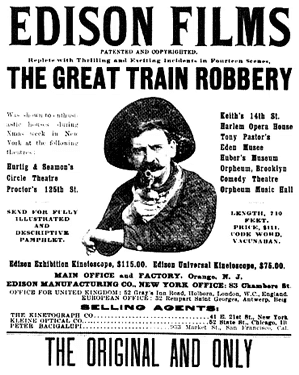
After A trip to the moon, there was The Great Train Robbery by Edwin S. Porter(1903), who invented cross-cutting to make different locations feel simultaneous. He also did some early compositing tricks. Cross-cutting means cutting back and forth between different scenes happening at the same time. A Trip to the Moon had one scene at a time, like watching a stage play. In The Great Train Robbery, Porter shows bandits robbing a train, telegraph operator dealing with the aftermath, and a posse forming to chase the bandits. Instead of showing these one after another, he cuts between them. It was a new language invented, and a new language that the audience learned to understand.
And then there’s Intolerance by D.W. Griffith(1916), which had massive sets, and complex intercut timelines. Intolerance took everything people had just started figuring out and pushed it to a scale no one had ever seen before. Griffith built gigantic sets representing ancient Babylon. The set had towering walls, reportedly over 100 feet tall, huge staircases filled with hundreds of extras, colossal statues, including giant elephants lining the walls, and fully explorable environments. It was physical world-building at scale.
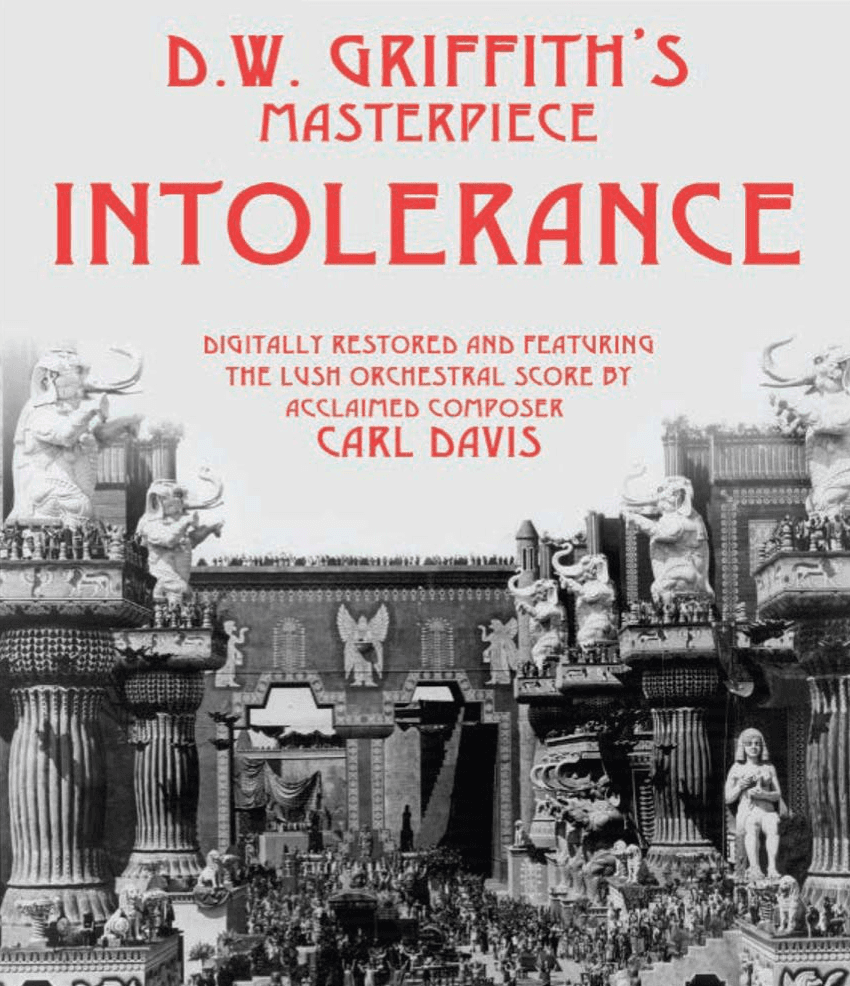
Griffith also moved the camera dynamically through space, and used wide shots to show scale and crowd movement. This is a direct ancestor of modern epic filmmaking, think Gladiator or Lord of the Rings.
Instead of one story, the film tells four different stories from different time periods. There’s Ancient Babylon, Life of Chris, French Renaissance, and Modern 1910s story. He doesn’t show them one after another, he cuts between all four timelines repeatedly. He starts with long chunks from each story, then cuts become faster, and timelines start interweaving more tightly. Near the end, Griffith does something wild for 1916, he rapidly cuts between a modern-day race to stop an execution, the fall of Babylon, the religious persecution and historical violence. This creates the climax of the movie. I imagine this is where people tear up and feel some type of way while watching a movie in theaters back in the day. The audience is forced to compare eras, notice patterns, feel the tension across unrelated stories.
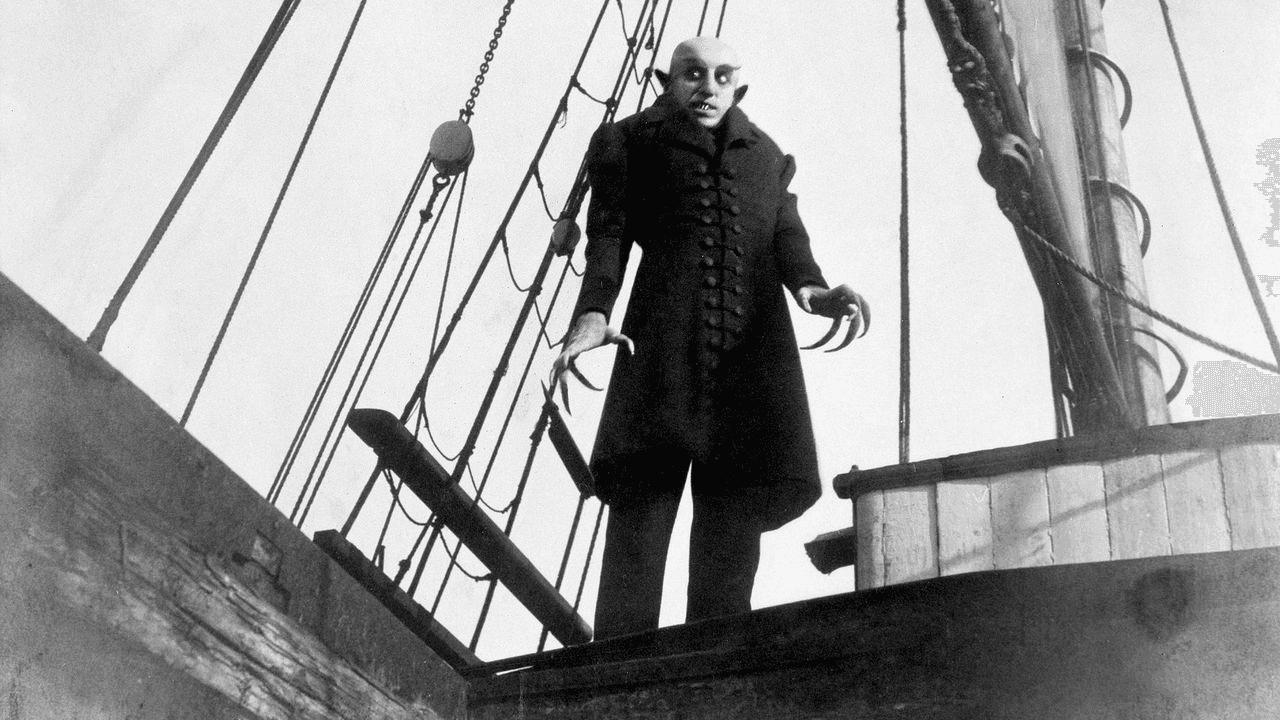
Then there was Nosferatu by F. W. Murnau(1922), which was known to use in-camera effects, such as negative exposure, speed tricks, and shadow as a character. It is a masterclass in practical, in-camera effects, and a lot of what feels “creepy” about it is actually very technical trickery. There are certain scenes, especially the night sequence, that were shot normally, but printed as negative images. Trees look pale and unnatural, sky becomes dark and ominous, the world feels unsettling. At the time, filmmakers couldn’t easily shoot at night. People like George Melies needed a huge amount of night to capture images. In daylight, it works fine. But indoors, massive lighting rigs were needed. At night, it’s basically too dark to see anything. Cameras had fixed or very limited apertures, and couldn’t be adjusted easily to darkness. It was common to use this technique called day-for-night.
There’s a recent film I watched that used this technique, Mank. Mank is a 2020 American biographical drama film about screenwriter Herman J. Mankiewicz and his development of the screenplay for Orson Welles's 1941 film Citizen Kane.“The film was shot in black and white on Fincher's preferred RED digital camera and made reference to the aesthetics of Citizen Kane cinematographer Gregg Toland. Dance stated that a scene involving a drunken Mankiewicz took over 100 takes,while Seyfried said that one of her scenes took over a week and 200 takes to shoot.She stated, "It does feel like Groundhog Day, in a way, but that's how [Fincher] captures things that most people don't." The moonlight stroll between Mankiewicz and Davies was filmed at Huntington Gardens and a Pasadena mansion during the day, although it takes place at night.”(Wikipedia) The film received little attention, it’s a bit dry for modern audiences’ taste. I have to be honest, I did not finish it on Netflix. Still think it's a good film though, probably.
Metropolis by Fritz Lang(1927) was another, it had miniatures and live-action compositing. There was also this process called the Schüfftan process that Lang used, which used mirrors to combine actors and models. It pushed VFX forward in a very specific way, not by inventing CGI, but by fooling the camera into believing multiple realities existed in the same frame. They built entire city skylines in miniature, skyscrapers, highways, industrial machines, and layered mechanical worlds, like a dystopian engine city. These weren’t small props, they were detailed architecture models filmed like real environments. The camera would shoot miniatures from specific angles, match lighting to live-action scenes, combine them so the scale felt seamless. The city feels massive, vertical, mechanical and impossible to build in real life on film.
Up until King Kong(1933), all kinds of creatives and filmmakers had tried and invented various techniques and tricks to use illusions that weren’t considered part of the VFX pipeline. However, while they created the stepping stones for it, none of it changed the industry the way King Kong did. More on this in the next post. ☀️