Created on
Updated on
Filmmaking in the Age of AI(23): The Impressionists Band
Legion of Honor is free on Saturday for bay area residents
Preface: Co-written with Claude.
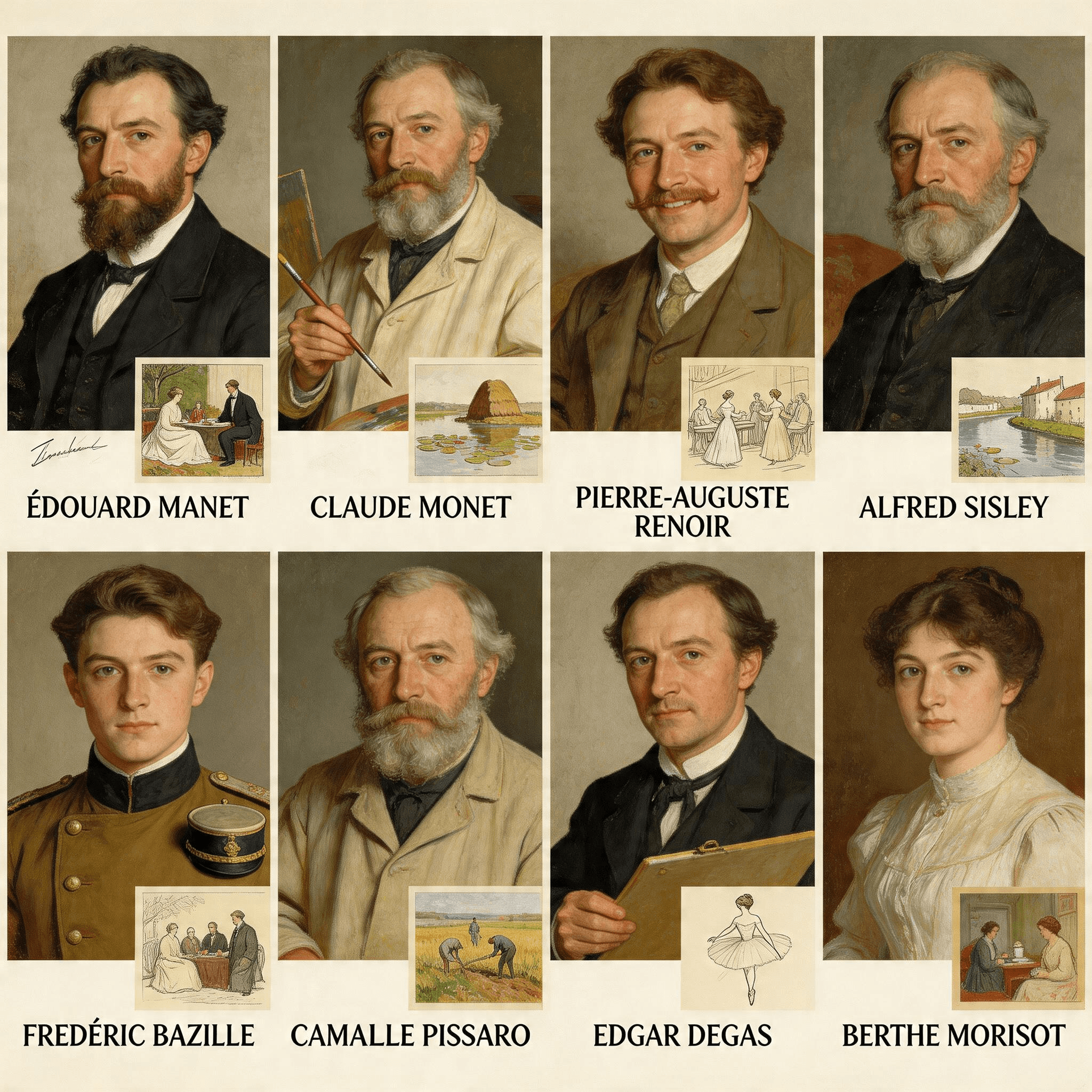
I skimmed through the Picasso section. I realized as much as I appreciate his art, I am not interested in him as a person. His life sounds rather boring, your typical my friend died so I'm emo, I saw some african art so I appropriated, and I saw a girl so we slept together. His studio sounds disgusting, and I heard he was quite possessive with his partner, rarely letting her out of his side. This is creepy. I do not think I'd like him as a person if we lived through the same time. I was going to write about Matisse, but I was afraid it's going to another situation of a great artist with a terrible personality. I'd like to get back to the impressionists, they sound like a fun bunch. So before moving onto Fauvism, which is also part of Bella Epoque I think, since it lasted until the beginning of WWI, I want to go back to Renoir, Monet, Sisley, Bazille, and Pissarro and explore the height of the impressionism movement before going into Matisse, who knew Picasso. See, this was a crazy time in Paris, the more I dig, the more I find out. The Impressionists are one of the most fascinating friend groups in art history — a genuine circle of young radicals who changed how humans see light, time, and the everyday world. Let me run through the key figures and what makes each of them distinct.
Édouard Manet was the godfather who wasn't technically an Impressionist. He refused to exhibit with them, kept submitting to the Salon, and desperately wanted establishment approval his whole life. But the younger painters worshipped him. His Luncheon on the Grass (1863) scandalized Paris not because of nudity per se, but because the nude woman was clearly a real Parisian woman, instead of a mythological figure. He made the ordinary confrontational. Manet came from money. His father was a senior judge, his mother the goddaughter of the Swedish crown prince. This matters enormously — not just biographically but aesthetically. He had the education, the social connections, the dining rooms and salons of the haute bourgeoisie. He knew what propriety looked like from the inside. When he violated it, he knew exactly what he was violating(BALLER!!). The Impressionist circle — Monet, Renoir, Pissarro — were genuinely scraping by for much of their careers. Manet hosted dinners. He dressed impeccably. He was charming, witty, a fixture at the right parties. He wanted the Légion d'honneur. He wanted the Salon. He wanted the whole official architecture of French cultural prestige to look at his work and say: yes, this belongs here.
The Académie had a strict hierarchy of subjects. History painting — scenes from antiquity, mythology, the Bible — sat at the top. Then portraits. Then genre scenes. Then landscapes. Then still lifes at the bottom. The ideal painting was technically flawless, historically legible, morally elevating, and finished to the point where brushwork disappeared entirely. The surface should look like reality through glass, not like paint applied by a human hand. When Luncheon on the Grass was submitted to the Salon in 1863, it was rejected. So was the work of hundreds of other artists that year — the rejection rate was so high that Napoleon III intervened and created the Salon des Refusés, an exhibition of the rejected works. The public was invited to judge for themselves.
The Légion d'honneur of created by Napoleon Bonaparte in 1802, and this origin tells you everything about what it was designed to do. Napoleon had just dismantled the old aristocratic order — titles of birth, hereditary privilege, the entire feudal architecture of who mattered — and he needed a replacement system for recognizing achievement and binding talented people to the state. The Légion d'honneur was that system. Merit-based, theoretically open to anyone, but controlled entirely from the top. The Emperor (or later the Republic) decided who deserved it. For a painter like Manet, operating in a culture where the state deeply intertwined itself with cultural production, the Légion d'honneur wasn't vanity — it was a professional and social position. It meant the establishment had looked at your work and said: this belongs to French civilization. His whole career was an argument for why it should be said about him. It arrived too late to mean what he needed it to mean. Legion of Honor still exists today. France still awards it — to French citizens and to foreigners. Americans who've received it include Josephine Baker (retroactively, and she was given a full state funeral in Paris in 2021), Meryl Streep, Steven Spielberg, and Jerry Lewis, who was genuinely considered a comic genius in France in a way.
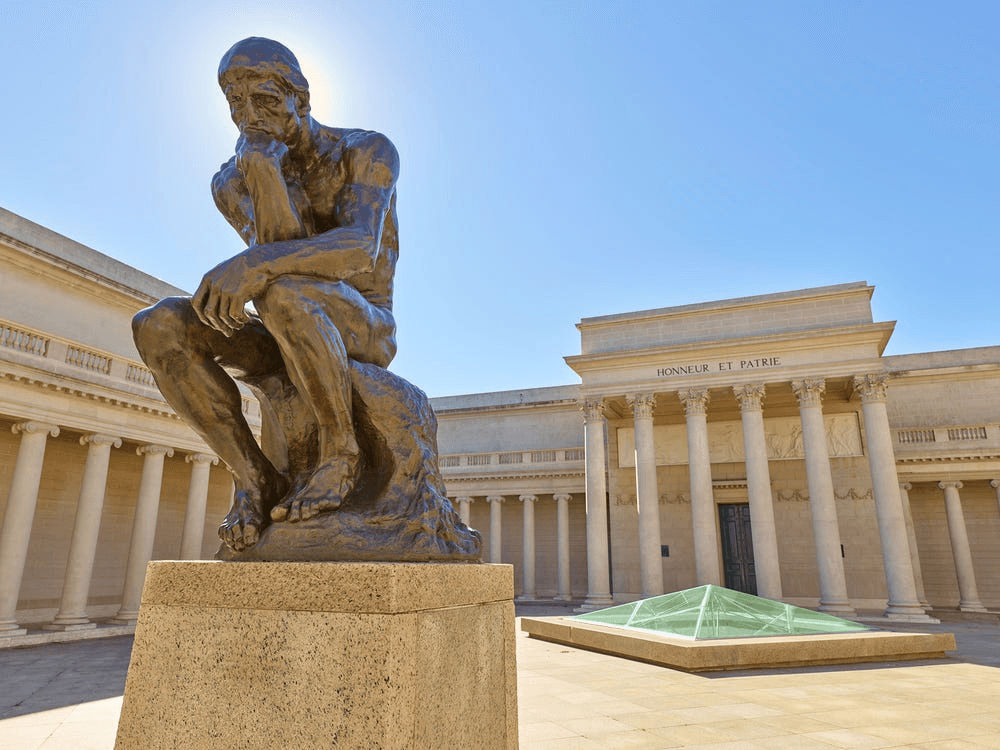
The California Palace of the Legion of Honor on the cliffs above Land's End, with the Rodin Thinker in the courtyard — is a direct replica of the Palais de la Légion d'Honneur in Paris. Not inspired by it. Not similar to it. A three-quarter-scale replica, built deliberately and specifically as a tribute. The story runs through Alma de Bretteville Spreckels, one of the most remarkable figures in San Francisco history. She was a working-class girl from a Danish immigrant family who modeled , including, reportedly, as the figure on the Victory sculpture atop the Union Square Dewey Monument, married Adolph Spreckels , who's a sugar magnate, one of the richest men in California and then spent the rest of her life doing exactly what she wanted with his money. What she wanted was art. Specifically French art. She had fallen in love with France, developed a close friendship with Auguste Rodin, and became one of the most significant American collectors of Rodin's work. After World War I, in which France and California had fought as allies and California had sent significant numbers of men, Alma conceived of the museum as a memorial to California's war dead — and as a permanent home for French art in America. She partnered with the city of San Francisco, secured the land in Lincoln Park, and funded the construction herself. The building opened in 1924. She also developed a relationship with the French government and the Légion d'honneur organization itself — she was eventually awarded the Légion d'honneur for her contributions to French culture, one of the first American women to receive it. Isn't it funny? The impressionists spent their lives rebel against legion of honor, yet they are now placed in another legion of honor. Everything comes in full circle now. In fact, I just went there this afternoon(https://www.famsf.org/visit/legion-of-honor), free on Saturday for bay area residents.
As of The Salon des Refusés, where Manet's work ended up getting exhibited, dated back to 1667 — Louis XIV. By the 19th century it had moved to the Palais de l'Industrie and had become the central institution of French art life. Tens of thousands of visitors. Careers made and destroyed. A painting accepted by the Salon could be sold; a painting rejected might as well not exist. The jury system was brutal and political. Academic painters who sat on juries tended to favor work that looked like their own. By 1863 the rejection rate had become so extreme — about 60% of submitted works were turned away — that there was genuine public outcry. Artists were furious. The press was writing about it. Napoleon III, who was shrewder about public opinion than his reputation sometimes suggests, made an unusual decision: he ordered that the rejected works be displayed in a separate exhibition at the same venue, so that the public could judge the jury's decisions for themselves. This was the Salon des Refusés — the Salon of the Rejected.
It ran once, in 1863. About a thousand works were shown. The public came in enormous numbers, and they mostly came to mock — Parisian crowds being what they were. But three paintings stopped the conversation cold: Manet's Luncheon on the Grass, Whistler's Symphony in White No. 1, and Cézanne's early work. The Salon des Refusés was revived in smaller forms in later years, but 1863 is the one that mattered. It established a precedent: that there could be an outside, that the Academy's judgment wasn't the only judgment, that rejection itself could become a kind of credential. The Impressionist independent exhibitions of the 1870s and 1880s are unthinkable without that precedent.
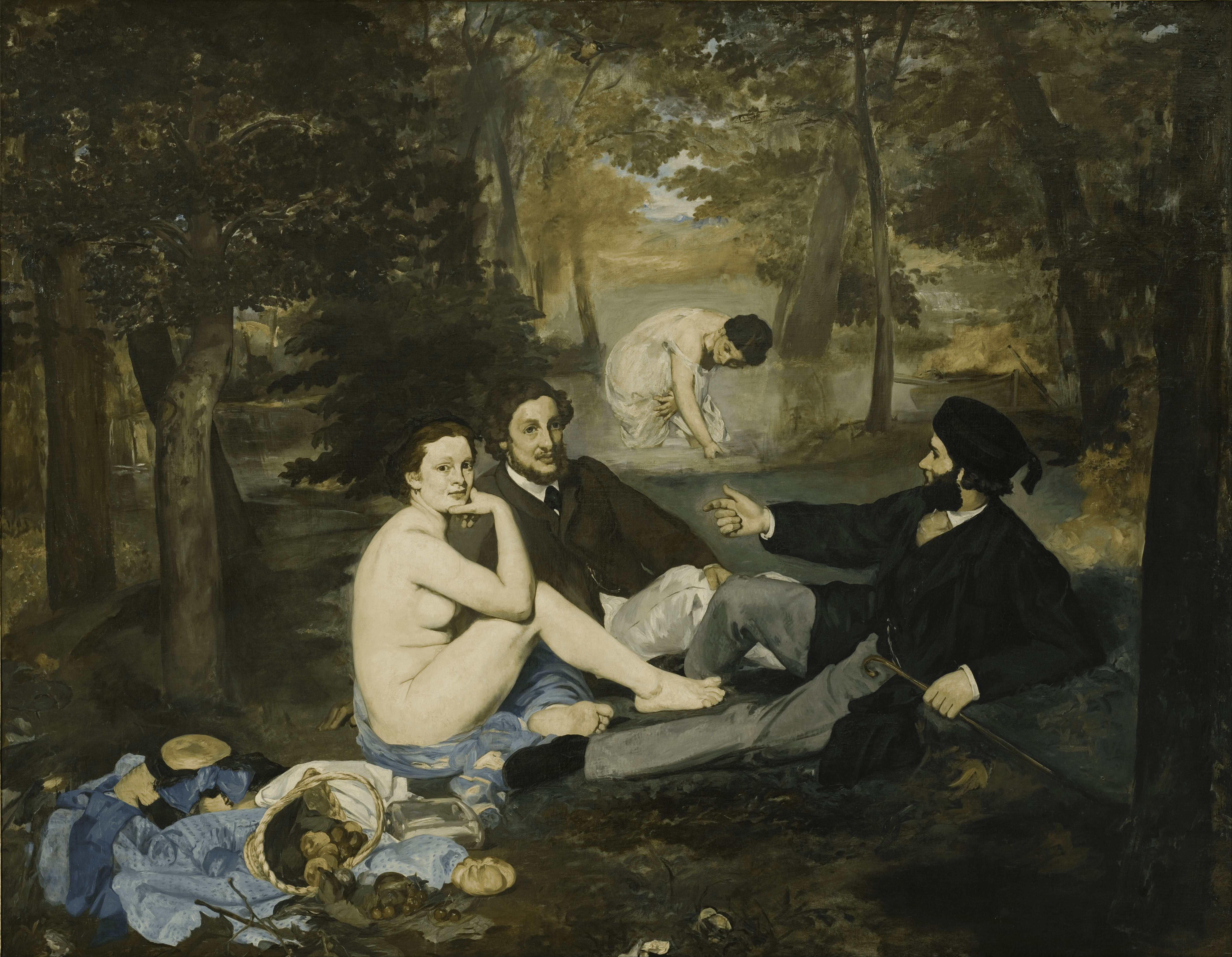
“Luncheon on the Grass” is one of the most important—and scandalous—paintings in the birth of modern art. It's a picnic scene in a forest with two fully dressed bourgeois men, one completely nude woman sitting casually with them, and another lightly dressed woman bathing in the background. The nude woman is not idealized—she looks directly at you, almost like she knows you’re watching. This painting caused a huge scandal when first shown, nudity wasn’t the issue, art had plenty of nudes, the problem was context, she's not a goddess or mythological figure, she's in a modern, everyday setting with clothed men. It suggested she might be a real woman, possibly even a sex worker. Manet wasn’t just trying to shock: he was rewiring painting itself. He borrowed composition from Renaissance masters like Raphael and Titian but replaced gods with modern Parisians. Later, Monet did his own version of this.
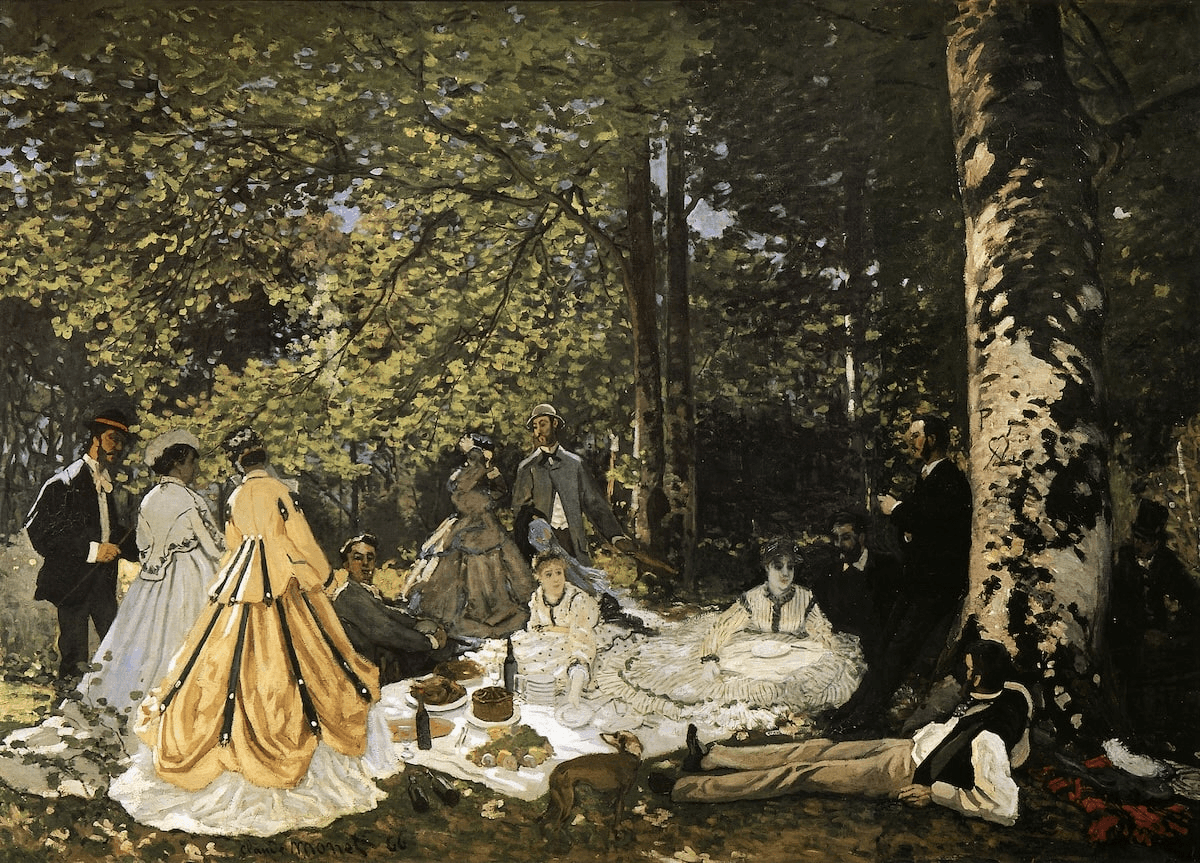
"The Luncheon on the Grass by Edouard Manet was a monumental impressionist works that broke away from the classical view that art should obey established conventions and seek to achieve timelessness. Manet's work was exhibited at the Salon des Refuses in 1863 and caused outrage with its scandalous subject of a naked woman lunching with two clothed men. Two years later Monet decided to paint his own version of Luncheon on the Grass.", from claude-monet.com. Monet can be said to be the most persistent impressionist, where others compromised, Monet went further. He became almost obsessive about capturing the same subject across time — haystacks at different hours, Rouen Cathedral in different seasons, the water lilies for the last thirty years of his life. He was chasing something almost philosophical: light as the only subject. He was also terrible with money, constantly borrowing from friends.
Pierre-Auguste Renoir as mentioned previously was the sensualist. Where Monet wanted to dissolve form into light, Renoir loved bodies, skin, pleasure, cafés, dancing. Bal du Moulin de la Galette (1876) is probably the single painting that best captures what Paris felt like on a Sunday afternoon. He grew up poor, worked as a porcelain painter as a child, and never forgot that art should give people joy. Later in life his politics turned ugly — he became openly antisemitic during the Dreyfus Affair, which estranged him from some of the group. Alfred Sisley was the most underrated. British-born, spent nearly his entire life in France, died in poverty. His landscapes are quieter than Monet's, more melancholic, focused on water and sky and ordinary provincial villages. He almost never painted people. He's the one the casual museum-goer walks past — but painters love him. He is the great overlooked figure of Impressionism, and the overlooking is itself a kind of critical information — about what we reward, what we mistake for simplicity, and how badly the art world conflates fame with quality. Painters love Sisley the way musicians love certain guitarists the general public has never heard of: the appreciation is technical, devotional, and slightly possessive.
Sisley was born in Paris in 1839 to British parents — his father a prosperous silk merchant, his mother a cultivated woman who encouraged his interest in music and painting. He was sent to London at eighteen to prepare for a business career, spent four years there, and came back to Paris having decided he was going to be a painter. He enrolled in Charles Gleyre's studio in 1862, which is where he met Monet, Renoir, and Bazille. The four of them went painting together in the Forest of Fontainebleau, arguing about light and color and how to see. From that point forward Sisley spent almost his entire life in France, in the small towns and villages along the Seine and its tributaries west of Paris. He painted France. He breathed French light. He died in France. And yet he remained legally British his entire life. He applied for French citizenship in the last year of his life — 1898, shortly before he died — and the application was still being processed when he died. He got nothing. No citizenship, no recognition, no financial security. This nationality limbo haunted him in ways both practical and symbolic. He couldn't access certain French state commissions or patronage networks that were available to French citizens. More abstractly, he existed between two cultures without fully belonging to either — too French in sensibility and subject matter to be claimed as a British painter, too British by birth to be fully adopted by the French establishment. He slipped through every institutional net.
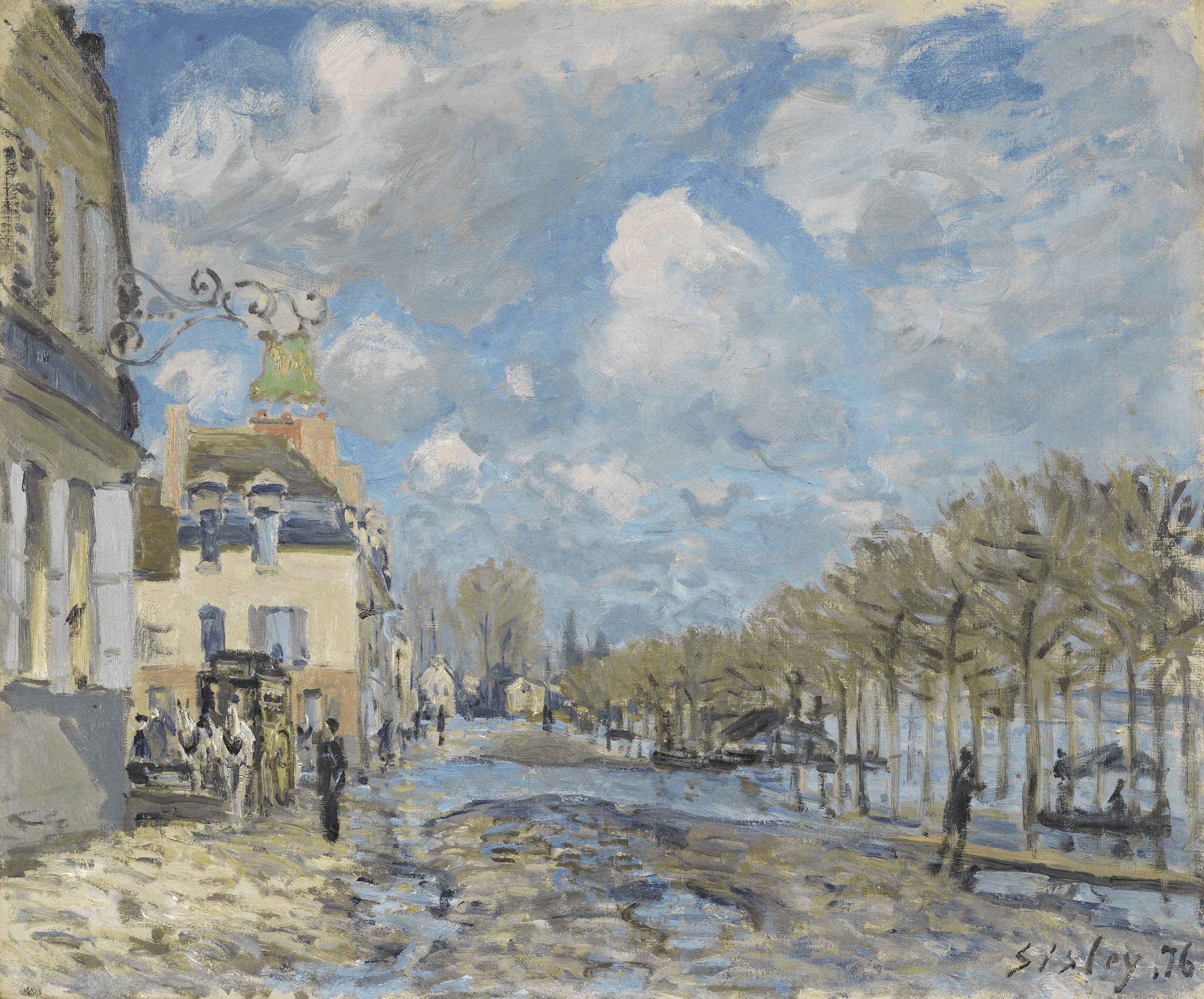
The biographical fact that reshapes everything about Sisley's life came in 1870-71, with the Franco-Prussian War. His father's business, which had been providing the family's comfortable income, was destroyed by the war. William Sisley died shortly after, leaving Alfred without the financial cushion that had allowed him to paint without commercial pressure. Up to this point Sisley's life had looked like Bazille's: a young man of means pursuing painting as a serious vocation, supported by family money, part of an exciting circle of friends. After 1871 it looked like Monet's worst years, but permanent. He was in financial distress for the rest of his life — almost three decades of it. He moved his family from place to place as money allowed, always to small towns along the water, always to places that were cheaper than Paris, always looking for the light he needed. The contrast with Renoir and Monet is painful. Renoir found wealthy patrons, made portrait commissions work for him, and ended his life in reasonable comfort. Monet, despite years of desperate borrowing and periodic crisis, eventually achieved extraordinary success, bought his house and garden at Giverny, and died famous and financially secure. Sisley died of throat cancer in January 1899 in Moret-sur-Loing, in poverty, his paintings selling for almost nothing. The month after he died, his paintings suddenly tripled in price at auction.
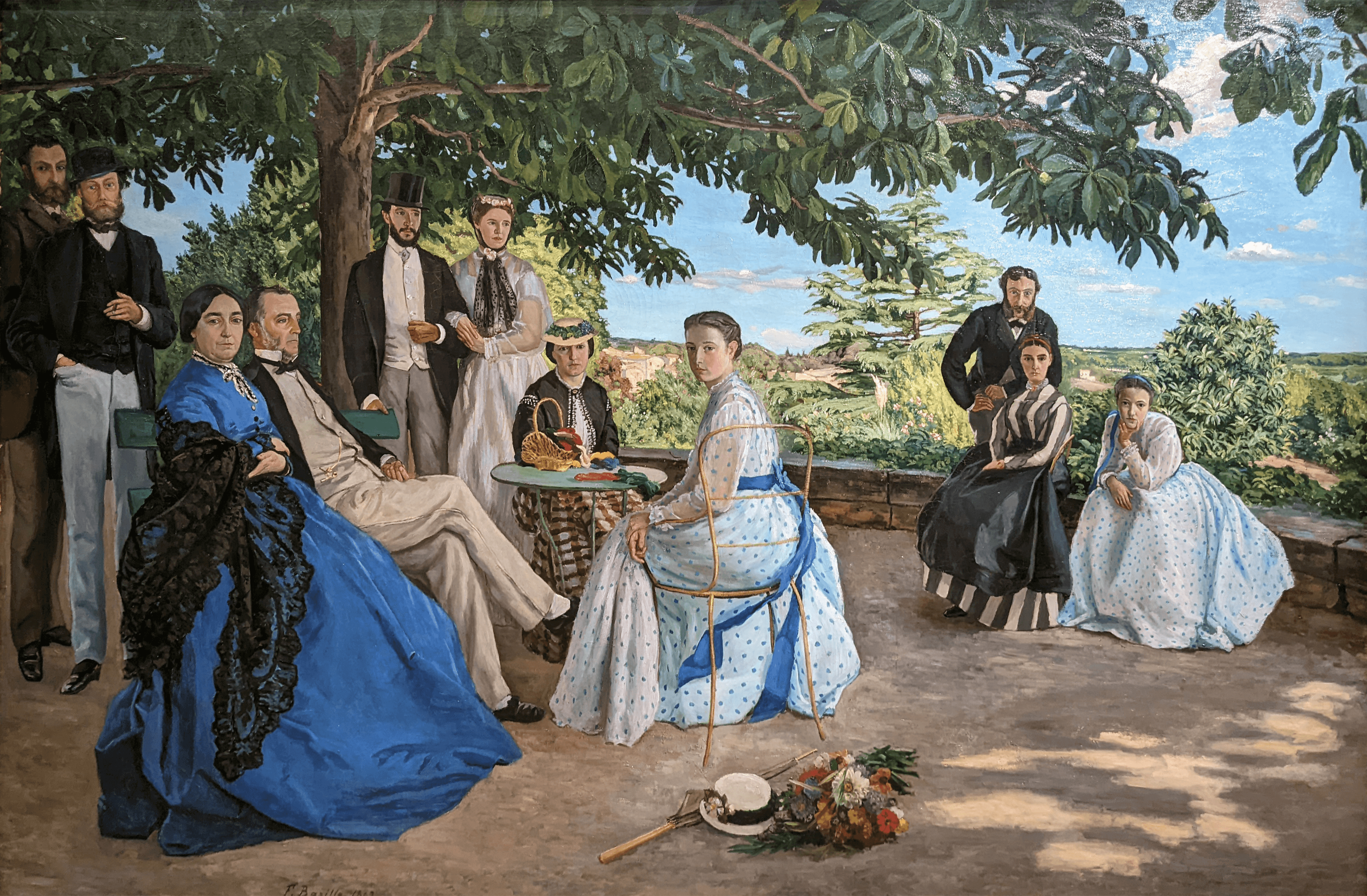
Frédéric Bazille was the tragedy of the group. Tall, aristocratic, genuinely gifted, he was the one who financially supported Monet and Renoir when they were broke. He died at 28 in the Franco-Prussian War (1870), before Impressionism even had a name. His Family Reunion (1867) is stunning — it has this strange, slightly uncomfortable quality, like a photograph where everyone knows they're being watched. What he might have become is one of art history's great open questions.
Camille Pissarro was the father figure of the group. Oldest of the core circle, most politically radical (anarchist), most generous with his teaching. He's the only one who exhibited in all eight Impressionist exhibitions. He mentored both Cézanne and Gauguin. His paintings of rural labor and peasant life give the movement a social conscience the others sometimes lacked. He is the moral center of Impressionism — the one who held the group together when it was fracturing, taught freely when others hoarded their methods, showed up when others made excuses, and painted with a consistency and seriousness that never wavered across six decades. He is also the most politically radical major painter of the 19th century, the oldest of the core circle, and the only one whose family came from outside Europe entirely. All of this makes him the most interesting Impressionist nobody talks about enough.
This surprises people. Pissarro was born in 1830 in Charlotte Amalie, the capital of what was then the Danish colony of St. Thomas in the Caribbean — now the US Virgin Islands. His father was a French-Jewish hardware merchant of Portuguese-Jewish descent whose family had originally come from Bordeaux. His mother was a Creole woman from the Dominican Republic, also of Jewish heritage. He grew up in the Caribbean, in a port town that was one of the busiest trading hubs in the Atlantic world — a genuinely cosmopolitan place where French, Danish, Dutch, English, African, and Jewish cultures overlapped in the market and on the docks. He was sent to school in France near Paris as a teenager, developed a passion for painting, returned briefly to St. Thomas to work in his father's shop, found it intolerable, and in 1852 ran away to Venezuela with a Danish painter named Fritz Melbye to paint for two years.
He arrived in Paris permanently in 1855, at twenty-five, having already lived a life most of his future colleagues couldn't have imagined. Monet was fifteen. Renoir was fourteen. Sisley was sixteen. Pissarro was already formed — already Caribbean, already Jewish, already someone who had chosen painting over the respectable life his father wanted. This background matters. His outsider status was not metaphorical or aesthetic. He was racially, ethnically, and nationally outside the French mainstream in ways that were concrete and sometimes dangerous. During the Dreyfus Affair — when Renoir and Degas descended into virulent antisemitism — Pissarro had skin in the game in a way they didn't. More on this later. ☀️