Created on
Updated on
左宗棠鸡算台湾菜吧,虽然是长沙人发明的没错
A Journey Through Hunanese Warfare, Imperial Decline, and the Birth of an American Icon
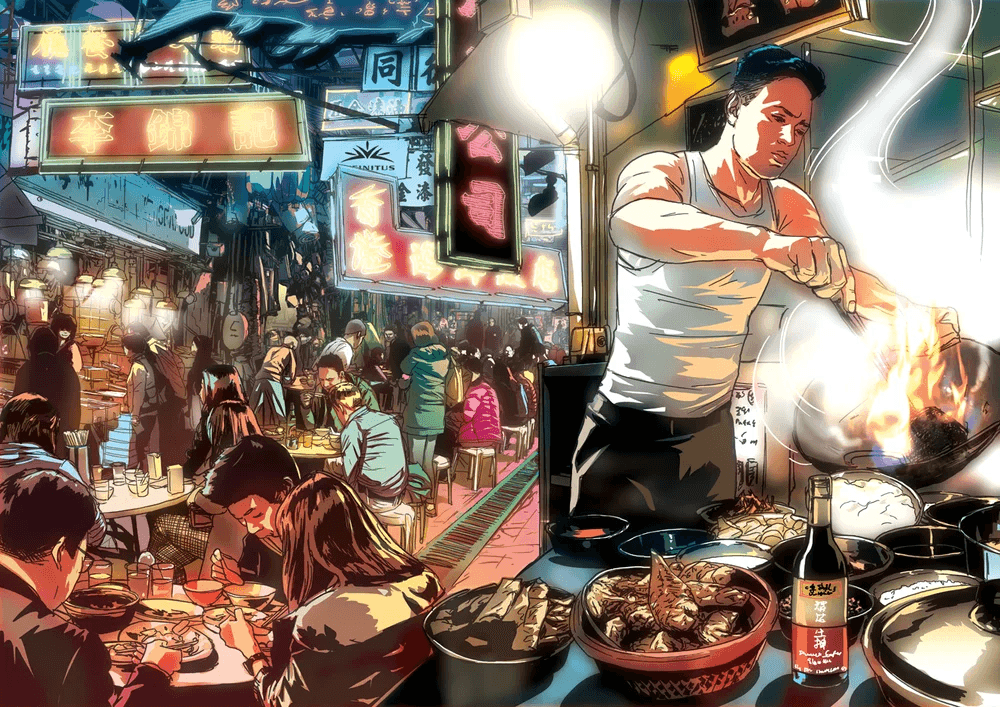
Preface:I wanted to know where General Tso's came from.
1)左宗棠鸡
左宗棠是湖南湘阴¹人,字季高²,号湘上农人。左宗棠没考中过进士³,早年种田为生,自学、实干,后来成为幕僚,所以自己叫自己农人。“湘”则是指湘江,左宗棠的家乡湘阴就在湘江之上。左宗棠出身书香门第,但考试总考不上。这很好理解,考试是按考官的思路来,对性格、思维各不同的学生来说,不见得是最能体现他们能力的考查方式。左宗棠一生未得进士,但事实证明,这样也可以成为将军。左宗棠被视为落榜秀才,但他自幼通经史、精地理、懂军事,有“半部兵书⁴治天下”的志气。ChatGPT称他为“天才型失败考生”,我觉得合理。他一生参加科举七次。七次,我一次高考都不想考,他却尝试了七次。屡战屡败,屡战屡败。事实证明,人不应该在别人发明的、不适合自己的制度和上升渠道上死磕。他是个杂学天才,虽然不会背八股文⁵,但通读《春秋》⁶、《左传》⁷、《资治通鉴》⁸、《汉书》⁹,精研儒学义理¹⁰。他不死读教条,而是用于现实政治与判断时局,常写读书笔记与讲学札记,著有《今经直解》¹¹、《左文襄公全集》¹²。
据说,他在地理与水利方面也颇有建树,精通中国地形地势、水利灌溉、农田分布。平定西北时,他亲自绘图踏查,规划运输与屯垦路线,了解沙漠、绿洲、山口、河流走向,是中国最早实地考察“丝绸之路地理走向”的高官之一。ChatGPT说,当时的京官很多连西域¹³在哪都说不清,而他可以手指地图讲出“从兰州¹⁴到吐鲁番该走哪条道”。军事方面也不错,虽然不是军人出身,左宗棠从小痴迷《孙子兵法》¹⁵、《吴子》¹⁶、《练兵实纪》¹⁷、《兵鉴》¹⁸等古兵书。他特别欣赏明末将领戚继光¹⁹、俞大猷²⁰,研究其兵制与练兵术,练兵主张“文武合一”、“将才不等于武夫”、“兵要有志气和纪律”,完全不同于八旗和绿营的腐烂旧制。曾国藩²¹慧眼识才,将他荐入幕府,说他:“谈兵三日,士气皆奋。”而“半部兵书治天下”这句话并不是左宗棠自己说的,而是后人对他的军事才能的赞誉,意思是“他靠一部兵书的一般内容,就能打下西北,收回新疆。”但左宗棠鸡却和左宗棠没有什么大关系。
左宗棠鸡是蒋介石御厨彭长贵的发明。彭长贵出生于湖南长沙,自幼跟随父亲学习湘菜厨艺。1930s,他进入南京的国民政府高级餐厅工作,成为当时重要宴会的厨房助手,后来晋升为主厨。他擅长湘菜、淮扬菜、川菜混合技法,尤其以刀工细腻、口味讲究闻名。抗战胜利后,彭长贵成为蒋介石与国民党高层的重要御厨,负责国宴、外交场合的菜单设计与执行。他曾亲手为尼克松夫妇、宋美龄、张学良等人烹饪。随着1949年国民政府迁往台湾,他也随政府前往台湾继续任职,主持多场重要国宴与高层接待。在台北,彭长贵开设彭园餐厅,提出“新湘菜”概念:融合湘菜辣味、川菜技法与台式讲究。他重塑传统中餐的宴会风格,引领台式高端中餐厅文化的雏形。这也使他在台湾厨艺界获得极高声望,被誉为“台湾宴席菜之父”。他在1955年台湾海峡危机期间,为来访的美军将领Arthur Radford 设计国宴菜肴,即兴创作了这道鸡肉料理,并以湖南名将左宗棠命名,以致敬其镇压19世纪叛乱的功绩。
1970年代初,几位纽约华人厨师为筹备纽约首家湖南餐厅赴台学习湖南菜,在彭长贵台北餐馆吃到这道鸡肉菜肴。他们将它改良成美式口味:加糖、酥炸、去骨、加入黑木耳、栗子、海鲜酱等,于是左宗棠鸡变成如今美国中餐馆常见的甜辣味版本。1973年,彭本人来到纽约,发现这道菜已先他一步在美传播。他与David Keh合办餐厅Uncle Peng’s,但初期遭遇冷遇,人们反而觉得他在模仿别人。后来,他重开“Peng’s”,并被《纽约时报》餐评人Mimi Sheraton称赞为“炙热酥香的杰作”。亨利·基辛格是其餐厅常客,据称“正是他让湖南菜走入公众视野”。彭长贵还在美国电视上展示这道菜做法,导致ABC电视台收到1500多个求食谱的请求。这道菜酥炸鸡块,裹以酸甜微辣酱汁,外脆里嫩,迅速走红。他以湖南籍将领左宗棠为名,增加历史感,也显得“地道中餐”。据说,左宗棠鸡是以湖南传统的酸辣酥炸鸡改良而来的,这道菜我确实记得我爸几个月前来美国看望我的时候做过。但奇怪的是,小时候我并没有吃过。我猜测左宗棠鸡可能是湖南版的的辣子鸡,辣子鸡也是炸过之后,再放花生、花椒、干辣椒,大油爆炒。和左宗棠鸡最初的设想很接近。
虽然原版更辛辣、酸度更重,但随着美国人口味变化,这道菜逐渐变得偏甜、浓酱,成为美式中餐的代表之一。尽管彭长贵晚年曾批评美国左宗棠鸡版本“又甜又腻,完全失真”,但他依旧是这道菜的命名者与原创者,并为中餐在美国的传播方式提供了一个重要范本,用熟悉语言包裹陌生食物,在妥协中生存,在创意中发展。彭长贵在1980年代末回到台湾,创办“彭园”连锁餐厅,菜单上保留“左宗棠鸡”,中文名为“左公农家鸡”,英文名为“chicken à la viceroy”。据说,他也尝试在长沙的长城饭店开设分店,但经营不善。这完全可以理解,毕竟左宗棠鸡离本地人的口味来说,还是偏甜了一些。他晚年回到台湾继续经营彭园餐厅,直至2016年去世,享年98岁。左宗棠鸡和左宗棠的关系,就好像南蛮和湖南的关系,听起来如雷贯耳、似乎很熟悉,但其实溯源的时候才能发现,和本意向去甚远。虽然已偏离原意很远,但这样的挪用和创新给文化交流带来了很大的积极影响。所谓的appropriation到底是利大于弊,还是在夺取原宗的话语权,则又是另一个很大的话题了。
2)
左宗棠虽然考了七次也没考上进士,但是还是能当上将军,得多谢一个人的提拔:曾国藩。曾国藩,原名曾子城,字伯涵,号涤生,1811年11月26日出生于清嘉庆十六年十月十一日,家乡在湖南省长沙府湘乡县涟水乡,也就是今湖南双峰县荷叶镇。湘乡地处湘中偏西,丘陵起伏,水田密布,是湖南的传统农业腹地。这里在清代属人文荟萃之地,自明以来多出秀才举人,民风勤朴、耕读传家。而湘阴位于湖南北部,地处洞庭湖东南岸,现在属岳阳市。两地在今天的湖南省地图上相距约150公里左右,在清代步行或骑马往返,约需三五天。虽然不算很近,但在湖南士绅文化圈中,这个距离不算远。尤其是对那些走科举路线、或在长沙等地读书、结交的士人来说。
左宗棠比曾国藩小十岁,生于1812年,但因左少年成名,才气横溢,所以二人较早就有耳闻。两人并非一开始就是朋友。相反,左宗棠早年看不上曾国藩,据说在长沙时,左宗棠批评曾国藩的文章干枯无味,而曾也视左为轻狂书生。左宗棠没走科举正途,虽才学惊人,但屡试不中,早早回乡务农,闭门讲学。他也因此对体制内官僚持有相当的不屑情绪。1850年代,曾国藩奉命组建湘军,开始在湖南大规模招募人才。这时左宗棠已经归隐多年,闭门讲《春秋》、研《农政》,颇有地方声望。湖南自古“尚文而重义”,既有理学的遗风,也有楚文化的血性。在这样的文化氛围下,曾家的家训强调忠孝廉耻、诗书礼义,虽家境并不显赫,却极为重视教育与品行。曾家世代为农,属“寒素之族”中的“士族余绪”,并非真正的地主或官宦之家,但有一定文化传统和读书习惯。祖父曾玉屏是读书人,父亲曾麟书则是典型的乡绅农人,未中科举,但在当地颇有声望。
曾国藩是家中长子,母亲区太夫人,性格刚烈持家有道,对曾国藩影响极大。他的成长经历中,母教远重于父训。他曾说:“吾之谨慎勤恳,得之于吾母。”可见母亲的约束和激励成为其人格的早期塑形力量。家中兄弟众多,共有六弟一妹,作为长子,曾国藩从小肩负“持家望宗”的责任,也为他后来严于律己、强调“修身为本”奠定心理基础。据他自述,曾国藩小时候并不聪明,背书极慢,读书常“日诵十页,明日遗七页”,比同龄人落后许多。他不是天赋型少年,而是意志型人物。他常常用“拙诚”来形容自己:拙于才,诚于志。他十几岁时赴长沙读书,多次应乡试不中,但每日仍五更起读、夜半不息,极端自律。他曾说:“吾生平所凭者,一念之诚耳。” 直到27岁时,才考中进士,入翰林院,算是寒门一跃,由此踏入帝国体制之内,进入朝廷的视野。这个出身看似普通,实则关键。正因不贵不贱、既非豪门也非赤贫,曾国藩具备了士人的精神坚韧与农人的现实韧性。他的“中间位置”,让他既有上升通道的饥渴,又没有既得利益的包袱,最终锤炼出一种“靠修身致达”的信仰。
胡林翼,湘军名将,曾国藩同僚与曾联名请左出山协助军务。曾国藩一开始也犹豫,毕竟早年有成见。但后来他读到左宗棠的文章,深感惊艳,“此人不可不交也”,于是主动致书相邀,称其为“旷代奇才”。“吾阅其所作,才气横溢,议论精当,真非常之人也。”这段话是曾国藩在阅读左宗棠所撰的《筹洋八策》之后的感慨。他此前对左并无太好印象,但看了文稿后,转而惊为天人,遂主动致信邀请左宗棠出山辅佐。他还说,“左季高胆识才略,远过予辈;然性刚不受制。”。“季高”是左宗棠的字。曾国藩在给胡林翼的信中评价左宗棠,说他才干远胜自己,但脾气暴烈、不肯服人,难以约束。他既敬重,又隐隐提防。即便是在临终前,据《曾国藩年谱》记载,他也曾说:“左文襄,栋梁之材,余不如也。”这是他对左宗棠的极高的评价。哪怕两人多年龃龉,他仍承认左宗棠在军事与国政上的杰出才能。左宗棠最终以“参谋”身份加入曾国藩幕府,被安排在湘军营帐中献策筹划。他虽非正规将官,但常参与重要军政决策。
湘军的创办人是曾国藩。他以“忠义、修身、持家、治国”的儒家理念训练士兵,选将不用旧军系统,而是重视“乡里子弟、操守端方、能文能武”。他认为:“兵贵在诚”,即士兵要忠诚,而非仅仅服从。他招募乡勇、训练团练、在湖南一地发展成军,后来扩展到多个省份。最初称为“湘勇”,后人称之为“湘军”。它不是清廷中央的八旗、绿营军,而是地方督抚自筹饷、自建队、自任命军官的“编外军队”。湘军的将领直接效忠于曾国藩、胡林翼、左宗棠等创建人,不听朝廷直接节制。经费靠地方筹措,指挥体系独立,是“半官方、半私人”的武装力量。这就是后来的“兵为将有”制度:士兵跟着将领走,军权归于人而非国家。它在战争时期灵活高效,但也为清末军阀割据埋下了根源。湘军的军事行动与主要“成就”是平定太平天国。尽管初战失败,曾国藩两次投水自杀未遂。后来,他凭借“练兵、屯田、重军纪”,逐渐稳住战局,与胡林翼、彭玉麟、左宗棠等将领协力,十年血战。1864年攻克天京,也就是今天的南京,太平天国灭亡。其他“功绩”包括与淮军合理镇压捻军,支援陕甘、参与镇压西北动乱,后由左宗棠继续西征新疆。湘军成为整个清朝后期最强悍、最纪律严明的军队。
3)
左宗棠的好朋友除了湘军创始人曾国藩,还有和他俩一起发起洋务运动的李鸿章。李鸿章不是湖南人,是安徽合肥人,当时属庐州府合肥县,生于1823年2月15日,水瓶座。Chatgpt说,水瓶座的特质包括思维独立、理性而富有远见,崇尚理智、追求进步,有点孤傲,但很有主见,有时显得冷静梳离,甚至不太在乎世俗的评价,喜欢新事物,愿意推进改革,但方式可能比较务实、策略性强。我爸妈都是水瓶座,我结合对他们的了解,这些也许属实,但也是只是比较好的那一方面而已。水瓶座的奇怪,chatgpt倒是一点没提。和李鸿章的两位朋友不一样,李鸿章19岁就中举,24岁考中进士,入翰林院成为庶吉士,师从曾国藩。早年以文人身份踏入仕途。这和现在的状况也差不多,没考上的成了考上了的少年的师傅。科举只是一条路,不必死磕。放今天也一样。曾国藩任命他为湘军干将,后来李鸿章在江浙一带自筹经费,自建淮军,参与围剿太平天国、捻军、回乱等。他的淮军也是晚清最精锐的地方武装之一。
太平天国是清朝晚期一次规模空前的农民起义,也是中国历史上死伤最惨重的内战之一。由一个叫洪秀全的哥们领导,起于广西,定都南京,那时候叫天京。他们和清政府对抗了十几年,最终还是被左宗棠和他的朋友平定了。太平天国的主要爆发原因是社会矛盾激烈,加上第一次鸦片战争后,清政府威信受损,民心动摇。清朝中期之后,土地不断集中在少数地主、豪绅手中,大量中小农破产,成为佃农、雇农,或者被迫流民化。佃农没有自己的土地,只能靠租别人的地来种庄稼,收入的一部分或者大部分要交给地主作为租金。租金一般是稻谷、小麦,不是现金、银票。据说一般地主和佃农五五分成,或者地主六成、佃农四成。佃农虽不等于奴隶,但社会地位很低。他们缺乏保障,没地、没权、没声援,易被剥削。因为收成大部分被地主拿走,积蓄很难累积。不少家庭几代人都是佃农,很难摆脱。而雇农,则是没办法租地,只靠给别人打工来换取工钱的农民,社会地位更低、更不稳定。破产农民无以为生,聚集为帮、为会,成为起义的重要基础力量。
虽然朝廷宣布“摊丁入亩”“地丁归并”,但地方官吏层层加码,各类“暂税”“养廉银”层出不穷,远超法定税额。同时,衙门吃空额,虚报员额、克扣军饷、私设关卡。贫民无力缴纳者往往被捕入狱或家产被抄,民怨极深。太平军初起之时的宣传口号就是“替天行道,救民水火”,许多百姓宁愿跟随太平军,也不愿再受官府欺压。洪秀全所处的广西,是客家移民与本地人长期冲突之地,械斗频繁。太平军早期主要成员多为客家人。很有趣的是,洪秀全还曾创“拜上帝教”,效仿西方基督教。洪秀全是寒门出生,曾多次参加科举不中。1837年,也就是洪秀全23岁的时候,再次落第。这次他精神崩溃了,陷入昏迷。他梦中“升天受命”,得“天父”启示。他自称被天使带上天庭,见到“金阙玉宫”,庄严宏伟,有神兵列阵。他会见“天父”与“天兄”。“天父”是白发老人,自称“上帝”。“天兄”是年轻人,自称“耶稣”,与洪秀全为“兄弟”;天父赐他金剑和印信,命他“扫除世间妖魔”,是指佛道神像、祖宗偶像、清朝皇帝。天父还责备他以前未信真道,命其回人间传扬“真神之道”。洪秀全醒来后,情绪极为激动,自觉被选中成为上帝在人间的代言人,担负拯救中华、重建人间乐土的重任。
洪秀全并没有立刻创教,而是在1843年,读到传教士梁发所写的基督教小册子《劝世良言》后,才将他梦中的“天父”“天兄”与“上帝”“耶稣”对接,从而完成了一个中西混合的“宗教解释体系”。他是“耶稣的弟弟”,他所奉的“上帝”是真神,其他神灵都是“妖魔”。他“受命救世”有了神学基础,不只是“梦”,而是“神启”。于是,洪秀全开始在广东、广西一带秘密传教,发展信徒,形成“拜上帝会”。信众多为下层百姓、失地农民和被压迫的客家人。他开始宣传反偶像、破旧俗,严禁烧香拜佛、祭祖、请风水等传统宗教活动。他们砸毁寺庙道观,清除神像祖牌。拜上帝教称儒释道为“三妖”,清皇帝为“妖孽”,主张彻底铲除“异端”。社会道德改革方面,他也开始提倡清廉、节制、禁酒、禁烟、禁赌。男女有别但强调男女平等,反对蓄妾纳妾,鼓励读书识字、家庭伦理、互助合作。
但拜上帝教并非纯宗教团体,而是高度政治化、军事化。洪秀全为“天王”,其下设“五王”体系,东、西、南、北、翼王,兼宗教与政治双重身份。每个信徒必须参与军政事务,接受“训令”“读经”,在军营中举行“拜上帝”礼仪。教义通过“诏书”“天条”“礼制”等传达,融合儒家格式、基督教内容、中国语言、政治号召,形成独特的政治、宗教、军事共同体。为了镇压太平天国,也由于自己的中央正规军八旗、绿营已无力应对,清廷批准曾国藩自筹经费、地方募兵,组建湘军。后又有李鸿章创立淮军。李鸿章培养的淮军骨干,晚清末期主持训练新建陆军,即“北洋新军”,以德式军事训练为核心。他被清廷任命为直隶总督兼北洋大臣,掌握清廷最精锐、最现代化的军队。
4) 鸦片
在18世纪末到19世纪初,中英之间的贸易基本是中国赚、英国亏。中国向英国出口的茶叶、丝绸、瓷器极受欢迎,尤其是茶叶成为英国人日常生活必需品。英国向中国出口方面,英国几乎没有竞争力的商品。而清政府只允许以白银进行交易。这导致英国白银大量流入中国,形成严重贸易逆差,损害了英国的经济利益,特别是东印度公司的利润。为了扭转逆差,英国东印度公司从其殖民地印度大规模种植罂粟,制造成鸦片,然后通过民间商人、走私渠道,非法输入中国市场。英国在印度种植鸦片 ,然后贩运至中国沿海,尤其是广东,用鸦片换中国的茶叶、丝绸、瓷器。中国商人将鸦片倒卖内地,获得白银再购英货或进口品,完成洗钱式的资本循环。
这直接导致1820年代开始,每年中国流失白银超过450万两。白银紧缩影响了清朝的税收体系、农民负担加重、物价波动。鸦片泛滥成灾,吸食群体从达官显贵扩展到军人、商贩、农民。劳动力下降、士兵战力崩溃、社会风气颓废。这引发清廷内部争议,有林则徐等人主张禁烟,也有人主张“开禁纳税”,即合法化鸦片贸易,以换取收入。1839年,林则徐赴广州禁烟,销毁两万多箱鸦片,也就是虎门销烟,被英国视为“侮辱国格与商权”,以此为由发动战争,和波士顿茶party如出一辙。鸦片不是单纯的毒品问题,而是中英贸易结构不平等、帝国主义掠夺、殖民经济全球化三重交汇的产物。1840年6月,英国派出远征军舰队,从印度出发,封锁珠江口。清廷也不是什么些靠谱的人,前脚让林则徐去硝烟,后脚急忙罢免林则徐,改派主和派琦善赴广州与英方谈判,但谈判未果。舰队转而北上,攻打厦门、宁波、舟山群岛,并驶入渤海湾,逼近天津口岸,威胁北京。
1841年1月,英军攻击广州要塞虎门炮台,清军被击溃。琦善与英方签订《穿鼻草约》,which 因为未获皇帝批准,导致他被撤职。英军不断南北推进,攻占厦门、宁波、定海等地。朝廷更换将领多次,耆英、奕山等人相继主战主和。战局愈发不利,英军兵锋直逼江南。1842年夏,英军溯江而上,攻占上海吴淞 ,攻下江苏镇江,彻底切断京杭大运河交通线,对清廷构成毁灭性战略压力。1842年8月,清政府派出耆英、伊里布代表,与英方在南京江面英舰“康华丽号”上签订《南京条约》,赔款2100万银元,割让香港岛。开放广州、厦门、福州、宁波、上海,五口通商,并给予英国“最惠国待遇”。鸦片战争至此宣告失败,清政府在百姓心中失去“天命之威”。《南京条约》签订后,赔款、通商、割地香港等让普通百姓首次认识到“天朝上国”神话破灭,许多人对清廷彻底失望。
而第二次鸦片战争,又称英法联军之役,起因比第一次更加复杂,不再仅仅是鸦片贸易本身,而是牵涉到外交特权、通商权益、宗教传教、帝国主义扩张等一系列矛盾。《南京条约》签了,但问题没解决。鸦片贸易并未真正被禁止,反而更加猖獗。英国虽然获得了“五口通商”,但仍不满意。他们希望驻京外交使节,希望通商城市扩大到内地,希望“传教自由”,更希望鸦片贸易合法化。清廷在条约执行上极为消极,英国觉得该得的利益没得到,处处受限。
1856年,一艘名叫Arrow的小船,挂着英国旗帜、实为中国船只,在广州被清朝水师查缉走私时登船搜人。清军拘捕了12名华人船员,并摘下了英国旗帜。英国领事巴夏礼Harry Parkes指责清军“侮辱国旗、非法抓人”,要求赔礼道歉。清廷未及时回应,英国随即用炮舰轰击广州,掀起战端。这是英国故意挑起矛盾:这艘船的英国旗照理已无效,英国知道这一点,却故意炒作为“外交羞辱”,以此为借口重启战争。于是法国也借口出兵:马神甫事件。1856年,法国传教士Maistre在广西被当地人杀害。法国以“传教士遇害”为由,加入英国阵营,组成“英法联军”。1857年,战争爆发。英法联军联合进攻广州,俘虏两广总督叶名琛。1858年北上威胁天津,迫使清廷签订《天津条约》,承认西方使节可驻京,开放更多通商口岸,宗教自由,巨额赔款。没写明鸦片合法化,但暗含默许。然而,条约签了之后,清廷拒绝批准、拒绝让使节进京,引发第二阶段冲突。
1860年,英法联军北上至通州,与清军激战。谈判期间,清军诱捕英法使节与随从共39人。英国谈判代表 Harry Parkes一度被囚,虽幸存,但其中20余名西方人士,包括记者、士兵等,被酷刑折磨致死。英国特使额尔金为“惩罚清廷的野蛮行径”,最终决定不袭击紫禁城、不伤害皇帝,而是焚毁圆明园,作为“象征性的文明惩罚”。圆明园是清代皇家三园之一,其他两个是长春园、绮春园,总称“圆明三园”。它不仅是皇家行宫,更是文化艺术与园林建筑的集大成者。内藏大量珍宝、书籍、书画、文物,是“万园之园”。联军先抢掠、后焚毁,火烧持续了三天,绝大部分建筑被毁,文物流散全球。下次去大英博物馆看看,都抢了些啥。1860年,英法再度联军北上,在通州八里桥战役中清军再次惨败。联军直逼北京,焚毁圆明园作为报复。咸丰皇帝逃往热河避难。清廷被迫签订《北京条约》,承认《天津条约》所有条款,割让九龙半岛一部分,正式承认传教自由,默认鸦片贸易合法化,开放更多港口,包括内陆城市。第一次鸦片战争之后爆发了太平天国运动,十四年后被左宗棠和他的朋友们平定。为了平定太平天国成立的湘军、淮军,以及后来的北洋军,也成为了后来和清朝抗争的军阀。而湘军和北洋军成为了共产党和国民党的内战的先行。历史总是这么环环相扣,太有意思。
1) General Tso’s Chicken
Zuo Zongtang was a native of Xiangyin, Hunan; his courtesy name was Jigao, and his pseudonym was the "Farmer of the Upper Xiang." Zuo Zongtang never passed the Jinshi (highest imperial exam). In his early years, he made a living by farming, was self-taught, and practiced hands-on work. Later, he became a legal advisor (aide), which is why he called himself a "farmer." "Xiang" refers to the Xiang River; Zuo Zongtang’s hometown, Xiangyin, sits upon the Xiang River. Zuo came from a scholarly family, but he always failed the exams. This is easy to understand: exams follow the logic of the examiner; for students with different personalities and ways of thinking, it is not necessarily the best way to reflect their abilities. Zuo Zongtang never obtained the Jinshi degree in his life, but as facts proved, one can still become a general this way. Zuo Zongtang was regarded as a "failed scholar," but from childhood, he was well-versed in the classics and history, proficient in geography, and understood military affairs, possessing the ambition to "rule the world with half a military book." ChatGPT calls him a "genius-type failed candidate," which I find reasonable. He participated in the imperial examinations seven times in his life. Seven times! I don't even want to take the Gaokao (college entrance exam) once, yet he tried seven times. Repeated battles, repeated defeats; repeated battles, repeated defeats. Facts prove that people should not stubbornly persist in systems and promotion channels invented by others that do not suit them. He was a polymath genius; although he could not recite "eight-legged essays," he read through the Spring and Autumn Annals, Zuo Zhuan, Zizhi Tongjian, and the Book of Han, and deeply studied Confucian principles. He did not read dogmas blindly but applied them to real-world politics and judging the current situation. He often wrote reading notes and lecture journals, authoring Direct Explanation of Modern Classics and The Collected Works of Duke Zuo Wenxiang.
It is said that he also made significant achievements in geography and water conservancy, being proficient in China's terrain, irrigation, and farmland distribution. When pacifying the Northwest, he personally drew maps and conducted field surveys, planning transport and settlement routes, and understanding the trends of deserts, oases, mountain passes, and rivers. He was one of the earliest high-ranking officials in China to conduct field investigations of the "geographical path of the Silk Road." ChatGPT says that many capital officials at the time couldn't even say where the Western Regions were, but he could point to a map and explain "which road to take from Lanzhou to Turpan." His military side was also good; though not from a military background, Zuo Zongtang was obsessed since childhood with ancient military books like The Art of War, Wuzi, Records of Military Training, and Military Mirror. He especially admired the late Ming generals Qi Jiguang and Yu Dayou, studying their military systems and training techniques. He advocated for "the unity of the civil and military," "military talent is not equal to a mere brute," and "soldiers must have ambition and discipline," which was completely different from the rotten old systems of the Eight Banners and the Green Standard Army. Zeng Guofan had an eye for talent and recommended him to his headquarters, saying of him: "After talking about war for three days, the morale of the soldiers was all aroused." The phrase "ruling the world with half a military book" was not said by Zuo Zongtang himself, but was the praise of later generations for his military talent, meaning "he could conquer the Northwest and recover Xinjiang relying on just the general contents of one military book." However, General Tso’s Chicken has almost nothing to do with Zuo Zongtang.
General Tso’s Chicken is the invention of Chiang Kai-shek’s royal chef, Peng Chang-kuei. Peng Chang-kuei was born in Changsha, Hunan, and followed his father to learn Hunanese (Xiang) culinary arts since childhood. In the 1930s, he entered the high-end restaurants of the Nationalist Government in Nanjing, becoming a kitchen assistant for important banquets of the time, and later promoted to head chef. He was skilled in the mixed techniques of Hunan, Huaiyang, and Sichuan cuisines, and was especially famous for his delicate knife work and refined tastes. After the victory of the Anti-Japanese War, Peng Chang-kuei became an important royal chef for Chiang Kai-shek and high-ranking Kuomintang officials, responsible for the design and execution of menus for state banquets and diplomatic occasions. He personally cooked for the Nixons, Soong Mei-ling, and Zhang Xueliang. Following the Nationalist Government's move to Taiwan in 1949, he also went to Taiwan to continue his service, presiding over many important state banquets and high-level receptions. In Taipei, Peng Chang-kuei opened the Pengyuan Restaurant and proposed the concept of "New Hunan Cuisine": a fusion of Hunanese spiciness, Sichuanese techniques, and Taiwanese refinement. He reshaped the banquet style of traditional Chinese food, leading the prototype of Taiwanese high-end Chinese restaurant culture. This also earned him extremely high prestige in the Taiwanese culinary world, being hailed as the "Father of Taiwan Banquet Cuisine." During the 1955 Taiwan Strait Crisis, while designing state banquet dishes for the visiting U.S. Admiral Arthur Radford, he improvised this chicken dish and named it after the famous Hunanese General Zuo Zongtang to pay tribute to his achievements in suppressing 19th-century rebellions.
In the early 1970s, several New York Chinese chefs went to Taiwan to learn Hunanese cuisine in preparation for New York's first Hunanese restaurant, where they ate this chicken dish at Peng Chang-kuei’s Taipei restaurant. They modified it to suit American tastes: adding sugar, deep-frying it, removing bones, and adding wood ear mushrooms, chestnuts, hoisin sauce, etc. Thus, General Tso’s Chicken became the sweet-and-spicy version common in American Chinese restaurants today. In 1973, Peng himself came to New York and discovered that this dish had spread across America before him. He co-founded the restaurant Uncle Peng’s with David Keh, but initially encountered a cold reception—people actually felt he was imitating others. Later, he reopened "Peng’s" and was praised by New York Times food critic Mimi Sheraton as a "masterpiece of sizzling crispness." Henry Kissinger was a regular at his restaurant; it is claimed that "it was he who brought Hunan cuisine into the public eye." Peng Chang-kuei also demonstrated the recipe for this dish on American television, leading ABC to receive over 1,500 requests for the recipe. This dish of deep-fried chicken chunks, coated in a sweet, sour, and slightly spicy sauce—crispy on the outside and tender on the inside—quickly became a hit. He used the name of the Hunanese General Zuo Zongtang to increase the sense of history and make it seem like "authentic Chinese food." It is said that General Tso’s Chicken was modified from traditional Hunanese Sour and Spicy Crispy Fried Chicken; I do remember my dad making this dish a few months ago when he came to visit me in the U.S. But strangely, I didn't eat it when I was a child. I guess General Tso’s Chicken might be the Hunanese version of "Lazi Ji" (Spicy Chicken); Lazi Ji is also stir-fried with high oil after being fried, then adding peanuts, Sichuan peppercorns, and dried chilies. It is very close to the original conception of General Tso’s Chicken.
Although the original version was spicier and more acidic, as American tastes changed, this dish gradually became sweeter with a thicker sauce, becoming one of the representatives of American Chinese food. Although Peng Chang-kuei criticized the American version of General Tso’s Chicken in his later years as "sweet and greasy, completely distorted," he remains the namer and original creator of this dish, providing an important model for the way Chinese food spread in the United States—wrapping unfamiliar food in familiar language, surviving through compromise, and developing through creativity. Peng Chang-kuei returned to Taiwan in the late 1980s and founded the "Pengyuan" chain of restaurants, keeping "General Tso’s Chicken" on the menu, with the Chinese name "Zuo Gong's Farmhouse Chicken" and the English name "chicken à la viceroy." It is said that he also tried to open a branch at the Great Wall Hotel in Changsha, but it was poorly managed. This is completely understandable—after all, General Tso’s Chicken is still a bit too sweet compared to the tastes of the local people. He returned to Taiwan in his later years to continue operating Pengyuan Restaurant until he passed away in 2016 at the age of 98. The relationship between General Tso’s Chicken and Zuo Zongtang is like the relationship between "Nanman" (Southern Barbarians) and Hunan—it sounds thunderous and seemingly familiar, but in fact, you only find out when tracing the source that it is far removed from the original meaning. Although it has deviated far from the original intent, such appropriation and innovation have brought a great positive impact on cultural exchange. Whether so-called "appropriation" does more good than harm, or whether it is seizing the discourse power of the original source, is another very large topic.
2) The Patron: Zeng Guofan
Although Zuo Zongtang failed to pass the Jinshi exam seven times, he was still able to become a general; for this, he had to thank one person's promotion: Zeng Guofan. Zeng Guofan, originally named Zeng Zicheng, courtesy name Bohan, pseudonym Disheng, was born on November 26, 1811 (the 11th day of the 10th lunar month in the 16th year of the Jiaqing reign). His hometown was Lianshui Township, Xiangxiang County, Changsha Prefecture, Hunan Province—which is today’s Heye Town, Shuangfeng County, Hunan. Xiangxiang is located in the west-central part of Hunan, with rolling hills and dense paddy fields; it is a traditional agricultural heartland of Hunan. During the Qing Dynasty, this was a place where cultural talents gathered; many Xiucai and Juren scholars had emerged since the Ming Dynasty, and the folk customs were diligent and simple, with a tradition of farming and studying passing through generations. Meanwhile, Xiangyin is located in northern Hunan, on the southeastern shore of Dongting Lake, now belonging to Yueyang City. On today's map of Hunan Province, the two places are about 150 kilometers apart; in the Qing Dynasty, traveling back and forth by foot or horseback would take about three to five days. Although not very close, in the cultural circle of the Hunanese gentry, this distance was not considered far—especially for those scholars who took the imperial examination route or studied and made friends in places like Changsha.
Zuo Zongtang was ten years younger than Zeng Guofan, born in 1812, but because Zuo became famous at a young age and was overflowing with talent, the two had heard of each other early on. The two were not friends at the start. On the contrary, in his early years, Zuo Zongtang looked down on Zeng Guofan; it is said that while in Changsha, Zuo Zongtang criticized Zeng Guofan's essays as dry and tasteless, while Zeng also viewed Zuo as a frivolous scholar. Zuo Zongtang did not follow the orthodox imperial examination path; although his scholarship was startling, he failed the exams repeatedly and returned home early to farm and teach in seclusion. Because of this, he held a considerable sense of disdain toward the bureaucrats within the system. In the 1850s, Zeng Guofan was ordered to form the Xiang Army and began to recruit talent on a large scale in Hunan. At this time, Zuo Zongtang had been in seclusion for many years, teaching the Spring and Autumn Annals and studying "Agricultural Administration," and held quite a bit of local prestige. Since ancient times, Hunan has "valued literature and emphasized righteousness," possessing both the legacy of Neo-Confucianism and the bloodiness of Chu culture. In such a cultural atmosphere, the Zeng family's instructions emphasized loyalty, filial piety, integrity, and shame, as well as poetry, books, rites, and righteousness. Although the family circumstances were not prominent, they placed extreme importance on education and character. The Zeng family had been farmers for generations, belonging to the "remnants of the scholar class" within the "plain families"—they were not true landlords or official families, but had a certain cultural tradition and reading habits. The grandfather, Zeng Yuping, was a literate man, while the father, Zeng Linshu, was a typical gentry farmer who did not pass the imperial exams but had quite a reputation locally.
Zeng Guofan was the eldest son; his mother, Madame Qu, had a resolute character and managed the household well, exerting a huge influence on Zeng Guofan. In his upbringing, his mother's teaching was far more important than his father's discipline. He once said: "My prudence and diligence were obtained from my mother." It can be seen that his mother’s restraint and encouragement became the early shaping force of his personality. There were many brothers in the family—six younger brothers and one younger sister—and as the eldest son, Zeng Guofan carried the responsibility of "maintaining the household and bringing hope to the clan" from a young age, which also laid the psychological foundation for his later strict self-discipline and emphasis on "self-cultivation as the root." According to his own account, Zeng Guofan was not clever as a child; he was extremely slow at memorizing books, often "reciting ten pages a day, but forgetting seven the next day," lagging far behind his peers. He was not a talent-type youth, but a willpower-type figure. He often used "clumsy sincerity" to describe himself: clumsy in talent, sincere in ambition. In his teens, he went to Changsha to study and failed the provincial exams many times, but he still rose at the fifth watch to read and did not stop until midnight, with extreme self-discipline. He once said: "What I have relied on in my life is but a single thought of sincerity." Not until the age of 27 did he pass the Jinshi exam and enter the Hanlin Academy, which was a leap from a humble family, thus stepping into the imperial system and entering the court's field of vision. This background seems ordinary but was actually key. Precisely because he was neither noble nor lowly—neither from a wealthy family nor in abject poverty—Zeng Guofan possessed the mental toughness of a scholar and the realistic resilience of a farmer. His "middle position" gave him both the hunger for an upward channel and the lack of burden of vested interests, eventually tempering a belief in "attaining goals through self-cultivation."
Hu Linyi, a famous general of the Xiang Army and a colleague of Zeng Guofan, jointly invited Zuo to come out and assist with military affairs with Zeng. Zeng Guofan was also hesitant at first, after all, there were early prejudices. But later he read Zuo Zongtang’s articles and was deeply impressed: "This person must be befriended," so he took the initiative to write a letter of invitation, calling him a "genius of the ages." "I have read what he wrote; his talent is overflowing and his arguments are precise; he is truly an extraordinary person." This passage was Zeng Guofan’s lament after reading the Eight Strategies for Maritime Defense written by Zuo Zongtang. He previously had no good impression of Zuo, but after reading the manuscript, he turned to view him as a god-like figure and took the initiative to write to invite Zuo Zongtang to come out and assist him. He also said, "Zuo Jigao's courage, insight, and talent far exceed ours; however, his nature is rigid and he does not accept control." "Jigao" is Zuo Zongtang's courtesy name. In a letter to Hu Linyi, Zeng Guofan evaluated Zuo Zongtang, saying his talent was far superior to his own, but his temper was violent, he refused to submit to others, and was difficult to restrain. He both respected and subtly guarded against him. Even before his death, according to the Chronological Biography of Zeng Guofan, he once said: "Zuo Wenxiang is a pillar of the state; I am not as good as he." This was his extremely high evaluation of Zuo Zongtang. Even though the two had bickered for many years, he still acknowledged Zuo Zongtang’s outstanding talent in military and national affairs. Zuo Zongtang eventually joined Zeng Guofan's staff as a "counselor," arranged in the Xiang Army camp to offer strategies and planning. Although not a formal general, he often participated in important military and political decisions.
The founder of the Xiang Army was Zeng Guofan. He trained soldiers with the Confucian concepts of "loyalty, righteousness, self-cultivation, household management, and state governance." He did not use the old military system for selecting generals but emphasized "hometown youths, upright in conduct, capable in both literary and military affairs." He believed: "In the military, sincerity is valuable," meaning soldiers should be loyal, not just obedient. He recruited local braves, trained militia, and developed them into an army in Hunan, later expanding to several provinces. Initially called "Xiang Braves," later generations called them the "Xiang Army." It was not the central Eight Banners or Green Standard Army of the Qing court, but an "off-budget army" for which local governors raised their own funds, built their own teams, and appointed their own officers. The generals of the Xiang Army were directly loyal to founders like Zeng Guofan, Hu Linyi, and Zuo Zongtang, and were not under the direct control of the court. Funds were raised locally, and the command system was independent; it was a "semi-official, semi-private" armed force. This was the later "soldiers belong to the general" system: soldiers follow the general, and military power belongs to the person rather than the state. It was flexible and efficient during wartime, but it also buried the roots for the warlord separatism of the late Qing. The military actions and main "achievements" of the Xiang Army were the pacification of the Taiping Heavenly Kingdom. Despite initial defeats, where Zeng Guofan twice attempted suicide by jumping into water unsuccessfully, he later relied on "training troops, farming for self-sufficiency, and emphasizing military discipline" to gradually stabilize the war situation, working together with generals like Hu Linyi, Peng Yulin, and Zuo Zongtang through ten years of bloody battle. In 1864, they captured Tianjing—which is today’s Nanjing—and the Taiping Heavenly Kingdom perished. Other "merits" included the joint suppression of the Nian Rebellion with the Huai Army, supporting Shaanxi and Gansu, and participating in the suppression of the Northwest unrest, followed by Zuo Zongtang continuing the Western expedition to Xinjiang. The Xiang Army became the toughest and most disciplined army in the entire late Qing Dynasty.
3) Rebellion and the Aquarius Diplomat
Zuo Zongtang’s good friends, besides the Xiang Army founder Zeng Guofan, also included Li Hongzhang, who launched the Self-Strengthening Movement with them. Li Hongzhang was not from Hunan; he was from Hefei, Anhui—at that time belonging to Hefei County, Luzhou Prefecture—born on February 15, 1823, an Aquarius. ChatGPT says the traits of Aquarius include independent thinking, being rational and far-sighted, advocating reason, pursuing progress, being a bit proud, but very assertive; sometimes appearing calm and detached, even not caring much about worldly evaluations; liking new things and willing to push reforms, but the methods might be relatively pragmatic and strategic. Both my parents are Aquarians; combining my understanding of them, these might be true, but they are only the better side of it. As for the weirdness of Aquarius, ChatGPT didn't mention it at all. Unlike Li Hongzhang's two friends, Li Hongzhang passed the provincial exam at 19 and the Jinshi exam at 24, entering the Hanlin Academy as a Shujishi (Bachelor) and studying under Zeng Guofan. In his early years, he entered officialdom as a scholar. This is quite similar to the current situation—the ones who didn't pass became the teachers of the youths who did. The imperial exam is just one path; one doesn't have to stick to it stubbornly. It’s the same today. Zeng Guofan appointed him as a key figure in the Xiang Army; later, Li Hongzhang raised his own funds in the Jiangsu and Zhejiang areas, built the Huai Army, and participated in the encirclement and suppression of the Taiping Heavenly Kingdom, the Nian Rebellion, and the Muslim Rebellions. His Huai Army was also one of the most elite local armed forces of the late Qing.
The Taiping Heavenly Kingdom was an unprecedented peasant uprising in the late Qing Dynasty and one of the bloodiest civil wars in Chinese history. Led by a fellow named Hong Xiuquan, it started in Guangxi and set its capital in Nanjing, which was called Tianjing at the time. They fought the Qing government for over a decade and were eventually pacified by Zuo Zongtang and his friends. The main reasons for the outbreak of the Taiping Heavenly Kingdom were intense social contradictions, coupled with the loss of the Qing government's prestige and the shaking of people's hearts after the First Opium War. After the mid-Qing period, land was continuously concentrated in the hands of a few landlords and gentry; a large number of small and medium farmers went bankrupt, becoming tenant farmers, hired laborers, or forced to become vagrants. Tenant farmers had no land of their own and could only rely on renting others' land to grow crops; a portion or most of the income had to be given to the landlord as rent. Rent was generally rice or wheat, not cash or bank notes. It is said that generally, landlords and tenant farmers split fifty-fifty, or the landlord took sixty percent and the tenant forty percent. Although tenant farmers were not equal to slaves, their social status was very low. They lacked protection—no land, no power, no voice—and were easily exploited. Because most of the harvest was taken by the landlord, it was hard to accumulate savings. Many families were tenant farmers for generations and found it hard to escape. As for hired laborers, they were farmers who had no way to rent land and relied solely on working for others to earn wages; their social status was even lower and more unstable. Bankrupt farmers had no way to make a living and gathered into gangs or societies, becoming the important foundational force of the uprising.
Although the court announced the "merging of the poll tax into the land tax," local officials added layers of extra charges; various "temporary taxes" and "integrity silver" emerged endlessly, far exceeding the legal tax amount. At the same time, the government offices took "phantom pay," falsely reporting the number of personnel, embezzling military pay, and setting up private checkpoints. Poor people who could not pay were often arrested and imprisoned or had their property confiscated; public grievances were extremely deep. When the Taiping Army first rose, the propaganda slogan was "acting on behalf of Heaven to save the people from fire and water"; many people would rather follow the Taiping Army than suffer the oppression of the government again. Hong Xiuquan’s Guangxi was a place of long-term conflict and frequent feuds between Hakka immigrants and locals. Early members of the Taiping Army were mostly Hakka people. Interestingly, Hong Xiuquan also created the "God Worshipping Society," imitating Western Christianity. Hong Xiuquan was born into a humble family and failed the imperial exams many times. In 1837, which was when Hong Xiuquan was 23 years old, he failed again. This time he had a mental breakdown and fell into a coma. In his dream, he "ascended to heaven and received his mission," obtaining revelations from the "Heavenly Father." He claimed to have been taken to the heavenly court by an angel, where he saw the "Golden Palace and Jade Hall," solemn and magnificent, with divine soldiers lined up. He met the "Heavenly Father" and "Heavenly Brother." The "Heavenly Father" was a white-haired old man calling himself "God." The "Heavenly Brother" was a young man calling himself "Jesus," who was "brothers" with Hong Xiuquan; the Heavenly Father gave him a golden sword and a seal, commanding him to "sweep away the demons of the world," referring to Buddhist and Taoist statues, ancestral idols, and the Qing Emperor. The Heavenly Father also rebuked him for not believing in the true way before and commanded him to return to the human world to spread the "Way of the True God." After Hong Xiuquan woke up, he was extremely agitated, feeling he was chosen to be God’s spokesperson on earth, burdened with the heavy responsibility of saving China and rebuilding an earthly paradise.
Hong Xiuquan did not create the religion immediately; it was only in 1843, after reading the Christian pamphlet Good Words to Admonish the Age written by the missionary Liang Fa, that he connected the "Heavenly Father" and "Heavenly Brother" in his dream with "God" and "Jesus," thereby completing a mixed Sino-Western "religious interpretation system." He was "Jesus's younger brother," the "God" he served was the true God, and other deities were "demons." His "mission to save the world" now had a theological basis—it was not just a "dream," but a "divine revelation." Thus, Hong Xiuquan began to preach secretly in the Guangdong and Guangxi areas, developing followers and forming the "God Worshipping Society." Most of the followers were lower-class people, landless farmers, and oppressed Hakka people. He began to promote anti-idolatry and the breaking of old customs, strictly forbidding traditional religious activities such as burning incense, worshipping Buddha, sacrificing to ancestors, or consulting Feng Shui. They smashed temples and Taoist monasteries and cleared away statues and ancestral tablets. The God Worshipping Society called Confucianism, Buddhism, and Taoism the "Three Demons" and the Qing Emperor the "evil creature," advocating for the complete eradication of "heresy." Regarding social moral reform, he also began to advocate for integrity, moderation, and the banning of alcohol, tobacco, and gambling. Men and women were separated but gender equality was emphasized; he opposed keeping concubines and encouraged reading, literacy, family ethics, and mutual cooperation.
But the God Worshipping Society was not a pure religious group; it was highly politicized and militarized. Hong Xiuquan was the "Heavenly King," under whom was a "Five Kings" system—the Kings of the East, West, South, North, and the Wing King—holding dual religious and political identities. Every follower had to participate in military and political affairs, accept "instructions" and "scripture reading," and hold "God-worshipping" rituals in the military camps. Doctrines were transmitted through "edicts," "heavenly rules," and "ceremonial systems," merging Confucian formats, Christian content, the Chinese language, and political calls to form a unique political, religious, and military community. To suppress the Taiping Heavenly Kingdom, and because its own central regular armies—the Eight Banners and Green Standard—were unable to cope, the Qing court approved Zeng Guofan to raise his own funds and recruit local soldiers to form the Xiang Army. Later, Li Hongzhang founded the Huai Army. The backbone of the Huai Army trained by Li Hongzhang presided over the training of the New Army in the late Qing period, namely the "Beiyang New Army," with German-style military training as its core. He was appointed by the Qing court as the Governor-General of Zhili and the Minister of Beiyang, controlling the most elite and modern army of the Qing court.
4) Opium
Between the late 18th century and early 19th century, the trade between China and Britain was basically China making money and Britain losing money. China's exports of tea, silk, and porcelain to Britain were extremely popular; especially tea became a necessity of daily life for the British. Regarding Britain's exports to China, Britain had almost no competitive goods. Moreover, the Qing government only allowed transactions to be conducted in silver. This led to a massive influx of British silver into China, forming a serious trade deficit and damaging British economic interests, especially the profits of the East India Company. To reverse the deficit, the British East India Company grew poppies on a large scale in its colony, India, manufactured opium, and then illegally imported it into the Chinese market through private merchants and smuggling channels. Britain grew opium in India, then transported it to the Chinese coast, especially Guangdong, exchanging opium for China's tea, silk, and porcelain. Chinese merchants resold the opium inland, obtaining silver to buy British goods or imported items, completing a money-laundering style of capital circulation.
This directly led to China losing more than 4.5 million taels of silver annually starting in the 1820s. The silver contraction affected the Qing Dynasty's tax system; the burden on farmers increased, and prices fluctuated. Opium spread like a plague; the consuming group expanded from high-ranking officials and nobles to soldiers, vendors, and farmers. Labor productivity fell, the combat effectiveness of soldiers collapsed, and social atmosphere became decadent. This triggered disputes within the Qing court; some, like Lin Zexu, advocated for a ban on opium, while others advocated for "lifting the ban and collecting taxes"—that is, legalizing the opium trade in exchange for revenue. In 1839, Lin Zexu went to Guangzhou to ban opium and destroyed more than 20,000 chests of opium—this was the Humen Destruction of Opium—which was viewed by Britain as an "insult to national dignity and commercial rights," using this as a reason to launch a war, just like the Boston Tea Party. Opium was not a simple drug problem, but a product of the intersection of the unequal China-Britain trade structure, imperialist plunder, and colonial economic globalization. In June 1840, Britain sent an expeditionary fleet starting from India to blockade the Pearl River estuary. The people in the Qing court were not reliable either; one moment they sent Lin Zexu to destroy the opium, the next they hastily dismissed Lin Zexu and sent the peace-party member Qishan to Guangzhou to negotiate with the British, but the negotiations failed. The fleet then turned north, attacking Xiamen, Ningbo, and the Zhoushan Islands, and sailed into Bohai Bay, approaching the Tianjin port and threatening Beijing.
In January 1841, the British army attacked the Humen forts, the gateway to Guangzhou, and the Qing army was defeated. Qishan signed the Chuenpi Convention with the British, which, because it did not receive the emperor's approval, led to his dismissal. The British army continuously pushed north and south, occupying Xiamen, Ningbo, Dinghai, and other places. The court changed generals many times; Qiying, Yishan, and others took turns advocating for war or peace. The war situation became increasingly unfavorable, and the British military edge directly approached the Jiangnan region. In the summer of 1842, the British army sailed up the river, occupying Wusong in Shanghai and capturing Zhenjiang in Jiangsu, completely cutting off the Grand Canal transportation line and posing a destructive strategic pressure on the Qing court. In August 1842, the Qing government sent representatives Qiying and Ilibu to sign the Treaty of Nanking with the British on the British ship "Cornwallis" in the waters of Nanjing, paying an indemnity of 21 million silver dollars and ceding Hong Kong Island. They opened Guangzhou, Xiamen, Fuzhou, Ningbo, and Shanghai—the five treaty ports—and gave Britain "most-favored-nation status." The Opium War was thus declared a failure, and the Qing government lost its "authority of the Mandate of Heaven" in the hearts of the people. After the Treaty of Nanking was signed, the indemnity, trade, and cession of Hong Kong made ordinary people realize for the first time that the myth of the "Celestial Empire" had shattered, and many people were completely disappointed in the Qing court.
As for the Second Opium War, also known as the Anglo-French Expedition, the causes were more complex than the first, no longer just about the opium trade itself, but involving a series of contradictions such as diplomatic privileges, trade rights, religious proselytizing, and imperialist expansion. The Treaty of Nanking was signed, but the problems were not solved. The opium trade was not truly banned; instead, it became more rampant. Although Britain obtained the "five treaty ports," they were still unsatisfied. They wanted diplomatic envoys stationed in Beijing, they wanted the trade cities expanded to the interior, they wanted "freedom of proselytizing," and they even more so wanted the legalization of the opium trade. The Qing court was extremely passive in the execution of the treaty; Britain felt the interests it should have obtained were not gained and were restricted everywhere.
In 1856, a small boat named the Arrow, flying a British flag but actually being a Chinese vessel, was boarded by the Qing naval forces in Guangzhou to search for people while investigating smuggling. The Qing army detained 12 Chinese crew members and took down the British flag. The British consul Harry Parkes accused the Qing army of "insulting the national flag and illegal arrests," demanding an apology. The Qing court did not respond in time, and Britain immediately used gunboats to shell Guangzhou, starting the hostilities. This was Britain deliberately provoking a conflict: the British flag on this ship was technically no longer valid, Britain knew this, but deliberately hyped it up as a "diplomatic humiliation" to use as an excuse to restart the war. Thus France also used an excuse to send troops: the Father Chapdelaine Incident. In 1856, the French missionary Auguste Chapdelaine was killed by locals in Guangxi. France used the "killing of a missionary" as a reason to join the British camp, forming the "Anglo-French Allied Forces." In 1857, war broke out. The Anglo-French forces jointly attacked Guangzhou and captured the Governor-General of Guangdong and Guangxi, Ye Mingchen. In 1858, they went north to threaten Tianjin, forcing the Qing court to sign the Treaty of Tientsin, acknowledging that Western envoys could be stationed in Beijing, opening more trade ports, religious freedom, and a huge indemnity. It did not explicitly state the legalization of opium, but it implied tacit consent. However, after the treaty was signed, the Qing court refused to ratify it and refused to let envoys enter Beijing, triggering the second stage of the conflict.
In 1860, the Anglo-French forces went north to Tongzhou and fought fiercely with the Qing army. During negotiations, the Qing army lured and captured 39 Anglo-French envoys and followers. The British negotiator Harry Parkes was imprisoned for a time; although he survived, more than 20 Westerners, including journalists and soldiers, were tortured to death. To "punish the barbaric behavior of the Qing court," the British special envoy Lord Elgin eventually decided not to attack the Forbidden City or harm the emperor, but to burn the Old Summer Palace (Yuanmingyuan) as a "symbolic civilized punishment." The Old Summer Palace was one of the three imperial gardens of the Qing Dynasty—the other two being the Garden of Eternal Spring and the Garden of Elegant Spring, collectively called the "Three Yuanming Gardens." It was not only an imperial palace but also a culmination of cultural art and garden architecture. Inside were stored a vast amount of treasures, books, paintings, and cultural relics—it was the "Garden of Ten Thousand Gardens." The allied forces first looted and then burned it; the fire lasted for three days, and the vast majority of buildings were destroyed, with cultural relics scattered across the globe. Next time you go to the British Museum, take a look at what was stolen. In 1860, the Anglo-French allied forces again went north, and the Qing army suffered another crushing defeat in the Battle of Baliqiao in Tongzhou. The allied forces directly approached Beijing and burned the Old Summer Palace as retaliation. The Xianfeng Emperor fled to Rehe to take refuge. The Qing court was forced to sign the Convention of Peking, acknowledging all terms of the Treaty of Tientsin, ceding part of the Kowloon Peninsula, officially acknowledging the freedom of proselytizing, tacitly acknowledging the legalization of the opium trade, and opening more ports, including inland cities. After the First Opium War, the Taiping Heavenly Kingdom movement broke out, which was pacified fourteen years later by Zuo Zongtang and his friends. The Xiang Army and Huai Army established to pacify the Taiping Heavenly Kingdom, as well as the later Beiyang Army, also became the warlords who later fought against the Qing Dynasty. And the Xiang Army and the Beiyang Army became the precursors to the civil war between the Communist Party and the Nationalist Party. History is always so interlinked; it's so interesting.