Created on
Updated on
International Intelligence (i): HUMINT
A Brief Intro To The History of Espionage
Preface: Co-written with Claude and Gemini.
A while ago, during covid sometime in 2020 or so, I went to the International Spy Museum in Washington D.C. While it was merely an intro to how spy work is done worldwide, it was eye-opening to me. Upon entry, each person is given a badge and an identity as an agent. Throughout the museum, there are interactive games and actual tasks that you'd be given to perform, intel you'd have to gather, people you have to protect, if you were an actual agent. It was very fun and where I got to know the first encryption machine Enigma created by Alan Turing, and how Obama captured Osama bin Laden, that Coco Chanel was a spy, and China sent a good amount of spies to the US to steal their agricultural related research findings. For the past month or so, I've been pretty into various "Spy / intelligence" shows, including The Recruit on Netflix with babyface Noah Centineo from To All The Boys I Loved Before with Lana Condor, and just like in that movie, Noah's in love with an asian girl once again; and The Hunting Party on NBC, which is more or less sci-fi and not very accurate to how intelligence community operates I would say, however, the serial killers backstories are amazingly written; and lately,The Night Agent on Netflix, which is about an off-the-book section of CIA that operates on its own to protect its intelligence workers, which is adapted from a book series of the same name by Matthew Quirk, seems to be an more apt depiction of how the international intelligence community works, at least, my judgement before diving into all the details of it. What I'm trying to say is, that all these shows perked my interest on the topic. So I thought, why not do a series on this? If I was curious about it, maybe many other people would be too.
In this day and age, I do not think I need to stress more on the importance of information. With privileged information, one party can get ahead, and be prepared when no one else is, and therefore have the upper hand. An informed decision is always better than an ill-informed one. However, privileged information's usually top secret and unique to the nation's or certain party's interest, and therefore is hard to get, hence the intelligence brokers, and from there, an community. The history of intelligence brokerage dates back to ancient time. In Ancient Egypt, intelligence work was inextricably linked to the concept of divine order. If the Pharaoh was a god on earth, then any dissent wasn't just a political disagreement—it was a rupture in the fabric of the universe. To prevent this, the Egyptian state developed a sophisticated, multi-layered surveillance system that prioritized internal stability over external conquest. The Pharaoh’s right hand acted as the central hub for all domestic intelligence. He received daily reports from regional governors about everything from the height of the Nile’s flood to the grumblings of workers in the tomb-building villages like Deir el-Medina. The Strike at Deir el-Medina (1152 BC), was one of the first recorded labor strikes in history occurred under Ramses III. Records show that the state’s internal intelligence failed to predict the strike, but the subsequent investigation utilized a network of informants to identify the ringleaders, illustrating the state's reactive intelligence capabilities.
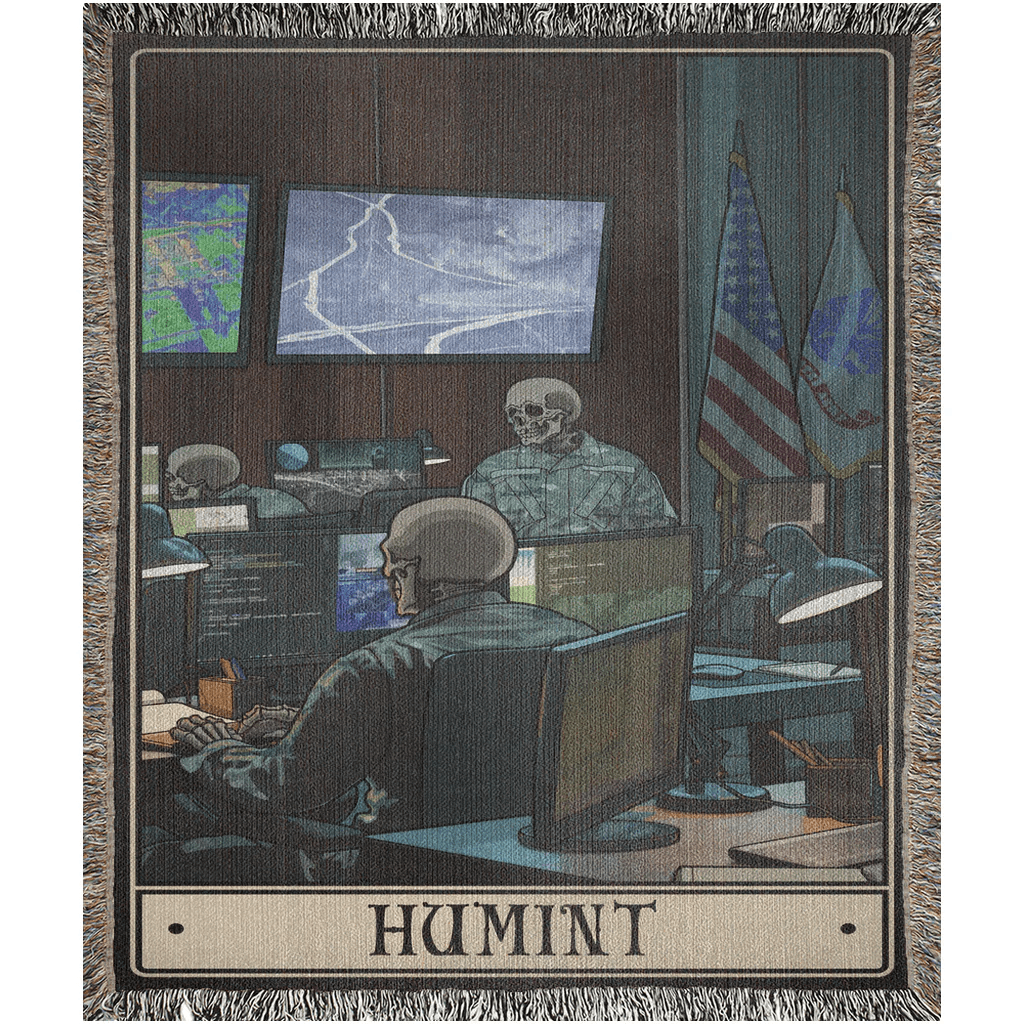
In the world of 2026, intelligence is no longer gathered by a single "spy" with a camera. It is a massive, multi-modal puzzle. Professionals refer to these different methods of collection as "INTs." Each "INT" provides a different layer of truth, and a finished intelligence product usually requires a fusion of all five. Each represents a distinct methodology for collecting information, with unique capabilities, limitations, and applications in today's complex security environment. HUMINT, short for Human Intelligence, is the ancient art of espionage. Human Intelligence (HUMINT) represents the oldest form of intelligence gathering, involving the collection of information through human sources. This includes traditional spies, informants, assets, defectors, diplomatic contacts, and even casual conversations with individuals who have access to valuable information. HUMINT encompasses both recruited agents who knowingly provide intelligence and unwitting sources who provide information without realizing its intelligence value. HUMINT's roots stretch back to ancient civilizations. One of the earliest recorded examples appears in the biblical account of Joshua sending spies to scout Jericho around 1400 BCE. Ancient China's Sun Tzu wrote extensively about the use of spies in "The Art of War" (circa 500 BCE), categorizing five types of spies and emphasizing their crucial role in military strategy.
Sun Tzu's "The Art of War," (Yes, same last name as mine, though I do not know if Sun was his real last name) written during China's Warring States period (circa 500 BCE), dedicated an entire chapter—Chapter 13, titled "The Use of Spies" (用間篇)—to intelligence operations. This makes it one of the earliest comprehensive treatises on organized espionage in recorded history. First there's the local spies (因間 - Yīn Jiān) were recruited from the enemy's own population—farmers, merchants, officials, or anyone with access to useful information within enemy territory. These were essentially what modern intelligence services call "assets in place." They provided continuous intelligence about enemy movements, supply situations, morale, and political developments. Their greatest advantage was legitimacy—they belonged to the environment they were observing, making detection less likely. During the Warring States period, kingdoms routinely recruited merchants who traveled between states to report on military preparations, crop yields (indicating ability to sustain armies), and political alliances. These networks provided early warning of military campaigns and insights into enemy capabilities. Then there are the inward spies (內間 - Nèi Jiān) were enemy officials or military officers who had been recruited or turned to work for the opposing side. These were high-value assets within the enemy's government or military structure. Sun Tzu emphasized that successful recruitment of inward spies often involved exploiting personal grievances, financial difficulties, or political disagreements within enemy ranks. Chinese strategists became masters at identifying and cultivating such vulnerabilities. Then there's the converted spies (反間 - Fǎn Jiān) were enemy agents who had been captured and then "turned" to work for their captors. Rather than being executed or imprisoned, these spies were convinced or coerced into becoming double agents. Doomed spies (死間 - Sǐ Jiān) were agents deliberately given false information and sent into enemy territory, knowing they would likely be captured. These agents were essentially sacrificial assets designed to deceive the enemy. Surviving spies (生間 - Shēng Jiān) were the most valuable assets in Sun Tzu's intelligence hierarchy—professional agents who could penetrate deep into enemy territory, gather crucial intelligence, and return safely to report their findings. These were elite operatives trained in survival, deception, and intelligence collection.
Other than China, the Roman Empire perfected many HUMINT techniques still used today, including the use of diplomatic missions as intelligence-gathering platforms and the recruitment of foreign assets. The Romans understood that governing an empire spanning three continents required constant information flow about potential threats, rebellions, and political developments across vast distances. The cursus publicus, Rome's imperial postal system established by Emperor Augustus around 20 BCE, served dual purposes as both a communication network and intelligence-gathering infrastructure. This system of roads, way stations, and messenger services enabled rapid information transmission across the empire, but it also created opportunities for systematic intelligence collection. Roman officials at every level of the cursus publicus were expected to report unusual activities, troop movements, or political developments. Station masters, road wardens, and postal officials formed an informal but effective intelligence network that kept Rome informed about conditions throughout the empire. The Romans also recognized the security implications of their communication network. They developed sophisticated methods for protecting sensitive information, including coded messages, sealed documents with special markings, and trusted courier systems for the most sensitive intelligence. Roman armies maintained extensive scout networks (exploratores) that operated far ahead of main forces, gathering intelligence about enemy movements and terrain conditions. These scouts often spent months in enemy territory, developing local contacts and mapping defensive positions. They also developed systematic approaches to interrogating captured enemies, using both incentives and coercion to extract valuable military intelligence: they understood that different techniques worked with different types of prisoners and developed specialized interrogation protocols. They created sophisticated communication systems using fire beacons, flags, and other visual signals to transmit intelligence rapidly across long distances, which was the beginning of Signal Intelligence.
Medieval Europe saw a rise of court spies and diplomatic intelligence, while the Renaissance brought more sophisticated spy networks, exemplified by Sir Francis Walsingham's intelligence service for Queen Elizabeth I. To expand on this, one must understand the state Medieval Europe was in, politically. During the early medieval period (roughly 9th-12th centuries), Europe operated under a highly decentralized feudal system that created fundamental challenges for intelligence gathering and information flow. Under feudalism, political authority was distributed among countless lords, each controlling relatively small territories. This fragmentation meant that information about threats, opportunities, or political developments remained trapped within local jurisdictions, preventing comprehensive strategic awareness. The collapse of Roman administrative systems left medieval Europe without effective long-distance communication networks. Information traveled slowly and unreliably, often through informal channels like traveling merchants, pilgrims, or clergy. The Crusades (1095-1291) created unprecedented demands for long-distance intelligence coordination. European powers needed information about distant territories, enemy capabilities, and logistical requirements that exceeded local feudal intelligence capabilities. Contact with more sophisticated Islamic and Byzantine intelligence systems revealed the limitations of European feudal intelligence. These encounters demonstrated the strategic advantages of centralized, professional intelligence operations. The Mongol invasions of Eastern Europe (13th century) showcased the military advantages of superior intelligence gathering. Mongol forces consistently outmaneuvered European armies that lacked comprehensive intelligence about enemy movements and intentions. Persistent external threats from Vikings, Magyars, and other groups exposed the inadequacy of localized defense systems. Effective defense required early warning networks that transcended local feudal boundaries.
However, the medieval commercial revolution (11th-13th centuries) created wealth that enabled monarchs to fund professional administrators, standing armies, and intelligence services. Economic growth provided the resources necessary for systematic intelligence operations. The revival of Roman law and development of professional bureaucracies provided organizational models for centralized intelligence. Legal concepts like royal prerogative justified monarchical information-gathering activities. Improvements in transportation, communication, and record-keeping made centralized intelligence coordination more feasible. Better roads, faster ships, and more efficient writing systems facilitated information flow. Medieval population growth and urbanization created larger, more complex societies that required sophisticated information management. Cities became intelligence hubs where information naturally concentrated. Monarchical consolidation concentrated financial resources that could support professional intelligence services. Kings could afford to maintain networks of paid informants, professional diplomats, and dedicated intelligence analysts that individual feudal lords could not.
As monarchs consolidated legal authority, they gained legitimate justification for intelligence activities. Royal prerogative included the right to gather information for national security, providing legal cover for espionage operations. Emerging monarchies developed formal diplomatic relations that created natural cover for intelligence activities. Royal ambassadors and diplomatic missions provided legitimate platforms for systematic intelligence gathering. Professional royal bureaucracies possessed the organizational skills necessary to manage complex intelligence operations. Trained administrators could coordinate multiple information sources, maintain security protocols, and analyze collected intelligence. Royal courts attracted nobles, merchants, clergy, and foreign visitors who brought information from across the realm and beyond. Courts became natural concentration points for political, military, and economic intelligence. Court society created opportunities for intelligence gathering through social interactions. Courtiers developed relationships that facilitated information exchange while maintaining plausible deniability about espionage activities. Monarchical courts became centers of cultural and intellectual life, attracting scholars, artists, and intellectuals who often possessed valuable information about foreign developments or political trends.
By the 12th and 13th centuries, European royal courts had become centers of intelligence activity. Kings and nobles maintained networks of informants who reported on rival courts, potential rebellions, and foreign threats. These early court spies operated within the complex web of feudal loyalties, often serving multiple masters simultaneously. Medieval courts developed a class of professional courtiers who served as both diplomats and intelligence agents. These individuals possessed the social skills, education, and connections necessary to gather sensitive information while maintaining their cover as legitimate court officials. The Republic of Venice pioneered systematic diplomatic intelligence during the medieval period. Venetian merchants and diplomats created one of Europe's most effective intelligence networks, gathering information throughout the Mediterranean, Middle East, and beyond. Venice's wealth and commercial connections provided perfect cover for intelligence operations. The Renaissance period (roughly 14th-17th centuries), on the other hand marked a revolutionary transformation in intelligence operations, characterized by increased professionalism, systematic organization, and technological innovation. More on this in the next post. ☀️