Created on
Updated on
Marvin Minsky(I): Reviving the Dead
马文·明斯基 (I):复活死者
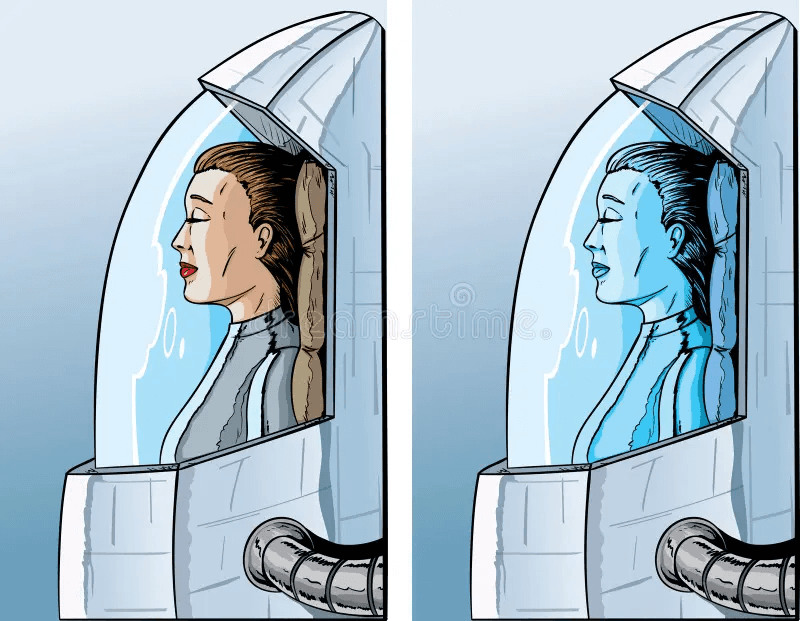
Preface: A bit of a biology class, written in collaboration with Gemini.
Marvin Minsky died on January 24, 2016, at the age of 88. His death was caused by a cerebral hemorrhage (a stroke caused by bleeding in the brain). He passed away at Brigham and Women's Hospital in Boston, Massachusetts. Minsky was a long-time, outspoken advocate for cryonics—the process of freezing a body in the hope that future technology can revive it. If you are like me, this is likely the first time you are hearing this. It sounds like science fiction, but this was a very real project he worked on. In 2026, cryonics has moved from the realm of "eccentric sci-fi" into a high-stakes debate at the intersection of medical ethics and billionaire ego. Modern cryonics doesn't actually "freeze" you in the traditional sense. Freezing creates ice crystals that act like tiny knives, shredding cell membranes. Instead, the patient's blood is replaced with a cryoprotectant (essentially medical-grade antifreeze). This allows the body to be cooled to -196°C (the temperature of liquid nitrogen) without forming ice. The tissue turns into a "glass-like" state. In September 2025, researchers at Texas A&M made a massive leap by developing a vitrification solution that prevents cracking in large organs—a major hurdle that had plagued the field for decades. This has made the idea of "organ banking" a near-term medical reality.
The biggest misconception is that cryonics "freezes" people. If you freeze a human like a steak, ice crystals act like tiny knives, shredding cell membranes. Modern cryonics uses vitrification. Instead of ice forming, the body’s water is replaced with Cryoprotectant Agents (CPAs)—essentially medical-grade antifreeze. When cooled to about -124°C, the liquid doesn't crystallize; it becomes extremely viscous and then turns into a solid, amorphous "glass." The goal is not to just preserve the body, but to preserve the connectome (the map of neural connections in your brain). If the structure is intact, the "data" of you is theoretically still there. The process goes like this: once the heart stops, the brain begins to starve of oxygen (ischemia). There needs to be an immediate application of ice and a "thumper" (mechanical CPR), to slow metabolic decay and maintain blood flow to the brain. Next, we replace blood with a temporary preservative solution on-site, to prevent clotting and prepare the vascular system for CPAs. After this step is completed, the body is then transferred to a facility, where water is used to allow for vitrification. The final step is to keep the body immersed in liquid nitrogen at -196°C, which stops its biological time. The body, or I guess the patient, can stay in this state for centuries. Companies like Tomorrow Bio and Alcor are focusing heavily on "Field Cryoprotection," aiming to start the vitrification process in a mobile ambulance immediately after legal death, rather than waiting to transport the patient to a central facility.
The temperature of -196°C is not an arbitrary number chosen by scientists because it "sounds cold." It is the boiling point of liquid nitrogen at standard atmospheric pressure. In the world of cryonics and cryobiology, this temperature represents the "Goldilocks Zone" for stopping biological time. Nitrogen makes up about 78% of the air we breathe. When cooled to -196°C (77 Kelvin or -320°F), it turns into a clear, colorless liquid. Because it boils at this temperature, a tank of liquid nitrogen will stay at exactly -196°C as long as there is liquid left. It doesn't require electricity or a thermostat to maintain—it just requires a vacuum-insulated container (a giant thermos called a Dewar). If the power goes out, the "patients" stay frozen. You only need to top off the liquid every few weeks. The real magic happens a bit warmer than -196°C, at the Glass Transition Temperature (usually around -124°C). As mentioned before, we don't want ice. We want the body to become "glassy." Once the temperature drops below -124°C, the molecules in the body move so slowly that all chemical reactions stop. At -196°C, you are well below that transition point. Theoretically, a biological sample (or a human) could stay at this temperature for thousands of years without aging, decaying, or changing at a molecular level. The only "aging" that occurs is from background radiation from space.
You might wonder: if cold is good, isn't Absolute Zero (-273.15 C) better? Actually, no. Going colder than -196°C introduces a massive engineering problem: fracturing. As materials get colder, they contract. Between -124°C and -196°C, the "glassy" tissues are under immense structural stress. If you went all the way to Absolute Zero, the thermal stress would likely shatter the brain or body into tiny fragments, making future repair impossible. -196°C is seen as the "stable floor"—cold enough to stop time, but "warm" enough to avoid total structural disintegration. At -196°C, you are essentially "leaping" over the present. If you were preserved today and "woken up" in 200 years, your biological age would not have changed by a single second. To your cells, the two centuries would feel like a blink.
Developing cryonics technology is no longer just the work of a few nonprofits; it has evolved into a global ecosystem that includes specialized storage facilities, high-tech medical startups, and industrial giants. There are few organizations that focus on long-term storage and the actual practice of cryopreservation. First up is Alcor Life Extension Foundation (USA), the most famous, based in Arizona. They are currently leading the way in "Field Washout" tech—portable systems that allow them to begin the preservation process immediately at the patient's bedside. There is also Tomorrow Bio (Europe), the "new guard" based in Berlin. They have modernized the industry with a tech-startup approach, offering high-speed emergency response teams (SST) across Europe and transparent R&D roadmaps for 2026 that focus on Blood-Brain Barrier (BBB) modifiers to prevent brain shrinkage during cooling. Last but not least, Cryonics Institute (USA), based in Michigan, is known for being the more affordable, "utilitarian" option. In early 2026, they introduced Field Cryoprotection (FCP) as an upgrade, allowing members to be vitrified locally rather than waiting for transport to the main facility. Other than the major players, there are a few startups working on solving the reversibility problem. Founded by longevity scientist Laura Deming, Until Labs(formerly Cradle) recently raised over $100 million. Their immediate goal isn't just whole-body cryonics, but reversible organ preservation. If they can freeze and thaw a kidney for transplant, they prove the core science of cryonics works. The Southern Hemisphere's first facility, Southern Cryonics (Australia), located in Holbrook, is currently scaling up their operations after preserving their first patients in 2025 and are positioning themselves as a hub for Asian and Australian members. Lastly, just like AI needs chips, you can't have cryonics without the hardware. Several massive corporations provide the "picks and shovels" for the industry. Chart Industries & Cryofab, manufacture the massive Dewars (storage tanks) and vacuum-insulated piping required to keep patients at -196°C for decades. Linde & Air Liquide, which are global gas giants that supply the endless stream of liquid nitrogen needed for "top-offs."
Many research groups around the world are actively working on this. 21st Century Medicine, a research lab that has achieved "near-perfect" synaptic preservation in animal brains. Their work on Aldehyde-Stabilized Cryopreservation (ASC) is considered the gold standard for preserving the brain's physical structure. The Brain Preservation Foundation (BPF), act as a "quality control" board, offering prizes to researchers who can prove they’ve preserved a brain’s connectome well enough to meet specific scientific benchmarks. In 2026, the trend is "Vertical Integration." Instead of just waiting for you to die and then showing up, companies like Tomorrow Bio and Alcor are building their own ambulances, designing their own cryoprotectants, and using AI-driven CT scanning to verify exactly how well your brain was preserved before you go into the tank. More on this in the next post. ☀️
🧬 Cryonics & Bio-Engineering: Key Terminology
Vitrification (玻璃化):
The process of turning a liquid into a glass-like solid without any ice crystals. This is the "Holy Grail" of cryonics because it prevents ice from shredding cell membranes.
Cryoprotectant Agents / CPAs (冷冻保护剂):
Medical-grade "antifreeze." These chemicals replace the water in your cells so that your body turns into "glass" instead of "ice" when cooled.
The Connectome (连接组):
The total "wiring diagram" of your brain. Cryonicists believe that if the structure of your neurons and synapses is kept intact, your memories and personality (the "data" of you) are preserved.
Dewar (杜瓦瓶):
A high-tech, vacuum-insulated container (like a giant, industrial Thermos). It keeps patients at −196°C using liquid nitrogen without needing any electricity.
Ischemia (缺血):
The period after the heart stops when the brain is starved of oxygen. Minimizing "Ischemic time" is critical to prevent the biological "data" in the brain from decaying.
Field Cryoprotection / FCP (现场冷冻保护):
Starting the preservation process on-site (in a home or hospital) using a specialized ambulance. This avoids the damage caused by waiting to transport a patient to a central facility.
Glass Transition Temperature (玻璃化转变温度):
The point (roughly −124°C) where molecules move so slowly that all chemical reactions stop. Below this temperature, biological time effectively stands still.
The "Stable Floor" (稳定底限):
The temperature of −196°C (liquid nitrogen’s boiling point). It is cold enough to stop time but "warm" enough to prevent the body from shattering like it would at Absolute Zero.
Fracturing (开裂):
A major engineering hurdle where "glassy" tissues crack due to extreme thermal stress. New 2025 research is focused on preventing this in large organs.
Vertical Integration (垂直整合):
A business trend where cryonics companies (like Tomorrow Bio) build their own ambulances, design their own chemicals, and use AI to verify preservation quality in-house.
References & Recommended Reading
Scientific Foundations & Bio-Ethics
Minsky, M. (1986). The Society of Mind. Simon & Schuster. (For understanding Minsky’s view of the brain as a machine that can be mapped).
Fahy, G. M., et al. (2009). "Physical and biological aspects of renal vitrification." Organogenesis. (The foundational study on the use of CPAs for organ preservation).
Best, B. P. (2008). "Scientific justification of cryonics practice." Rejuvenation Research. (A peer-reviewed overview of why vitrification is biologically plausible).
Texas A&M University Research Report (Sept 2025). "Advances in Large-Scale Vitrification and Thermal Stress Mitigation."
Cryonics Industry & Field Reports
Alcor Life Extension Foundation. Case Report: Patient A-1644 (Marvin Minsky). alcor.org/library
Tomorrow Bio. 2026 R&D Roadmap: Blood-Brain Barrier Penetration and Field SST. tomorrow.bio
Until Labs (Formerly Cradle). "Whitepaper: Reversible Organ Preservation and the $100M Scale-up." (Jan 2026).
Technical Manuals
Chart Industries. Technical Specifications for Vacuum Insulated Bulk Dewars and Liquid Nitrogen Storage.
Cryobiology Journal. (Special Edition 2025). "Vitrification vs. Crystallization: The Role of Medical-Grade Antifreeze in Whole-Body Preservation."
前言:这算是一堂生物课,由我与 Gemini 合作编写。
马文·明斯基(Marvin Minsky)于 2016 年 1 月 24 日逝世,享年 88 岁。死因是脑出血(中风)。他在波士顿的布莱根妇女医院走完了生命最后一程。明斯基生前一直是人体冷冻技术(Cryonics)的坚定倡导者——这一过程旨在冷冻遗体,寄希望于未来技术能将其复活。如果你和我一样,这可能是你第一次听说这件事。它听起来像科幻小说,但这确实是他生前投入过精力的真实项目。
到了 2026 年,人体冷冻技术已从“古怪的科幻构想”演变为一场处于医学伦理与亿万富翁自我意识交汇点的尖端辩论。现代人体冷冻实际上并不像传统意义上那样“冻结”你。冷冻会产生冰晶,这些冰晶像微型小刀一样割破细胞膜。相反,病人的血液会被替换为一种冷冻保护剂(本质上是医用级防冻液)。这使得身体可以在不形成冰的情况下冷却至 -196°C(液氮温度)。组织会进入一种“玻璃化”状态。2025 年 9 月,德州农工大学(Texas A&M)的研究人员取得了巨大飞跃,开发出一种能防止大器官开裂的玻璃化溶液——这曾是困扰该领域数十年的主要障碍。这一突破让“器官库”的构想在近期内成为了医学现实。
关于人体冷冻,最大的误区是认为它在“冷冻”人。如果你像冻牛排一样冷冻人体,冰晶会像微型刀片一样撕碎细胞膜。现代技术采用的是玻璃化。这种方法不再让冰形成,而是将体内的水分替换为冷冻保护剂(CPAs)。当冷却到约 -124°C 时,液体不会结晶,而是变得极度粘稠,随后凝固成固态、无定形的“玻璃”。其目标不仅是保存肉体,更是保存“连接组”(Connectome,即大脑神经连接的蓝图)。如果结构完整,理论上你的“数据”依然存在。
具体流程如下:一旦心脏停止跳动,大脑就会开始缺氧(缺血)。这时需要立即敷冰并启动“机械心肺复苏机(Thumper)”,以减缓代谢衰减并维持大脑血流。接下来,我们在现场用临时防腐溶液替换血液,防止凝固并为血管系统注入保护剂做好准备。完成后,遗体被转移至专业设施,通过水分置换实现玻璃化。最后一步是将身体浸泡在 -196°C 的液氮中,彻底停止其生物学时间。遗体(或者说病人)可以在这种状态下维持数百年。像 Tomorrow Bio 和 Alcor 这样的公司正专注于“现场冷冻保护”,旨在法律宣布死亡后立即在移动救护车中启动玻璃化进程,而不是等待运回中心设施。
-196°C 这个温度并非科学家因为听起来冷而随便选的。它是液氮在标准大气压下的沸点。在人体冷冻学和低温生物学界,这个温度是停止生物学时间的“黄金地带”。我们呼吸的空气中约 78% 是氮气。当冷却到 -196°C(77 K 或 -320°F)时,它会变成清澈无色的液体。正因为它在这个温度沸腾,只要罐子里还有残余液体,液氮罐就会精确维持在 -196°C。它不需要电力或恒温器来维持——只需要一个真空绝缘容器(一种被称为“杜瓦瓶”的巨大保温瓶)。即便停电,这些“病人”依然能保持冷冻状态。你只需每隔几周加满液氮即可。
真正的奇迹发生在比 -196°C 稍暖一点的地方,即玻璃转化温度(通常在 -124°C 左右)。如前所述,我们不想要冰,而是希望身体变成“玻璃态”。一旦温度降至 -124°C 以下,分子运动会极其缓慢,导致所有化学反应停止。在 -196°C 下,你远低于那个临界点。理论上,一个生物样本(或人类)可以在这个温度下保存数千年,而不会老化、腐烂或发生分子层面的改变。唯一发生的“老化”仅源于宇宙背景辐射。
你可能会好奇:如果冷更好,绝对零度(-273.15°C)不是更完美吗?其实不然。低于 -196°C 会引发巨大的工程难题:断裂。随着物质变冷,它们会收缩。在 -124°C 和 -196°C 之间,玻璃化组织承受着巨大的结构压力。如果一路降温到绝对零度,热应力可能会使大脑或身体粉碎成微小残片,导致未来修复变得不可能。因此,-196°C 被视为“稳定底线”——既冷到足以停止时间,又够“暖”以避免彻底的结构崩溃。在 -196°C 下,你本质上是在向未来“跳跃”。如果你今天被保存并在 200 年后“醒来”,你的生物年龄不会改变哪怕一秒。对你的细胞来说,这两个世纪不过是弹指一挥间。
人体冷冻技术的发展已不再是少数非营利组织的活计,它已演变成一个由专业存储设施、高科技医学初创公司和工业巨头组成的全球生态系统。目前有几家机构专注于长期存储和冷冻实践:
Alcor(阿尔科生命延续基金会,美国): 最知名的机构,总部位于亚利桑那州。他们目前在“现场洗脱”技术上处于领先地位——这种便携式系统允许他们在病人床边立即开始保存程序。
Tomorrow Bio(明日生物,欧洲): 总部位于柏林的“新锐势力”。他们以科技创业公司的模式让行业焕然一新,在全欧提供高速应急响应团队(SST),并发布了透明的 2026 年研发路线图,重点研究血脑屏障(BBB)调节剂,以防止冷却过程中的大脑萎缩。
Cryonics Institute(人体冷冻机构,美国): 总部位于密歇根州,以价格亲民、走“实用主义”路线著称。2026 年初,他们推出了现场冷冻保护(FCP)升级服务,允许会员在当地进行玻璃化。
除了这些主要玩家,还有几家初创公司致力于解决“可逆性”问题。由长寿科学家 Laura Deming 创立的 Until Labs(前身为 Cradle)近期融资超过 1 亿美元。他们的短期目标不仅是全身冷冻,还有可逆的器官保存。如果他们能成功冷冻并解冻一颗用于移植的肾脏,就能证明人体冷冻的核心科学是可行的。南半球首家设施 Southern Cryonics(澳大利亚)位于霍尔布鲁克,在 2025 年保存了首批病人后正在扩大规模,定位为亚洲和澳洲会员的枢纽。
最后,就像 AI 需要芯片一样,没有硬件就无法实现人体冷冻。几家大型企业为该行业提供“基础设施”:Chart Industries 和 Cryofab 负责制造存放病人数十年所需的巨大杜瓦瓶和真空绝缘管道;而全球气体巨头 Linde(林德) 和 Air Liquide(液化空气) 则负责供应加注所需的源源不断的液氮。
全球许多研究小组正在积极攻克这一课题。21st Century Medicine 实验室已在动物大脑中实现了“近乎完美”的突触保存。他们在醛稳定冷冻保存(ASC)方面的工作被视为保存大脑物理结构的金标准。大脑保存基金会(BPF) 则充当“质检委员会”,为那些能证明保存的大脑连接组达到特定科学基准的研究人员提供奖金。
2026 年的趋势是“垂直整合”。与其坐等死讯再上门,Tomorrow Bio 和 Alcor 等公司正开始建造自己的救护车、设计专属冷冻保护剂,并利用 AI 驱动的 CT 扫描,在你进入储藏罐前精确验证大脑的保存效果。更多内容,且听下回分解。☀️
🧬 Cryonics & Bio-Engineering: Key Terminology
Vitrification (玻璃化): 将液体转变为类玻璃态固体而不产生任何冰晶的过程。这是人体冷冻学的“圣杯”,因为它能防止冰晶撕裂细胞膜。
Cryoprotectant Agents / CPAs (冷冻保护剂): 医用级“防冻液”。这些化学物质会替换细胞中的水分,使身体在冷却时转变为“玻璃态”而非“冰态”。
The Connectome (连接组): 大脑完整的“线路图”。人体冷冻学家认为,只要神经元和突触的结构保持完好,你的记忆和个性(即你的“数据”)就能被保存下来。
Dewar (杜瓦瓶): 一种高科技真空绝缘容器(类似于巨大的工业保温瓶)。它利用液氮使病人在不需要任何电力的条件下维持在 -196°C。
Ischemia (缺血): 心脏停止跳动后大脑缺氧的阶段。尽量缩短“缺血时间”对于防止大脑中生物“数据”的腐烂至关重要。
Field Cryoprotection / FCP (现场冷冻保护): 利用专用救护车在现场(家中或医院)立即开始保存程序。这避免了因等待转运病人至中心设施而造成的损伤。
Glass Transition Temperature (玻璃化转变温度): 分子运动变得极其缓慢以至于所有化学反应停止的临界点(约为 -124°C)。低于此温度,生物时间实际上处于停滞状态。
The "Stable Floor" (稳定底限): 指 -196°C(液氮沸点)。这个温度冷到足以停止时间,但又足够“暖”,能防止身体像在绝对零度下那样发生粉碎。
Fracturing (开裂): 一个主要的工程障碍,指“玻璃化”组织因极端的冷应力而产生裂缝。2025 年的新研究正致力于防止大器官出现此类情况。
Vertical Integration (垂直整合): 一种商业趋势,指人体冷冻公司(如 Tomorrow Bio)自行建造救护车、设计专属化学制剂,并利用 AI 内部验证保存质量。
References & Recommended Reading
科学基础与生物伦理
Minsky, M. (1986). 《心智社会》(The Society of Mind). Simon & Schuster.(用于理解明斯基将大脑视为可绘制地图的机器的观点)。
Fahy, G. M., et al. (2009). "肾脏玻璃化的物理与生物学维度." 《器官发生》(Organogenesis).(关于使用冷冻保护剂进行器官保存的基础研究)。
Best, B. P. (2008). "人体冷冻实践的科学合理性." 《返老还童研究》(Rejuvenation Research).(一份关于玻璃化在生物学上可行性的同行评审综述)。
德州农工大学研究报告 (2025 年 9 月). "大规模玻璃化与缓解热应力的进展."
行业与现场报告
Alcor 生命延续基金会. 案例报告:病人 A-1644 (马文·明斯基). alcor.org/library
Tomorrow Bio. 2026 研发路线图:血脑屏障渗透与现场 SST. tomorrow.bio
Until Labs (前身位 Cradle). "白皮书:可逆器官保存与 1 亿美元规模化." (2026 年 1 月).
技术手册
Chart Industries. 真空绝缘大容量杜瓦瓶与液氮存储技术规范。
《低温生物学》杂志 (Cryobiology Journal). (2025 特刊). "玻璃化 vs. 结晶:医用级防冻液在全身保存中的作用。"