Created on
Updated on
SFFILM 2026 + Life Updates
side conversation
Preface: side conversation.
I rearranged the webpage to have the "Filmmaking in the Age of AI" series under a separate collection, as the old collection was reaching its limit on the number of entries I could have. Framer seems to be making lots of updates lately, to avoid losing information, I compiled it under this new tab, even though now all dates are messed up. I'm too lazy to fix it, so here it is. Ps, the time is in New Zealand time, since framer has its headquarters in New Zealand. There's no option to put it under local time as we speak, or maybe I just don't know how to do it.
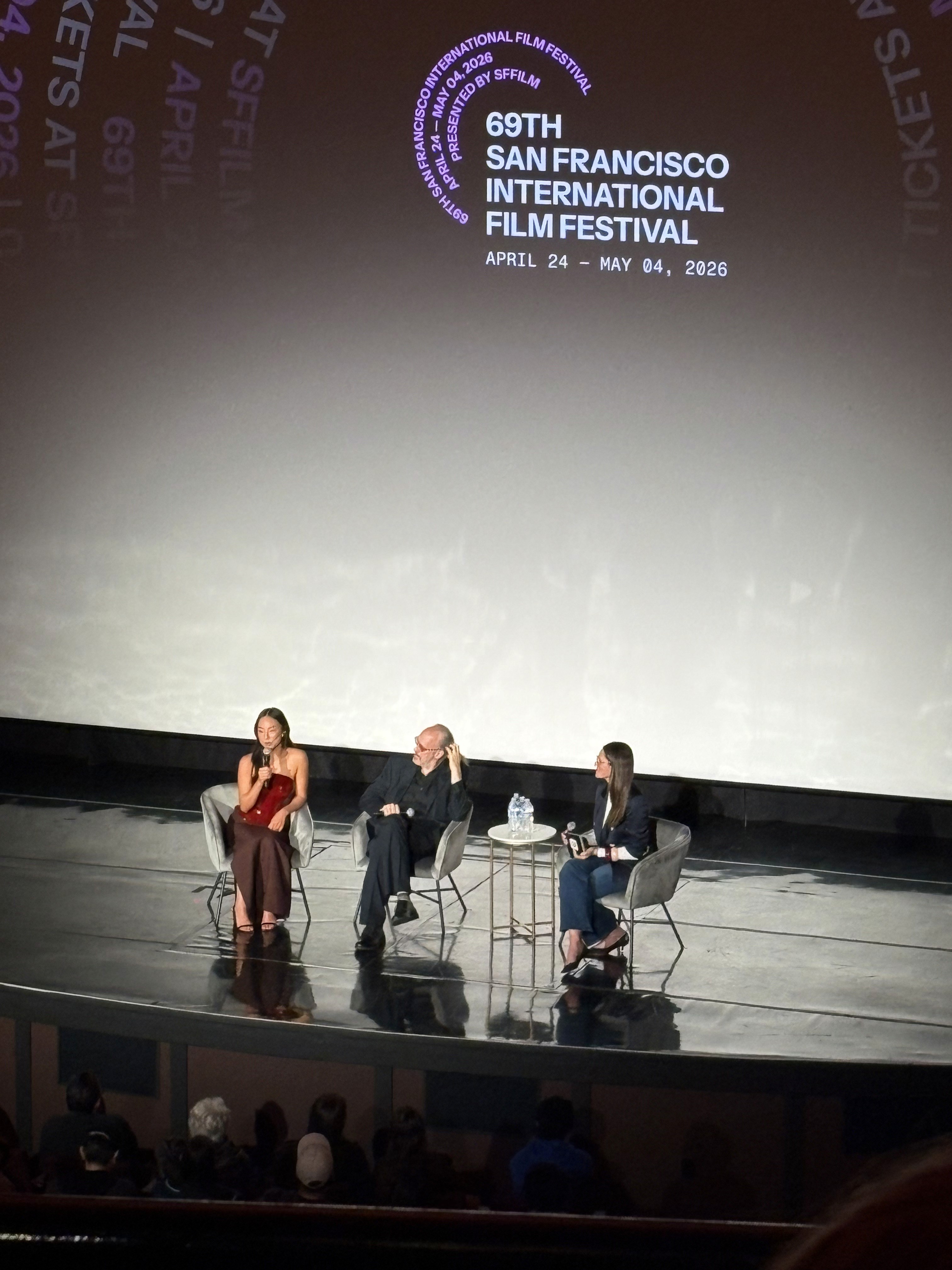
I've paused on updating for a bit since I've been going to The San Fransisco International Film Festival to catch up on the new films that came out this year. After watching four films from USA, Turkey, Japan, and I guess one co-production between Germany and France, I realized globally, as a collective human civilization, we are moving forward a lot with film as a medium, in terms of the topics we cover, techniques we use. However, American movies are clearly falling behind, with repetitive themes, structures, or just in general I feel like there's nothing that's being said that's new, or really required a movie to be made to say it. Not sure what is happening, but people have stopped taking risks, and making changes, to create something new, despite the vast amount of resources at their disposal. All of the headliner of SFFILM are American movies. I watched one of them, Late Fame, which is not bad, but very uneventful two hours of my life. I didn't finish it, went out to the bathroom, killed time waiting outside and observing the architecture of the venue: the theater itself was more interesting than the movie.
Late Fame is a 2025 American drama directed by Kent Jones, written by Samy Burch, and based on a posthumously published novella by Arthur Schnitzler. Arthur Schnitzler was an Austrian writer — born in Vienna in 1862, died in 1931. He was a physician by training, which shaped his writing significantly. He was deeply interested in psychology, sexuality, and the interior lives of his characters at a time when Freud was developing psychoanalysis in the same city. It stars Willem Dafoe, Greta Lee, and Edmund Donovan. Despite the movie adapted from a last century story, it's set in modern day New York, which is a bit jarring, and I personally thought it'd be better if it was set back in original books timeline. It mocks the pretentiousness of the writer / creative circle, and an aging poet's complicated inner desire of wanting to be understood as a creative only to realized that the group praises him so much for his work don't actually care about his work, but more about being associated with him for their role-playing of being a writer as rich kids who don't need a job. It's melodramatic and a bit underwhelming, or perhaps I just had too much hope for the headliners.
Meanwhile, other movies I watched, including Renior from Japan, Salvation from Turkey, and a co-production featuring Tony Leung about a tree called Silent Friend were all impressive in their own ways. Renoir is a 2025 coming-of-age drama written and directed by Chie Hayakawa, starring Yui Suzuki, Lily Franky, and Hikari Ishida. It follows the childhood of 11-year-old Fuki in late-1980s Tokyo. The film had its world premiere in the main competition of the 78th Cannes Film Festival, where it was nominated for the Palme d'Or. The movie reads like an impressionist painting at times. I'm not sure how to describe how it made me feel, but when I realized the movie was about herself and her own father towards the end, I started bawling. It's tender, personal, captures that 1980s bubble economy japan had. Everything was hopeful, yet in a nihilistic and disconnected way. People were navigating through life and relationships, each with their own trauma, disclosed, moving forward.
Salvation from Turkey was not like anything I saw before. I've seen a few movies from Turkey, Nuri Bilge Ceylan's About Dry Grasses. I'm trying to describe it as much as I can remember, it was about a school teacher who works in remote areas of Turkey who had all these dreams and hopes yet stuck in his unsatisfying current life. He meets a lady, the two eventually get into a fight about his ideals and his hypocrisy. Instead of focusing on one actors performance, the movie had these long takes with multiple actors performing in a set at the same time: two people having a side conversation, while the other is putting away her clothes or a group in the center talking about something else. Everything was happening at once, much like a play, except in a movie form. The style was very novel to me at the time. That's when I knew Turkey made good movies.
However, Salvation was much more intense. Without spoiling too much, its about conflicts between two clans that eventually lead to a massacre, based on a real historical event happened in 2009. One clan built their town from scratch, the other clan seeing this, came in, asking to stay. The clan leader decides to accept visiting clan. The new clan grows, more and more people come, who start buying up the land from the state, asking the local clan to leave. In the wild plains of Turkey, sheep, food, killings between clans, fear of having your wife taken away while you are away are very real threats. If you lose your crops, you starve, if you lose your sheep, you also starve. If the men of the town goes outside to fight "terrorists", whom they believe to be the opposing clan's sneaky operation, they are worried about other clan's men coming in and invade their families when's there's no guard. When the new clan comes in, and buying up local's land along with all the farming infrastructure they built, naturally, it is a life or death situation. It was like a peek into another world, a world that felt foreign yet familiar. The movie wasn't much of a question, but more of a statement. Circumstances like this is happening today, using religion as a tool to gain power, different people fight for different reason, neither's willing to stay down. People get swayed by religious leaders, people's emotions get riled up and manipulated, coups, slaughter, all in the name of god. I'm not here to point fingers, I fully understand the guidance people need from god. Would god have wanted us slaughtered each us, undermined each other, brought each other pain? I'm not so sure. Killing will not bring salvation, giving up on hate will. If this, then that, was sort of like the-matter-of-fact tone this movie had. I enjoyed it, and I appreciated actor Berkay Ateş, and his patience in responding to some of the less interesting and sometimes sharp questions. I highly recommend this movie. This movie won Berlin Silver Bear.
Silent Friend is Ildikó Enyedi's new film — it premiered at Venice and just opened in New York at the Lincoln Center and Angelika. I was only interested in Silent Friend cuz I was curious to know what Tony Leung's new movie was all about, turns out it's about a tree, and three generations of scientists and love stories of the first lady that was admitted to the german college Tony was teaching at in 1908, and of the story of two people in love who were doing research on how plants responded to their environment in the 1970s or so, to the current day of Tony staying at the same college during Covid and listening into trees heartbeat with his heartbeat device. It's a century-spanning triptych centered on an ancient ginkgo tree in the botanical garden of Marburg University, moving from 1908 through to the early months of the pandemic. Tony Leung anchors the 2020 segment. He plays a visiting neuroscientist stranded on campus during lockdown, whose attempt to measure the tree's electromagnetic signals gradually opens into a meditation on perception itself. Enyedi wrote the role specifically for him — their first collaboration — and she said she was "absolutely humbled that from the first read of the script, he became such a great partner in terms of thinking not just about his role, but about the whole project." This film also won Sloan Scientific Award, the same award that funded the original text for Christopher Nolan's Oppenheimer. The movie has great sound design, even though it was long and could be slow at times, I still recommend it. ☀️