Created on
1
/
19
/
2026
,
23
:
16
Updated on
1
/
20
/
2026
,
13
:
38
Location
Oakland, CA
Communication Studies (i): Origins
传播学(i): 起源
写在前面:本文和chatgpt合作完成。
Public Relations(公共关系)的起源,并不是“企业形象管理”,而是一个更根本的问题:在大众社会中,如何制造可控的共识。它诞生于危机,而不是商业需求。
19 世纪末到第一次世界大战前,美国的快速工业化同时催生了两件事:大型企业与大众媒体。铁路、煤矿、钢铁、石油等财团第一次不得不面对一个不受控制的“公众”。在这一时期,大企业普遍将公众视为对立面。面对罢工、事故与丑闻,常见做法是封锁信息、操纵或威胁媒体、压制记者调查。结果并非稳定,而是信任迅速崩塌——一旦企业开口,任何解释都会被预设为谎言。
正是在这种背景下,Ivy Lee 出现了。他的判断并不道德化,而是结构性的:问题不在于公众是否情绪化,而在于企业已经失去了解释权。在这种情况下,再强的宣传都只会激化对立。
Lee 的第一个关键动作,是建立稳定、可预期的信息通道。1906 年,在为宾夕法尼亚铁路公司处理事故时,他主动向媒体发布事故信息,包括负面事实。这类文本后来被视为早期“新闻稿”的原型。他强调的不是形象,而是及时、准确、可核实——公众有权知道发生了什么,新闻不应被视为企业的私产。
大约在 1905–1906 年间,他提出并传播了著名的《原则声明》(Declaration of Principles)。这不是一篇公关文案,而是一份职业立场声明:不隐瞒、不歪曲、尊重事实、把公众视为判断主体。以今天的眼光看,这套原则近乎天真;但在当时,这是一次结构性转向——企业第一次被要求向公众解释自己,而不仅仅向股东负责。
Lee 方法论中最具争议、也最能说明问题的案例,出现在 1914 年卢德洛事件之后。
卢德洛事件(Ludlow Massacre)发生在美国科罗拉多州,是一次长期劳资冲突演变为公共暴力的结果。冲突核心围绕的是以 Colorado Fuel & Iron(CF&I) 为代表的煤矿体系,该公司与洛克菲勒家族资本深度关联。矿工长期处于低工资、高事故率、公司城镇与公司商店制度下,工会组织权受到系统性限制。1913 年,在 United Mine Workers 支持下,矿工发起大规模罢工,被迫在卢德洛地区搭建帐篷营地长期对峙。
1914 年 4 月 20 日,州政府派遣的科罗拉多国民警卫队与矿工发生冲突。当天的关键不是零星交火,而是营地被系统性焚毁。妇女和儿童躲在帐篷下方挖出的地窖中,火灾后被发现集体窒息身亡。最终确认的死亡人数中,包含多名妇女和至少 11 名儿童。这不是“失控的警卫”,而是国家力量被用来解决劳资问题。
惨案发生后,美国社会震动极大。报纸、工会、知识分子迅速将其定性为“屠杀”。洛克菲勒家族此前几乎是匿名的资本象征,但这一刻,资本第一次被公众清晰地指认为“可被追责的主体”。问题不再是“劳工条件”,而是“一个看不见的权力,是否正在杀人”。矿工被枪杀,舆论已经完全站在资本对立面。
Ivy Lee 没有试图洗白事件本身,而是做了一件更底层的事:让洛克菲勒“出现在现实中”。他安排洛克菲勒亲自去矿区,与工人见面、听他们说话、被拍照、被报道。重点不在于他说了什么,而在于公众第一次看到:这个权力中心不再是抽象的、冷漠的、不可触及的。
这一步不是为了改变事实,而是为了阻止社会把矛盾升级为“资本 vs 人民”的不可逆对立。换句话说,他的目标不是赢,而是止血。从更大的结构看,卢德洛惨案揭示了一个现代社会第一次正面遭遇的问题:当私人资本拥有准国家级力量时,谁为暴力负责?
Ivy Lee 并没有试图为事件本身洗白,也没有反驳死亡事实,而是采取了一个更底层的动作:让权力现身。他安排洛克菲勒家族成员亲赴矿区,与工人会面、被拍照、被报道。重点不在于发言内容,而在于公众第一次看到:这个此前只以制度和资本形式存在的权力,开始以“人”的形态进入现实。
这一步非常关键。Ivy Lee 深知,在高度对立的局面中,语言已经失效,可见性本身就是信息。当权力只以制度和资本形式存在时,它天然被视为恶;一旦它以“人”的形态出现,冲突才有可能被重新理解。他不是为洛克菲勒“辩护”,而是为社会提供一个重新解释冲突的入口。
这件事直接推动了三条长期变化:一是美国劳工立法开始加速,工会合法性逐步确立;二是大企业意识到,“不解释”本身就是风险;三是 Public Relations 从“宣传”转向“合法性修复工具”。卢德洛惨案不是一段孤立的历史,它是现代传播、资本治理、舆论政治真正交汇的现场。
但 Ivy Lee 的方法也有清晰边界。他解决的是“已经炸了怎么办”的问题。他的 PR 是被动的,是危机后的补救机制,而不是提前塑造社会理解的治理工具。这对企业尚且够用,但对国家而言远远不够。
1900–1917 年间,美国社会发生结构性转变:城市化加速、报纸发行量暴涨、移民人口激增、工会与社会运动频繁。舆论不再由精英自然引导,而是可能自行聚集、爆炸、反噬。政府与大型组织逐渐意识到:如果只在危机发生时解释,已经太晚了。
一战前,美国已开始零散尝试舆论动员:协调报纸口径、雇佣前记者进行信息联络、通过公共演讲塑造态度。但这些做法仍然缺乏统一指挥与制度承认。
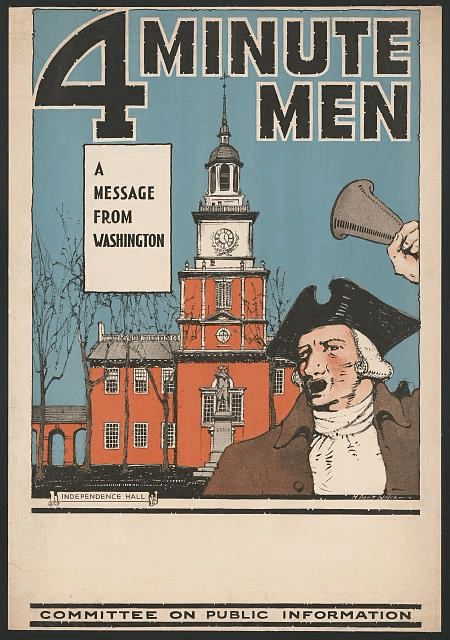
真正的转折发生在第一次世界大战。1917 年,美国成立 Committee on Public Information(CPI),首次以国家名义系统性动员媒体、演讲者、视觉符号与情绪叙事,说服一个原本反战的社会支持参战。效果极其显著,也极其危险:国家确认,大众意见是可以被工程化塑造的。战后,“propaganda”一词声名狼藉,但技术被完整保留。
正是在这一语境中,Edward Bernays 登场。他并非学院派,而是实践者。他不关心信息是否真实,而关心是否有效。他把心理学与群体行为研究引入公共舆论操作,并以“public relations counsel(公共关系顾问)”自称,系统性地推动并定义了这一职业领域。
Bernays 并未发明“public relations”这个词,但他确立了它的现代含义。他不相信大众能通过理性讨论形成共识。在他看来,大众需要的不是理解,而是被引导的感觉、象征与身份。他把这一逻辑应用于政治、商业与舆论实践,使传播从“说服”转向操纵意义许可。
他留下的不是一个整齐的学术模型,而是一套可反复复用的操作逻辑:大众不会基于事实行动,而是基于被合法化的欲望与身份行动。传播的关键不在信息,而在象征的重新编码。
“自由火炬”(Torches of Freedom)正是这套逻辑最经典的示范。1929 年,在女性公开吸烟仍被视为不道德的社会环境中,Bernays 并未反驳禁忌,而是绕开它。他将女性吸烟重新编码为“被压抑的自由欲望”,并将香烟嵌入“女性解放”的宏大叙事。在纽约复活节游行中,他安排女性在媒体镜头前点烟,并提前向媒体提供统一解释——这些香烟是“自由的火炬”。
女性并非被说服“吸烟是正确的”,而是被允许通过吸烟表达政治身份。一旦行为被赋予象征意义,禁忌便自动瓦解。这个案例揭示了传播学最不体面的真相:人们并非因为理解而行动,而是因为行动被赋予意义。
后来的议程设置、框架理论、符号消费、品牌叙事与身份政治,只是把 Bernays 已经验证过的实践,换了一套更体面的语言。传播学由此不再是技巧问题,而成为结构与合法性的问题。
Edward Bernays是现代公共关系(Public Relations)的奠基者,也是把“宣传”系统化、技术化、合法化的关键人物。他是第一个公开、明确、成功地把“操纵大众心理”当作一门正当职业来做的人。为了摆脱“propaganda(宣传)”在一战后的负面含义,他刻意发明并推广了“Public Relations”这个词。
他出生于 1891 年,是精神分析学家 Sigmund Freud 的外甥。这不是背景装饰,而是核心来源。弗洛伊德告诉世界:人并不是理性动物,而是被潜意识、欲望、恐惧、性与身份焦虑驱动。Bernays 接过这套理论,问了一个更现实的问题:既然如此,谁来管理大众的欲望,社会才能稳定?
他并不相信民主社会中的大众能通过事实、理性讨论形成共识。在他看来,那是幻想。大众需要的不是理解,而是被安排好的感觉、象征和立场。他把这套逻辑应用到三件事上:政治、商业、舆论。他做的不是“说服你某件事是对的”,而是让你在情感和身份层面“自然地站到某一边”。Edward Bernays并没有留下一个像“拉斯韦尔公式”那样整齐的学术模型,他给传播学留下的是一整套可反复复用的操作逻辑。后来学界做的事,本质上都是把他已经用过、验证过的手法,抽象成“模型”。
先说他真正给出的“模型内核”。Bernays 的核心判断只有一句话:大众不会基于事实行动,只会基于被允许的欲望与身份行动。因此,传播的关键不在“信息”,而在象征层的重新编码。
他实际使用的是一个三层结构:第一层是被压抑或未被合法化的欲望。不是所有欲望都能直接表达,很多行为在社会中是“想做但不被允许”的。第二层是一个看起来高尚、正当、不可反对的宏大叙事。比如自由、解放、进步、科学、国家利益、现代性。这一层不讨论真假,只讨论正当性。第三层是把具体行为嵌入这个宏大叙事,让行为本身变成一种道德或身份姿态。一旦完成这一步,人就不是在“选择行为”,而是在“表态立场”。当这三层对齐,传播就不需要再发生。系统会自动复制。
“自由火炬”(Torches of Freedom)正是这套逻辑最干净、也最冷酷的示范。20 世纪 20 年代,美国社会普遍认为女性在公共场合吸烟是不道德的。问题不在法律,而在社会禁忌。烟草公司想卖给女性市场,但广告、劝说、解释健康问题,全都没用,因为吸烟在象征层面被判了死刑。
Bernays 的做法不是“反驳禁忌”,而是绕开禁忌。他先做了一件事:通过精神分析渠道,把女性吸烟重新解释为“被压抑的自由欲望”。香烟不再是尼古丁,而是象征性的“阳具权力”,代表被男性垄断的公共空间。然后他找了一个无法被公开反对的叙事外壳:女性解放。接着,在 1929 年纽约复活节游行中,他安排一批年轻女性在记者镜头前点烟,并提前向媒体放出统一说法——这些香烟是“自由的火炬”,象征女性争取平等权利。
结果是,女性并不是被说服“吸烟是对的”,而是被允许通过吸烟表达政治身份。一旦行为被合法化为象征,禁忌就自动瓦解。之后几十年,女性吸烟率暴涨,烟草公司赢麻,但更重要的是——传播学赢了。
这个案例给后世留下了几条极其致命的原则。
第一,传播的真正战场不在事实层,而在意义许可层。只要行为被允许“代表某种正确的东西”,事实是否健康、是否合理,都会退到次要位置。第二,最有效的传播不是你在说,而是系统在替你说。Bernays 几乎从不让“客户”站到台前,他让媒体、专家、社会运动来完成表达。第三,一旦象征绑定成功,传播就不再需要持续投入,它会在社会结构中自我复制。
而议程设置(Agenda Setting)是这条链最早、也最冷静的一环。它不关心你怎么想,只关心你在想什么。20 世纪 60—70 年代,传播学者通过选举研究发现,大众对现实重要性的判断,高度跟随媒体反复呈现的主题。媒体不需要告诉你“该支持谁”,只要不断告诉你“哪些问题最重要”,你的思考路径就已经被限定了。经典结论是:媒体不能决定你怎么看,但能决定你看什么。这里的权力非常行政化——像一张议事日程表,哪些议题被放上桌,哪些永远进不了会议室。社会共识不是被说服出来的,而是被排程出来的。
框架理论(Framing)则往前推进了一步:当议题已经不可避免地被讨论时,如何被解释才是真正的战场。这个概念后来与社会学家 Erving Goffman 的研究高度融合。Erving Goffman研究的不是“媒体怎么影响人”,而是更基础的一层:人是如何在日常生活中理解正在发生什么,并据此行动的。他的贡献,在于把“传播”从信息发送,彻底拉回到互动与情境。
Goffman 的核心判断很直接:现实并不是原样进入人的意识,而是先被套进一套“理解框架”。人不会先看事实再思考,而是先判断“这是什么场景”,再决定该如何反应。这套判断规则,他称之为 frame(框架)。框架不是观点,也不是立场,而是对“现在在干嘛”的默认理解。在他的经典著作《Frame Analysis》中,他反复证明一件事:同一个行为,在不同框架下,意义会完全改变。打人,在“街头冲突”框架下是暴力;在“拳击比赛”框架下是规则动作;在“表演”框架下是道具。事实没有变,解释前提变了。而一旦前提确定,后续的判断几乎是自动的。
这也是他为什么对“理性说服”极度不信任。Goffman 认为,大多数社会秩序并不是靠说服维持的,而是靠大家对框架的默契遵守。你走进电梯会沉默,不是因为有人告诉你“应该安静”,而是因为你已经识别了“这是电梯”的框架。你知道在这个框架里,哪些行为是允许的,哪些是越界的。
他的另一个关键贡献,是把社会生活理解为持续的表演。在《The Presentation of Self in Everyday Life》中,他提出“前台 / 后台”的概念。人在公共场合,会管理自己的形象、语言、情绪,以符合当前情境的期待;而在私密空间,才会放松角色。这不是虚伪,而是社会得以运作的必要条件。没有角色管理,互动会失效,秩序会崩溃。
把这些放回传播学,你会发现一件很残酷的事:传播真正起作用的地方,不是你说了什么,而是你成功激活了哪一种框架。Bernays 操作的是象征与欲望;Goffman 提供的是底层认知机制。前者告诉你“可以操纵”,后者解释“为什么能操纵”。后来所有“框架理论”,无论在新闻、政治还是品牌领域,本质上都是在做同一件事:先定义情境,再允许推理。
所以 Goffman 并不直接谈媒体、广告或政治,但他几乎决定了后半个世纪传播学的方向。他让人不得不承认:社会不是由事实组成的,而是由被共享的理解方式组成的。框架不是立场,而是解释模板。比如同一件事,可以被框为“安全问题”“道德问题”“经济成本”“个人责任”。一旦框架被选定,很多结论就自动成立了。框架的厉害之处在于,它让人产生“我是在独立思考”的错觉,但其实你只是在预设边界内推理。Bernays 做的不是给观点,而是选框;后来学界只是把这个操作显性化。
符号消费(Symbolic Consumption)把传播从政治与新闻,彻底拉进日常生活。这里的核心转变是:人消费的不再是功能,而是意义。衣服、车、咖啡、音乐、生活方式,都成了可被阅读的符号。你买的不是物品,而是一个“我是谁”的声明。传播在这一阶段已经不需要强制,它嵌入选择本身。社会通过商品系统,让人用消费完成自我分类。Bernays 早就看到了这一点——香烟不是烟,是自由;后来整个资本体系把它规模化了。
品牌叙事(Brand Narrative)是符号消费的组织形态。当符号过多、市场过饱和,单一象征不够用了,就需要连续故事。品牌不再卖一次意义,而是提供一个可长期栖居的叙事世界。你不是“用了某个产品”,而是“加入了一种生活方式”“站在某种价值一边”。品牌叙事的本质,是把公司变成一个稳定的意义节点,让个体在其中获得身份连续性。你会发现,成熟品牌极少解释自己“好在哪里”,它们只不断重复“我们是谁”。这正是传播进入结构层的标志。
身份政治(Identity Politics)则是这条链在社会冲突层面的终点。这里,传播不再围绕议题、解释或商品,而是围绕存在本身的合法性。人不再说“我支持什么观点”,而是说“我是谁、你有没有资格评价我”。身份一旦成为政治单位,传播就从说服机制,转为承认机制。讨论的焦点不再是对错,而是谁被允许发言、谁的经验具有不可质疑性。这一步极其危险,也极其有效,因为它把传播从可辩论领域,推进到了道德与存在领域。Bernays 当年的“自由火炬”,本质上就是一次早期的身份政治实验——行为之所以不可反对,是因为它被绑定到了“解放者”的身份上。
把这五个概念连起来看,你会发现一个非常冷静的轨迹:先决定注意力分配 → 再决定解释方式 → 再把意义嵌入日常选择 → 用叙事维持长期认同 → 最终上升为身份不可侵犯性。传播学并没有变得更“善良”,它只是变得更内化、更贴身、更难被察觉。用Chatgpt的话说:你现在写这些,会感觉它们和宗教、制度、合法性高度重合,是因为它们本来就在做同一件事:决定哪些存在是自然的,哪些是需要被证明的,哪些根本不被看见。看清这一点之后,传播就不再是技巧问题,而是结构问题了。
Preface: This article was co-written with ChatGPT.
Public Relations (PR) did not originate as “corporate image management,” but from a far more fundamental problem: how to produce controllable consensus in a mass society. It was born out of crisis, not commercial demand.
From the late nineteenth century to the First World War, rapid industrialization in the United States simultaneously produced two forces: large corporations and mass media. Railroad, coal, steel, and oil conglomerates were forced for the first time to confront an uncontrollable “public.” During this period, big business generally treated the public as an adversary. When faced with strikes, accidents, and scandals, the common responses were information blockades, media manipulation or intimidation, and the suppression of journalistic investigation. The result was not stability but a rapid collapse of trust—once a company spoke, any explanation was preemptively assumed to be a lie.
It was against this background that Ivy Lee emerged. His judgment was not moralistic but structural: the problem was not that the public was emotional, but that corporations had lost the right to explain. Under such conditions, even the strongest propaganda only intensified antagonism.
Lee’s first crucial move was to establish stable, predictable channels of information. In 1906, while handling an accident for the Pennsylvania Railroad, he proactively released information to the press, including negative facts. Such texts later came to be regarded as prototypes of the early “press release.” What he emphasized was not image, but timeliness, accuracy, and verifiability—the public had a right to know what had happened, and news should not be treated as corporate property.
Around 1905–1906, he proposed and disseminated the famous Declaration of Principles. This was not a piece of PR copy but a professional statement of position: no concealment, no distortion, respect for facts, and recognition of the public as the ultimate judge. By today’s standards these principles may seem naïve; at the time, however, they marked a structural shift—for the first time, companies were expected to explain themselves to the public, not only to shareholders.
The most controversial and revealing application of Lee’s methodology came after the Ludlow Massacre of 1914.
The Ludlow Massacre occurred in Colorado and was the outcome of a prolonged labor dispute that escalated into public violence. The conflict centered on a coal-mining system represented by Colorado Fuel & Iron (CF&I), a company closely linked to Rockefeller family capital. Miners endured low wages, high accident rates, company towns and company stores, and systematic restrictions on union organizing. In 1913, with support from the United Mine Workers, miners launched a large-scale strike and were forced to set up a tent colony at Ludlow for a prolonged standoff.
On April 20, 1914, the Colorado National Guard, deployed by the state government, clashed with the miners. The key event that day was not sporadic gunfire but the systematic burning of the camp. Women and children hid in pits dug beneath the tents and were later found dead from suffocation; the confirmed death toll included multiple women and at least eleven children. This was not a case of “out-of-control guards,” but an instance in which state power was used to resolve a labor dispute.
The massacre shocked American society. Newspapers, unions, and intellectuals quickly labeled it a “massacre.” The Rockefeller family, previously an almost anonymous symbol of capital, was for the first time clearly identified by the public as a power subject subject to accountability. The issue was no longer “labor conditions,” but whether an invisible power was killing people. With miners shot and public opinion firmly aligned against capital, Ivy Lee did not attempt to whitewash the event itself. Instead, he did something more fundamental: he made Rockefeller appear in reality. He arranged for Rockefeller to go personally to the mining area, meet with workers, listen to them, be photographed, and be reported on. The point was not what he said, but that the public saw, for the first time, that this power center was no longer abstract, cold, and untouchable.
Lee arranged for Rockefeller to visit the mines, converse with workers, be captured by the media, and be “seen” by the public. This step was not meant to change the facts, but to prevent society from escalating the conflict into an irreversible “capital versus the people.” In other words, his goal was not to win, but to stop the bleeding. At a broader structural level, the Ludlow Massacre exposed a problem modern societies were confronting for the first time head-on: when private capital possesses quasi-state power, who is responsible for violence?
At this critical moment, Ivy Lee intervened. He neither tried to cleanse the event nor to deny the deaths; instead, he took a deeper step—making power visible. By bringing Rockefeller family members into direct contact with workers and into the media’s frame, Lee enabled the public to see that a power previously existing only as institutions and capital had entered reality in human form.
This step was crucial. Lee understood that in conditions of extreme polarization, language had already failed; visibility itself became information. When power exists only as institutions and capital, it is naturally perceived as evil; once it appears in human form, conflict can begin to be reinterpreted. He was not “defending” Rockefeller, but offering society an entry point for reinterpreting the conflict.
Railroad, steel, and oil companies were confronting “public resentment” for the first time. Early responses—crude propaganda and repression—quickly failed. Ivy Lee’s approach was not to beautify facts, but to build information channels: openness to the media, timely responses, and explanations that could be accepted. Here, PR first took shape as a profession—not to persuade the public, but to make conflict digestible.
This episode directly drove three long-term changes: the acceleration of U.S. labor legislation and the gradual legitimation of unions; corporate recognition that “not explaining” itself is itself a risk; and the transformation of Public Relations from propaganda into a tool for repairing legitimacy. The Ludlow Massacre was not an isolated incident; it was the site where modern communication, capital governance, and public opinion politics truly intersected.
Yet Ivy Lee’s method had clear limits. He addressed the problem of “what to do after everything has already exploded.” His PR was reactive—a post-crisis remedy—not a governance tool for shaping public understanding in advance. That might suffice for corporations, but it was far from sufficient for the state.
Between 1900 and 1917, American society underwent structural change: rapid urbanization, exploding newspaper circulation, surging immigration, and frequent labor and social movements. Public opinion was no longer naturally guided by elites; it could spontaneously gather, explode, and backfire. Governments and large organizations gradually realized that explaining only after a crisis was already too late.
Before the U.S. formally entered World War I, there were scattered attempts at public mobilization: coordinating newspaper lines, hiring former journalists for information liaison work, and shaping attitudes through public speeches. But these efforts lacked unified command and institutional recognition.
The true turning point came with World War I. In 1917, the United States established the Committee on Public Information (CPI), which for the first time mobilized media, speakers, visual symbols, and emotional narratives in a systematic, state-led way to persuade an initially antiwar society to support the war. The effect was dramatic—and dangerous. The state confirmed that mass opinion could be engineered. After the war, the term “propaganda” became discredited, but the techniques were fully retained.
It was in this context that Edward Bernays emerged. He was not an academic but a practitioner. He cared less about whether information was true than whether it was effective. He introduced psychology and group behavior research into public opinion operations and styled himself a “public relations counsel,” systematically advancing and defining the profession.
Bernays did not invent the term “public relations,” but he established its modern meaning. He did not believe that democratic societies could form consensus through rational discussion. In his view, the public needed not understanding but guided feelings, symbols, and positions. He applied this logic to politics, business, and public discourse, shifting communication from persuasion to the manipulation of meaning permission.
What he left behind was not a tidy academic model but a reusable operational logic: people do not act on facts, but on legitimized desires and identities. The key to communication is not information, but the recoding of symbols.
The “Torches of Freedom” campaign is the cleanest and most ruthless demonstration of this logic. In 1929, when women’s public smoking was still considered immoral, Bernays did not refute the taboo; he bypassed it. He re-coded women’s smoking as “suppressed desire for freedom” and embedded cigarettes within the grand narrative of women’s liberation. During the New York Easter Parade, he arranged for women to light cigarettes in front of reporters and pre-briefed the media with a unified explanation—these cigarettes were “torches of freedom.”
Women were not persuaded that smoking was “right”; they were permitted to express political identity through smoking. Once an action was legitimized as a symbol, the taboo collapsed. The case reveals an uncomfortable truth of communication studies: people act not because they understand, but because action has been endowed with meaning.
Subsequent concepts—agenda setting, framing theory, symbolic consumption, brand narrative, and identity politics—simply rearticulate, in more respectable language, practices Bernays had already validated. Communication thus ceased to be a matter of technique and became a matter of structure and legitimacy.
Edward Bernays is the founder of modern Public Relations and the key figure who systematized, technologized, and legitimized “propaganda.” He was the first to openly and successfully treat the manipulation of mass psychology as a legitimate profession. To shed the negative connotations of “propaganda” after World War I, he deliberately promoted the term “Public Relations.”
Born in 1891, Bernays was the nephew of psychoanalyst Sigmund Freud. This was not incidental but foundational. Freud showed that humans are not rational beings, but are driven by the unconscious, desire, fear, sexuality, and identity anxiety. Bernays took this insight and asked a more practical question: if this is so, who manages collective desire so that society can remain stable?
He did not believe that democratic publics could reach consensus through facts and reason. In his view, that was a fantasy. What the public needed was not understanding, but carefully arranged feelings, symbols, and stances. He applied this logic to politics, commerce, and public opinion—not to convince you that something was correct, but to make you naturally align with one side at the level of emotion and identity. Bernays left no neat formula like Lasswell’s model; instead, he left a comprehensive set of reusable practices later abstracted into “models” by scholars.
At the core of his approach was a single judgment: people do not act on facts, but on permitted desires and identities. Communication, therefore, hinges not on information, but on the recoding of meaning.
He operated with a three-layer structure. First, suppressed or illegitimate desires—many actions are wanted but not socially permitted. Second, a grand narrative that appears noble, just, and unassailable—freedom, liberation, progress, science, national interest, modernity. This layer does not debate truth, only legitimacy. Third, embedding a concrete action into that grand narrative so the action becomes a moral or identity gesture. Once aligned, people are no longer choosing actions; they are taking positions. When these layers align, communication no longer needs to be repeated—the system self-replicates.
“Torches of Freedom” was the cleanest demonstration of this logic. In the 1920s, women’s public smoking was widely condemned not by law but by social taboo. Tobacco companies wanted the female market, but advertising, persuasion, and health arguments all failed because smoking had been symbolically condemned. Bernays did not rebut the taboo; he bypassed it. Drawing on psychoanalytic ideas, he reinterpreted women’s smoking as suppressed desire for freedom; cigarettes ceased to be nicotine and became symbolic phallic power, representing access to male-dominated public space. He then wrapped this in an unopposable narrative—women’s liberation—and staged the Easter Parade event with pre-coordinated media framing.
The result was not that women were convinced smoking was good, but that they were allowed to express political identity through smoking. Once the action was symbolically legitimized, the taboo collapsed. In the decades that followed, women’s smoking rates surged, tobacco companies profited enormously—and, more importantly, communication theory won.
This case left several lethal principles for posterity. First, the true battlefield of communication is not facts but meaning permission; once an action is allowed to represent something “right,” questions of health or reason recede. Second, the most effective communication is not when you speak, but when the system speaks for you; Bernays rarely put clients front and center, instead mobilizing media, experts, and social movements. Third, once symbolic binding succeeds, communication requires no continuous investment; it self-replicates within social structures.
Agenda setting is the earliest and most clinical link in this chain. It does not care how you think, only what you think about. Research in the 1960s–70s showed that public judgments of importance closely follow the issues repeatedly presented by media. Media need not tell you whom to support; by deciding what is “important,” they delimit your thinking path. Consensus is not persuaded into existence; it is scheduled.
Framing theory advances further: once an issue must be discussed, how it is interpreted becomes the battlefield. Closely linked to Erving Goffman, this approach shows that people first identify “what kind of situation this is” before reasoning. Frames are not positions but interpretive templates; once selected, conclusions follow almost automatically.
Symbolic consumption brings communication from politics and news into everyday life. People consume not functions but meanings; purchases become declarations of identity. Communication no longer coerces—it embeds itself in choice.
Brand narrative organizes symbolic consumption by providing continuous stories rather than single meanings, allowing individuals to inhabit stable identity worlds.
Identity politics marks the end of this chain. Communication no longer centers on issues or goods but on the legitimacy of existence itself. The focus shifts from persuasion to recognition—who is allowed to speak and whose experience is beyond challenge. Bernays’s “Torches of Freedom” was an early experiment in this logic.
Seen together, the trajectory is clear: attention allocation → interpretive framing → embedding meaning in daily choice → sustaining identity through narrative → elevating identity beyond dispute. Communication did not become kinder; it became more internalized, intimate, and difficult to perceive. It intersects with religion, institutions, and legitimacy because it serves the same function: deciding which forms of existence are natural, which must be justified, and which are never seen.