Created on
1
/
8
/
2026
,
22
:
1
Updated on
1
/
15
/
2026
,
8
:
7
Location
Oakland, CA
Puritans(v): If both Church and state say you are evil, how do you prove you are not?
清教徒(v):如果教会和国家都宣布你是异端,你凭什么证明自己不是?
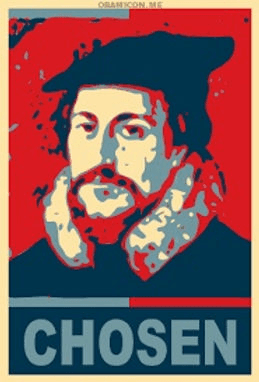
前言:加尔文好帅。
加尔文出生于法国北部小城诺瓦永,一个典型的天主教社会环境。他的家庭并不贫穷,父亲在当地教会系统中任职,熟悉教会—行政体系的运作方式。这一点非常关键:加尔文从小看到的教会,不是神秘的信仰共同体,而是一个高度制度化、与权力和升迁密切相关的组织。他的父亲并不打算让他当神学家,而是希望他走一条稳妥、体面、可上升的路线——通过教育,进入教会或法律体系,成为体制内精英。
因此,加尔文早年的教育路径极其“标准”。他先在巴黎接受人文主义教育,系统学习拉丁文、修辞学、古典文学,随后转向法律,前往奥尔良、布尔日等地研习罗马法。他接受的是当时欧洲最严格的法律训练:文本细读、逻辑推演、权威来源、制度正当性。这种训练塑造了他一生的思维方式——冷静、结构化、对模糊和权威滥用高度敏感。到这一阶段为止,加尔文的人生方向仍然是法律人或体制内知识官僚,而不是宗教改革者。
真正的转折,发生在1530年代初的法国。宗教改革思想开始在法国知识界悄然扩散,但法国王权与天主教会高度捆绑,对任何改革倾向都保持零容忍。1533年,巴黎大学索邦神学院新任校长尼古拉·科普在就职演讲中,公开强调“因信称义”“内在信仰高于外在制度”,并弱化教会作为救赎中介的地位。这篇演讲在神学上并不激进,但在政治上极其危险。它意味着:改革思想已经进入法国最核心的学术权威内部。
加尔文与科普关系密切,学界普遍认为他至少参与了这篇演讲的思想构思。在索邦神学院的视角中,这已经足够。索邦不是讨论神学分歧的地方,而是裁定正统与异端的机构。演讲事件之后,索邦迅速启动调查程序,王权介入,改革派学者被系统性标记、排查、清洗。科普被迫连夜逃离巴黎,而加尔文则立刻意识到,自己已经不可能继续留在法国的体制内。
需要强调的是:加尔文并不是被正式审判、公开定罪后才离开法国的。他是在清洗全面展开之前,主动选择流亡。在16世纪的法国,一旦异端指控进入司法程序,结果往往是监禁、没收财产,甚至死刑。对一个年轻的法律人来说,继续留在国内,意味着职业生命和现实生命同时结束。
正是在这种被体制驱逐的状态中,加尔文开始“被迫搞神学”。他需要为自己、也为法国新教徒,回答一个迫在眉睫的问题:如果教会和国家都宣布你是异端,你凭什么证明自己不是?这不是灵修问题,而是合法性问题。1536年,他在流亡途中完成《基督教要义》初版。这本书不是为普通信徒写的,而是一份高度理性、系统化的信仰辩护文本,几乎可以被看作一部“新教宪法”。他用法律人的方式,为新教信仰建立逻辑结构、权威来源和社会可行性。
加尔文主义之所以能成为清教徒的思想底盘,不是因为它安慰人,而恰恰相反,是因为它极度残酷、但高度稳定。它提供的不是情绪慰藉,而是一套可以长期运转的世界观,在信仰、道德、社会秩序之间形成闭环。而约翰·加尔文之所以能把预定论、上帝主权这些高度抽象的神学问题,论证成一套可执行、可治理、可持续运转的体系,则是因为他在用法律人的方式在做神学。他没有“放弃法律”,而是把法律的方法升级成了神学方法。
首先,加尔文的论证起点并不是个人的情感经验或宗教激情,而是权威来源的问题。这一点与他的法律训练高度相关。作为受过严格法律教育的人,加尔文非常清楚,任何体系要成立,必须先回答“最终裁决权在哪里”。在他的神学中,这个答案只有一个:最终权威只能属于上帝本身。由此他确立了一条清晰的权威链条——上帝的意志是终极根源,《圣经》是上帝启示的权威文本,而教会与传统只能承担解释与执行的角色,绝不能成为新的权威来源。这一立场在《基督教要义》中反复出现,其直接结果,就是从根本上否定了教皇和教会作为“信仰立法者”的合法性。
其次,在预定论问题上,加尔文的论证方式呈现出一种高度理性的因果区分。他坚持认为,人的得救与否只能由上帝在永恒中的决定来解释,而不能由人的行为、选择或宗教实践来解释。换言之,救赎的原因只可能来自上帝的旨意,而人的行为只能是这一旨意在时间中的结果。这种区分在逻辑上彻底切断了“行为导致救赎”的可能性,也使得通过教会仪式、善功或道德表现来“换取”救恩在理论上变得不成立。
第三,加尔文对教会制度的批判,并不是简单的道德谴责,而是一种结构性的后果分析。他反复指出,如果把救赎的部分权力交给人类行为或教会操作,那么救恩必然会被制度化、垄断化,并最终沦为一种可被管理和分配的资源。在这种结构下,道德不再是回应上帝的结果,而会退化为表演与交换。这不是因为个人一定腐败,而是因为制度本身鼓励这种结果。正是在这一意义上,加尔文的批判更像一种制度风险分析,而非情绪化的反教会宣言。
第四,在行为问题上,加尔文并没有否认道德实践的重要性,而是彻底重塑了行为的地位。在他的神学中,善行不是得救的条件,而是信仰与恩典作用的结果。行为无法证明一个人一定被拣选,但持续、稳定的生活秩序与道德实践,被视为信仰真实存在的外在呈现。这种理解方式,后来在清教徒社会中发展为高度严格的道德监督体系——他们关注行为,并不是为了积累功德,而是为了确认信仰与生活之间的逻辑一致性。
最后,《基督教要义》本身的写作方式,也体现出加尔文鲜明的法律思维。它不是讲道集,也不是灵修随笔,而是一部系统化的神学论证文本,从基本原则出发,逐层展开论点,回应反对意见,不断修订以增强逻辑自洽性。正因为如此,这本书才能在宗教改革的长期争论中反复被引用、被使用,甚至被视为改革宗传统的“基础文本”。这并不是因为它像法律条文那样写成,而是因为它具备一种法律式的稳定性。
预定论的要害不在于“上帝提前知道一切”,而在于一个更激进的断言:人的得救或沉沦,在时间开始之前就已经由上帝决定,与人的行为、选择、甚至信仰表达本身都没有因果关系。这意味着,教会不能通过仪式分配救赎,个人也无法通过善行“积累资格”。救赎从根本上脱离了人类社会的交换逻辑。
这个理论乍看之下极其反人性。既然一切早已决定,人为什么还要守道德、守纪律、活得像个“被拣选者”?加尔文主义的厉害之处就在这里:它并没有放弃行为,而是彻底改变了行为的意义。行为不再是“通向救赎的手段”,而是“救赎已存在的外在标志”。换句话说:你行善,不是为了得救;你行善,是因为你可能已经被拣选。
这就制造出一种高度紧张的心理结构。信徒永远无法确定自己是否属于“被拣选者”,但又被要求活出被拣选者应有的秩序、自律与道德强度。结果不是松弛,而是持续的自我审视、自我管理与自我约束。这也是为什么清教徒社会呈现出一种近乎偏执的道德纪律感——不是因为他们相信行为能换救赎,而是因为他们害怕自己的生活状态暴露出“未被拣选”的迹象。
在这一点上,加尔文主义与天主教形成了彻底断裂。天主教提供的是一套“可操作的救赎机制”:通过教会、圣礼、忏悔与善功,人可以在制度中不断修复自己与上帝的关系。加尔文主义则直接取消了这套机制。当救赎不再可被操作,制度的宗教权威就失效了。
这正是清教徒敌视教会等级制度的神学根源。在加尔文主义逻辑中,把属灵权威集中在人类等级结构中,本身就是对神权的僭越。主教制不仅是一个组织形式问题,而是一个神学问题:它暗示有人比其他人“更接近上帝”。而在加尔文主义中,上帝与人的距离是绝对的,任何人都无法通过职位、圣职或血统缩短这种距离。由此,清教徒更倾向于长老制、集体治理与相互监督。清教徒天然反感主教制与属灵贵族,倾向于更平等、去中心化的教会治理形式。正因为如此,清教徒在神学立场上普遍是英格兰的加尔文主义者,而非更强调个人信心体验、对制度冲击较小的路德宗。
这套神学框架之所以“极具行动力”,恰恰是因为它不提供确定性。你无法确认自己是否得救,只能通过持续的纪律、劳动、道德实践来“活出一种可能性”。这使清教徒极度重视时间管理、职业责任、家庭秩序与公共道德,并愿意把整套神学原则落实到社会结构之中。于是,信仰不再只是内心状态,而变成一种全面介入生活的行动伦理。
在16世纪后期,清教徒最初以英格兰国教内部改革派的身份出现,他们并不是一开始就要“脱离体制”。这一阶段的清教徒大体分为两种取向:一类是温和派,选择留在英格兰国教内部,希望通过改革教义、简化仪式、削弱主教权力来“净化”教会;另一类则逐渐走向分离派立场,认为英格兰国教在结构和权力上已经无可救药,必须与之彻底切割。这种分化并非神学细节之争,而是对“是否还能在现有体制内忠于上帝”的根本判断。英格兰王权对这两类人都高度警惕,因为在国教体制下,教会秩序本身就是王权合法性的支柱,任何对教会结构的挑战,都等同于对政治权威的挑战。
进入17世纪初,在伊丽莎白一世和詹姆斯一世统治时期,这种紧张关系迅速升级为系统性压制。清教徒的讲道内容受到审查,非国教聚会被取缔,拒绝遵循官方礼仪的牧师遭到惩处。在这种环境下,部分清教徒逐渐放弃了在英格兰改革教会的可能性,转而选择离开欧洲。1620年乘坐“五月花号”前往北美的清教徒,正是其中最具象征性的一支,但必须强调,他们代表的是分离派清教徒,而非清教徒整体。
在北美,新英格兰并不是清教徒被动避难的终点,而是他们主动实施社会理想的试验场。以马萨诸塞湾殖民地为核心,清教徒试图在新大陆建立一个以宗教盟约为基础的“圣约社会”。在这一设想中,教会是社会的核心结构,宗教规范直接构成法律与公共道德的基础,个人行为被严格纳入共同体的道德监督之中。这套体系高度自洽,却也高度排他。清教徒对异端和异议缺乏宽容,包括对其他新教派亦然。他们确实逃离了宗教迫害,但同时也在北美复制并制造了新的宗教压制,这一点无法被浪漫化。
随着时间推移,进入第二、第三代之后,清教徒社会的宗教张力开始下降。原本紧绷的神学热情逐渐松动,清教主义开始发生世俗化转变。最终留下来的不再是一整套严密的神学体系,而是一种被抽离宗教外壳的伦理结构:强调勤奋、自律、节制的生活方式,强调契约精神与公共责任,强调社群秩序高于个人欲望。这些世俗化的清教伦理,深刻塑造了新英格兰的政治文化,影响了美国早期的共和思想,并为后来所谓的“美国例外主义”提供了强烈的道德底色。
Preface: Calvin is really cool.
John Calvin was born in Noyon, a small town in northern France, within a thoroughly Catholic social environment. His family was not poor; his father held a position within the local church administration and was well acquainted with how the church–bureaucratic system operated. This point is crucial: from an early age, the church Calvin encountered was not a mysterious community of faith, but a highly institutionalized organization closely tied to power and social advancement. His father did not intend for him to become a theologian. Instead, he hoped Calvin would follow a safe, respectable, upwardly mobile path—through education, into the church or the legal profession, and ultimately into the ranks of the institutional elite.
As a result, Calvin’s early educational trajectory was extremely “standard.” He first received a humanist education in Paris, systematically studying Latin, rhetoric, and classical literature, before turning to law and traveling to Orléans and Bourges to study Roman law. He underwent what was among the most rigorous legal training in Europe at the time: close textual analysis, logical reasoning, questions of authority, and institutional legitimacy. This training shaped his lifelong mode of thinking—calm, highly structured, and acutely sensitive to ambiguity and the abuse of authority. Up to this point, Calvin’s life direction was still that of a legal professional or an institutional intellectual, not a religious reformer.
The real turning point came in the early 1530s in France. Reformation ideas began quietly circulating among French intellectual circles, but the French monarchy and the Catholic Church were tightly bound together and maintained zero tolerance for any reformist tendencies. In 1533, Nicolas Cop, the newly appointed rector of the Faculty of Theology at the Sorbonne in the University of Paris, emphasized in his inaugural address “justification by faith” and the priority of inner faith over external institutions, while downplaying the church’s role as a mediator of salvation. Theologically, the speech was not radical; politically, however, it was extremely dangerous. It signaled that reformist ideas had penetrated the very core of France’s highest academic authority.
Calvin was closely associated with Cop, and scholars generally agree that he at least participated in shaping the ideas behind the address. From the Sorbonne’s perspective, this was already sufficient. The Sorbonne was not a forum for debating theological differences; it was an institution that determined orthodoxy and heresy. After the address, the Sorbonne quickly initiated investigations, royal authority intervened, and reform-minded scholars were systematically identified, scrutinized, and purged. Cop was forced to flee Paris overnight, and Calvin immediately realized that it was no longer possible for him to remain within the French institutional system.
It must be emphasized that Calvin did not leave France after a formal trial or public conviction. He chose exile proactively, before the purge fully unfolded. In sixteenth-century France, once a charge of heresy entered the judicial process, the outcome was often imprisonment, confiscation of property, or even execution. For a young legal professional, remaining in the country would have meant the simultaneous end of both his career and his life.
It was precisely in this condition of being expelled from the system that Calvin was forced into theology. He needed to answer an urgent question—for himself and for French Protestants alike: If both the Church and the state declare you a heretic, on what grounds can you prove that you are not? This was not a matter of personal spirituality, but of legitimacy. In 1536, while in exile, he completed the first edition of The Institutes of the Christian Religion. This book was not written for ordinary believers; it was a highly rational, systematic defense of faith, one that can almost be read as a “Protestant constitution.” Using the methods of a jurist, Calvin constructed a logical framework, a source of authority, and a vision of social viability for Protestant belief.
Calvinism became the intellectual foundation of Puritanism not because it offered comfort, but precisely because it was extremely severe yet highly stable. It provided not emotional consolation, but a worldview capable of long-term operation, forming a closed circuit among faith, morality, and social order. John Calvin was able to turn doctrines as abstract as predestination and divine sovereignty into a system that was executable, governable, and sustainable precisely because he approached theology with a jurist’s mindset. He did not abandon law; he elevated legal method into a theological method.
First, Calvin’s point of departure was not personal emotional experience or religious enthusiasm, but the question of authority. This was closely related to his legal training. As someone educated in law, Calvin understood that any system must first answer the question of where final adjudicative authority lies. In his theology, the answer was singular: ultimate authority belongs to God alone. From this he established a clear chain of authority—God’s will as the ultimate source, Scripture as the authoritative text of divine revelation, and the church and tradition as agents of interpretation and execution, never as new sources of authority. This position recurs throughout The Institutes of the Christian Religion, and its direct consequence is the fundamental denial of the pope and the church as legitimate “legislators” of faith.
Second, in addressing predestination, Calvin’s reasoning displays a highly rational separation of causality. He insisted that salvation or damnation can only be explained by God’s eternal decree, not by human behavior, choice, or religious practice. In other words, the cause of salvation lies solely in God’s will, while human actions are merely the temporal outcomes of that will. This distinction logically severs any possibility that behavior could cause salvation and renders attempts to “exchange” rituals, good works, or moral performance for salvation theoretically untenable.
Third, Calvin’s critique of church institutions was not a simple moral denunciation, but a structural analysis of consequences. He repeatedly argued that if any portion of salvific authority were entrusted to human behavior or ecclesiastical administration, salvation would inevitably be institutionalized, monopolized, and transformed into a resource to be managed and distributed. Under such a structure, morality would cease to be a response to God and would instead degenerate into performance and exchange—not because individuals are necessarily corrupt, but because the system itself incentivizes such outcomes. In this sense, Calvin’s critique resembles an analysis of institutional risk rather than an emotional anti-church polemic.
Fourth, Calvin did not deny the importance of moral practice; instead, he fundamentally redefined its status. In his theology, good works are not conditions of salvation, but the result of faith and grace at work. Behavior cannot prove that a person is certainly among the elect, but a stable, disciplined life order and consistent moral practice are taken as outward manifestations of a living faith. This understanding later developed within Puritan society into highly stringent systems of moral oversight. Their attention to behavior was not about accumulating merit, but about maintaining logical consistency between faith and life.
Finally, the very mode of writing of The Institutes of the Christian Religion reflects Calvin’s legal mindset. It is neither a collection of sermons nor a book of devotional reflections, but a systematic theological argument that begins from first principles, unfolds layer by layer, responds to objections, and undergoes continual revision to strengthen its internal coherence. For this reason, the book could be repeatedly cited and used throughout the long controversies of the Reformation and came to be regarded as a foundational text of the Reformed tradition. This is not because it was written like a legal code, but because it possesses a kind of legal stability: it holds up under dispute and functions in practice.
The essence of predestination lies not in the idea that “God knows everything in advance,” but in a more radical claim: that a person’s salvation or damnation was determined by God before time itself began, without any causal dependence on human actions, choices, or even expressions of faith. This means that the church cannot distribute salvation through rituals, and individuals cannot “accumulate qualifications” through good works. Salvation is thus fundamentally detached from the logic of human exchange.
At first glance, this theory appears profoundly anti-human. If everything is already decided, why should anyone uphold morality, discipline, or live like one of the “elect”? This is precisely where Calvinism’s force lies: it does not abandon behavior, but completely transforms its meaning. Behavior is no longer a means toward salvation; it becomes the outward sign of a salvation that already exists. Put differently: one does good not in order to be saved, but because one may already be among the elect.
This creates a state of intense psychological tension. Believers can never be certain whether they belong to the elect, yet they are required to live out the order, self-discipline, and moral rigor expected of the elect. The result is not relaxation, but continuous self-examination, self-management, and self-restraint. This explains why Puritan society exhibited an almost obsessive moral discipline—not because Puritans believed behavior could purchase salvation, but because they feared that their way of life might reveal signs of not having been chosen.
At this point, Calvinism represents a complete rupture with Catholicism. Catholicism offers an “operable system of salvation”: through the church, the sacraments, confession, and good works, individuals can continually repair their relationship with God within an institutional framework. Calvinism abolishes this system outright. When salvation is no longer operable, the religious authority of the institution itself collapses.
This is the theological root of Puritan hostility toward ecclesiastical hierarchies. In Calvinist logic, concentrating spiritual authority within human hierarchies is itself an encroachment upon divine sovereignty. Episcopacy is not merely an organizational issue, but a theological one: it implies that some people are “closer to God” than others. In Calvinism, however, the distance between God and humanity is absolute; no position, office, or lineage can reduce it. Consequently, Puritans gravitated toward presbyterian governance, collective oversight, and mutual supervision. They were instinctively hostile to episcopal systems and spiritual aristocracies, favoring more egalitarian and decentralized forms of church governance. For this reason, Puritans were, in theological terms, overwhelmingly Calvinist rather than Lutheran, the latter placing greater emphasis on personal faith experience and exerting less pressure on institutional structures.
The reason this theological framework proved so “action-oriented” is precisely that it offers no certainty. One can never confirm one’s own salvation, and can only “live out a possibility” through sustained discipline, labor, and moral practice. This drove Puritans to place extraordinary emphasis on time management, vocational responsibility, family order, and public morality, and to embed their theological principles into social structures. Faith thus ceased to be merely an inner state and became an action-oriented ethic that permeated everyday life.
In the late sixteenth century, Puritans initially emerged as reformers within the Church of England; they did not begin with the intention of breaking away from the system. At this stage, they broadly divided into two orientations. One consisted of moderates who chose to remain within the Church of England, hoping to “purify” it by reforming doctrine, simplifying rituals, and weakening episcopal power. The other gradually adopted a separatist stance, concluding that the Church of England was beyond redemption in its structure and power relations and had to be abandoned entirely. This division was not a dispute over theological minutiae, but a fundamental judgment about whether one could still remain faithful to God within the existing system. The English crown was deeply wary of both groups, because under the established church system, ecclesiastical order itself was a pillar of royal legitimacy; any challenge to church structure amounted to a challenge to political authority.
In the early seventeenth century, during the reigns of Elizabeth I and James I, these tensions escalated into systematic repression. Puritan sermons were censored, nonconformist gatherings were banned, and ministers who refused to follow official liturgy were punished. Under such conditions, some Puritans gradually abandoned the possibility of reforming the English church from within and chose instead to leave Europe. The Puritans who sailed to North America aboard the Mayflower in 1620 were the most emblematic among them, though it must be stressed that they represented the separatist faction rather than Puritans as a whole.
In North America, New England was not merely the endpoint of passive refuge for the Puritans, but a testing ground for their social ideals. Centered on the Massachusetts Bay Colony, they sought to build a “covenant society” in the New World, founded on a religious compact. In this vision, the church was the core structure of society, religious norms directly constituted law and public morality, and individual behavior was strictly subjected to communal moral oversight. This system was highly coherent, but also highly exclusionary. The Puritans showed little tolerance for heresy or dissent, including dissent from other Protestant groups. They did flee religious persecution, but they also reproduced and imposed new forms of religious repression in North America—an aspect that cannot be romanticized.
Over time, as the second and third generations emerged, the religious intensity of Puritan society began to decline. The once tightly stretched theological fervor gradually loosened, and Puritanism underwent a process of secularization. What ultimately remained was no longer a comprehensive theological system, but an ethical structure stripped of its religious shell: an emphasis on diligence, self-discipline, and restraint; a strong sense of covenant and public responsibility; and the priority of communal order over individual desire. These secularized Puritan ethics profoundly shaped the political culture of New England, influenced early American republican thought, and provided a powerful moral foundation for what would later be called “American exceptionalism.”