Created on
1
/
8
/
2026
,
22
:
1
Updated on
1
/
14
/
2026
,
7
:
19
Location
Oakland, CA
Puritans(vi): Institutes of the Christian Religion
清教徒(vi):基督徒教义
前言:本文和Gemini合作完成。
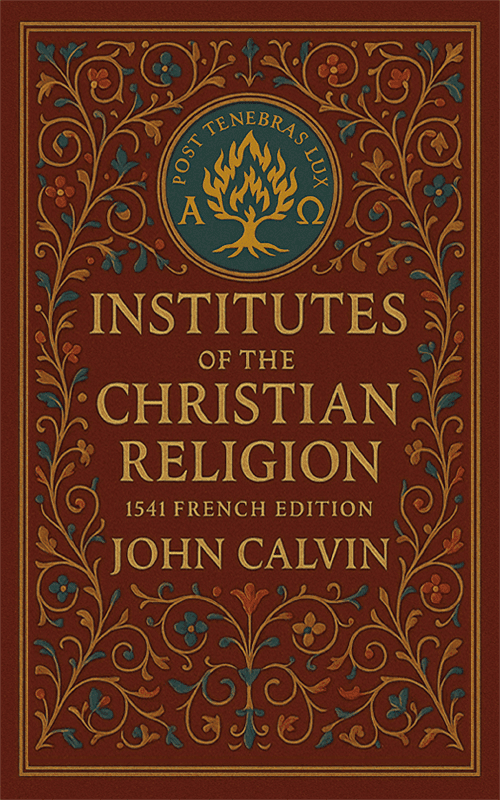
所以加尔文到底是怎么证明自己的无辜呢?上一篇说了很多,但听上去还是很抽象,于是我找了下这本《基督徒教义》,发现它不是一本书,是三卷。
第一卷论述的是对上帝的认识,承认上帝是宇宙以及宇宙间万有的创造者、保守者和管理者,which 是所有论证的大前提。这里不讨论上帝是否存在,而是基于上帝是宇宙万物的创造者、保守者和管理者的前提下,我们应该如何理解人与上帝,以及教会、教皇在其中的作用。第一卷指明了对创造者之认识的性质和目的;这种认识不是从学校里学来的,而是与生俱来的。然而,由于人类的堕落过于严重,一方面出于无知,另一方面出于邪恶,这种认识被败坏并几乎消灭,因此它既不能使人归荣耀于上帝,也不能使人自己获得幸福。
虽然这种内在的认识可以借助那在我们周围、如同镜子一般反映神之完全的一切受造之物而得到帮助,但人却并未因此而得益。这句话我是同意的,我时常感觉世界万物的”神性“是在万物开始之初就存在的,它们和我们的呼吸、行为、自我意识,即便从物理学上来说,这个世界的存在也是极小概率的存在。
我们可以说这是存在着偏差,不是因为我们特别才存在,而是因为我们存在了,才有观察和反思的能力,才能提这个问题,即:”我们为什么存在?”这个问题。提问题的前提,是因为我们存在。而我们被这种“神性”包围,世界万物都是我们所有问题的答案。我时常说,"The answer is within me“。因为我真是相信,所有我要提的问题,答案早就在我心中,我只是需要不overthink,答案自然会浮现。我们的问题不是没有答案,而是答案太多,导致人们不知道,什么是重要的,什么是不重要的。
为了给人们提示,上帝便将他成文的道赐给那些他愿意使其认识他的人;因此我们必须注意圣经。上帝在圣经中启示了他自己;他不仅是父,更是父、子、圣灵合而为一的天地创造者。由于我们的堕落,那本性中固有的知识,以及显现在世界中的那极其美丽的“镜子”,都不能使我们学会将荣耀归给他。
因此,作者讨论了上帝在圣经中的启示,以及三位一体等问题。为防止人将自己自愿盲目的过失归咎于上帝,作者说明了人在受造之初的情形,并论及人是照着上帝的形象被造的、自由意志,以及本性上原初的完整。创造的问题讨论完毕之后,作者接着论述万物的保守与治理,并以对神之护理教义的讨论作为第一卷的结束。
下面分章节具体说说第一卷的内容。
第一章主要讨论我们如何认识上帝和认识自己。章节的开头,讨论了真正的智慧到底是什么。
真正的智慧主要由两部分构成:对上帝的认识,以及对我们自己的认识。不过,由于这两种认识彼此关系极为密切,因此很难确定哪一个在先、哪一个在后。首先,因为人一旦省察自己,就必然立刻想到上帝——那位使人“生活、动作、存留”(徒 17:28)都在其中的上帝;我们所拥有的才智绝非出于自身,甚至连我们的存在本身,也完全依赖于上帝。这些从天上不断滴落、赐给我们的恩典,仿佛汇成许多河流,引导我们回到源头。
我不知道其他人怎么感受这段话,但我时常感觉到聪明、智慧、和真正的大智慧之间的区别。聪明似乎和学习和理解能力相关,但是智慧似乎是与生俱来的,而大智慧在我看来,是使用智慧进行内观,以时间为度量,将对自己的理解延伸到对他人和世界万物的理解。这有可能是佛教的思路,我不是很清楚,因为我也没有仔细的了解过佛教。但我确实对藏传佛教有一定的兴趣,可能得之后再了解,现在想研究的主题还太多。
其次,我们自身的贫乏,更加显明了上帝无限的丰富。尤其是由于始祖的背叛,我们陷入了可悲的败坏之中,这迫使我们不得不仰望上天;这不仅如同饥荒之时需要饮食,更使我们因恐惧而学习谦卑。因为人被各样愁苦所辖制,又被剥夺了原本的神圣装饰,畸形残缺赤裸裸地显露出来,每个人因深切感受到自己的不幸,或多或少都会获得一些对上帝的认识。
这是典型的圣经storytelling,我理解,也时常感受到自己的罪恶,让我想跑到最近的教堂去忏悔,跟神父哭泣。但找人忏悔不应该成为我信基督教的理由。最近我看了最新一集的knives out,Wake Up Dead Man: A Knives Out Mystery。 我没研究过bible,这是我第一次听说Road to Damascus的故事。For those who don't know, Road to Damascus(大马士革之路)指的是《新约·使徒行传》中扫罗(后来的保罗)悔改归信的关键事件。
原本作为法利赛人的扫罗正前往大马士革迫害基督徒,途中忽然被天上强光击倒,失明三日,并听见声音呼唤他的名字,质问他为何逼迫耶稣;在大马士革,他由亚拿尼亚医治并受洗,从迫害者转变为宣讲者,身份与使命彻底翻转。此事件的重要性不在于“看见异象”,而在于一种被点名、被中断的认知崩塌——一个自以为站在真理一边的人,突然发现自己错把神当工具,从而经历不可逆的世界观重组。
我在看这部电影的时候,居然突然理解了我之前一直不能理解的“God is within me”这句话的意思。我能感觉到它,我能感觉到这种“神性”是高于我的,我不确定我是否信任耶稣的故事,但故事是否真实并不重要。如果信仰这个故事能带领我们理解和接近god,weather it is Jesus or not,我想那会是世界上最美好的事情。因为我很迷失,万物的神,不管是什么样的神都好,请给我方向。
当我们感到自己的无知、空虚、贫乏、软弱、邪恶与败坏时,便会察觉并承认:唯有在主里面,才能找到真实的智慧、坚固的力量、完全的仁慈,以及无瑕的公义。正因如此,我们因自身的不完全,而开始思念上帝的完全。唯有当我们开始对自己不再满足时,才能真心仰望上帝。因为有谁不愿意依靠自己呢?当人尚未认清自身的真实处境,反而以自己的禀赋为满足,忘记或茫然不知自己的不幸时,又有谁不会自鸣得意、自我满足呢?因此,自我认识不仅激励人寻求上帝,也帮助人发现上帝。
第二章讨论认识上帝的性质,以及认识上帝的目的。
加尔文认为,真正的认识上帝不仅仅是理智上承认有一位神,而是包含敬畏与爱,即认识上帝意味着感知到他的伟大,从而对他产生敬畏;同时感知到他的慈爱,从而对他产生爱戴。 加尔文批评那些只讨论上帝“本质”是什么、却不关心上帝“对我们”意味着什么的空谈。他认为认识上帝必须是实用的,即认识他的属性如何影响我们的生活。
加尔文将“敬虔”定义为:“敬虔是由于认识上帝的恩惠而产生的对上帝的敬爱,并与对他的敬畏结合在一起。” 他强调,除非人先感受到上帝是万善的源头,并由此产生感激和顺服,否则人不会真心敬拜上帝。如果一个人真正认识了作为创造者的上帝,他会表现出以下特质:自愿的顺服和完全的信靠。这里我又要引用《Knives Out 3》里面的人物,当神父Josh被指控为谋杀者时,他也想逃脱罪责,但他最终不愿意将他的精力放在解决谋杀案件上。因为每一分钟用来suspect人们的极恶,他都在straying away from他真正应该做的事。在他追踪案件的时候,突然在搜查证据的时候听到电话那端的售货员祈求他作为神父为他的病重的母亲祷告,那一刻他明白,他的职责不是追查真凶,而是继续协助迷失的人们找到方向。在遭遇困苦时,他相信上帝的保护;在获得成功时,他将荣耀归于上帝。
第三章,“论在人心中本有对上帝的认识”(The Knowledge of God Has Been Naturally Implanted in the Minds of Men)。加尔文在这一章的核心逻辑是:没有任何人可以推诿说不认识上帝。
加尔文提出,上帝在每个人心中都植入了一定程度的“神性意识”(Sensus Divinitatis)。这种认识不是通过后天学习获得的,而是与生俱来的,这一点和我之前说的基本吻合。无论文明多么落后或野蛮,甚至那些生活习惯近乎禽兽的人,内心深处仍然有一种“宗教感”。这种“神性”是不可磨灭的, 尽管人可以极力压制这种意识,甚至口头上否认上帝,但当危机或死亡临近时,这种对神的畏惧感会再次涌现。
宗教不是人为的发明,加尔文反驳了当时的这种观点,即“宗教是少数聪明人为了统治百姓而发明出来的骗局”。他认为,如果人心中原本没有对上帝的感知作为种子,那些政治家或狡猾的人无论如何灌输,也不可能在人类心中建立起宗教。加尔文指出,人宁可去拜木头、石头,也不愿完全没有神。这种“宁可拜错也要拜”的行为,反倒证明了人心中有一种根深蒂固、无法根除的对神的渴求。这种内在的认识也会在人心中产生基本的道德责任感,让人知道应当向上帝负责。
本章的结论:人无可推诿。加尔文总结道,既然上帝已经在每个人心中留下了见证,那么:#1: 无神论是虚假的,那些自称不信神的人,其实是在内心深处进行着激烈的挣扎,试图逃避上帝;#2 审判是公义的,最终在上帝面前,没有人能以“不知道有神”为借口来为自己的罪行辩护。
(To be continued)
Preface: This article was completed in collaboration with Gemini.
So how did Calvin ultimately prove his own innocence? The previous article discussed this at length, but it still sounded rather abstract. I then looked up The Institutes of the Christian Religion and realized that it is not a single book, but a work in three volumes.
The first volume discusses the knowledge of God, acknowledging God as the Creator, Preserver, and Governor of the universe and all that is within it—which serves as the major premise for all subsequent arguments. It does not debate whether God exists; rather, starting from the premise that God is the Creator, Preserver, and Governor of all things, it asks how we should understand the relationship between humanity and God, and the roles of the Church and the Pope within that relationship. The first volume clarifies the nature and purpose of knowing the Creator: this knowledge is not acquired through schooling but is innate. However, because human depravity is so severe—partly due to ignorance and partly due to evil—this knowledge has been corrupted and nearly extinguished, so that it can neither lead people to glorify God nor bring happiness to themselves.
Although this inner knowledge can be assisted by all created things around us, which reflect God’s perfection like mirrors, people nonetheless fail to benefit from it. I agree with this statement. I often feel that the “divinity” of all things has existed since the very beginning of creation; it exists alongside our breathing, our actions, and our self-awareness. Even from a purely physical perspective, the existence of this world itself is an event of extremely low probability.
We can say that there is a bias here—not because we exist because we are special, but because we exist, we are able to observe and reflect, and thus raise the question: “Why do we exist?” The ability to ask this question presupposes our existence. Surrounded by this “divinity,” all things in the world are answers to our questions. I often say, “The answer is within me,” because I truly believe that the answers to all the questions I raise are already in my heart; I simply need to stop overthinking, and the answers will naturally emerge. Our problem is not a lack of answers, but an excess of them, which leaves people unable to distinguish what is important from what is not.
In order to give people guidance, God therefore granted his written Word to those whom he wished to make know him; hence we must pay attention to Scripture. In Scripture, God reveals himself—not only as the Father, but as the Father, the Son, and the Holy Spirit united as one, the Creator of heaven and earth. Because of our fall, the knowledge inherently present in our nature, as well as the exceedingly beautiful “mirror” displayed in the world, can no longer teach us to give glory to him.
Accordingly, the author discusses God’s revelation in Scripture and issues such as the Trinity. To prevent people from attributing their willful blindness to God, the author explains the condition of humanity at creation, and addresses humanity’s creation in the image of God, free will, and the original integrity of human nature. After completing the discussion of creation, the author proceeds to examine the preservation and governance of all things, concluding the first volume with a discussion of the doctrine of divine providence.
Below, I will go through the contents of the first volume chapter by chapter.
Chapter One primarily discusses how we come to know God and how we come to know ourselves. At the beginning of the chapter, it addresses the question of what true wisdom really is.
True wisdom consists chiefly of two parts: the knowledge of God and the knowledge of ourselves. However, because these two kinds of knowledge are so closely connected, it is difficult to determine which comes first and which follows. First, because once a person examines himself, he must immediately think of God—the God in whom humans “live and move and have their being” (Acts 17:28). The talents we possess are by no means our own; even our very existence depends entirely on God. These gifts, continually bestowed upon us drop by drop from heaven, are like many rivers leading us back to their source.
I do not know how others feel about this passage, but I often sense a distinction between cleverness, wisdom, and true great wisdom. Cleverness seems related to learning and comprehension, whereas wisdom appears to be innate. Great wisdom, in my view, is the use of wisdom for inner contemplation, measured over time, extending self-understanding into an understanding of others and of all things in the world. This may reflect a Buddhist line of thought—I am not entirely sure, as I have not studied Buddhism carefully—but I do have some interest in Tibetan Buddhism, which I may explore later. For now, there are simply too many topics I want to study.
Second, our own poverty makes God’s infinite richness all the more apparent. Especially because of the rebellion of our first ancestors, we have fallen into a pitiable state of corruption, which forces us to look upward to heaven—not only as famine drives the need for food, but also as fear teaches us humility. Being constrained by various sufferings and stripped of our original sacred adornment, our deformity and brokenness are fully exposed. As each person deeply senses his or her own misery, they gain, to some degree, a knowledge of God.
This is classic biblical storytelling. I understand it, and I often feel my own sinfulness so strongly that I want to run to the nearest church, confess, and weep before a priest. But seeking confession should not be my reason for believing in Christianity. Recently, I watched the latest episode of Knives Out, Wake Up Dead Man: A Knives Out Mystery. I have never studied the Bible, and this was the first time I heard the story of the Road to Damascus. For those who don’t know, the Road to Damascus refers to the pivotal event in the New Testament’s Acts of the Apostles in which Saul (later Paul) repents and converts.
Originally a Pharisee, Saul was on his way to Damascus to persecute Christians when he was suddenly struck down by a heavenly light, blinded for three days, and heard a voice calling his name and asking why he was persecuting Jesus. In Damascus, he was healed by Ananias and baptized, transforming from a persecutor into a preacher, with his identity and mission completely overturned. The importance of this event lies not in “seeing a vision,” but in a moment of being named and forcibly interrupted—a collapse of cognition in which someone who believed himself to be on the side of truth suddenly realized that he had mistaken God for a tool, thereby undergoing an irreversible restructuring of his worldview.
While watching this film, I suddenly understood something I had previously been unable to grasp about the phrase “God is within me.” I can feel it; I can sense that this “divinity” is higher than myself. I am not sure whether I trust the story of Jesus, but whether the story is literally true does not matter. If believing in this story can lead us to understand and approach God—whether it is Jesus or not—I think that would be one of the most beautiful things in the world. Because I am lost. God of all things—whatever kind of God you may be—please give me direction.
When we feel our ignorance, emptiness, poverty, weakness, evil, and corruption, we come to perceive and acknowledge that only in the Lord can true wisdom, firm strength, perfect mercy, and flawless justice be found. Thus, because of our own imperfection, we begin to think of God’s perfection. Only when we become dissatisfied with ourselves can we truly look to God. For who does not prefer to rely on oneself? When a person has not yet recognized his true condition, but is content with his own endowments, forgetting or remaining oblivious to his misery, who would not be complacent and self-satisfied? Therefore, self-knowledge not only motivates people to seek God, but also helps them discover God.
Chapter Two discusses the nature of knowing God and the purpose of knowing God.
Calvin argues that truly knowing God is not merely an intellectual acknowledgment that a god exists, but includes reverence and love. To know God is to perceive his greatness and thus develop reverence for him, and at the same time to perceive his benevolence and thus develop love for him. Calvin criticizes empty discussions that focus solely on what God’s “essence” is, while ignoring what God “means to us.” He maintains that knowledge of God must be practical—concerned with how God’s attributes affect our lives.
Calvin defines “piety” as follows: “Piety is that reverence joined with love of God which the knowledge of his benefits induces.” He emphasizes that unless a person first senses that God is the source of all good, and thereby develops gratitude and obedience, true worship will not occur. If someone truly knows God as Creator, that person will display two characteristics: voluntary obedience and complete trust. Here I want to reference a character from Knives Out 3 again. When Father Josh is accused of murder, he also wants to escape blame, but he ultimately refuses to devote his energy to solving the murder case. Because every minute spent suspecting the extreme evil of others draws him further away from what he is truly meant to do. While investigating the case, he suddenly receives a call from a salesperson asking him, as a priest, to pray for his gravely ill mother. In that moment, he realizes that his duty is not to hunt down the true culprit, but to continue helping lost people find direction. In times of hardship, he trusts in God’s protection; in times of success, he gives glory to God.
Chapter Three, “On the Knowledge of God Implanted in the Human Mind” (The Knowledge of God Has Been Naturally Implanted in the Minds of Men), advances a central argument: no one can legitimately claim ignorance of God.
Calvin proposes that God has implanted in every human heart a certain awareness of the divine (sensus divinitatis). This knowledge is not acquired through later learning, but is innate—consistent with what I said earlier. No matter how primitive or barbaric a civilization may be, even those whose lifestyles verge on the animalistic still possess, deep within, a kind of “religious sense.” This divinity is indelible. Although people may try hard to suppress it or even verbally deny God, when crisis or death approaches, this sense of awe toward God resurfaces.
Religion is not a human invention. Calvin refutes the view prevalent at the time that “religion is a deception invented by a few clever people in order to rule the masses.” He argues that if there were no innate awareness of God as a seed in the human heart, then no matter how much politicians or cunning individuals tried to indoctrinate people, they would never succeed in establishing religion in humanity. Calvin points out that people would rather worship wood and stone than have no god at all. This behavior—“better to worship the wrong god than none”—ironically proves that there is a deep-rooted, ineradicable longing for God in the human heart. This inner knowledge also generates a basic sense of moral responsibility, making people aware that they are accountable to God.
Conclusion of the chapter: humanity is without excuse. Calvin concludes that since God has left a witness in every human heart: #1 Atheism is false; those who claim not to believe in God are in fact engaged in an intense inner struggle, attempting to flee from God. #2 Judgment is just; ultimately, before God, no one can use “I didn’t know God existed” as an excuse to defend their sins.
(To be continued)