Created on
12
/
9
/
2025
,
1
:
28
Updated on
1
/
7
/
2026
,
5
:
33
Location
Oakland, CA
Taiwan’s Path to Democracy(v): Before and After the Lifting of Martial Law
台湾民主历程(v):取消戒严的前后
Preface:和ChatGPT合作完成。
1971 年10月25日,联合国通过了第2758号决议,which承认中华人民共和国是中国在联合国的唯一合法代表,并决定驱逐中华民国的代表。决议文本里没有出现台湾的地位,只是决定了谁代表中国,没有决定台湾属于谁。文字游戏也罢,结果是中华民国正式退出联合国。决议的背景很简单,1950到1960年代,大量的亚非的新独立国家加入联合国。而这些国家大多承认北京,不接受台湾代表全中国的说法。联合国也从战后同盟俱乐部,变成了第三世界占多数的政治场域。中国民国在投票结构上成为了少数派。
而冷战带来的美国战略转向也促进这一改变。当时,美国深陷越战泥潭,苏联和中国交恶,美国需要拉拢北京对抗苏联。1972年,基辛格秘密访华,名义上是访问巴基斯坦,但实际上他在伊斯兰堡“生病”,偷偷乘飞机去了北京。当时的会谈对象是周恩来,而美国国务院的大多数人、台湾政府、盟国,全都不知情。美国承认了“只有一个中国”的立场,不挑战北京对台湾的立场。而北京也同意,不要求美国立刻与台湾断绝一切关系。
1972年2月,尼克松访华,会见对象是毛泽东。《上海公报》文本表示,美国acoknowlege中国的立场,但没说recognize。他们不会挑战台湾是中国的一部分,但留下了外交的模糊空间。同时,中华民国拒绝双重代表、一中一台的折衷方案,拒绝仅代表台湾的身份,要求代表全中国。蒋介石的立场是,如果失去中国的代表权,就等于否定政权的合法性,那么不如全部退出。
至此,台湾的官方叙事遭受致命打击。之前的叙事是:台湾代表大陆,他们只是暂时失去大陆,反攻大陆是历史使命。而1981年之后,这三条同时破产。国家还在,但民众第一次意识到,世界并不站在他们那边,国际规则不是道德裁判,于是反共救国显得空洞而陈旧。台湾的外省统治集团、即国共内战退居台湾掌握政权的统治集团,开始失去国际合法性的背书。本省人开始问,如果你连代表中国都不是,那凭什么代表我?我们应该由本土人代表。
美国不再无条件背书台湾威权统治,而人权成为新的外交语言。此前,在50-60年代,美国对盟友的底线只有一条:你是不是反共。只要你反共,你的政权下实行的军事独裁、长期戒严、清治系统镇压、政治犯遍地等,美国基本是选择性失明。台湾、南韩、菲律宾、南越,都是一样的逻辑。1970年代,美国的越战失败、水门事件和民权运动的余波,让美国内部出现了反思:对反共不择手段的厌倦,对权力滥用的警惕,权力话语开始制度化。人权开始成为美国外交的可公开使用的语言。不是突然变善良,而是政治文化变了。
1977年到1982年,人权被证实写进外交政策。吉米卡特是第一位明确把人权列为外交核心价值的美国总统,不仅仅是演讲,而是将其制度化。具体操作包括在国务院设立人权报告机制,国会要求行政部门递交各国人权状况报告,并且对盟友也适用。卡特的逻辑下,美国不再只是在意台湾是不是反共,而是你怎么对待自己的人?美国对台湾的态度降级,不再无条件支持,而是有成本的支持。台湾的镇压会被写入美国的人权报告,军法审判会被国会点名,而政治犯也会成为外交的摩擦点。威权统治的外部成本显著上升。
1979的美丽岛事件引发了美国媒体的关注,国会议员的质询,和人权组织的介入。这在1950年代是不可想象的。蒋经国政府开始清楚:美国不会为镇压背书。镇压越狠,外交空间越小。人权意图会长期存在,而不是一次风潮。如果蒋经国政府持续高压统治,会造成在国际上的自我鼓励。
在此之前,1960年代,台湾放弃只满足内需的模式,改为引进外资、发展加工制造,承接纺织、电子、零组件等国际订单。高雄加工出口区是其代表。这个年代,国家主导土地、金融、劳动力配置。严格管控工会、压低劳动成本,提供政治稳定换取外资信任。这样虽然效率极高,但是参与度极低。短期内是成功的,但长期上,结构性反噬政治控制。台湾从农业社会进入工业社会,农业收入相对下降,年轻人大量进城,宗族、地方士绅影响力减弱。工厂、科技园区、都市办公体系把人际关系从血缘、地缘的链接,转向职业、同事、社交网络的格局。人们开始靠工资生活,而不是靠关系或国家配给。、
中产阶级开始扩大,这个阶级不是资本家,也不是农民,而是工程师、公务员、教师、技术人员、白领行政人员等。他们的共同特征是收入稳定,技能可转移,且不依附黑箱政治生存。他们不需要革命,但他们无法接受全面控制。他们要的是可预期的规则,专业尊严,和言论空间。他们不暴力,不造反,但持续不服从精神控制。
同时,教育水平被显著提高。高等教育扩张,大学数量增加。理工科、社会科学并进,教师、学生规模暴涨。大量学生赴美、赴欧,接触了选举、公民社会、言论自由。虽然他们不一定反对政权,但他们知道,世界可以不一样。人不在完全依附国家给饭吃,而是靠市场给收入。工作机会来自企业,而不是政府。收入来自工资、技术,而非政治忠诚。
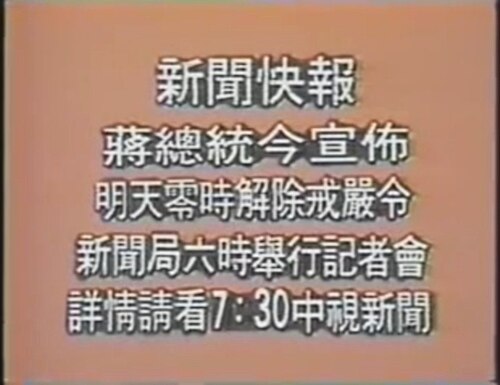
1980–1987 年之间,台湾政治已经发生很大改变。政治犯减刑、释放,情治系统不再全面抓人。反对杂志不再全部查禁,最重要的是民进党 1986 年成立却未被取缔。1987 年 7 月 15 日,中华民国政府正式宣布,自1949年实施、持续38年的戒严令废止,which is 当时亚洲持续时间最长的戒严之一。戒严停止后,新报纸开始合法出现,不同的政治立场开始公开存在,政府不再是唯一的叙事来源。至此,国家失去了对现实解释权的垄断。
Preface: completed in collaboration with ChatGPT.
On October 25, 1971, the United Nations adopted Resolution 2758, which recognized the People’s Republic of China as the only legitimate representative of China at the United Nations and decided to expel the representatives of the Republic of China. The text of the resolution made no mention of Taiwan’s status; it merely determined who represented China, not to whom Taiwan belonged. Whether this was a matter of semantic maneuvering or not, the outcome was clear: the Republic of China formally withdrew from the United Nations.
The background to this decision was straightforward. During the 1950s and 1960s, a large number of newly independent countries in Asia and Africa joined the United Nations. Most of these states recognized Beijing and rejected the claim that Taiwan could represent all of China. As a result, the UN transformed from a postwar alliance club into a political arena dominated by the Third World. Within this new voting structure, the Republic of China became a minority.
The Cold War and the resulting shift in U.S. strategy further accelerated this change. At the time, the United States was deeply mired in the Vietnam War, while relations between the Soviet Union and China had deteriorated. Washington sought to draw Beijing closer in order to counterbalance Moscow. In 1972, Henry Kissinger made a secret visit to China. Officially, he was traveling to Pakistan; in reality, he claimed to have fallen ill in Islamabad and secretly flew to Beijing. His counterpart in these talks was Zhou Enlai. Most officials in the U.S. State Department, the Taiwanese government, and America’s allies were kept completely in the dark.
During these talks, the United States acknowledged the position that there was only one China and stated that it would not challenge Beijing’s position on Taiwan. In return, Beijing agreed not to demand that the United States immediately sever all relations with Taiwan.
In February 1972, President Richard Nixon visited China and met with Mao Zedong. The Shanghai Communiqué stated that the United States acknowledged China’s position, deliberately using acknowledge rather than recognize. While the U.S. declared that it would not challenge the claim that Taiwan was part of China, it deliberately left room for diplomatic ambiguity. At the same time, the Republic of China rejected compromise proposals such as dual representation or “one China, one Taiwan,” and refused to accept a status that would allow it to represent Taiwan alone. Chiang Kai-shek’s position was clear: losing the right to represent China would amount to denying the legitimacy of his regime, and under such circumstances, total withdrawal was preferable.
At this point, Taiwan’s official narrative suffered a fatal blow. The previous narrative rested on three pillars: that Taiwan represented China, that the loss of the mainland was only temporary, and that retaking the mainland was a historical mission. After this series of events, all three collapsed simultaneously. The state still existed, but for the first time, the public realized that the world was not on their side and that international rules were not moral arbiters. The rhetoric of “anti-communism and national salvation” began to sound hollow and outdated.
The ruling elite—those who had retreated to Taiwan after the Chinese Civil War and monopolized political power—began to lose their international legitimacy. Native Taiwanese increasingly asked: if you no longer represent China, on what grounds do you represent us? Why should we not be represented by people rooted in this island?
The United States no longer offered unconditional backing to Taiwan’s authoritarian rule, and human rights emerged as a new diplomatic language. In the 1950s and 1960s, Washington’s only criterion for its allies was simple: were they anti-communist? As long as they were, the United States largely turned a blind eye to military dictatorships, prolonged martial law, repression by security agencies, and the widespread existence of political prisoners. Taiwan, South Korea, the Philippines, and South Vietnam all followed the same logic.
By the 1970s, however, the defeat in Vietnam, the Watergate scandal, and the aftershocks of the civil rights movement triggered deep reflection within the United States: fatigue with anti-communism at any cost, growing suspicion of abuses of power, and the institutionalization of rights-based discourse. Human rights became a language that could be openly deployed in American foreign policy. This was not a sudden moral awakening, but a shift in political culture.
Between 1977 and 1982, human rights were formally written into U.S. foreign policy. Jimmy Carter was the first American president to explicitly elevate human rights to a core diplomatic value—not merely in rhetoric, but through institutionalization. This included the establishment of human rights reporting mechanisms within the State Department and congressional requirements that the executive branch submit reports on human rights conditions in other countries, including allies.
Under Carter’s logic, the United States no longer cared only whether Taiwan was anti-communist, but also how it treated its own people. American support for Taiwan was downgraded: no longer unconditional, but conditional and costly. Political repression in Taiwan would be recorded in U.S. human rights reports; military trials would be singled out by Congress; and political prisoners would become sources of diplomatic friction. The external costs of authoritarian rule rose significantly.
The 1979 Kaohsiung (Formosa) Incident drew the attention of U.S. media, prompted questioning by members of Congress, and invited intervention by human rights organizations—developments that would have been unthinkable in the 1950s. Chiang Ching-kuo’s government came to understand that the United States would no longer provide cover for repression. The harsher the crackdown, the narrower Taiwan’s diplomatic space would become. Human rights pressure was not a passing trend but a long-term condition. Continued high-pressure rule would result in international self-isolation.
Even before this, in the 1960s, Taiwan had abandoned an inward-looking economic model in favor of attracting foreign investment, developing export-oriented manufacturing, and taking on international orders in textiles, electronics, and components. The Kaohsiung Export Processing Zone was emblematic of this shift. The state directed land, finance, and labor allocation, tightly controlled unions, and suppressed labor costs, offering political stability in exchange for foreign investment. This model was highly efficient but offered extremely limited participation. It succeeded in the short term but, over time, structurally undermined political control.
Taiwan moved from an agrarian society to an industrial one. Agricultural incomes declined relative to industrial wages, and large numbers of young people migrated to cities. The influence of clans and local elites weakened. Factories, science parks, and urban office systems restructured social relations away from blood ties and local networks toward professional, workplace-based, and social networks. People began to live on wages rather than personal connections or state allocations.
The middle class expanded. This class consisted not of capitalists or farmers, but of engineers, civil servants, teachers, technicians, and white-collar administrators. Their shared characteristics included stable incomes, transferable skills, and relative independence from opaque political patronage. They did not need revolution, but they could not accept total control. What they demanded were predictable rules, professional dignity, and space for expression. They were neither violent nor rebellious, yet they persistently resisted ideological domination.
At the same time, education levels rose dramatically. Higher education expanded, universities multiplied, and enrollment in both STEM fields and the social sciences surged. Large numbers of students studied in the United States and Europe, where they encountered elections, civil society, and freedom of speech. They did not necessarily oppose the regime, but they knew that the world could be different. People were no longer entirely dependent on the state for survival; income increasingly came from the market. Job opportunities were provided by enterprises rather than the government, and livelihoods were based on wages and skills rather than political loyalty.
Between 1980 and 1987, Taiwan’s political landscape changed significantly. Political prisoners received reduced sentences or were released; security agencies no longer carried out indiscriminate arrests; opposition magazines were no longer universally banned. Most importantly, the Democratic Progressive Party was founded in 1986 and was not suppressed.
On July 15, 1987, the government of the Republic of China officially announced the abolition of the martial law that had been in effect since 1949, lasting thirty-eight years—one of the longest periods of martial law in Asia at the time. After martial law ended, new newspapers began to appear legally, diverse political positions entered the public sphere, and the government was no longer the sole source of narrative authority. At this point, the state lost its monopoly over the interpretation of reality.