Created on
1
/
15
/
2026
,
0
:
13
Updated on
1
/
17
/
2026
,
2
:
13
Location
Oakland, CA
The Old World(ii): Romulus Augustus
旧世界(ii): 罗慕路斯
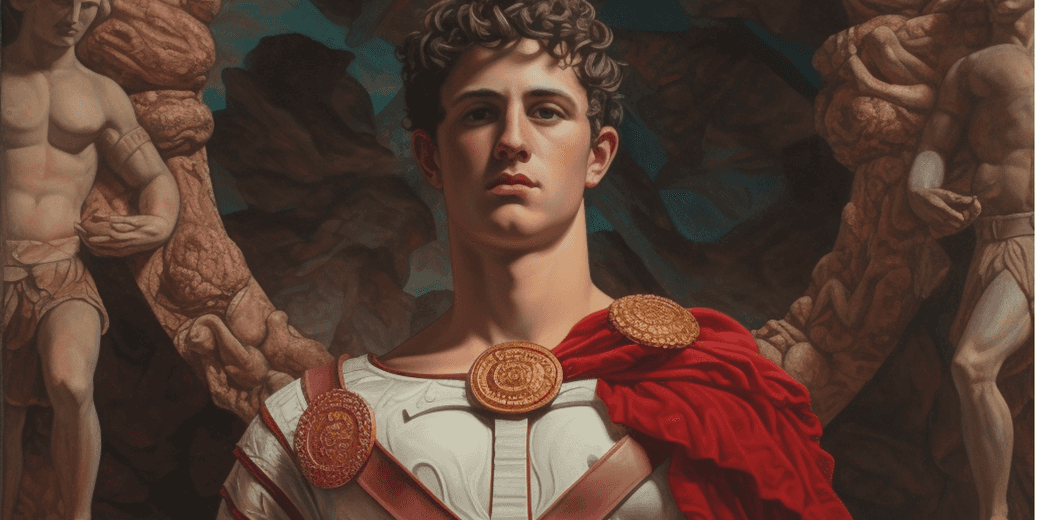
前言:罗马叙事的起点,最初那并不是罗马。本文和chatGPT合作完成。
A: “罗马第一位国王”
在罗慕路斯活动的时期(约公元前 750 年),后来被称为“七丘”的各个丘陵仍然彼此独立。每一丘都有自己的聚居点、耕作范围与防御方式,日常生活围绕家族和小型共同体展开。它们之间的距离并不遥远,却不足以自然形成联合;相反,这种接近更多意味着持续的警惕。邻近的丘陵既是潜在的伙伴,也是随时可能发生冲突的对象,摩擦多半围绕土地、水源和通行权展开。
罗慕路斯在历史中的位置,与其说是一位统治者,不如说是一个被后世固定下来的起点人物。传统年代将他的活动放在公元前八世纪中叶,但在这一时期,罗马尚未作为统一城市存在,七丘彼此独立,各自防御,也不存在覆盖整体的军队、法律或常设权威。在这样的结构条件下,罗慕路斯不可能以制度化意义上的“国王”身份统治七丘,他更可能只是以帕拉蒂尼山为核心的一位早期丘陵首领,依靠个人威望、武力与宗教—仲裁角色维持影响。
“罗马第一位国王”这一称呼,本身就是回溯性的命名。它并不反映罗慕路斯所处时代的政治现实,而是成熟城邦在事后为自身寻找清晰起点的结果。关于他出生、建城、杀兄的叙述,属于政治神话,其功能在于压缩复杂的形成过程,为罗马提供一个可被记忆、可被讲述的源头。这些故事并不等同于可核验的历史事件。
罗慕路斯并不是“每天坐在王座上的国王”,而是在一个尚未形成城邦的环境中,通过反复处理具体事务而逐渐被推到强人位置上的人物。他的“日常”,决定了他如何成为强人。
在罗慕路斯所处的阶段,权力并不存在于制度之中,而存在于谁能持续解决问题。他的日常活动,首先是军事性的。作为帕拉蒂尼山一带的首领,他需要组织防御、带头冲突、分配战利品。在丘陵彼此独立、冲突频繁的环境里,谁能在冲突中存活、取胜,并在事后稳定局面,谁就自然获得追随者。强人并不是被选出来的,而是在不断的冲突中被确认出来的。
其次,他必须承担仲裁者的角色。土地边界、放牧路线、内部纠纷,都是每天都会发生的问题。在没有成文法和常设机构的情况下,解决争端依赖的是个人威望与即时判断。一个能让冲突双方都暂时接受裁决的人,会被不断推到“下一次也来找他”的位置。权力在这里不是命令,而是被反复调用。
第三,罗慕路斯需要主持宗教与仪式行为。这并非附属角色,而是核心职能。早期拉丁社会中,宗教不是信仰体系,而是秩序工具。主持祭祀、宣誓、建界仪式,意味着为共同体确认边界与连续性。谁能站在仪式中心,谁就被视为“代表我们的人”。强人往往也是仪式的中心人物。
此外,他还承担着吸纳与整合的功能。早期传说中关于“收留外来者”“扩大人口”的叙事,反映的并不是浪漫行为,而是一种现实策略:在竞争激烈的丘陵环境中,能聚集更多可战斗人口,就能扩大生存空间。强人不是靠血统维系,而是靠能否让更多人愿意留下。
正是在这些重复而具体的日常事务中,罗慕路斯逐渐从一个丘陵首领,变成“如果事情变大,就该由他出面”的人物。他并没有建立城邦,也没有设计制度,但他所扮演的角色——军事领导、仲裁中心、仪式主持者、人口整合点——恰好构成了后来王权的雏形。
罗慕路斯成为强人,并非因为他宣称自己是王,而是因为在一个没有稳定结构的世界里,他不断承担起最难、最危险、也最不可替代的工作。当后世回望这段历史,需要一个起点人物时,这种被反复确认过的“强人”,自然被拉直成了“第一位国王”。
B: “罗慕路斯以自己的名字命名,建立罗马”
罗马神话中,罗慕路斯与孪生兄弟雷穆斯出生于王族之家。兄弟的母亲是阿尔巴隆加的公主雷亚·西尔维亚,被迫成为维斯塔女祭司,按规定不得生育。她却诞下双子,声称他们的父亲是战神玛尔斯。国王得知后,下令将婴儿处死。
仆人不忍杀害,把两个孩子放进篮子,顺着台伯河漂流。河水退去后,篮子停在帕拉蒂尼山脚的洞穴旁。一只母狼发现了他们,用乳汁哺育;后来,一位牧人法乌斯图卢斯将他们带回家抚养成人。兄弟长大后,得知自己的身世,推翻了篡位的国王,恢复祖父的王位。随后,他们决定在被母狼发现的地方建城。但在选址和谁来统治的问题上发生争执,于是诉诸占卜。罗慕路斯先看到征兆,雷穆斯却嘲笑他。争执升级,雷穆斯跨越了罗慕路斯划定的城界,罗慕路斯将其杀死。
罗慕路斯独自完成建城仪式,在帕拉蒂尼山上建立城市,并以自己的名字命名为罗马。罗慕路斯在山顶犁地划界,确定城的范围。城首先被定义为空间,而非制度。随后,他设立避难所,收容逃亡者、无家可归的人和外来者。罗马并不要求血统纯正,它更需要人口与力量。共同体不是通过继承形成,而是在聚集与吸纳中扩张。后来,罗慕路斯在一次集会上被风暴吞没,消失不见。有人说他被神接走,升为神祇奎里努斯。从此,罗马人祭祀他为城市的始祖与守护神。
这套故事并不试图证明罗慕路斯是善的、正当的,甚至不完全是人性的。但它给罗马提供了一个可以反复回望的起点:一个从被抛弃开始、以划界和冲突成形、靠吸纳而扩大的城市原型。
在公元前 8 世纪的罗马,并不存在可供我们直接依赖的文字记录。所有关于罗慕路斯的叙述,都出自数百年后的作者之手,最早也要到公元前 3 至 1 世纪之间,典型如李维和普鲁塔克。他们写作时,与所谓“罗慕路斯时代”之间至少相隔五百年。这意味着,这些记载在史料学意义上并非同时代记录,而是后世整理、回溯与重构的结果。
从考古角度看,能够被确认的事实非常有限。考古发现表明,在公元前 9 至 8 世纪,帕拉蒂尼山一带确实存在持续的人类定居,有茅屋遗迹、炉灶以及谷物处理的痕迹。但这一阶段的人口规模很小,没有城墙,也不存在统一的城市规划。这些证据只能说明那里有稳定的聚落活动,而不能证明存在一位具备制度性权力的统治者,更无法对应神话中描绘的具体行为。
因此,在现代史学的理解中,罗慕路斯并不是一个“完成了许多具体事业的历史人物”,而更像是一个被后世压缩出来的名字,用来指代公元前 8 世纪罗马从分散村落向早期城镇过渡的阶段。他所代表的,是一个时间节点、一段转型过程,以及后来王权叙事中不可或缺的起点锚点,而不是一位可以被考证其政策、行动和年表的统治者。
罗慕路斯之所以被保留下来,并非因为他的历史真实性,而是因为他的叙事功能。自共和国时代起,罗马需要一个明确的“从何而来”的起点;王政序列需要一个第一环;城邦的集体记忆也需要一个可以被讲述、被人格化的源头人物。正因如此,罗慕路斯成为必要的存在。
现代史学对这一神话的修正,并不是简单否定它,而是对其使用方式加以限定:学者并不否认“罗慕路斯”这个名字在罗马传统中的地位,但也不再把任何具体行为、制度或事件当作可以成立的历史事实来对待。他留下的,不是可核验的传记,而是一段被神话化的历史阶段。
C:“第一位罗马国王”的叙事意义>实际建设
罗慕路斯并未建造罗马的城墙,这一点在时间、考古与制度层面上都是清楚的。传统把他的活动放在公元前 8 世纪中叶,而这一时期的帕拉蒂尼山只是一个规模有限的定居点,缺乏修建永久性防御工程所需的人口、技术与组织能力。考古证据同样表明,这一阶段不存在环绕聚居区的石墙、壕沟或连续防御体系,城市尚未形成,也谈不上整体防御。
神话中所谓罗慕路斯“划界”的行为,指向的并不是城墙,而是宗教意义上的城界(pomerium)。这是一条通过仪式确立的象征性边线,用来区分城内与城外、神圣空间与非神圣空间。它不承担军事功能,也不具备物理形态,却在观念上为城市预留了一个未来可以被占据和扩展的范围。罗慕路斯在神话中的角色,是为“城”提供一个可被命名、可被记忆的起点,而不是为它提供工程基础。
真正的城墙出现在公元前 6 世纪,当时罗马已经不再是零散的丘陵聚落,而是一个在事实层面完成整合的城市。七丘之间的往来、冲突与协作已成为常态,公共空间和政治机制开始稳定,外部威胁也不再针对单一丘陵,而是面向整个聚居区。在这样的条件下,防御才第一次成为一个整体性问题。
罗马第一道真正意义上的城市城墙,传统上被归于塞尔维乌斯·图利乌斯时期,即公元前 6 世纪修建的塞尔维乌斯城墙。这一归属并不意味着城墙是某位国王个人意志或个人力量的产物,而是指:在他的统治阶段,罗马首次具备了组织、启动并持续推进这样一项整体性防御工程的条件。
工程本身也决定了它不可能由个人完成。修建城墙需要大规模动员、稳定的权威协调、持续数年的劳力与物资投入,以及对地形的整体利用与改造。这些条件,只能在王权尚存、中央权力能够集中调度的阶段实现。王权在这里扮演的角色,是组织者与动员者:划定工程范围,协调不同丘陵的参与,确保工程不因短期冲突或资源分配问题而中断。
与此同时,城墙并不是“王的工程”,而是公民的工程。劳役、物资与维护责任以义务的形式分摊到城内成员身上。参与修建城墙,意味着承认自己属于这个城市,并承担与之相应的防御责任。正是在这种集体投入中,城墙把抽象的“共同体”固定为一个具体的、可被保护的空间实体。
因此,塞尔维乌斯城墙的意义,并不在于它体现了某位国王的个人成就,而在于它标志着一个阶段:罗马已经成形到需要整体防御,也已经成熟到可以为一块共同空间投入不可逆的长期成本。城墙不是罗马的起点,而是罗马对自身存在的一次确认。从此,“罗马”不仅在观念上被划定,也在空间上被封闭与保护。
罗慕路斯的重要性,并不在于他实际完成了什么制度性建设——统一七丘、修建城墙、制定法律,都是更晚阶段的成果——而在于他被选中,成为罗马“从何而来”的答案。随着帕拉蒂尼山在后世成为象征中心,早期的地方首领被自然抬升为建城者与首王,个人形象由此取代了漫长而无意识的聚合过程,成为罗马政治记忆中的起点。
正是在这一刻,旧的权力形式开始显得不合时宜。王权曾经是必要的——它集中资源,推动工程,在尚未稳固的阶段完成整合。但当城墙完成、防御制度化、公民义务均摊之后,个人统治反而成为风险。继续由一人掌握最高权力,意味着把已经由全体承担成本、共同完成的成果,重新收回到私人之手。这种张力不需要被辩论,只需要被感受到。
与此同时,城内的公共空间已经具备了承载政治的能力。裁决、宣誓、集会与争执长期在同一空间反复发生,人们逐渐习惯于在公开场合被看见、被回应、被否定或被支持。权威不再来自血缘或居所的高度,而来自是否能够在公共空间中站得住脚。权力开始从个人滑向程序,从世袭滑向轮换。
于是,城邦并不是被宣布成立的。它是在城墙完成之后,在旧权力逐渐失去必要性、新机制显得更省冲突的过程中,自然显形的。共和国不是一次断裂,而是一个已经被迫共同生活的城市,为了继续运转而选择的最稳定形式。
Preface: The Starting Point of the Roman Narrative. This essay was completed in collaboration with ChatGPT.
A: “The First King of Rome”
In the period when Romulus was active (around 750 BCE), the hills later known as the “Seven Hills” were still independent of one another. Each hill had its own settlement, cultivated land, and defensive arrangements, and daily life revolved around families and small communities. The distance between them was not great, yet insufficient to produce spontaneous unity; on the contrary, such proximity more often meant sustained vigilance. Neighboring hills were both potential partners and constant sources of conflict, with friction typically centered on land, water, and rights of passage.
Romulus’s place in history is better understood not as that of a ruler, but as a starting figure fixed in retrospect. Traditional chronology places his activity in the mid–eighth century BCE, but at that time Rome did not yet exist as a unified city. The Seven Hills were separate, each defending itself, and there was no army, legal system, or standing authority that encompassed the whole. Under such structural conditions, Romulus could not have ruled the Seven Hills as a “king” in an institutional sense. He was more likely an early hill leader centered on the Palatine, maintaining influence through personal prestige, force, and a combined religious–arbitral role.
The title “the first king of Rome” is itself a retrospective designation. It does not reflect the political reality of Romulus’s time, but rather the mature city-state’s later effort to identify a clear point of origin. Accounts of his birth, the founding of the city, and the killing of his brother belong to political myth. Their function is to compress a complex process of formation into a single narrative figure, providing Rome with an origin that could be remembered and retold. These stories are not equivalent to verifiable historical events.
Romulus was not a king who “sat on a throne every day.” He was a figure pushed into the position of a strongman through the repeated handling of concrete problems in an environment where the city-state had not yet formed. His “daily life” determined how he became such a figure.
At this stage, power did not reside in institutions, but in the ability to resolve problems continuously. Romulus’s daily activities were first and foremost military. As a leader in the Palatine area, he needed to organize defense, lead conflicts, and distribute spoils. In a setting where hills were independent and clashes frequent, those who survived conflict, prevailed, and stabilized the aftermath naturally attracted followers. A strongman was not elected; he was confirmed through repeated confrontation.
Second, he had to assume the role of arbiter. Boundary disputes, grazing routes, and internal conflicts arose daily. In the absence of written law or standing institutions, dispute resolution depended on personal authority and immediate judgment. Someone whose decisions were provisionally accepted by both sides would repeatedly be turned to again. Power here was not command, but repeated invocation.
Third, Romulus needed to preside over religious and ritual practices. This was not a peripheral role, but a central one. In early Latin society, religion was not a belief system so much as an instrument of order. To conduct sacrifices, oaths, and boundary rites was to affirm communal limits and continuity. Whoever stood at the center of ritual was regarded as representing “us.” Strongmen were often also ritual focal points.
In addition, he played a role of absorption and integration. Early stories about “welcoming outsiders” and “expanding population” reflect not romantic gestures, but practical strategies: in a competitive hill environment, the ability to gather more fighting-age people meant greater room for survival. A strongman was sustained not by lineage, but by whether more people were willing to remain.
Through these repetitive and concrete daily tasks, Romulus gradually shifted from being a hill leader to becoming the figure who would step forward “when matters grew serious.” He did not establish a city-state, nor did he design institutions, but the roles he occupied—military leadership, arbitral center, ritual officiant, and point of population integration—together formed the prototype of later kingship.
Romulus became a strongman not because he proclaimed himself king, but because in a world without stable structures, he repeatedly took on the hardest, most dangerous, and least replaceable work. When later generations looked back and required a founding figure, this repeatedly confirmed strongman was naturally straightened into “the first king.”
B: “Romulus Founded Rome and Named It After Himself”
In Roman myth, Romulus and his twin brother Remus were born into a royal house. Their mother, Rhea Silvia, was a princess of Alba Longa who was forced to become a Vestal Virgin and was therefore forbidden to bear children. She nonetheless gave birth to twins, claiming their father was the god of war, Mars. When the king learned of this, he ordered the infants to be killed.
A servant, unwilling to carry out the order, placed the two children in a basket and set it adrift on the Tiber River. When the waters receded, the basket came to rest near a cave at the foot of the Palatine Hill. A she-wolf discovered the infants and nursed them; later, a shepherd named Faustulus took them home and raised them. When the brothers grew up and learned of their origins, they overthrew the usurping king and restored their grandfather to the throne. They then decided to found a city at the place where they had been discovered by the wolf. A dispute arose over the site and over who should rule, and they turned to augury. Romulus saw the signs first; Remus mocked him. The conflict escalated, Remus crossed the boundary Romulus had marked out, and Romulus killed him.
Romulus alone completed the founding rites, established a city on the Palatine Hill, and named it Rome after himself. He plowed a furrow along the hilltop to mark the city’s boundary, defining the city first as a space rather than an institution. He then established an asylum, taking in fugitives, the dispossessed, and outsiders. Rome did not require pure lineage; it required population and strength. The community did not grow through inheritance, but through aggregation and absorption. Later, during an assembly, Romulus was engulfed by a storm and disappeared. Some said he was taken up by the gods and became the god Quirinus. From then on, the Romans worshipped him as the city’s founder and guardian.
This set of stories does not attempt to prove that Romulus was good, just, or even fully human. What it provides is a point of return: a city prototype that begins with abandonment, takes shape through boundary-making and conflict, and expands through absorption.
In eighth-century BCE Rome, there were no written records that we can directly rely on. All accounts of Romulus were written centuries later, the earliest dating to between the third and first centuries BCE, by authors such as Livy and Plutarch. When they wrote, they were separated from the supposed “age of Romulus” by at least five hundred years. In historiographical terms, these are not contemporaneous records, but later compilations, reconstructions, and retrospections.
From an archaeological perspective, the facts that can be confirmed are extremely limited. Excavations show that in the ninth to eighth centuries BCE, there was indeed continuous human settlement on the Palatine Hill, with hut remains, hearths, and evidence of grain processing. But the population was small, there were no city walls, and there was no unified urban plan. These findings can only demonstrate stable settlement activity; they cannot prove the existence of a ruler with institutional authority, nor can they be matched to the specific actions described in myth.
Accordingly, in modern historical understanding, Romulus is not a historical figure who “accomplished many concrete achievements,” but rather a name condensed by later generations to designate the transitional phase in the eighth century BCE when Rome moved from scattered villages toward an early town. He represents a temporal marker, a phase of transformation, and an indispensable anchor point in later narratives of kingship—not a ruler whose policies, actions, or chronology can be reconstructed.
Romulus was preserved not because of his historical reality, but because of his narrative function. From the Republican period onward, Rome required a clear answer to the question of where it came from; the sequence of kings required a first link; and the city-state’s collective memory required an origin figure that could be told and personified. For these reasons, Romulus became necessary.
Modern historiography does not simply reject this myth, but restricts how it is used. Scholars do not deny the place of the name “Romulus” in Roman tradition, but they no longer treat any specific actions, institutions, or events attributed to him as established historical fact. What remains is not a verifiable biography, but a mythologized historical phase.
C: “The Narrative Significance of ‘the First Roman King’ Over Actual Construction”
Romulus did not build the walls of Rome; this is clear from chronological, archaeological, and institutional perspectives alike. Tradition places his activity in the mid–eighth century BCE, when the Palatine Hill was only a limited-scale settlement, lacking the population, technology, and organizational capacity required for permanent defensive works. Archaeological evidence likewise indicates that at this stage there were no stone walls, ditches, or continuous defensive systems enclosing the settlement. The city had not yet taken shape, and there was no concept of collective defense.
What myth describes as Romulus “drawing a boundary” does not refer to a city wall, but to the pomerium—a sacred boundary in the religious sense. This was a symbolic line established through ritual, distinguishing inside from outside, sacred space from non-sacred space. It had no military function and no physical form, yet it reserved, at the level of belief, a space that the city could later occupy and expand. Romulus’s role in myth was to provide the “city” with a nameable, memorable point of origin, not to supply its engineering foundations.
The first true city walls appeared in the sixth century BCE, when Rome was no longer a collection of scattered hill settlements but a city that had already achieved factual integration. Movement, conflict, and cooperation among the Seven Hills had become routine; public space and political mechanisms were beginning to stabilize; and external threats no longer targeted individual hills but the entire settlement. Only under these conditions did defense become a genuinely collective problem.
Rome’s first wall in the full sense of the term is traditionally attributed to the reign of Servius Tullius, that is, the Servian Wall built in the sixth century BCE. This attribution does not mean that the wall was the product of a single king’s personal will or labor. Rather, it indicates that during his reign Rome first possessed the capacity to organize, initiate, and sustain such a comprehensive defensive project.
The nature of the project itself made individual construction impossible. Building a city wall required large-scale mobilization, stable authoritative coordination, years of sustained labor and material investment, and the integrated use and modification of terrain. These conditions could only be met while kingship still existed and central authority was capable of coordinated command. In this context, royal power functioned as organizer and mobilizer: defining the scope of the project, coordinating participation among different hills, and ensuring that the work was not interrupted by short-term conflicts or disputes over resources.
At the same time, the wall was not a “royal project,” but a civic one. Labor, materials, and maintenance were distributed among the city’s members as obligations. Participation in the construction of the wall meant acknowledging one’s belonging to the city and assuming the corresponding responsibility for its defense. Through this collective investment, the wall transformed an abstract “community” into a concrete, defensible spatial entity.
The significance of the Servian Wall, therefore, does not lie in its representation of a particular king’s personal achievement, but in what it marks as a stage: Rome had formed sufficiently to require collective defense, and had matured enough to commit irreversible, long-term resources to a shared space. The wall was not the beginning of Rome, but Rome’s confirmation of its own existence. From this point on, “Rome” was not only conceptually defined, but physically enclosed and protected.
Romulus’s importance, accordingly, does not lie in any concrete institutional accomplishments—unifying the Seven Hills, building walls, or establishing laws were all achievements of later periods—but in his selection as the answer to the question of where Rome came from. As the Palatine Hill later became a symbolic center, early local leaders were naturally elevated into founders and first kings. The individual figure thus replaced a long, unconscious process of aggregation, becoming the starting point of Rome’s political memory.
It was precisely at this moment that older forms of power began to appear ill-suited. Kingship had once been necessary—it concentrated resources, pushed through large projects, and completed integration at an unstable stage. But once the wall was finished, defense institutionalized, and civic obligations evenly distributed, personal rule became a liability. Continued concentration of supreme power in a single individual meant reclaiming as private possession what had been collectively paid for and jointly completed. This tension did not need to be argued; it only needed to be felt.
At the same time, public space within the city had developed the capacity to carry political life. Judgments, oaths, assemblies, and disputes repeatedly took place in the same spaces. People gradually became accustomed to being seen, answered, opposed, or supported in public. Authority no longer derived from bloodline or residential elevation, but from the ability to stand one’s ground in shared space. Power began to shift from individuals to procedures, from heredity to rotation.
Thus the city-state was not proclaimed into existence. It emerged naturally after the completion of the walls, as older forms of power gradually lost their necessity and new mechanisms proved less conflictual. The republic was not a rupture, but the most stable form available to a city that had already been compelled to live together and needed to continue doing so.