Created on
Updated on
Filmmaking in the Age of AI(16): Making a Good Script Great by Linda Seger (1987)
it's not just the writing that counts — it's also the rewriting
Preface: Re-teaching myself the new filmmaking pipeline, now with AI (netflix please notice me). co-written with Claude. NOW WITH AUDIO.
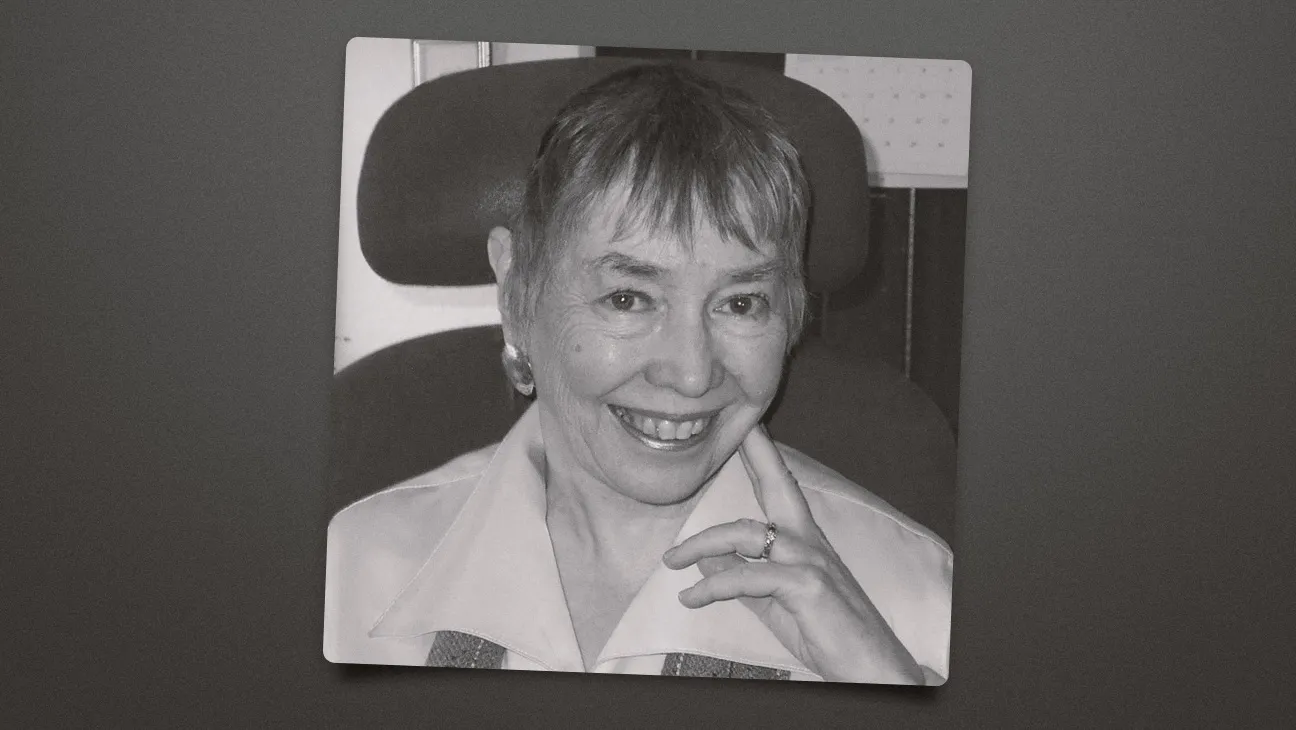
Linda Seger died on February 16, 2026 — just weeks before this post was written. She was eighty years old. It feels right to say that at the start, not as an obituary note but as context: this is a woman who spent her entire adult life thinking about what makes a screenplay work, who consulted on over 2,500 scripts across four decades, who taught in 33 countries on six continents, and who left behind a body of work that shaped how the professional film industry understands its own craft. She deserves more than a footnote.
Linda Sue Seger was born on August 27, 1945, in Peshtigo, Wisconsin — a small town in the northeastern part of the state, the kind of place that teaches you, she said later, how to get along with people unlike yourself. Her father was a pharmacist. Her mother taught piano. She was the younger of two daughters, and she knew from early on that she wanted something larger than Peshtigo could offer, though she couldn't have told you what it was.
At thirteen, on a family trip to Colorado, she saw mountains for the first time and fell in love with the state she would eventually spend most of her life in. After graduating from Colorado College in 1967 with a degree in English, she followed an instinct that was already characteristically hers: toward drama, toward spirituality, and toward the question of how the two connect. She spent the next decade in seminary. Not as a detour — as a destination. She earned a master's in drama from Northwestern University in 1968, a master's in religion and the arts from the Pacific School of Religion in Berkeley in 1973, and a doctorate in drama and theology from the Graduate Theological Union in 1976. Her dissertation was titled What Makes a Script Work? She would later add a fourth degree — a master's in feminist theology from Immaculate Heart College Center in Los Angeles in 2000 — because she was, apparently, constitutionally incapable of stopping. The dissertation is where everything starts. She had spent years studying drama from a theological angle — asking what storytelling does for human beings at the level of meaning, not just entertainment — and the dissertation turned that inquiry into something practical. What actually makes a screenplay work? Not in a spiritual sense but in a structural, technical, craft sense? What are the elements that, when present, make a script hold together, and when absent, make it fall apart? She had an answer. And in 1981, she turned that answer into a business.
Before Linda Seger, the script consultant as a professional category did not exist. There were script readers — low-level development employees who read submissions and wrote coverage — and there were writing teachers who taught seminars. But the idea of an independent professional whose sole business was analyzing individual scripts for writers, producers, and directors on a consulting basis? Seger created that. She built her consulting practice around the analytical framework from her dissertation and started working. Word spread. Her clients began winning awards. Ray Bradbury, one of the most meticulous prose stylists in American literature, said of her: "Linda's technique is a light to see by." William Kelley, who won the Academy Award for Best Original Screenplay for Witness, was a client. Tony Bill, who produced The Sting (also an Oscar winner), praised her work. A young New Zealand filmmaker named Peter Jackson came to her when he was making Brain Dead — his 1992 splatter-horror breakout film, the one that convinced Hollywood he was something extraordinary. Roland Emmerich consulted her on Universal Soldier, his own breakthrough that same year.
Dead Alive and Universal Soldier in the same year. Two filmmakers who would go on to define their respective ends of the cinematic spectrum — Jackson with the Lord of the Rings trilogy, Emmerich with the spectacle blockbuster — both shaped in part by the same script consultant from Peshtigo, Wisconsin. Ron Howard's father, the actor Rance Howard, gave his son a copy of Seger's book. Ron Howard read it, and then used it on every film he made starting with Apollo 13. He said this publicly, repeatedly, for the rest of his career. Apollo 13 is one of the most technically accomplished narrative films of the 1990s — a story where the audience knows the ending before the opening credits, and yet is held in genuine suspense for two hours. If you've ever wondered how that works structurally, Seger's book is a large part of the answer. She taught at ABC, NBC, CBS, Disney, the DGA, the WGA, the AFI. She presented the first professional screenwriting seminar ever held in Moscow. Then Bulgaria. She trained script consultants in Germany, New Zealand, Scandinavia, Austria, and Italy, essentially exporting the profession she had invented. She retired in 2020. She wrote thirty books, eleven of them on screenwriting, eight on spirituality and theology — because those were never really separate concerns for her. She died in Cascade, Colorado, the mountain state she had loved since she was thirteen.
Making a Good Script Great was first published in 1987, revised and expanded in a second edition, and updated again in a third edition in 2010. It has been continuously in print for nearly forty years. Film schools use it as a textbook. Working professionals keep it on their desks for reference. The UCLA Screenwriting Faculty Chair called it "an invaluable tool for the working writer." The Screenwriter's Bible's author called it "the gold standard of screenwriting books." The book's central premise is stated plainly in the introduction: making a good script great is not just a matter of having a good idea. It's not just a matter of putting that idea down on paper. In scriptwriting, it's not just the writing that counts — it's also the rewriting.That word — rewriting — is the key to understanding what this book is and why it occupies a different position than McKee, Truby, or Snyder. Those books are primarily about how to construct a story. Seger's book is primarily about how to look at the story you've already written, diagnose what's wrong with it, and fix it. The question it answers is not "how do I build a script?" but "I have a draft — what's wrong with it and how do I make it better?" That is a fundamentally different question, and it's the one most working writers are actually asking most of the time.
Seger's most useful contribution to structural analysis is not a template — it's a set of diagnostic questions. She is less interested in telling you what a script should look like in the abstract and more interested in giving you the tools to look at what you already have and identify where it's failing. The single most common structural error she encountered across thousands of scripts was this: the first turning point was actually at the midpoint. Writers would set up a situation, develop it slowly, and then — around page 45 or 50 — something would happen that genuinely changed the direction of the story. It is the moment when the story commits to a new direction — when the protagonist can no longer return to the ordinary world unchanged, when the central question pivots from "will they enter the conflict?" to "how will they survive it?" The turning point is a door that closes behind the character. They can't go back.
Seger also diagnosed Act Two as the structural problem most writers actually struggle with, because Act Two is the longest and most shapeless part of the script. It has to hold roughly fifty to sixty pages and create escalating momentum across all of them without the structural anchors of the opening setup or the climax. The way she frames Act Two is as a series of action beats moving toward a midpoint that raises the stakes, followed by a second half that drives toward the second turning point. When Act Two loses energy — when it feels like the story is treading water, scenes appearing and disappearing without consequence — it is almost always because the sequences within it lack internal structure. Her diagnostic questions for Act Two are blunt and practical: Does every scene come out of the scene before it? Does each scene push the story forward or is it simply present? Is there a clear midpoint that shifts the story's direction? Does the action build toward the second turning point rather than drifting toward it? These are not theoretical questions — they are things you can check against your draft page by page.
Most writers think about story in two sizes: the individual scene and the overall three-act structure. Seger argues there's a third unit that most writers ignore, and it's the one that actually holds Act Two together: the scene sequence. A scene sequence is a series of scenes grouped around a single subject or action, with its own internal beginning, middle, and end. It typically runs five to fifteen minutes. It has a goal, complications that complicate that goal, and a resolution — which may or may not be a success, but which definitively closes this particular line of action before the next sequence opens. Think of the escape sequence in a thriller. The protagonists need to get out of the building. That is the sequence's goal. Each scene within the sequence advances or complicates the escape — a locked door, a guard who almost sees them, a member of the group who freezes. The sequence ends when they either escape or are captured. Then the next sequence begins with a new goal emerging from that resolution. What this gives the writer is momentum. Each sequence has its own miniature dramatic arc, so the audience is constantly engaged in a small-scale version of the story's larger tension — wanting something, seeing it complicated, watching it resolve. Act Two, rather than being a formless expanse of development, becomes a series of these contained arcs, each one raising the stakes of the next. When Act Two feels slow, Seger's diagnosis is almost always that the writer has scenes but not sequences — individual units of action that don't connect to each other through a shared goal. The scenes exist but they don't accumulate. Adding sequence structure — grouping related scenes around a single through-line, giving that through-line a beginning, middle, and end — is usually the fix.
I'm going to go on and briefly mention the other diagnostic questions she raises in her book, so you can read through it and decide if it's helpful for you without reading the book. The next is this, the central question, aka, what the whole story is actually about? The central question is not the plot question. This is a crucial distinction and one that reveals something important about how Seger understands the relationship between story and theme. In The Silence of the Lambs, the central question is something closer to: "Can a young woman from nowhere, without power or status or protection, prove that she is capable enough to do what no one expects her to be capable of — and survive what it costs her?" The plot gives that question its urgency and its terms, but the central question is why audiences care about more than the body count.
Seger argues that the central question must be established clearly by the end of Act One and that every turning point in the story should revisit and re-sharpen it. The first turning point doesn't just redirect the plot — it clarifies the central question. The midpoint doesn't just raise the stakes — it deepens the central question by putting the protagonist in a position where the answer becomes genuinely uncertain. The climax is the moment when the central question is finally answered. This is the diagnostic use of the concept: if your turning points don't feel dramatic enough, if your climax doesn't land with the weight it should, it may be because your central question isn't clear. The audience doesn't know what they're supposed to be wondering about throughout the story. They follow the plot because the plot gives them something to watch — but they are not gripped the way they would be if they understood, at a level just below conscious articulation, exactly what the story is asking. The central question is also how Seger distinguishes between a story that is about something and a story that merely has things happen in it. Every story has a plot. Not every story has a central question. The ones that do are the ones audiences remember.
Character vs. Characterization is one of the quieter but most practically important ideas in Seger's work, and it comes into focus more sharply in Creating Unforgettable Characters than in Making a Good Script Great, though she introduces it in both. Characterization is the surface of a character: what they look like, their job, their habits, their quirks, the telling details that make them vivid and specific. Characterization is what makes a character feel inhabited — the way they hold their coffee cup, the particular phrase they always use, the nervous tic under pressure. It is necessary. Character is what a person does under pressure. It is the value system that drives their decisions when the stakes are real. It is the difference between who they appear to be and who they reveal themselves to be when the plot forces a choice. Character, in Seger's framework, is only visible at moments of crisis — which is precisely why drama requires crisis, not because suffering is interesting in itself, but because crisis is the only condition under which character becomes legible.
Seger is interested in what she calls the character's inner truth — the core value or belief that drives their behaviour at the deepest level, often below their own conscious awareness, often in contradiction with how they present themselves. Gittes in Chinatown, despite his cynical detective surface, has an inner truth that is essentially idealistic — he believes justice is possible and cannot stop acting as if it is, even when everything in his experience tells him otherwise. That inner truth is what makes him tragic rather than simply defeated at the end. The plot destroys his idealism. The character's inner truth makes us feel that destruction as a genuine loss. The diagnostic question: can you state your protagonist's inner truth in a single sentence, and does every significant choice they make in the story either express or test that truth? If you can't, the character may have excellent characterisation — and no character.
Next, subtext. Subtext is what is not said. More precisely, it is the meaning that exists in the gap between what a character says and what they mean — and that gap, in well-written scripts, is where the audience spends most of their emotional attention.Seger's definition: "Subtext is what the character is really saying beneath and between the lines. Often characters don't understand themselves. They're often not direct and don't say what they mean." That last clause matters enormously: the subtext is not always strategic concealment. Sometimes the character genuinely doesn't know what they're communicating. Their body language, the timing of a pause, the specific word they choose to deflect — these things communicate something the character has not consciously chosen to express. Good actors know this, which is why actors love scenes with rich subtext. The scene gives them something to play that is more interesting than what they are required to say.
Seger expands her treatment of subtext in the standalone book Writing Subtext: What Lies Beneath (2011), where she maps it beyond dialogue into gestures, action, images, genre, and what she calls the super-objective — the underlying goal that drives all of a character's behavior throughout the entire script, which they may never articulate and may not even be conscious of. The rewriting implication: you often can't write subtext on a first draft. The first draft is where you find the story. The second and third drafts are where you find what the story is really saying, and start removing the text that was doing the subtext's job by speaking too directly. A line of dialogue that says "I'm still angry about what you did" is text. A line that says "The lawn looks good" while meaning "I'm still angry about what you did" is subtext — and the question the writer has to answer is whether the audience will understand that the lawn is not really what they're talking about. If they will, say the line about the lawn. If they won't, you haven't yet done the work of building the scene's context sufficiently for the subtext to be readable. Seger's practical test: read dialogue aloud and listen for where it sounds like people explaining the story to each other. That is the text doing work the subtext should be doing. Find what the character cannot say — what they want but won't admit wanting, what they know but won't acknowledge knowing — and construct the dialogue around that silence.
The most common mistake in screenplay dialogue is what Seger calls being on-the-nose — characters saying exactly what they mean, explaining their motivations clearly, articulating their themes in full sentences. On-the-nose dialogue is dialogue that has evacuated its own subtext. It is, in a sense, the failure of trust: the writer doesn't trust the audience to understand what's happening unless a character explains it, so a character explains it, and the scene dies. Great dialogue, in Seger's framework, is doing at least three things simultaneously: advancing the story, revealing character, and communicating theme — without appearing to do any of them. It sounds like people talking. It doesn't sound like people delivering information.
She identifies specific dialogue problems she found repeatedly across scripts: the explanatory speech (a character delivering a monologue that exists to inform the audience rather than to exist within the scene), the echo (two characters repeating what was just established to make sure the audience got it), and the false intimacy (characters confiding things to each other that they would not actually confide, purely to give the audience information). All of these are symptoms of a writer who doesn't trust their structure to carry the story — who feels that characters need to say what's happening because they're not sure the scenes are showing it. Her instruction: scatter exposition. If information must be delivered, break it into pieces and distribute it across the script, introduced at the latest possible moment when the audience needs it to understand what's happening. Never deliver an uninteresting piece of information in a vacuum — put it in motion, give it to an interesting character to deliver, surround it with emotional pressure so the audience is attending to the scene rather than simply receiving data.
Seger gives more attention to the visual dimension of screenwriting than most craft books outside production, and her reasoning is simple: a screenplay is not a novel or a play. It is a document that will become images projected on a screen, and the images carry as much meaning as the words. A writer who thinks only in dialogue is writing for a medium that doesn't exist. Her central question for images: can you render your theme visually? Not through a metaphorical speech but through what the camera actually shows — the way a room is arranged, what a character does with their hands, the recurring image that keeps appearing at key moments and gathers meaning each time it recurs. Seger's diagnostic question for images is one of the sharpest in the book: how many of your scenes take place in vague apartments or generic hotel rooms? The answer tells you how cinematically you are thinking. A film set in a series of undifferentiated interiors is a film that has not yet found its visual world — and a film without a visual world is a film that is not yet using what the medium is actually for.
Point of view in screenwriting is not the same as point of view in fiction. The camera can see things the protagonist cannot. The audience can know things no character knows. POV in Seger's sense is less about which character the camera is physically tied to and more about with whom the audience's identification and emotional investment lives.Her key argument: most scripts with POV problems have them because the writer hasn't committed. They distribute sympathy too evenly, give too much interiority to too many characters, let the audience float between perspectives without ever settling into one. The result is a film that is technically well-crafted but emotionally at a distance. The audience watches rather than experiences. Seger's practical advice is to identify, from the first pages of the script, whose story this is — and then ensure that every significant scene is filtered through that character's experience in some way. Not that the camera must always be with them, but that the audience's emotional logic is anchored to them. When events happen to other characters, the audience's response should be conditioned by wondering how this affects the protagonist, what it means for their arc, whether it makes their success more or less likely. Her question is blunt: who is the audience with? If the answer is "it depends on the scene," that is a POV problem. Figure out whose story it is. Then write every scene from inside their experience of it, even the scenes where they're not present. These seven concepts together form something more valuable than a set of techniques — they form a diagnostic vocabulary. A way of reading your own work that is specific enough to locate problems and practical enough to solve them. That is what Seger built her forty-year career on, and why the book she wrote to explain it is still in print nearly four decades later.
The book is organised in three broad areas — structure, scene construction, and character — and within each it moves from diagnostic questions to practical remedies. Where McKee and Truby work at the level of the whole story's architecture, Seger works at the level of the individual scene and how scenes connect into sequences. Her concept of action points is one of the most practically useful things in the book: these are the moments within a scene that move the story forward, force a character to make a decision, or change the direction of the narrative. She identifies three types. The obstacle — something that blocks the character's path and forces a decision. The complication — something that doesn't pay off immediately but creates anticipation, a delayed reaction. And the reversal — the strongest action point, which changes the story's direction by 180 degrees. The reversal can be physical (the monster you thought was dead comes back) or emotional (the person you trusted turns out to be the enemy), but in both cases it doesn't just advance the story — it transforms it. Her concept of the scene sequence is equally useful. A sequence is a series of scenes, grouped around a single subject, that has its own internal beginning, middle, and end. Act Two in particular is structured through sequences rather than individual scenes, and one of the most common Act Two problems she diagnosed — the act losing momentum, scenes feeling like filler — usually traces back to missing or weak sequences rather than weak individual scenes.
Seger's approach to character is more clinical than Truby's but more specific than McKee's. She reduces character to three interconnected elements: motivation (what pushes the character forward, the catalyst that gets them involved), goal (what they are trying to achieve), and action (what they do to achieve it). The character spine is the through-line of these three elements, and she argues that most character problems in scripts trace back to one of three failures: unclear motivation, a goal that doesn't connect to the theme, or actions that don't follow naturally from who the character is. But the part of her character work that has probably had the most lasting influence is her writing on subtext — which she explored so extensively she later wrote an entire separate book about it. Subtext is what is not said. It is the layer of meaning beneath the dialogue, the unspoken tension between characters who want things they won't name, the feeling the audience has that they understand more about what is happening between these people than either character is admitting. Good dialogue, Seger argues, is almost never about what it appears to be about. Characters keep secrets from each other. They keep secrets from themselves. The gap between what they say and what they mean is where the audience lives, and the writer's job is to create and maintain that gap without closing it too early.
Seger is operating on a different plane than McKee and Truby. She is not trying to give you a theory of what story is or a complete architecture for building one from scratch. She assumes you have already written something and are now trying to understand why parts of it aren't working. This makes her more useful at a specific stage of the process — the rewrite — and less useful at the initial conception stage. If you want to understand the deep structure of narrative before you write your first page, read Truby. If you want to understand the theoretical principles of story, read McKee. But if you have a draft in front of you and you're trying to figure out why the second act feels slow, or why the climax doesn't land, or why your audience keeps rooting for the wrong character, Seger is the one to reach for. The practical framework she built out of that inquiry — the central question, the catalyst, the action points, the character spine — is the mechanism. But the understanding that animates it is deeper than mechanism. She believed that stories matter because they help people make sense of their lives, that a script works not just because it hits its structural marks but because it reaches something true in the audience about what it means to be human. That belief is why she spent forty years doing this work, and why "Making a Good Script Great" is still in print nearly four decades after she first wrote it. More on this in the next post. ☀️