Created on
Updated on
Filmmaking in the Age of AI(25): Impression, Sunrise(1872)
The Heist
Preface: Co-written with Claude, Gemini, Chatgpt.
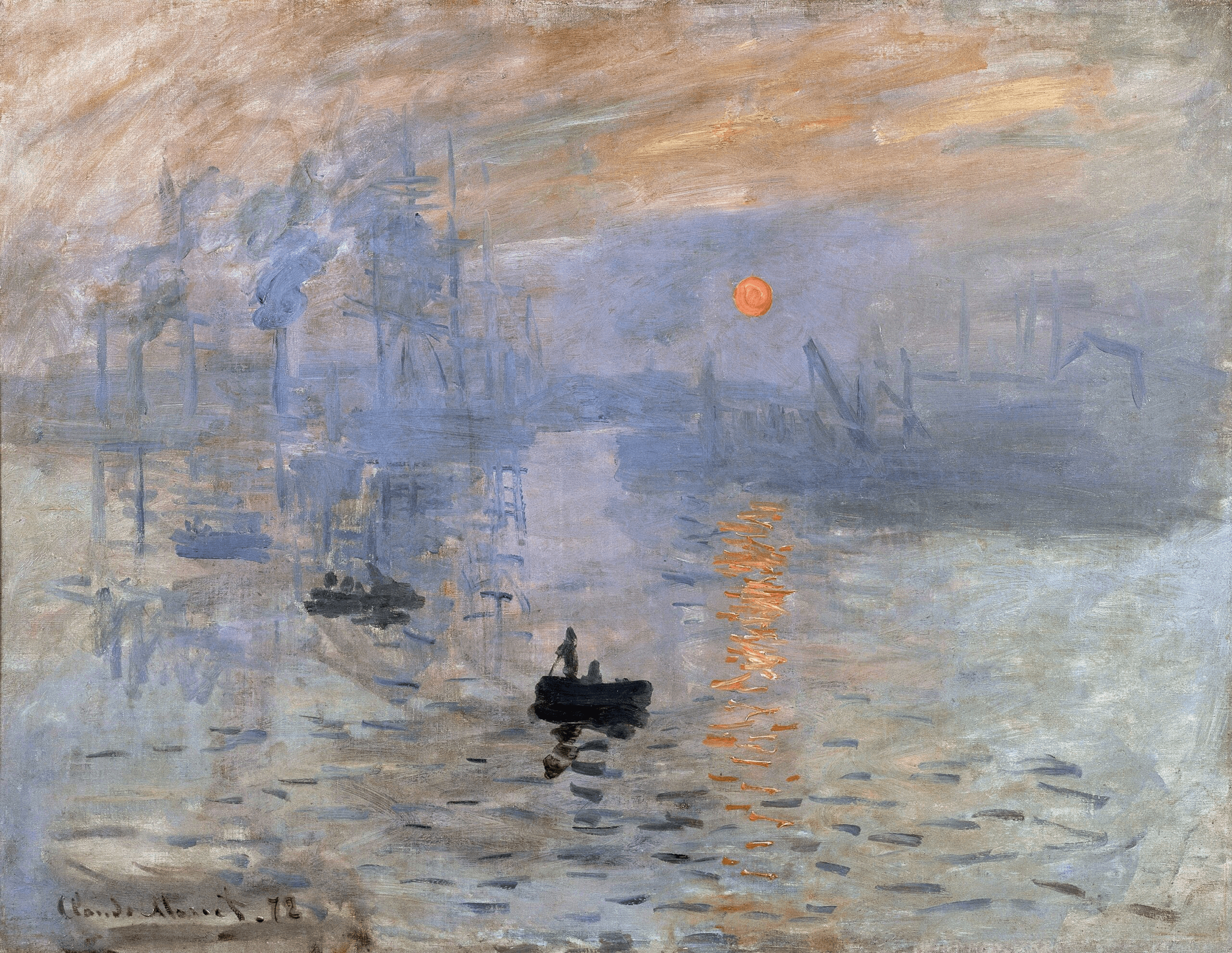
The entire Impressionist Movement is named after Claude Monet's painting in the first exhibition Impression, Sunrise(1872). His influence and impact on the movement is hard to go unnoticed. I'm sure everyone that's currently reading this post knows about this painting. This painting is permanently housed at the Musée Marmottan Monet in Paris, France. It depicts the harbor of Le Havre in Normandy, which Monet painted from a hotel window. The painting was stolen in 1985 but recovered in 1990 in Corsica and returned to the museum. This is actually quite an interesting tale.
Claude Monet's Impression, Sunrise was stolen on October 27, 1985, during a brazen daylight robbery. At approximately 10:00 AM, five masked gunmen entered the Musée Marmottan Monet while it was open to the public. They held roughly 40 visitors and nine guards at gunpoint, forcing them to lie face down on the floor while they stripped nine masterpieces from the walls in just five minutes. The robbery itself had a kind of brazen theatricality to it. The museum's alarm system had been turned off that morning — deemed too sensitive for a public visiting hour, likely to trigger on innocent movement. So when the five gunmen walked in just after opening, there was nothing to stop them. Two paid for their entrance tickets at the door and were joined inside by three accomplices. Guards were threatened at gunpoint and made to lie face down. Nobody was hurt. Seven paintings came off the walls. Two more had to be removed from a glass case. The whole operation took roughly ten minutes.
What followed was five years of silence. The paintings — nine in total, including five Monets — vanished completely. Authorities were puzzled at the motive from the start, because the works were too well-known to sell on any legitimate market. Early speculation ran toward ransom demands or a private collector who'd commissioned the theft to keep them hidden. The break came not from Paris but from Tokyo. A 1987 trip by French police Commissioner Mireille Balestrazzi to Japan — pursuing a separate theft of four Corot paintings — yielded intelligence from Japanese organized crime figures that cracked the Marmottan case open. In the house of a suspect named Fujikuma, police found an auction catalog with all nine stolen Marmottan paintings circled. In December 1990, police found the paintings in an apartment near Porto-Vecchio, in the southern part of Corsica. Seven people were arrested, including an unemployed Corsican barman who had photographs of the stolen works. The condition of the paintings told a quieter story of those five years in hiding. Specialists treated the works for damage caused by humidity. Field of Tulips in Holland had been slashed. Young Girl at the Ball had two holes punched through it. Impression, Sunrise itself — the painting that named an entire movement — survived with only minor humidity damage. It was back on the walls of the Marmottan by the end of that December. The museum's curator called it the best Christmas present they could have imagined.
Monet's life can be easily looked up so I supposed I don't need to cover too much of it here. What makes this painting specifically irreplaceable. It's not just a great Monet. It's the accidental naming document of an entire movement — a critic used the title mockingly, the painters adopted it defiantly. That origin story is why the theft registered as something beyond a $10 million insurance problem. You're not stealing a canvas, you're stealing a cultural founding myth. The Marmottan was never supposed to be a world-class Impressionist museum. It was a Napoleonic-era hunting lodge that became one by accident — Michel Monet donated 65 of his father's paintings in 1966 and essentially transformed the institution overnight. That context makes the lax security feel less like negligence and more like a museum that never quite caught up to what it had become. It was originally bought by a doctor for the equivalent of $54. That detail earns its place in any piece about the theft — because the gap between that number and "priceless" is the entire story of what Impressionism became. ☀️