Created on
Updated on
Filmmaking in the Age of AI(5): Life Is a Dream
The Birth of Absurdity in Drama
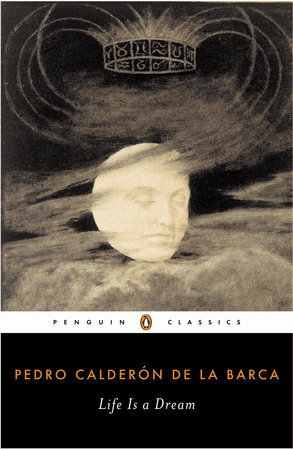
Preface: Re-teaching myself the new filmmaking pipeline, now with AI (netflix please notice me). co-written with Claude.
The connections between Life Is a Dream and existentialist thought are not superficial. They operate at the deepest level of philosophical structure. Albert Camus developed the concept of the absurd as the central condition of human existence — the gap between the human need for meaning, order, and purpose, and the universe's complete silence on these matters. We are beings who desperately need to know why we are here, and the universe offers no answer. This collision between human demand and cosmic indifference is the absurd. Life Is a Dream is about a prince who has been imprisoned since birth based on a prophecy, gets one day of freedom, and must decide how to live when he cannot tell the difference between reality and a dream. Sounds very interesting, right?
Segismundo is the prince of Poland. Before he was born, his father King Basilio — an astrologer — read the stars and saw a prophecy: his son would become a monstrous tyrant who would humiliate his father and destroy the kingdom. Terrified, Basilio made a terrible decision. He imprisoned his newborn son in a stone tower in the mountains, raised by a single keeper named Clotaldo, and told the world the child had died at birth. Segismundo has grown up in chains, in animal skins, with no human contact except his jailer. He is brilliant and educated — Clotaldo taught him to read and think — but burning with rage at the injustice of his situation. He does not know who he is or why he is imprisoned. He knows only the stone walls, the chains, and the overwhelming sense that he deserves something better.
The play opens with him delivering one of the great speeches in all of dramatic literature — comparing himself to the bird, the beast, the fish, and the brook, all of which enjoy freedoms he has been denied. It is a cry of genuine anguish from a genuinely unjust situation. Basilio, growing older and feeling guilt, decides to conduct an experiment. He will have Segismundo drugged and brought to the palace, given a single day as prince, and observed. If he behaves justly he will be recognized as heir. If he fails he will be returned to the tower and told it was all a dream. Segismundo wakes in the palace, told he is the prince of Poland. He has absolutely no way of knowing whether this is real or a dream. His behavior is — as the prophecy foretold — violent and ungovernable. He throws a servant out of a window, attempts to assault a young woman, strikes his father. He is brutal, arrogant, uncontrolled. But Calderón is careful to show us why. Segismundo's violence is not simply innate monstrousness. It is the behavior of a man who has been brutalized by solitary imprisonment, who has never learned to moderate his impulses, who has no framework for social behavior because he has never participated in society. The prophecy is self-fulfilling — Basilio's attempt to prevent his son's violence by imprisoning him has itself created the conditions for exactly that violence. Basilio concludes the experiment has failed. Segismundo is drugged again and returned to the tower.
Segismundo's situation is a perfect dramatic embodiment of the absurd. He wakes in chains in a stone tower. He has been there since birth. He does not know why. He is not told what he did wrong. He is not given any framework for understanding his situation. The authority that imprisoned him — his father, the king — operates according to reasons Segismundo cannot access. The existentialist problem of freedom is precisely Segismundo's problem in Act Three. He has been told — or at least strongly implied — that his nature is predetermined, that the stars have written his character in advance, that he is destined to be violent and tyrannical. The prophecy is the existentialist concept of essence preceding existence — a fixed nature determining behavior before the individual has had any chance to choose. Segismundo's revolt against the prophecy — his choice to act with justice and restraint even when he could act otherwise, even when he cannot be certain his actions are real — is a perfect dramatic enactment of the existentialist insistence that existence precedes essence. He is not what the stars said he would be. He chooses what he will be, in the face of every force suggesting his choice is illusory. Sartre's formulation — we are condemned to be free — captures exactly Segismundo's dilemma. He cannot escape the burden of choosing. Even accepting the prophecy, even behaving as if his nature is fixed, would be a choice — the choice of bad faith, of pretending his freedom is less than it is.
Sartre's concept of bad faith — the self-deception by which people deny their own freedom — illuminates several characters in Life Is a Dream in interesting ways. Basilio is perhaps the play's greatest practitioner of bad faith. He reads a prophecy, decides it is certainly true, and acts on that certainty in a way that forecloses his son's freedom entirely. But the prophecy is not certainty — it is interpretation, probability, astrological reading. Basilio's decision to treat it as fixed truth is itself a choice — and a choice that allows him to abdicate responsibility for what follows. He can tell himself he had no option, that the stars determined everything, that imprisoning his son was forced on him by cosmic necessity rather than chosen by him in fear. This is bad faith in its purest form — the refusal to acknowledge that one is choosing, the use of fate or nature or necessity as cover for a decision one does not want to own. Segismundo, by contrast, achieves authenticity. He faces his situation without the consolation of certainty. He acts without guaranteed knowledge that his actions are real or that they matter. He chooses virtue not because God or the stars or social convention demand it but because he has decided, freely and in full awareness of his freedom, that it is the right choice.
Let me now draw the connections to specific 20th century works, because the parallels are specific enough to be genuinely illuminating rather than merely impressionistic. In Samuel Beckett's Waiting for Godot (1953), the surface similarities are obvious — the waiting, the uncertainty, the repetition, the impossibility of knowing whether anything is real or meaningful. But the deeper connection is philosophical. Vladimir and Estragon, like Segismundo, are in a situation they did not choose and cannot fully understand. They wait for someone who may or may not exist, who may or may not come, whose arrival may or may not change anything. They cannot leave — or rather they could leave but they don't, which is itself a form of choice. The play's famous exchange captures the existentialist situation precisely: Vladimir: Well? Shall we go? Estragon: Yes, let's go. They do not move. The inability to act despite apparent freedom — the paralysis produced by meaninglessness — is what Beckett is exploring. Segismundo faces a version of the same paralysis in his tower. But where Beckett's characters remain paralyzed — the play ends as it began, nothing has changed, they will wait again tomorrow — Calderón's protagonist breaks through the paralysis into genuine action.
This is the crucial difference between Calderón and Beckett. Both diagnose the same condition. Calderón offers a resolution — not a comforting one, not a resolution that eliminates uncertainty, but a genuine moral choice that constitutes a way of living within uncertainty. Beckett offers no resolution. His characters are still waiting at the final curtain. Whether this makes Calderón more optimistic or simply more baroque in his dramatic architecture is an interesting question. But it is worth noting that the existentialist tradition itself was divided on this point — Camus and Sartre both insisted that the absurd condition did not preclude meaningful action, that choosing in the face of meaninglessness was itself the highest form of human dignity. Beckett is the most uncompromising voice — the one who refuses even the consolation of resolution. Calderón is closer to Camus.
Jean-Paul Sartre's No Exit (1944), Sartre's most famous play — three people locked in a room, unable to leave, unable to sleep, unable to escape each other — is ostensibly about hell. But hell, in Sartre's formulation, is not punishment inflicted from outside. It is the condition of being trapped with other consciousnesses whose perception of you you cannot control or escape. His famous line — L'enfer, c'est les autres — hell is other people — is often misread as simple misanthropy. What Sartre means is that other people's perception of us is a form of imprisonment — they see us as fixed objects, as characters with defined natures, and we cannot make them see us as the free, self-defining beings we actually are. Their gaze turns us to stone. Yet in Albert Camus's Caligula (1944) about the Roman emperor who, after the death of his beloved sister, embarks on a reign of deliberate cruelty and absurdity, is one of the most direct theatrical explorations of the absurd condition and its ethical implications.
Caligula discovers the absurd — the universe's indifference, the absence of meaning — and concludes that if nothing matters then nothing is forbidden. He can kill arbitrarily, humiliate systematically, destroy without justification. His logic is internally consistent: if there is no cosmic meaning, then all human distinctions between good and evil are equally arbitrary. This is precisely the logic available to Segismundo in Act Three. He has discovered that reality may be a dream, that his actions may have no real consequences, that the universe has already treated him with radical injustice. He could conclude — as Caligula concludes — that this license releases him from any moral obligation. The difference between Caligula and Segismundo is the difference between two responses to the same diagnosis. Caligula uses the absurd as justification for cruelty. Segismundo uses uncertainty as the occasion for choosing virtue. More on this in the next post. ☀️