Created on
Updated on
Filmmaking in the Age of AI(6): Beginning of Dreams
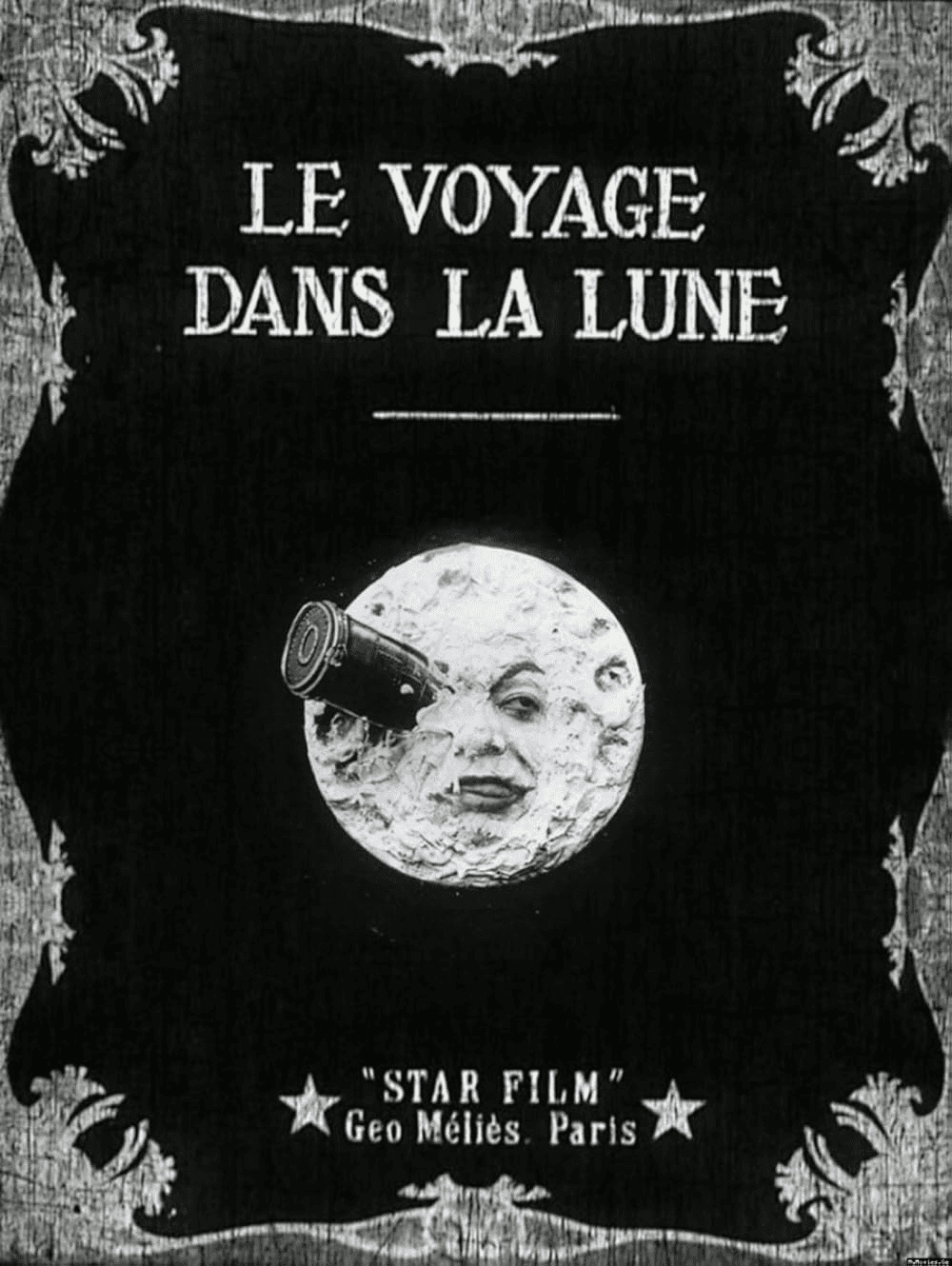
A Trip to the Moon!!!!
Preface: Re-teaching myself the new filmmaking pipeline, now with AI (netflix please notice me). co-written with Claude.
Film was not invented by a single person in a single moment — it emerged gradually from several converging technologies developed simultaneously in different countries, which led to some fierce disputes about who deserved the credit. The essential prehistory begins with the persistence of vision — the optical phenomenon whereby the human eye retains an image for a fraction of a second after it disappears, creating the illusion of continuous motion when a rapid sequence of still images is shown. Scientists and inventors had been experimenting with this principle throughout the 19th century with devices like the zoetrope — a spinning cylinder with sequential drawings inside that created the illusion of movement when viewed through slits — and the phenakistoscope — a spinning disc with images arranged in sequence. These were toys, essentially, but they established the principle on which cinema would be built. The critical leap came with photography — the ability to capture real images rather than drawings. Once photographs could be taken quickly enough in sequence, the possibility of recording actual motion became real. Eadweard Muybridge — a British photographer working in America — is one of the great stepping stones. In 1878, commissioned by railroad tycoon Leland Stanford to settle a bet about whether all four of a horse's hooves leave the ground simultaneously during a gallop, Muybridge set up a row of cameras along a racetrack, each triggered by a wire as the horse passed. The resulting sequence of photographs proved Stanford right — and more importantly demonstrated for the first time that motion could be broken down into and reconstructed from a sequence of still images. Muybridge spent the rest of his career photographing humans and animals in motion, producing thousands of sequential photographs that became enormously influential on both science and art.
Thomas Edison and his assistant William Kennedy Laurie Dickson developed the Kinetoscope in 1891 — a machine that allowed one person at a time to peer through a viewfinder and watch a short loop of film. Edison's invention was significant technically but limited commercially — it was a peepshow device, individual rather than communal, and Edison famously failed to see the potential of projecting film onto a screen for a large audience. He thought the real money was in the individual viewing machines. The decisive moment — the birth of cinema as a public, communal experience — came in Paris on December 28, 1895, when Auguste and Louis Lumière projected their films onto a screen for a paying audience in the basement of the Grand Café on the Boulevard des Capucines. This date is generally considered the birth of cinema as we know it(👏🏼).
The Lumières had developed the Cinématographe — a device that served simultaneously as camera, film processor, and projector, far more practical and portable than Edison's equipment. Their first program included ten short films, each roughly a minute long, including the famous L'Arrivée d'un train en gare de La Ciotat — a train arriving at a station — which legend says caused audience members to leap from their seats in terror, believing a real train was about to burst through the screen. Film historians are skeptical about whether this actually happened, but the story captures something true about the experience of seeing moving photographic images for the first time. Edison, recognizing what he had missed, quickly developed his own projection system and began staging public screenings in America — the first significant American public film screening took place in New York in April 1896.
The very first films had no scripts, no stories, no writers of any kind. They were what film historians call actualities — recordings of real events and everyday scenes. The Lumières' films showed workers leaving their factory, a boat leaving a harbor, a baby being fed, waves breaking on a shore. They were marvels of technology, not of narrative. The camera was pointed at the world and the world was enough. Even the films that had a slight narrative element — a man watering his garden gets the hose turned on him, a joke played on a customer in a shop — were so simple they required no more preparation than a brief description of what to do. There was nothing to write. The director told the performers what to do and the camera recorded it. This phase lasted only a few years. By the late 1890s filmmakers were beginning to understand that the camera could do more than record — it could tell stories.
Georges Méliès is one of the most important figures in early cinema — a French magician and theater owner who discovered almost by accident that film could create illusions impossible in any other medium. According to a story he told — possibly embellished — his camera jammed while filming a Paris street scene, and when he developed the footage he discovered that objects had appeared to vanish and reappear, men had transformed into women, a bus had become a hearse. I suppose that's the earliest visual effects ever existed. The mechanical accident revealed a creative possibility. Stopping and restarting the camera could create magical transformations.
Méliès built a glass-roofed studio — the first purpose-built film studio in the world — and began making films that were essentially filmed stage magic shows, using his knowledge of theatrical illusion to create effects no stage could match(crazy). His films had sets, costumes, performers, and a basic narrative logic — they were the first films that required any kind of planning and preparation before filming began. His masterpiece — and one of the most important films ever made — is Le Voyage dans la Lune — A Trip to the Moon (A Trip to the Moon!!!!) — made in 1902. Running approximately fourteen minutes, it follows a group of astronomers who build a rocket, travel to the moon, encounter moon creatures called Selenites, capture their king, and return triumphantly to Earth. It has a beginning, middle, and end. It has characters, however rudimentary. It has spectacle, humor, and imagination. This was honestly amazing, considering the time it was made, the resources and time it cost, I'm always in awe every time I see it. It is the closest thing to the first real movie in the modern sense — a narrative film created with artistic intention rather than merely recorded actuality. Did Méliès write a screenplay for it? Not in any form we would recognize today. He worked from a basic outline — a sequence of scenes drawn from Jules Verne's novel From the Earth to the Moon and H.G. Wells's The First Men in the Moon — but the planning existed largely in his head and in simple notes. He was simultaneously the writer, director, set designer, and lead performer. The idea of a separate document called a screenplay did not yet exist.
While Méliès was creating magical fantasies in France, American filmmakers were discovering a different kind of storytelling possibility — the ability to edit together scenes filmed in different places and times to create a continuous narrative. Edwin S. Porter, working for Edison, made two films in 1903 that were enormously influential. The Life of an American Fireman and The Great Train Robbery both used editing(the birth of editing!!!) to tell stories across multiple locations — cutting between the interior of a burning building and firemen outside, cutting between a train robbery, a telegraph operator sending for help, and a posse riding to intercept the outlaws.The Great Train Robbery — twelve minutes long, fourteen shots — was the biggest commercial success American cinema had yet seen and established the basic grammar of film narrative: that a story could be assembled from fragments filmed separately and edited together into a coherent whole. Audiences understood intuitively what the editing meant. The language of cinema was beginning to form. Porter worked from simple outlines — a brief description of each scene, the action to be filmed — but again nothing that resembles a modern screenplay.
As films got longer and more complex in the late 1900s and early 1910s, the need for written preparation became impossible to ignore. By around 1907 American film studios — which were producing enormous quantities of short films to feed the insatiable appetite of the new nickelodeon theaters springing up across the country — began soliciting written story ideas from outside writers. They called these written story outlines scenarios. The earliest scenarios were extraordinarily simple — sometimes a single paragraph, rarely more than a page. They described what would happen in each scene but with none of the technical detail of a modern screenplay. There were no camera directions, no dialogue, no formatting conventions. They were closer to a short story synopsis than anything we would recognize as a script. The studios published notices in newspapers and magazines inviting amateur writers to submit scenarios — and were immediately deluged. Thousands of people submitted story ideas. Most were terrible. A small industry of scenario writing guides and manuals emerged almost immediately — books with titles like How to Write Moving Picture Plays and The Photoplay: A Psychological Study that claimed to teach the secrets of scenario writing. This is the moment when film writing began to be recognized as a distinct activity — something that required specific skills and knowledge, something that could be taught and learned.
But who wrote the first screenplay? This is where the history gets genuinely complicated, because the answer depends entirely on what you mean by screenplay. If you mean the first person to write a structured narrative intended for film production — the earliest scenario writers of the late 1890s and early 1900s. Most of them are anonymous — studio employees or uncredited writers whose names were not considered worth recording. If you mean the first person to write something approaching a modern screenplay — with scene descriptions, some dialogue, and structural organization — the answer gets more interesting. Roy McCardell is sometimes credited as writing the first commissioned screenplay in America — hired by the Biograph Company around 1900 to write story outlines, though what he produced was rudimentary. Stanner E.V. Taylor wrote scenarios for Edison and Biograph in the early 1900s that were somewhat more developed — actual written documents rather than mere verbal descriptions. But the figure most often cited as the first genuinely professional screenwriter — the first person to make a living specifically from writing for film — is a woman named Gene Gauntier.
Gene Gauntier was an actress working for the Biograph Company who began writing her own scenarios around 1906 because she was frustrated with the quality of the stories she was being asked to perform. She had a literary background and understood narrative in a way most early filmmakers did not. Her most significant work was a 1907 adaptation of Ben-Hur — unauthorized, which eventually led to a landmark copyright lawsuit — and a series of increasingly ambitious scripts for the Kalem Company, which she joined after Biograph. She wrote, acted in, and sometimes directed her own films, functioning as a complete creative force in an era before film roles were rigidly specialized. She later wrote about her scenario writing process in ways that suggest genuine craft consciousness — thinking about visual storytelling, about what the camera could show, about how to construct a scene for maximum effect. She was not just describing what would happen but thinking specifically about how film could tell a story.
The figure who most transformed early film narrative into something approaching the medium's full potential was D.W. Griffith(The Birth of a Nation!!!) — a failed stage actor and playwright who began directing for Biograph in 1908 and in the next six years made hundreds of short films that systematically developed the vocabulary of cinematic storytelling. Griffith did not invent the techniques he used — editing, close-ups, camera movement, parallel cutting had all been used before him — but he organized them into a coherent language and used them with a narrative sophistication no one had previously achieved. His films told genuinely complex emotional stories. His actors performed with a restraint suited to the close-up camera rather than the theatrical gestures of stage performance. His editing created rhythm, tension, and emotion. His writers — particularly Stanner E.V. Taylor and later Frank Woods — began producing something more recognizable as a screenplay: scene by scene breakdowns of the action, descriptions of what the camera would see, notes on character and mood. Still no dialogue, still no standardized format — but a genuine written document that served as the foundation for production.
Then in 1915 Griffith made The Birth of a Nation — a film of enormous technical achievement and equally enormous moral catastrophe, a glorification of the Ku Klux Klan that caused riots, was protested by the NAACP, and remains one of the most disturbing and complicated objects in film history. Its technical influence on filmmaking was profound and undeniable. Its racism was explicit and inexcusable. It cannot be separated from either. Its follow-up, Intolerance in 1916 — Griffith's attempted atonement, interweaving four parallel stories from different historical periods about intolerance and injustice — required a level of written planning unprecedented in film history. The script was a substantial document. The production was the most ambitious and expensive in cinema's short history.
As films grew from one reel — roughly ten minutes — to multiple reels and eventually feature length, the need for serious written preparation became urgent and unavoidable. A feature film lasting an hour or more, requiring weeks of production involving dozens of people, could not be improvised. Sets had to be designed and built. Costumes had to be made. Actors had to be cast and rehearsed. Locations had to be scouted. All of this required a written document from which every department could plan. By the mid-1910s the scenario had evolved into something more developed — the continuity script, which broke the story down scene by scene with detailed descriptions of the action, notes on sets and props, and increasingly specific camera directions. This was a functional production document, not a literary text — designed to serve the practical needs of a complex industrial process. Studios began hiring writers specifically for this work — not actors who also wrote, or directors who also planned, but dedicated scenario writers employed on contract. The scenario department became a standard feature of major studios. The writers who worked in these departments were overwhelmingly women. This is one of the most remarkable and most overlooked facts in early film history.
In the 1910s, before screenwriting had established itself as a prestigious or well-paid profession, women dominated the field. Estimates suggest that between 1911 and 1925, women wrote approximately half of all films produced in Hollywood — and in some years considerably more. Anita Loos began writing scenarios for Griffith at Biograph when she was around fifteen years old — the exact date is disputed because she lied about her age — and became one of the most prolific and sophisticated screenwriters of the silent era. She later wrote Gentlemen Prefer Blondes. Her scenarios for Griffith were notable for their wit and their psychological sharpness. Frances Marion is perhaps the most important figure in early Hollywood screenwriting, male or female. She wrote over 300 films, won two Academy Awards for Best Writing — for The Big House in 1930 and The Champ in 1932 — and was for much of the 1920s the highest-paid writer in Hollywood of any gender. She was a close friend and collaborator of Mary Pickford and helped shape some of the most successful films of the silent era.
June Mathis was the powerful head of Metro's scenario department and the writer responsible for recognizing and championing Rudolph Valentino — she insisted he be cast in The Four Horsemen of the Apocalypse in 1921 and created the starmaking role that launched his career. She also wrote the ambitious adaptation of Ben-Hur in 1925. Bess Meredyth, Beulah Marie Dix, Clara Beranger — the list of significant women screenwriters in the silent era is long and largely forgotten. The reason women dominated early screenwriting is probably a combination of factors. The profession was new and had no established hierarchy excluding them. It was considered writing rather than directing or producing — a more domestic, less overtly powerful activity, and therefore less threatening to male gatekeepers. And the subject matter of early films — domestic drama, romance, social comedy — was considered women's territory.
Then, sound arrived. More on this in the next post. ☀️