Created on
1
/
15
/
2026
,
0
:
13
Updated on
2
/
1
/
2026
,
22
:
42
Location
Oakland, CA
New World (i): The “Discovery”
新大陆(i):被发现了
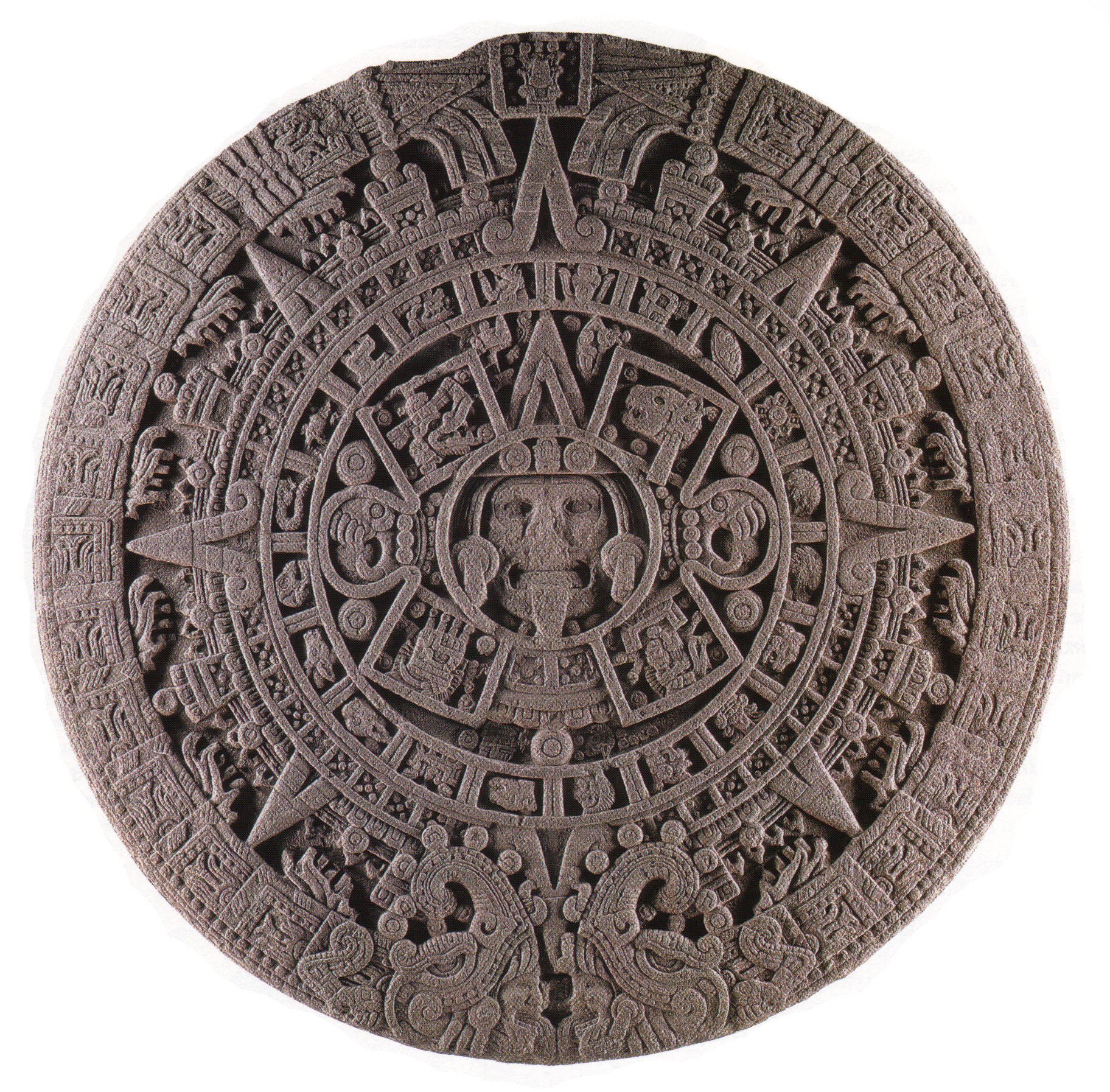
前言:美洲文明感觉很牛逼,和中国同期comparable。本文和chatGPT合作完成。
在欧洲人抵达之前,美洲并非一片等待命名与占有的荒原,而是一个已经被人类长期居住、改造并赋予意义的世界。考古与遗传证据显示,最晚在距今约 1.5–2 万年前,人类已通过白令陆桥及可能的沿海路线进入美洲,并在此后数千年中发展出多样而成熟的社会形态。这些社会并不是零散的部落集合,而是在人口规模、分工体系、宗教秩序与政治组织上高度复杂的文明网络。
在中美洲,玛雅文明建立了精密的历法体系、成熟的书写系统和以城市为核心的政治结构。
玛雅并不是一个在某个时间点“兴起—辉煌—突然消失”的单一文明体,而是一系列在中美洲持续运作了两千年以上的城邦体系。从前古典期到古典期,再到后古典期,玛雅社会不断重组、迁移与转型,有的城市衰落,有的新中心兴起。这种变化更接近于政治与生态条件下的结构调整,而不是文明层面的终结。
与许多以领土扩张为核心的帝国不同,玛雅文明的突出特征并不在于对大面积疆域的长期军事占领,而在于他们对时间、知识与宇宙秩序的系统化理解。在玛雅世界中,政治权力、宗教仪式与天文知识紧密交织,统治者的合法性不仅来自武力,也来自其与宇宙秩序之间被“正确安放”的关系。
玛雅人发展出一套高度复杂而精确的历法体系,同时使用多个历法系统,用于宗教仪式、农业安排和历史纪年。这些历法建立在长期天文观测基础之上,使他们能够高精度追踪日食、行星周期和天象变化。时间在玛雅社会中不是线性流逝的背景,而是一种被计算、被标记、被赋予意义的结构性存在。
与此相配套的,是一套成熟的文字系统。玛雅文字是一种表意与表音结合的书写体系,可以精确记录人名、事件、王朝谱系和宗教仪式。这意味着玛雅社会拥有明确的历史意识,他们不仅在“发生事情”,也在记录、解释并传承这些事情。
在空间层面,玛雅城市并非随意聚集的居住点,而是围绕宗教与行政中心组织起来的政治—仪式空间。金字塔、神庙、广场和王宫构成城市核心,权力、仪式与公共生活在这些空间中反复展开。
如果说玛雅文明的核心是对时间与宇宙秩序的组织,那么阿兹特克帝国所展现的,则是一种对空间、人口与资源关系的高度组织能力。其首都特诺奇蒂特兰建于特斯科科湖中的岛屿之上,通过持续的人为改造而得以存在。堤道连接岛屿与陆地,既承担交通功能,也起到防御作用;水利系统将淡水引入城市,同时隔离咸水,保障供水与农业灌溉。城市内部有明确分区,并存在有组织的垃圾清理与排水安排,这在当时的世界范围内并不常见。
特诺奇蒂特兰是一座人口规模巨大的城市。位于邻城特拉特洛尔科的市场每日有大量交易活动,商品种类丰富,交易秩序受到制度性管理。这表明该城市不仅能维持自身运转,还作为区域经济网络的核心节点。在政治结构上,阿兹特克通过贡赋制度维持广阔区域的控制。被征服地区通常保留原有统治结构,只需按期缴纳物资与劳力。中央将资源用于军队、公共工程和宗教仪式,使帝国得以在不彻底摧毁地方社会的前提下维持统治。将这一现实与15世纪的许多欧洲城市相比,可以看到显著差异。欧洲城市普遍面临公共卫生与供水问题,而特诺奇蒂特兰已具备稳定供水、交通组织和市场管理能力。
在今天美国中部的密西西比河流域,曾存在一个以城市为节点、覆盖广阔区域的文明体系——密西西比文化。其中最具代表性的中心是卡霍基亚。在鼎盛时期(约公元1050—1200年),卡霍基亚人口可能达到数万。更关键的是,人口能够在同一地点长期集中并维持运转,这意味着稳定的农业剩余与有效的资源调配机制。
卡霍基亚已经具备城市形态。其空间结构以巨型土丘为核心,其中僧侣丘体量巨大。这些土丘承担宗教、政治与公共集会功能,是权力结构的物理表达。考古证据显示,卡霍基亚存在明确的社会分层。城市周边发现的“木阵”(Woodhenge)与太阳方位高度吻合,表明其空间规划与天文观测、农业周期和宗教仪式密切相关。
在北美西南部,普韦布洛人发展出高度适应干旱环境的农业与居住体系。通过梯田、蓄水系统与紧凑型石质建筑,他们建立了长期稳定的社区结构。社会运行更多依赖传统规范与宗教仪式,而非高度集中的统治者。易洛魁联盟则展示了另一种政治可能。多个部族组成联合体,决策依赖协商与共识,权力受到制度与传统的约束。这种政治形式后来引起欧洲思想家的关注,成为反思政治组织方式的参照对象之一。
这些社会之间并非彼此隔绝。贸易网络、技术传播与冲突长期存在,美洲本身就是一个在运作的历史空间。因此,“发现新大陆”这一说法本身带有明显视角偏向。所谓“发现”,并不是美洲第一次进入历史,而是欧洲第一次系统性地将其纳入自身认知框架,并通过命名、绘图与主权划分重构其意义。
Preface: The civilizations of the Americas were remarkably advanced—fully comparable to China during the same historical periods. This essay was co-written with ChatGPT.
Before Europeans arrived, the Americas were not an empty wilderness awaiting naming and possession, but a world long inhabited, shaped, and imbued with meaning by human societies. Archaeological and genetic evidence indicates that, no later than roughly 15,000–20,000 years ago, humans had entered the Americas via the Bering land bridge and possibly coastal routes, and over the following millennia developed diverse and mature social forms. These were not scattered bands of tribes, but complex civilizational networks marked by substantial populations, division of labor, religious order, and political organization.
In Mesoamerica, the Maya civilization developed a highly precise calendrical system, a mature writing system, and city-centered political structures.
The Maya were not a single civilization that “rose, flourished, and suddenly vanished” at a particular moment, but a series of city-state systems that operated in Mesoamerica for more than two millennia. From the Preclassic to the Classic and into the Postclassic periods, Maya societies continuously reorganized, migrated, and transformed. Some cities declined while new centers emerged. These changes resemble structural adjustments driven by political and ecological conditions rather than the disappearance of a civilization.
Unlike many empires centered on territorial expansion, the distinctive feature of Maya civilization was not long-term military occupation of vast territories, but a systematic understanding of time, knowledge, and cosmic order. In the Maya world, political authority, religious ritual, and astronomical knowledge were tightly intertwined. The legitimacy of rulers derived not only from force, but from their perceived alignment with cosmic order.
The Maya developed an intricate and highly accurate calendrical system, simultaneously using multiple calendars for ritual, agricultural planning, and historical reckoning. These calendars were grounded in long-term astronomical observation, allowing them to track eclipses, planetary cycles, and celestial patterns with great precision. Time in Maya society was not a passive linear background, but a structured entity that was calculated, marked, and endowed with meaning.
Accompanying this was a sophisticated writing system. Maya script combined logographic and phonetic elements and could record personal names, events, dynastic lineages, and ritual activities with precision. This indicates a strong historical consciousness: the Maya were not only experiencing events, but recording, interpreting, and transmitting them.
Spatially, Maya cities were not random clusters of dwellings, but political-ritual spaces organized around religious and administrative centers. Pyramids, temples, plazas, and palaces formed urban cores where power, ritual, and public life repeatedly unfolded.
If the Maya exemplified the organization of time and cosmic order, the Aztec Empire demonstrated a high degree of organization in space, population, and resource management. Its capital, Tenochtitlan, was built on an island in Lake Texcoco and existed through continuous human modification. Causeways connected the island to the mainland, serving both transport and defensive purposes. Hydraulic systems brought fresh water into the city while separating it from brackish lake water, ensuring stable supply for drinking and agriculture. The city had defined districts and organized waste disposal and drainage systems—conditions not common worldwide at the time.
Tenochtitlan was a very large city by premodern standards. The market at nearby Tlatelolco saw extensive daily trade in a wide range of goods, and transactions were conducted under regulated order. This indicates that the city functioned not only as a self-sustaining urban center but also as a hub in a broader regional economic network. Politically, the Aztec state maintained control through a tribute system. Conquered regions generally retained their local rulers as long as they provided regular goods and labor. Resources collected by the center were used for the military, public works, and religious institutions, allowing imperial control without fully dismantling local societies. Compared with many fifteenth-century European cities, which frequently struggled with sanitation and water supply, Tenochtitlan exhibited a notably high level of urban organization.
In what is now the Mississippi River valley of the central United States, there once existed a civilization organized around urban centers across a wide region—the Mississippian culture. Its most representative center was Cahokia. At its height (c. 1050–1200 CE), Cahokia’s population may have reached tens of thousands. More significant than the number itself was the fact that such a population could remain concentrated and functioning in one place over time, implying stable agricultural surplus and effective resource management.
Cahokia displayed clear urban characteristics. Its spatial structure centered on large earthen mounds, including the massive Monks Mound. These mounds served religious, political, and public functions and were physical expressions of authority. Archaeological evidence shows clear social stratification. The nearby “Woodhenge,” aligned with solar positions, indicates that urban planning was closely linked to astronomical observation, agricultural cycles, and ritual life.
In the arid Southwest of North America, Pueblo societies developed agricultural and residential systems highly adapted to harsh environmental conditions. Through terracing, water management, and compact stone architecture, they formed long-lasting, stable communities. Social organization relied more on tradition and ritual norms than on highly centralized rulers.
The Haudenosaunee (Iroquois) Confederacy represented yet another political model. Multiple nations formed a union in which decision-making relied on deliberation and consensus, and power was constrained by institutional norms and tradition. This political structure later drew the attention of European thinkers and became a point of reference in discussions about alternative forms of governance.
These societies were not isolated from one another. Trade networks, technological exchange, and conflict connected the continent. The Americas were already a functioning historical space. Thus, the phrase “discovery of the New World” reflects a particular perspective. What was “discovered” was not the Americas entering history for the first time, but Europe systemically incorporating them into its own cognitive framework through naming, mapping, and claims of sovereignty.