Created on
Updated on
1883, Saumur | Coco Chanel
mistress, german spy, fashion icon, costume designer for Ballets Russes
Preface: welcome to this very brief intro to modern art. Please feel free to use this as a guide for museum visits.
Gabrielle "Coco" Chanel (1883–1971)
Born illegitimate in Saumur in 1883. Saumur comes from her official birth certificate, which records the date as August 19, 1883 and the place as Saumur in the Loire Valley. Her father Auguste Chanel was an itinerant market vendor who moved around constantly, and the family happened to be in Saumur when she was born. They had no particular connection to the city and didn't stay. She routinely claimed to have been born in 1893, making herself ten years younger. She maintained this fiction publicly for most of her life. It was only after her death that the birth certificate confirmed 1883. Her mother a laundress who died when Gabrielle was around eleven, and her father couldn't or wouldn't keep the children — he placed Gabrielle and her sisters in an orphanage run by nuns in Aubazine, in central France. She spent six years there. A bit of a Queen's Gambit there if you ask me, a genius trapped in a ophrange. She learned to sew at the orphanage and at the boarding school in Moulins where she was sent afterward.
However, her illegitimacy, the orphanage, the poverty, the itinerant father who abandoned his children — she buried all of this. She gave interviewers vague romantic accounts of a childhood in Auvergne, suggested she had been raised by aunts rather than nuns, implied a modest but respectable provincial upbringing rather than institutional poverty. She understood that her authority as an arbiter of elegance and taste depended on a certain mystique, and a childhood in an orphanage for indigent children was not part of that mystique. Considering all these, it's less surprising actually that she became a German spy, she had all the tools for it. She made a good spy.
The origin of "Coco" is disputed and she was deliberately vague about it throughout her life. One account says it came from a song she sang at cabaret performances in her early twenties — Qui qu'a vu Coco? Another says it was a nickname from an early lover. She never used it in her business name. Professionally she was always Chanel.
Arthur "Boy" Capel (1881–1919)
The name came first — everyone called him Boy, apparently from childhood, and the name stuck through his adult life without irony. He was English, born in Brighton in 1881, Catholic, educated at Beaumont College which was a Jesuit school. His background had a slight ambiguity to it — there was persistent gossip during his lifetime about whether his father had French or possibly Jewish origins, something Chanel herself may have believed and later used in ways that reflected badly on her. What is clear is that he was intelligent, ambitious, physically striking, and moving through the upper levels of English and French society through a combination of business success and polo. Polo was the social mechanism. It put wealthy English and French men in the same spaces — the same estates, the same resorts, the same social calendar. Through polo and horse racing he was part of Étienne Balsan's circle. According to Wikipedia, this dude was "a French socialite and heir, he was born into the family of wealthy industrialists from Châteauroux (Indre) who created Balsan (Company) and provided the army with uniforms and originated the famous cloth known as "blue horizon." Balsan is best known in the present day as having kept Coco Chanel as his mistress."
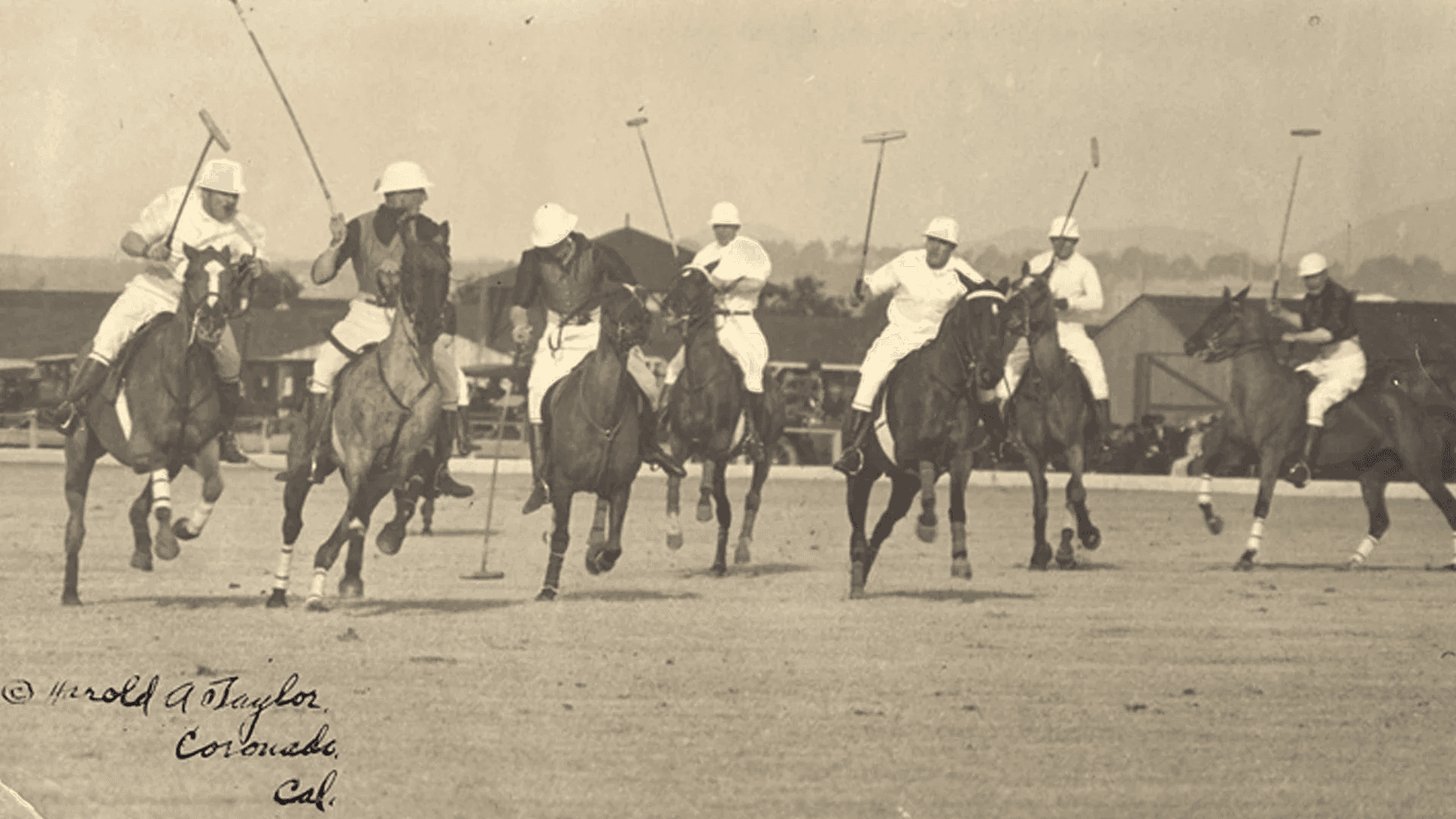
Royallieu was a château near Compiègne, north of Paris, where Balsan kept horses, entertained friends, and lived the life of a wealthy man with no particular obligations. Chanel had been living there since around 1906 as his companion, present at social gatherings, making hats for the women who visited, occupying the specific position of a kept woman in a wealthy man's household, which meant she was there and not quite there simultaneously. Not a guest, not a servant, something the social vocabulary of the time didn't have a clean word for. Capel visited frequently.
The precise date of Chanel and Capel's first meeting isn't documented — most accounts place it around 1906 or 1907. What is documented is the effect. Balsan's relationship with Chanel was comfortable and relatively indifferent — she was a companion and social ornament, and he was fond of her without being serious about her. Capel looked at her differently. He was interested in her mind and her unconventionality, in the sharpness of her observations and the quality of her instincts. There's a reported version of events in which he essentially competed with Balsan for her, which Balsan found amusing rather than threatening — he didn't understand what Capel saw in her urgency that he himself had missed. Whether the triangle was as light as this account suggests is impossible to know from the outside. What is certain is that she left Royallieu with Capel.
Capel financed the hat shop on rue Cambon in 1910. He financed the Deauville boutique in 1913. These weren't gifts in the conventional sense — he understood them as investments in her capability, and she paid him back when the money came in, which she was apparently insistent about. He also took her seriously as a person with ideas worth developing. He introduced her to intellectual circles she wouldn't otherwise have accessed — he later wrote a book on post-war political philosophy, Reflections on Victory (1917), which anticipated some of the thinking behind the League of Nations.
In September 1918 Capel married Lady Diana Wyndham, daughter of the Earl of Ribblesdale. The marriage was a social calculation — he wanted to be established in English aristocratic society, and marrying a titled Englishwoman was the mechanism. He was ambitious in ways that went beyond business, and social position in England required this kind of alliance. Chanel learned about the engagement through others. He continued the relationship with her after the marriage. He visited her in the weeks before his death. December 22, 1919. He was driving on the road between Cannes and Paris when a tire blew out. The car left the road. He died either at the scene or shortly afterward. He was thirty-eight. Chanel was on the Côte d'Azur at the time. She drove through the night to reach where it happened. She said afterward: I lost everything when I lost Capel. The beige she used to decorate her apartments in the immediate aftermath — reportedly because she couldn't bring herself to use black, even though black was already becoming her signature — is one of the small precise details that biographers return to. The woman who made black the fundamental color of modern fashion couldn't wear it for the person whose death affected her most.
1910: 21 Rue Cambon and Hats
1910, Boy Capel financed Chanel a millinery shop in Paris, called 21 Rue Cambon. Rue Cambon is in the first arrondissement, close to the Place Vendôme, close to the Ritz, in the neighborhood where money and fashion already lived. Boy Capel understood this when he financed the lease — putting her in a prestigious location gave the shop a credibility it couldn't have earned from a less visible address. Small, limited in scope, selling hats she made herself. At this point she was not famous. She was a woman with good taste and a financial backer, operating at the edge of the fashionable world rather than inside it.
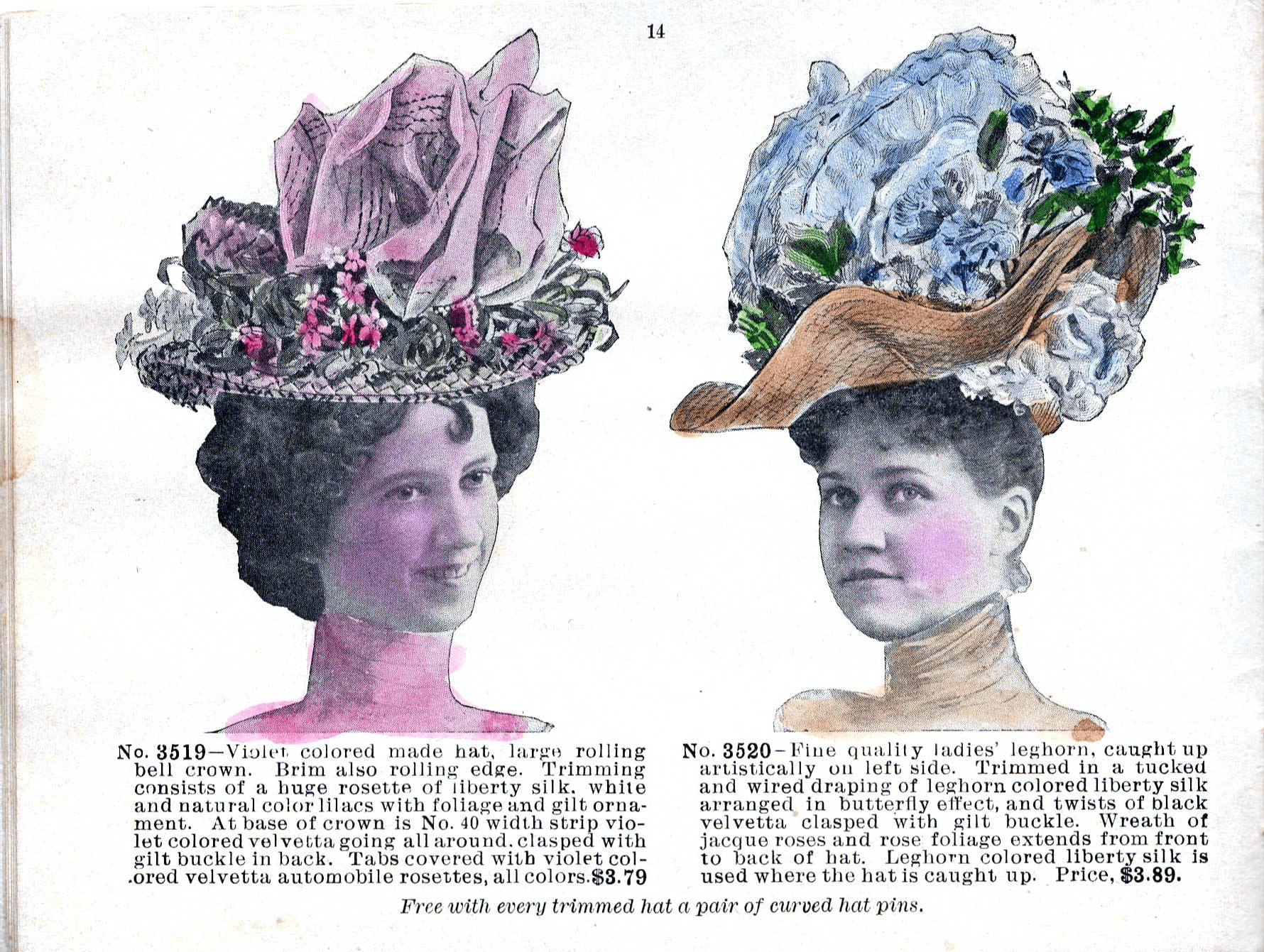
The women's hat in 1910 was an architectural event. Edwardian millinery had reached a kind of maximum — enormous brims, heavily decorated with feathers, artificial flowers, ribbons, sometimes entire artificial birds. The hat was a statement of status and femininity, designed to be seen from across a room, requiring hat pins the length of a hand to anchor it to the elaborate hairstyles underneath. It was a production.
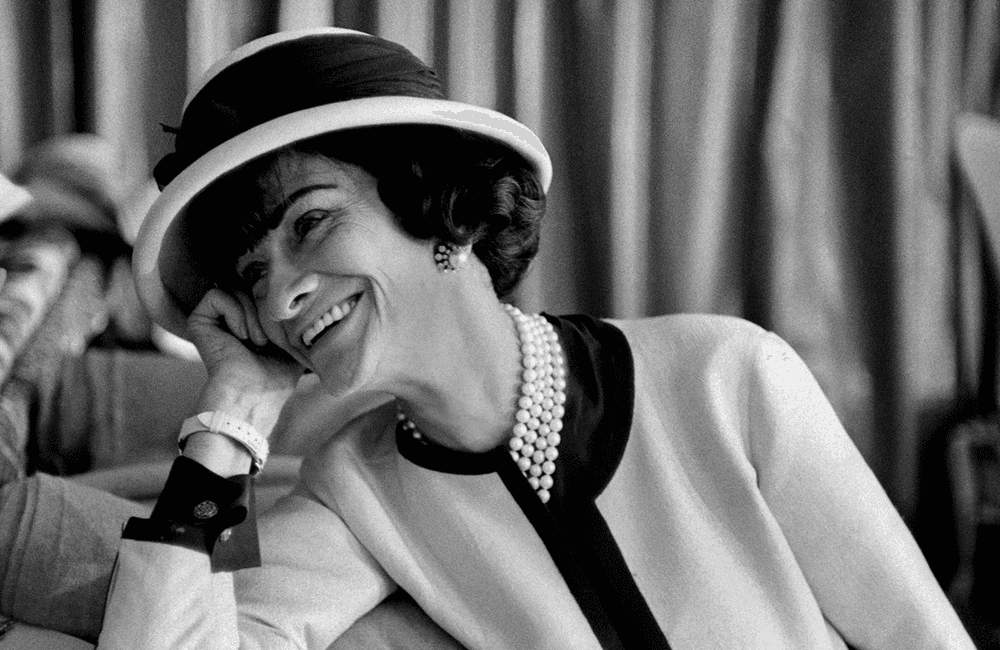
Chanel made the opposite. Simple shapes, clean lines, minimal decoration, well-made but without fuss. A hat that sat on a head rather than crowning it. A hat that framed a face rather than competing with it. This was already the logic she would apply to everything she made for the rest of her career — remove what isn't necessary, let the essential thing be visible — but at this point it was expressed in straw and ribbon rather than jersey and tweed. The simplicity was a statement, and it was a statement that found its audience. The women in Balsan's circle were her first clients — she had spent years watching them, knew what they wore and how they wore it, understood the specific tedium of being weighed down by elaborate millinery. Some were already looking for a way out of the Edwardian excess.
Chanel was working with her hands. The skills she had learned at the orphanage at Aubazine and at the boarding school in Moulins — sewing, cutting, shaping fabric — were the foundation. She wasn't a designer giving instructions to seamstresses yet. She was making the things herself, handling the materials, understanding what they could and couldn't do through direct physical contact. She was also talking to clients and being willing to argue. Women would come in with ideas about what they wanted — the fashionable thing, the elaborate thing — and she would tell them what she thought actually worked. She had strong opinions and didn't soften them for commercial reasons. This was a risk and it was also the shop's character. You didn't come to rue Cambon to be told yes. You came because she knew things about what looked right that you hadn't been told before.
1913: Deauville
In 1913, Chanel opened a boutique in Deauville, the resort town on the Normandy coast where wealthy Parisians spent summers. This is when people started paying attention. She was making simple jersey garments — casual, comfortable, completely unlike what women were wearing — and the resort context was the right environment for them. Women on holiday, away from the formal social demands of Paris, found that what she was offering fit how they actually wanted to move and live.
The silhouette of women's fashion in the 1900s and early 1910s was built from the inside out. Underneath everything was the corset — a structured garment of boning and lacing that compressed the waist and shaped the torso into the S-curve silhouette that Edwardian fashion required. The corset didn't just change the shape of the body. It changed how the body could move. Bending from the waist was difficult. Running was essentially impossible. Breathing deeply required effort. The body was being held in a fixed shape by an external structure. Over the corset went layers — a chemise, a corset cover, petticoats, sometimes a crinoline structure for the skirt. Over all of this went the dress or suit itself, which was typically made from structured woven fabrics — wool, silk, heavy linen — cut and constructed to maintain their shape independently of the body inside them. The garment was an architecture. The woman inhabited it. This was not comfortable. It was also not designed to be comfortable. Comfort was not a value that high fashion recognized. Fashion communicated status, femininity, wealth, leisure — and leisure, paradoxically, meant wearing things that made physical activity difficult, because physical activity was what working people did. The restriction was part of the message.
Jersey is a knitted fabric — interlocked loops of yarn rather than woven threads. The knit structure gives it elasticity: it stretches in multiple directions and returns to its shape. It drapes rather than holding a fixed form. It moves with the body because it has give, and it recovers because the loops pull back. Before Chanel, jersey was used for men's underwear, for athletic wear, for fishermen's sweaters. It was functional fabric, associated with labor and sport and the body in movement. Using it for women's outer garments — suits, dresses, coats — was not done, and the reason it was not done was precisely because of what jersey communicated: comfort, practicality, the body allowed to move. None of these were values that women's fashion of the period was interested in expressing. She had encountered jersey through the sporting world — through Balsan's horses and the men around them who wore it casually, through Capel who wore jersey sweaters. She had been wearing simplified versions of men's sporting clothes at Royallieu for years, partly for practicality and partly because it looked right to her eye. The idea of bringing that material into women's fashion was not a calculated disruption. It was a logical extension of what she was already doing.
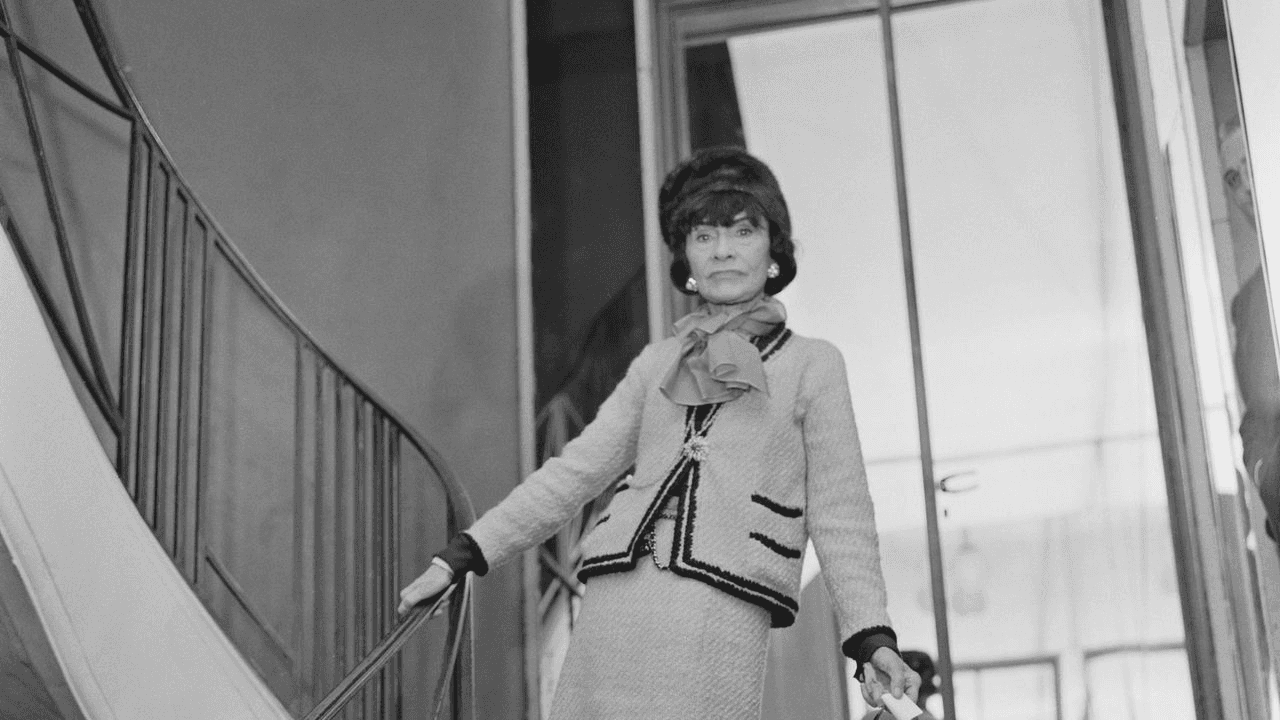
Chanel made simple jersey suits and dresses — collarless jackets, straight skirts, tunics. Nothing that required the corset underneath. Nothing that held its shape independently of the body. The garments moved when the body moved and fell when the body was still. The fit came from the fabric's elasticity rather than from the construction of the garment itself. The colors were simple — navy, beige, white, the colors of nautical and sporting life rather than the elaborate patterns of Edwardian decoration. The trimming was minimal. Nothing that didn't need to be there was there. Women put them on and discovered they could move. They could walk quickly, sit down without adjusting, reach for things, bend. The physical experience of wearing clothes that didn't fight the body was genuinely new for many of them, and once experienced it was difficult to go back.
1915: Biarritz
In 1915–1916, Chanel opened in Biarritz during the war, when the Basque coast resort was full of wealthy people who had left Paris. By this point she had roughly three hundred employees and was operating as a genuine couture house, not a boutique. She was making money on a serious scale. The war had changed what women needed from clothing — practical, adaptable, functional — and she had been making exactly that for two years already.
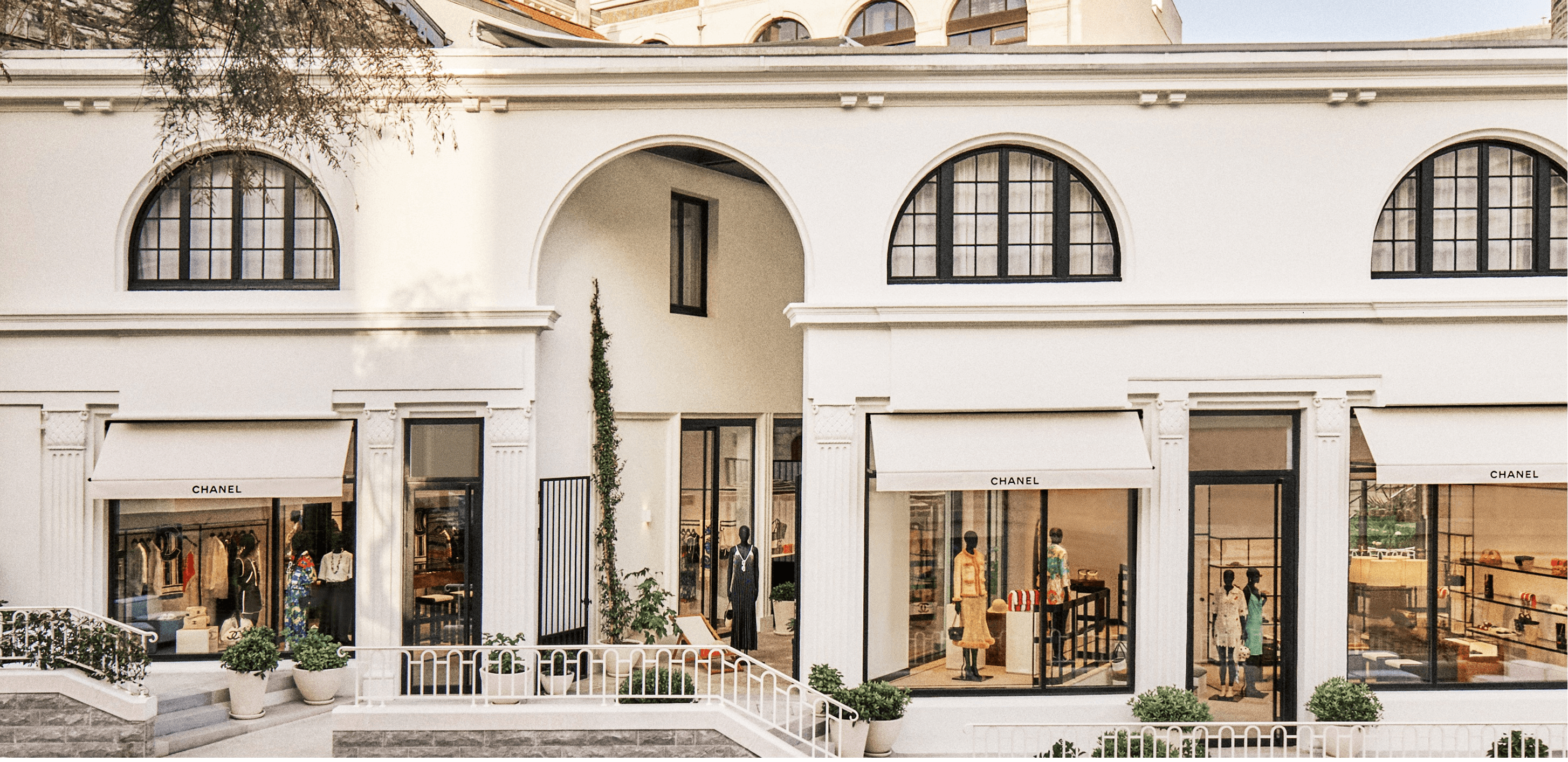
In Biarritz she was designing and producing a complete wardrobe for the first time — not just hats, not a few jersey pieces for the beach, but the full range of what a woman needed from morning to evening. The specific garments: jersey suits with collarless jackets and straight skirts, jersey dresses that could move from day to evening, coats in simple cuts, blouses. The fabric remained her primary argument — jersey, which draped and moved and required none of the structural undergarment apparatus that conventional women's clothing depended on. She was also beginning to work with tweed, borrowed from men's sporting clothing, and with the nautical vocabulary of the Basque coast — sailor references, stripes, the visual language of the Atlantic rather than the Parisian salon. She had workers — eventually around three hundred — which meant she was running a manufacturing operation rather than making things herself. She was designing, fitting, overseeing production, managing relationships with fabric suppliers, and seeing clients. The client work was important and specific: she fitted individually, argued with women about what worked on them versus what they wanted, and was known for telling the truth about both. Women came back because she was right more often than she was diplomatic.
The Spanish clients changed the register of the operation. Through the proximity to the border and the concentration of Spanish aristocracy in the Basque region she was dressing women from a world more formally hierarchical than even the French upper class — women for whom the question of what couture house you used was a social statement as much as an aesthetic one. Being their choice was a different kind of validation than being chosen by resort visitors. She was also paying attention to what the war was making visible. Women managing estates and charity work and the practical administration of interrupted lives were discovering what their clothing could and couldn't do. By the time the war ended she had generated enough money to pay back Boy Capel completely. This was the concrete measure of what Biarritz had been: not recognition, not critical attention, but financial independence sufficient to settle the debt that had made everything possible, and to continue without it.
Chanel No. 5 (1921)
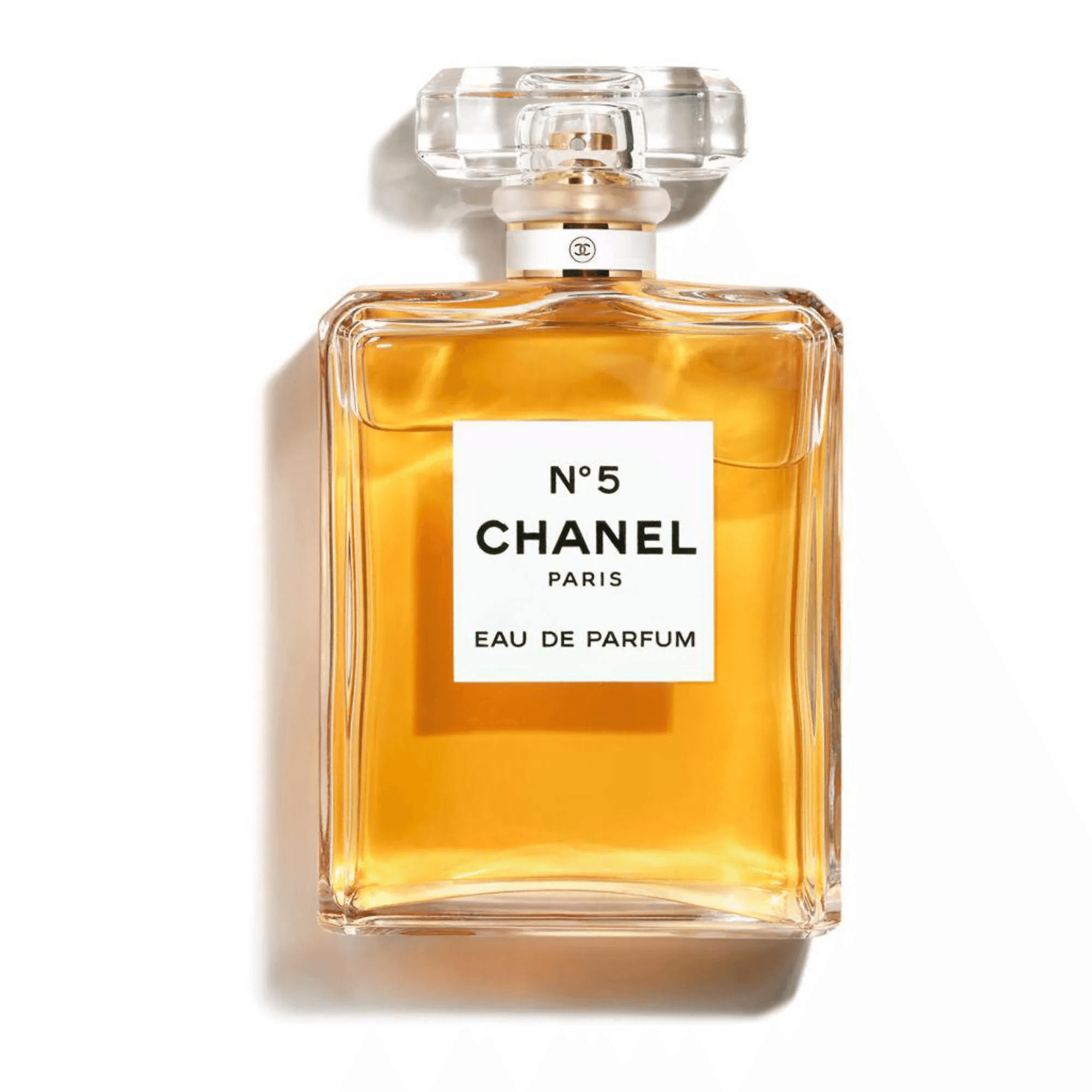
When Chanel pitched the idea for No.5, she told the perfumer Ernest Beaux — who had been introduced to her through Grand Duke Dmitri, the Russian émigré she was involved with — that she wanted an artificial perfume. Not something that smelled like roses or violets or any identifiable flower. Something abstract, complex, made rather than found. A composition, like a piece of music. Beaux presented her with numbered samples. She chose the fifth. No. 5 used synthetic aldehydes — chemical compounds that produced a complex, abstract scent that didn't exist in nature. This was technically new and conceptually new simultaneously.
Synthetic aldehydes had existed as chemical compounds before 1921. Perfumers knew about them. What made No. 5 different was the quantity — Beaux used aldehydes at a concentration dramatically higher than anyone had used before, reportedly because of a measuring error by his assistant during the sample preparation. The accident produced a scent intensity and complexity that deliberate formulation hadn't achieved. Whether the error story is fully accurate or partly mythologized is impossible to verify — Chanel and Beaux both told versions of the story and the versions don't perfectly align. What is certain is that the resulting formula used synthetic aldehydes at a level that was new, and that the effect was immediately recognizable as different from anything that existed. The aldehyde concentration did something specific: it lifted the other scent components — the jasmine, the rose, the sandalwood underneath — into a kind of luminous abstraction. The flowers were present but they weren't identifiable as flowers. They had been transformed into something that retained their character while losing their literalness. The scent seemed to come from everywhere and nowhere simultaneously, which is the quality people struggled to describe and kept trying to describe for the next hundred years.
Perfume before No. 5 was organized around a single principle: a perfume smelled like something. Rose water smelled like roses. Lavender water smelled like lavender. The more sophisticated perfumes of the 19th century combined several flowers or added oriental notes, but the logic was still additive — this plus this plus this, each element identifiable. The perfume was a list of ingredients you could read through your nose. What Chanel articulated to Beaux — and she articulated it clearly, not accidentally — was a rejection of that entire logic. She didn't want a list. She wanted a composition, which is a different thing: a whole that is not reducible to its parts, where the individual elements are in service of a total effect. This is a conceptual leap that most people working in perfumery at the time didn't make, because the tradition they were working in didn't require it. She made it because she was thinking from outside the tradition, from her instinct about what design was — the same instinct that had produced the jersey suits and the little black dress. The logic was identical: remove the literal, find the essential, make the thing that works without explaining why it works.
Most perfumes have a lifespan. Fashion changes, noses change, what smelled sophisticated in one decade smells dated in the next. No. 5 has been in continuous production since 1921 and is still the best-selling perfume in the world more than a hundred years later. The reason is probably that abstraction ages better than literalism. A perfume that smells like an idea — that achieves its effect through complexity and abstraction rather than through reference to something identifiable — has no convention to become dated.
The Little Black Dress (1926)
Victorian mourning culture had codified black into an elaborate system of grief management. When a close relative died, a respectable woman entered full mourning — entirely black clothing, matte fabrics specifically chosen to avoid any suggestion of festivity, no jewelry except jet or hair jewelry made from the deceased's own hair. The duration varied by relation to the dead: a husband required two years of mourning, a parent one year, a sibling six months. The gradations were precise and socially enforced. As the period progressed, half-mourning allowed grey, lavender, and eventually white to be reintroduced. The sequence marked the stages of returning to social life after loss — a visible calendar of grief worn on the body. Queen Victoria's extended mourning after Prince Albert's death in 1861 — she wore black until her own death in 1901, forty years — had fixed this association deep into European consciousness. Black was not a color choice. Black was what you wore when someone was gone. For a woman of fashion to wear black by choice — not in mourning, not to signify loss, but because she found it beautiful and useful — was transgressive in a way that is difficult to recover across the distance. It meant wearing death's color at the dinner table. It meant refusing the social signal system that told everyone around you what your emotional state was. It meant treating as aesthetics what convention had reserved for grief.
Pants (throughout the 1920s)
The Duke of Westminster's world gave her the specific contexts. On his yacht the Flying Cloud she wore wide-leg sailor trousers — the kind that had existed in men's nautical wear, practical for moving on a boat, loose enough to allow full range of movement. She was photographed in them. At his Scottish estates she wore tweed trousers for shooting and country pursuits — again borrowing from the male wardrobe of English country life, which had a more pragmatic attitude toward outdoor dress than French formal society. English aristocratic country life was useful to her in this specific way. The tweeds, the practical boots, the functional clothing for grouse moors and river banks — this was a world where clothing was organized around physical activity rather than around being seen, and where borrowing from the male wardrobe had a kind of sporting legitimacy that it lacked in the Paris salon. She absorbed this and brought it back.
In Paris, a law dating from 1800 technically required women to obtain a police permit to wear trousers in public. It was widely ignored by the time Chanel was wearing them in the 1920s, but its existence tells you something about the status of the question — this was not a matter of taste or convention but something the state had felt compelled to regulate. The law was not officially repealed until 2013. The deeper prohibition was social rather than legal. Trousers were male garments. Wearing them was understood as claiming the social position that came with them — the freedom of movement, the practical independence, the implied capacity to go places and do things without managing the physical encumbrance of skirts. The reaction to women who wore trousers was not merely aesthetic disapproval but something closer to moral alarm. It was read as a refusal of femininity, an aggressive claim on male territory, a statement about gender roles that the existing social structure was not prepared to accommodate.
In the 1930s Marlene Dietrich wore trousers publicly and in films, extending the conversation Chanel had started. During World War Two, women in factories wore trousers for practical reasons on a massive scale — the war did what it had done to women's clothing once before, forcing practicality into spaces that convention had reserved for femininity. In 1966 Yves Saint Laurent introduced Le Smoking — the women's tuxedo trouser suit — as a formal evening option, which was the moment the argument finally reached the most formal end of the fashion spectrum. Women's trousers had traveled from Chanel's yacht to the black tie dinner in four decades. The full repeal of the Paris law in 2013 arrived long after the question had been settled in practice. But its survival on the books until then is a useful reminder of what Chanel was actually doing in the 1920s when she walked onto the Duke of Westminster's yacht in wide-leg trousers and let herself be photographed. She was not making a fashion choice. She was making an argument, in the only language she worked in.
The 2.55 (1955)
The name is the date: February 1955. She named it after the month she introduced it, which was either a practical decision or a statement about how little she felt the need to make things sound more significant than they were. She introduced it in February 1955 — the date is literally the product's name, the 2.55. Women's bags in 1955 came with rigid handles you gripped in your hand or soft handles you draped over your wrist or forearm. Both arrangements occupied your hands — one fully, one partially. Carrying a bag meant managing a bag, which meant your hands were not free, which meant you were always, at some level, encumbered. The handbag as a social object had developed in parallel with the assumption that a woman in a formal or semi-formal context was not going to need her hands for anything urgent. She was going somewhere to be present, not to act. The bag was part of the presentation of her person, an accessory to her appearance, and the inconvenience of carrying it was simply not a design consideration because inconvenience was not registered as a problem. She had been arguing against this logic since 1913. The jersey suits, the little black dress, the trousers — every design decision she made was organized around what the woman wearing it needed to do. The bag was the same argument applied to accessories.

The shoulder strap freed the hands entirely. This was its primary function and its primary statement. A strap that went over the shoulder rather than into the hand meant the bag was carried by the body rather than by the arm, and the hands were available. The chain specifically — rather than a fabric or leather strap — was borrowed from contexts where chains had functional rather than decorative purposes: military equipment, the scissors chains used in sewing workrooms, the chains on key rings and watch fobs. She had spent her working life around fabric and tools and had a specific familiarity with how chains functioned in practical contexts. A chain was stronger than a fabric strap of the same weight, more durable, and visually distinct in a way that announced its purpose without apology. The leather woven through the chain links solved two immediate problems: it prevented the metal from being cold against the skin and from snagging on the fabric of whatever you were wearing. It also softened the visual weight of the chain, making it less industrial and more wearable. The leather woven through chain is now so characteristic of the bag that it reads as purely aesthetic. It began as a practical solution.
The quilting pattern is usually described as diamond quilting but is more precisely rectangular — a grid of interlocking diagonal stitching that creates raised diamonds across the leather surface. Its functional logic: the stitching distributes stress across the leather, preventing the soft material from deforming under the weight of the chain and the contents. The quilting gives structural rigidity to a soft bag without adding hard internal structure. The decoration and the engineering are the same thing. The quilted surface is beautiful and it is beautiful because it is doing something — the same logic as the whiplash line in Art Nouveau, the same logic as the exposed iron columns in Horta's Hôtel Tassel, the same logic as everything in the modern design tradition she had absorbed and was applying. Form follows function, and when it does so precisely the form becomes beautiful.
The Ballets Russes Years
The entry point into this world was Misia Sert — Polish-Russian by origin, had been married three times by the time Chanel knew her well, and was by the 1910s one of the most significant social connectors in Paris. Renoir had painted her, Toulouse-Lautrec had painted her, Mallarmé had been devoted to her, Proust had absorbed her into his world. She was not famous in herself — she hadn't made anything, hadn't built anything — but she was the kind of person around whom things happened, through whom introductions were made, in whose orbit the most interesting people of the generation found each other. Diaghilev was one of her closest friends. She introduced Chanel to him, and through him to the entire Ballets Russes world. The friendship between Chanel and Misia was the most important female relationship of Chanel's life, which is saying something given how few close relationships she maintained. They were devoted to each other and difficult with each other simultaneously — competitive, dependent, occasionally cruel, consistently present. Misia was at Diaghilev's deathbed in Venice in 1929. Chanel came immediately when she heard. They dressed him for burial together, which tells you something about what the Ballets Russes world had meant to both of them.
The revolution had dispersed the Russian artistic world across Europe. Stravinsky had been in Switzerland during the war, then moved to France. By 1920 he was in Paris, his wife Katarina was ill with tuberculosis, and the family had no money. Chanel offered them her villa at Garches — Bel Respiro, outside Paris — for as long as they needed it. The Stravinskys moved in with their four children. Chanel was at the villa regularly. The affair between her and Stravinsky developed while Katarina was in the house. The domestic situation was impossible by conventional standards and was apparently managed by everyone involved with a specific kind of studied ignorance — or perhaps specific knowledge handled without direct acknowledgment, which is different. Katarina Stravinsky was not a naive woman. What she knew and chose not to name cannot be established from outside. What is documented is that the arrangement continued for several months before the Stravinskys moved to their own residence. The affair ended. The friendship continued for years. Stravinsky's music was among the things Chanel valued most in the world, and her financial generosity to him — at Garches, and in continued support through the 1920s — was genuine rather than transactional. She was not buying access or affection. She was supporting work she believed in, which was a consistent pattern across her relationships with Diaghilev and the Ballets Russes world.
The other lover of Chanel, Grand Duke Dmitri Pavlovich was a cousin of the last Tsar and had been involved in the murder of Rasputin in 1916 — one of the conspirators who assembled at the Yusupov palace that December night. He hadn't delivered the final blow but his participation had been enough to have him exiled to the Persian front, which accidentally saved his life when the revolution came. He arrived in Paris with a title, no money, and the specific charm of someone from a world that had just been destroyed. He and Chanel had a relationship from around 1920 to 1921. It was short and its most significant consequence was practical rather than personal: he introduced her to Ernest Beaux, the perfumer who had worked for the Russian imperial court and who would create Chanel No. 5.
His sister, Grand Duchess Maria Pavlovna, established an embroidery workshop in Paris called Kitmir — employing Russian émigré women who had brought the specific skills of Russian court embroidery into exile with them. Chanel gave Kitmir substantial commissions. This was humanitarian — helping destitute former aristocrats survive in Paris — and aesthetically productive simultaneously. Russian embroidery was extraordinary, and the influence showed in Chanel's work in the early 1920s: Byzantine-influenced surface decoration, rich gold and colored embroidery applied to otherwise simple garments, the contrast of stripped-down Western cut with elaborate Eastern surface. The simplicity of her silhouette and the richness of the decoration worked against each other in exactly the way she found interesting. The Russian émigré community in Paris through the 1920s was one of the most concentrated gatherings of displaced talent in modern history — former aristocrats, artists, composers, dancers, writers, craftspeople all in the same city, all needing to work. Chanel moved through this world with genuine curiosity and genuine generosity, and what she absorbed from it shaped her aesthetic for a decade.
Diaghilev ran the Ballets Russes on perpetual financial precarity. The company had no permanent home, no endowment, no institutional support — it existed on ticket sales, patron contributions, and Diaghilev's ability to keep generating both. The gap between the cultural significance of what he was producing and the financial reality of how he was producing it was enormous and permanent. Chanel helped close that gap at specific critical moments. When Diaghilev restaged The Rite of Spring in 1920, she contributed to the financing. When he mounted the ambitious and expensive revival of The Sleeping Princess in London in 1921 — a production that overextended his resources badly and left him in serious debt — she was among those who helped. The costumes Bakst designed for that production were held by the theater against the company's unpaid bills when the run ended early, which was the kind of specific financial humiliation the Ballets Russes periodically suffered. She never made the support conditional or publicly visible. She wasn't buying a credit or a social position. She understood what Diaghilev was doing and she thought it mattered, which was sufficient reason. When he died in Venice in August 1929 — diabetes, essentially alone, the company's accounts empty — Misia sent Chanel a telegram. Chanel arrived and the two of them dressed him for burial. He had no money for a funeral. Chanel and Misia paid for it.
The German Spy: Code Name Westminster
This is the part that was suppressed for decades and is now documented. She became the mistress of Hans Gunther von Dincklage, known as Spatz — a German intelligence officer thirteen years younger than her, working for the Abwehr, German military intelligence. She was recruited as an Abwehr agent. Her codename was Westminster — after the Duke, whose English aristocratic network was the asset the Germans were interested in using. Hans Gunther von Dincklage was born in 1896, the son of a German father and an English mother. The mixed background was professionally useful — his English fluency and social ease in British circles gave him cover and access that pure Germans lacked. He had been working in Paris through the 1930s under semi-official cover, moving in the expatriate and international social world of the city in ways that served German intelligence without being obviously connected to it. He was charming, presentable, and known in certain Paris circles before the occupation began.
The German military administration took over the Hotel Ritz immediately after Paris fell. Senior German officers were billeted there. Chanel had lived at the Ritz for years — it was her home, not a hotel stay — and she remained. The building now contained both her and a significant portion of the German military and intelligence presence in Paris. Von Dincklage was stationed in Paris during the occupation and had access to the Ritz. The social world that formed around the occupied hotel — French collaborators, German officers, the specific atmosphere of people who had decided to accommodate the new order — was the world in which the relationship formalized. She was fifty-seven when the occupation began. He was forty-four. She was the more famous person by every measure. He was the one with institutional power in the current arrangement.She later described him simply as someone she loved. Whether the relationship was primarily personal, primarily strategic, or some mixture of the two is impossible to establish from outside. What is documented is that he was an Abwehr officer and she became an Abwehr agent, and that the connection between these two facts runs directly through him.
The Abwehr — German military intelligence — assigned her the codename Westminster. The choice was specific and deliberate: her asset was the Duke of Westminster, and through him the English aristocratic and political network that included Winston Churchill. This was what German intelligence wanted access to. She was the route. Her formal recruitment as agent F-7124, codename Westminster, is documented in German intelligence files captured after the war. The files show she was considered a serious asset rather than a casual informant — someone with genuine access to a network the Germans couldn't reach through other means. What she was asked to provide initially was intelligence about her British social connections — who was thinking what, what the mood was in British establishment circles, whether there were factions who might be amenable to a negotiated peace. This was the intelligence function. The operational function came later.
Operation Modellhut
By 1943 Germany's military position had deteriorated significantly. The Eastern Front was going badly. North Africa had been lost. Certain figures within German intelligence — not Hitler, but officers who could read the situation — were exploring whether a negotiated peace with Britain was possible, separate from the American alliance. The logic was that Britain and Germany shared certain interests against Soviet expansion, and that if the right channel could be opened to the right British figures, a conversation might be possible. Walter Schellenberg was the chief of SS foreign intelligence, one of the more politically intelligent figures in the German intelligence apparatus. He had been thinking about back-channel approaches to Britain for some time. When someone in the network identified Chanel's Churchill connection as potentially exploitable, Schellenberg took the meeting.
He met with Chanel in Paris. She was sixty years old. He was thirty-three. She later claimed she had genuinely believed the operation could end the war and was motivated by that belief rather than by loyalty to Germany. Whether this was true, partially true, or a postwar construction cannot be established. What is documented is that she agreed to participate. The plan was named Operation Modellhut — Model Hat. She would travel to Madrid on the pretext of business. In Madrid, operating under neutral Spanish jurisdiction, she would make contact with the British. The specific target was Sir Samuel Hoare, the British Ambassador to Spain, whom she would approach through social channels. She would carry a message indicating that certain German parties were interested in discussing terms. To support the operation she wanted to bring her old friend Vera Bate Lombardi — an English aristocrat, possibly a minor illegitimate relation of the British royal family, who had worked for Chanel as a social ambassador in the 1930s and was now living in Rome. Vera's English aristocratic credentials would give the approach credibility with Hoare. The Italian authorities, alerted somehow, arrested Vera Bate before she could be used. She was imprisoned for a period before being released. The intended intermediary was gone.
Chanel traveled to Madrid anyway. She met with contacts and made the approach. Hoare either didn't receive it clearly, didn't have a mechanism to transmit it credibly to London, or simply didn't take it seriously. The records on the British side of this exchange are still not fully public. What is clear is that nothing happened. Churchill did not respond. The channel did not open. Operation Modellhut failed completely. Schellenberg sent her back to Paris with the operation unresolved. A second attempt was apparently considered but never executed. By 1944 the Allied landing in Normandy had changed the military situation so completely that the back-channel approach was no longer viable in the same terms.
Running parallel to the intelligence activity, and in some ways more revealing of her motivations during the occupation, was what she tried to do with Parfums Chanel. The Wertheimer brothers — Théophile and Pierre — had been her business partners since 1924, holding a significant percentage of the Parfums Chanel company. She had always resented the arrangement, feeling she had been maneuvered into an unfavorable split early in the business relationship. The German occupation offered what looked like an opportunity to correct this. The Nazi aryanization laws allowed the seizure of businesses owned by Jewish people and their transfer to non-Jewish owners. Chanel filed papers with the German occupation authorities claiming that Parfums Chanel should be transferred to her as a French national, on the grounds that the company was Jewish-owned. She presented herself as the rightful owner whose business had been taken from her by Jewish partners.
The Wertheimer brothers had anticipated exactly this. In 1940, as the occupation began, they had arranged to transfer the company on paper to Félix Amiot, a French aircraft manufacturer who was neither Jewish nor a target of aryanization. The transfer placed the company outside the legal framework Chanel was trying to use. Her claim was rejected. The Wertheimers retained control of the company from their position in the United States, where they had relocated. She continued to dispute ownership through other legal channels during the occupation. None of these attempts succeeded. The Wertheimers came back to Paris after Liberation and remained her business partners, which created one of the stranger arrangements in business history: the woman who had tried to use Nazi law to seize their company was commercially dependent on the men she had tried to dispossess.
Exile and Return
She left Paris with Dincklage and went to Switzerland, where she stayed for approximately a decade — largely invisible to the fashion world. She arrived in Lausanne with von Dincklage and installed herself at the Beau-Rivage Palace, a hotel on the shores of Lake Geneva. It was comfortable in the specific way that expensive Swiss hotels are comfortable — discreet, well-appointed, completely without character. She would live there for the better part of a decade. The mathematics of her disappearance from Paris in 1944 were straightforward. She had been one of the most recognizable figures in France — her name on buildings, on bottles, on the backs of women at every important social occasion in the country for thirty years. She had closed her fashion house in 1939 and spent the occupation years at the Ritz surrounded by German officers, in a relationship with a German intelligence operative, involved in operations that had not succeeded but had not been secret either. The people who needed to know had known.
France in 1944 and 1945 was engaged in a violent reckoning with what the occupation had been. The tonte — the public shaving of heads of women who had slept with Germans — was happening on streets across the country. Trials were proceeding. Robert Brasillach, the writer, was executed in February 1945. Others followed. The pressure to account for what you had done was real and physical. She had been arrested, questioned, and released. The reasons for the release were never formally stated and the files that might clarify them remained inaccessible for decades. What was clear was that staying in Paris was not viable — not legally, not socially, not psychologically. Switzerland was neutral, quiet, and far enough from the rue Cambon that the distance felt like protection.
He was with her in the early years of the exile. The relationship that had begun in the specific pressurized atmosphere of occupied Paris continued for a time in the neutral unreality of Lausanne, and then ended. The precise timing of when he left is not well documented. Some accounts place the separation in the late 1940s. He eventually went to Ibiza, where he spent his remaining years. He died there in 1974. What the end of the relationship meant to her is not recorded directly. She had lost Capel to a car crash and Westminster to his need for a Duchess. Von Dincklage she lost to ordinary attrition, the relationship outlasting its conditions. She was in her early sixties, in a foreign country, without work, without the social world that had defined her adult life, without the person who had been her primary company for the years of occupation. The isolation of the Switzerland years is not something she discussed publicly. She presented herself, on the rare occasions she spoke about the period, as someone who had simply needed a rest.
The Wertheimer brothers had returned from the United States after Liberation and reclaimed control of Parfums Chanel. The wartime transfer to Félix Amiot was reversed. The business was theirs again, and given that she had attempted to use Nazi aryanization laws to seize it from them, the resumption of any commercial relationship required a specific kind of pragmatism on both sides. Pierre Wertheimer was that kind of pragmatist. His calculation was essentially: having Chanel as a compliant partner was commercially superior to having Chanel as a hostile former partner making public complaints about the business. The brand depended partly on her name and her identity, and her name and identity depended partly on the continued success of No. 5. Their interests were entangled whether they liked it or not. The settlement they reached — the precise terms are not fully public but the broad structure is — gave her a significant percentage of worldwide Chanel No. 5 sales. Some accounts say two percent of global sales, which given No. 5's volume meant an income that made her genuinely wealthy independent of anything else she did or didn't do. The perfume sold continuously and in vast quantities, had done so since 1921, and would continue to do so regardless of whether she was in Paris or Lausanne or anywhere else. The settlement also effectively buried the wartime dispute. They agreed to move forward commercially. She had tried to use the apparatus of Nazi racial law against Jewish business partners, had failed, and the parties had found a way to continue making money together. The moral accounting of this arrangement was left to others.
By 1953 the conditions for return had aligned sufficiently. The political climate in France had shifted. The urgent reckoning with collaboration had exhausted itself — the trials were over, the executions done, the country engaged in the collective project of rebuilding national identity that required minimizing rather than amplifying the memory of occupation. The woman who had spent the war at the Ritz with a German officer was less immediately scandalous in 1953 than she had been in 1945. Not forgiven, exactly. Receded. The Wertheimer settlement meant she had financial resources to fund a relaunch. She was not returning to Paris dependent on finding backers. She could finance the comeback herself, which meant she controlled it entirely. She was seventy years old and the Dior New Look was in its sixth year of dominance. She had been absent from the runway for fifteen years. Every rational assessment of the situation said the attempt would fail — that she was too old, too compromised, too long gone, returning to a fashion world that had moved past her into territory she would never recover. She announced the return for February 1954 and began work on the collection.
The French reception was cool — she was associated with collaboration and her return felt to many like an insult. The American and British response was the opposite: immediate, enthusiastic, commercially enormous. The Chanel suit — braid-trimmed, slightly boxy, collarless jacket with matching skirt — became the defining silhouette of the late 1950s and early 1960s. Jackie Kennedy wore it. The whole aesthetic of a certain kind of mid-century feminine elegance runs through that comeback collection. She died in her suite at the Ritz on January 10, 1971, age eighty-seven, while working on a new collection. The wartime activities were known in French cultural memory but largely suppressed in the official biography for decades. The book that documented them most thoroughly — Hal Vaughan's Sleeping with the Enemy — was published in 2011, forty years after her death. By that point the brand had long since absorbed and neutralized the biography. The little black dress and No. 5 were too embedded in the culture to be revisited through what she had done between 1940 and 1944. The distance between the two Chanels — the woman who liberated women's bodies from the corset and built one of the 20th century's most significant aesthetic languages, and the woman who filed aryanization papers against her Jewish business partners and traveled to Madrid as a Nazi agent, both are the same person, operating with the same ruthlessness and the same clear-eyed self-interest that ran through everything she did, in very different directions. 👗