Created on
Updated on
1909, Russia | The Ballets Russes
Picasso, Matisse, Coco Chanel
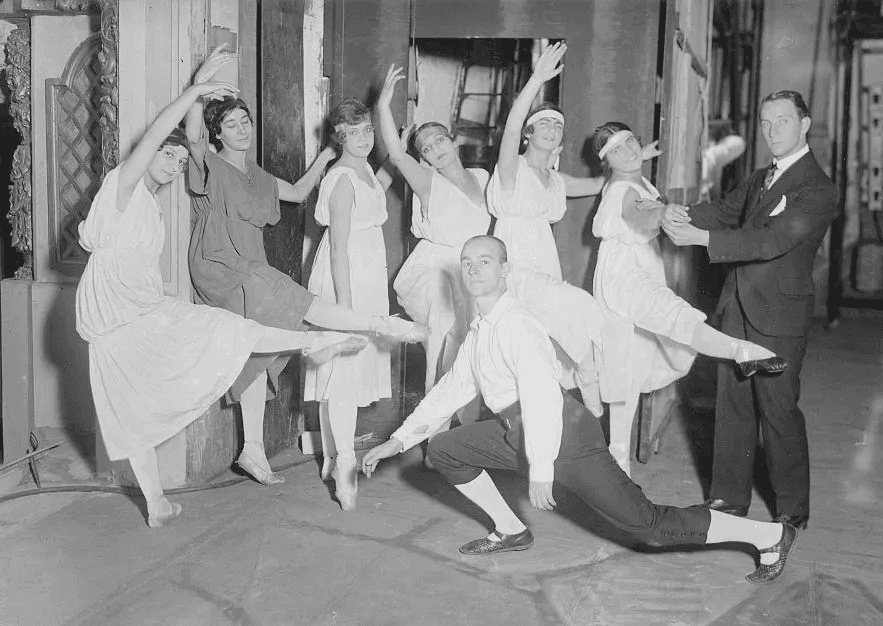
Preface: welcome to this very brief intro to modern art. Please feel free to use this as a guide for museum visits. Continued from the last post.
The First World of Art Exhibition
The first World of Art exhibition in 1899 was deliberately mixed — it showed the Mir Iskusstva circle alongside established Wanderers like Repin and Levitan, and alongside Western European artists. This created immediate friction. The Wanderers didn't appreciate the implicit argument that their socially committed realism was just one option among others rather than the correct path for Russian art. Repin eventually broke with the group. The exhibitions continued — showing Finnish painters, Scandinavians, German Secessionists alongside the St. Petersburg circle — and in doing so redrew the map of what Russian artists could see as relevant precedents. You were not choosing between the Academy and the Wanderers. You were choosing between dozens of different currents in European and Russian art, none of which was the obviously correct one.
When the magazine closed in 1904 and the exhibition society wound down, Diaghilev shifted direction entirely. In 1906 he organized a massive exhibition of Russian art in Paris — bringing 750 works by Russian artists to the Salon d'Automne(the salon impressionists were rebel against), the first serious introduction of Russian visual art to a French audience. In 1907, a concert of Russian music. In 1908, Boris Godunov at the Paris Opera with Chaliapin in the title role. In 1909, the first Ballets Russes season.
The Ballets Russes was the World of Art tendency taken to its logical conclusion. A single evening synthesized choreography, music, costume design, and stage design by the most advanced artists of the moment — and Diaghilev was the person who understood that all these needed to be at the same level simultaneously, that a great score with a mediocre set was a failure, that the total experience was the work. He commissioned Stravinsky for The Firebird in 1910, Petrushka in 1911, The Rite of Spring in 1913. He brought Picasso in to design Parade in 1917. He worked with Matisse, Coco Chanel, Braque, de Falla, Prokofiev, Poulenc over his career. The Rite of Spring premiere in Paris on May 29, 1913 produced a riot in the theater — the audience divided between those who found the music and Nijinsky's angular choreography an outrage and those who thought the objectors were philistines. It is one of the most famous nights in cultural history and the clearest demonstration of what the World of Art's total aesthetic synthesis could produce when pushed to its extreme.
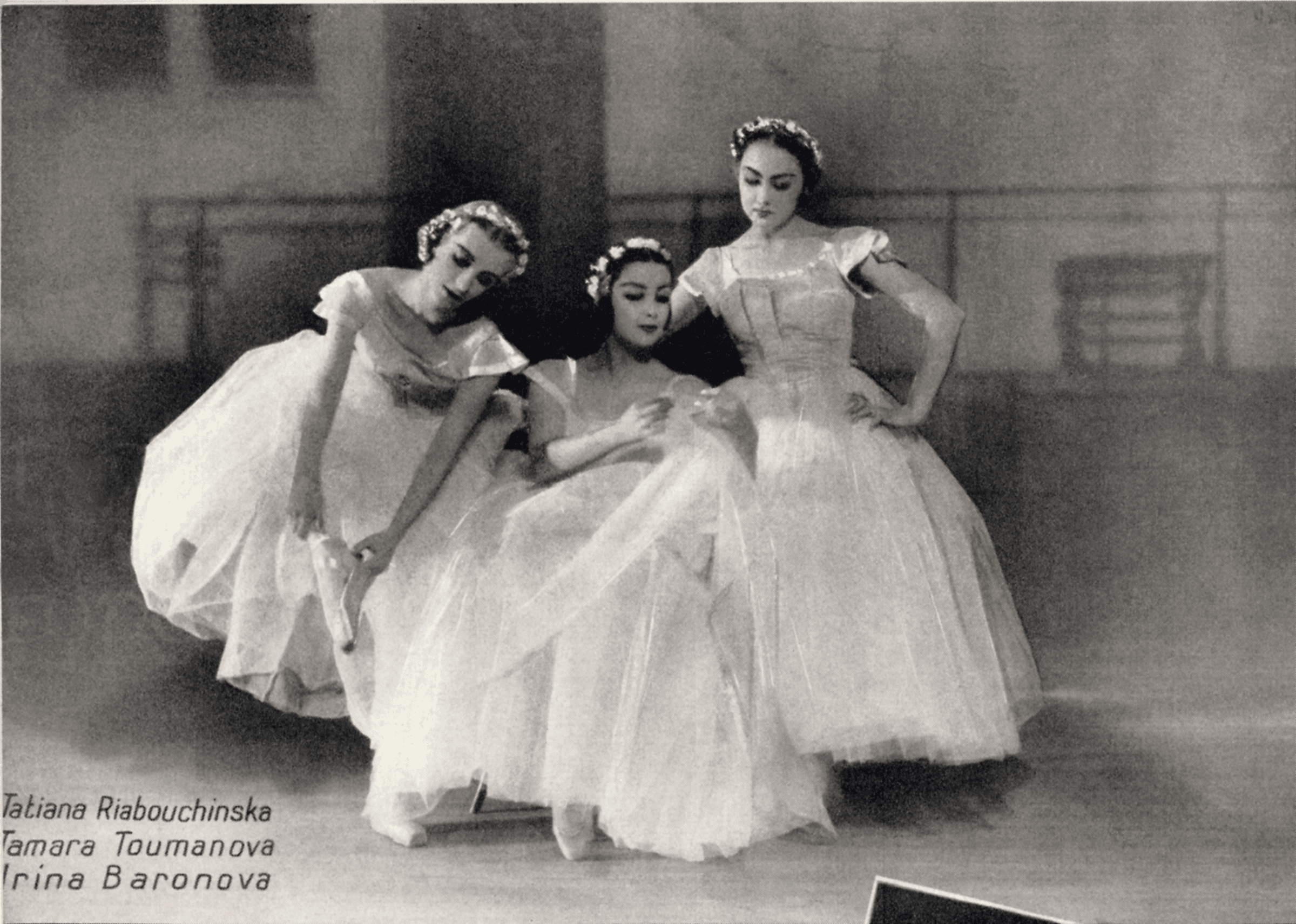
The Ballets Russes
The Ballet Russes was the most important performing arts organization of the 20th century. Twenty years of operation, 1909 to 1929, producing work that changed music, dance, visual art, fashion, and theater design simultaneously. It ran entirely on Diaghilev's personal authority, and when he died it dissolved immediately — which tells you everything about what held it together.
The Ballets Russes had no permanent home. No theater, no base, no endowment. It toured constantly — Paris, London, Monte Carlo, Spain, South America, the United States — and existed in perpetual financial precarity, dependent on patrons, ticket sales, and Diaghilev's ability to keep finding money. By any organizational standard it should not have survived as long as it did. What held it together was the quality of the work and the force of Diaghilev's personality. He identified the best available composer, the best available choreographer, the best available designer, and put them in a room together with a subject and a deadline. The premise was that no element was subordinate to any other — the score, the choreography, and the visual design were equally important, and the collaboration between them was the work. This sounds obvious now because Diaghilev made it the standard. Before the Ballets Russes, opera and ballet routinely used second-rate designers as an afterthought to music and performance. Diaghilev brought in Picasso, Matisse, Braque, Coco Chanel, Giorgio de Chirico — the most significant visual artists of the 20th century — to design productions, and treated their contribution as seriously as Stravinsky's. The company's relationships with the major visual artists of the period were among its most significant cultural contributions, and they went in both directions — the artists brought their aesthetics to the theater, and the theater brought them into contact with each other and with new constraints.
The Rite of Spring — May 29, 1913
The Théâtre des Champs-Elysées in Paris, opening night of the new production. The audience was fashionable, cultured, primed for something — the Ballets Russes had been building toward increasing provocation for four years. The subject was prehistoric Russia, the sacrifice of a chosen maiden who dances herself to death to bring the spring. The design by Nicholas Roerich depicted a primeval Slavic world — rough fabrics, archaic shapes, nothing of the orientalist luxury of the previous seasons.
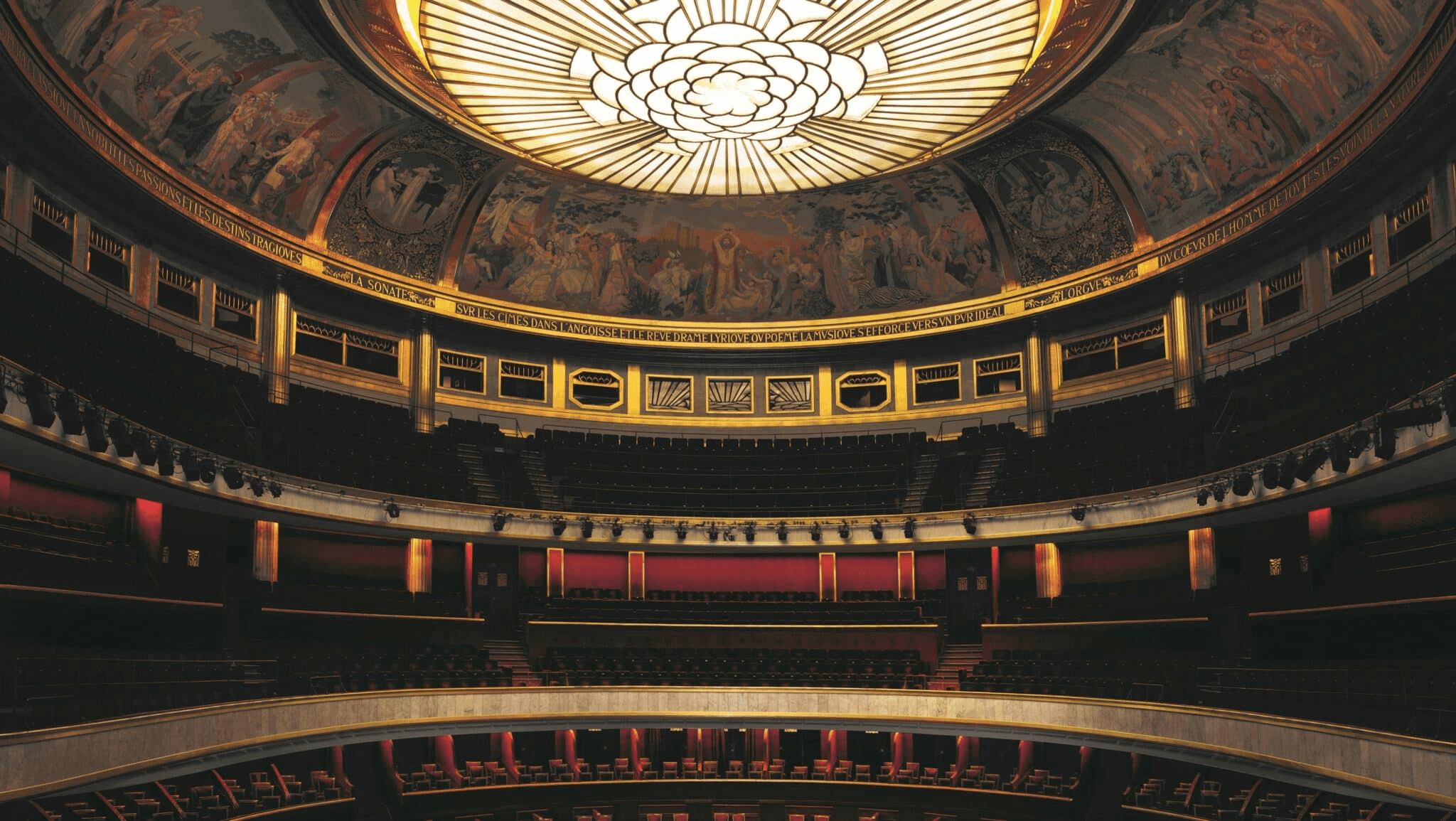
Stravinsky's score opened with a bassoon solo at the extreme top of the instrument's range — an ugly, strained sound that was immediately recognizable as deliberate and wrong by conventional standards. The harmony was dissonant throughout, organized around grinding ostinatos rather than melodic development, with rhythmic patterns of radical asymmetry. The most famous moment — the opening of the second part, repeated 8-note chord with shifting accents — was unlike anything in the orchestral literature. Nijinsky's choreography was angular, stamping, turned-in — the opposite of everything classical ballet prized. The dancers stood with bent knees and turned-in feet, faces forward in archaic profile, moving in heavy percussive patterns that had nothing of the lightness of classical technique.
The audience began to react almost immediately. What started as disapproval became booing, then shouting, then apparently physical altercations between those who thought the work was a serious innovation and those who thought it was an outrage. The dancers could not hear the orchestra. Nijinsky reportedly stood in the wings shouting counts. Diaghilev ordered the house lights turned on at some point. The performance continued to the end. How much of this was spontaneous and how much was orchestrated is genuinely unclear. Diaghilev understood scandal as publicity and had managed it before. Whether he encouraged the riot, anticipated it, or was genuinely surprised is something his biographers have never fully settled. The work was revived in 1921 with Massine's choreography, performed successfully, and has been in continuous repertoire since. Stravinsky's score is one of the foundational documents of 20th century music. Nijinsky's original choreography was lost and reconstructed from notation in 1987.
Parade — 1917
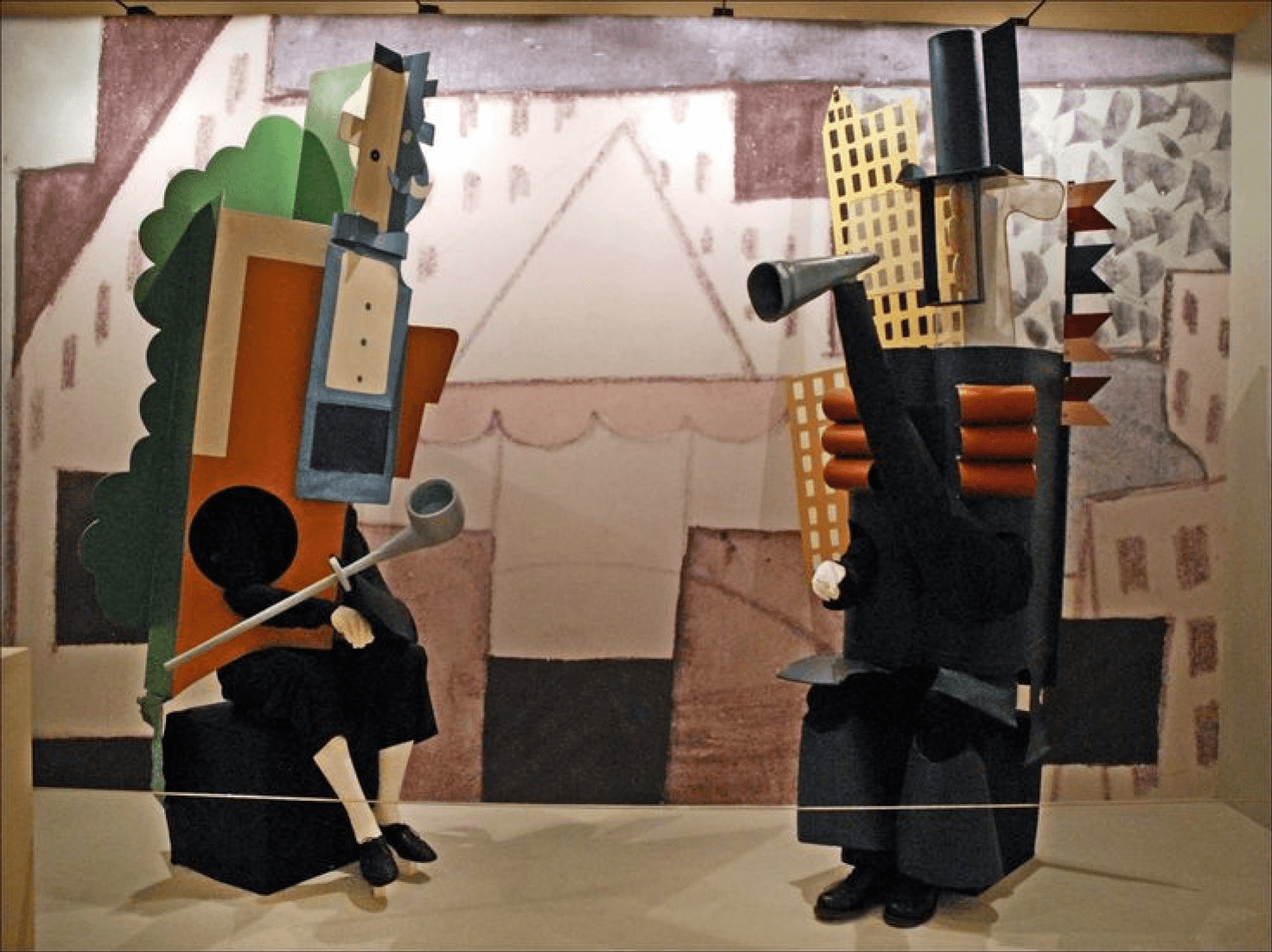
The production that marked the company's turn toward the Paris avant-garde rather than Russian folk material. The scenario was by Jean Cocteau. The music was by Erik Satie — dry, ironic, incorporating a typewriter, a lottery wheel, an airplane propeller into the score. The design was by Pablo Picasso — his first work for the company, and the beginning of a significant relationship with Diaghilev. The choreography was by Massine. The subject was street entertainers outside a theater — an acrobat, a Chinese conjurer, an American girl — performing sample pieces to attract an audience that never comes inside. The Managers, characters in enormous Cubist costumes, represented the impresarios — figures so dominated by their commercial function that they had become architectural objects.
In theatrical and ballet contexts, the scenario is the written plan of the work — the outline of the story, the sequence of events, the structure of what happens on stage from beginning to end, kinda like an early screenplay, but more of an outline. It's not the same as a libretto, which is the full text of an opera or sung work. And it's not a script in the way a play has a script — ballet has no spoken dialogue, so there's no text to deliver. The scenario is the dramatic blueprint: who the characters are, what situation they're in, what happens in each scene, how the story moves from opening to resolution. It describes the action without prescribing how the music or the choreography will realize it. In the collaborative structure of the Ballets Russes, the scenario was typically the starting point — the document that defined the subject and structure that the composer, choreographer, and designer then worked from and against. Diaghilev would commission or approve a scenario before any of the other elements were developed, because the scenario determined what kind of work everything else needed to be.
Jean Cocteau
Jean Cocteau had been orbiting Diaghilev for years, proposing ideas, trying to find a way into the inner circle of the company. He had the social intelligence to understand that bringing Picasso to Diaghilev — or Diaghilev to Picasso — would be a significant cultural event, and he worked toward it for months. Diaghilev was initially skeptical. Picasso was the most talked-about painter in Paris, but he was a Cubist, which was not obviously compatible with theatrical design. Cocteau convinced him. In early 1917 Picasso went to Rome, where the company was in winter residence, to work on Parade.
Cocteau had been working toward this project for years. He had the scenario by around 1915 — street entertainers performing sample acts outside a theater tent, trying to attract an audience that keeps thinking the preview is the show and never goes inside. The real performance remains unseen. This was Cocteau's idea about the relationship between art and its audience, and between spectacle and experience: the surface prevents access to the depth. He convinced Satie to write the music, which was itself remarkable. Satie was a recluse, genuinely difficult, deeply suspicious of the fashionable art world and of Cocteau specifically — he thought Cocteau was too social, too interested in his own brilliance. Cocteau pursued him patiently for months. When Satie finally agreed, he agreed on his own terms, which meant he was going to write exactly the music he wanted to write regardless of what Cocteau had imagined. Bringing Picasso in was Cocteau's real coup. Diaghilev had been skeptical — Picasso was a Cubist, which seemed incompatible with theatrical design. Cocteau argued his way through the skepticism, and in early 1917 Picasso went to Rome where the company was in winter residence. He arrived as a designer. By the time the production opened in Paris in May he had become something closer to the visual architect of the entire work.
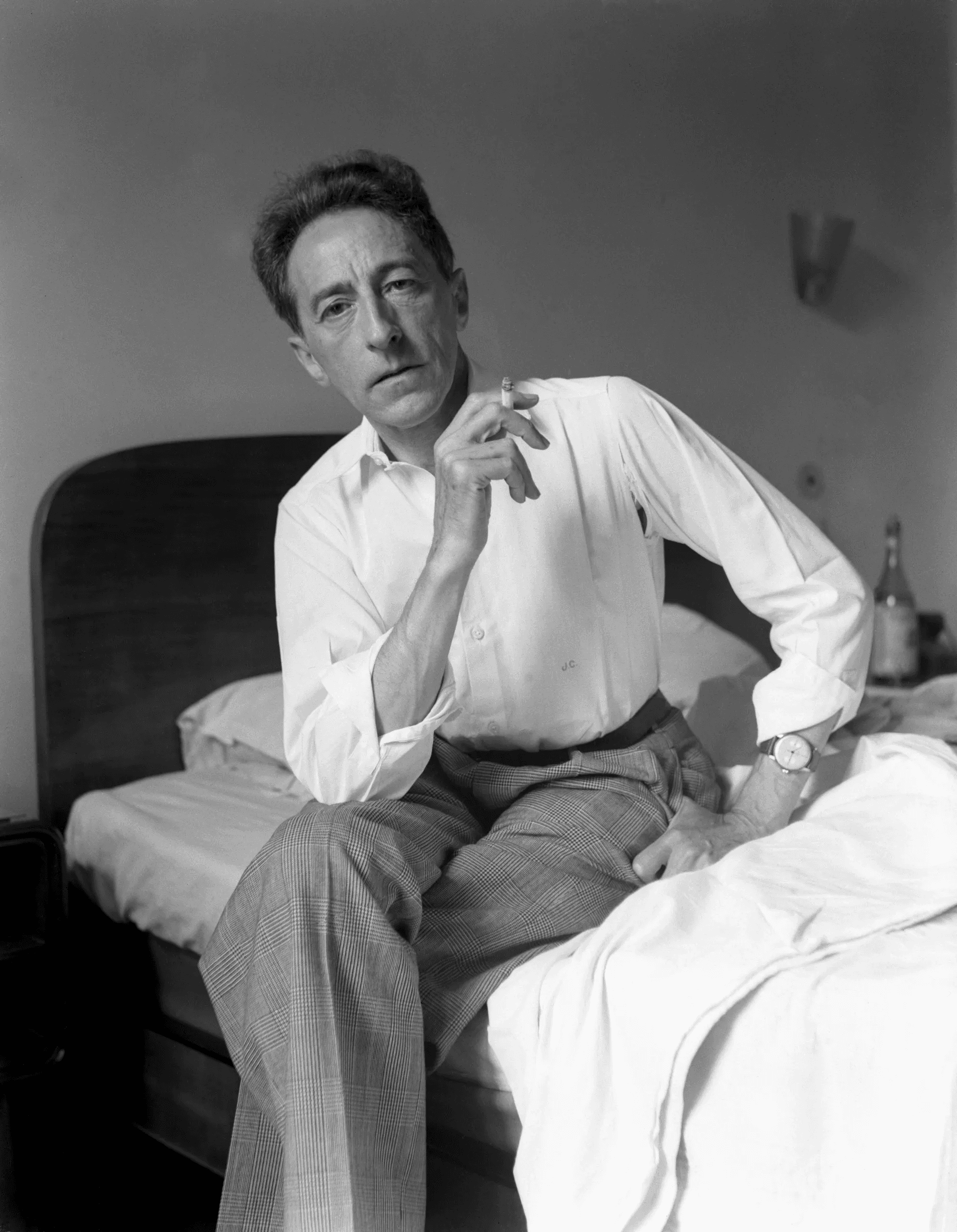
Jean Cocteau was the most versatile French artist of the 20th century — poet, novelist, playwright, filmmaker, designer, draftsman, ceramicist — and also, not coincidentally, the person most likely to be accused of being more dazzling than deep. Both things were probably true simultaneously. He was born into upper-middle-class Parisian comfort in 1889, showed precocious literary talent, and made his social debut in the Paris art world as a teenager, publishing poetry at nineteen and becoming known in literary circles before he had produced anything of lasting importance. His father had committed suicide when Cocteau was nine, which he discussed throughout his life as a formative wound. He was gay, which was known within his circles though he navigated it with characteristic discretion in public.
He had an extraordinary instinct for identifying who was doing the most interesting work in any field and finding a way to be present in their vicinity. He discovered Stravinsky's music and championed it early. He found Picasso. He found Satie. He found the young composers who became Les Six — Milhaud, Honegger, Poulenc, Tailleferre, Auric, Durey — and promoted them before anyone else knew their names. This was genuinely valuable cultural work, not just social climbing. He understood things before other people did.
His relationship with Diaghilev began around 1909, almost from the Ballets Russes' first Paris season. Diaghilev's response to Cocteau's early proposals reportedly included the phrase that became one of the most quoted instructions in cultural history: Étonne-moi — astonish me. Whether Diaghilev said this once or repeatedly, whether Cocteau elevated a casual remark into a motto, it captured something real about what Diaghilev required and what Cocteau spent his career trying to deliver.
His first Ballets Russes commission, Le Dieu Bleu in 1912, was a failure — orientalist, overblown, quickly forgotten. Parade in 1917 was the breakthrough, but it also illustrated a recurring problem in Cocteau's career: he had the original idea, assembled the collaborators, and then the collaborators took the work somewhere he hadn't fully planned. His aesthetic position was deliberately opposed to what had immediately preceded him. His manifesto Le Coq et l'Arlequin (1918) argued for a French art of clarity, wit, economy, and lightness rather than the Germanic Romanticism of Wagner or the atmospheric shimmer of French Impressionism. He wanted music that sounded like Paris — like the music hall, the circus, the street — not like the concert hall. This position aligned him with the post-war generation's rejection of pre-war grandeur and made him a significant critical voice for a decade.
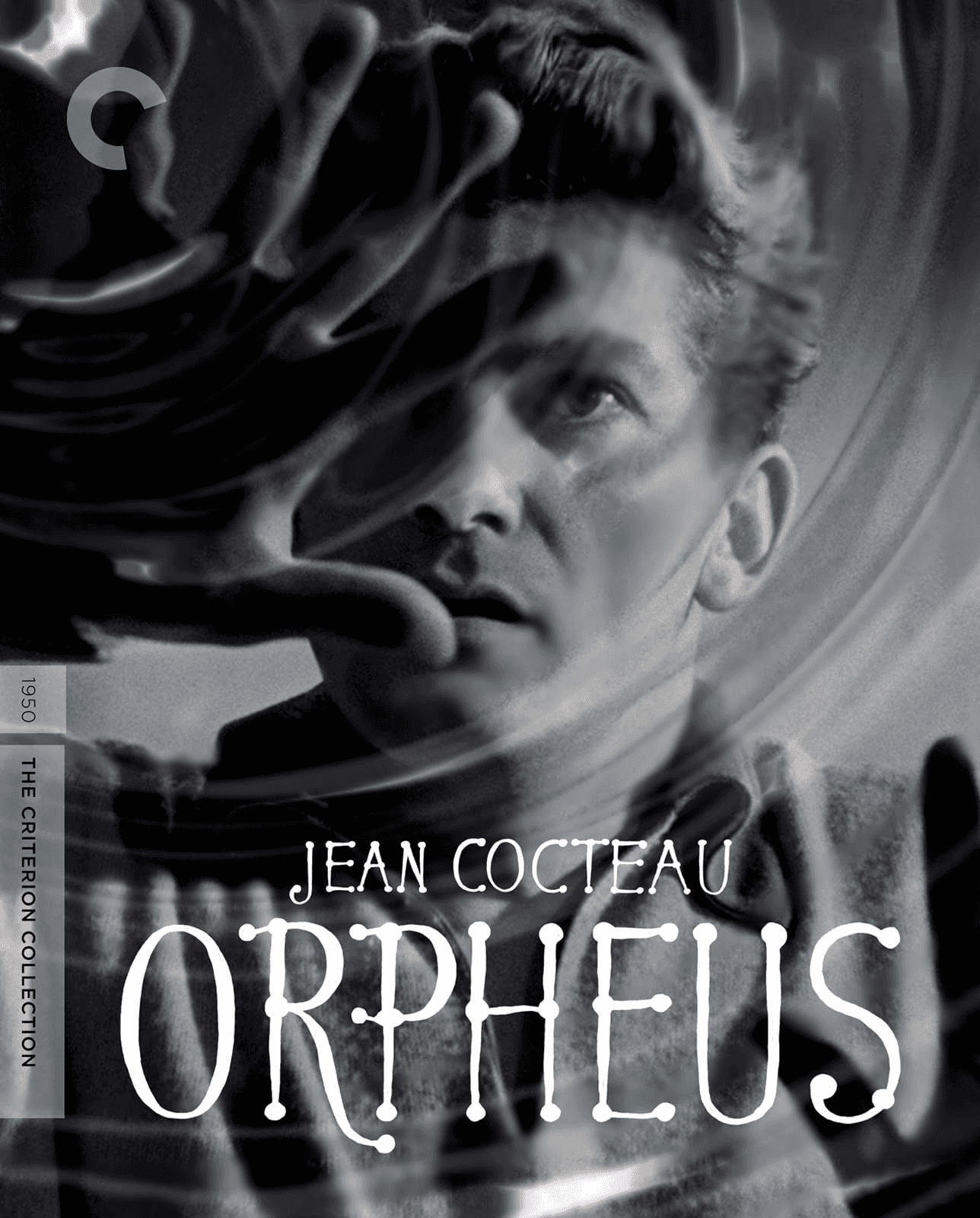
His films are where he is most consistently himself. The Orpheus trilogy — The Blood of a Poet (1930), Orpheus (1950), The Testament of Orpheus (1960) — used the myth of the poet who descends into the underworld as a sustained meditation on artistic identity, creation, and death. The visual language he developed across these films — mirrors as portals, the underworld as a slightly displaced version of the contemporary world, poetry as something that costs the poet his life — was entirely his own and didn't come from anywhere else. They remain genuinely strange and genuinely moving.
Picasso and Ballets Russes
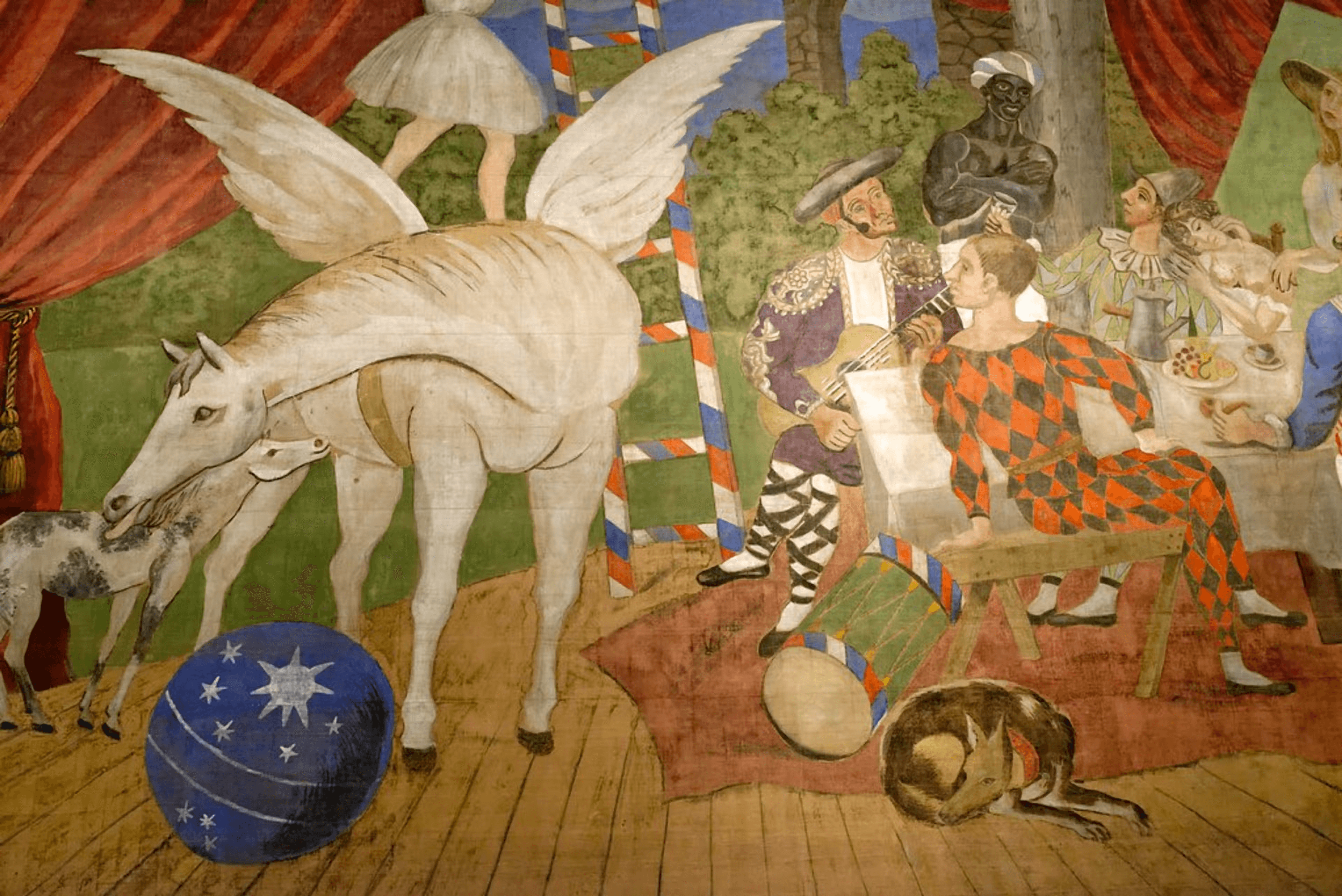
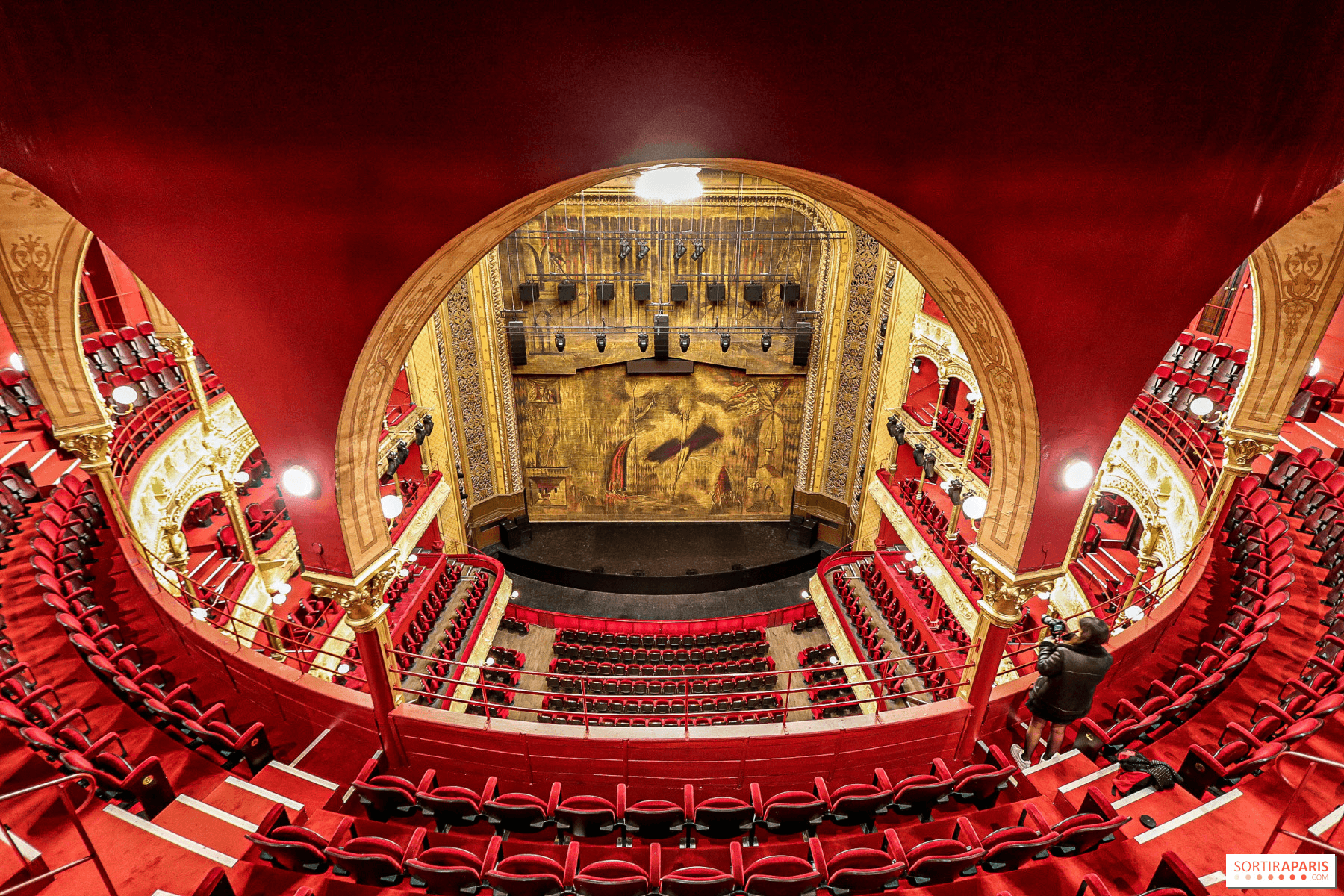
Before a note was played, before a dancer appeared, audiences in the Théâtre du Châtelet on May 18, 1917 saw Picasso's drop curtain. It was enormous — over ten meters wide, nearly eleven meters tall — and it showed a scene of harlequins, circus performers, a sailor, a young woman in a tutu perched on the back of a winged white horse with a small monkey nearby, figures gathered in warm informal proximity. The style was not Cubist. It was recognizable from Picasso's Rose Period paintings of 1904 to 1906 — the harlequins and saltimbanques he had painted during his years of early Paris poverty, when the circus performers of Montmartre had become his emotional proxy for the artist's position in society: itinerant, entertaining, not quite belonging to the social world that watched them. Coming back to these figures in 1917, at a scale designed to fill a proscenium arch, was a deliberate act of self-quotation. The curtain was the world of art as it had been — human, warm, melancholy in a familiar way, the figures from his own past. When the curtain rose the world of art as it now was came into view, and the contrast was the production's first visual argument.
In Cocteau's original scenario the Managers were figures who stood outside the theater and used megaphones to announce the acts, attracting the crowd. Human-scaled, theatrical, functional. What Picasso designed instead was something that had never appeared on a stage before. The French Manager incorporated a top hat, a pipe, a tree, a section of Parisian pavement — architectural and quotidian elements assembled into a single wearable construction approximately three meters tall. The American Manager incorporated a skyscraper, a megaphone, references to cowboys and American popular culture. The third was a two-person pantomime horse.
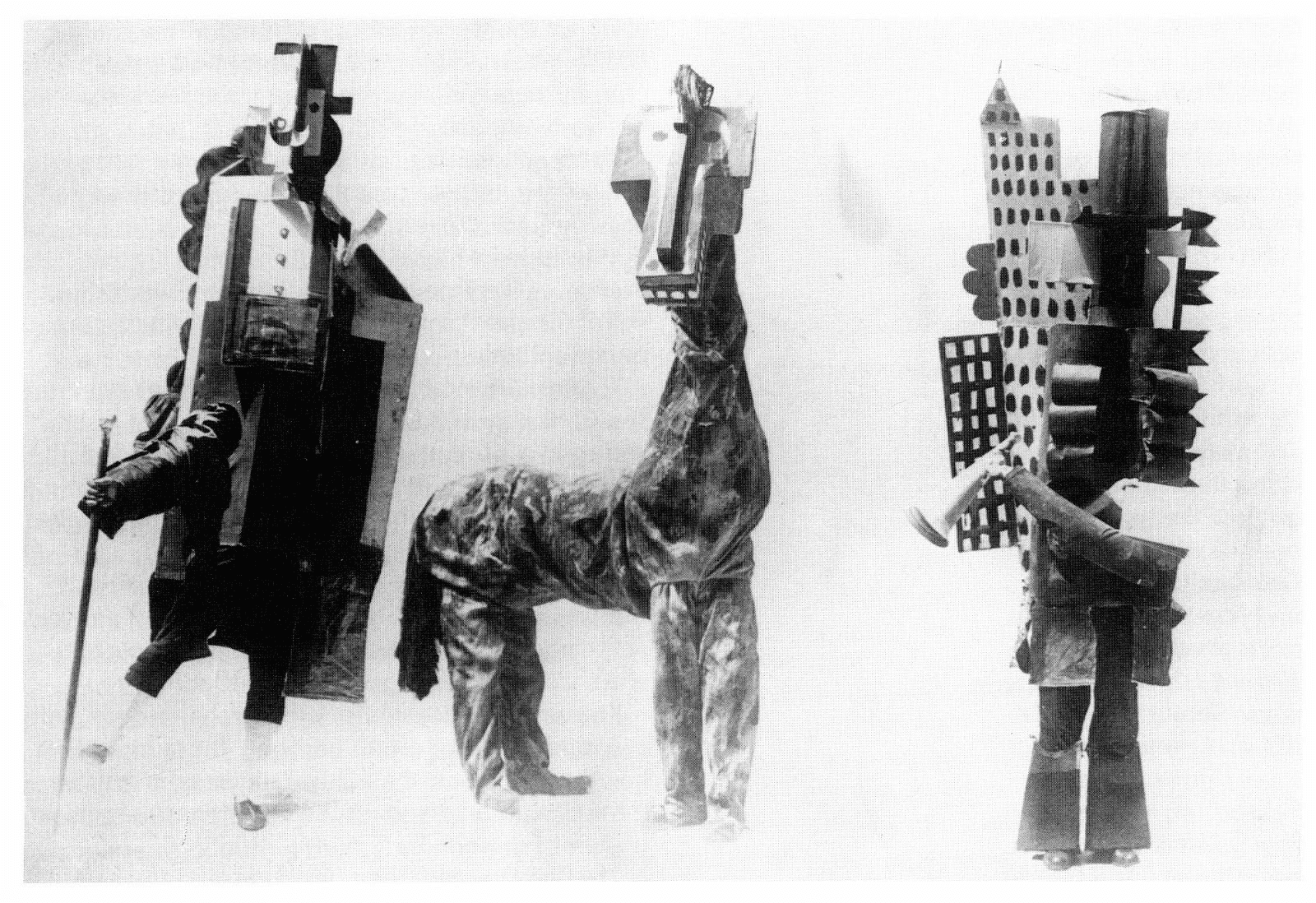
These were not costumes in any conventional sense. They were Cubist sculptures designed to be worn by performers and walked across a stage(crazy,lol). The performers inside them were essentially invisible — the human body became the armature for an architectural object. Movement was severely constrained; the Managers could barely navigate the stage. They communicated through their physical presence and their scale rather than through gesture or expression. The acts — the Chinese conjurer, the Little American Girl, the acrobats — performed in human-scaled costumes, capable of full movement, fragile inside the spectacle. The Managers were enormous, mechanical, barely capable of movement, dwarfing everything around them. The commercial apparatus — the impresario system, the entertainment industry — was visually more powerful and less human than the art it was supposed to be promoting. The art was small and alive. The machinery around it was vast and nearly immobile. This was Picasso taking the fundamental formal claim of Cubism — that a single image could represent multiple simultaneous perspectives — and extruding it into three-dimensional space that moved through an audience. The Cubist paintings on his studio walls showed multiple viewpoints of an object simultaneously on a flat surface. The Manager costumes were Cubist objects in actual space that the audience could walk around. Nothing like them had existed in theater before.
Cocteau had wanted noise. His original scenario called for megaphones, typewriters, boat whistles, airplane engines, lottery wheels — the sonic texture of modern urban life incorporated directly into the musical fabric. He wanted the score to be loud, disruptive, cinematically vivid. Satie gave him something completely different. The music was dry, ironic, deliberately anti-climactic — music that refused to be impressive precisely when impressiveness was expected. The ragtime sequence for the Little American Girl was affectionate but observed from a distance, suggesting American popular music without inhabiting it. The Chinese conjurer's music was delicate and slightly absurd. Where Cocteau wanted dramatic impact Satie offered deflation, and where Cocteau wanted grandeur Satie offered a shrug. Some of the noise instruments did appear — a typewriter, a lottery wheel, a siren — but absorbed into Satie's ironic texture rather than deployed for shock effect. The result was a score that felt like it was commenting on the spectacle rather than driving it. This produced a production in which the music and the visual design were doing almost opposite things simultaneously. The costumes were grand, overwhelming, architecturally assertive. The music was small, dry, witty, self-deflating. The tension between these two registers — visual aggression and musical irony — was part of what made the work genuinely strange rather than simply novel.
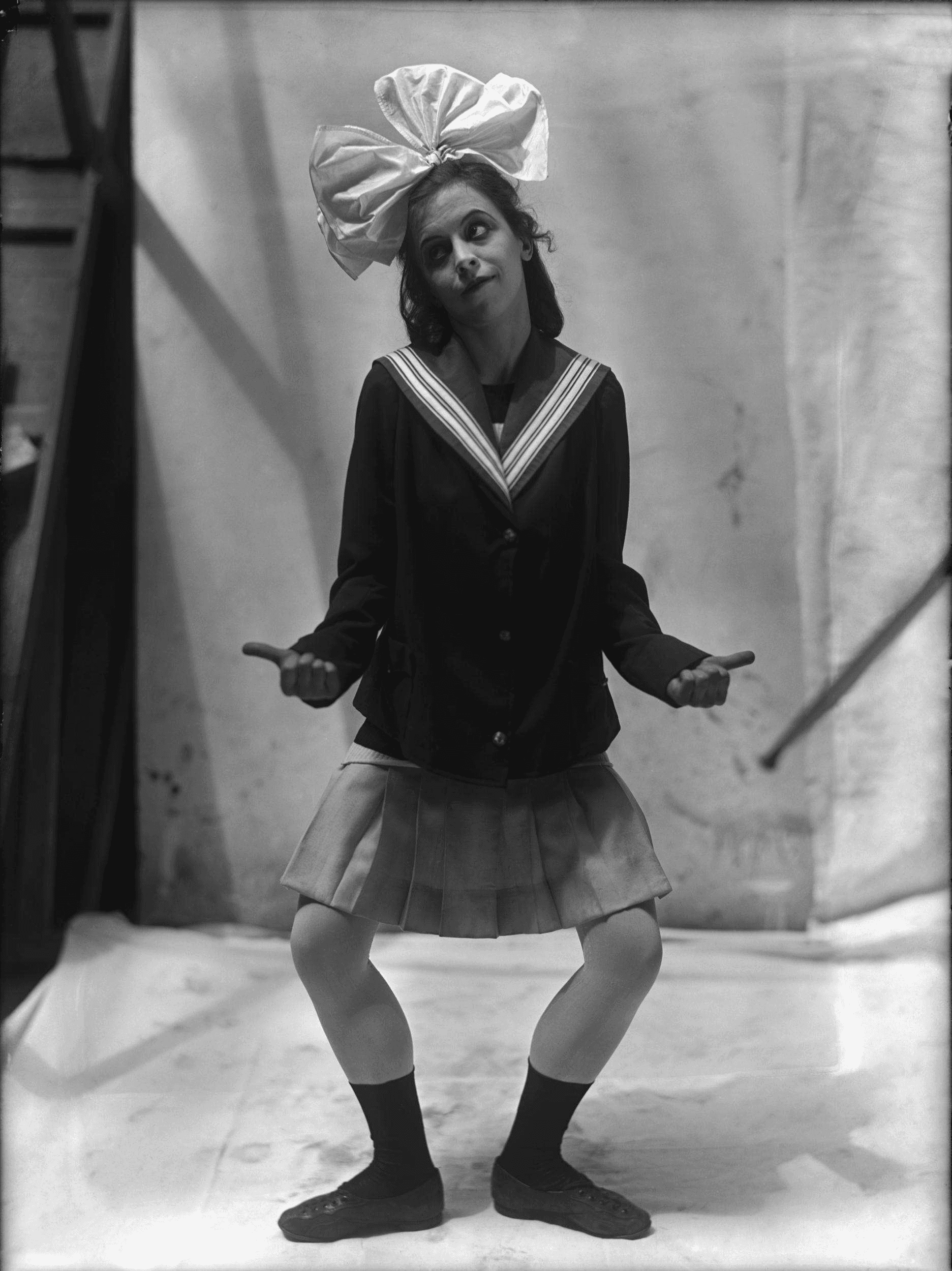
The Little American Girl character was performed by Marie Chabelska in a sailor-style dress — relatively straightforward costume, recognizably American, not Cubist. Her number included movements that Massine choreographed around American popular culture gestures: riding a bicycle, taking photographs, imitating Charlie Chaplin, responding to the speed and fragmentation of early American cinema. She was modernity made kinetic — not the ancient primitivism of The Rite of Spring, not the Russian folk tradition of Petrushka, but the actual contemporary present of 1917. This was new for the Ballets Russes, which had built its visual vocabulary primarily from folk material, mythology, and historical periods. Parade said: the present tense is also available. Charlie Chaplin is also available. The Cubist construction and the music hall routine belong in the same space as Stravinsky and Fokine. This position — the embrace of popular culture as valid artistic material, without condescension toward it — was identified by later critics as anticipating Pop Art by four decades.
Picasso worked with the Ballets Russes across roughly seven years, from 1917 to 1924, producing five designs in total.
Parade (1917): Already covered in detail — the drop curtain showing circus harlequins in his Rose Period style, the Cubist Manager costumes as wearable sculptures, the Little American Girl, the formal argument about commerce and art. His first theatrical work and the most conceptually ambitious of the five.
The Three-Cornered Hat (1919): Spanish subject, de Falla's score, Massine's flamenco-based choreography, Picasso's designs derived from direct research in Spain. The most personally satisfying of his Ballets Russes work because the subject was material he knew from childhood. The drop curtain showing a bullfight in a deliberately popular visual style remains the most reproduced single image from his theater work.
Pulcinella (1920): The most contested of the five. Commedia dell'arte subject — the Italian folk theater tradition — with Stravinsky's arrangement of pseudo-Pergolesi material and Massine's choreography. Picasso's first proposals were nearly abstract, a Cubist treatment that Diaghilev rejected outright. The argument between them was extended and heated. Diaghilev won. The final design was a simplified Italian street scene with Commedia characters in recognizable traditional costume — more conventional than Picasso wanted, less adventurous than Parade or Three-Cornered Hat. The negotiated quality is visible in the result.
Cuadro Flamenco (1921): A suite of traditional Andalusian dances — not a narrative ballet but a sequence of folk performances presented as a theatrical event. Real flamenco performers rather than ballet dancers. Picasso designed the stage setting: a simplified theater-within-a-theater, a painted proscenium suggesting a popular Spanish venue framing the performers. The design drew on the same Spanish folk visual tradition as Three-Cornered Hat but more directly, less elaborated. He was essentially designing the frame rather than the full visual world.
Le Train Bleu (1924): His contribution here was specific and limited — he designed the front curtain only. The production had Milhaud's music, Nijinska's choreography, Cocteau's libretto, and Chanel's costumes. What Picasso provided was an enlargement of a small painting he had made in 1922 — Two Women Running on the Beach — blown up to proscenium scale. Two large female figures in classical drapery running along a shoreline, rendered in a loose, energetic style, their bodies massive and monumental. The scale transformation from small canvas to enormous curtain worked better than it had any right to, and the image became one of the more recognizable from this period of his work.
The five productions span the most personally tumultuous period of his life — meeting Olga in Rome, marriage in 1918, Paulo born in 1921, the neoclassical phase, the beginning of its deterioration. The Ballets Russes work runs parallel to all of this rather than driving it, but the Rome trip that started everything was specifically a Ballets Russes trip. Without Parade there is no Rome, without Rome there is no Olga, without Olga there is no neoclassical period, without the neoclassical period the specific paintings of the early 1920s don't exist.The theatrical context gave him formal problems the studio didn't. A drop curtain has to work at twenty meters distance in stage lighting in front of an audience arriving and settling. A wearable costume has to allow a body to move inside it while communicating a visual idea. These constraints pulled decisions out of him — the boldness of the bullfight curtain, the radical scale of the Manager costumes — that came from the specific demands of theater rather than from anything he was working through in his studio. After 1924 the direct collaboration ended. Diaghilev moved toward younger designers and new visual territory. Picasso moved into the Surrealist orbit. The relationship had been intense and productive and specific to its moment, and both of them understood that the moment had passed. More on Ballets Russes in the next post.
🖼️