Created on
Updated on
Filmmaking in the Age of AI(46.1): Lighting II
light is magic
Preface: Welcome to this very long series of filmmaking in the age of AI(2026).
The Narrative Function of Light
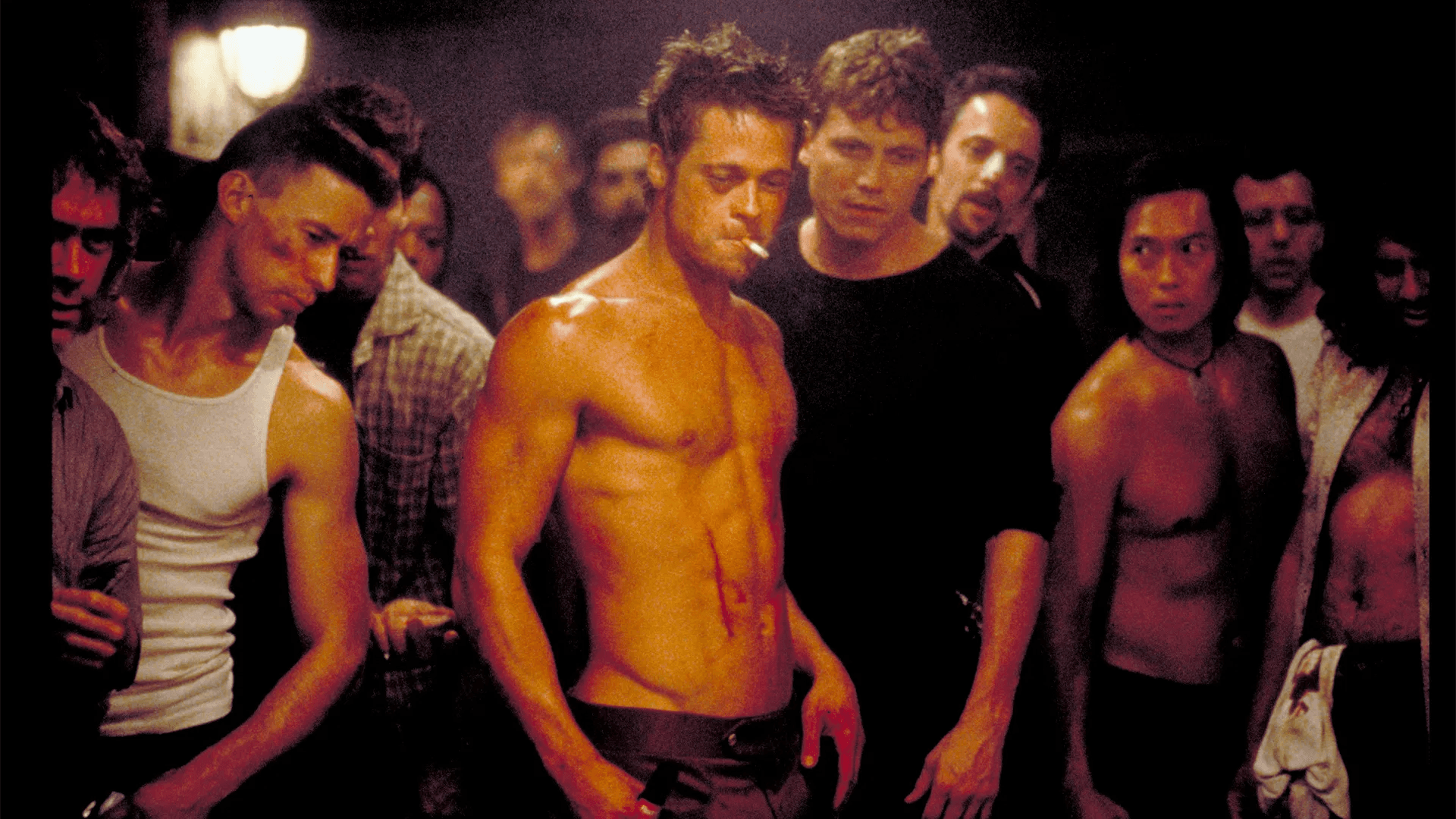
Honestly, I didn't know much about the narrative function of light before writing this. I did some research specifically for it. As it turns out, light is divided into hard light and soft light. Hard light comes from a small or distant light source and produces sharp, clearly defined shadows. Soft light comes from a large or close diffused source; shadow edges are blurred and transitions are smooth. Soft light makes people feel safe, warm, enveloped — domestic scenes and romantic scenes frequently use it. Hard light creates tension, cutting the face into halves of light and shadow, suggesting internal conflict or external threat. Fincher shot Fight Club and The Girl with the Dragon Tattoo almost entirely in hard light, because in those worlds there is no safety. High-key and low-key lighting: high-key means the entire frame is very bright, shadows are minimal, contrast is low. This is the light of comedy, advertising, and daytime soap operas. Low-key lighting means heavy shadow, high contrast, light illuminating only what you need the audience to see. Film noir is the most extreme example — the stripes cast by Venetian blinds, half a face in darkness, a world that seems untrustworthy. Kubrick used counterintuitive high-key lighting in The Shining: a horror film with bright corridors, and that brightness creates a more uncomfortable feeling than darkness would, because there is nowhere to hide.
The direction of light is the oldest and most stable symbolic system in the language of cinematography. From above — authority, the divine, safety. Light descending from above is the most natural direction of illumination, so it reads as "normal." From below — fear, evil, the unnatural. No natural light travels upward from the ground; this direction triggers an instinctive unease. From the side — conflict, ambiguity, duality. The face is divided into half-light and half-shadow, visually suggesting that this person has two sides, or is standing at the edge of a choice. In The Godfather, Michael Corleone is increasingly lit from the side. Backlighting and silhouette — mysterious, supernatural, information withheld. You see only the shape, not the details. Villeneuve loves this; the aliens in Arrival almost always appear as backlit silhouettes.
Shadow can be the protagonist. The best lighting is not about what is illuminated but about what is chosen not to be. Shadow is the director's tool for controlling the audience's attention; hiding information in shadow means delaying the reveal, creating suspense. German Expressionism (Nosferatu, The Cabinet of Dr. Caligari, Metropolis) was the first movement to use shadow systematically as a narrative tool. In Nosferatu, Orlok's shadow climbs the stairs and crosses Ellen's bed — the shadow arrives first, the body follows. Hollywood film noir inherited this grammar directly, simply transposing it to an urban setting. Now let's look at specific directors and cinematographers and their particular approaches to light.
Gordon Willis — "Prince of Darkness"
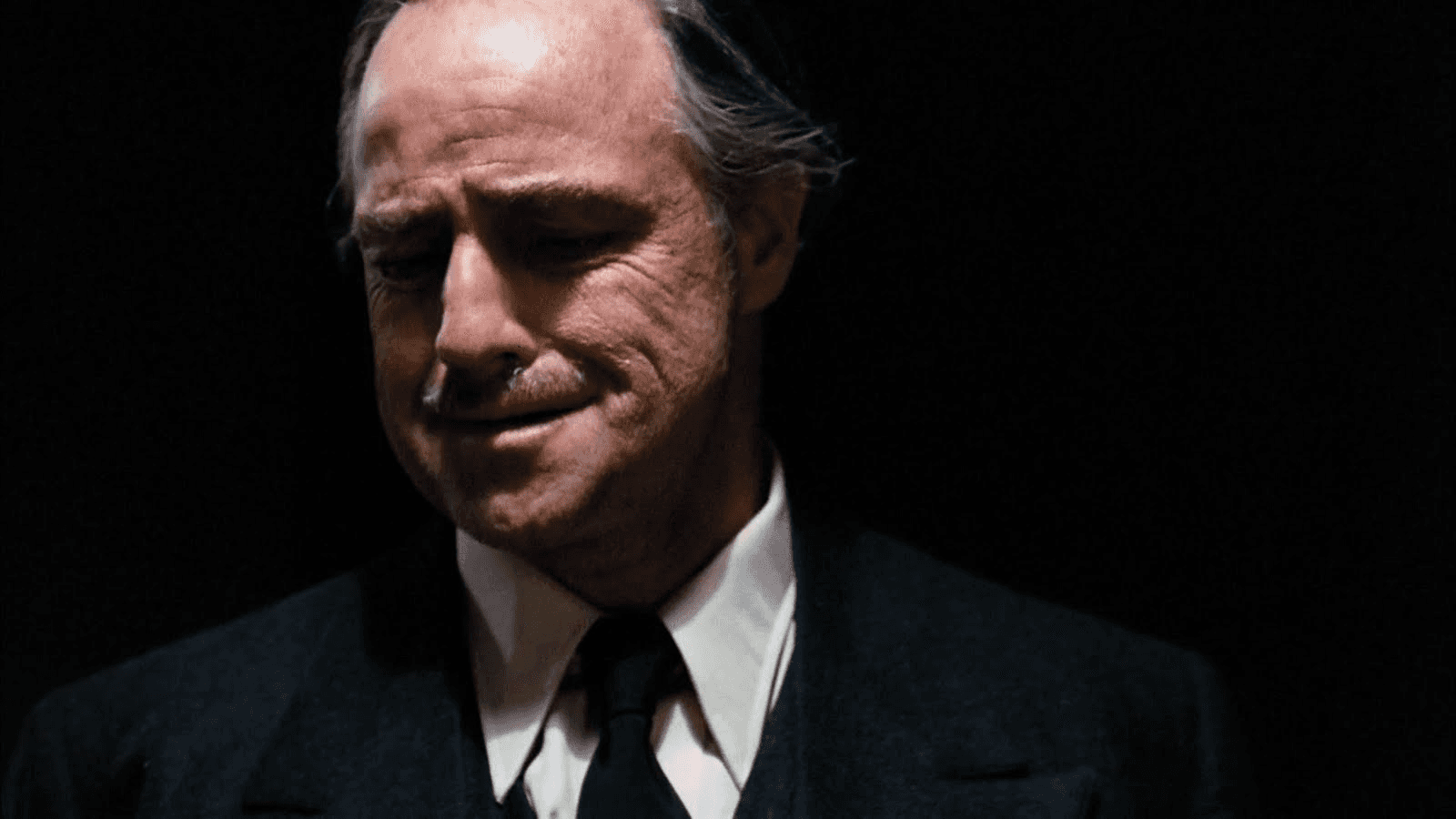
Gordon Willis is one of the most influential cinematographers in American film history, nicknamed the Prince of Darkness for his willingness to push faces into shadow. The Godfather (1972) is his most important work. The rule of that era was that faces had to be lit — audiences needed to see the actors' expressions clearly. Willis ignored this entirely. Marlon Brando's eyes in the office scenes are almost completely in shadow; only below the cheekbones is illuminated. Vito Corleone's gaze is unreadable. His intentions are hidden. As the story develops, Michael Corleone receives less and less light, and what remains grows harder. At the end of the first film, as he accepts his father's position, a door closes before him — and in the final frame he is in shadow. Willis used the withdrawal of light to record one man's moral disintegration.
The core of Willis's style is a counterintuitive claim: darkness is not the absence of information — darkness is information. Most cinematographers treat shadow as a problem to be managed; wherever something goes dark, you add a light. His signature was extreme top lighting — a single hard source from directly overhead, burying the eye sockets in shadow, leaving only the lower half of the face illuminated. This has a specific psychological consequence: eyes are the conventional instrument of emotional legibility in screen performance, the means by which audiences understand a character's inner life. Push the eyes into shadow and the face becomes unreadable — the person becomes a presence rather than someone who can be analyzed. Applied to Vito Corleone, this is the visual equivalent of the character himself: power that does not explain itself, does not perform itself, simply exists and is felt.
His lighting ratios were extreme enough to violate industry norms. The standard considered 3:1 already aggressive. Willis regularly pushed to 8:1 or higher — the bright areas of the frame eight times more exposed than the shadow areas. More importantly, he used light as a moral tracking instrument across the entire film. The Godfather's lighting arc is one of the most precise in American cinema: the opening wedding, the garden, the kitchen — domestic spaces, warm, broadly lit, human. As the story descends into the machinery of power and violence, the light progressively withdraws. By the time Michael accepts his father's position, the warmth has gone entirely, and in the final frame he is in shadow. Willis did not use close-ups or score to mark one man's moral fall — he used the systematic removal of light from a face across 175 minutes of screen time. The lighting became part of the character arc.
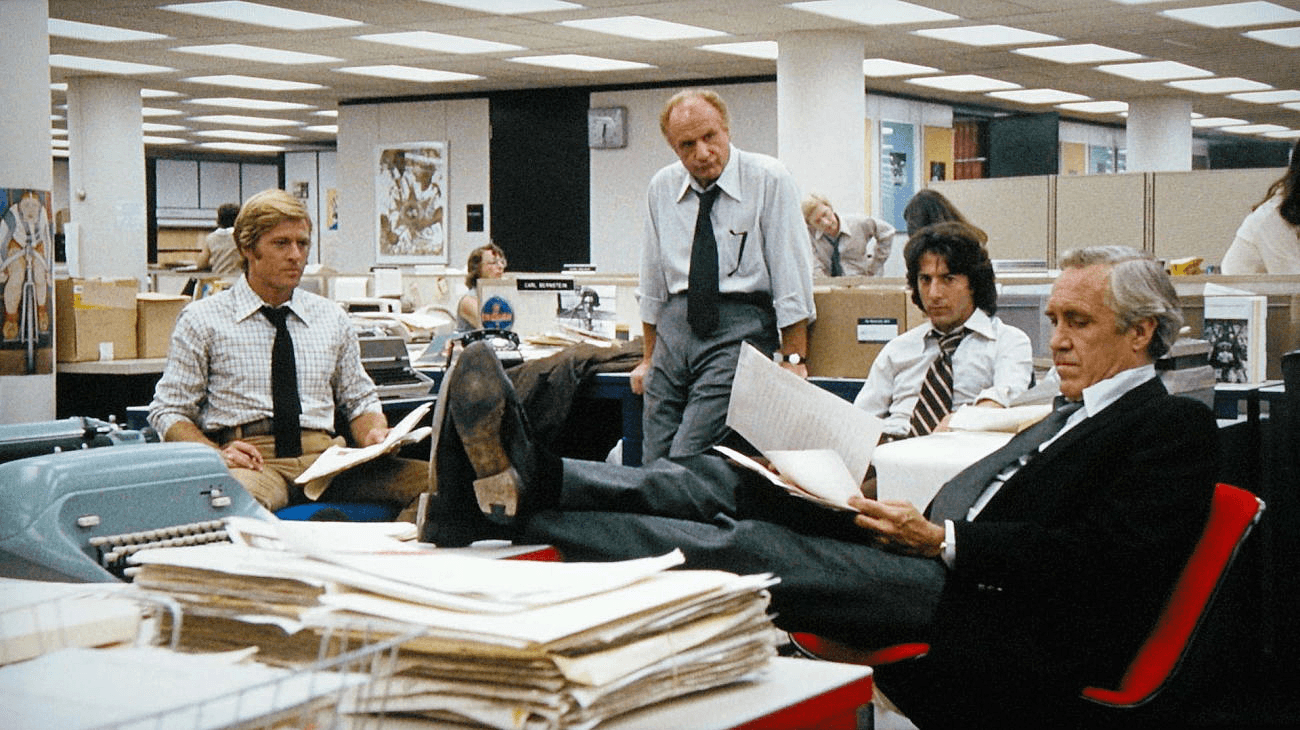
All the President's Men inverts this logic entirely. The Washington Post newsroom is flooded with fluorescent light — flat, omnidirectional, everyone equally visible, nowhere to hide. This is the visual opposite of the Corleone office, because the institutional logic of journalism is the opposite: this is a space where everything gets exposed. In Manhattan, his collaboration with Woody Allen shot in black and white and anamorphic widescreen, he pushed the approach toward the tradition of New York street photography — closer to Cartier-Bresson and Weegee than to Hollywood cinematography. The top-light instinct was still there but naturalized: the city's own light at night, streetlamps, storefront signs — Willis trusting the environment to accomplish what he had built with deliberate rigs on The Godfather.
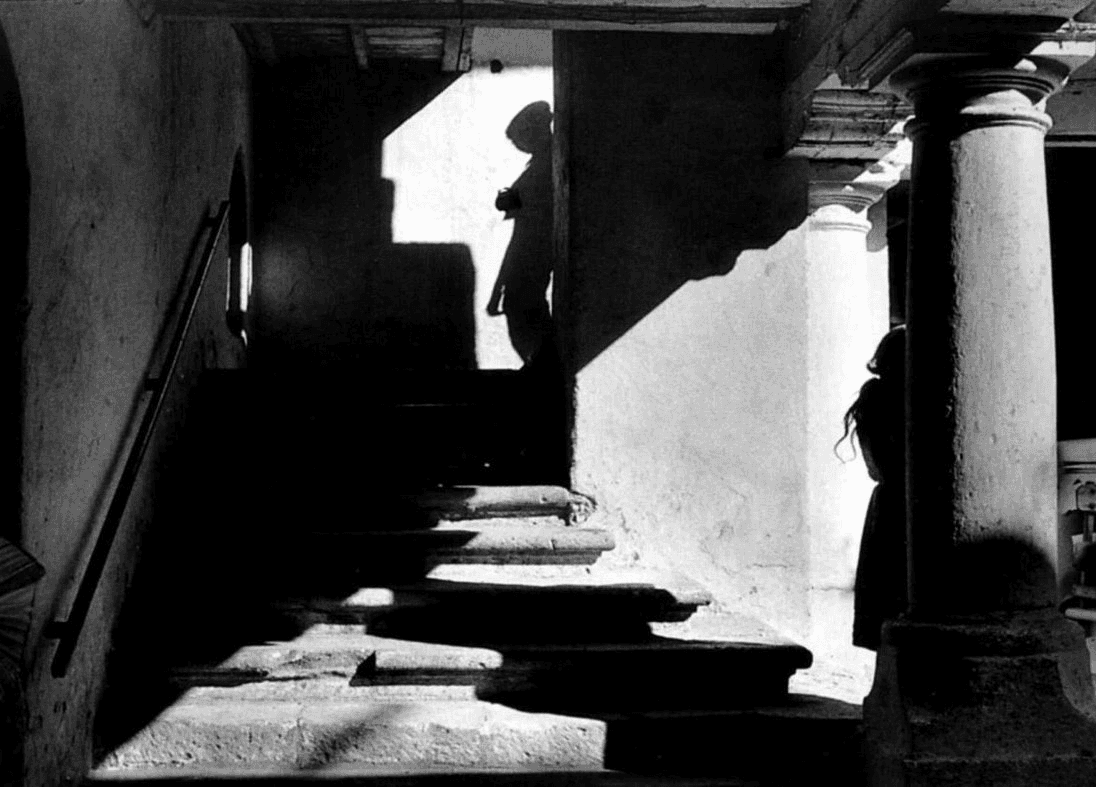
Across all of it, the through-line is the same: Willis made decisions about what not to light, and defended those decisions against every pressure from the set and the studio. When The Godfather's dailies came back, studio executives believed there had been an exposure error and demanded reshoots. Willis refused. The darkness was not a mistake. It was a deliberate argument.
Kubrick — Philosopher of Light
Kubrick's approach to light was extreme: he wanted nothing that looked like "lighting." He wanted light to appear as though it had always been there. 2001: A Space Odyssey uses extremely restrained cold light — white, even, emotionless — corresponding to the concept of space. The light inside the spacecraft has no visible source; it simply diffuses through the space, like a world without shadow. 2001: A Space Odyssey uses extremely restrained cold light — white, even, emotionless — corresponding to the concept of space. The light inside the spacecraft has no visible source; it simply diffuses through the space, like a world without shadow. Barry Lyndon (1975) is a technical miracle. Kubrick insisted on shooting interior scenes by candlelight alone, without any artificial illumination. To achieve this he used the Carl Zeiss Planar 50mm f/0.7 lens, developed by NASA for lunar missions — the widest-aperture cinema lens in existence, capable of exposure in near-darkness. The quality of those candlelit scenes is almost indistinguishable from the oil paintings of the same era, because they were literally shot in the same light. In The Shining he did the opposite, using high-key lighting to generate fear. The corridors of the Overlook Hotel are bright, the carpets vividly colored. That brightness makes what happens inside more disturbing, because there is nowhere to hide, no shadow to account for the presence of the threat. Each of his films treats this challenge as a specific problem belonging to that film's world, solved in a different way.
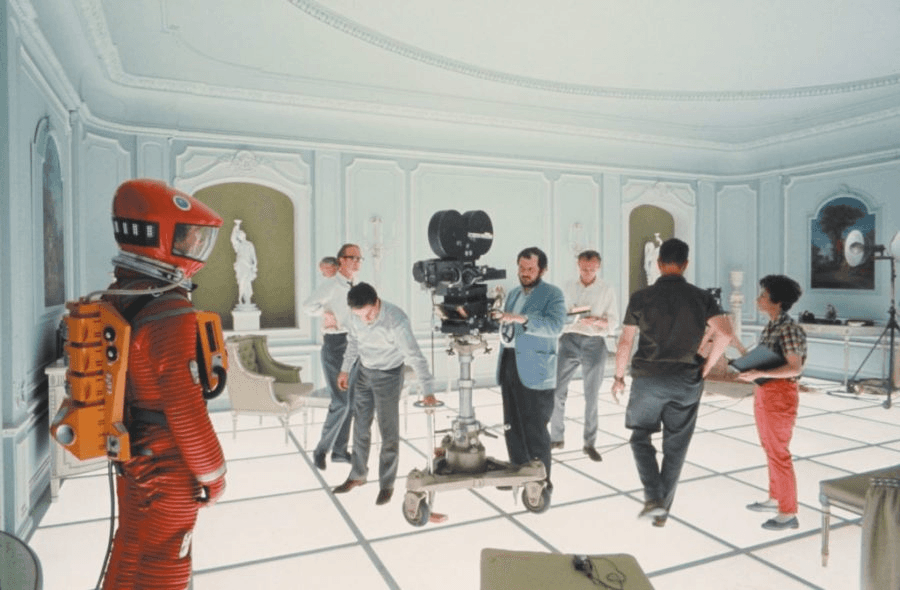
2001 uses light to define two incompatible realities and hold them simultaneously inside a single film. The prehistoric prologue uses low-angle hard natural light, raking across the ground, pulling long shadows, giving the earth a tactile quality. The interior of the Discovery, by contrast, is white, even, shadowless — the visual language of a controlled environment, a place where humans have eliminated uncertainty. The light has no visible source because it is institutional light, the light of a system rather than of any particular place. It illuminates everything equally, and that is precisely why it is cold: light with no direction contains no warmth. The Stargate sequence and the final bedroom scene represent a third state: the bedroom light has no visible source, its quality shifts continuously across the sequence, suggesting a space that exists outside the physical laws governing the rest of the film.
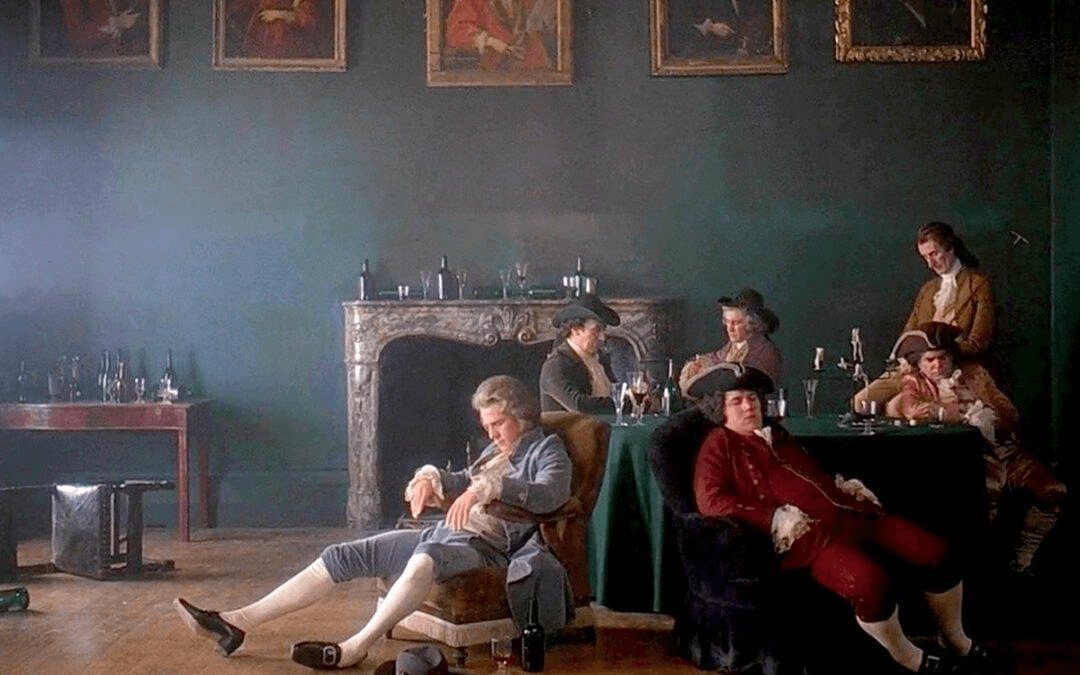
Barry Lyndon is set in the eighteenth century, which means candlelight. The standard cinema lenses of that era required far more light than candles could provide. The solution came from a set of lenses Carl Zeiss had developed for NASA — the Zeiss Planar 50mm f/0.7, originally used for photographing the lunar surface from orbit. An f/0.7 aperture admits four times the light of a standard f/1.4 lens, and fourteen times that of an f/2.0. Three of these lenses were purchased and modified for the Mitchell BNC camera. The cinematographer was John Alcott, who won the Academy Award for Best Cinematography for the film; he spent months testing combinations of lens, film stock, and candle arrangement, working out what the system could and couldn't do. The f/0.7 aperture produces an extremely shallow depth of field — only a few centimeters at close range — meaning focus-pulling demands were exceptionally stringent. The characteristic softness at the edges of the frame and the particular rendering of light and shadow in skin tones are partly a consequence of this aperture. What Kubrick wanted visually was Dutch Golden Age painting — Vermeer, Rembrandt, Georges de La Tour. The particular quality of candlelight is that it is warm, strongly directional, and falls off extremely rapidly with distance. A face close to the candle is powerfully lit, but a face a meter away sinks into deep shadow. This creates a world consisting of small islands of visibility inside large quantities of darkness. Those scenes look like oil paintings because they were made in the same conditions oil paintings were made in.
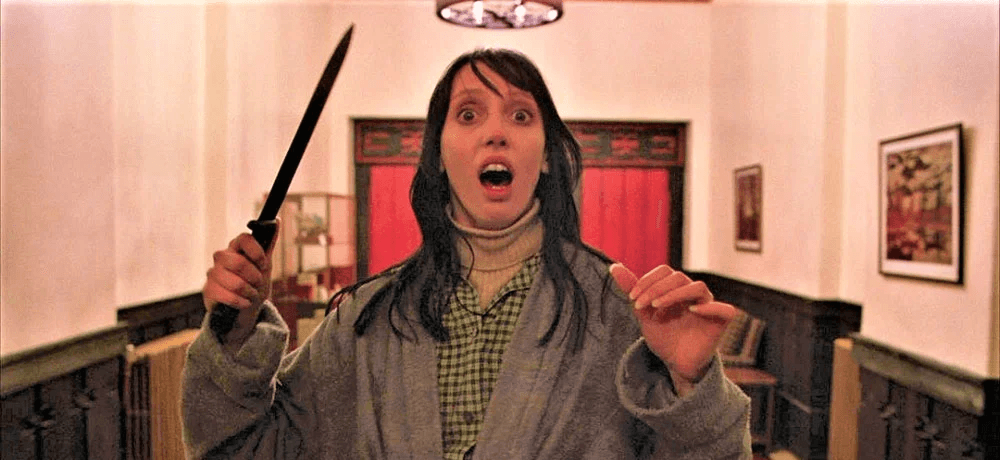
The Shining is the work in which Kubrick most explicitly uses light as psychological argument, and he achieves it through inversion. The traditional visual language of fear is darkness — threats hidden in shadow, pools of black at the frame's edges, the unknown waiting in the unlit places. Kubrick used the opposite. The Overlook Hotel is radically bright. The corridors are fully illuminated by even fluorescent overhead lights. The carpet patterns are saturated and vivid. The Gold Room blazes. This brightness is more disturbing than darkness would be. You can see everything clearly. The threat is not in the shadows. And yet the wrongness cannot be located or named. Kubrick understood that the uncanny is not produced by darkness. The uncanny is produced by a familiar environment that is behaving incorrectly — and you can only perceive that incorrectness when you can see clearly.
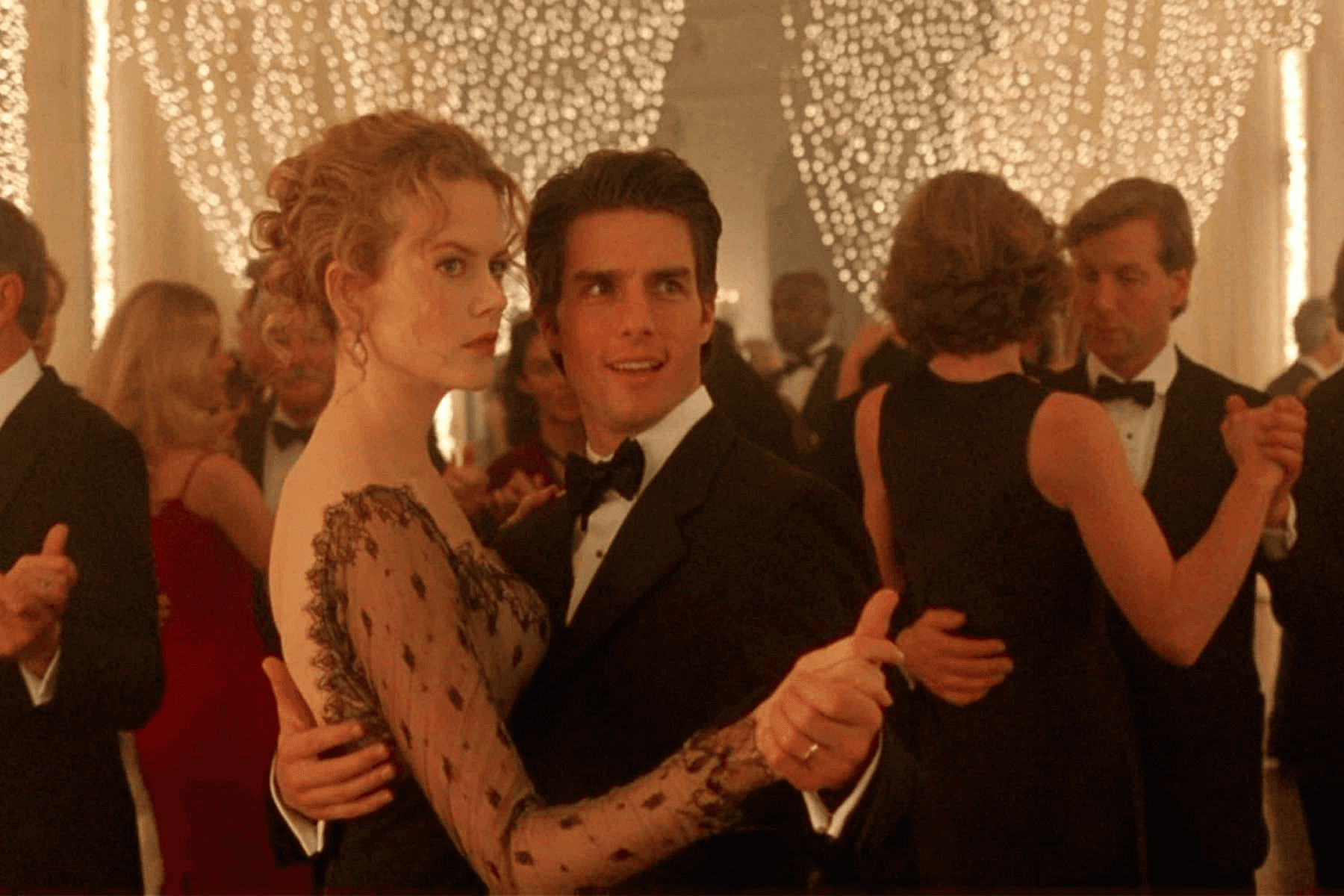
Eyes Wide Shut is Kubrick's final film and is constructed almost entirely from practical light sources. Christmas lights, candles, table lamps, the light of television screens — in every scene the light comes from physical sources visible within the frame. The cinematographer Larry Smith spent months sourcing and testing practical light sources to produce the quality Kubrick wanted: warm, saturated, slightly overexposed, with the particular colored light rendering that results from tungsten-balanced film stock exposed to Christmas lights. The film looks as though it was shot inside a painting, because the light sources themselves are painterly. More on this in the next post.
🫶🏼
光的叙事功能
说实话,我不是很了解光的叙事功能, 为了写这篇,我特地找了些资料来看。原来,光分硬光和软光。硬光来自小光源或远距离光源,产生清晰、边缘锐利的阴影。软光来自大光源或近距离扩散光,阴影边缘模糊,过渡平滑。软光让人觉得安全、温暖、被包围,家庭场景、浪漫场景经常用软光。硬光制造张力,把脸切割成光明和阴影两半,暗示内部冲突或外部威胁。Fincher拍《搏击俱乐部》和《龙纹身的女孩》用的基本都是硬光,因为他们的世界观里没有安全感。
而高调和低调打光,高调打光是指是整个画面都很亮,阴影少,对比低。这是喜剧、广告、日间肥皂剧的光。低调打光(low key)是大量阴影,高对比,光只照亮你需要观众看的部分。Film noir是最极端的例子,威尼斯百叶窗投射的阴影条纹,半张脸在黑暗里,世界显得不可信。Kubrick在《闪灵》里用的是反直觉的高调光,恐怖片反而用明亮的走廊,这种反差制造出比黑暗更不舒服的感觉。
光的方向则是lighting语言里最古老、最稳定的一套符号系统。从上往下,也就是俯视,通常是指权威、神圣、安全。光从天而降,这是最自然的光源方向,所以它读起来是"正常的"。从下往上,仰视,恐惧、邪恶、不自然。没有自然光从地面向上照,这个方向触发的是本能的不安。从侧面,则是冲突、模糊、两面性。脸被切割成半明半暗,视觉上在暗示这个人有两面,或者处于选择的边界。《教父》里Michael Corleone越来越多地被侧光照。逆光/轮廓光则非常神秘、超自然、信息被隐藏。你只看到形状,不看到细节。Villeneuve非常喜欢这个,《降临》里外星人出现的方式基本都是逆光剪影。
阴影是可以作为主角的,最好的lighting不是照亮了什么,而是选择不照亮什么。阴影是导演对观众注意力的控制工具,把信息藏在阴影里意味着延迟揭示,制造悬念。德国表现主义(Nosferatu, The Cabinet of Dr. Caligari, Metropolis)是首次把阴影系统性地当作叙事工具的运动。Nosferatu里Orlok的影子爬上楼梯、爬过Ellen的床,影子先到,本体后到。好莱坞film noir直接继承了这套语法,只是换了城市背景。接下来具体看看不同导演、摄影师对打光的不同偏好。
Gordon Willis — "Prince of Darkness"
Gordon Willis是美国电影史上最有影响力的摄影师之一,绰号"黑暗王子",因为他敢于把脸打进阴影里。《教父》(1972)是他最重要的作品。那个时代的摄影规则是脸必须被照亮,观众需要看清演员的表情。Willis直接无视这个规则,马龙·白兰度在办公室场景里眼睛几乎完全在阴影里,只有颧骨以下被照亮。Vito Corleone的眼神是不可读的,他的意图是隐藏的。随着剧情发展,Michael Corleone的光越来越少、越来越硬。第一部结尾他接受了父亲的位置,门在他面前关上,最后一帧他在阴影里。Willis用光的撤退来记录一个人的道德消亡。
Willis的风格核心是一个反直觉的主张:黑暗不是信息的缺失,黑暗本身就是信息。大多数摄影师把阴影当作需要管理的问题,哪里暗了就补光。他的标志性手法是极端的顶光,单一硬光源从正上方打下来,眼窝完全陷入阴影,只有脸的下半部分被照亮。这有一个非常具体的心理后果:眼睛是表演里情感可读性的传统工具,观众通过眼神理解角色的内心。把眼睛打进阴影,脸就变得不可读,这个人变成了一种存在感,而不是一个可以被分析的人。用在Vito Corleone身上,这就是这个角色本身的视觉等价物:不解释自己、不表演权力、只是存在并被感受到的力量。
他的光比(lighting ratio)极端得违反行规。行业惯例是3:1已经很激进了,Willis经常推到8:1甚至更高,亮部曝光是暗部的八倍。更重要的是他把光当作跨越整部电影的道德追踪工具。《教父》第一部是美国电影史上最精确的光弧之一:开场婚礼、花园、厨房,家庭空间,温暖,宽泛照亮,有人情味。随着剧情进入权力和暴力的机制,光逐渐撤退。到Michael接受父亲位置的结尾,温暖彻底消失,最后一帧他在阴影里。Willis没有用特写镜头或配乐来标记这个人的堕落,他用的是在175分钟里从一张脸上系统性地移除光线,布光成为人物弧线的一部分。
《总统班底》把这个逻辑完全倒转。华盛顿邮报的编辑室被荧光灯均匀地淹没,平,无方向,每个人都同等可见,没有阴影可以躲。这是Corleone办公室的视觉对立面,因为新闻业的机构逻辑是对立面:这是一个把所有事情曝光的空间。在和伍迪·艾伦合作的《曼哈顿》里,他用黑白、变形宽银幕,把光的处理推向纽约街头摄影的传统,接近Cartier-Bresson和Weegee。顶光还在,但被自然化了:夜晚城市自己的光,路灯,店面招牌,Willis信任环境去完成他在《教父》里靠精心布光完成的事。
整体看下来,贯穿所有这些作品的核心是同一个东西:Willis做出了"不照亮某些东西"的决定,并且在所有来自片场和制片厂的压力面前捍卫了这些决定。《教父》的毛片回来的时候,制片厂高层认为曝光出了问题,要求重拍。Willis拒绝了,黑暗是刻意的论点。
Kubrick — 光的哲学家
Kubrick对光的态度是极端的,他不想要任何看起来像"布光"的东西。他想要光看起来像它本来就在那里。《2001太空漫游》用的是极度克制的冷光,白色、均匀、无情感,和太空的概念对应。飞船内部的光没有来源可见,它就是弥漫在那里,像一个没有阴影的世界。《巴里·林登》(1975)是技术史上的奇迹。库布里克坚持用18世纪的蜡烛光拍室内场景,不加任何人工照明。为了做到这一点,他使用了NASA为月球任务开发的Carl Zeiss Planar 50mm f/0.7镜头:世界上光圈最大的电影镜头,能在接近黑暗的环境下曝光。那些烛光场景的画面质感和同时代的油画几乎没有区别,因为它们确实是用同样的光拍的。《闪灵》里他反其道而行,用高调打光制造恐惧。Overlook Hotel的走廊是明亮的,地毯是鲜艳的,这种明亮感让里面发生的事情更令人不安,因为你无处躲避,没有阴影可以解释威胁的存在。
他的每一部电影都把这个挑战当作属于那个世界的特定问题,用不同的方式解决。
《2001太空漫游》用光来定义两种不相容的现实,并把它们同时放在一部电影里。片头史前序列的用的是低角度的硬质自然光,斜切过地面,拉出长长的阴影,让地面有地面的质感。而发现号的内部,白色、均匀、没有阴影,是一个受控环境的视觉语言,人类在那里消除了不确定性。光没有可见来源,因为这是机构性的光,是系统的光而不是某个地方的光。它均匀照亮所有东西,这正是它冷的原因,没有方向的光里没有温度。星门序列和结尾的卧室场景代表了第三种状态:卧室的光没有可见来源,质量在整个序列里不断变化,暗示着一个存在于影片其他部分物理规律之外的空间。
《巴里·林登》则发生在十八世纪,意味着蜡烛光。那个时代的标准电影镜头需要的光量远超蜡烛能提供的。解决方案来自一套卡尔·蔡司为NASA开发的镜头,Zeiss Planar 50mm f/0.7,原本用于用地照拍摄月球表面。f/0.7的进光量是标准f/1.4镜头的四倍,是f/2.0镜头的十四倍。三支这样的镜头被购入并为Mitchell BNC摄影机进行改装,摄影师是John Alcott,他因此片获得奥斯卡最佳摄影,花了数月时间测试镜头、胶片和蜡烛排列的组合,弄清楚这套系统能做什么、不能做什么。f/0.7的景深极浅,近距离下只有几厘米,意味着跟焦的要求极为苛刻。影片边缘的特征性柔软质感以及皮肤色调中光影的特殊呈现,部分就是这个光圈的原因。库布里克在视觉上想要的是荷兰黄金时代绘画,维米尔、伦勃朗、乔治·德·拉图尔。烛光的特殊质量在于它温暖、方向性极强、随距离衰减极快。靠近蜡烛的脸被强烈照亮,但一米之外的脸却陷入深重阴影。这创造了一个由大量黑暗中的小片可见性构成的世界,这些场景看起来像油画。
《闪灵》是库布里克最明确地把光当作心理论点使用的作品,它通过反转来实现。恐惧的传统视觉语言是黑暗,影子里隐藏威胁,画面边缘的黑暗池,未知等待在未被照亮的地方。库布里克用了相反的东西。Overlook Hotel是激进地明亮的。走廊被均匀的荧光顶灯完全照亮。地毯图案是饱和的、鲜艳的。金厅灯火通明。这种明亮比黑暗更令人不安,你能看清所有东西,威胁不在阴影里,而那种不对劲无法被定位或命名。库布里克理解到,诡异感不是由黑暗产生的,诡异感是由一个行为不正确的熟悉环境产生的,而你只有在能清晰看见的时候才能感知到这种不正确。
《大开眼界》是库布里克的最后一部电影,几乎完全由实体光源构成。圣诞彩灯、蜡烛、台灯、电视机的光,每个场景里的光都来自画面中的实体光源。摄影师Larry Smith花了数月寻找和测试实体光源,以产生库布里克想要的质感:温暖、饱和、略微过曝,带有钨丝平衡胶片曝光于圣诞彩灯时产生的特殊彩色光渲染。这部电影看起来像是在一幅画里拍摄的,因为光源本身是绘画性的。
🫶🏼