Created on
Updated on
What is Modern Art?
喜欢现代艺术和古典艺术的不是同一种人
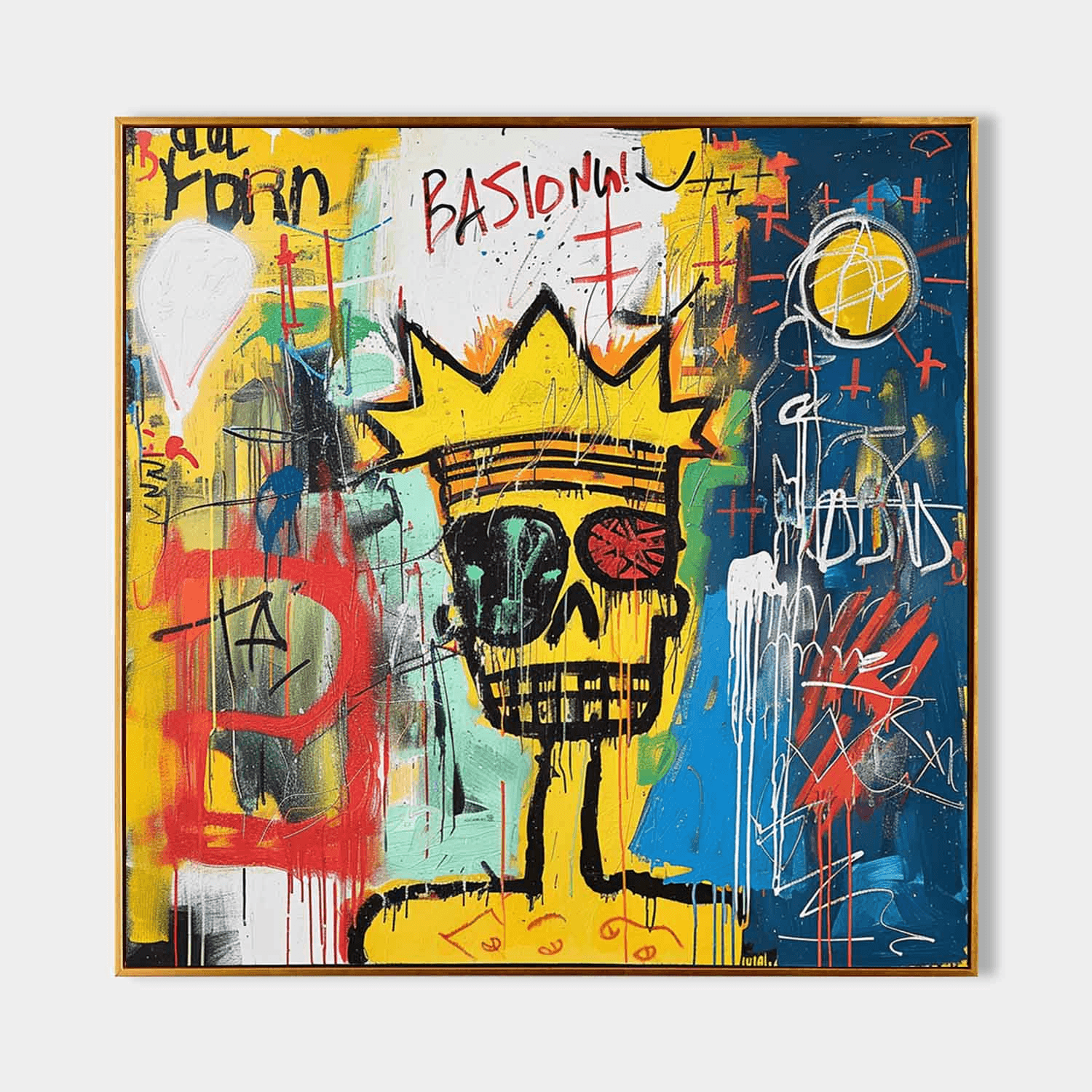
Preface: welcome to this very brief intro to modern art. Please feel free to use this as a guide for museum visits.
What is Modern Art?
“Modern art” is not a style — it’s an attitude. At its core is a question asked over and over: “What is art, and what must art be?”Traditional art never asked this question. Its task was clear — depict gods, power, nature, history, using ever more precise technique to reproduce reality. Modern art, at a certain moment, refused that task and began to question the task itself. So the essence of modern art is self-reflexivity — art begins to take itself as its own subject.
When does it begin?
The official Paris Salon rejected a group of paintings, so Napoleon III opened a “Salon des Refusés” for the public to judge. Manet’s Le Déjeuner sur l’herbe was shown there — a nude woman picnicking with two men in suits, looking directly at the viewer. Not Venus from mythology. A real woman, looking at you. The audience was outraged. Outrage usually marks the arrival of something new.
Monet and others stopped submitting to the official Salon and organized their own exhibitions. This was the first time artists systematically bypassed the authority of institutions to build their own space.
In 1907, Picasso painted Les Demoiselles d’Avignon, borrowing the visual language of African masks to completely shatter Western perspective. Many art historians consider this the true manifesto moment of modern art.
Others push the starting point further back. Romanticism was the first movement to place the artist’s subjective emotion at the center, in resistance to the cool rational order of the Enlightenment. This is the premise for all later modernist “expression of the inner life.”
Why is it categorized this way?
The category itself is problematic and worth unpacking.
First, the word “modern” is ambiguous. “Modern Art” in English does not mean contemporary art. In art history, Modern Art refers specifically to roughly the 1860s through the 1970s. After that comes Postmodern Art, and after that Contemporary Art. So “modern” here is a historical term, not a temporal one.
Second, this is a Western category. The narrative of “modern art” was written by Europe and America, centered on Paris and New York. This means:
Japanese ukiyo-e influenced Impressionism, but ukiyo-e itself is not in the main narrative of “modern art”
African sculpture inspired Cubism, but African sculpture was called “primitive art,” not modern art
Modern art movements in China, Iran, and India were only incorporated into Western art history in recent decades
So this category is simultaneously a historical description and a power structure.
Third, why the word “modern” at all? Because it corresponds to the larger historical concept of Modernity — the Industrial Revolution, urbanization, secularization, democratization, scientific rationality replacing religious authority. The “modern” in modern art is a response to this entire social upheaval. The world modern artists faced: trains, cameras, factories, trenches, psychoanalysis, the atomic bomb. The old forms of expression couldn’t hold these experiences, so form had to change.
The camera may be the single most important trigger. Photography was invented in 1839, and the machine took over painting’s function of reproducing reality. Artists suddenly had to answer: if a camera can represent the world more accurately than I can, why should I paint at all? This question pushed painters toward abstraction, expression, and concept.
A cleaner definition
Modern art = the systematic betrayal of the assumption that “art must resemble reality,” and the series of questions this betrayal unleashed — about form, meaning, the identity of the artist, and the nature of looking itself. It begins at the moment someone decided: rules are not laws of nature. They are agreements that can be questioned. Modern art and the modern novel are structurally the same thing. What Proust, Faulkner, and Woolf were doing, and what Cézanne and Picasso were doing, is the same thing — shattering linear time, introducing multiple perspectives, making form itself a carrier of meaning.🖼️
什么是现代艺术?
“现代艺术”不是一个风格,是一个态度。核心是一个问题的反复追问:“艺术是什么,艺术必须是什么?”传统艺术从不问这个问题。它的任务是清晰的——描绘神、权力、自然、历史,用越来越精确的技术去再现现实。现代艺术从某个时刻开始,拒绝接受这个任务,开始质疑任务本身。所以现代艺术的本质是自我反射性(self-reflexivity)——艺术开始以自身为主题。
什么时候开始?
巴黎官方沙龙拒绝了一批画作,拿破仑三世开了个”落选者沙龙”让公众评判。马奈的《草地上的午餐》在这里展出——一个裸体女性和两个穿西装的男人野餐,她直视观众。不是神话里的维纳斯,是真实的女人,看着你。观众愤怒了。愤怒t通常标志着某种新事物的出现。莫奈等人不去官方沙龙,自己办展览。这是艺术家第一次系统性地绕开权威体制建立自己的场域。1907年《亚维农的少女》毕加索画这幅画,从非洲面具里借取造型语言,彻底打碎西方透视传统。很多艺术史家认为这是现代艺术真正的宣言时刻。也有人把起点推得更早。浪漫主义第一次把艺术家的主观情感置于中心,反抗启蒙理性的冷静秩序。这是后来所有”表达内心”的现代主义的前提。
为什么这样分类?这个分类本身是有问题的,值得拆解。
首先,”现代”这个词有歧义。英文Modern Art不等于”当代艺术”(Contemporary Art)。Modern Art在艺术史语境里特指大约1860s到1970s这段时期。之后叫Postmodern Art(后现代),再之后叫Contemporary Art(当代)。所以”现代”在这里是历史名词,不是时间副词。
其次,这个分类是西方的分类。“现代艺术”的叙事是欧洲和美国写的,以巴黎和纽约为中心轴。这意味着:
日本浮世绘影响了印象派,但浮世绘本身不在”现代艺术”的主叙事里
非洲雕塑启发了立体主义,但非洲雕塑被称为”原始艺术”(primitive art)而非现代艺术
中国、伊朗、印度的现代艺术运动到近几十年才被西方艺术史纳入
所以这个分类既是历史描述,也是权力结构。
第三,为什么用”现代”这个词?
因为它对应的是现代性(Modernity)这个更大的历史概念——工业革命、城市化、世俗化、民主化、科学理性取代宗教权威。艺术里的”现代”是对这整个社会剧变的回应。现代艺术家面对的世界:火车、照相机、工厂、战壕、精神分析、原子弹。旧的表达方式装不下这些经验,所以形式必须改变。照相机可能是最重要的触发点。 1839年摄影术发明,绘画”再现现实”的功能被机器取代了。艺术家突然必须回答:如果相机能比我画得更像,我为什么还要画画?这个问题把画家推向了抽象、表现、观念。
一个更简洁的定义
现代艺术 = 对”艺术必须像现实”这个假设的系统性背叛,以及由此引发的一系列关于形式、意义、艺术家身份和观看本身的追问。它开始于某一刻有人决定:规则不是自然法则,是可以被质疑的约定。现代艺术和现代小说是同构的。普鲁斯特、福克纳、伍尔夫在做的事,和塞尚、毕加索在做的事,是同一件事——打碎线性时间,引入多重视角,让形式本身成为意义的载体。
🖼️