Created on
Updated on
1565/ St. Augustine, Florida
Settlement Built On Religious Massacre

Preface: Welcome to this quick recap of the history of immigration of US. Celebrating 250 years of USA.
As mentioned previously, even though Spain first discovered New Land, Portugal was the one established the navigation system and stabilized the routes to Africa. Portugal — small hinterland, blocked out of the spice trade, no internal growth option, forced to make exploration a state strategy starting with CeutaPortugal had already evaluated and turned down. Columbus himself was Genoese, but since he sailed under the Spanish crown, and that’s why Spain (not Portugal) ended up with the claim and the resulting rivalry with Portugal that produced the Treaty of Tordesillas in 1494. in 1415, decades before Columbus ever sailed. Spain, by contrast, gets framed almost as a free-rider on a navigational toolkit Portugal had already de-risked. Spain’s motive wasn’t structural desperation — it was post-Reconquista momentum and a single high-variance bet that happened to pay off spectacularly. Portugal had a head start of decades and was the one steadily building toward Asia — but it was working a different route (down the African coast, around the bottom, then east), and Columbus’s specific pitch — sail west across open ocean to reach Asia — was something
Columbus (1492) was trying to reach Asia by simply sailing west across open ocean — his premise was that no landmass stood in the way, just water the whole way from Europe to Japan/China. He was wrong about the earth’s size and didn’t know the Americas existed. The 1492 landfall accelerated rivalry between Spain and Portugal over new lands, and Pope Sixtus IV had previously granted Portugal rights to land south of the Cape Verde islands, which is part of why the Portuguese king initially argued Columbus’s discoveries should belong to Portugal, not Spain. Spain got a friendlier pope to rule otherwise, and the dispute was settled by drawing a line down the Atlantic. Columbus initially pitched his westward voyage to King João II of Portugal. Portugal rejected him because his estimated travel distance was too short — he badly underestimated the size of the globe — and because Portuguese explorers had already rounded the Cape of Good Hope, giving them a known eastern route to Asia that didn’t require betting on an unverified shortcut. Portugal had real intel (decades of coastal surveying) telling them Columbus’s math was wrong, so from their position it looked like a bad bet, not a visionary one. Spain had just finished the Reconquista in January 1492 — military, financial, and religious momentum was all pointed outward looking for a new project, and Ferdinand and Isabella were also motivated by status competition with Portugal specifically. So Columbus’s pitch landed with a country that had mobilized energy and a rival to outdo, not a country with the best navigational judgment. Columbus was working from a wrong premise that happened to work out. He believed the earth was much smaller than it actually is, didn’t know the Americas existed, and fully expected to land in Asia — he hit land in the Caribbean on October 12, 1492, and (per Britannica Kids) died still believing he’d reached Asia, not a separate continent.
1513, Ponce de León, Florida
Fifty-two years before Menéndez, Juan Ponce de León was the first recorded landing and the first detailed exploration of the Florida coast, sighting land on Easter Sunday, March 27, 1513, and coming ashore a few days later — most accounts place it April 2 or 3. He named what he found “La Florida,” not for any mystical spring but for the Spanish Easter feast of flowers, Pascua Florida, and for the lush vegetation he saw. The Fountain of Youth story is almost certainly a later invention — his actual royal contract spelled out, in detail, how he’d split gold, enslaved Native people, and other profits with the Crown, and made no mention of any rejuvenating water at all.
He wasn’t a discoverer in any innocent sense. Before Florida, he’d governed Puerto Rico as a conquistador known for enslaving the people he found there — University of Florida archaeologist Jerald Milanich’s assessment is blunt: he was “the beginning of the end” for hundreds of thousands of Indigenous Floridians, the door through which the rest of the invasion walked in. And he never built anything here. The 1513 voyage was a sighting, a name, and a retreat — no fort, no settlement, just a claim staked on a coastline he assumed was an island. He tried again in 1521 with horses, seed, and two hundred people, hoping to found an actual colony near Charlotte Harbor. He was fatally wounded by a Native attack almost as soon as he landed, and died without seeing any colony of his survive him.
There’s one more name on that 1513 ship worth holding onto, because it complicates the neat math of “who came first” in exactly the way this series keeps circling back to: a free African conquistador named Juan Garrido, sometimes called “Handsome John,” born in the Kingdom of Kongo and baptized in Lisbon before crossing to the Caribbean. He’d already fought alongside Ponce de León in the conquest of Puerto Rico years earlier, and he was aboard for Florida too — meaning a free Black man stood on Florida sand 225 years before Fort Mosé existed, and 106 years before the Jamestown arrivals most timelines call the start of Black presence in what’s now the United States. Garrido isn’t a clean hero for this thread, either — he went on to fight at the siege of Tenochtitlan, later ran his own slave-labor mining and farming operations in Mexico using both enslaved Africans and Indigenous people, and spent thirty years as a paid instrument of the same conquest that devastated the people he met in Florida.
The Fifty-Two Years Between
What followed is a graveyard of Spanish failure, and it’s the part that makes 1565 make sense as a reaction, not an opening move. Lúcas Vázquez de Ayllón tried next, in 1526, founding San Miguel de Gualdape near present-day Brunswick, Georgia — the same failed settlement, that’s also remembered as the first site of African enslavement and the first slave rebellion in what became the US. It collapsed within months.
Then came Pánfilo de Narváez in 1528 — the same brutal conqueror who’d subdued Cuba — leading 400 men and 42 horses inland chasing rumors of “another Mexico.” The Timucua handled him with a quiet, devastating strategy: hide the food, avoid contact, and tell the invaders their rivals the Apalachee had the real gold — sending Narváez deeper into hostile country on a fabricated lead. It ended in catastrophe: illness, ambushes, starvation, and a desperate retreat on crude rafts that wrecked on the Texas coast. African name in Florida’s earliest record, two centuries before Fort Mosé — not a conquistador this time, but a castaway who became indispensable to four desperate men’s survival.Only four men survived eight years of wandering to reach Mexico — among them Esteban, a West African man, enslaved, who became the group’s interpreter and negotiator with every Indigenous tribe they encountered along the way. Another
Hernando de Soto came next, landing at Tampa Bay in 1539 with 550 soldiers and 200 horses, refining the playbook by extorting food directly and brutally from the people he marched through. For four years his expedition wandered, searching for gold that never materialized, until de Soto died near the Mississippi River in 1542;Luis Cáncer de Barbastro tried to establish a mission among the Timucua, who — still furious over Narváez and de Soto — destroyed it and killed him almost immediately. the survivors who eventually straggled into Mexico had nothing to show for it. By 1549, the well was so thoroughly poisoned that even a peaceful approach failed instantly: the missionary
The closest near-miss came in 1559. Tristán de Luna y Arellano sailed with roughly 1,500 soldiers and colonists, 240 horses, and over a million pounds of food — by far the largest, best-equipped attempt yet, bound for what’s now Pensacola. It wasn’t Indigenous resistance that ended it. A hurricane sank most of the ships and killed many of the settlers before the colony had a chance. Had Luna succeeded, there’s a real argument that none of the rest of this post would exist — Spain might have locked down Florida’s coast before the French ever got near it. Three more small attempts between 1560 and 1563 failed too, and by then Spain had had enough. In 1562, King Philip II formally decreed that Florida would no longer be pursued for Spanish colonization at all. After six expeditions, decades of dead soldiers, a dead governor, and a dead missionary, the Spanish Crown simply walked away.
It was the French who walked through the open door Spain had just abandoned. Jean Ribault founded Charlesfort in 1562, the same year Philip gave up — though France’s own religious wars kept him from resupplying it, and it was abandoned too. Two years later, Laudonnière founded Fort Caroline. It was the sight of French Protestants succeeding, immediately, on the very ground Spain had just quit trying to hold, that reversed Philip II’s decision and sent Menéndez across the Atlantic — not ambition starting fresh, but panic restarting something already given up for dead.
March 20, 1565, St. Augustine
Three years after giving up on Florida, Philip II reversed himself. He appointed Pedro Menéndez de Avilés as adelantado of Florida via a contract (asiento) signed March 20, 1565 — not to finish what Spain had started, but to undo what France had just managed to start instead. The contract’s stated goal was a permanent settlement that could defend the Spanish treasure fleet and protect Spain’s claimed territory from other European powers. The real, immediate trigger was already sitting on the coast: a French Huguenot settlement Philip couldn’t tolerate.
Menéndez set sail from Cádiz on July 28, 1565, with a fleet led by the 600-ton flagship San Pelayo, carrying over 1,000 sailors, soldiers, and settlers. Other sources put the total expedition closer to 2,000 people aboard 11 ships, of whom only about 800 actually reached Florida’s shore — meaning well over half the original expedition was lost or turned back before they even arrived. The land was sighted on August 28, 1565, the feast day of St. Augustine, after which the settlement was eventually named. Menéndez wasn’t just sailing to an empty coastline. He was in a race to reach Florida before French captain Jean Ribault, who was heading to reinforce Fort Caroline. The two fleets actually crossed paths — on September 4 they met at the mouth of the St. Johns River and exchanged fire in a brief, inconclusive skirmish. Menéndez landed again on September 8, formally declared the land for Philip II, and officially founded the settlement, naming it San Agustín. The Spanish occupied structures in the Timucua town of Seloy, whose chief was allied with Laudonnière’s French. A chaplain, Father Francisco López de Mendoza Grajales, celebrated what’s sometimes called the first Thanksgiving Mass on the grounds — predating Plymouth’s Thanksgiving by 56 years, a detail that tends to surprise people raised on the Pilgrim version of that holiday.
Eleven days after founding St. Augustine, Menéndez marched his soldiers overland to Fort Caroline and launched a surprise attack on September 20, killing all the adult men they found while sparing women and children — 132 Frenchmen died. This wasn’t incidental violence; it was the actual point of the expedition. Worse followed: Ribault’s fleet was wrecked by a storm near Cape Canaveral, and when Menéndez found the surviving 150–350 Frenchmen, they surrendered after negotiations — and the Spanish executed nearly all of them in the dunes near an inlet that became known as Matanzas, Spanish for “slaughters.” St. Augustine’s foundation is inseparable from a religious massacre — Catholic Spain annihilating a Protestant French colony, justified explicitly as killing them “Not as Frenchmen, but as heretics.” English pirates and soldiers attacked and burned the town repeatedly during the 1600s, including Sir Francis Drake’s raid on June 6, 1586, which burned the settlement and drove survivors into the wilderness (Drake then moved on to Roanoke rather than capitalizing on the win). Spain eventually responded by building the Castillo de San Marcos starting in 1672, completed just in time to survive a major British attack in 1702.
St. Augustine became home to the oldest continuously occupied settlement of European and African American origin in the United States. Specifically: a free Black settlement called Fort Mosé formed north of St. Augustine, founded by Francisco Menéndez — a man born in Gambia, enslaved in English South Carolina, who fled to Spanish Florida, fought in the Yamasee War, and in 1738 received Spanish permission to establish the village after converting to Catholicism and pledging loyalty to the crown. This is, depending how you frame it, one of the earliest organized free Black communities in what’s now the US — built specifically because Spanish Florida offered freedom that English Carolina didn’t.
Fort Mosé, 1738
In 1693, King Charles II of Spain issued an edict Spain’s own colonies, and crucially, these freed Africans could be formed into a militia to defend St. Augustine from the British. stating that any male slave escaping from an English plantation to Spanish Florida would be granted freedom, provided he joined the militia and converted to Catholicism — one of the New World’s earliest emancipation proclamations. Important to be clear-eyed about why: welcoming refugees struck an economic blow against the English colonies while adding skilled workers and Catholic converts to
Born around 1704 in West Africa, likely along the Gambia River, of Mandinka descent, Francisco Menéndez was captured by slave traders sometime between 1709 and 1711 and shipped to British Carolina. He escaped to Florida and was sold as a slave to Francisco Menéndez Márquez — which is where he got his name, baptized Catholic, but still enslaved. Spain’s Black militia in combat for over a decade Spain freed him. In 1726 he was appointed captain of St. Augustine’s Black militia while still legally enslaved, and solidified his leadership status by helping defend the city from a British attack in 1728. So: a man led before
Menéndez directly petitioned the Spanish crown, arguing it was unacceptable that only some fugitive slaves had been freed while others hadn’t, even though Spanish conditions were comparatively favorable to British chattel slavery — the runaways had upheld their end of the bargain by converting. He successfully petitioned for his own freedom and that of 31 others. By 1738 there were about 100 Black people, mostly Carolina runaways, living in what became Fort Mose, and on March 20, 1738, Governor Manuel de Montiano finally officially freed all runaway slaves and established the fort to house them. Montiano installed Menéndez as captain of the free Black militia and de facto leader — an obvious choice given he spoke four languages and had a decorated military record.
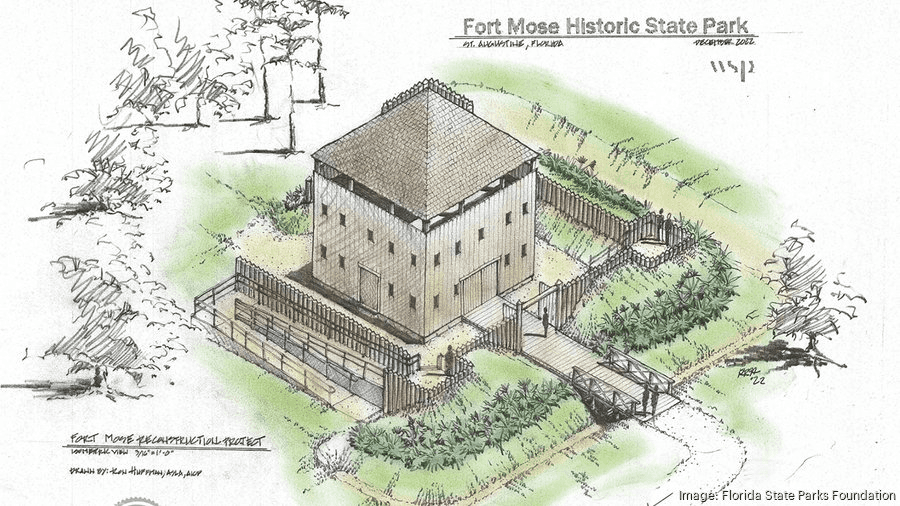
The settlement had a wall around it with dwellings inside, plus a church and an earthen fort, and the freedmen used their own skills in carpentry, masonry, and blacksmithing to build it. Most Africans in Spanish Florida — free and enslaved — Spain in 1740, and the English sent thousands of soldiers and dozens of ships to destroy St. Augustine, blockading and bombarding the town for 27 consecutive days. Fort Mose was one of the first places attacked; Menéndez’s militia briefly lost it but recaptured it, repelling the English. The fort was destroyed in the fighting, but the counterattack — Spanish troops, Indigenous allies, and the free Black militia together — defeated Oglethorpe’s forces.made up about ten percent of St. Augustine’s population, coming not just from West Africa but from Cuba, Jamaica, Barbados, Antigua, Venezuela, Colombia, and the Canary Islands, and cross-cultural marriages were common and legal, fostering a genuinely multi-ethnic society blending African, Spanish, and Native American traditions. Word of Mose reached South Carolina and Georgia and attracted escaping slaves, and the fort’s existence is believed to have helped inspire the Stono Rebellion of September 1739 — one of the largest slave uprisings in colonial American history. That’s a direct causal line worth sitting with: a free Black Spanish fort in Florida likely helped trigger a slave rebellion in British South Carolina. War broke out between England and
After the fort’s destruction Menéndez became a privateer to earn income, and in 1741 was captured by a British privateer ship. Recognized as Fort Mose’s captain, he was tied to a cannon, given 200 lashes, threatened with castration, and had his wounds pickled in salt as further torture, then sold into slavery in the Bahamas. Somehow — the record doesn’t say how — he was back in Florida by 1759, once again leading the rebuilt Fort Mose. Spain ceded Florida to Britain in 1763 at the close of the Seven Years’ War. In August 1763, Menéndez, his wife María de Escovar, and the roughly 50 remaining residents sailed to Cuba on a schooner called Our Lady of the Sorrows, landing at Ceiba Mocha and founding a new settlement they named San Agustín de la Nueva Florida. Once Spanish St. Augustine no longer existed, Fort Mose had no purpose — its entire reason for being was tied to defending a city that was no longer Spain’s. It was designated a US National Historic Landmark on October 12, 1994, and the actual site was lost for over two centuries until Florida Museum archaeologist Kathleen Deagan located it in the 1980s, working with then-doctoral-candidate Jane Landers, who together identified the approximate sites of both the first and second forts.🇺🇸
Timeline — “St. Augustine, Florida”
1415 — Portugal takes Ceuta, starting its state-strategy approach to exploration, decades ahead of Columbus.
1492 — Spain completes the Reconquista (January); Columbus, rejected earlier by Portugal’s King João II, sails for Spain and makes landfall in the Caribbean on October 12, believing he’s reached Asia.
1494 — The Treaty of Tordesillas settles the Spain/Portugal rivalry over new lands by drawing a line down the Atlantic.
St. Augustine, 1565
20 March 1565 — Philip II signs the asiento appointing Pedro Menéndez de Avilés adelantado of Florida, with orders to deal with the French Huguenot settlement (Fort Caroline) on the Florida coast and establish a permanent defensive settlement.
28 July 1565 — Menéndez sails from Cádiz with a fleet of roughly 1,000–2,000 people; only about 800 actually reach Florida.
28 August 1565 — Land sighted on the feast day of St. Augustine.
4 September 1565 — Menéndez’s fleet and Jean Ribault’s French fleet cross paths near the mouth of the St. Johns River and exchange fire — brief, inconclusive.
8 September 1565 — Menéndez lands again, formally founds the settlement as San Agustín. A chaplain celebrates what’s sometimes called the first Thanksgiving Mass — 56 years before Plymouth’s.
20 September 1565 — Eleven days after founding St. Augustine, Menéndez marches overland and attacks Fort Caroline, killing 132 Frenchmen.
Shortly after — Ribault’s fleet wrecks in a storm near Cape Canaveral; Menéndez finds 150–350 survivors, negotiates their surrender, then executes nearly all of them at what becomes known as Matanzas Inlet — “not as Frenchmen, but as heretics.”
6 June 1586 — Francis Drake raids and burns St. Augustine, then moves on to Roanoke rather than capitalizing.
1672 — Construction begins on the Castillo de San Marcos.
1702 — The fort survives a major British attack, justifying the 1672 investment.
Fort Mosé, 1693–1763
1693 — Charles II issues an edict: any enslaved man escaping an English plantation to Spanish Florida is freed, provided he joins the militia and converts to Catholicism — one of the New World’s earliest emancipation proclamations, and a strategic move against the English as much as a humanitarian one.
c. 1704 — Francisco Menéndez born in West Africa, likely along the Gambia River, of Mandinka descent.
1709–1711 — Captured by slave traders, shipped to British Carolina.
Some point after — Escapes to Spanish Florida, sold into slavery to Francisco Menéndez Márquez (the source of his name), baptized Catholic but still enslaved.
1726 — Appointed captain of St. Augustine’s Black militia while still legally enslaved.
1728 — Helps defend St. Augustine from a British attack.
1738 — Menéndez petitions the Crown over the unevenness of freedom grants. He and 31 others are freed. On 20 March 1738, Governor Manuel de Montiano formally frees all runaway slaves in the area and establishes Fort Mosé, installing Menéndez as militia captain.
September 1739 — The Stono Rebellion in South Carolina — believed to be partly inspired by word of Fort Mosé reaching enslaved communities further north.
1740 — War breaks out between England and Spain. English forces blockade and bombard St. Augustine for 27 days; Fort Mosé is attacked, briefly lost, then recaptured; ultimately destroyed in the fighting, but the combined Spanish/Indigenous/free Black militia defeat Oglethorpe’s forces.
1741 — Menéndez becomes a privateer, is captured by a British privateer ship, tortured (200 lashes, threatened castration, salted wounds), and sold into slavery in the Bahamas.
By 1759 — Back in Florida, once again leading the rebuilt Fort Mosé.
1763 — Spain cedes Florida to Britain at the end of the Seven Years’ War. In August, Menéndez, his wife, and roughly 50 remaining residents sail to Cuba, founding San Agustín de la Nueva Florida.
1980s — Archaeologist Kathleen Deagan, with doctoral candidate Jane Landers, locates the lost site of both Fort Mosé forts.
12 October 1994 — Designated a US National Historic Landmark.