Created on
Updated on
1494-1502/ The Caribbean as Template
Coco Island in "One Piece"?

Preface: Welcome to this quick recap of the history of immigration of US. Celebrating 250 years of USA.
On February 13, 1502, Nicolás de Ovando's fleet sailed from Sanlúcar. Thirty ships. 2,500 people. The largest expedition Spain had ever sent west. Ovando was the Crown's new governor for Hispaniola. A career administrator — noble family, knight of the Order of Alcántara, close to the court since childhood. Ferdinand and Isabella sent him because they had decided to stop letting Columbus's family run the place.
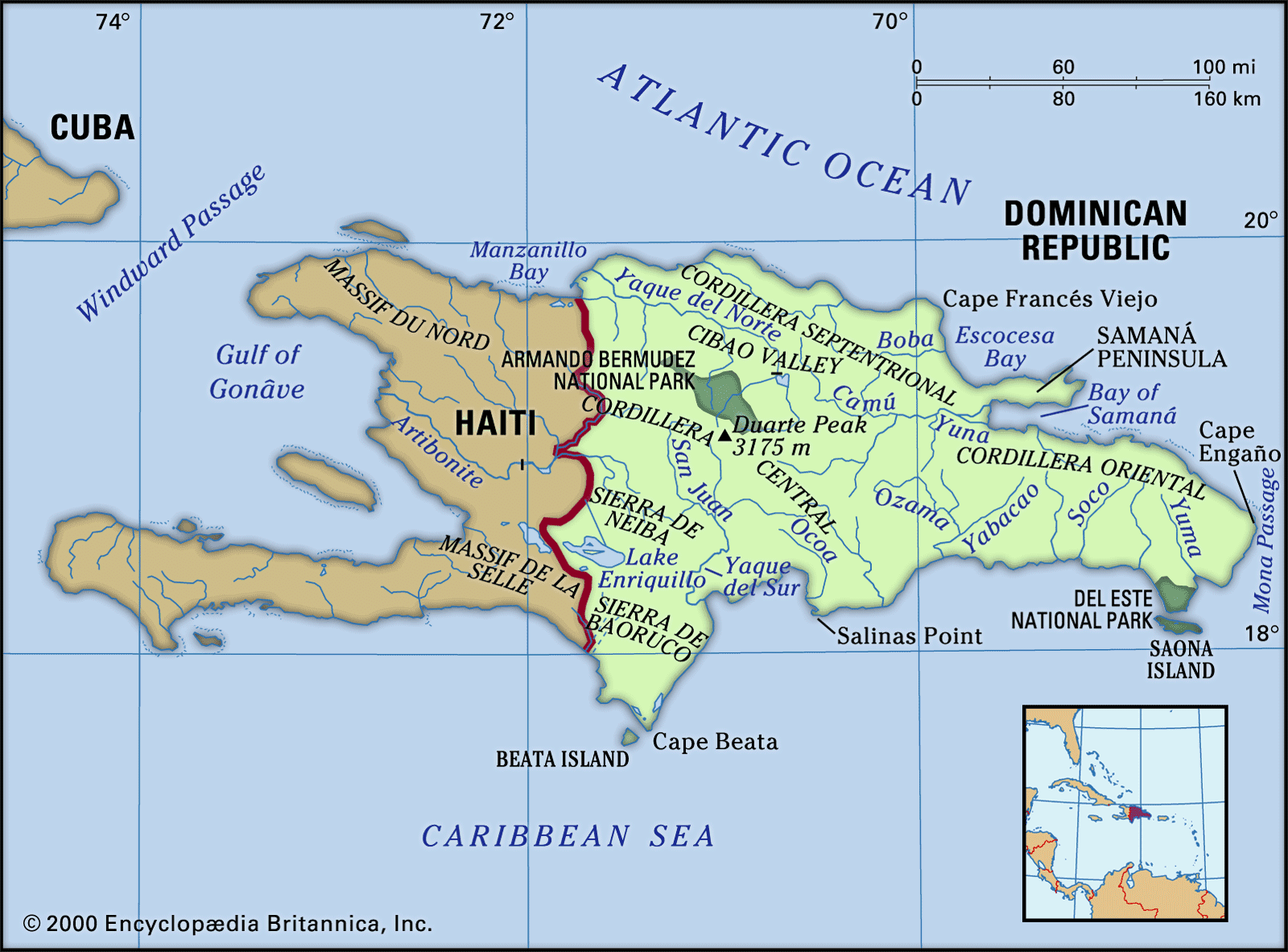
Sanlúcar — Sanlúcar de Barrameda — is a port town in southern Spain, downstream from Seville at the mouth of the Guadalquivir. Every ship crossing the Atlantic left from here, because Seville itself is inland and the big ships couldn't reach it. Hispaniola is a large island in the middle of the Caribbean — today split between Haiti in the west and the Dominican Republic in the east. It was where Columbus first landed in 1492, and where Spain built its first American colony. When Ovando arrived, the island held somewhere between several hundred thousand and a million Taíno people.
Columbus — Cristóbal Colón, the Genoese navigator everyone knows who had persuaded Ferdinand and Isabella to fund a westward voyage to reach Asia — believed to his last day that Hispaniola was on the coast of Asia. In 1492, before he sailed, Ferdinand and Isabella had signed a contract with Columbus giving him and his heirs three things in perpetuity: the title of Admiral of the Ocean Sea, the governorship of anything he discovered, and one tenth of all revenue from it. Nobody at court expected him to find anything, so the terms were cheap to give. When he actually found Hispaniola, the Crown found itself locked into a hereditary franchise on an entire hemisphere.
At contact, the island was divided into five large chiefdoms, each ruled by a paramount cacique who commanded subordinate village chiefs. December 25, 1492. Columbus's flagship, the Santa María, ran aground on a reef off the north coast of Hispaniola, in the territory of the cacique Guacanagarí of Marién. The ship was a total loss. Guacanagarí's people helped the Spanish salvage the timbers and cargo. Guacanagarí himself wept when he saw the wreck. Columbus decided to leave part of his crew behind. He had two ships left — the Niña and the Pinta — and not enough space to bring everyone home. He also wanted a foothold on the island for his return. He used the Santa María's timbers to build a small fort on the shore. He named it La Navidad — "the Nativity" — because of the Christmas Day wreck. He left thirty-nine men there under the command of Diego de Arana, with instructions to trade for gold, find the mines, and wait for his return. He sailed for Spain in January 1493.
Almost immediately, the discipline collapsed. The men at La Navidad were sailors, not settlers. They had no women, no clear command structure once Columbus was gone, and no real oversight from Guacanagarí, who treated them as guests. They started raiding. They went into villages and took women — often several each. They demanded gold. They fought each other over the women and the gold. Small parties broke off and wandered inland into other chiefdoms looking for the mines. Guacanagarí's territory could absorb the insult, at least for a while — he had a diplomatic relationship with Columbus and wanted it preserved. But the men wandered out of his territory. Some went into Maguana, the mountainous chiefdom in the interior, ruled by Caonabo.
Caonabo was not Guacanagarí. He had no diplomatic history with the Spanish and no reason to tolerate them. When Spaniards arrived in his territory demanding gold and taking women, he had them killed. Then he did something more ambitious. He organized a coordinated assault on La Navidad itself. Sometime in the autumn of 1493 — the date isn't precisely known — Caonabo led a force of warriors from Maguana overland to the coast. They attacked the fort at night. They killed everyone still there. They burned the fort to the ground. Some Spaniards had already died from disease, or from fights among themselves, or been killed piecemeal by the villages they had raided. But the final blow — the destruction of the fort, the massacre of the remaining garrison — was Caonabo's. Guacanagarí, whose territory the fort was in, was either unable or unwilling to intervene. His own account, given later to Columbus, was that he had tried to defend the Spanish and had been wounded doing so. Columbus chose to believe him. Modern historians are more skeptical — some suspect Guacanagarí at least tacitly allowed the attack, since it removed a nuisance he could no longer control.
Columbus returned on his second voyage with seventeen ships and twelve hundred men. He sailed straight to La Navidad expecting to be greeted by his men. What he found was a burned-out fort, unburied bodies, and no survivors. Guacanagarí met him with a story about a wound and a defense that had failed. He named Caonabo as the attacker and blamed everything on him. Columbus accepted the story, kept Guacanagarí as an ally, and marked Caonabo for future retaliation. He abandoned the site of La Navidad — it was cursed, and the shore was too exposed. He sailed east along the coast and founded La Isabela in January 1494 as the new colonial capital.
1494 / Cibao
By early 1494 the Spanish had built two forts in Cibao country: Santo Tomás and Magdalena. These were not diplomatic outposts. They were garrisons for men who needed food, women, and gold, in that order, and who took all three from whichever Taíno village was closest. The Taíno response came fast. Attacks on Magdalena in late 1494. Attacks on Santo Tomás. Attacks on Spaniards traveling alone. Spanish reprisals — Bartholomew Columbus's men captured 1,600 people in a single raid on the Macorix region. Five hundred fifty of them were shipped to Spain as slaves. The rest were distributed to settlers.
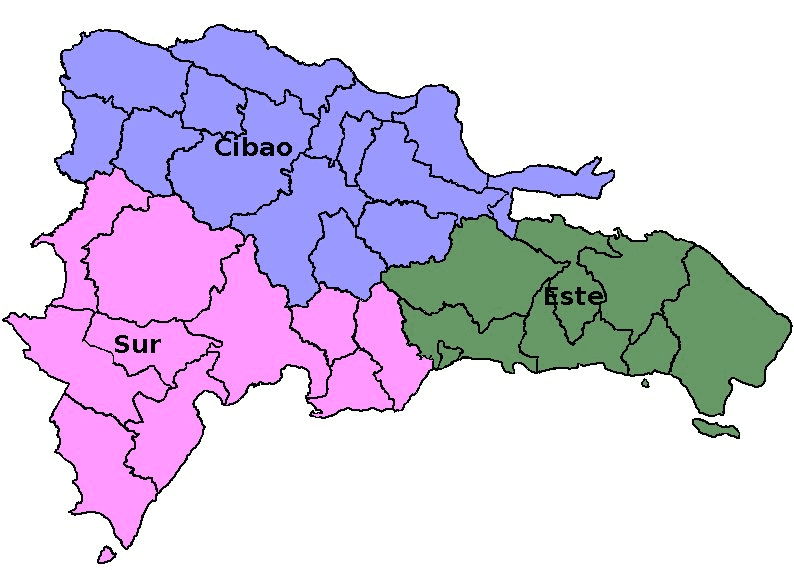
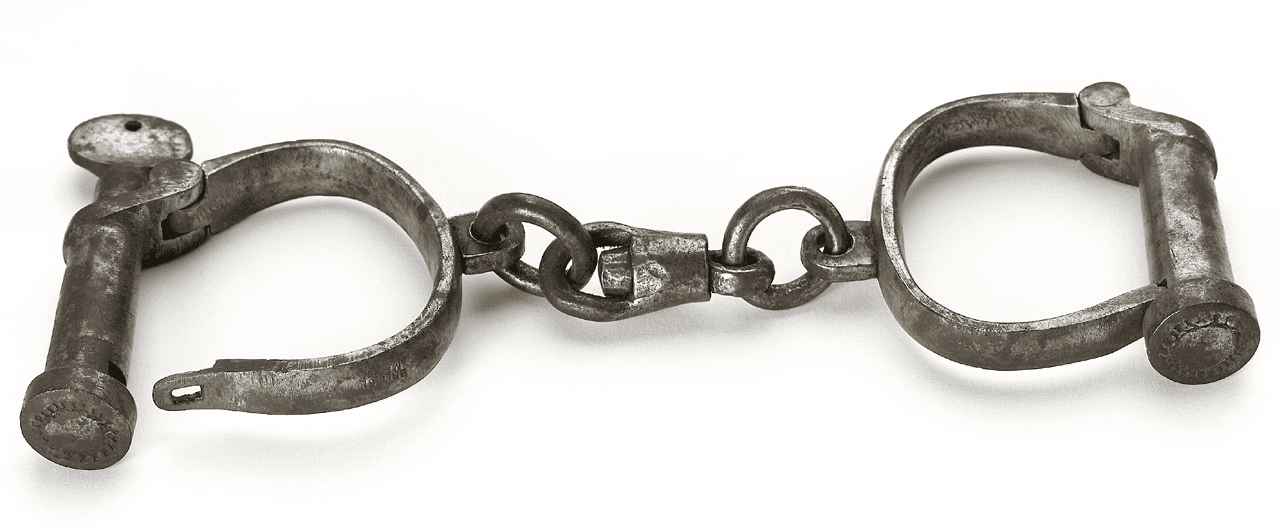
By the end of 1494, four of the five great chiefdoms of Hispaniola were coordinating. Caonabo of Maguana in the center. Guarionex of Magua in the eastern gold country. Bohechío of Jaragua in the west. Cayacoa of Higüey in the far east. Only Guacanagarí of Marién — the cacique who had befriended Columbus after the Santa María wrecked on his shore in 1492 — stayed with the Spanish. Columbus's men were vastly outnumbered. A Taíno force in the tens of thousands, spread across an island the Spanish barely controlled. Two hundred Spanish soldiers, sick, hungry, and rebellious. If the alliance held and pressed, La Isabela would fall. He "solved" it by taking Caonabo out of the picture first. The ruse belonged to Alonso de Ojeda, one of the young captains on the second voyage. Ojeda rode into Caonabo's territory with a small escort and a "gift" — a pair of polished brass ornaments, offered as objects of ceremonial power worn only by great Castilian lords. He asked Caonabo to try them on. They were manacles. The moment they closed on the cacique's wrists, Ojeda's men lifted him onto a horse behind Ojeda and rode. Caonabo was carried back to La Isabela in chains. He was later put on a ship to Spain and died at sea.
The Battle of Vega Real came on March 24, 1495 — a few weeks after Caonabo's capture, when the remaining chiefdoms tried to press the attack anyway. On the Spanish side: about 200 Spaniards, 20 war dogs — large mastiffs and greyhounds bred and trained to kill — a small mounted force under Ojeda, and several hundred Indigenous auxiliaries provided by Guacanagarí. On the other side: a coalition force under Guarionex, drawn from Magua, Higüey, and remnants of Caonabo's Maguana. Contemporary Spanish accounts put their numbers at ten thousand or more, though those numbers are the kind conquistadors always inflated. The Spanish had steel, horses, gunpowder, and the dogs. The Taíno had wooden spears and cotton armor.
Columbus imposed the tribute in the summer of 1495. Every Taíno on the island over the age of fourteen owed a set quantity of gold every three months. In the gold country of Cibao, the quota was a small hawk's bell — the bell used in falconry, roughly the volume of a thimble — filled with gold dust. In regions without gold, the substitute was twenty-five pounds of spun cotton per person per quarter. When a Taíno delivered the tribute, they received a copper or brass token stamped with the current quarter, to be worn on a cord around the neck. A Taíno found without a current token had their hands cut off and was left to bleed.The system was designed to fail. Hispaniola's placer gold was thin and scattered. Even Taíno panning full-time couldn't produce a thimble of gold dust in three months across most of the island. Whole families walked away from their villages and disappeared into the interior mountains rather than come back empty-handed. Columbus sent expeditions after them.
Within a year of the tribute's imposition, subsistence agriculture on the island began to collapse — because everyone was panning gold instead of planting cassava. Famine followed. So did the first mass mortality event. So did the mothers Las Casas would later describe, who killed their children to spare them what was coming. The tribute was quietly modified in 1497. It didn't matter. By that point the mechanism was set: forced quarterly delivery, corporal punishment for non-delivery, and no legal recourse. Everything that came after — the repartimiento, the encomienda, the Laws of Burgos — was a variation on the design. Columbus invented the system because the numbers wouldn't work otherwise. The Crown had signed a contract expecting gold. So the labor had to be forced, and the punishment for failing to produce was catastrophic.
1490s / Family Bussiness
For most of the 1490s, Columbus and his brothers Bartolomé and Diego ran the island as a family business. Columbus was not on the island most of the time. He sailed, he mapped, he went home to Spain. His brothers Bartolomé and Diego Colón did the day-to-day governing. When people say "Columbus ran Hispaniola," what they mean is: the Columbus family, three brothers rotating between the island and the court, ran Hispaniola. They ran it as a gold-extraction operation with unpaid Indigenous labor. Everything else on the island served that. Las Casas records this in the Historia de las Indias. Multiple Spanish witnesses corroborate it. The token system existed. The mutilations were the enforcement mechanism. By 1497 the tribute system had collapsed on its own terms. Gold deliveries were falling. Taíno were dying or fleeing. Spanish settlers were in open revolt — a rebellion led by Francisco Roldán, the mayor of Isabela, had drawn off a large fraction of the Spanish population into a breakaway camp. Columbus bought Roldán off by inventing a new instrument: the repartimiento.
A repartimiento was a "distribution." The governor assigned a specific number of Taíno people, sometimes an entire village and its cacique, to a specific Spaniard. That Spaniard could work them at whatever he liked — gold panning, cassava fields, personal service, construction. The tribute was still nominally due to the Crown. But in practice the Spaniard now controlled the labor directly, kept most of what it produced, and passed the rest up. The Taíno were no longer taxpayers with legal standing. They were assigned workers with no legal recourse. This is the direct ancestor of the encomienda. Ovando in 1503 will formalize it — same mechanism, more paperwork, royal approval. But the mechanism was already running by 1497 under Columbus.
Columbus and his brothers dealt with Spanish settler rebellions the way they dealt with Taíno resistance: with execution. By 1500, seven Spaniards had been hanged. Five more were awaiting execution when Bobadilla arrived. Their crime, in most cases, was disobeying the Columbus brothers. Reports of the hangings, together with reports of settler complaints about the brothers keeping the best gold for themselves, reached the court. This is what triggered the royal investigation.
By 1500, seven years into Columbus family rule: The Taíno population had already collapsed dramatically. Modern estimates vary — Cook and Borah's reconstruction suggests the pre-contact population had fallen by more than half by 1500, possibly by two thirds. The mechanisms were the tribute, the labor demands, the mutilations, disease, famine from the collapse of subsistence agriculture, and mass suicide.
The Spanish settler population was around 300. Down from a peak of over a thousand at the height of Isabela — the first Spanish town, which Columbus had founded on the north coast in 1494 and which had proved a disaster (bad water, disease, hurricane damage). Gold production was thin. The Crown was not getting rich. The island was in open political rebellion. Roldán's men, the Columbus loyalists, and the surviving Taíno chiefdoms were in a three-way standoff. This is what Bobadilla arrived to in August 1500. He looked at it for two days, arrested Columbus, and shipped him home in chains. . Columbus was released on arrival but never restored to the governorship.
1502 / Nicolás de Ovando
Two years later, Ovando replaced Bobadilla — a professional administrator with no family claim, answering only to the Crown. Ovando arrived with royal instructions and royal ledgers. An administrator. Ovando's fleet dropped anchor off Santo Domingo on April 15, 1502. Bobadilla was preparing to sail home with the year's gold shipment. What he found on shore was not a colony. It was a small, chaotic settlement of about 300 Spaniards living on the east bank of the Ozama River, under the acting governor Francisco de Bobadilla.
In late June, thirty ships lay in Santo Domingo harbor, loaded with gold and preparing to sail for Spain. Columbus himself had shown up two weeks earlier — he was on his fourth voyage, denied permission to enter the port by Ovando, and anchored offshore. He read the sky, recognized the signs of a hurricane, and sent word into the port warning Bobadilla to delay the fleet. Bobadilla laughed at him.
The storm hit on July 1. Twenty ships sank at anchor or were driven onto the reefs. Somewhere between five hundred and a thousand people drowned, most of them Spaniards. Bobadilla was among the dead. So was Francisco Roldán, the settler-rebel Columbus had bought off with the repartimiento in 1497 — the two men most responsible for the old order on the island, both taken by the same storm. The gold Bobadilla was carrying home went to the bottom of the harbor. Columbus, riding it out on the leeward side of the island, lost none of his own ships.
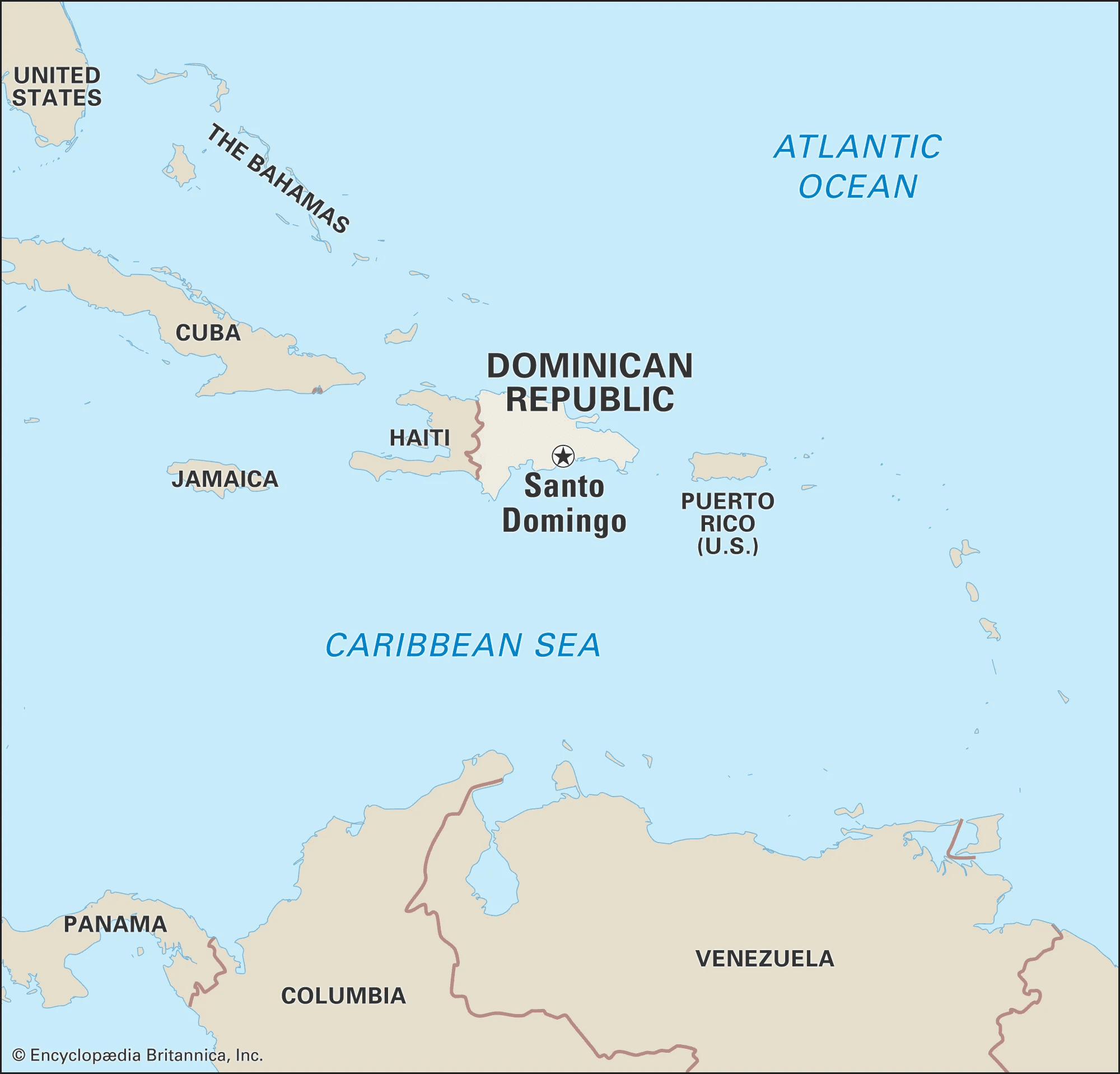
The storm had flattened most of Santo Domingo. Ovando decided not to rebuild the town where it stood. He moved it across the Ozama to the west bank — better anchorage, defensible high ground, easier to lay out. He laid it out on a grid. Santo Domingo was the first grid-plan city in the Americas. Straight streets crossing at right angles. Central plaza. The cathedral faces the plaza on one side, the cabildo (town hall) on another, the governor's residence on a third, merchants' arcades on the fourth. Blocks of standard size, subdivided into rectangular lots. Land distributed by lottery to settlers on written title. This template would be exported everywhere Spain went for the next three centuries. Havana, Mexico City, Lima, Buenos Aires, San Juan, Cartagena, Manila — all of them laid out on Ovando's grid. When you walk through the historic center of any Spanish American city today and notice that the streets are straight and the plaza is square, you are walking through a copy of what Ovando built in 1502.
Around the plaza in Santo Domingo, he began the construction on the Ozama Fortress and its Tower of Homage began in 1503 — the oldest surviving stone military structure in the Americas. Construction on the Hospital of San Nicolás de Bari began in 1503 — the first hospital in the Americas, modeled on the great Renaissance hospitals of Rome. Calle Las Damas — the first paved street in the Americas — was laid the same year. 🇺🇸