Created on
Updated on
1424/ Yongle Emperor
永乐驾崩

Preface: An alternative to the colonial age of exploration.
1405–1424 · 前六次 / First Six Voyages
Between the summer of 1405 and Yongle's death in 1424, Zheng He led six treasure voyages. Each of the six ran roughly two years from staging to return. The intervals between them ran from six months to eighteen months. The intervals were not rest. They were the operational core of the program. The voyages themselves were the visible output. Everything that made them possible happened on shore, and Zheng He was in charge of most of it.
The intervals went like this. A cycle would end in the summer or autumn, when the returning fleet caught the southwest monsoon back across the Bay of Bengal and up the South China Sea. The ships anchored at Liujiagang, offloaded envoys from the tributary states, and moved up the Yangtze to Longjiang 龙江 for the maintenance cycle: hulls out of the water for inspection and re-caulking, rigging replaced, canvas swapped, ironwork repaired, gunpowder weapons re-forged, sails re-cut. The largest wooden fleet in the world took six months of continuous shipyard work between voyages, and every one of those months was Zheng He's responsibility.
Foreign envoys were escorted upriver to the court — first at Nanjing, after 1421 at Beijing — for imperial audiences. Foreign tribute goods — pepper, aromatics, timber, ivory, gems, medicinal substances, exotic animals — were inventoried at the customs stations and moved into the imperial storehouses. State workshops began producing the outbound gifts for the next cycle: bolts of silk from the imperial looms at Suzhou and Hangzhou, porcelain from the kilns at Jingdezhen, ironware and copper coinage from the state foundries, gold-inlaid weapons and jade seals for the cefeng investiture rituals. Timber for hull replacement floated down the Yangtze from Sichuan and down the coast from Fujian. Provisions — rice, salted vegetables, dried meat, water tanks — were procured through the Ministry of War's supply chains, not the Ministry of Revenue's civilian ones. Every step of this ran through Zheng He's office as Grand Director of Palace Servants, and through the parallel eunuch bureaucracy Yongle had built up around him. Not through the civil ministries.
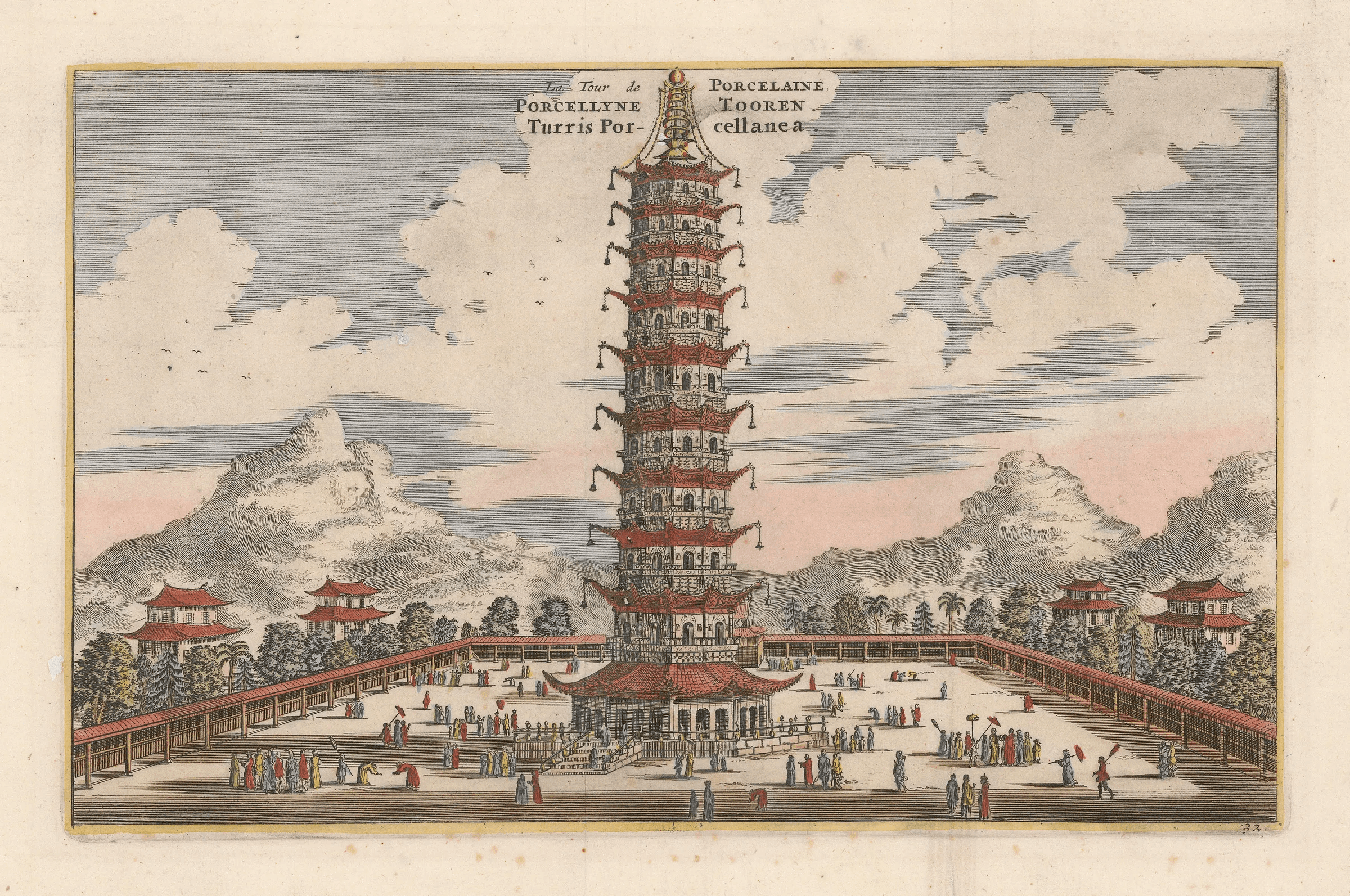
Beyond the fleet itself, Zheng He carried other portfolios that filled the intervals. From 1412 onward, he was one of the senior supervisors of the Great Bao'en Temple 大报恩寺 in Nanjing — the enormous nine-story porcelain-faced pagoda Yongle had commissioned in memory of his mother — a project that would take three more decades to finish and consume, at its peak, roughly a hundred thousand laborers. He conducted diplomatic ceremonies at court in years when Yongle himself was away on Mongol campaigns. He supervised improvements to the Grand Canal locks near Nanjing. He personally reviewed shipyard construction at Longjiang and at the auxiliary yards at Suzhou and Taicang. In the intervals between voyages he was, in effect, Yongle's operational deputy for the entire southern-and-maritime portfolio of the empire.
Zheng He's formal rank barely moved across nineteen years. He was Grand Director of Palace Servants 内官监太监 at the start of the program and Grand Director of Palace Servants at the end of it. He was not raised into the outer bureaucracy. He did not receive a noble title. He was not made a duke or a marquis, though his military service — Jingnan first, then six treasure voyages — would have justified such a title for a non-eunuch officer of comparable weight. What he received instead was authority without formal elevation. He reported directly to the emperor. He carried, unusually, a set of blank imperial scrolls pre-stamped with Yongle's seal — a device that allowed him to issue orders in the emperor's name from the deck of a treasure ship six thousand miles from the palace, or from a Fujian temple, or from a Sichuan shipyard. This is the sort of instrument normally reserved for frontier generals in active wartime. Yongle had given it to a eunuch in peacetime and left it in his hands for two decades.
The consequence, from the point of view of the civil bureaucracy, was that a very large portion of the empire's resources — silver, silk, porcelain, timber, ships, tens of thousands of trained personnel — was moving through channels the Ministry of Revenue could not audit. The money and the men were in eunuch hands. The account books did not pass through the Ministry of Revenue.This is the arrangement that would eventually end the voyages, and it is worth naming precisely because it was invisible while it was working.
The Ming civil bureaucracy — the six ministries, the censorate, the Hanlin Academy, the Grand Secretariat — was staffed by graduates of the imperial examination system. They were Confucian scholars by training, deeply hostile to eunuch power on ideological grounds, and additionally hostile to any imperial project that bypassed the ministries' oversight on fiscal and administrative grounds. The treasure voyages did both. They were commanded by a eunuch, funded by an eunuch-controlled directorate, staffed through eunuch-managed procurement chains, and answerable only to the emperor personally. From the point of view of the Ministry of Revenue, the treasure fleet was a decades-long, empire-scale expenditure whose books it could not read.
The Minister of Revenue for most of Yongle's reign was Xia Yuanji 夏原吉. He had held the office since 1402, appointed in the immediate aftermath of Zhu Di's coup, and he would hold it through three subsequent emperors. He was, by every contemporary account, an unusually capable administrator with an unusually clear grasp of the empire's actual finances. He opposed the treasure voyages from the beginning, on ledger grounds. His argument was consistent across twenty years: the outbound gifts — the silks, the porcelain, the silver — were being disbursed at market cost, while the incoming tribute — the symbolic offerings from foreign kings — carried nominal value far below its accounting weight. The voyages, in his reading, were a fiscal net loss that the empire was choosing to sustain for reasons that had nothing to do with the finances.
He was correct on the finances. He was outmaneuvered on the politics. Yongle listened to him on lesser matters and overrode him on this one, consistently, for two decades. In 1421, when Yongle insisted on funding a fifth personal campaign north of the Great Wall against the Mongols on top of the sixth treasure voyage on top of the completion of Beijing on top of the Grand Canal expansion, Xia Yuanji finally refused to sign. He submitted a memorial arguing that the treasury could not sustain the compound cost. Yongle imprisoned him. He remained in prison until Yongle's death three years later. From 1421 to 1424, with Xia Yuanji in a cell, the ministerial opposition to the treasure voyages was — for the last time — silenced. Not persuaded. Silenced. The sixth voyage sailed on schedule in 1421. The account books were kept where they had always been kept, in the Directorate of Palace Servants.
This is the arrangement that could not survive Yongle's personal death. It had never been institutionalized. It had been sustained by one emperor's individual will against the sustained opposition of his own civil government. The moment that emperor died, the arrangement had no independent support. The Ministry of Revenue would recover its own account books within a single day of the new reign.
1424 年 8 月 · 榆木川 / Yumuchuan
In the spring of 1424, the Yongle Emperor left Beijing at the head of an army to conduct his fifth personal campaign against the Mongols north of the Great Wall. He was sixty-four. He had led four previous campaigns into the steppe — in 1410, 1414, 1422, and 1423 — and none of the last three had produced a decisive result. The Mongol confederations he was chasing, principally the Eastern Mongols under Arughtai 阿鲁台 and the Oirats to the west, had learned that engaging Yongle's main force in the open field was suicidal, and had instead adopted a pattern of dispersal ahead of the imperial advance. Yongle would march. The Mongols would scatter. The Ming army would exhaust its supplies chasing shadows through country it could not hold. It would turn around and march home. The 1422 and 1423 campaigns had each ended this way.
The 1424 campaign began the same way. The imperial column moved north from Beijing in April, crossed the frontier in May, and pushed into what is now central Inner Mongolia through June. Arughtai's forces declined to engage. The scouts sent out ahead of the main column found empty grasslands. By July, Yongle was at the northern edge of his logistical reach, with supply lines stretched thin and no visible enemy to bring to battle. He ordered the return march.
He was already ill. The specific illness is not identified in the surviving Ming records, but the campaign's chief archivist, Yang Rong 杨荣 — later one of the "Three Yangs" who would dominate the civil bureaucracy for the next two reigns — recorded that the emperor's condition deteriorated rapidly through late July as the column moved south. By early August he could no longer ride. He was carried in a covered sedan.
On 12 August 1424, Yongle died at Yumuchuan 榆木川 — an unremarkable marshy waypoint on the return route through what is now the Ujimchin banner region of Inner Mongolia. The name means, roughly, "Elm Tree River." There was nothing at Yumuchuan. It was not a town, not a fortified post, not a garrison. It was where the imperial column had stopped for water. The emperor of Ming China, at the peak of his empire's reach into the world, died in the reeds beside an unnamed stream on a march that had produced no military result. He was 1,300 kilometers from Beijing. He was 2,300 kilometers from Nanjing. He was 8,000 kilometers from Calicut.
The emperor's body was placed inside a large tin coffin sealed against decomposition — the specific detail preserved in the Veritable Records of the Ming Taizong is that they melted down cooking pots to fabricate the sealed vessel — and the coffin was loaded into the imperial carriage as if the emperor were still riding in it. Meals continued to be delivered to the carriage on schedule. The imperial standard continued to fly at the head of the column. Only Yang Rong, the campaign's other senior officials — Jin Youzi 金幼孜 and Zhang Fu 张辅 — and a small number of eunuch attendants knew that the emperor was already dead.
They sent a rider ahead to Beijing with a sealed message for the crown prince, Zhu Gaozhi. Only when Zhu Gaozhi had time to organize the succession — to secure the palace, brief the ministries, and prepare the transition — did the official announcement of Yongle's death go out. The column continued its march south for weeks with a corpse in the carriage and an army that believed it was escorting a living emperor.
This was not a paranoid overreaction. It was a calculated response to the actual political situation. Yongle had come to the throne by usurpation in 1402. His younger brothers had been eliminated or neutralized during the Jingnan Campaign, but the possibility of a rival claimant emerging from the surviving Zhu family — most obviously from Zhu Gaoxu 朱高煦, Zhu Gaozhi's own younger brother, an ambitious military prince who had been agitating for the succession for years — was real enough to plan around. A field army that learned the emperor was dead in the middle of the steppe was a field army that might march anywhere. Yang Rong bought the succession the time it needed. Zhu Gaoxu did in fact attempt a rebellion five years later, in 1426, once his older brother was dead and his young nephew was on the throne. It was crushed. But that is Xuande's story, not Yongle's.
The official announcement of Yongle's death went out from Beijing in the first days of September 1424. It reached Nanjing within days by imperial courier. Zheng He was in Nanjing when it arrived. The specific date of his receipt of the news is not recorded, but his location is not in question. He had been in Nanjing continuously since the sixth voyage returned in September 1422. He was, at that moment, most likely at the Bao'en Temple 大报恩寺 construction site, or at the Longjiang 龙江 shipyards where the docked treasure fleet was under maintenance, or at his official residence in the Nanjing shoubei compound south of the imperial ancestral tombs. He was fifty-three years old. He had been Yongle's man for forty-two of those years — since the autumn of 1381, when he had been taken captive at eleven or twelve and delivered to the Prince of Yan's household in Beiping.
Whatever he did on the day the news arrived is not in the record. It would not be, and this is worth being explicit about. The Ming archival tradition records the deeds of emperors and the memorials of civil ministers. It does not record the private reactions of eunuch officials, even ones as consequential as Zheng He. On this event, on his own life, at fifty-three, he leaves no trace. We know only that within six months he had accepted the Nanjing shoubei appointment from a new emperor and was, from that point onward, no longer commanding a fleet in motion. The first phase of Zheng He's professional life ended at Yumuchuan. Not with any formal act. Not with a dismissal from command or a demotion in rank. Not with a change in title. It ended with a sealed tin coffin coming south from the steppe in an imperial carriage.
Every position Zheng He held — the surname Zheng, the rank of Grand Director of Palace Servants, the office of admiral of the treasure fleet, the pre-stamped blank imperial scrolls, the direct line of report bypassing the six ministries, the parallel eunuch bureaucracy through which the voyages ran, the political cover that had kept Xia Yuanji silenced for three years — every one of them had been personally instituted by Yongle and personally sustained by Yongle's individual will. None of it was institutional. All of it depended on one man. That man was now dead. The sole guarantor of the treasure voyage program was in a tin coffin somewhere between Yumuchuan and Beijing.
Zheng He was, professionally, alone for the first time since he was ten years old. Yongle had not been merely his sovereign; Yongle had been the household his boyhood was sold into, the master who had taken him from a slave-boy to a general in his personal army, the emperor who had renamed him, the political patron who had made every subsequent position possible. The relationship had lasted four decades. It ended without warning, in a marsh, over a thousand kilometers from any city.
Whatever came next for Zheng He would happen in a court that owed him nothing. The Confucian civil bureaucracy that Yongle had held at bay for twenty-two years was about to hold the balance. Xia Yuanji was in prison, but he would not be in prison much longer. The seventh voyage, which Zheng He did not yet know would happen, was six years away. Between August 1424 and June 1430, he would build a temple, guard a docked fleet, and watch his life's work slowly stop being funded.
1424–1430 · 南京守备 / Defender of Nanjing
Yongle's oldest son, Zhu Gaozhi, took the throne as the Hongxi Emperor on 7 September 1424. He was forty-six. He had spent the previous twenty-two years as crown prince — a title that was, for most of that period, an active political vulnerability. His father had never made a secret of preferring his second son, Zhu Gaoxu, as a military heir, and had entertained the possibility of changing the succession multiple times across two decades. Zhu Gaozhi had survived by being useful, patient, and, in temperament, the exact opposite of his father. He was scholarly, corpulent to the point that he could not ride a horse for extended periods, physically limited by what was probably early cardiovascular disease, and closely aligned with the Confucian civil bureaucracy his father had spent his reign holding at arm's length. On the day of his enthronement, he issued the order terminating the treasure voyages.
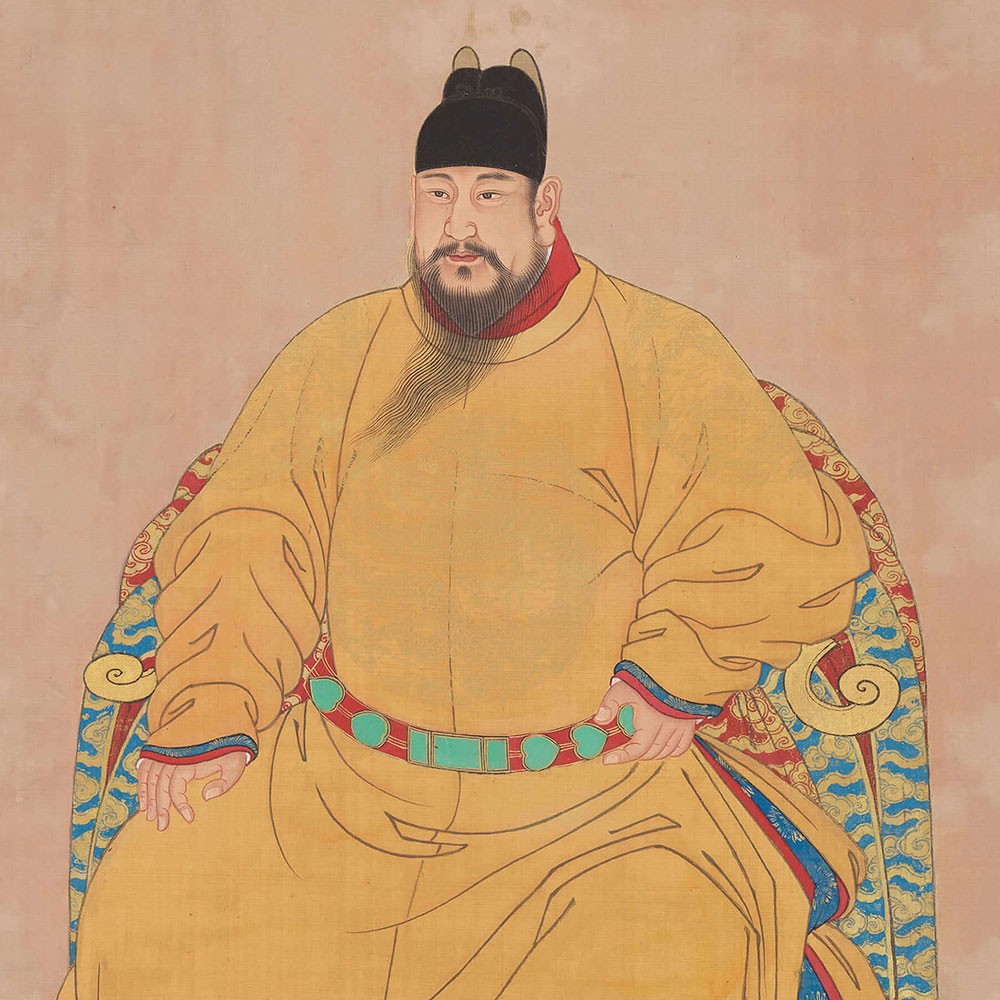
Same day. The termination was the first substantive act of the new reign. It was not a phased drawdown. It was not a review commission. It was not a deferred decision awaiting further consultation. It was not framed as an economy measure attached to a broader package. It was categorical. The edict directed that no further fleets were to be sent to the Western Ocean. Ships already outfitted were to be laid up. Timber allocations for future construction were to be redirected to canal and river work. The parallel logistical chain that had run through the Directorate of Palace Servants for two decades was, from that date, no longer authorized to procure for oceangoing purposes. On the same day, Hongxi released Xia Yuanji from prison and restored him to the Ministry of Revenue.
The synchronization of these two acts tells you what had been going on inside the court during Yongle's later years. The anti-voyage faction had not disappeared during the years of imperial silencing. It had consolidated around the crown prince. Zhu Gaozhi, who had spent the Jingnan Campaign in his teens holding Beiping alongside Yao Guangxiao and had inherited none of his father's expansionist temperament, had been quietly aligned with Xia Yuanji and the "Three Yangs" — 三杨 — for over a decade before he took the throne. Yang Shiqi 杨士奇, Yang Rong 杨荣 — the same Yang Rong who had concealed Yongle's death at Yumuchuan — and Yang Pu 杨溥 were the three senior Grand Secretaries of the Hanlin Academy who would dominate the civil bureaucracy across the next three reigns. All four of them — the Three Yangs and Xia Yuanji — had been waiting. They did not have to persuade Hongxi to end the voyages. Hongxi had come to the throne intending to.
Hongxi did not punish Zheng He personally. There is no record of any hostile act toward the admiral by the new emperor. No demotion in rank. No confiscation of property. No public rebuke. The dismantling of the program was ideological and fiscal, not personal. Zheng He had been Yongle's man, and Yongle was dead. What the treasure voyages represented — an emperor's personal project run through a eunuch bureaucracy in bypass of the civil ministries — was what the new regime was ending. The admiral who had commanded them was, in the new framework, someone to be managed rather than someone to be attacked. What Hongxi did instead was reassign him.
On 24 February 1425, five months into the new reign, Zheng He was appointed Defender of Nanjing 南京守备. The office had been vacant for some time. It carried nominal weight and considerable ceremonial prestige. Nanjing remained the empire's liudu 留都 — the "retained capital" — after Yongle's 1421 transfer of the primary capital to Beijing. It housed a full parallel bureaucracy: a shadow set of six ministries, a shadow censorate, a shadow military command. It contained the imperial ancestral tombs at Xiaoling — Zhu Yuanzhang's mausoleum — which required continuous ritual attendance. Any post attached to Nanjing carried real weight in the Ming symbolic order.
But the operational meaning of the appointment was unambiguous. The treasure fleet was to be docked at Longjiang and kept there. The ships that had crossed the Indian Ocean seven times were to be used, if at all, as a Yangtze coastal defense flotilla — river-service duty for what had been the largest ocean-going fleet in the world. The mobilization system that had put 27,800 men to sea in 1405 and 28,560 in 1413 was to be maintained on standby but not exercised. The Longjiang shipyards were to continue their maintenance operations at reduced tempo but were not to be authorized to build new oceangoing hulls. Zheng He himself was to sit on top of this preserved-but-frozen apparatus, in the parallel capital, six hundred kilometers south of the actual court in Beijing, out of the way of the Confucian reformers who were now running the empire.
He was fifty-four years old. He had been Yongle's admiral for twenty years. He was now, in effect, a caretaker. He accepted the appointment without recorded protest. There is no memorial from Zheng He objecting to the reassignment. Whether this was pragmatism, exhaustion, gratitude that he was not being purged, loyalty to the dynasty independent of the specific emperor, or something else, the record does not say. What the record shows is that he moved his household to the Nanjing shoubei compound, took up the daily administrative responsibilities of the office, and did not press for a return to sea. For the next six years, he did his job.
Hongxi died on 29 May 1425. He was forty-seven. He had reigned for ten months. The specific cause is not preserved in the surviving records with any precision. Contemporary accounts refer to chronic ill health that had been visibly worsening for the last several years of his tenure as crown prince, and modern historians usually infer some form of cardiovascular or metabolic failure consistent with his weight and reduced mobility. What matters here is that his death was neither an assassination nor a coup. He simply did not live long enough to make his reforms structural.
But the ten months were sufficient for the treasure voyages. The termination edict of 7 September 1424 had already dismantled the operational pipeline. Timber allocations had been redirected. Personnel had been reassigned or released. The tributary states were, through the winter of 1424–25, noticing that no Ming envoys were arriving to arrange the next round of missions. Ten months was long enough to break the momentum of a program that had run on continuous scheduling for twenty years. The infrastructure was still standing. The habit of using it was not.
Hongxi's twenty-six-year-old son, Zhu Zhanji 朱瞻基, took the throne as the Xuande Emperor 宣德帝 on 27 June 1425. Xuande's position on the treasure voyages was more complicated than his father's, and it stayed complicated for the entire five years before he authorized the seventh voyage.
He was the first Ming emperor born and educated in Beijing rather than Nanjing. He had grown up in Yongle's active tutelage — his grandfather had personally taken him on the 1414 Mongol campaign at age fifteen to expose him to military command, and had drilled him in the specifically expansionist worldview that had produced Beijing, the Yongle Dadian, the Grand Canal, and the treasure voyages themselves. In temperament and formation, Xuande was much closer to his grandfather than to his father. He hunted, he painted (his surviving works are among the finest imperial art of the fifteenth century), he wrote poetry, he took a personal interest in military affairs, and he thought globally in a way Hongxi never had.But he inherited his father's court, not his grandfather's.
The Three Yangs ran the Grand Secretariat. Xia Yuanji ran the Ministry of Revenue. The Confucian bureaucracy that had been suppressed under Yongle and released under Hongxi was now, in the transition to Xuande, fully in control of the day-to-day operation of the empire. Xuande did not have the internal support to reverse them on the voyages, and he did not try. He was young. His father had been dead for less than a month when he took the throne. He had to consolidate his position against the standing threat of his uncle Zhu Gaoxu, who would in fact rebel against him in 1426 and be crushed at Le'an. The last thing Xuande needed in his first five years as emperor was a public fight with his own senior ministers over an expensive maritime program his grandfather had run and his father had explicitly killed.
So he waited. The treasure voyage program stayed dormant for the next five years. Zheng He stayed at Nanjing. The docked fleet decayed slowly at Longjiang under maintenance regimes adequate for river service but not for open-ocean readiness. The physical infrastructure that had taken twenty years to build was being allowed, quietly, to age.
In 1428, Xuande transferred Zheng He from strict shoubei duties to supervising the completion of the Great Bao'en Temple. The project had been running since 1412 — Yongle's sixteen-year memorial to his mother, Empress Ma. The temple complex sprawled across the southern outskirts of Nanjing, but its centerpiece was the Porcelain Pagoda 琉璃塔 — a nine-story octagonal tower faced entirely in white glazed porcelain tiles, inset with Buddha figures and floral motifs in blue, green, yellow, and brown. Bronze bells hung from each of the eight corners of each of the nine levels — seventy-two in total — that rang in wind. Oil lamps burned continuously at each level, so that the pagoda glowed from within at night. The structure rose to about seventy-eight meters — approximately as tall as a twenty-story modern building — and was, when completed, the tallest building in China and among the tallest in the world.
European travelers of the seventeenth century recorded it as a wonder on the order of the Roman Colosseum. The Portuguese Jesuit Álvaro Semedo, who saw it in the 1630s, wrote that it was "the most sumptuous piece of Architecture in all the East." Johan Nieuhof, the Dutch envoy who visited Nanjing in 1656, produced the engraving that would circulate through European scholarly and popular publications for the next two centuries, becoming the most widely reproduced image of Chinese architecture in the West. The English writer Oliver Goldsmith mentioned it in his 1762 Citizen of the World as one of the great wonders of the age. It stood in that position until the Taiping Rebellion demolished it in 1856. Zheng He supervised the final years of its construction from 1428 through its completion in 1431.
The reassignment is, structurally, a demotion in a ceremonial wrapper. From commander of the largest fleet the world had ever put to sea to construction supervisor at a temple. The temple was an honor to be given. The command was not being returned. A man who had crossed the Indian Ocean seven times was now overseeing the placement of glazed porcelain tiles on a pagoda in the southern suburbs of Nanjing. The work was prestigious, culturally significant, and materially real — the Porcelain Pagoda would be studied, admired, and drawn for four hundred years — but it was not the treasure fleet. It was, in the vocabulary of the Ming court, honorable retirement. Zheng He was fifty-seven when the reassignment came. He carried it out. The pagoda was completed under his supervision in 1431. By the time it was finished, the last piece of the political situation that had ended the voyages had already shifted.
1430–1433 · 最后一次 / The Final Voyage
Xia Yuanji died on 19 February 1430. He was seventy-four. He had held office as Minister of Revenue almost continuously since 1402 — twenty-eight years across four reigns, briefly interrupted only by his three-year imprisonment under Yongle from 1421 to 1424. He had opposed the treasure voyages from the ledger side for the entire twenty-eight years. He was seventy-four when he died, and he had won the argument.
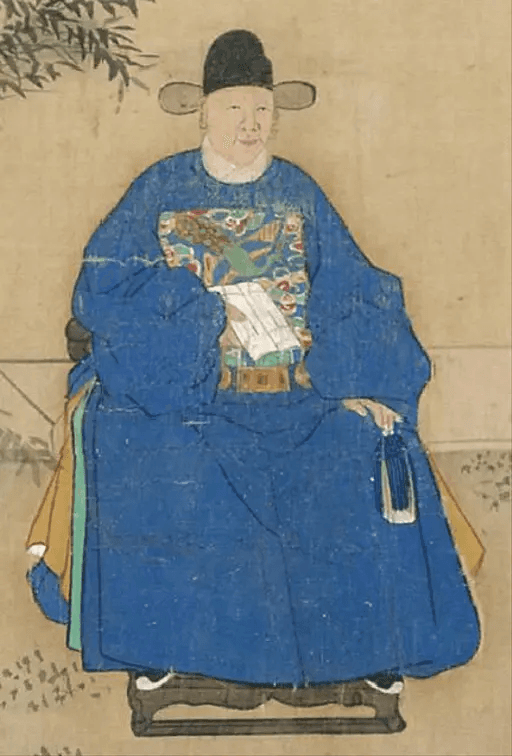
The specific cause is not preserved in the record with precision. He had been in office actively until close to the end — Xuande had personally visited him during his final illness, which is preserved in the Veritable Records of the Ming Xuanzong as an unusual mark of imperial respect for a senior minister. The emperor and the minister had reached, across five years of working together, something that resembled genuine mutual regard. Whatever Xuande's private views on the voyages were, Xia Yuanji had been the one civil official whose fiscal judgment he consistently trusted. With Xia Yuanji dead, that particular restraint was gone. Four months later, on 29 June 1430, Xuande issued the edict authorizing the seventh voyage.
The single most important structural opponent of the treasure voyages exits the stage in February, and the treasure voyages come back in June. Xuande had been waiting. He had inherited a court dominated by his father's ministers and had governed within its constraints for five years. When the constraint that mattered most in this particular file removed itself, he moved. The Three Yangs did not resist. Yang Shiqi and Yang Rong both submitted memorials on the seventh voyage that raised fiscal concerns without opposing the mission itself. Their political position had been the anti-voyage position for a decade, but their political position on this particular emperor's first major reactivation of his grandfather's program was to accommodate. Xuande was popular. He was competent. He had not otherwise pushed back against the Confucian bureaucracy. They picked their battles, and this was not one of them.
The tributary network had been slack for six years. Foreign envoys had stopped arriving at Nanjing and Beijing in anything like the earlier numbers. The eighteen states that had sent missions in 1416 had, by 1430, dwindled to a handful. Malacca continued to send tribute. Champa continued to send tribute. Ceylon and Cochin had gone silent. Hormuz and the East African polities had been out of contact for almost a decade. The official argument was that the network required a demonstration to reactivate it — a single voyage to reassert Ming presence, deliver imperial gifts, receive tribute missions in return, and re-anchor the ritual framework that had been allowed to lapse. This was defensible, and it was also insufficient.
The unstated rationale was Xuande's own political need. He was thirty-one years old. His father had reigned for ten months and had accomplished, in institutional terms, one thing: the termination of the treasure voyages. Xuande needed an accomplishment large enough to place his own reign next to his grandfather's in the dynastic record. The seventh voyage was that accomplishment. It was the only Yongle-scale project available to him. Beijing was already built. The Yongle Dadian was already compiled. The Mongol campaigns had been discontinued after Hongxi. The treasure fleet was the one remaining piece of Yongle's legacy that Xuande could pick up and use as his own. Zheng He was recalled to command. He was fifty-nine years old. He had been ashore for eight years.
The mobilization system, after five years of dormancy, restarted in six months. The edict went out on 29 June 1430. The staging cascade — Longjiang for final outfitting, Liujiagang for muster, Changle for the winter monsoon wait, Wuhumen for open water — was reactivated on schedule. Twenty-seven thousand five hundred fifty men were assembled. A hundred-plus ships were readied. The total personnel figure was almost identical to the 27,800 of the first voyage twenty-five years earlier.
This tells you two things simultaneously. The first is that the treasure voyage program had, at its peak under Yongle, achieved a genuine institutional depth. The shipyards knew how to build the ships. The military bureaux knew how to muster the men. The provincial governors knew how to procure the rice, the salted vegetables, the fresh water, the timber. Five years of dormancy had not destroyed the mobilization system. It had been maintained, mostly by Zheng He himself in his Nanjing shoubei capacity, at a level sufficient to permit reactivation.
The second is that the seventh voyage's staffing was going to be, in significant part, the same personnel as the earlier voyages. Ma Huan 马欢, now around fifty, came back to serve as translator for a third time. Wang Jinghong 王景弘, Zheng He's longstanding deputy, took command of the fleet's second division. Hong Bao 洪保 and Zhou Man 周满, veterans of the fourth and fifth voyages, returned as detachment commanders. The bench of experienced maritime officers had held. Zheng He himself had held. He was, by the standards of the period, an old man beginning what would be the longest and most geographically ambitious of all his voyages. He had already outlived Hongxi, Xia Yuanji, and most of the men he had first sailed with in 1405.
Before the fleet sailed, Zheng He erected two stone stelae. The first was at the Tianfei Palace at Liujiagang 刘家港 in Taicang — the Louedong Liujiagang Tianfei Gong Shike Tongfan Shiji Ji 娄东刘家港天妃宫石刻通番事迹记, the "Record of the Achievements in Communicating with Foreign Countries, Engraved at the Tianfei Palace at Liujiagang in Louedong." The second was at the Tianfei Palace at Nanshan in Changle 长乐 in Fujian — the Tianfei Lingying Zhi Ji 天妃灵应之记, the "Record of the Efficacious Response of the Divine Consort." Both were composed under Zheng He's direct supervision. Both were engraved in the winter of 1431 while the fleet was waiting at Changle for the northeast monsoon. Both survive.
These two stelae are the most reliable primary source we have on the treasure voyages, and it is worth being explicit about why.They were written by Zheng He himself, in the winter before the seventh voyage sailed, and they contain a compressed narrative summary of each of the previous six voyages: dates, routes, principal ports of call, encounters, outcomes. They predate the Veritable Records of the Ming Xuanzong by four years, Fei Xin's Xingcha Shenglan by five years, Ma Huan's Yingya Shenglan by twenty years, and the Ming Shi by three centuries. On any point where the stelae disagree with the later official histories — including the correct separation of the second and third voyages, which the Ming Shi would later collapse into one — the stelae are what modern scholarship follows.
Their ostensible subject is religious. Both stelae give thanks to Tianfei 天妃 — the Divine Consort, the sea goddess later merged into the broader Mazu 妈祖 cult — for protection through the previous six voyages. Zheng He personally credited the goddess with saving the fleet during multiple storms. The Changle stele describes lights appearing at the mastheads during typhoons and interprets them as the goddess's presence. It records specific incidents in which the fleet had appeared certain to founder and had been delivered by her intervention. In the religious register of the stelae, the treasure voyages were made possible by Tianfei. In the operational register of the same stelae, they are memorialized under Zheng He's own name and dated to his authorship.
Both registers are true simultaneously. This is how Zheng He, one of the fifteenth century's most consequential Muslim naval commanders, could without contradiction erect stone monuments thanking a Chinese sea goddess for six voyages that had, along the way, made offerings to Buddha, Vishnu, and Allah on a single Sri Lankan stone. He was Muslim in his private practice and in his lineage. He was a patron of Tianfei worship in his professional capacity, because Tianfei was the ritual center of Chinese maritime work and no fleet moved without her worship. He was a supervisor of Buddhist temple construction — the Bao'en Pagoda — because that had been the assignment given to him. None of these roles cancelled any of the others. He operated inside all of them at once. The fleet sailed through the Wuhumen in early 1432. Zheng He was sixty-one.
The seventh voyage's route was the most extensive of any. Champa, Java, Palembang, Malacca, northern Sumatra, Ceylon, Calicut, Hormuz, Aden, Mogadishu, Brava. From Calicut, a detachment sailed to Mecca — seven Chinese sailors, Ma Huan among them, boarded a local vessel and completed the hajj. This was, by any surviving record, the first arrival of Chinese under Ming state auspices at the holy city. Whether Zheng He himself joined that detachment has not been settled by the sources.
On the return leg, Zheng He died. The Ming record is not precise about the location. Most surviving accounts place his death at Calicut 古里 — modern Kozhikode, on the Malabar Coast of southwest India — during the fleet's final stopover on the way home. Some accounts place it at sea, on open water, after the fleet had already departed Calicut for the eastward crossing back to Ceylon and Sumatra. He was sixty-two. His deputy Wang Jinghong took over field command. Wang had commanded the second voyage in Zheng He's place, had sailed beside him on five of the other six, and had inherited most of Zheng He's operational relationships across the tributary network. The transition was clean. The fleet completed the return leg without incident. It reached Nanjing in July 1433, with envoys from eleven countries — including, for the first time, Mecca — aboard for imperial audiences at court.
Zheng He himself was buried at sea, according to the standard interpretation of the Ming records — his body committed to the water somewhere off the Malabar Coast. He had specified this in his own arrangements, according to the tradition maintained by his descendants. The Muslim burial rite — quick interment, no elaborate coffin, no delay — could not be observed properly aboard a ship four months from home. Committing the body to the sea was, in Islamic practice, an acceptable alternative and probably the outcome Zheng He himself would have chosen. The cenotaph at Niushou Mountain 牛首山 in the hills south of Nanjing is a yiguan zhong 衣冠冢 — an empty tomb. It contains his ceremonial robes, his official seal, his sword, and other personal effects, arranged as if for a body that is not there. It is oriented toward Mecca. The stone tablet in front of it carries an Arabic inscription — "Allahu Akbar" — alongside the Chinese one. The double burial — the Chinese state's empty tomb, the Muslim body at sea — is a plausible reflection of what Zheng He actually was, and neither half of it is more real than the other.
Xuande did not order an eighth voyage. Not immediately, not later. The reasons the Three Yangs and the ministerial system had marshaled against the program had not disappeared while it was running. The reactivation of 1430 had been a specific window opened by Xia Yuanji's death, and the death of Zheng He closed that window from the other side. There was no obvious successor. Wang Jinghong could have commanded another voyage — he was capable, experienced, and available — but the political sponsor and the operational architect had been the same person, and losing him meant losing the coordination between the Directorate of Palace Servants, the shipyards, the Fujian timber network, the Ministry of War's supply chains, and the tributary states themselves. Xuande, whose interest in the voyages had never risen to Yongle's level, allowed the program to lapse.
In 1435, Xuande died. He was thirty-six. His nine-year-old son took the throne as the Zhengtong Emperor 正统帝 under a regency dominated by the Three Yangs — the same three men who had waited out Yongle, aligned with Hongxi, accommodated Xuande, and now had a child on the throne and no adult imperial will to work against. In 1436, the regency issued a decree banning the construction of oceangoing ships and reassigning the Longjiang shipyards to river-craft production. In 1449, the Zhengtong Emperor was captured by the Oirat Mongols at Tumu — the Tumu Crisis 土木之变 — and the entire strategic orientation of the Ming shifted permanently to defensive posture on the northern frontier. Maritime affairs never returned to the imperial agenda in the fifteenth century.
The haijin 海禁 — the sea prohibition first codified under Hongwu and largely relaxed under Yongle — was tightened progressively through the mid-fifteenth century. By 1500, Ming maritime policy was, in operational terms, closed water. Chinese merchants could still sail. The state could not. The infrastructure that had taken thirty years to build had taken sixty years to dismantle. Zheng He had watched the first six years of the dismantling with his own eyes, from the deck of a docked flagship and from the scaffolding of a porcelain pagoda. He did not die in defeat. He died in mid-restart, in a moment his own dynasty had already been actively repudiating for six years, on a voyage the Ministry of Revenue had opposed on the ledgers before it left port. The port at Calicut was familiar. He had first entered it in 1406, at thirty-five, on the way west. He entered it for the last time in 1433, at sixty-two, on the way home. Everything that came after him — the ship-building ban, the archive attrition, the tightening of the haijin, the Tumu Crisis, the closing of the water — is properly a story about the Ming, not about him. He had already been gone.🇨🇳