Created on

1

/

8

/

2026

,

22

:

1

Updated on

1

/

14

/

2026

,

2

:

33

Location

Oakland, CA

Puritans(ii): Protestantism

清教徒(ii):新教
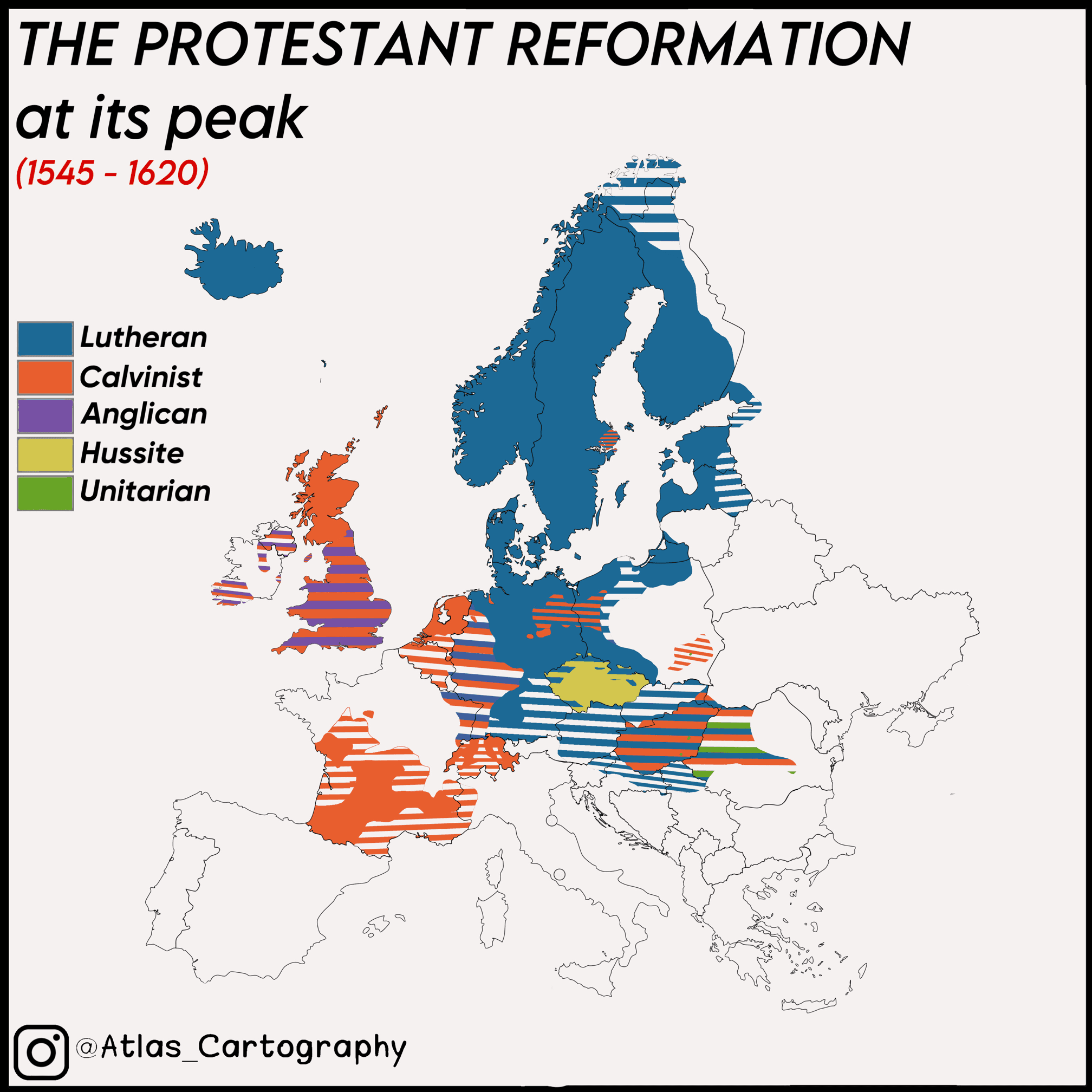
前言:本文和chatgpt合作写成。


新教(Protestantism)是 16 世纪欧洲宗教改革过程中形成的一大类基督教传统的总称。它并不是一个单一教会或统一宗派,而是一系列改革运动的集合。新教的共同特征,并不在于某一套完全一致的教义,而在于对罗马天主教会权威结构的系统性否定。新教否认教皇拥有至高无上的宗教权威,主张《圣经》而非教会传统才是信仰的最终标准,认为人的得救依赖信仰本身,而不是通过教会中介、圣礼或善功来实现。同时,新教强调信徒可以直接面对上帝,个人良心在信仰判断中具有不可被教会完全取代的地位。

新教的公认起点是 1517 年。这一年,德意志神学家马丁·路德在维滕贝格发表《九十五条论纲》,公开质疑罗马教会出售赎罪券的合法性。这一行为本身并非一场政治革命,而是一种神学与学术层面的挑战。然而,其历史意义在于,它首次将个人良心与《圣经》的权威,明确置于教会权威之上,从根本上动摇了中世纪拉丁基督教世界的权力结构。

1517 年之所以成为新教的起点,并非偶然。在此之前,欧洲已经长期积累了对教会财政特权、司法特权和道德腐败的不满。印刷术的普及削弱了教会对知识与文本的垄断,新兴国家权力不断强化,而个人宗教意识也逐渐觉醒。路德的行动之所以引发连锁反应,正是因为它将这些长期存在的结构性矛盾,以神学的形式公开化,并通过传播技术迅速扩散。

需要注意的是,新教从一开始就不是一个统一的教会体系。宗教改革在不同地区走出了不同道路。在德意志和北欧,形成了以路德为核心的路德宗传统;在瑞士和法语区,发展出以加尔文为代表的改革宗传统;在英格兰,则由国家主导建立了英格兰国教会。这些传统在教会制度、礼仪形式和政治关系上差异显著,但都被统称为新教,因为它们共同拒绝罗马教皇作为最高宗教权威。

从根本上看,新教与天主教的分界线并不在于是否信仰上帝,而在于权威的最终来源。天主教坚持教会传统与教皇权威在信仰中的核心地位,而新教则将终极权威交还给《圣经》,并通过个人良心来理解和实践信仰。这一权威转移,不仅改变了欧洲的宗教结构,也深刻影响了现代国家、法律制度以及个人责任观念的形成。概括而言,新教的起点是 1517 年对教会权威的公开挑战,而其本质,是将信仰的最终裁决权从罗马教会手中夺回,重新安置在《圣经》与个人良心之中。

马丁·路德出生于 1483 年的德意志,是一名受过严格经院神学训练的天主教修士,同时也是维滕贝格大学的神学教授。他隶属于奥古斯丁修会,身份上完全处于拉丁基督教体系的内部,而非边缘人物或政治反叛者。路德长期教授《圣经》,尤其深入研读《罗马书》《加拉太书》等文本,其思想并非来自民间反教会情绪,而是源自系统性的神学研究。

路德的个人气质对理解他至关重要。他并不是一个轻松的宗教改革者,而是一个长期被“人在上帝面前如何得救”这一问题折磨的人。他对自身的罪感极为敏感,对教会所提供的得救路径始终无法获得内心确信。正是在这种强烈而内在化的宗教焦虑中,他逐渐形成了后来被视为颠覆性的神学判断。

1517 年,路德发表了后来被称为《九十五条论纲》的文本。这并不是一份革命宣言,而是一份以拉丁文写成、供学术辩论使用的神学提纲,原本的目标对象是大学和教会内部的学术共同体。它的直接议题非常具体,即当时在德意志地区广泛推行的赎罪券制度。

赎罪券允许信徒通过支付金钱,来减少自己或已故亲属在炼狱中所需承受的惩罚时间。这一制度在实践中迅速商业化,甚至被宣传为“金钱一响,灵魂出狱”。路德在论纲中反复强调,真正的悔改是内心的转向,而不是可以通过金钱完成的交易。他认为教会无权将赦罪制度化为经济行为,更无权向信徒保证属灵后果。

在《九十五条论纲》中,路德并未直接否认教皇的存在,但他明确指出,即便教皇拥有宣告赦免的权力,也只能宣告上帝已经赦免的事实,而不能凭借自身权威制造赦免。这一论点看似温和,却在逻辑上极具破坏性,因为它否认了教会对救赎的主动控制权。

表面上看,这份文本是在反对赎罪券的滥用;但在更深层次上,它触及的是一个根本问题:教会是否垄断了人与上帝之间的中介权。如果得救依赖的是信仰本身,而不是教会制度,那么教会的权威就不再是不可替代的。如果个人可以直接通过《圣经》理解信仰,那么神职体系的等级结构就会失去神学基础。

路德发表《九十五条论纲》的直接动机,并非政治反抗,而是良心与神学之间的冲突。他认为赎罪券制度不仅误导信徒,还制造了一种虚假的安全感,使人误以为可以通过金钱逃避真正的悔改。推动他行动的核心信念,是他在长期研究中逐渐确立的判断:人得救并非因为行为或功德,而是因为信仰本身。这一思想后来被概括为“因信称义”。

与此同时,时代条件也放大了路德行为的影响。印刷术的普及使文本得以迅速传播,德意志诸侯对罗马教廷财政掠取长期不满,也使得政治力量愿意为宗教异议提供庇护。路德原本设想的内部学术讨论,很快演变为一场公开、不可逆的冲突。

路德在 1517 年并不认为自己是在创立一个新的宗教传统。他最初希望的是教会内部的自我纠正,并始终自认是忠于基督教核心信仰的人。正是罗马教廷对他的审判、谴责和将其定性为异端的过程,才将他一步步推向体制之外。也正是在这一过程中,路德从一名改革者,转变为一场历史性断裂的起点。从结果来看,马丁·路德并不是一个意图摧毁宗教的人,而是一个拒绝接受“用制度和金钱替代信仰”的神学家。他所挑战的,并不仅仅是赎罪券本身,而是教会是否拥有对救赎的最终解释权。当这一问题被公开提出时,新教的历史事实上已经开始。

Preface: This article was written in collaboration with ChatGPT.


Protestantism is a broad category of Christian traditions that emerged during the European Reformation of the sixteenth century. It is not a single church or a unified denomination, but rather a collection of reform movements. What these movements share is not a perfectly consistent body of doctrine, but a systematic rejection of the authority structure of the Roman Catholic Church. Protestantism denies that the pope possesses supreme religious authority, maintains that Scripture—rather than church tradition—is the ultimate standard of faith, and holds that salvation depends on faith itself, not on mediation by the church, the sacraments, or good works. At the same time, Protestantism emphasizes that believers can relate directly to God, and that individual conscience occupies a position in matters of faith that cannot be fully replaced by ecclesiastical authority.

The generally accepted starting point of Protestantism is the year 1517. In that year, the German theologian Martin Luther published the Ninety-Five Theses in Wittenberg, publicly questioning the legitimacy of the Roman Church’s sale of indulgences. This act was not, in itself, a political revolution, but a theological and academic challenge. Its historical significance lies in the fact that it explicitly placed individual conscience and the authority of Scripture above the authority of the Church for the first time, fundamentally destabilizing the power structure of the medieval Latin Christian world.

That 1517 became the starting point of Protestantism was no accident. Long before this moment, Europe had accumulated widespread dissatisfaction with the Church’s financial privileges, judicial privileges, and moral corruption. The spread of the printing press weakened the Church’s monopoly over knowledge and texts; emerging state powers continued to strengthen; and individual religious consciousness was gradually awakening. Luther’s action triggered a chain reaction precisely because it articulated these long-standing structural tensions in theological form and allowed them to spread rapidly through new technologies of communication.

It is important to note that Protestantism was never a unified church system from the outset. The Reformation took different paths in different regions. In the German lands and Northern Europe, a Lutheran tradition centered on Luther took shape; in Switzerland and the French-speaking regions, a Reformed tradition associated with Calvin developed; in England, the Church of England was established under state leadership. These traditions differed markedly in church organization, liturgy, and political relationships, yet they are collectively called Protestant because they all rejected the Roman pope as the highest religious authority.

At its core, the dividing line between Protestantism and Catholicism does not concern belief in God, but the ultimate source of authority. Catholicism insists on the central role of church tradition and papal authority in matters of faith, whereas Protestantism returns ultimate authority to Scripture, to be understood and practiced through individual conscience. This transfer of authority not only transformed Europe’s religious landscape, but also profoundly influenced the formation of modern states, legal systems, and concepts of individual responsibility.

In summary, the starting point of Protestantism was the public challenge to church authority in 1517, and its essence lies in reclaiming the final authority over faith from the Roman Church and relocating it in Scripture and individual conscience.

Martin Luther was born in 1483 in the German lands. He was a Catholic monk rigorously trained in scholastic theology and a professor of theology at the University of Wittenberg. He belonged to the Augustinian order and was fully embedded within the Latin Christian system, not a marginal figure or a political rebel. Luther spent years teaching Scripture, especially texts such as Romans and Galatians. His ideas did not arise from popular anti-church sentiment, but from systematic theological study.

Luther’s personal temperament is essential to understanding him. He was not a relaxed reformer, but a man deeply tormented by the question of how a human being can be saved before God. He was acutely sensitive to his own sense of sin and could not achieve inner certainty through the paths to salvation offered by the Church. Out of this intense, internalized religious anxiety, he gradually developed the theological judgments that would later be seen as subversive.

In 1517, Luther published the text later known as the Ninety-Five Theses. This was not a revolutionary manifesto, but a set of theological propositions written in Latin for academic debate, originally addressed to the university and ecclesiastical scholarly community. Its immediate subject was very specific: the system of indulgences that was being widely promoted in the German territories at the time.

Indulgences allowed believers to reduce the time of punishment in purgatory for themselves or deceased relatives through monetary payment. In practice, the system rapidly became commercialized and was even promoted with slogans such as “When the coin in the coffer rings, the soul from purgatory springs.” Luther repeatedly emphasized that true repentance is an inner turning, not a transaction that can be completed with money. He argued that the Church had no authority to institutionalize forgiveness as an economic act, nor to guarantee spiritual outcomes to believers.

In the Ninety-Five Theses, Luther did not directly deny the existence of the pope, but he made it clear that even if the pope possessed the authority to proclaim forgiveness, he could only declare what God had already forgiven, not manufacture forgiveness through his own authority. This argument appears moderate, but it is logically devastating, because it denies the Church’s active control over salvation.

On the surface, the text opposed the abuse of indulgences; at a deeper level, it addressed a fundamental question: does the Church monopolize the mediating role between human beings and God? If salvation depends on faith itself rather than church institutions, then church authority is no longer irreplaceable. If individuals can understand faith directly through Scripture, then the hierarchical structure of the clergy loses its theological foundation.

Luther’s immediate motivation for publishing the Ninety-Five Theses was not political rebellion, but a conflict between conscience and theology. He believed that the indulgence system not only misled believers but also created a false sense of security, encouraging people to think they could escape genuine repentance through money. The core conviction driving his action was a conclusion he had reached through long study: human beings are saved not by deeds or merit, but by faith alone. This idea later came to be summarized as “justification by faith.”

At the same time, historical conditions magnified the impact of Luther’s actions. The spread of the printing press allowed his texts to circulate rapidly, and German princes’ long-standing resentment of Roman financial extraction made political authorities willing to shelter religious dissent. What Luther had imagined as an internal academic discussion quickly escalated into a public and irreversible confrontation.

In 1517, Luther did not believe he was founding a new religious tradition. His initial hope was for reform within the Church, and he consistently regarded himself as loyal to the core of Christian faith. It was the Roman Church’s trials, condemnations, and eventual designation of him as a heretic that gradually pushed him outside the institutional framework. In this process, Luther moved from being a reformer to becoming the starting point of a historical rupture. In retrospect, Martin Luther was not a man intent on destroying religion, but a theologian who refused to accept the substitution of faith with institutions and money. What he challenged was not merely indulgences, but whether the Church possessed final authority over the meaning of salvation. Once this question was publicly posed, the history of Protestantism had, in effect, already begun.


Artist Statement

My work is not about explaining the world; it’s about dismantling the emotional structures that everyday life tries to conceal. What I focus on is not “story,” but the dynamics between people—the pull and tension of intimacy, the quiet control embedded in family, the fractures that come with migration, and how an individual maintains their boundaries within these systems.

I grew up between shifting cultures and languages, often in environments where I was expected—needed—claimed by others. I was asked to understand, to accommodate, to take care, to adjust. Even the gentlest relationships carried an undercurrent of consumption. That tension became the foundation of my creative work.

The characters in my stories are not moral types. They each carry a kind of private conflict: they want closeness but fear being swallowed; they long to be seen but can’t fully expose themselves; they are asked again and again to give—to family, to love, to work—without knowing how to keep space for themselves. These aren’t inventions; they’re reflections of lived experience. Writing, for me, is a way to unearth the emotions that have been suppressed, ignored, or normalized—and let them speak again.

I gravitate toward rhythmic narrative structures: compressed scenes, quick shifts, intentional gaps, silences between characters. These spaces reveal more truth than dialogue ever could. The themes I explore—migration, family, identity, trauma, intimacy, female autonomy—ultimately point to a single question: how does a person protect their boundaries in a world that constantly pulls at them, demands from them, watches them?

Creating is neither escape nor self-soothing. It is a way of reclaiming authorship over my own narrative. When I write a character’s silence, resistance, hesitation, or departure, I’m answering one essential question:

When the world insists on defining me, how do I choose to define myself?

艺术家陈述

我的创作不是为了解释世界,是为了拆开被日常掩盖的情绪结构。我关注的核心不是“故事”,而是人与人之间的力量关系——亲密带来的拉扯、家庭带来的隐性控制、身份在迁徙中的断裂,以及一个人在这些结构里如何保持自己的边界。

出生在不断变化的文化与语言之间,长期处在“被期待—被需要—被占用”的环境里。很多时候,我被要求理解别人、照顾别人、顺着环境。那些看似温和的关系里,也潜藏着吞噬性的需求。这种张力成了我创作的源头。

在我的故事里,人物不是善恶分明的类型。他们都带着某种困境:他们想靠近别人,但又害怕被吞没;他们渴望被看见,却无法完全暴露自己;他们在家庭、爱情、工作里不断被要求付出,却不知道怎样为自己保留空间。这并不是虚构,是现实经验的折射。我写作,把那些长期被压抑、被忽略、被习惯化的情感重新挖出来,让它们重新发声。

我倾向于使用节奏性的叙事结构:压缩的篇幅、快速切换的场景、留白的空间、人物之间的静默。这些“空隙”比对白本身更能暴露一个人的真实状态。我处理的主题是移民、家庭、身份、创伤、亲密、女性的自主性,但它们都指向同一件事:一个人如何在被拉扯、被要求、被凝视的世界里,维护自己的边界。

创作不是逃避,也不是自我疗愈,是重新夺回叙事权的方式。当我写下一个人物的沉默、反抗、犹豫或离开,我其实是在回答一个核心问题:
当世界不断定义我时,我选择如何定义自己?

Artist Statement

My work is not about explaining the world; it’s about dismantling the emotional structures that everyday life tries to conceal. What I focus on is not “story,” but the dynamics between people—the pull and tension of intimacy, the quiet control embedded in family, the fractures that come with migration, and how an individual maintains their boundaries within these systems.

I grew up between shifting cultures and languages, often in environments where I was expected—needed—claimed by others. I was asked to understand, to accommodate, to take care, to adjust. Even the gentlest relationships carried an undercurrent of consumption. That tension became the foundation of my creative work.

The characters in my stories are not moral types. They each carry a kind of private conflict: they want closeness but fear being swallowed; they long to be seen but can’t fully expose themselves; they are asked again and again to give—to family, to love, to work—without knowing how to keep space for themselves. These aren’t inventions; they’re reflections of lived experience. Writing, for me, is a way to unearth the emotions that have been suppressed, ignored, or normalized—and let them speak again.

I gravitate toward rhythmic narrative structures: compressed scenes, quick shifts, intentional gaps, silences between characters. These spaces reveal more truth than dialogue ever could. The themes I explore—migration, family, identity, trauma, intimacy, female autonomy—ultimately point to a single question: how does a person protect their boundaries in a world that constantly pulls at them, demands from them, watches them?

Creating is neither escape nor self-soothing. It is a way of reclaiming authorship over my own narrative. When I write a character’s silence, resistance, hesitation, or departure, I’m answering one essential question:

When the world insists on defining me, how do I choose to define myself?

艺术家陈述

我的创作不是为了解释世界,是为了拆开被日常掩盖的情绪结构。我关注的核心不是“故事”,而是人与人之间的力量关系——亲密带来的拉扯、家庭带来的隐性控制、身份在迁徙中的断裂,以及一个人在这些结构里如何保持自己的边界。

出生在不断变化的文化与语言之间,长期处在“被期待—被需要—被占用”的环境里。很多时候,我被要求理解别人、照顾别人、顺着环境。那些看似温和的关系里,也潜藏着吞噬性的需求。这种张力成了我创作的源头。

在我的故事里,人物不是善恶分明的类型。他们都带着某种困境:他们想靠近别人,但又害怕被吞没;他们渴望被看见,却无法完全暴露自己;他们在家庭、爱情、工作里不断被要求付出,却不知道怎样为自己保留空间。这并不是虚构,是现实经验的折射。我写作,把那些长期被压抑、被忽略、被习惯化的情感重新挖出来,让它们重新发声。

我倾向于使用节奏性的叙事结构:压缩的篇幅、快速切换的场景、留白的空间、人物之间的静默。这些“空隙”比对白本身更能暴露一个人的真实状态。我处理的主题是移民、家庭、身份、创伤、亲密、女性的自主性,但它们都指向同一件事:一个人如何在被拉扯、被要求、被凝视的世界里,维护自己的边界。

创作不是逃避,也不是自我疗愈,是重新夺回叙事权的方式。当我写下一个人物的沉默、反抗、犹豫或离开,我其实是在回答一个核心问题:
当世界不断定义我时,我选择如何定义自己?

Artist Statement

My work is not about explaining the world; it’s about dismantling the emotional structures that everyday life tries to conceal. What I focus on is not “story,” but the dynamics between people—the pull and tension of intimacy, the quiet control embedded in family, the fractures that come with migration, and how an individual maintains their boundaries within these systems.

I grew up between shifting cultures and languages, often in environments where I was expected—needed—claimed by others. I was asked to understand, to accommodate, to take care, to adjust. Even the gentlest relationships carried an undercurrent of consumption. That tension became the foundation of my creative work.

The characters in my stories are not moral types. They each carry a kind of private conflict: they want closeness but fear being swallowed; they long to be seen but can’t fully expose themselves; they are asked again and again to give—to family, to love, to work—without knowing how to keep space for themselves. These aren’t inventions; they’re reflections of lived experience. Writing, for me, is a way to unearth the emotions that have been suppressed, ignored, or normalized—and let them speak again.

I gravitate toward rhythmic narrative structures: compressed scenes, quick shifts, intentional gaps, silences between characters. These spaces reveal more truth than dialogue ever could. The themes I explore—migration, family, identity, trauma, intimacy, female autonomy—ultimately point to a single question: how does a person protect their boundaries in a world that constantly pulls at them, demands from them, watches them?

Creating is neither escape nor self-soothing. It is a way of reclaiming authorship over my own narrative. When I write a character’s silence, resistance, hesitation, or departure, I’m answering one essential question:

When the world insists on defining me, how do I choose to define myself?

艺术家陈述

我的创作不是为了解释世界,是为了拆开被日常掩盖的情绪结构。我关注的核心不是“故事”,而是人与人之间的力量关系——亲密带来的拉扯、家庭带来的隐性控制、身份在迁徙中的断裂,以及一个人在这些结构里如何保持自己的边界。

出生在不断变化的文化与语言之间,长期处在“被期待—被需要—被占用”的环境里。很多时候,我被要求理解别人、照顾别人、顺着环境。那些看似温和的关系里,也潜藏着吞噬性的需求。这种张力成了我创作的源头。

在我的故事里,人物不是善恶分明的类型。他们都带着某种困境:他们想靠近别人,但又害怕被吞没;他们渴望被看见,却无法完全暴露自己;他们在家庭、爱情、工作里不断被要求付出,却不知道怎样为自己保留空间。这并不是虚构,是现实经验的折射。我写作,把那些长期被压抑、被忽略、被习惯化的情感重新挖出来,让它们重新发声。

我倾向于使用节奏性的叙事结构:压缩的篇幅、快速切换的场景、留白的空间、人物之间的静默。这些“空隙”比对白本身更能暴露一个人的真实状态。我处理的主题是移民、家庭、身份、创伤、亲密、女性的自主性,但它们都指向同一件事:一个人如何在被拉扯、被要求、被凝视的世界里,维护自己的边界。

创作不是逃避,也不是自我疗愈,是重新夺回叙事权的方式。当我写下一个人物的沉默、反抗、犹豫或离开,我其实是在回答一个核心问题:
当世界不断定义我时,我选择如何定义自己?

sunny.xiaoxin.sun@doubletakefilmllc.com

Sunny Xiaoxin Sun's IMDb


©2025 Double Take Film, All rights reserved

I’m an independent creator born in 1993 in Changsha, now based in California. My writing started from an urgent need to express. Back in school, I often felt overwhelmed by the chaos and complexity of the world—by the emotions and stories left unsaid. Writing became my way of organizing my thoughts, finding clarity, and gradually, connecting with the outside world.


Right now, I’m focused on writing and filmmaking. My blog is a “real writing experiment,” where I try to update daily, documenting my thoughts, emotional shifts, observations on relationships, and my creative process. It’s also a record of my journey to becoming a director. After returning to China in 2016, I entered the film industry and worked in the visual effects production department on projects like Creation of the Gods I, Creation of the Gods II, and Wakanda Forever, with experience in both China and Hollywood. Since 2024, I’ve shifted my focus to original storytelling.


I’m currently revising my first script. It’s not grand in scale, but it’s deeply personal—centered on memory, my father, and the city. I want to make films that belong to me, and to our generation: grounded yet profound, sensitive but resolute. I believe film is not only a form of artistic expression—it’s a way to intervene in reality.

我是93年出生于长沙的自由创作者。我的写作起点来自一种“必须表达”的冲动。学生时代,我常感受到世界的混乱与复杂,那些没有被说出来的情绪和故事让我感到不安。写作是我自我整理、自我清晰的方式,也逐渐成为我与外界建立连接的路径。


我目前专注于写作和电影。我的博客是一个“真实写作实验”,尽量每天更新,记录我的思考、情绪流动、人际观察和创作过程。我16年回国之后开始进入电影行业,曾在视效部门以制片的身份参与制作《封神1》《封神2》《Wankanda Forever》等,在中国和好莱坞都工作过,24年之后开始转入创作。


我正在重新回去修改我第一个剧本——它并不宏大,却非常个人,围绕记忆、父亲与城市展开。我想拍属于我、也属于我们这一代人的电影:贴地而深刻,敏感又笃定。我相信电影不只是艺术表达,它也是一种现实干预。

sunny.xiaoxin.sun@doubletakefilmllc.com

Sunny Xiaoxin Sun's IMDb


©2025 Double Take Film, All rights reserved

I’m an independent creator born in 1993 in Changsha, now based in California. My writing started from an urgent need to express. Back in school, I often felt overwhelmed by the chaos and complexity of the world—by the emotions and stories left unsaid. Writing became my way of organizing my thoughts, finding clarity, and gradually, connecting with the outside world.


Right now, I’m focused on writing and filmmaking. My blog is a “real writing experiment,” where I try to update daily, documenting my thoughts, emotional shifts, observations on relationships, and my creative process. It’s also a record of my journey to becoming a director. After returning to China in 2016, I entered the film industry and worked in the visual effects production department on projects like Creation of the Gods I, Creation of the Gods II, and Wakanda Forever, with experience in both China and Hollywood. Since 2024, I’ve shifted my focus to original storytelling.


I’m currently revising my first script. It’s not grand in scale, but it’s deeply personal—centered on memory, my father, and the city. I want to make films that belong to me, and to our generation: grounded yet profound, sensitive but resolute. I believe film is not only a form of artistic expression—it’s a way to intervene in reality.

我是93年出生于长沙的自由创作者。我的写作起点来自一种“必须表达”的冲动。学生时代,我常感受到世界的混乱与复杂,那些没有被说出来的情绪和故事让我感到不安。写作是我自我整理、自我清晰的方式,也逐渐成为我与外界建立连接的路径。


我目前专注于写作和电影。我的博客是一个“真实写作实验”,尽量每天更新,记录我的思考、情绪流动、人际观察和创作过程。我16年回国之后开始进入电影行业,曾在视效部门以制片的身份参与制作《封神1》《封神2》《Wankanda Forever》等,在中国和好莱坞都工作过,24年之后开始转入创作。


我正在重新回去修改我第一个剧本——它并不宏大,却非常个人,围绕记忆、父亲与城市展开。我想拍属于我、也属于我们这一代人的电影:贴地而深刻,敏感又笃定。我相信电影不只是艺术表达,它也是一种现实干预。

sunny.xiaoxin.sun@doubletakefilmllc.com

Sunny Xiaoxin Sun's IMDb


©2025 Double Take Film, All rights reserved

I’m an independent creator born in 1993 in Changsha, now based in California. My writing started from an urgent need to express. Back in school, I often felt overwhelmed by the chaos and complexity of the world—by the emotions and stories left unsaid. Writing became my way of organizing my thoughts, finding clarity, and gradually, connecting with the outside world.


Right now, I’m focused on writing and filmmaking. My blog is a “real writing experiment,” where I try to update daily, documenting my thoughts, emotional shifts, observations on relationships, and my creative process. It’s also a record of my journey to becoming a director. After returning to China in 2016, I entered the film industry and worked in the visual effects production department on projects like Creation of the Gods I, Creation of the Gods II, and Wakanda Forever, with experience in both China and Hollywood. Since 2024, I’ve shifted my focus to original storytelling.


I’m currently revising my first script. It’s not grand in scale, but it’s deeply personal—centered on memory, my father, and the city. I want to make films that belong to me, and to our generation: grounded yet profound, sensitive but resolute. I believe film is not only a form of artistic expression—it’s a way to intervene in reality.

我是93年出生于长沙的自由创作者。我的写作起点来自一种“必须表达”的冲动。学生时代,我常感受到世界的混乱与复杂,那些没有被说出来的情绪和故事让我感到不安。写作是我自我整理、自我清晰的方式,也逐渐成为我与外界建立连接的路径。


我目前专注于写作和电影。我的博客是一个“真实写作实验”,尽量每天更新,记录我的思考、情绪流动、人际观察和创作过程。我16年回国之后开始进入电影行业,曾在视效部门以制片的身份参与制作《封神1》《封神2》《Wankanda Forever》等,在中国和好莱坞都工作过,24年之后开始转入创作。


我正在重新回去修改我第一个剧本——它并不宏大,却非常个人,围绕记忆、父亲与城市展开。我想拍属于我、也属于我们这一代人的电影:贴地而深刻,敏感又笃定。我相信电影不只是艺术表达,它也是一种现实干预。

PRODUCT

Design

Content

Publish

RESOURCES

Blog

Careers

Docs

About