DATE
12/8/25
TIME
5:31 PM
LOCATION
Oakland, CA
Taiwan’s Path to Democracy(i)
台湾民主历程(i)
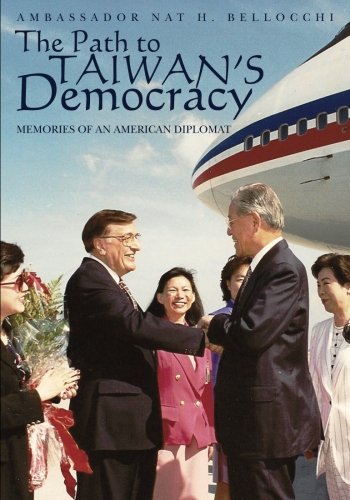
Preface:和ChatGPT合作完成。
1945 年,抗战胜利后,国民党接管日本在中国留下的所有行政机构、工厂、机械、武器、粮仓、企业、银行资产、铁路设备等。理论上这是国家资产,但实际上这一过程变成了国民党官僚、军队系统的大型掠夺行动。这件事在东北尤其严重,因为东北工业基础最完整,日本留下大量现代设施例如兵工厂、钢铁公司、铁路、机械,资源量巨大。国民党对东北并无长期统治基础,纪律更难约束。
1945到1946年,苏联军队占领东北期间,已经大量拆走日本种工业设备运辉苏联,特别是鞍山钢铁厂。而国民党接收后,也有大量设备被挪用、盗卖,生产遭严重破坏。一些高级军官直接把机器运到南方私卖,原本能用于国防生产的装备,在几个月内被洗劫一空。当时沈阳、长春有大量日本储备物资,粮仓、布料、药品、工业零件、军用物资、生活日用品。国民党官员们拉来卡车整车整车往外运。很多物资没有登记,直接被内部处理。民众原本期待物资发放却发现仓库空了,物价飞涨、黑市爆发。共产党在城市里几乎不需要宣传,群众自动倒向他们。
哈尔滨原本有大量日军官邸与企业宿舍。国民党接收后,接收官员直接入住高级房产。日本家庭家具、电器被公开拍卖,有官员把官邸当成私人豪宅装修,传出高官聚会饮酒、享受奢华生活的新闻。共产党抓到这个机会,在城市里做政治宣传,国民党是官僚资产阶级,结果被现实验证。日本留下的东北铁路也极为完整,后来车轮被拆,钢轨被偷,枕木被卖,机车零件被分装运走,整列火车消失。结果是铁路运输混乱,粮食调配出问题,军队机动能力下降,民生物价失控。
接收人员还接收了东北最大的煤矿,关掉矿坑卖机器。像抚顺、本溪等地的煤矿,本来是战略资源。国民党高层指派“接收大员”,先搜刮现金、煤炭库存,再取消工人工资。某些矿坑甚至因为设备被偷光而不得不停止运营,成千上万工人失业、中共趁势组织工人运动,并获得大量工人支持。这一系列的事件让三个最关键群体同时倒向共产党,城市民众看见腐败与混乱,工人阶级失业、被敲诈,被共产党吸收,知识分子痛心国民党无能,开始支持变革。同时,中共掌握农村与基层组织,深入农村,提供土地、组织农会。土改虽然激烈,但确实动员了大量农民。农民拿到土地 ,开始感激和为共产党作战。而国民党依赖地主、保甲制,社会基础越来越少。
辽沈战役造成东北失守,国军放弃锦州,东北 47 万军队损失过半。东北完全被中共控制,国军战略地位从此无法逆转。淮海战役,国军参战约 80 万人,损失约 55 万。最精锐的整编部队全军覆没,国民党在华东、中原再无作战能力。平津战役之后,华北崩溃,傅作义选择投降,北平基本未开战就被接收,国民党丧失北方全部战略位置。美国一开始希望国共合作,后来对国民党腐败与低效失望。国军在美援下仍然溃败,令美国放弃支持全面反共。到 1949,美国基本决定不再强力干预内战。
到 1949 年,华北、华东、华中基本都被中共控制,南京、上海、广州陆续失守。国民党考量,台湾有日治时代留下的完整的铁路、电力、学校等,有台湾海峡作为地理屏障,有产业与农业基础,加上冷战初期美军对台湾的战略兴趣,他们把台湾看成最后堡垒。大规模迁台时,国军将故宫文物从大陆运来台湾,将中央银行黄金储备大量运台,高层官员与其家属、军队十余万人迁台,同时学者、技术人员、文化界人士大量随行。
国民党撤台不是突然发生的,是从1948年到1950年的期间逐渐加速的过程。1948,战局恶化,开始把贵重物资往台湾转移,把中央银行黄金储备运到台湾;把故宫文物、国宝级档案分批从南京运出;把一些关键科研机构、大学,如中央研究院部分单位提前布局台北。1948到1949,国军节节败退,台湾被纳入最后保留地。蒋介石判断大陆已无法守住,准备全政权转移台湾。1949 1 月到 6 月,中央政府各部会陆续迁台,大批技术官员、情治人员、文化人员被安排上船,将领与家属大量离开上海、广州。国军残部从福建、广东、浙江不断撤到澎湖、基隆、高雄。1949 年下半年,台湾省行政系统变成事实上的中央所在地。大批外省军人、官僚、教师、警察、工厂员工进入台湾,国军防线完全围绕台湾海峡重新布署,情治系统,如军统、调查局、警备司令部全面落地台湾。1950 年 6 月韩战爆发,美国第七舰队进驻台湾海峡,导致中共无法武力攻台。国民党政权意外获得国际保护,台湾从逃亡政权变成冷战前线盟友。如果没有韩战,台湾可能撑不住,戒严政权可能活不了几十年。
而戒严,则是因为1945到1949之间发生的一连串事件。1945,国民党接管台湾,但表现极差,民怨迅速累积。日本投降后,台湾本来准备迎接祖国政府,但短短几个月,国民党官员腐败,黑市横行、物价暴涨,公务系统不专业,国军纪律混乱,民生迅速恶化,台湾人对外省政府的好感崩盘。
1947年2月27日,台北圆环附近,专卖局查缉员发现一位卖私烟的林江迈女士。当时查缉员暴力取缔,打伤了她,群众愤怒包围查缉员,结果查缉员开枪,打死路人。隔天,民众到台湾广播公司抗议,结果再次发生枪击,群众情绪全面引爆。事件迅速升级,各地爆发抗议,位于台湾北中南各城市的民众要求逮捕开枪者,要求撤换腐败官员,要求自治与改革,学生、律师、医生、商人均有参与。自治呼声高涨,台湾士绅成立处理委员会,提出开放省议会,结束军队对行政的干预,让台湾人参与治理,清查贪污,保障言论自由。
国民政府拖延、欺骗,然后武力镇压。陈仪政府表面愿意谈判,但同时秘密电报请求南京派军队增援,情报单位记录叛乱分子名单,将台湾精英视作反叛力量。于是,南京中央 3 月上旬决定以军事手段平息台湾。蒋介石3 月 8 日到达基隆,21 师与三处部队登陆。军队进城之后逐街搜捕,逮捕嫌疑分子,进行处决或让其失踪。而遭殃的不只是抗争者,还有医生,老师,律师,学生,商界领袖,地方仕绅,新闻工作者和民间组织者。他们被视为组织反叛的潜在领导者,而清理他们的目的,是清除台湾本省精英阶层,让政权再无挑战者。学界最低估计死亡人数在一千到三千之间,台湾学者的估计则在一万到两万,当代分析更高但无官方数字。
至此,族群裂痕正式形成,台湾人对外省政权的恐惧和敌意被写进集体记忆。本省菁英被清除,国民党政治权力完全掌控台湾,对台湾政治生态影响深远。直至后,几十年无本土政治领导人,所有权力被外省官僚掌握,社会失去反对力量,并形成长期社会恐惧文化。几十年家庭传承一句话:“政治的事不要讲。”
而1947到1948之间,共产党地下组织开始渗透台湾,中共在台湾秘密建立组织,学生社团,工人组织,地下宣传,民主运动团体。虽然规模不大,但足以让国民党恐慌。1949 年 5 月 19 日,台湾省警备总司令部发布《戒严令》。直至1987 年 7 月 15 日蒋经国宣布结束戒严,总共持续了 38 年。
In 1945, after Japan’s defeat in the Second Sino-Japanese War, the Nationalist government (KMT) took over all administrative institutions, factories, machinery, weapons, granaries, companies, banking assets, railway equipment, and other properties left behind by the Japanese in China. In theory, these were national assets, but in practice the process turned into a massive looting operation carried out by KMT bureaucrats and the military. This was especially severe in the Northeast, because Manchuria had the most complete industrial base: modern facilities such as arsenals, steel companies, railways, and machinery, with enormous resources. The KMT had no long-term governing foundation in the region, and discipline was even harder to enforce.
From 1945 to 1946, while the Soviet army occupied the Northeast, it had already dismantled and shipped vast quantities of Japanese industrial equipment to the Soviet Union, especially from the Anshan Steel Works. After the KMT took over, large amounts of equipment were again diverted or stolen, and production was severely damaged. Some senior officers transported machinery south to sell privately; equipment that could have been used for national defense production was stripped clean within months. At the time, Shenyang and Changchun still held massive Japanese stockpiles—grain, cloth, medicine, industrial parts, military supplies, and daily necessities. KMT officials drove trucks in and hauled the goods away by the truckload. Many materials were never registered and were simply handled internally. The public, expecting distribution of supplies, instead found the warehouses emptied; prices soared and the black market exploded. The Communist Party barely needed to run propaganda in the cities—people naturally turned toward them.
Harbin originally had a large number of former Japanese military residences and corporate dormitories. After the KMT takeover, reception officials directly moved into these high-end properties. Japanese household furniture and appliances were openly auctioned off. Some officials renovated the residences into private mansions, and news spread of high-ranking officers holding drinking parties and enjoying luxurious lifestyles. The Communist Party seized this opportunity for urban propaganda, calling the KMT a “bureaucratic capitalist class,” and reality seemed to prove the accusation true. The railway system left by the Japanese in the Northeast was also extremely complete, but later wheels were dismantled, tracks stolen, ties sold off, and locomotive parts broken down and carried away—entire trains disappeared. The result was chaos in rail transport, disruptions in grain distribution, reduced military mobility, and spiraling inflation.
Reception personnel also took over the largest coal mines in the Northeast and shut down shafts to sell off machinery. Coal mines in places like Fushun and Benxi—originally strategic resources—were seized by “reception commissioners” appointed by the KMT leadership. They first confiscated cash and coal reserves, then cancelled workers’ wages. Some mines had to cease operations entirely because equipment had been stolen down to the last piece. Tens of thousands of workers lost their jobs, and the CCP seized the opportunity to organize labor movements and gained strong support from workers. This series of events pushed three key groups toward the Communist Party simultaneously: urban residents, who saw corruption and chaos; the working class, who suffered unemployment and extortion and were then mobilized by the CCP; and intellectuals, who were dismayed by the KMT’s incompetence and began to support political change. Meanwhile, the CCP secured control in the countryside and grassroots communities, entering rural areas, redistributing land, and organizing peasant associations. Land reform, though harsh, mobilized large numbers of peasants. Once they received land, they became grateful and willing to fight for the Communists. The KMT, by contrast, relied on landlords and the baojia system, leaving it with a shrinking social base.
The Liaoshen Campaign resulted in the loss of the entire Northeast; the Nationalist army abandoned Jinzhou, and of the 470,000 troops in the region, more than half were lost. With the Northeast completely under Communist control, the Nationalists’ strategic position became irreversibly weak. In the Huaihai Campaign, roughly 800,000 Nationalist troops participated, and around 550,000 were lost. The most elite reorganized divisions were annihilated, and the KMT no longer had effective fighting capacity in East China or the Central Plains. After the Pingjin Campaign, North China collapsed; Fu Zuoyi chose to surrender, and Beiping (Beijing) was taken with almost no fighting. The KMT lost all strategic positions in the north. The United States initially hoped for KMT–CCP cooperation, but later became disappointed by Nationalist corruption and inefficiency. Even with American aid, KMT forces kept collapsing, prompting the U.S. to abandon the idea of fully supporting the Nationalists against the Communists. By 1949, the U.S. had essentially decided not to intervene forcefully in the civil war.
By 1949, North China, East China, and Central China were largely under Communist control, and Nanjing, Shanghai, and Guangzhou fell one after another. The KMT considered Taiwan to be its final redoubt: it had the infrastructure Japan had left behind—railways, electric grids, schools—plus the Taiwan Strait as a natural barrier, agricultural and industrial foundations, and potential strategic value to the United States at the dawn of the Cold War. During the mass relocation to Taiwan, the KMT transported the National Palace Museum treasures from the mainland, shipped large portions of the Central Bank’s gold reserves, and moved tens of thousands of high-ranking officials, their families, and military personnel to Taiwan. Scholars, technicians, and cultural figures also followed in large numbers.
The KMT retreat to Taiwan did not happen overnight; it accelerated gradually from 1948 to 1950. In 1948, as the war situation deteriorated, the KMT began moving valuable materials to Taiwan—shipping Central Bank gold reserves, transporting the National Palace Museum treasures and national archives from Nanjing, and repositioning key research institutions and universities (including parts of Academia Sinica) to Taipei. From 1948 to 1949, as Nationalist forces suffered successive defeats, Taiwan was designated the final fallback zone. Chiang Kai-shek concluded that the mainland could no longer be held and prepared to relocate the entire government. From January to June 1949, central government ministries moved to Taiwan; large groups of technical staff, intelligence personnel, and cultural workers boarded ships; generals and their families left Shanghai and Guangzhou. Nationalist remnants withdrew from Fujian, Guangdong, and Zhejiang to Penghu, Keelung, and Kaohsiung. By late 1949, the Taiwan provincial government had effectively become the central government. Huge numbers of mainland soldiers, officials, teachers, police, and factory employees entered Taiwan, the military redrew its defensive lines entirely around the Taiwan Strait, and intelligence agencies such as the Military Bureau of Investigation and Statistics, the Investigation Bureau, and the Taiwan Garrison Command established full operations on the island. In June 1950, the Korean War broke out, and the U.S. Seventh Fleet entered the Taiwan Strait, preventing the PRC from invading Taiwan. The KMT regime unexpectedly gained international protection, transforming Taiwan from a fleeing government into a Cold War frontline ally. Without the Korean War, Taiwan might not have survived; the martial-law regime might not have lasted decades.
Martial law, in turn, resulted from a series of events between 1945 and 1949. In 1945, after the KMT took over Taiwan, its poor governance quickly triggered public anger. Taiwanese people, who had expected to welcome the “motherland” after Japan’s surrender, instead saw within months: corrupt KMT officials, rampant black markets, soaring prices, an unprofessional bureaucracy, undisciplined troops, and rapidly worsening living conditions. Whatever goodwill Taiwanese once had toward the mainland government collapsed.
On February 27, 1947, near Taipei’s Roundabout area, Monopoly Bureau agents discovered Lin Jiang-mai, a woman selling contraband cigarettes. The agents violently attempted to confiscate her goods and injured her; bystanders surrounded them in anger, and the agents opened fire, killing a passerby. The next day, crowds marched to the Taiwan Broadcasting Company to protest, and gunfire broke out again, igniting public outrage. The incident escalated rapidly, and protests erupted across Taiwan. People in cities throughout the north, center, and south demanded the arrest of those who fired shots, the removal of corrupt officials, and political reform and self-government. Students, lawyers, doctors, and businesspeople all participated. Calls for autonomy surged, and Taiwanese gentry formed settlement committees, proposing the opening of a provincial assembly, ending military interference in administration, allowing Taiwanese participation in governance, investigating corruption, and guaranteeing freedom of speech.
The KMT government stalled, deceived, and then resorted to military suppression. Chen Yi’s administration pretended to negotiate while secretly telegraphing Nanjing for reinforcements and compiling lists of “rebellious elements,” treating Taiwanese elites as potential insurgents. In early March, Nanjing decided to quell the island by force. On March 8, Chiang Kai-shek arrived in Keelung, and the 21st Division and Third Corps landed. Once troops entered cities, they conducted door-to-door searches, arrested suspects, executed people, or caused them to disappear. Those persecuted were not only protesters but also doctors, teachers, lawyers, students, business leaders, local gentry, journalists, and civic organizers—regarded as potential leaders of rebellion. The purpose of eliminating them was to remove Taiwan’s native elite class so that the regime would face no further challenge. Academic estimates of the death toll range from 1,000 to 3,000 at minimum, with Taiwanese scholars estimating 10,000 to 20,000, and contemporary analyses suggesting even higher numbers, though no official figure exists.
By this point, the ethnic and political rift was firmly established. Taiwanese fear and hostility toward the mainland regime became embedded in collective memory. With the native elite purged, the KMT held complete political control over Taiwan, profoundly shaping the island’s political ecosystem. For decades afterward, Taiwan had no native political leaders; all authority was held by mainlander officials, opposition forces disappeared, and a long-term culture of political fear took hold. For generations, families passed down a single warning: “Don’t talk about politics.”
Between 1947 and 1948, underground Communist organizations began infiltrating Taiwan. The CCP secretly established student groups, labor organizations, underground propaganda networks, and democratic movement cells. Though small in number, they were enough to alarm the KMT. On May 19, 1949, the Taiwan Garrison Command issued the Martial Law Order. It remained in effect until President Chiang Ching-kuo lifted it on July 15, 1987, lasting a total of 38 years.