Created on
Updated on
Filmmaking In the Age of AI(1): Before Screenwriting There was Playwriting
Aeschylus, Sophocles, and Euripides
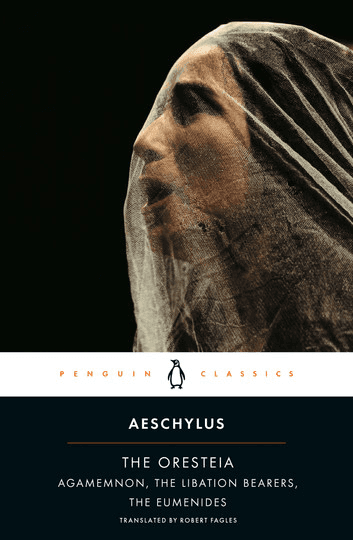
Preface: teaching myself the new filmmaking pipeline, now with AI. Co-written with Gemini, Claude.
As AI impact the film industry, and people are using it in the field more than they let on, I'm trying to catch the attention of Netflix and land this job. So I thought, what's a better way to catch their attention than writing an entire series on all aspects of filmmaking and AI's impact on them, along with my take, to impress them? Here we go. The first section is about screenwriting, before we start making a film, we don't always have a script (Not Wong Kar-wai), but we usually do. I wanna go back to screenwriting before there was a screen, play writing. What was it like to be a playwright?
The playwright was essentially invented in Athens. Tragedy emerged from religious festivals honoring Dionysus, and the great trio — Aeschylus, Sophocles, and Euripides — established the foundational conventions still in use today: dramatic conflict, character psychology, the chorus, the three-act arc. Theater in ancient Athens wasn't entertainment in the way we think of it today — it was religious ritual. Dionysus was the god of wine, ecstasy, transformation, and the blurring of boundaries between self and other. Festivals in his honor, particularly the City Dionysia held each spring in Athens, were the occasion for theatrical competitions. That sounds like a fun time, I wish I lived that time. Audiences of thousands gathered not just for a show but as an act of civic and spiritual devotion. The connection runs deep: the word tragedy likely derives from tragoidia — "goat song" — possibly referencing sacrificial rituals in Dionysus's honor. The very act of an actor wearing a mask and becoming someone else is fundamentally Dionysian — it's a controlled loss of self, a sanctioned transformation. Theater was born from the idea that temporarily dissolving who you are is sacred.
The Oresteia Trilogy is the only complete trilogy surviving from ancient Greece — three plays that form one enormous arc. The story goes like this. The great king Agamemnon has been away for ten years, fighting the Trojan War. His wife Clytemnestra has been waiting — but not patiently, and not faithfully. She has taken a lover, Aegisthus, and harbors a deep, cold rage against her husband.The reason for that rage is this: before the Greek fleet could sail for Troy, the winds would not blow. The prophet Calchas declared that the goddess Artemis demanded a sacrifice — Agamemnon's own daughter, Iphigenia. Agamemnon made the terrible choice. He lured his daughter to the altar under the pretense of a wedding, and had her killed. The winds blew. The fleet sailed. And Clytemnestra never forgot.
When Agamemnon finally returns home, triumphant, dragging the Trojan princess Cassandra as a war prize, Clytemnestra receives him with elaborate ceremony. She rolls out a crimson carpet — an act of dangerous hubris, as only gods walk on such things — and leads him inside. In the bath, she throws a net over him and stabs him to death. Cassandra, who has the gift of prophecy but the curse of never being believed, foresaw it all and walked into the palace anyway, accepting her fate. The chorus wails. Clytemnestra stands over the bodies, unrepentant.
Years pass. Agamemnon's son Orestes, who was sent away as a child, returns in secret with his friend Pylades. He is commanded by the god Apollo to avenge his father — which means killing his own mother. He reunites with his sister Electra at their father's tomb. Together they grieve, plan, and steel themselves. Orestes enters the palace in disguise, pretending to bring news of his own death. Clytemnestra, hearing her son is dead, barely flinches — revealing the depth of her coldness. Orestes kills Aegisthus(his mom's lover). Then he confronts his mother. Clytemnestra bares her breast — the breast that nursed him — and begs for her life. Orestes hesitates. Pylades, who has been silent the entire play, speaks his only three lines: Remember Apollo. Obey the god. Orestes kills her. Immediately the Furies appear — ancient goddesses of vengeance, invisible to everyone but Orestes, with serpents for hair and blood dripping from their eyes. They are the embodiment of the primal law that says: a man who kills his mother cannot go unpunished. Orestes flees, mad with guilt.
Orestes arrives at Delphi, Apollo's sanctuary, where the god tries to purify him. But the Furies will not let go. He travels to Athens and throws himself on the mercy of the goddess Athena, who does something extraordinary — she convenes a jury of Athenian citizens to decide his fate. The world's first murder trial. The Furies prosecute. Apollo defends. The jury votes — and ties. Athena casts the deciding vote in favor of Orestes. He is acquitted. The Furies are furious. Athena gently persuades them to accept a new role in Athens — not as spirits of endless vengeance but as protectors of the city, honored and worshipped. They are transformed from the Furies into the Eumenides — "the Kindly Ones." The trilogy ends with a procession, torchlight, and celebration. Blood vengeance has given way to civic justice. The world has grown up.
The deepest theme of the Oresteia is not really about obedience to gods at all. It's about how justice itself changes and grows. The old system — the Furies' system — is blood vengeance. Someone in your family is killed, you kill the killer. Then their family kills you. Then your family kills them. It never ends. It is an infinite chain of righteous violence, each act justified by the one before it, stretching back forever. This is where the House of Atreus has been trapped for generations. Aeschylus shows this system destroying itself through the story. Every act of vengeance is simultaneously a new crime requiring new vengeance. Clytemnestra kills Agamemnon to avenge Iphigenia. Orestes kills Clytemnestra to avenge Agamemnon. Who kills Orestes? Where does it stop? It stops — and this is the extraordinary moment of the trilogy — when Athena invents something new. A jury. A trial. Evidence, argument, deliberation, and a verdict. The Furies are not destroyed or defeated; they are transformed into something new — protectors of civic order rather than agents of endless vengeance. Aeschylus is telling the story of civilization learning to replace the cycle of private revenge with the idea of public, reasoned justice. The trial of Orestes is the birth of law.
The trilogy premiered at the Dionysia of 458 BCE, where it outperformed tetralogies by Sophocles and other competitors — marking Aeschylus's thirteenth and final win at the festival. He died just two years later, so it was essentially his farewell masterpiece, and he went out at the top. At the City Dionysia, playwrights competed against one another — each presenting a trilogy of tragedies followed by a comic "satyr" play. Judges chose the winners based on audience response, and victorious playwrights received a wreath of ivy. Almeida Theatre It was a massive public event — performed in the Theatre of Dionysus, a semi-circular open-air structure on the Acropolis slope seating up to 15,000 spectators.
Aeschylus won first prize at the City Dionysia thirteen times total. This compares favorably with Sophocles's reported eighteen victories, and far surpasses the five victories of Euripides. That last detail is remarkable when you think about it — Euripides, whom many consider the most psychologically modern and brilliant of the three, was also the least popular with the judges in his own lifetime. The Athenian audiences found him too strange, too provocative, too willing to make them uncomfortable. History, however, eventually sided with him — of more than 300 known tragedies, only 30 complete plays have survived — six by Aeschylus, seven by Sophocles, and 18 by Euripides. Almeida Theatre We have more of Euripides than anyone else, simply because later generations kept copying his work. Aeschylus's epitaph commemorates his participation in the Greek victory at the Battle of Marathon, while making no mention of his success as a playwright. Wikipedia The man who wrote the greatest trilogy in ancient theater apparently felt that fighting for Athens as a soldier was the more important achievement. That tells you something about how Greeks thought about civic duty versus artistic fame. More on this in the next post. ☀️