Created on
1
/
19
/
2026
,
23
:
16
Updated on
1
/
29
/
2026
,
0
:
51
Location
Oakland, CA
Communication Studies (iii): “Legitimized" Transgression
传播学(iii): 合理化的越界
写在前面:接上篇,本文和chatgpt合作完成。
Bernays 明确意识到,谎言在长期传播中是低效工具。谎言一旦被识破,就会迅速侵蚀信任,而失去信任的传播结构无法持续运转。因此,他真正追求的从来不是短期奏效的欺骗,而是能够长期、稳定运行的舆论结构。在这个意义上,他对谎言的否定并非出于道德立场,而是功能判断:谎言不具备系统层面的可持续性。
基于这一判断,Bernays 提出了一个关键前提:事实本身并不会自动生成意义。事实往往是零散的,意义并不内嵌其中,而是通过选择、排序和解释被赋予的。公共意见也从来不是事实的简单累加,而是一个被组织、被结构化的结果。因此,propaganda 的核心并不在于编造事实,而在于决定哪些事实被呈现、如何排列这些事实、以及如何把它们连接成一个连贯的叙事。意义并非来自事实本身,而来自事实之间被设计出来的关系。
在这一层面上,“选择”本身是不可避免的。即便宣称自己在进行“客观报道”,也无法逃脱结构性取舍:报道什么、不报道什么,用什么标题、放在什么位置,这些决定本身就已经在塑造理解。Bernays 并没有发明这种偏向,而是把这一点明确说出来——所谓中立,并不意味着不存在取舍,而只是取舍不被承认。
这也解释了一个常见误解:Bernays 所说的 propaganda 并不等同于“洗脑”。他并不认为人是可以被直接灌输观念的被动容器。相反,他的判断是,人只能在既有的心理结构、情绪模式与社会认同中作出反应。因此,他的目标不是改造思想,而是激活、放大并重新排列那些本来就存在的心理倾向。
正因如此,Bernays 在实践中依赖的并非逻辑论证,而是恐惧、认同、羞耻、荣誉和从众心理。他并不创造新的欲望,而是重新配置既有的欲望与情绪资源,使某种立场成为最自然、最省力的选择。
这一方法在联合果品公司与危地马拉的案例中体现得尤为清楚。
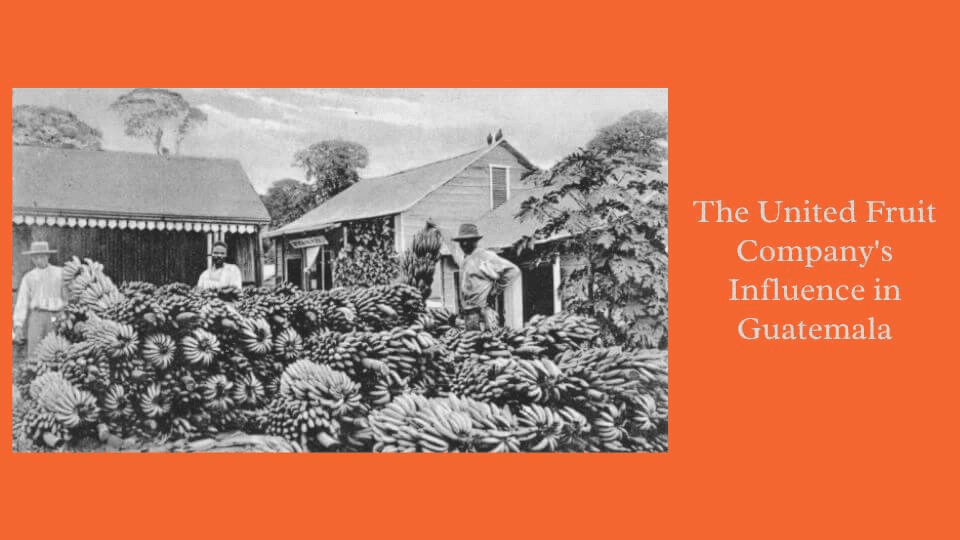
19 世纪末至 20 世纪初,危地马拉的核心困境并非意识形态,而是国家能力不足:财政薄弱、基础设施匮乏、出口结构高度单一。政府希望通过特许制度引入外国资本,换取铁路、港口与出口通道的建设。United Fruit Company 正是在这一背景下进入,并逐步获得了土地、税收与交通方面的特殊地位,其影响范围很快超出一般商业活动。
在土地层面,联合果品通过优惠条款集中持有大量适合出口作物的优质土地,其中相当一部分并未投入生产。这种土地结构客观上限制了本地农民和潜在竞争者的进入空间,也压缩了国家在农业政策和土地调配上的操作余地。
在交通与物流层面,公司通过关联企业控制了连接种植区与港口的铁路系统,并参与关键港口的运营。出口通道在形式上是商业资产,在功能上却承担着国家级基础设施的角色,使政府在贸易与运输政策上的执行能力受到制约。
围绕铁路与港口形成的通信与信息优势,也进一步加剧了这种不对称。对运输、价格与市场信息的控制,转化为谈判与决策上的结构性优势,国家在信息获取上的滞后削弱了其治理能力。
在财政层面,联合果品长期以低估值申报土地和资产,税负极低。在国家财政本就薄弱的条件下,这种结构使税制逐渐失去调节功能,财政调控权在实践中被企业申报制度掏空。
在劳工层面,公司在其控制区域内形成高度封闭的用工体系,工人对企业在就业、住房和生活物资上的依赖,使劳工问题难以通过国家法律体系解决,监管功能被企业内部制度替代。
这些因素叠加的结果是:国家在形式上仍保有主权与法律,但在土地、交通、财政、劳工和出口等关键领域,已经难以作出独立决策。政府的政策空间被压缩到不触及公司利益的狭小范围内,一旦尝试调整,便会引发系统性反弹。
正是在这种结构背景下,Jacobo Árbenz 上台。Árbenz 并非通过政变执政,而是在宪政框架内经选举成为总统(1951–1954)。他的改革重点并不在于意识形态重塑,而在于恢复国家对土地、税收和公共资源的基本调配能力。
土地改革成为核心并非偶然。长期以来,大量优质土地被集中持有且处于闲置状态,而多数农民缺乏耕地,农业生产率低下,农村贫困持续积累。1952 年的土地改革法明确区分生产性土地与闲置土地,仅对后者进行征收,并依据既有税务申报估值提供补偿。这一设计并非否定私有产权,而是试图提高土地利用率。
正是在补偿机制上,制度矛盾被集中暴露。长期低报土地价值以减少税负,在既有体系中被默许,而改革按申报估值执行补偿,使这种做法直接反噬其受益者。冲突的焦点并不只是利益受损,而是国家是否重新开始按规则行使主权。
在这一结构性冲突中,Bernays 的作用并不在法律或政治决策层面,而在叙事层面。他参与的不是土地谈判,而是冲突的再定义:将一场“国家治理能力与企业利益”的经济冲突,重塑为“意识形态威胁”和“国家安全问题”。
在这一叙事中,土地制度、税务估值与补偿规则逐渐被移出讨论中心,取而代之的是“左翼政府”“共产主义渗透”“苏联势力进入西半球”等标签。同时,企业自身的利益被刻意淡化,由记者、学者和所谓“拉美问题专家”的分析来承担发声功能,从而制造出“多方独立判断一致”的印象。
这种操作并未直接决定政变的发生,但它改变了干预行为的可辩护性与政治承受度。当 CIA 启动 PBSUCCESS 行动时,威胁叙事已经成熟,行动在舆论和政治层面具备了可接受性。
因此,更准确的表述是:Bernays 并没有推翻危地马拉政府,但他参与塑造了一种认知环境,使“推翻它”在美国变得合理、可被理解、且不易立即引发系统性反弹。在大众民主制度中,往往正是这种被提前铺设的合理性,而非直接命令,决定了历史事件的走向。
Preface: Continuing from the previous piece. This article was co-written with ChatGPT.
Bernays was explicit in his belief that lies are an inefficient tool for long-term persuasion. Lies are easily exposed, and once uncovered, they rapidly erode trust. A communication system that loses trust cannot operate sustainably. For this reason, Bernays was never interested in deception that merely “works once,” but in building opinion structures that could function reliably over time. His rejection of lying was not primarily moral, but functional: lies lack systemic durability.
From this premise, Bernays advanced a crucial insight: facts do not automatically generate meaning. Facts are inherently fragmented, and meaning is not embedded within them—it is assigned. Public opinion is never a simple aggregation of facts, but the result of organization and structure. Accordingly, the core task of propaganda is not to invent facts, but to decide which facts are presented, how they are ordered, how they are interpreted, and how they are linked into a coherent narrative. Meaning arises not from facts themselves, but from the relationships constructed between them.
At this level, Bernays emphasized that selection is unavoidable. Even when one claims to practice “objective reporting,” one cannot escape structural choice: what to cover, what to omit, which headlines to use, and where to place a story. These decisions already shape interpretation. Bernays did not invent bias; he made explicit what was usually concealed—that neutrality does not mean the absence of structure, but the refusal to acknowledge it.
This clarification also addresses a common misunderstanding: Bernays’ concept of propaganda is not equivalent to “brainwashing.” He rejected the notion that individuals are passive containers into which ideas can simply be poured. On the contrary, he argued that people respond only within preexisting psychological structures, emotional patterns, and social identities. His aim was therefore not to transform beliefs wholesale, but to activate, amplify, and rearrange tendencies that already existed.
As a result, Bernays relied less on logical argument than on fear, identification, shame, honor, and conformity. He did not seek to manufacture new desires, but to reconfigure existing emotional resources so that a particular attitude would feel natural and effortless.
This approach is clearly illustrated in the case of United Fruit Company and Guatemala.
From the late nineteenth to the early twentieth century, Guatemala’s core problem was not ideology but weak state capacity: fragile public finances, limited infrastructure, and heavy dependence on a single export economy. The government sought foreign capital through concessionary arrangements, trading land and privileges for railways, ports, and export infrastructure. United Fruit entered under these conditions and gradually acquired influence that exceeded ordinary commercial activity.
At the land level, United Fruit accumulated large tracts of high-quality agricultural land through preferential terms, much of which remained idle. This land structure constrained access for local farmers and potential competitors, while sharply limiting the state’s ability to implement agricultural or land-use policy.
In transportation and logistics, the company—through affiliated firms—controlled railways linking plantations to ports and participated in operating key port facilities. Although formally private assets, these networks functioned as national infrastructure, restricting the government’s ability to enforce trade or transport policy independently.
Control over rail and port systems also produced informational asymmetries. Access to transport, pricing, and market information translated into structural bargaining power, while the state’s delayed access further weakened governance capacity.
At the fiscal level, United Fruit consistently undervalued land and assets for tax purposes, resulting in extremely low effective taxation. Given the state’s already limited revenue base, taxation ceased to function as a regulatory tool, and fiscal authority was effectively hollowed out through corporate reporting practices.
In labor relations, the company maintained closed employment systems in areas under its control. Workers depended on the firm for employment, housing, and basic necessities, making labor disputes difficult to address through national legal frameworks. Regulatory authority was displaced by internal corporate governance.
Together, these dynamics produced a situation in which the state retained formal sovereignty but lacked effective control over land, transport, revenue, labor, and exports. Policy space shrank to the narrow range that did not challenge corporate interests, and attempts at reform triggered systemic resistance.
It was within this structure that Jacobo Árbenz assumed office. Árbenz was elected president within Guatemala’s constitutional framework (1951–1954), not through revolution or coup. His reform agenda was not primarily ideological, but aimed at restoring the state’s basic capacity to allocate land, taxation, and public resources.
Land reform became central for structural reasons. Large areas of productive land were held idle, while the majority of rural workers lacked access to farmland. Agricultural productivity stagnated, and rural poverty intensified. The 1952 agrarian reform law distinguished between productive and idle land, authorizing expropriation only of the latter and compensating owners based on existing tax valuations. This design did not abolish private property; it sought to increase land utilization.
It was precisely the compensation mechanism that exposed the system’s internal contradiction. Longstanding underreporting of land values had been tolerated for tax purposes, but when compensation was calculated on that basis, the practice rebounded against its beneficiaries. The conflict was no longer about isolated losses, but about whether the state could again exercise sovereignty according to its own laws.
In this structural confrontation, Bernays’ role lay not in legal negotiations or domestic politics, but in narrative construction. His intervention reframed a conflict over governance and corporate power into an ideological and security issue. Land law, taxation, and compensation were displaced by labels such as “leftist government,” “communist infiltration,” and “Soviet influence in the Western Hemisphere.”
At the same time, corporate interests were deliberately obscured. United Fruit avoided direct public advocacy, while journalists, academics, and policy commentators supplied ostensibly independent analyses that converged on the same conclusions. The effect was the appearance of broad consensus rather than corporate lobbying.
This narrative work did not itself cause the coup, but it reshaped the environment in which intervention became politically defensible. By the time the CIA launched Operation PBSUCCESS, the threat narrative was already established, lowering the political cost of action.
In this sense, Bernays did not overthrow the Guatemalan government. He helped create the conditions in which overthrowing it became reasonable, intelligible, and politically survivable within the United States. In mass democracies, it is often this prior construction of legitimacy—rather than direct command—that determines how history unfolds.