Created on

1

/

19

/

2026

,

23

:

16

Updated on

1

/

29

/

2026

,

0

:

23

Location

Oakland, CA

Communication Studies (ii): Edward Bernays, and How To Slow Down

传播学(ii): 慢下来
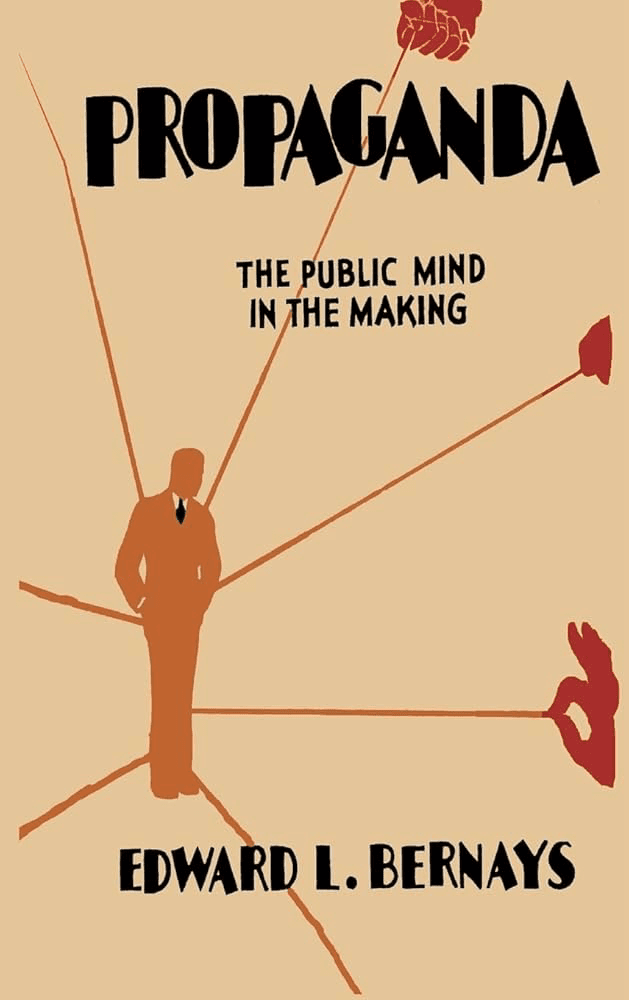
写在前面:接上篇,本文和chatgpt合作完成。


Edward Bernays(1891–1995)出生于奥地利维也纳,幼年随家人移民美国,是精神分析学创始人 Sigmund Freud 的外甥。这一亲属关系并非轶事,而是他思想形成的重要背景之一。Bernays 并未走学术研究型路径,而是在新闻、宣传与政府实践中成长。他接受过大学教育,但并未进入学院体系,而是早早进入媒体与信息运作的实务领域。

第一次世界大战期间,他参与了美国政府的战争宣传与信息动员体系,在这一过程中近距离观察并参与了如何通过媒体、象征与叙事,在短时间内动员一个民主社会支持战争。战后,他将这些实践经验加以系统化,转而为企业、政府与政治力量服务,并逐步将“宣传”这一高度政治化的概念,重新包装为更具中性外观的“公共关系”(Public Relations)。他并非这一行业的唯一塑造者,但无疑是最早对公共关系的职业角色、技术逻辑与社会功能进行系统阐述和实践的人之一。

Bernays 的一生横跨第一次世界大战、两次大战之间以及冷战初期,既是大众社会全面成型的见证者,也是其主动的参与者与塑形者。他并不将自己视为阴谋家或单纯的操纵者,而是自觉站在一种“社会工程”的位置上,试图回答一个在他看来无法回避的问题:当大众社会不可逆地到来,社会秩序应当如何被维持。

Bernays 所谓的“冷酷前提”,并不是情绪化的价值判断,而是一种结构判断。在《Propaganda》中,他反复强调,自己并非在指责普通公众愚蠢,而是在描述大众社会在结构层面所面临的现实条件。现代社会的信息规模远远超出个体处理能力,金融、外交、科技与法律等领域高度专业化,任何个人都不可能凭自身经验理解全部公共事务。因此,问题并不在于个人理性不足,而在于判断权在结构上必然被外包、被委托给中介体系。

在这一前提下,Bernays 明确区分了个体理性与群体行为之间的差异。他继承并吸收了当时的群体心理学研究成果,认为个体在某些条件下可以保持理性,但一旦进入规模化群体,行为往往更容易转向情绪化、模仿化和极化,并受到象征、口号与身份认同的强烈驱动。他关心的并不是对这一现象的道德评判,而是其现实后果:在大众规模下,集体决策更容易失控,而不是更接近真理。

这一风险在民主制度扩张后被进一步放大。19 至 20 世纪之交,选举权扩大、媒体普及、城市化与工业化同步发生。Bernays 的判断是,小规模社会尚可依赖习俗、熟人网络与非正式约束维持秩序,但在大众社会中,这种“自发秩序”已不足以支撑稳定运作。如果缺乏统一的叙事框架与方向感,社会更容易陷入情绪循环、议题碎片化与动员失控的状态。

正是在这一背景下,Bernays 提出了 “Invisible Government”(看不见的政府)这一概念。这一概念常被误解为阴谋论,但在他的原意中,它并不指向秘密会议或某个具体组织,而是指一种在大众社会条件下必然出现的功能层。它不是凭空设计出来的,而是在结构压力之下自然形成的。

在 Bernays 对这一结构的描述中,“看不见的政府”并非由政客单独构成,而是一个由多种角色共同运作的网络:媒体编辑与议题把关机制影响哪些问题进入公共视野以及呈现方式;专家、学者与研究机构为特定判断提供专业权威的外观;公关与传播策划者负责设计叙事框架,连接利益方与媒体系统;意见领袖与社会象征则将抽象议题转化为可感知、可模仿的形象。这些角色不需要串谋,只需在同一套逻辑中各自运作。

这一结构行使的权力,并不主要体现在法律、警察、税收或军队等传统国家工具上,而体现在对认知边界的塑造上。传统政府管理的是行为,而这一“看不见的治理层”管理的是议题范围、可接受的表达方式以及“合理结论”的区间。它并不直接命令人们必须如何思考,而是通过控制可见性与框架,使其他可能性逐渐变得不可见或不被视为严肃选项。

在 Bernays 看来,这一结构之所以不可避免,是因为逻辑本身是闭合的:大众无法处理高度复杂的公共事务,因此判断必然依赖中介;中介一旦出现,就会形成结构;这一结构要么在无意识中运作并制造混乱,要么被有意识地组织起来以维持秩序。Bernays 明确选择了后者。他关心的从来不是是否存在操控,而是由谁操控、依据什么原则操控。

由此也引出了他最具争议的一层立场。在其论述中,透明本身并不必然带来理性,反而可能在特定条件下加剧恐慌、极化与系统性失序。因此,在他看来,完全意义上的公众自发决策是一种危险的幻想,民主若要在大众社会中运作,必须被“工程化”。

这一逻辑令人不安的地方,并不在于其道德立场,而在于它与现代社会结构的高度匹配性,并且在实践中屡次被验证。这也是为何冷战时期的心理战、当代政治传播以及平台化的信息分发机制,往往天然地沿着 Bernays 所描述的方向运作。

简要概括而言,Bernays 所说的 “Invisible Government”,指的是在大众社会中,决定人们“如何理解世界”的那一层结构。它不需要额外的合法性,因为它在更早的阶段就已经决定了,什么会被视为合法的问题,什么值得被认真讨论。

在这一意义上,Bernays 的核心判断并未随着时代消失,而是在当代以技术化形式被延续。他所描绘的是一套“舆论工程的原理图”,而平台算法则将这一原理转化为可自动运行、可规模扩展的技术系统。人性与社会结构并未发生根本变化,变化的只是执行层级——从依赖人工协调,升级为机器持续运作。

Preface: Continuing from the previous piece. This article was co-written with ChatGPT.


Edward Bernays (1891–1995) was born in Vienna, then part of the Austro-Hungarian Empire, and emigrated to the United States with his family at a young age. He was the nephew of Sigmund Freud, the founder of psychoanalysis. This familial connection is not a biographical curiosity, but an important contextual factor in the formation of his thought. Bernays did not follow an academic research trajectory; although he received a university education, he developed primarily through practice in journalism, publicity, and government information work rather than within the academy.

During the First World War, Bernays participated in the U.S. government’s wartime propaganda and information mobilization apparatus. Through this involvement, he observed at close range—and took part in—the use of media, symbols, and narrative to mobilize a democratic society in support of war. After the war, he systematized these experiences and redirected them toward serving corporate, governmental, and political interests. In the process, he helped reframe the highly politicized notion of “propaganda” into the more neutral-sounding concept of “public relations.” He was not the sole architect of this emerging field, but he was among the earliest and most influential figures to articulate and operationalize its professional roles, technical logic, and social function.

Bernays’s life spanned the First World War, the interwar period, and the early Cold War. He was both a witness to and an active participant in the full formation of mass society. He did not see himself as a conspirator or merely a manipulator, but positioned himself consciously as a kind of “social engineer,” attempting to answer what he regarded as an unavoidable question: once mass society has irreversibly emerged, how is social order to be maintained?

The “cold premise” underlying Bernays’s work was not an emotional or moral judgment, but a structural one. In Propaganda, he repeatedly emphasized that he was not accusing ordinary people of stupidity, but describing the objective conditions faced by mass society. The scale of information in modern society far exceeds any individual’s capacity to process it. Domains such as finance, diplomacy, science, and law are highly specialized, and no individual can genuinely understand all public affairs through personal experience alone. The problem, therefore, is not a deficit of individual rationality, but the structural necessity that judgment be outsourced and delegated to intermediary systems.

On this basis, Bernays drew a sharp distinction between individual reasoning and collective behavior. Drawing on contemporary theories of crowd psychology, he argued that individuals may remain rational under certain conditions, but once embedded in large-scale groups, behavior tends to become emotional, imitative, and polarized, driven by symbols, slogans, and identity. His concern was not moral condemnation, but practical consequence: at the scale of mass society, collective decision-making is more prone to instability and loss of control than to convergence on truth.

This risk was intensified by the expansion of democratic institutions. Around the turn of the nineteenth to the twentieth century, the extension of suffrage, the proliferation of mass media, and rapid urbanization and industrialization occurred simultaneously. Bernays’s assessment was that small-scale societies could rely on custom, familiar networks, and informal constraints to maintain order, but mass society could not depend on such “spontaneous order.” Without shared narratives and directional coherence, society was more likely to fall into cycles of emotional reaction, issue fragmentation, and uncontrolled mobilization.

It was in this context that Bernays introduced the concept of the “Invisible Government.” This idea is often misinterpreted as a conspiracy theory, but in Bernays’s own formulation it did not refer to secret meetings or a single hidden organization. Rather, it described a functional layer that emerges inevitably under the conditions of mass society. It was not artificially designed, but formed organically under structural pressure.

In Bernays’s account, this “invisible government” is not composed solely of politicians, but of a network of interacting roles. Media editors and agenda-setting mechanisms influence which issues enter public visibility and how they are framed. Experts, scholars, and research institutions lend professional authority to particular judgments. Public relations and communication planners design narrative frameworks that connect interest groups with media systems. Opinion leaders and social symbols translate abstract issues into tangible, imitable forms. These actors need not conspire; they need only operate according to the same underlying logic.

The power exercised by this structure does not primarily take the form of law, policing, taxation, or military force, but of shaping cognitive boundaries. Traditional governments regulate behavior; this “invisible layer of governance” regulates the range of legitimate topics, acceptable forms of expression, and plausible conclusions. It does not command people to think in a specific way, but renders alternative possibilities increasingly invisible or unserious by controlling visibility and framing.

In Bernays’s view, the inevitability of this structure followed from a closed logic. Mass publics cannot process highly complex public affairs; therefore judgment must be mediated. Once mediation exists, it solidifies into structure. That structure will either operate unconsciously, producing disorder, or be consciously organized to maintain order. Bernays explicitly chose the latter. His concern was never whether manipulation exists, but who performs it and according to what principles.

This position led to his most controversial conclusion. In his reasoning, transparency alone does not automatically produce rationality; under certain conditions, it may instead amplify panic, polarization, and systemic instability. As a result, fully unmediated public self-determination appeared to him as a dangerous illusion. For democracy to function in a mass society, it must be engineered.

What makes this logic unsettling is not its moral stance, but its explanatory power and its close fit with modern social structures—along with the fact that it has repeatedly proven effective in practice. This helps explain why Cold War psychological warfare, contemporary political communication, and platform-based information distribution systems often operate along lines remarkably consistent with Bernays’s framework.

In compressed form, Bernays’s concept of the “Invisible Government” refers to the structural layer that determines how people come to understand the world in a mass society. It requires no additional legitimacy because it precedes legitimacy itself, determining which questions are treated as valid and which are considered worthy of serious discussion.

In this sense, Bernays’s core insight has not disappeared with time, but has been technologically extended in the present. What he outlined was a schematic for “opinion engineering”; contemporary platform algorithms have transformed this schematic into systems that operate automatically and at scale. Human psychology and social structure have not fundamentally changed—only the level of execution has shifted, from human coordination to continuous machine operation.


Artist Statement

My work is not about explaining the world; it’s about dismantling the emotional structures that everyday life tries to conceal. What I focus on is not “story,” but the dynamics between people—the pull and tension of intimacy, the quiet control embedded in family, the fractures that come with migration, and how an individual maintains their boundaries within these systems.

I grew up between shifting cultures and languages, often in environments where I was expected—needed—claimed by others. I was asked to understand, to accommodate, to take care, to adjust. Even the gentlest relationships carried an undercurrent of consumption. That tension became the foundation of my creative work.

The characters in my stories are not moral types. They each carry a kind of private conflict: they want closeness but fear being swallowed; they long to be seen but can’t fully expose themselves; they are asked again and again to give—to family, to love, to work—without knowing how to keep space for themselves. These aren’t inventions; they’re reflections of lived experience. Writing, for me, is a way to unearth the emotions that have been suppressed, ignored, or normalized—and let them speak again.

I gravitate toward rhythmic narrative structures: compressed scenes, quick shifts, intentional gaps, silences between characters. These spaces reveal more truth than dialogue ever could. The themes I explore—migration, family, identity, trauma, intimacy, female autonomy—ultimately point to a single question: how does a person protect their boundaries in a world that constantly pulls at them, demands from them, watches them?

Creating is neither escape nor self-soothing. It is a way of reclaiming authorship over my own narrative. When I write a character’s silence, resistance, hesitation, or departure, I’m answering one essential question:

When the world insists on defining me, how do I choose to define myself?

艺术家陈述

我的创作不是为了解释世界,是为了拆开被日常掩盖的情绪结构。我关注的核心不是“故事”,而是人与人之间的力量关系——亲密带来的拉扯、家庭带来的隐性控制、身份在迁徙中的断裂,以及一个人在这些结构里如何保持自己的边界。

出生在不断变化的文化与语言之间,长期处在“被期待—被需要—被占用”的环境里。很多时候,我被要求理解别人、照顾别人、顺着环境。那些看似温和的关系里,也潜藏着吞噬性的需求。这种张力成了我创作的源头。

在我的故事里,人物不是善恶分明的类型。他们都带着某种困境:他们想靠近别人,但又害怕被吞没;他们渴望被看见,却无法完全暴露自己;他们在家庭、爱情、工作里不断被要求付出,却不知道怎样为自己保留空间。这并不是虚构,是现实经验的折射。我写作,把那些长期被压抑、被忽略、被习惯化的情感重新挖出来,让它们重新发声。

我倾向于使用节奏性的叙事结构:压缩的篇幅、快速切换的场景、留白的空间、人物之间的静默。这些“空隙”比对白本身更能暴露一个人的真实状态。我处理的主题是移民、家庭、身份、创伤、亲密、女性的自主性,但它们都指向同一件事:一个人如何在被拉扯、被要求、被凝视的世界里,维护自己的边界。

创作不是逃避,也不是自我疗愈,是重新夺回叙事权的方式。当我写下一个人物的沉默、反抗、犹豫或离开,我其实是在回答一个核心问题:
当世界不断定义我时,我选择如何定义自己?

Artist Statement

My work is not about explaining the world; it’s about dismantling the emotional structures that everyday life tries to conceal. What I focus on is not “story,” but the dynamics between people—the pull and tension of intimacy, the quiet control embedded in family, the fractures that come with migration, and how an individual maintains their boundaries within these systems.

I grew up between shifting cultures and languages, often in environments where I was expected—needed—claimed by others. I was asked to understand, to accommodate, to take care, to adjust. Even the gentlest relationships carried an undercurrent of consumption. That tension became the foundation of my creative work.

The characters in my stories are not moral types. They each carry a kind of private conflict: they want closeness but fear being swallowed; they long to be seen but can’t fully expose themselves; they are asked again and again to give—to family, to love, to work—without knowing how to keep space for themselves. These aren’t inventions; they’re reflections of lived experience. Writing, for me, is a way to unearth the emotions that have been suppressed, ignored, or normalized—and let them speak again.

I gravitate toward rhythmic narrative structures: compressed scenes, quick shifts, intentional gaps, silences between characters. These spaces reveal more truth than dialogue ever could. The themes I explore—migration, family, identity, trauma, intimacy, female autonomy—ultimately point to a single question: how does a person protect their boundaries in a world that constantly pulls at them, demands from them, watches them?

Creating is neither escape nor self-soothing. It is a way of reclaiming authorship over my own narrative. When I write a character’s silence, resistance, hesitation, or departure, I’m answering one essential question:

When the world insists on defining me, how do I choose to define myself?

艺术家陈述

我的创作不是为了解释世界,是为了拆开被日常掩盖的情绪结构。我关注的核心不是“故事”,而是人与人之间的力量关系——亲密带来的拉扯、家庭带来的隐性控制、身份在迁徙中的断裂,以及一个人在这些结构里如何保持自己的边界。

出生在不断变化的文化与语言之间,长期处在“被期待—被需要—被占用”的环境里。很多时候,我被要求理解别人、照顾别人、顺着环境。那些看似温和的关系里,也潜藏着吞噬性的需求。这种张力成了我创作的源头。

在我的故事里,人物不是善恶分明的类型。他们都带着某种困境:他们想靠近别人,但又害怕被吞没;他们渴望被看见,却无法完全暴露自己;他们在家庭、爱情、工作里不断被要求付出,却不知道怎样为自己保留空间。这并不是虚构,是现实经验的折射。我写作,把那些长期被压抑、被忽略、被习惯化的情感重新挖出来,让它们重新发声。

我倾向于使用节奏性的叙事结构:压缩的篇幅、快速切换的场景、留白的空间、人物之间的静默。这些“空隙”比对白本身更能暴露一个人的真实状态。我处理的主题是移民、家庭、身份、创伤、亲密、女性的自主性,但它们都指向同一件事:一个人如何在被拉扯、被要求、被凝视的世界里,维护自己的边界。

创作不是逃避,也不是自我疗愈,是重新夺回叙事权的方式。当我写下一个人物的沉默、反抗、犹豫或离开,我其实是在回答一个核心问题:
当世界不断定义我时,我选择如何定义自己?

Artist Statement

My work is not about explaining the world; it’s about dismantling the emotional structures that everyday life tries to conceal. What I focus on is not “story,” but the dynamics between people—the pull and tension of intimacy, the quiet control embedded in family, the fractures that come with migration, and how an individual maintains their boundaries within these systems.

I grew up between shifting cultures and languages, often in environments where I was expected—needed—claimed by others. I was asked to understand, to accommodate, to take care, to adjust. Even the gentlest relationships carried an undercurrent of consumption. That tension became the foundation of my creative work.

The characters in my stories are not moral types. They each carry a kind of private conflict: they want closeness but fear being swallowed; they long to be seen but can’t fully expose themselves; they are asked again and again to give—to family, to love, to work—without knowing how to keep space for themselves. These aren’t inventions; they’re reflections of lived experience. Writing, for me, is a way to unearth the emotions that have been suppressed, ignored, or normalized—and let them speak again.

I gravitate toward rhythmic narrative structures: compressed scenes, quick shifts, intentional gaps, silences between characters. These spaces reveal more truth than dialogue ever could. The themes I explore—migration, family, identity, trauma, intimacy, female autonomy—ultimately point to a single question: how does a person protect their boundaries in a world that constantly pulls at them, demands from them, watches them?

Creating is neither escape nor self-soothing. It is a way of reclaiming authorship over my own narrative. When I write a character’s silence, resistance, hesitation, or departure, I’m answering one essential question:

When the world insists on defining me, how do I choose to define myself?

艺术家陈述

我的创作不是为了解释世界,是为了拆开被日常掩盖的情绪结构。我关注的核心不是“故事”,而是人与人之间的力量关系——亲密带来的拉扯、家庭带来的隐性控制、身份在迁徙中的断裂,以及一个人在这些结构里如何保持自己的边界。

出生在不断变化的文化与语言之间,长期处在“被期待—被需要—被占用”的环境里。很多时候,我被要求理解别人、照顾别人、顺着环境。那些看似温和的关系里,也潜藏着吞噬性的需求。这种张力成了我创作的源头。

在我的故事里,人物不是善恶分明的类型。他们都带着某种困境:他们想靠近别人,但又害怕被吞没;他们渴望被看见,却无法完全暴露自己;他们在家庭、爱情、工作里不断被要求付出,却不知道怎样为自己保留空间。这并不是虚构,是现实经验的折射。我写作,把那些长期被压抑、被忽略、被习惯化的情感重新挖出来,让它们重新发声。

我倾向于使用节奏性的叙事结构:压缩的篇幅、快速切换的场景、留白的空间、人物之间的静默。这些“空隙”比对白本身更能暴露一个人的真实状态。我处理的主题是移民、家庭、身份、创伤、亲密、女性的自主性,但它们都指向同一件事:一个人如何在被拉扯、被要求、被凝视的世界里,维护自己的边界。

创作不是逃避,也不是自我疗愈,是重新夺回叙事权的方式。当我写下一个人物的沉默、反抗、犹豫或离开,我其实是在回答一个核心问题:
当世界不断定义我时,我选择如何定义自己?

sunny.xiaoxin.sun@doubletakefilmllc.com

Sunny Xiaoxin Sun's IMDb


©2025 Double Take Film, All rights reserved

I’m an independent creator born in 1993 in Changsha, now based in California. My writing started from an urgent need to express. Back in school, I often felt overwhelmed by the chaos and complexity of the world—by the emotions and stories left unsaid. Writing became my way of organizing my thoughts, finding clarity, and gradually, connecting with the outside world.


Right now, I’m focused on writing and filmmaking. My blog is a “real writing experiment,” where I try to update daily, documenting my thoughts, emotional shifts, observations on relationships, and my creative process. It’s also a record of my journey to becoming a director. After returning to China in 2016, I entered the film industry and worked in the visual effects production department on projects like Creation of the Gods I, Creation of the Gods II, and Wakanda Forever, with experience in both China and Hollywood. Since 2024, I’ve shifted my focus to original storytelling.


I’m currently revising my first script. It’s not grand in scale, but it’s deeply personal—centered on memory, my father, and the city. I want to make films that belong to me, and to our generation: grounded yet profound, sensitive but resolute. I believe film is not only a form of artistic expression—it’s a way to intervene in reality.

我是93年出生于长沙的自由创作者。我的写作起点来自一种“必须表达”的冲动。学生时代,我常感受到世界的混乱与复杂,那些没有被说出来的情绪和故事让我感到不安。写作是我自我整理、自我清晰的方式,也逐渐成为我与外界建立连接的路径。


我目前专注于写作和电影。我的博客是一个“真实写作实验”,尽量每天更新,记录我的思考、情绪流动、人际观察和创作过程。我16年回国之后开始进入电影行业,曾在视效部门以制片的身份参与制作《封神1》《封神2》《Wankanda Forever》等,在中国和好莱坞都工作过,24年之后开始转入创作。


我正在重新回去修改我第一个剧本——它并不宏大,却非常个人,围绕记忆、父亲与城市展开。我想拍属于我、也属于我们这一代人的电影:贴地而深刻,敏感又笃定。我相信电影不只是艺术表达,它也是一种现实干预。

sunny.xiaoxin.sun@doubletakefilmllc.com

Sunny Xiaoxin Sun's IMDb


©2025 Double Take Film, All rights reserved

I’m an independent creator born in 1993 in Changsha, now based in California. My writing started from an urgent need to express. Back in school, I often felt overwhelmed by the chaos and complexity of the world—by the emotions and stories left unsaid. Writing became my way of organizing my thoughts, finding clarity, and gradually, connecting with the outside world.


Right now, I’m focused on writing and filmmaking. My blog is a “real writing experiment,” where I try to update daily, documenting my thoughts, emotional shifts, observations on relationships, and my creative process. It’s also a record of my journey to becoming a director. After returning to China in 2016, I entered the film industry and worked in the visual effects production department on projects like Creation of the Gods I, Creation of the Gods II, and Wakanda Forever, with experience in both China and Hollywood. Since 2024, I’ve shifted my focus to original storytelling.


I’m currently revising my first script. It’s not grand in scale, but it’s deeply personal—centered on memory, my father, and the city. I want to make films that belong to me, and to our generation: grounded yet profound, sensitive but resolute. I believe film is not only a form of artistic expression—it’s a way to intervene in reality.

我是93年出生于长沙的自由创作者。我的写作起点来自一种“必须表达”的冲动。学生时代,我常感受到世界的混乱与复杂,那些没有被说出来的情绪和故事让我感到不安。写作是我自我整理、自我清晰的方式,也逐渐成为我与外界建立连接的路径。


我目前专注于写作和电影。我的博客是一个“真实写作实验”,尽量每天更新,记录我的思考、情绪流动、人际观察和创作过程。我16年回国之后开始进入电影行业,曾在视效部门以制片的身份参与制作《封神1》《封神2》《Wankanda Forever》等,在中国和好莱坞都工作过,24年之后开始转入创作。


我正在重新回去修改我第一个剧本——它并不宏大,却非常个人,围绕记忆、父亲与城市展开。我想拍属于我、也属于我们这一代人的电影:贴地而深刻,敏感又笃定。我相信电影不只是艺术表达,它也是一种现实干预。

sunny.xiaoxin.sun@doubletakefilmllc.com

Sunny Xiaoxin Sun's IMDb


©2025 Double Take Film, All rights reserved

I’m an independent creator born in 1993 in Changsha, now based in California. My writing started from an urgent need to express. Back in school, I often felt overwhelmed by the chaos and complexity of the world—by the emotions and stories left unsaid. Writing became my way of organizing my thoughts, finding clarity, and gradually, connecting with the outside world.


Right now, I’m focused on writing and filmmaking. My blog is a “real writing experiment,” where I try to update daily, documenting my thoughts, emotional shifts, observations on relationships, and my creative process. It’s also a record of my journey to becoming a director. After returning to China in 2016, I entered the film industry and worked in the visual effects production department on projects like Creation of the Gods I, Creation of the Gods II, and Wakanda Forever, with experience in both China and Hollywood. Since 2024, I’ve shifted my focus to original storytelling.


I’m currently revising my first script. It’s not grand in scale, but it’s deeply personal—centered on memory, my father, and the city. I want to make films that belong to me, and to our generation: grounded yet profound, sensitive but resolute. I believe film is not only a form of artistic expression—it’s a way to intervene in reality.

我是93年出生于长沙的自由创作者。我的写作起点来自一种“必须表达”的冲动。学生时代,我常感受到世界的混乱与复杂,那些没有被说出来的情绪和故事让我感到不安。写作是我自我整理、自我清晰的方式,也逐渐成为我与外界建立连接的路径。


我目前专注于写作和电影。我的博客是一个“真实写作实验”,尽量每天更新,记录我的思考、情绪流动、人际观察和创作过程。我16年回国之后开始进入电影行业,曾在视效部门以制片的身份参与制作《封神1》《封神2》《Wankanda Forever》等,在中国和好莱坞都工作过,24年之后开始转入创作。


我正在重新回去修改我第一个剧本——它并不宏大,却非常个人,围绕记忆、父亲与城市展开。我想拍属于我、也属于我们这一代人的电影:贴地而深刻,敏感又笃定。我相信电影不只是艺术表达,它也是一种现实干预。

PRODUCT

Design

Content

Publish

RESOURCES

Blog

Careers

Docs

About