Created on
Updated on
Epstein(II): Math Genius
爱泼斯坦(II):数学天才
Disclaimer: This article is a personal analytical commentary based on publicly available information, including the Netflix documentary "Jeffrey Epstein: Filthy Rich", official reports from the Office of the Inspector General (OIG), and public legislative records of the "Jeffrey Epstein Transparency Act". This writing is intended for educational and social commentary purposes only. It does not contain any non-public or classified information, nor does it intend to defame any specific living individuals. This was written in collaboration with Gemini. Originally written in English.
As previously mentioned, Epstein had what seemed to be a very “normal” and conventional upbringing, whatever “normal” means these days, and had a very normal, unremarkable relationship with his parents and his brother. By unremarkable, I don’t mean that their relationships were bad, I just mean that there wasn’t anything out of the ordinary that was worth-noting in the materials I found. What I didn’t mention though, was that academically, he was in fact, somewhat of a math genius.
According to his peers and teachers from high school, he had strong intuition when it came to numbers, complicated formulas and abstract concepts. He didn’t have to try hard to memorize them, he just “got them” intuitively. He was later accepted into New York University Courant Institute, which was and still is highly competitive. It is ranked #1 in the U.S. News for applied math, which topped MIT, Harvard, and Princeton. Its core courses included Partial Differential Equations, which I did take in college, but didn’t fully understand at the time, Computational Mathematics and Simulation, such as Fluid Dynamics, which is a study of understanding how air flows over an airplane wing or how blood moves through arteries, and Climate Modeling, which I thought was impossible to predict since it’s all chaos systems, but apparently you can predict long-term weather patterns though, and the impact of global warming by simulating atmospheric and oceanic interactions. On top of that, the school was especially good at Financial Mathematics, and The Courant Institute was one of the first institutions in the world to establish a formal Master’s program in this discipline. Many of the top quantitative analysts at elite Wall Street hedge funds are Courant alumni, who apparently use these mathematical frameworks to find tiny market inefficiencies and execute high-frequency trades.
At the Courant Institute, Epstein was surrounded by some of the most rigorous mathematical minds in the world. While he was undoubtedly bright, he was also described by those who knew him then as someone who lacked the patience for formal proofs and the grinding work of high-level academia. This makes a lot of sense to me, it coincides with his eagerness to take short cuts and unwilling to take the slower but steadier route. This trait of him shows up repeatedly throughout his life, and I would say this is the prime reason that he moved up so fast, combined with the fact that he was willing to do things that people with good consciousness were unwilling to do.
It was unclear why he dropped out of NYU, I would suspect it had to do with some sort of misconduct, but I couldn’t find much on record. Yet he was offered a second chance at UIUC, University of Illinois at Urbana-Champaign. It seems like a strange switch to me, one that I doubt he was willing to make. For someone who seems to be into the glamor of the real world, moving from Manhattan to Urbana-Champaign couldn’t have been an experience he was psyched about, at least from my point of view.
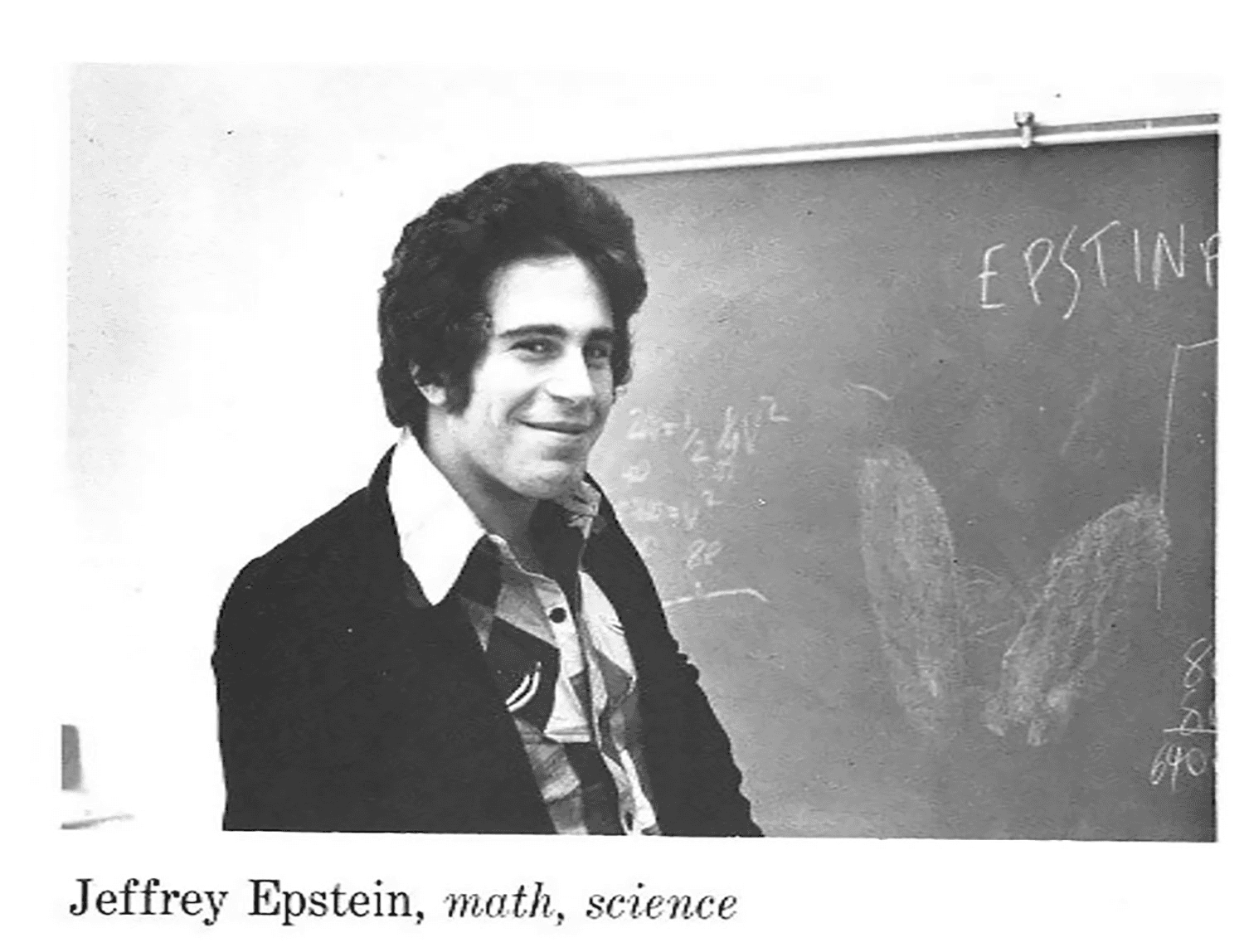
However, he didn't finish his degree at UIUC either. He was only there for one semester, I’m assuming that he hated it, during which he secured a teaching position at The Dalton School. It is unclear how he got the job, since Dalton is regarded as one of the most prestigious, exclusive, and academically rigorous private schools in the United States, which was located on the Upper East Side of Manhattan. People call this the Ivy Preparatory School.
I’ll go into a little more detail about this school. Unlike traditional schools that rely solely on lectures and fixed schedules, Dalton operates on a specific pedagogical model created by its founder, Helen Parkhurst. The "Dalton Plan" consists of three pillars: The House, The Assignment, and The Lab. At Dalton, every student belongs to a "House", which is a small peer group led by a House Adviser who mentors them throughout their years, focusing on social and emotional development. On top of that, students are given monthly contracts or "assignments" that outline their academic goals, encouraging them to manage their time and workload independently. Last but not least, the most famous part of the school is "Lab", which refers to dedicated time where students meet one-on-one or in small groups with teachers to dive deeper into subjects, foster intellectual curiosity, and receive personalized feedback. It sounds a lot like Hogwarts doesn’t it? From what I could gather, tuition was around $60k a year, twice as much as most state universities’ tuition
I can’t imagine someone like Epstein who didn’t have the patience to finish either of his degrees to have the patience to teach, or is it because he enjoyed being around children? I don’t know. Yet he was hired by Donald Barr, who led the school at the time, despite Epstein being a 21-year-old college dropout with no degree. He was hired to teach high-level Physics and Mathematics. He must have seen something in Epstein, maybe it was the eagerness for the job, maybe it was his geniusness, or charisma. I hate to admit this, but these kinds of people tend to be extremely charismatic and likable, very complicated characters.
As privileged of a school Dalton was, you can imagine the kind of kids that went to that school and who their parents were. That social ecosystem led him to meet Alan C. Greenberg, also known on Wall Street as “Ace”. At the time, Greenberg was the rising star and future CEO of Bear Stearns. His son was a student at Dalton, and Epstein was his math teacher. At parent-teacher meetings or social school events, Epstein did not act like a typical academic. He was brash, wore expensive-looking suits, and spoke about the markets with a confidence that caught Greenberg's attention.
Greenberg was impressed by Epstein’s "mathematical prodigy" persona. In the mid-1970s, Wall Street was just beginning to realize that advanced mathematics and computers could be used to gain an edge in trading—a field now known as "quantitative analysis." Greenberg saw Epstein as a young, hungry "math whiz" who could help the firm navigate these new complexities.
However, Epstein only taught there for two years, and was asked to leave by the headmaster, Donald Barr. The reason is unclear, but according to interviews with former staff, he did not leave voluntarily. Gemini says the reasons for his dismissal could fall into two categories: inappropriate behavior with students, and a “clash of culture”. Several former students and faculty members have since come forward alleging that Epstein’s behavior toward female students was "unsettling" or "inappropriate." He reportedly held private meetings with girls and made comments that crossed professional boundaries. At the same time, Epstein’s brash, arrogant personality and his tendency to act as if he were superior to the academic environment created friction with the administration. Donald Barr was a strict disciplinarian, and Epstein’s "prodigy" act began to wear thin.
Yet being ousted by the school wasn’t the end of it, it only takes one person to believe he’s a good person to help him to get a job, and that’s exactly what happened. Alan "Ace" Greenberg introduced Epstein to Bear Stearns, who hired Epstein as a junior assistant to a floor trader. It seemed that was the first job that was right up his alley.
(will continue in the next post)
免责声明: 本文仅代表个人基于公开信息的分析与评论。参考资料包括 Netflix 纪录片《杰弗里·爱泼斯坦:肮脏的财富》、美国监察长办公室(OIG)的官方报告以及《杰弗里·爱泼斯坦透明法案》的公开立法记录。本文仅用于教育和社会评论目的,不涉及任何非公开或机密信息,亦无意对任何特定在世个人进行诽谤。本文是与 Gemini 合作完成的,最初以英文撰写,由Gemini翻译成中文。
如前所述,爱泼斯坦的成长经历在今天看来似乎非常“正常”且传统(无论现在“正常”一词的具体含义为何),他与父母及弟弟的关系也十分普通,并无特别之处。我所谓的“普通”,并不是说他们的关系不好,而是指在我找到的资料中,没有任何值得关注的异样。不过,我之前没有提到的是,在学术方面,他其实算得上是一个数学天才。
根据他高中同学和老师的评价,他在处理数字、复杂公式和抽象概念时拥有极强的直觉。他不需要费力去记忆,只是直觉上就能“开窍”。后来他被纽约大学库朗数学科学研究所(Courant Institute)录取,这所学校过去和现在都竞争极其激烈。它在《美国新闻与世界报告》(U.S. News)的应用数学排名中位列全美第一,甚至超过了麻省理工(MIT)、哈佛和普林斯顿。其核心课程包括偏微分方程(PDEs)——这门课我大学时也修过,但当时并没完全听懂;计算数学与模拟,例如流体动力学(Fluid Dynamics),这是一门研究空气如何流过飞机机翼或血液如何流经动脉的学科;以及气候建模。我曾以为由于气候属于混沌系统,预测是不可能的,但显然人们可以通过模拟大气和海洋的相互作用来预测长期天气模式及全球变暖的影响。最重要的是,该校在金融数学方面表现尤为卓越,库朗研究所是世界上最早设立该学科正式硕士学位的机构之一。许多顶尖华尔街对冲基金的量化分析师都是库朗的校友,他们显然是利用这些数学框架来发现细微的市场失灵并执行高频交易。
在库朗研究所,爱泼斯坦身边环绕着世界上一些最严谨的数学头脑。虽然他无疑是聪明的,但当时了解他的人形容他缺乏对形式证明的耐心,也不愿从事高级学术界那种枯燥的研究工作。这在我看来非常有道理,这与他渴望走捷径、不愿选择虽然稳妥但速度较慢的道路的性格相吻合。这种性格特质贯穿了他的一生,我认为这是他晋升如此之快的主要原因,再结合他愿意做那些有良知的人所不愿做的事情这一事实。
目前尚不清楚他为何从纽约大学辍学,我怀疑这与某种不当行为有关,但在记录中找不到太多资料。然而,他获得了伊利诺伊大学厄巴纳-香槟分校(UIUC)提供的第二次机会。对我来说,这是一个奇怪的转变,我怀疑他是否真的愿意。对于一个似乎痴迷于现实世界光鲜亮丽生活的人来说,从曼哈顿搬到厄巴纳-香槟,至少在我看来,绝对不会是一段让他感到兴奋的经历。
然而,他也没有在 UIUC 完成学业。他只在那里待了一个学期(我猜他很讨厌那里),期间他在道尔顿学校(The Dalton School)获得了一个教职。目前还不清楚他是如何得到这份工作的,因为道尔顿学校被认为是美国最显赫、最排外且学术最严谨的私立学校之一,坐落于曼哈顿上东区。人们称之为“常春藤预备校”。
我将详细介绍一下这所学校。与仅依赖讲座和固定时间表的传统学校不同,道尔顿学校采用其创始人海伦·帕克赫斯特(Helen Parkhurst)创立的特殊教学模式。“道尔顿计划”由三大支柱组成:实验室(Lab)、任务(Assignment)和分院(House)。在道尔顿,每个学生都属于一个“分院”,这是一个由一名导师领导的小型同伴群体,导师会在学生在校期间指导他们,专注于社交和情感发展。此外,学生还会收到每月的合同或“任务”,列出他们的学术目标,鼓励他们独立管理时间和工作量。最后但同样重要的是,学校最著名的部分是“实验室”,指学生与老师一对一或以小组形式深入探讨课题、培养智力好奇心并获得个性化反馈的专属时间。听起来很像霍格沃茨(Hogwarts)对吧?据我所知,那里的学费大约是每年 6 万美元,是大多数州立大学学费的两倍。
我无法想象像爱泼斯坦这样没有耐心完成学业的人,会有耐心去教书,还是因为他喜欢和孩子待在一起?我不知道。然而,尽管爱泼斯坦当时只是一个 21 岁、没有任何学位的大学辍学者,他还是被当时领导学校的唐纳德·巴尔(Donald Barr)聘用了。他受聘教授高级物理和数学。巴尔一定在爱泼斯坦身上看到了什么,也许是对工作的渴望,也许是他的天才,或者是个人魅力。我不想承认这一点,但这类人往往极具魅力且讨人喜欢,是性格非常复杂的角色。
由于道尔顿学校极具阶级特权,你可以想象在那里上学的孩子以及他们的父母都是些什么样的人。正是这种社会生态系统让他结识了艾伦·C·格林伯格(Alan C. Greenberg),华尔街人称“王牌”(Ace)。当时,格林伯格是贝尔斯登公司(Bear Stearns)的明日之星,也是未来的首席执行官。他的儿子是道尔顿的学生,而爱泼斯坦是他的数学老师。在家长会或学校社交活动中,爱泼斯坦表现得并不像一个典型的学者。他性格张扬,穿着看起来很昂贵的西装,并以一种引起格林伯格关注的自信谈论市场。
格林伯格对爱泼斯坦的“数学天才”人设印象深刻。在 20 世纪 70 年代中期,华尔街才刚刚意识到高级数学和计算机可以用来在交易中获得优势——这一领域现在被称为“量化分析”。格林伯格认为爱泼斯坦是一个年轻、饥渴的“数学奇才”,可以帮助公司应对这些新的复杂局面。
然而,爱泼斯坦只在那里教了两年的书,就被校长唐纳德·巴尔要求离职。原因尚不清楚,但根据对前教职员工的采访,他并非自愿离开。Gemini 表示,他被解雇的原因可能归为两类:与学生的不当行为,以及“文化冲突”。此后,几名以前的学生和教职员工站出来指称,爱泼斯坦对女学生的行为令人“不安”或“不当”。据报道,他与女学生进行私人会面,并发表了逾越职业边界的言辞。与此同时,爱泼斯坦傲慢、自大的性格,以及他那种表现得仿佛高人一等的倾向,与管理层产生了摩擦。唐纳德·巴尔是一个严格的纪律维护者,爱泼斯坦的那套“神童”把戏也逐渐失去了吸引力。
然而,被学校赶出来并不是终点,只要有一个人相信他是个好人,就能帮他找到工作,而事实正是如此。艾伦·“王牌”·格林伯格将爱泼斯坦引荐给了贝尔斯登,后者聘请爱泼斯坦担任场内交易员的初级助理。看来那是第一份正中他下怀的工作。
(将在下一篇中继续)