Created on
Updated on
Epstein(IV): Options Trading and Tax Mitigation
爱泼斯坦(四):期权交易与税务减免
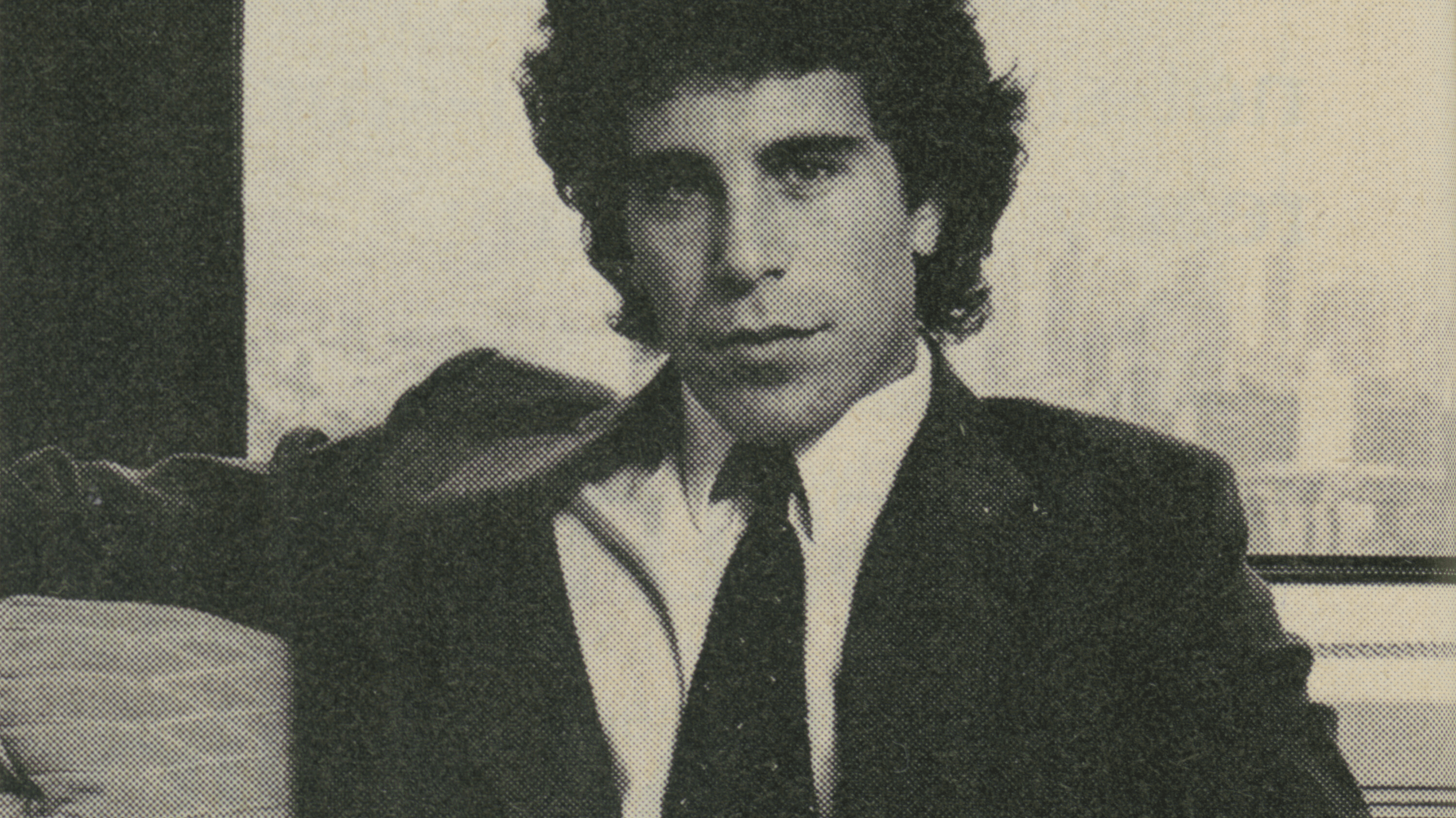
Preface: This article was written in collaboration with Gemini, originally written in English.
At the Special Productions, as an options trader, Epstein was able to use options for tax mitigation. In the 1970s, the U.S. tax code was far more rigid but also far more "porous" than it is today. The top marginal tax rate was a staggering 70%, creating a desperate demand among the wealthy for anyone who could lower that number. Jeffrey Epstein's "tax straddle" strategy was the financial equivalent of a magic trick: it allowed clients to keep their money while telling the IRS they had lost it.
Imagine a client has a $1 million profit from a business deal in 1978. Without Epstein, they owe the IRS $700,000. To avoid this, Epstein would set up a "commodity straddle", as mentioned in the first paragraph, in a volatile market like silver or gold. He would simultaneously buy a contract betting silver goes up (Long) and a contract betting silver goes down (Short). No matter what happened to the price of silver, one side of the trade would lose $1 million while the other gained $1 million. The client’s actual net wealth hadn't changed at all.
This is where the tax avoidance happened. In late December, Epstein would close out (sell) only the losing side. The client now had a "realized loss" of $1 million to show the IRS. This loss wiped out their $1 million business profit, bringing their taxable income to $0. The winning side of the trade remained "open." Under the laws of the time, you didn't have to report profits until you actually sold the asset. So, the $1 million gain stayed off the books as "unrealized."
On January 1st of the next year, the client still had that $1 million gain sitting in their account. To avoid paying taxes on it in the new year, Epstein would simply "roll" it into a new straddle and repeat the process the following December. By doing this every year, a client could theoretically defer taxes for decades. Often, Epstein would hold the winning side long enough to qualify it as a "long-term capital gain," which was taxed at a much lower rate (around 28%) than ordinary income (70%). He essentially "washed" high-tax income into low-tax income.
At the time, the IRS argued these trades had no "economic substance"—meaning they were done solely for tax reasons and shouldn't be allowed. However, Wall Street argued they were legitimate "hedging strategies" to protect against market risk. Because the laws weren't explicit, many wealthy individuals took the risk, and Epstein was the one bold enough to execute the math for them.
For this specialty, Epstein’s “Special Products” were high-margin and highly attractive to the bank’s most important clients (the “whales”). He wasn’t just a trader executing orders, he was a “rainmaker’. He brought in elite clients like the Bronfman family (Seagram) and provided them with these complex services that other departments couldn’t replicate. He successfully convinced the senior partners that he was a genius who could see patterns others couldn’t, which was more or less true, and even when he was caught lying on his resume (claiming he had degrees from NYU and Cooper Union), he turned lies into a strength. He reportedly told the partners he lied because he was so hungry for success and feared his humble background would hold him back. In the “cowboy culture” of Bear Stearns at the time, that kind of audacity was often rewarded rather than punished.
In 1980, Epstein was named a limited partner at the age of 27. It’s worth-nothing that he wasn’t a general partner, but a limited partner, which meant that instead of running the firm and having unlimited liability, he was a high-ranking employee who was given a stake in the profits. For a 27-year-old in 1980, it was a massive achievement that put him in the top 1% of earners on Wall Street and gave him the “social capital” to start his own firm just a year later.
Epstein’s party at Bear Stearns ended with the Economic Recovery Tax Act of 1981 (ERTA). The government introduced the "Mark-to-Market" rule (Section 1256). The law now required traders to treat all open contracts as if they were sold on the last day of the year. You had to pay taxes on your "unrealized" gains immediately. This made Epstein's strategy obsolete. It’s no coincidence that Epstein’s career at Bear Stearns ended in 1981—the very year his primary "product" was made illegal. The same year, he left the firm following an internal investigation and a “Reg D violation”.
Jeffrey Epstein’s departure from Bear Stearns in 1981 was the result of an internal investigation into several unethical and potentially illegal actions. While he later described his exit as being due to a "Reg D violation" (related to the private placement of securities), internal records and accounts from colleagues reveal a more complex set of reasons. The firm’s compliance department flagged Epstein for several specific activities that ultimately led to him being asked to leave. First, Epstein was found to have made personal loans to colleagues and others that were deemed inappropriate for a partner at the firm.
The investigation found that Epstein had been issuing unsecured personal loans to various individuals, including his own colleagues and subordinates at Bear Stearns. In the highly regulated environment of a Wall Street partnership, a partner lending money to junior employees or colleagues can create an improper power dynamic. It can be seen as a way to "buy" loyalty, influence internal firm decisions, or bypass the firm's formal compensation and credit structures. He was already starting to create power dynamics and putting juniors in positions of risk so that they’d answer to him, instead of the firm. Many of these loans were made outside of the firm’s official channels, lacking the standard oversight, collateral, and reporting required for financial transactions involving a partner.
For a brokerage firm, maintaining a clear separation between a partner’s personal wealth and the firm's operations is vital. Using personal funds to create financial obligations among staff raised red flags about the transparency and integrity of Epstein’s business dealings.
At the same time, he was investigated for allegedly providing a girlfriend with tips regarding upcoming stock IPOs, which raised serious regulatory red flags regarding insider trading. He was accused of providing confidential information about upcoming stock offerings to a girlfriend, which touched on potential insider trading concerns. He was also questioned for charging personal luxury items to company accounts. Epstein himself later claimed his departure was due to a "Reg D violation." Regulation D governs how private companies can sell stock to investors without a full public registration, which was a total understatement of what actually went down at Bear Sterns’ firm.
When confronted with these findings, Bear Stearns did not initially fire him but issued a suspension and a fine. However, the relationship was effectively broken. Epstein reportedly claimed he was "offended" by the scrutiny and chose to resign. This departure marked the end of his career as a "banker" and the beginning of his career as an independent "money manager." He immediately took the aggressive, high-risk strategies he learned at Bear Stearns and used them to start his own firm, Intercontinental Assets Group (IAG).
(will continue in the next post)
前言:本文是与 Gemini 合作完成的,最初以英文撰写。
在特别产品部(Special Products)担任期权交易员期间,爱泼斯坦能够利用期权进行税务减免。20 世纪 70 年代,美国的税法比现在僵化得多,但也比现在有更多的“漏洞”。当时最高边际税率高达惊人的 70%,这使得富人群体极度渴望任何能降低这一数字的人。杰弗里·爱泼斯坦的“税务跨期套利(Tax Straddle)”策略在金融领域简直就像一场魔术:它让客户既能保住自己的钱,又能理直气壮地告诉国税局(IRS)他们赔钱了。
想象一下,一位客户在 1978 年的一笔生意中赚了 100 万美元。如果没有爱泼斯坦,他们要欠国税局 70 万美元。为了避免这种情况,爱泼斯坦会在像白银或黄金这样波动剧烈的市场中,建立第一段提到的“商品跨期套利(Commodity Straddle)”。他会同时买入一份赌白银上涨的合约(做多)和一份赌白银下跌的合约(做空)。无论白银价格如何变动,交易的一方会亏损 100 万美元,而另一方则会赚取 100 万美元。客户实际的净资产根本没有改变。
这就是避税发生的关键点。在 12 月底,爱泼斯坦会仅平仓(卖出)亏损的那一方。现在,客户就有了一笔 100 万美元的“已实现亏损”向国税局展示。这笔亏损抵消了他们 100 万美元的商业利润,使其应纳税所得额降至 0。而交易中盈利的那一方则保持“持仓”状态。根据当时的法律,只有在你真正卖出资产时才需要申报利润。因此,这 100 万美元的收益作为“未实现收益”留在账外。
到了第二年的 1 月 1 日,客户账户里依然坐拥那 100 万美元的收益。为了避免在新的一年为此缴税,爱泼斯坦只需将其“滚动”到一个新的跨期套利中,并在次年 12 月重复这一过程。通过每年这样做,客户理论上可以将税款推迟几十年。通常,爱泼斯坦会持有盈利头寸足够长的时间,使其符合“长期资本利得”的条件,其税率(约 28%)远低于普通收入(70%)。他本质上是将“高税收入”洗成了“低税收入”。
当时,国税局辩称这些交易没有“经济实质”——意味着它们纯粹是为了避税而做的,不应被允许。然而,华尔街辩称它们是保护免受市场风险影响的合法“对冲策略”。由于法律并不明确,许多富人铤而走险,而爱泼斯坦正是那个胆大到能为他们执行这些数学模型的人。
由于这项专长,爱泼斯坦的“特别产品”利润丰厚,对银行最重要的客户(即“大鲸鱼”)极具吸引力。他不仅仅是一个执行订单的交易员,他还是一个“创收大户(Rainmaker)”。他引进了像布隆夫曼(Bronfman)家族(施格兰公司)这样的精英客户,并为他们提供其他部门无法复制的复杂服务。他成功地让高级合伙人相信他是一个能看到别人看不见的模式的天才——这在很大程度上是真的。甚至当他被发现简历造假(谎称拥有纽约大学和库珀联盟学院的学位)时,他竟将谎言变成了优势。据报道,他告诉合伙人,他撒谎是因为他太渴望成功,担心自己卑微的出身会阻碍他的发展。在当时贝尔斯登那种“牛仔文化”中,这种胆识往往得到的是奖赏而非惩罚。
1980 年,27 岁的爱泼斯坦被任命为有限合伙人(Limited Partner)。值得注意的是,他不是普通合伙人(General Partner),而是有限合伙人,这意味着他不负责运营公司且不承担无限责任,而是一名拥有利润分红权的高级雇员。对于 1980 年的一个 27 岁年轻人来说,这是一项巨大的成就,使他进入了华尔街收入前 1% 的行列,并为他在仅一年后创办自己的公司积累了“社交资本”。
爱泼斯坦在贝尔斯登的狂欢随着 1981 年《经济复苏税收法案》(ERTA)的出台而结束。政府引入了“市值计价(Mark-to-Market)”规则(第 1256 条)。法律现在要求交易员将所有未平仓合约视同在每年的最后一天已售出。你必须立即为你的“未实现”收益缴税。这让爱泼斯坦的策略彻底过时。爱泼斯坦在贝尔斯登的职业生涯于 1981 年结束绝非巧合——正是这一年,他的核心“产品”被判定为非法。同年,在经历了一次内部调查和一次“Reg D 违规”后,他离开了公司。
1981 年杰弗里·爱泼斯坦离开贝尔斯登,是因多项不道德及潜在非法行为引发内部调查的结果。虽然他后来将自己的离职描述为由于“Reg D 违规”(涉及证券的私募发行),但内部记录和同事的说法揭示了更复杂的原因。公司的合规部门盯上了爱泼斯坦的几项具体活动,最终导致他被要求离开。首先,爱泼斯坦被发现向同事和其他人提供个人贷款,这被认为不符合公司合伙人的身份。
调查发现,爱泼斯坦一直在向各色人等发放无抵押个人贷款,包括他在贝尔斯登自己的同事和下属。在华尔街合伙制这种高度监管的环境中,合伙人向初级员工或同事借钱会造成不当的权力动态。这可能被视为“购买”忠诚度、影响公司内部决策或绕过公司正式薪酬和信用结构的手段。他已经开始创造权力不对等,并将下属置于风险之中,使他们听命于他,而非公司。这些贷款中有许多是在公司官方渠道之外进行的,缺乏合伙人参与财务往来所需的标准监督、抵押和报告。
对于一家经纪公司来说,保持合伙人个人财富与公司运营之间的清晰界限至关重要。利用个人资金在员工中制造财务债务,引发了人们对爱泼斯坦业务往来透明度和诚信度的警觉。
与此同时,他因涉嫌向一名女友提供有关即将进行的股票 IPO(首次公开募股)的内幕消息而接受调查,这触及了内幕交易的严重监管红线。他被指控向女友提供有关即将发行的股票的机密信息。他还因将个人奢侈品开销计入公司账单而受到质疑。爱泼斯坦本人后来声称他的离职是因为“Reg D 违规”。Reg D(D 条例)规定了私人公司如何无需进行完整的公开注册即可向投资者出售股票,这完全淡化了当时在贝尔斯登公司发生的真实情况。
在面对这些调查结果时,贝尔斯登最初并没有开除他,而是处以停职和罚款。然而,双方的关系实际上已经破裂。据报道,爱泼斯坦声称自己对这种审查感到“被冒犯”并选择了辞职。这次离职标志着他作为“银行家”职业生涯的结束,以及他作为独立“基金管理人”职业生涯的开始。他立即带着在贝尔斯登学到的激进、高风险策略,创办了自己的公司——洲际资产集团(IAG)。
(将在下一篇中继续)