Created on
Updated on
新教怎么被创造的
From the 95 Theses to the Systematic Logic of the "Institutes of the Christian Religion"
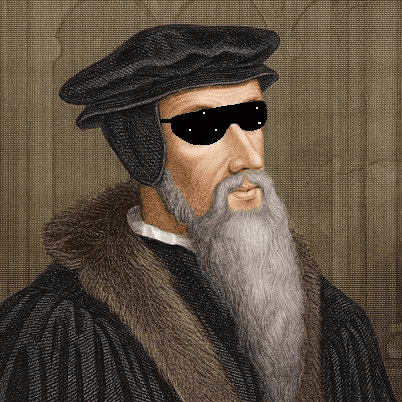
Preface: Co-written with ChatGPT.
1) 马丁路德和《九十五条论纲》
1517年,马丁·路德发表《九十五条论纲》,公开挑战天主教会的权威,宗教改革由此爆发。新教随之兴起,强调“因信称义”和“圣经至上”,否定教会在救赎中的中介地位,主张信仰的最终权威只存在于《圣经》和个人良心之中。英格兰很快跟进了这场改革,但问题在于,英格兰的宗教改革从一开始就是一场“政治先行、宗教半套”的改革。1534年,亨利八世与罗马教廷决裂,成立英格兰国教,但现实却是:在教义上部分吸收新教思想,在结构、仪式和主教制度上却高度保留了天主教的旧有框架。在继续讨论清教徒之前,有必要先厘清基督教、天主教、东正教与新教之间的关系。基督教(Christianity)是一个总称,指一切承认耶稣是“基督”,承认其受难与复活,并以《圣经》为信仰核心的宗教传统。它并不是一个单一教会,而是一整套围绕耶稣展开的信仰体系集合。围绕同一位耶稣,历史上逐渐形成了不同的制度与权威结构,于是分化出天主教、东正教和新教等主要传统。分歧的关键,从来不在“信不信耶稣”,而在“谁有权解释信仰、管理教会”。
天主教与东正教都自认为继承了早期基督教的正统传统,强调圣礼、传统和神职体系,但在权威结构上出现了根本分歧。天主教以罗马为中心,承认教皇拥有普世教会的最高裁决权,认为教会本身通过历史传统与历次会议构成信仰权威的一部分;东正教则拒绝教皇至上权,主张由各地自治教会共同守护传统。两者在教义内容上高度相似,却在“最终裁决权归谁”这一问题上不可调和。新教的出现,直接否定了天主教与东正教共享的“教会即权威”的逻辑。16世纪宗教改革中,以马丁·路德为代表的新教思想提出“唯独圣经”和“因信称义”,认为人的得救不依赖教会仪式或神职中介,而依赖个人与上帝之间的信仰关系。这一原则连锁地否定了教皇权威,削弱了圣礼的中介地位,并将圣经的解释权从教会结构中释放出来。新教因此并不是一个统一教会,而是一系列共享这些原则的宗派集合。
天主教与新教的根本差异,并不在于仪式风格,而在于权力来源。天主教认为圣经、教会传统与教会权威共同构成真理体系,教会是救恩的中介系统;新教则认为只有圣经具有最终权威,教会只是信徒的聚集。前者强调等级、仪式与历史连续性,后者强调个人良心、讲道与去等级化。这种差异,决定了两者对政治、社会秩序与个人责任的根本不同理解。英格兰国教之所以被称为“教义半新教”,正是因为它在神学文本上向新教让步,却在制度与仪式上保留了天主教的骨架。英格兰与罗马的决裂,主要出于政治需要:否定教皇权威,引入英文礼拜,并吸收部分新教教义;但与此同时,它完整保留了主教制度、教区结构、国家控制教会的人事体系,以及大量传统礼仪与祷文。这种刻意的折中有利于国家治理,却在清教徒看来意味着原则性的背叛——权威只是从教会转交给国家,而不是彻底交还给圣经与信仰本身。
清教徒真正的思想底色,来自约翰·加尔文,而不是路德。加尔文出生于法国,最初接受的是法律教育他的父亲是诺瓦永主教座堂的公证人兼主教秘书,希望他进入教会—法律混合的上升通道,因此先送他学习人文学科,后转向法律。加尔文在巴黎、奥尔良等地接受了严格的法律训练,熟悉罗马法、文本解释、逻辑推演与制度设计。他的人生轨迹发生转折,源于1533年11月1日巴黎大学索邦神学院的一场就职演讲。索邦的正式背景是巴黎大学的神学院,而巴黎大学自13世纪起便是西欧天主教世界最重要的学术权威之一。索邦最初由罗贝尔·德·索邦创立,目的是为贫穷神学生提供教育,但很快发展成专门裁定神学正统性的机构。到宗教改革时期,“索邦的意见”几乎等同于“正统天主教的立场”,在法国乃至整个拉丁基督教世界都具有权威效力。索邦不仅研究神学,更裁定什么是“正统”,什么是“异端”。它拥有审查书籍、评估讲道、并向王权提供宗教合法性意见的权力。法国国王在宗教事务上往往需要索邦的神学背书;反过来,索邦也依赖王权执行对异端的镇压。这种高度互相依赖的关系,使索邦成为国家—教会联盟中的核心节点。
正是在这次就职演讲中,尼古拉·科普强调,基督徒得救的根基并不在于外在制度,而在于内在信仰。人之所以成为真正的基督徒,不在于遵守多少仪式、完成多少善功,而在于是否真正理解并接受福音本身。这种表述在语言上看似温和,却精准触及宗教改革的核心命题——因信称义。在天主教语境中,信仰必须通过教会、圣礼与善功完成;而在新教语境中,信仰本身就是通向救赎的充分条件。更具挑衅性的是,这篇演说弱化甚至回避了教会作为中介的地位。演讲没有强调教会传统、教皇权威或神职等级,而是反复引用《圣经》文本,暗示圣经本身已经足以指引信徒理解真理。这在形式上仍然是拉丁文,仍然发生在大学讲坛上,但在逻辑上已经非常接近“唯独圣经”的立场。对索邦神学院而言,这几乎等同于否认其存在的根本理由。与此同时,这篇演说还带有明显的人文主义与改革派交叉色彩,批评空洞的经院神学,讽刺那些沉迷形式辩论却忽视基督精神本身的学术传统。这类批评在文艺复兴人文主义中并不罕见,但在1530年代的法国政治环境下,这种话语已经与路德派和改革派思想高度重叠。当学术批评开始指向教会权威本身,它就不再只是学术问题。
在巴黎大学这一象征天主教正统的机构中,校长的就职演讲被视为对国家与教会立场的公开表态。换句话说,这等同于在官方场合宣称:大学最高职位的持有者,对天主教的救赎体系持根本怀疑态度。正因如此,这篇演说几乎不需要逐字审查,就被认定为“异端倾向文本”。它触发的不是神学辩论,而是政治反应。科普很快被调查并被迫逃离,而与其思想圈层高度重叠的年轻学者——包括约翰·加尔文——也随即成为潜在清洗对象。索邦神学院已经明确认定,巴黎大学内部存在一个改革派思想网络。接下来发生的不是公开辩论,而是调查、指控与名单化。索邦启动异端审查程序,王权介入。加尔文的问题在于,他的位置过于敏感:他不是无名学生,而是受过精英教育、与科普私交密切、并被视为改革派重要思想资源的人。学界普遍认为,他至少参与了那篇演说的构思或修订。即便没有确凿书面证据,在当时也已经足够。法国选择了镇压改革,而加尔文被逼成了神学家。
2)如果教会和国家都宣布你是异端,你凭什么证明自己不是?
加尔文出生于法国北部小城诺瓦永,一个典型的天主教社会环境。他的家庭并不贫穷,父亲在当地教会系统中任职,熟悉教会—行政体系的运作方式。这一点非常关键:加尔文从小看到的教会,不是神秘的信仰共同体,而是一个高度制度化、与权力和升迁密切相关的组织。他的父亲并不打算让他当神学家,而是希望他走一条稳妥、体面、可上升的路线——通过教育,进入教会或法律体系,成为体制内精英。因此,加尔文早年的教育路径极其“标准”。他先在巴黎接受人文主义教育,系统学习拉丁文、修辞学、古典文学,随后转向法律,前往奥尔良、布尔日等地研习罗马法。他接受的是当时欧洲最严格的法律训练:文本细读、逻辑推演、权威来源、制度正当性。这种训练塑造了他一生的思维方式——冷静、结构化、对模糊和权威滥用高度敏感。到这一阶段为止,加尔文的人生方向仍然是法律人或体制内知识官僚,而不是宗教改革者。
真正的转折,发生在1530年代初的法国。宗教改革思想开始在法国知识界悄然扩散,但法国王权与天主教会高度捆绑,对任何改革倾向都保持零容忍。1533年,巴黎大学索邦神学院新任校长尼古拉·科普在就职演讲中,公开强调“因信称义”“内在信仰高于外在制度”,并弱化教会作为救赎中介的地位。这篇演讲在神学上并不激进,但在政治上极其危险。它意味着:改革思想已经进入法国最核心的学术权威内部。加尔文与科普关系密切,学界普遍认为他至少参与了这篇演讲的思想构思。在索邦神学院的视角中,这已经足够。索邦不是讨论神学分歧的地方,而是裁定正统与异端的机构。演讲事件之后,索邦迅速启动调查程序,王权介入,改革派学者被系统性标记、排查、清洗。科普被迫连夜逃离巴黎,而加尔文则立刻意识到,自己已经不可能继续留在法国的体制内。
需要强调的是:加尔文并不是被正式审判、公开定罪后才离开法国的。他是在清洗全面展开之前,主动选择流亡。在16世纪的法国,一旦异端指控进入司法程序,结果往往是监禁、没收财产,甚至死刑。对一个年轻的法律人来说,继续留在国内,意味着职业生命和现实生命同时结束。正是在这种被体制驱逐的状态中,加尔文开始“被迫搞神学”。他需要为自己、也为法国新教徒,回答一个迫在眉睫的问题:如果教会和国家都宣布你是异端,你凭什么证明自己不是?这不是灵修问题,而是合法性问题。1536年,他在流亡途中完成《基督教要义》初版。这本书不是为普通信徒写的,而是一份高度理性、系统化的信仰辩护文本,几乎可以被看作一部“新教宪法”。他用法律人的方式,为新教信仰建立逻辑结构、权威来源和社会可行性。
加尔文主义之所以能成为清教徒的思想底盘,不是因为它安慰人,而恰恰相反,是因为它极度残酷、但高度稳定。它提供的不是情绪慰藉,而是一套可以长期运转的世界观,在信仰、道德、社会秩序之间形成闭环。而约翰·加尔文之所以能把预定论、上帝主权这些高度抽象的神学问题,论证成一套可执行、可治理、可持续运转的体系,则是因为他在用法律人的方式在做神学。他没有“放弃法律”,而是把法律的方法升级成了神学方法。首先,加尔文的论证起点并不是个人的情感经验或宗教激情,而是权威来源的问题。这一点与他的法律训练高度相关。作为受过严格法律教育的人,加尔文非常清楚,任何体系要成立,必须先回答“最终裁决权在哪里”。在他的神学中,这个答案只有一个:最终权威只能属于上帝本身。由此他确立了一条清晰的权威链条——上帝的意志是终极根源,《圣经》是上帝启示的权威文本,而教会与传统只能承担解释与执行的角色,绝不能成为新的权威来源。这一立场在《基督教要义》中反复出现,其直接结果,就是从根本上否定了教皇和教会作为“信仰立法者”的合法性。
其次,在预定论问题上,加尔文的论证方式呈现出一种高度理性的因果区分。他坚持认为,人的得救与否只能由上帝在永恒中的决定来解释,而不能由人的行为、选择或宗教实践来解释。换言之,救赎的原因只可能来自上帝的旨意,而人的行为只能是这一旨意在时间中的结果。这种区分在逻辑上彻底切断了“行为导致救赎”的可能性,也使得通过教会仪式、善功或道德表现来“换取”救恩在理论上变得不成立。第三,加尔文对教会制度的批判,并不是简单的道德谴责,而是一种结构性的后果分析。他反复指出,如果把救赎的部分权力交给人类行为或教会操作,那么救恩必然会被制度化、垄断化,并最终沦为一种可被管理和分配的资源。在这种结构下,道德不再是回应上帝的结果,而会退化为表演与交换。这不是因为个人一定腐败,而是因为制度本身鼓励这种结果。正是在这一意义上,加尔文的批判更像一种制度风险分析,而非情绪化的反教会宣言。
第四,在行为问题上,加尔文并没有否认道德实践的重要性,而是彻底重塑了行为的地位。在他的神学中,善行不是得救的条件,而是信仰与恩典作用的结果。行为无法证明一个人一定被拣选,但持续、稳定的生活秩序与道德实践,被视为信仰真实存在的外在呈现。这种理解方式,后来在清教徒社会中发展为高度严格的道德监督体系——他们关注行为,并不是为了积累功德,而是为了确认信仰与生活之间的逻辑一致性。最后,《基督教要义》本身的写作方式,也体现出加尔文鲜明的法律思维。它不是讲道集,也不是灵修随笔,而是一部系统化的神学论证文本,从基本原则出发,逐层展开论点,回应反对意见,不断修订以增强逻辑自洽性。正因为如此,这本书才能在宗教改革的长期争论中反复被引用、被使用,甚至被视为改革宗传统的“基础文本”。这并不是因为它像法律条文那样写成,而是因为它具备一种法律式的稳定性。预定论的要害不在于“上帝提前知道一切”,而在于一个更激进的断言:人的得救或沉沦,在时间开始之前就已经由上帝决定,与人的行为、选择、甚至信仰表达本身都没有因果关系。这意味着,教会不能通过仪式分配救赎,个人也无法通过善行“积累资格”。救赎从根本上脱离了人类社会的交换逻辑。这个理论乍看之下极其反人性。既然一切早已决定,人为什么还要守道德、守纪律、活得像个“被拣选者”?加尔文主义的厉害之处就在这里:它并没有放弃行为,而是彻底改变了行为的意义。行为不再是“通向救赎的手段”,而是“救赎已存在的外在标志”。换句话说:你行善,不是为了得救;你行善,是因为你可能已经被拣选。
这就制造出一种高度紧张的心理结构。信徒永远无法确定自己是否属于“被拣选者”,但又被要求活出被拣选者应有的秩序、自律与道德强度。结果不是松弛,而是持续的自我审视、自我管理与自我约束。这也是为什么清教徒社会呈现出一种近乎偏执的道德纪律感——不是因为他们相信行为能换救赎,而是因为他们害怕自己的生活状态暴露出“未被拣选”的迹象。在这一点上,加尔文主义与天主教形成了彻底断裂。天主教提供的是一套“可操作的救赎机制”:通过教会、圣礼、忏悔与善功,人可以在制度中不断修复自己与上帝的关系。加尔文主义则直接取消了这套机制。当救赎不再可被操作,制度的宗教权威就失效了。这正是清教徒敌视教会等级制度的神学根源。在加尔文主义逻辑中,把属灵权威集中在人类等级结构中,本身就是对神权的僭越。主教制不仅是一个组织形式问题,而是一个神学问题:它暗示有人比其他人“更接近上帝”。而在加尔文主义中,上帝与人的距离是绝对的,任何人都无法通过职位、圣职或血统缩短这种距离。由此,清教徒更倾向于长老制、集体治理与相互监督。清教徒天然反感主教制与属灵贵族,倾向于更平等、去中心化的教会治理形式。正因为如此,清教徒在神学立场上普遍是英格兰的加尔文主义者,而非更强调个人信心体验、对制度冲击较小的路德宗。这套神学框架之所以“极具行动力”,恰恰是因为它不提供确定性。你无法确认自己是否得救,只能通过持续的纪律、劳动、道德实践来“活出一种可能性”。这使清教徒极度重视时间管理、职业责任、家庭秩序与公共道德,并愿意把整套神学原则落实到社会结构之中。于是,信仰不再只是内心状态,而变成一种全面介入生活的行动伦理。
在16世纪后期,清教徒最初以英格兰国教内部改革派的身份出现,他们并不是一开始就要“脱离体制”。这一阶段的清教徒大体分为两种取向:一类是温和派,选择留在英格兰国教内部,希望通过改革教义、简化仪式、削弱主教权力来“净化”教会;另一类则逐渐走向分离派立场,认为英格兰国教在结构和权力上已经无可救药,必须与之彻底切割。这种分化并非神学细节之争,而是对“是否还能在现有体制内忠于上帝”的根本判断。英格兰王权对这两类人都高度警惕,因为在国教体制下,教会秩序本身就是王权合法性的支柱,任何对教会结构的挑战,都等同于对政治权威的挑战。进入17世纪初,在伊丽莎白一世和詹姆斯一世统治时期,这种紧张关系迅速升级为系统性压制。清教徒的讲道内容受到审查,非国教聚会被取缔,拒绝遵循官方礼仪的牧师遭到惩处。在这种环境下,部分清教徒逐渐放弃了在英格兰改革教会的可能性,转而选择离开欧洲。1620年乘坐“五月花号”前往北美的清教徒,正是其中最具象征性的一支,但必须强调,他们代表的是分离派清教徒,而非清教徒整体。
在北美,新英格兰并不是清教徒被动避难的终点,而是他们主动实施社会理想的试验场。以马萨诸塞湾殖民地为核心,清教徒试图在新大陆建立一个以宗教盟约为基础的“圣约社会”。在这一设想中,教会是社会的核心结构,宗教规范直接构成法律与公共道德的基础,个人行为被严格纳入共同体的道德监督之中。这套体系高度自洽,却也高度排他。清教徒对异端和异议缺乏宽容,包括对其他新教派亦然。他们确实逃离了宗教迫害,但同时也在北美复制并制造了新的宗教压制,这一点无法被浪漫化。随着时间推移,进入第二、第三代之后,清教徒社会的宗教张力开始下降。原本紧绷的神学热情逐渐松动,清教主义开始发生世俗化转变。最终留下来的不再是一整套严密的神学体系,而是一种被抽离宗教外壳的伦理结构:强调勤奋、自律、节制的生活方式,强调契约精神与公共责任,强调社群秩序高于个人欲望。这些世俗化的清教伦理,深刻塑造了新英格兰的政治文化,影响了美国早期的共和思想,并为后来所谓的“美国例外主义”提供了强烈的道德底色。
3)《基督徒教义》
我找了下这本《基督徒教义》,发现它不是一本书,是三卷。第一卷论述的是对上帝的认识,承认上帝是宇宙以及宇宙间万有的创造者、保守者和管理者,which 是所有论证的大前提。这里不讨论上帝是否存在,而是基于上帝是宇宙万物的创造者、保守者和管理者的前提下,我们应该如何理解人与上帝,以及教会、教皇在其中的作用。第一卷指明了对创造者之认识的性质和目的;这种认识不是从学校里学来的,而是与生俱来的。然而,由于人类的堕落过于严重,一方面出于无知,另一方面出于邪恶,这种认识被败坏并几乎消灭,因此它既不能使人归荣耀于上帝,也不能使人自己获得幸福。虽然这种内在的认识可以借助那在我们周围、如同镜子一般反映神之完全的一切受造之物而得到帮助,但人却并未因此而得益。这句话我是同意的,我时常感觉世界万物的”神性“是在万物开始之初就存在的,它们和我们的呼吸、行为、自我意识,即便从物理学上来说,这个世界的存在也是极小概率的存在。
我们可以说这是存在着偏差,不是因为我们特别才存在,而是因为我们存在了,才有观察和反思的能力,才能提这个问题,即:”我们为什么存在?”这个问题。提问题的前提,是因为我们存在。而我们被这种“神性”包围,世界万物都是我们所有问题的答案。我时常说,"The answer is within me“。因为我真是相信,所有我要提的问题,答案早就在我心中,我只是需要不overthink,答案自然会浮现。我们的问题不是没有答案,而是答案太多,导致人们不知道,什么是重要的,什么是不重要的。为了给人们提示,上帝便将他成文的道赐给那些他愿意使其认识他的人;因此我们必须注意圣经。上帝在圣经中启示了他自己;他不仅是父,更是父、子、圣灵合而为一的天地创造者。由于我们的堕落,那本性中固有的知识,以及显现在世界中的那极其美丽的“镜子”,都不能使我们学会将荣耀归给他。因此,作者讨论了上帝在圣经中的启示,以及三位一体等问题。为防止人将自己自愿盲目的过失归咎于上帝,作者说明了人在受造之初的情形,并论及人是照着上帝的形象被造的、自由意志,以及本性上原初的完整。创造的问题讨论完毕之后,作者接着论述万物的保守与治理,并以对神之护理教义的讨论作为第一卷的结束。
第一章主要讨论我们如何认识上帝和认识自己。章节的开头,讨论了真正的智慧到底是什么。真正的智慧主要由两部分构成:对上帝的认识,以及对我们自己的认识。不过,由于这两种认识彼此关系极为密切,因此很难确定哪一个在先、哪一个在后。首先,因为人一旦省察自己,就必然立刻想到上帝——那位使人“生活、动作、存留”(徒 17:28)都在其中的上帝;我们所拥有的才智绝非出于自身,甚至连我们的存在本身,也完全依赖于上帝。这些从天上不断滴落、赐给我们的恩典,仿佛汇成许多河流,引导我们回到源头。我不知道其他人怎么感受这段话,但我时常感觉到聪明、智慧、和真正的大智慧之间的区别。聪明似乎和学习和理解能力相关,但是智慧似乎是与生俱来的,而大智慧在我看来,是使用智慧进行内观,以时间为度量,将对自己的理解延伸到对他人和世界万物的理解。这有可能是佛教的思路,我不是很清楚,因为我也没有仔细的了解过佛教。但我确实对藏传佛教有一定的兴趣,可能得之后再了解,现在想研究的主题还太多。
其次,我们自身的贫乏,更加显明了上帝无限的丰富。尤其是由于始祖的背叛,我们陷入了可悲的败坏之中,这迫使我们不得不仰望上天;这不仅如同饥荒之时需要饮食,更使我们因恐惧而学习谦卑。因为人被各样愁苦所辖制,又被剥夺了原本的神圣装饰,畸形残缺赤裸裸地显露出来,每个人因深切感受到自己的不幸,或多或少都会获得一些对上帝的认识。这是典型的圣经storytelling,我理解,也时常感受到自己的罪恶,让我想跑到最近的教堂去忏悔,跟神父哭泣。但找人忏悔不应该成为我信基督教的理由。最近我看了最新一集的Knives Out,Wake Up Dead Man: A Knives Out Mystery。 我没研究过bible,这是我第一次听说Road to Damascus的故事。For those who don't know, Road to Damascus(大马士革之路)指的是《新约·使徒行传》中扫罗(后来的保罗)悔改归信的关键事件。
原本作为法利赛人的扫罗正前往大马士革迫害基督徒,途中忽然被天上强光击倒,失明三日,并听见声音呼唤他的名字,质问他为何逼迫耶稣;在大马士革,他由亚拿尼亚医治并受洗,从迫害者转变为宣讲者,身份与使命彻底翻转。此事件的重要性不在于“看见异象”,而在于一种被点名、被中断的认知崩塌——一个自以为站在真理一边的人,突然发现自己错把神当工具,从而经历不可逆的世界观重组。我在看这部电影的时候,居然突然理解了我之前一直不能理解的“God is within me”这句话的意思。我能感觉到它,我能感觉到这种“神性”是高于我的,我不确定我是否信任耶稣的故事,但故事是否真实并不重要。当我们感到自己的无知、空虚、贫乏、软弱、邪恶与败坏时,便会察觉并承认:唯有在主里面,才能找到真实的智慧、坚固的力量、完全的仁慈,以及无瑕的公义。正因如此,我们因自身的不完全,而开始思念上帝的完全。唯有当我们开始对自己不再满足时,才能真心仰望上帝。因为有谁不愿意依靠自己呢?当人尚未认清自身的真实处境,反而以自己的禀赋为满足,忘记或茫然不知自己的不幸时,又有谁不会自鸣得意、自我满足呢?因此,自我认识不仅激励人寻求上帝,也帮助人发现上帝。
第二章讨论认识上帝的性质,以及认识上帝的目的。加尔文认为,真正的认识上帝不仅仅是理智上承认有一位神,而是包含敬畏与爱,即认识上帝意味着感知到他的伟大,从而对他产生敬畏;同时感知到他的慈爱,从而对他产生爱戴。 加尔文批评那些只讨论上帝“本质”是什么、却不关心上帝“对我们”意味着什么的空谈。他认为认识上帝必须是实用的,即认识他的属性如何影响我们的生活。加尔文将“敬虔”定义为:“敬虔是由于认识上帝的恩惠而产生的对上帝的敬爱,并与对他的敬畏结合在一起。” 他强调,除非人先感受到上帝是万善的源头,并由此产生感激和顺服,否则人不会真心敬拜上帝。如果一个人真正认识了作为创造者的上帝,他会表现出以下特质:自愿的顺服和完全的信靠。这里我又要引用《Knives Out 3》里面的人物,当神父Josh被指控为谋杀者时,他也想逃脱罪责,但他最终不愿意将他的精力放在解决谋杀案件上。因为每一分钟用来suspect人们的极恶,他都在straying away from他真正应该做的事。在他追踪案件的时候,突然在搜查证据的时候听到电话那端的售货员祈求他作为神父为他的病重的母亲祷告,那一刻他明白,他的职责不是追查真凶,而是继续协助迷失的人们找到方向。在遭遇困苦时,他相信上帝的保护;在获得成功时,他将荣耀归于上帝。
第三章,“论在人心中本有对上帝的认识”(The Knowledge of God Has Been Naturally Implanted in the Minds of Men)。加尔文在这一章的核心逻辑是:没有任何人可以推诿说不认识上帝。加尔文提出,上帝在每个人心中都植入了一定程度的“神性意识”(Sensus Divinitatis)。这种认识不是通过后天学习获得的,而是与生俱来的,这一点和我之前说的基本吻合。无论文明多么落后或野蛮,甚至那些生活习惯近乎禽兽的人,内心深处仍然有一种“宗教感”。这种“神性”是不可磨灭的, 尽管人可以极力压制这种意识,甚至口头上否认上帝,但当危机或死亡临近时,这种对神的畏惧感会再次涌现。宗教不是人为的发明,加尔文反驳了当时的这种观点,即“宗教是少数聪明人为了统治百姓而发明出来的骗局”。他认为,如果人心中原本没有对上帝的感知作为种子,那些政治家或狡猾的人无论如何灌输,也不可能在人类心中建立起宗教。加尔文指出,人宁可去拜木头、石头,也不愿完全没有神。这种“宁可拜错也要拜”的行为,反倒证明了人心中有一种根深蒂固、无法根除的对神的渴求。这种内在的认识也会在人心中产生基本的道德责任感,让人知道应当向上帝负责。本章的结论:人无可推诿。加尔文总结道,既然上帝已经在每个人心中留下了见证,那么:1: 无神论是虚假的,那些自称不信神的人,其实是在内心深处进行着激烈的挣扎,试图逃避上帝;2 审判是公义的,最终在上帝面前,没有人能以“不知道有神”为借口来为自己的罪行辩护。
1) Martin Luther and the "95 Theses"
In 1517, Martin Luther published the "95 Theses," publicly challenging the authority of the Catholic Church, and the Reformation broke out as a result. Protestantism rose accordingly, emphasizing "Justification by Faith" and "Sola Scriptura" (Scripture Alone), negating the church's intermediary position in salvation, and advocating that the final authority of faith exists only within the Bible and personal conscience. England quickly followed up on this reform, but the problem lay in the fact that the English Reformation was, from the very beginning, a reform of "politics first, religion halfway." In 1534, Henry VIII broke with the Roman Curia and established the Church of England, but the reality was: in doctrine, it partially absorbed Protestant thought, yet in structure, ritual, and the episcopal system, it highly retained the old framework of Catholicism. Before continuing the discussion on the Puritans, it is necessary to first clarify the relationship between Christianity, Catholicism, Orthodoxy, and Protestantism. Christianity is a general term referring to all religious traditions that recognize Jesus as "Christ," acknowledge his suffering and resurrection, and take the Bible as the core of faith. It is not a single church, but a collection of a whole set of faith systems revolving around Jesus. Around the same Jesus, different institutions and authority structures gradually formed in history, thus branching into major traditions such as Catholicism, Orthodoxy, and Protestantism. The key to the disagreement has never been "whether or not to believe in Jesus," but "who has the right to interpret faith and manage the church."
Both Catholicism and Orthodoxy consider themselves to have inherited the orthodox tradition of early Christianity, emphasizing sacraments, tradition, and the clerical system, but fundamental disagreements appeared in their authority structures. Catholicism is centered in Rome, recognizing that the Pope possesses the supreme power of adjudication over the universal church, and believes the church itself, through historical traditions and various councils, constitutes part of the authority of faith; Orthodoxy rejects papal supremacy and advocates that autonomous churches in various places jointly guard tradition. The two are highly similar in doctrinal content, yet irreconcilable on the question of "to whom the final power of adjudication belongs." The appearance of Protestantism directly negated the logic shared by Catholicism and Orthodoxy that "the church is the authority." In the 16th-century Reformation, Protestant thought represented by Martin Luther proposed "Scripture Alone" and "Justification by Faith," believing that a person's salvation does not depend on church rituals or clerical mediation, but depends on the faith relationship between the individual and God. This principle chain-negated papal authority, weakened the intermediary status of sacraments, and released the power of Biblical interpretation from the church structure. Protestantism is therefore not a unified church, but a collection of denominations sharing these principles.
The fundamental difference between Catholicism and Protestantism does not lie in ritual style, but in the source of power. Catholicism believes that the Bible, church tradition, and church authority together constitute the system of truth, and the church is the intermediary system of salvation; Protestantism believes that only the Bible has final authority, and the church is merely a gathering of believers. The former emphasizes hierarchy, ritual, and historical continuity; the latter emphasizes personal conscience, preaching, and de-hierarchicalization. This difference determines the two's fundamentally different understandings of politics, social order, and individual responsibility. The reason why the Church of England is called "doctrinally semi-Protestant" is precisely because it made concessions to Protestantism in theological texts, yet retained the skeleton of Catholicism in institutions and rituals. England's break with Rome was mainly due to political needs: negating papal authority, introducing English-language worship, and absorbing some Protestant doctrines; but at the same time, it completely retained the episcopal system, the parish structure, the personnel system of state control over the church, and a large number of traditional rituals and prayers. This deliberate compromise was beneficial to national governance, yet in the eyes of the Puritans, it meant a betrayal of principle—authority was merely transferred from the church to the state, rather than being thoroughly returned to the Bible and faith itself.
The true ideological background of the Puritans came from John Calvin, not Luther. Calvin was born in France and initially received a legal education. His father worked in the church system and hoped he would enter a mixed church-legal upward channel, so he first sent him to study humanities and later turned to law. Calvin received strict legal training in Paris, Orléans, and other places, becoming familiar with Roman law, textual interpretation, logical deduction, and institutional design. His life trajectory took a turn originating from an inaugural speech at the Sorbonne Divinity School of the University of Paris on November 1, 1533. The formal background of the Sorbonne was the Divinity School of the University of Paris, and the University of Paris had been one of the most important academic authorities in the Western European Catholic world since the 13th century. The Sorbonne was originally founded by Robert de Sorbon with the goal of providing education for poor divinity students, but it quickly developed into an institution specializing in adjudicating theological orthodoxy. By the time of the Reformation, the "opinion of the Sorbonne" was almost equivalent to the "orthodox Catholic position," possessing authoritative efficacy in France and even the entire Latin Christian world. The Sorbonne not only studied theology but also adjudicated what was "orthodoxy" and what was "heresy." It possessed the power to censor books, evaluate preaching, and provide opinions on religious legitimacy to royal power. The King of France often needed the theological endorsement of the Sorbonne in religious matters; conversely, the Sorbonne also relied on royal power to execute the suppression of heresy. This highly interdependent relationship made the Sorbonne a core node in the state-church alliance.
It was precisely in this inaugural speech that Nicolas Cop emphasized that the foundation of a Christian's salvation does not lie in external institutions, but in internal faith. The reason a person becomes a true Christian lies not in how many rituals they observe or how many good works they complete, but in whether they truly understand and accept the Gospel itself. This expression appeared mild in language, yet precisely touched the core proposition of the Reformation—Justification by Faith. In the Catholic context, faith must be completed through the church, sacraments, and good works; while in the Protestant context, faith itself is the sufficient condition leading to salvation. More provocatively, this speech weakened or even evaded the status of the church as an intermediary. The speech did not emphasize church tradition, papal authority, or clerical hierarchy, but repeatedly cited Biblical texts, implying that the Bible itself is already sufficient to guide believers in understanding the truth. This was still in Latin in form and still occurred on a university podium, but in logic, it was already very close to the position of "Scripture Alone." To the Sorbonne Divinity School, this was almost equivalent to denying the fundamental reason for its existence. At the same time, this speech also carried clear crossover colors of humanism and reformist factions, criticizing empty scholastic theology and satirizing those academic traditions obsessed with formal debate yet neglecting the spirit of Christ itself. Such criticism was not rare in Renaissance humanism, but in the political environment of France in the 1530s, this discourse already highly overlapped with Lutheran and reformist thoughts. When academic criticism begins to point at church authority itself, it is no longer just an academic issue.
In the University of Paris, an institution symbolizing Catholic orthodoxy, the Rector's inaugural speech was regarded as a public statement of position toward the state and the church. In other words, it was equivalent to declaring in an official setting: the holder of the highest position in the university holds a fundamental attitude of doubt toward the Catholic system of salvation. Because of this, this speech was identified as a "text with heretical tendencies" almost without needing a word-by-word censorship. It triggered not a theological debate, but a political reaction. Cop was quickly investigated and forced to flee, and the young scholars whose ideological circles highly overlapped with him—including John Calvin—immediately became potential targets for purging. The Sorbonne Divinity School had clearly determined that a network of reformist thought existed within the University of Paris. What happened next was not public debate, but investigation, accusation, and listing. The Sorbonne initiated heresy review procedures, and royal power intervened. Calvin's problem lay in the fact that his position was too sensitive: he was not an anonymous student, but a person who had received an elite education, had a close personal friendship with Cop, and was regarded as an important ideological resource for the reformists. Academic circles generally believe that he at least participated in the conception or revision of that speech. Even without conclusive written evidence, it was already enough at that time. France chose to suppress the reform, and Calvin was forced into becoming a theologian.
2) If both the church and the state declare you a heretic, by what do you prove you are not?
Calvin was born in the small northern French city of Noyon, a typical Catholic social environment. His family was not poor; his father held a post in the local church system and was familiar with the operation of the church-administration system. This point is very critical: the church Calvin saw from childhood was not a mysterious community of faith, but a highly institutionalized organization closely related to power and promotion. His father did not intend for him to be a theologian, but hoped he would take a steady, respectable, upward-moving route—through education, entering the church or legal system to become an elite within the establishment. Therefore, Calvin's early educational path was extremely "standard." He first received a humanist education in Paris, systematically studying Latin, rhetoric, and classical literature, and subsequently turned to law, heading to Orléans, Bourges, and other places to study Roman law. He received the strictest legal training in Europe at that time: close reading of texts, logical deduction, sources of authority, and institutional legitimacy. This training shaped his lifelong way of thinking—calm, structured, and highly sensitive to ambiguity and the abuse of authority. Up to this stage, Calvin's life direction was still that of a legal professional or an intellectual bureaucrat within the system, rather than a religious reformer.
The true turning point occurred in France in the early 1530s. Reformation ideas began to spread quietly in French intellectual circles, but French royal power was highly bundled with the Catholic Church and maintained zero tolerance toward any reformist tendencies. In 1533, the new Rector of the Sorbonne Divinity School of the University of Paris, Nicolas Cop, in his inaugural speech, publicly emphasized "Justification by Faith," "internal faith being higher than external institutions," and weakened the status of the church as an intermediary for salvation. This speech was not radical in theology, but extremely dangerous in politics. It meant: reformist ideas had already entered the interior of France's core academic authority. Calvin was closely related to Cop, and academic circles generally believe he at least participated in the ideological conception of this speech. In the perspective of the Sorbonne Divinity School, this was enough. The Sorbonne was not a place for discussing theological differences, but an institution for adjudicating orthodoxy and heresy. After the speech event, the Sorbonne quickly initiated investigation procedures, royal power intervened, and reformist scholars were systematically marked, screened, and purged. Cop was forced to flee Paris overnight, while Calvin immediately realized that it was no longer possible for him to remain within the French establishment.
It needs to be emphasized: Calvin was not formally tried and publicly convicted before leaving France. He chose exile voluntarily before the purge fully unfolded. In 16th-century France, once an accusation of heresy entered judicial procedures, the result was often imprisonment, confiscation of property, or even the death penalty. For a young legal professional, staying in the country meant the simultaneous end of professional life and actual life. It was precisely in this state of being expelled by the system that Calvin began "being forced to do theology." He needed to answer an imminent question for himself, and also for French Protestants: If both the church and the state declare you a heretic, by what do you prove you are not? This was not a spiritual problem, but a question of legitimacy. In 1536, he completed the first edition of the Institutes of the Christian Religion during his exile. This book was not written for ordinary believers, but was a highly rational, systematic text of faith defense, which could almost be seen as a "Protestant Constitution." He used a legal person's way to establish a logical structure, source of authority, and social feasibility for the Protestant faith.
The reason Calvinism could become the ideological floor of the Puritans was not because it comforted people, but precisely the opposite—because it was extremely cruel, yet highly stable. What it provided was not emotional solace, but a set of worldviews that could operate over the long term, forming a closed loop between faith, morality, and social order. And the reason John Calvin could argue highly abstract theological issues such as predestination and God's sovereignty into an executable, governable, and sustainably operating system was that he was doing theology in a legal person's way. He did not "give up law," but upgraded the method of law into a theological method. First, Calvin's starting point of argument was not personal emotional experience or religious passion, but the question of the source of authority. This point was highly related to his legal training. As a person who had received strict legal education, Calvin knew very well that for any system to be established, it must first answer "where is the final power of adjudication." In his theology, there was only one answer to this: the final authority can only belong to God Himself. From this, he established a clear chain of authority—God's will is the ultimate source, the Bible is the authoritative text of God's revelation, and the church and tradition can only assume the roles of interpretation and execution, and must never become new sources of authority. This position appeared repeatedly in the Institutes of the Christian Religion, and its direct result was the fundamental negation of the legitimacy of the Pope and the church as "legislators of faith."
Secondly, on the question of predestination, Calvin's way of argument presented a highly rational distinction of causality. He insisted that whether a person is saved or not can only be explained by God's decision in eternity, and cannot be explained by human behavior, choice, or religious practice. In other words, the cause of salvation can only come from God's will, and human behavior can only be the result of this will in time. This distinction logically and completely cut off the possibility of "behavior leading to salvation," and also made "exchanging" for salvation through church rituals, good works, or moral performance theoretically unsustainable. Thirdly, Calvin's critique of church institutions was not a simple moral condemnation, but a structural analysis of consequences. He repeatedly pointed out that if part of the power of salvation is handed over to human behavior or church operations, then salvation would inevitably be institutionalized, monopolized, and eventually degenerate into a resource that could be managed and distributed. Under this structure, morality would no longer be a result of responding to God, but would degrade into performance and exchange. This is not because individuals are necessarily corrupt, but because the institution itself encourages this result. It is precisely in this sense that Calvin's critique was more like a system risk analysis than an emotional anti-clerical manifesto.
Fourthly, on the question of behavior, Calvin did not deny the importance of moral practice, but thoroughly reshaped the status of behavior. In his theology, good deeds are not the condition for salvation, but the result of the functioning of faith and grace. Behavior cannot prove that a person is definitely chosen, but continuous, stable life order and moral practice are regarded as the external presentation of the true existence of faith. This way of understanding later developed into a highly strict moral supervision system in Puritan society—they focused on behavior not to accumulate merit, but to confirm the logical consistency between faith and life. Finally, the writing style of the Institutes of the Christian Religion itself also reflected Calvin's distinct legal thinking. It was not a collection of sermons, nor was it a spiritual essay, but a systematic theological argument text, starting from basic principles, unfolding arguments layer by layer, responding to opposing opinions, and constantly revising to enhance logical self-consistency. Precisely because of this, this book could be cited and used repeatedly in the long-term disputes of the Reformation, and was even regarded as the "foundational text" of the Reformed tradition. This was not because it was written like legal clauses, but because it possessed a legalistic stability. The point of predestination does not lie in "God knowing everything in advance," but in a more radical assertion: a person's salvation or perdition was already decided by God before time began, and has no causal relationship with human behavior, choice, or even the expression of faith itself. This meant the church could not distribute salvation through rituals, and individuals could not "accumulate qualifications" through good works. Salvation fundamentally broke away from the exchange logic of human society. This theory, at first glance, seems extremely anti-human. Since everything is already decided, why should people still maintain morality, maintain discipline, and live like a "chosen one"? The brilliance of Calvinism lies right here: it did not give up behavior, but thoroughly changed the meaning of behavior. Behavior is no longer a "means to salvation," but an "external sign that salvation already exists." In other words: you do good not to be saved; you do good because you may have already been chosen.
This created a highly tense psychological structure. Believers could never be certain whether they belonged to the "chosen," yet were required to live out the order, self-discipline, and moral intensity that a chosen person should have. The result was not relaxation, but continuous self-examination, self-management, and self-restraint. This is also why Puritan society presented an almost paranoid sense of moral discipline—not because they believed behavior could exchange for salvation, but because they were afraid their state of life would expose signs of "not being chosen." On this point, Calvinism formed a complete rupture with Catholicism. What Catholicism provided was a set of "operable salvation mechanisms": through the church, sacraments, confession, and good works, a person could continuously repair their relationship with God within the institution. Calvinism directly canceled this set of mechanisms. When salvation is no longer operable, the religious authority of the institution fails. This was precisely the theological root of the Puritans' hostility toward church hierarchy. In Calvinist logic, concentrating spiritual authority in a human hierarchical structure was itself a usurpation of divine power. The episcopal system was not just an organizational form issue, but a theological issue: it implied that some people are "closer to God" than others. In Calvinism, the distance between God and man is absolute, and no one can shorten this distance through office, holy orders, or bloodline. From this, Puritans were more inclined toward the presbyterian system, collective governance, and mutual supervision. Puritans naturally disliked the episcopal system and spiritual aristocracy, and were inclined toward more equal, decentralized forms of church governance. Precisely because of this, Puritans were generally English Calvinists in theological position, rather than Lutherans who emphasized personal faith experience more and had less impact on institutions. The reason this theological framework was "extremely capable of action" was precisely because it did not provide certainty. You cannot confirm whether you are saved, and can only "live out a possibility" through continuous discipline, labor, and moral practice. This made the Puritans attach extreme importance to time management, professional responsibility, family order, and public morality, and made them willing to implement the whole set of theological principles into the social structure. Thus, faith was no longer just an internal state, but became an action ethics that comprehensively intervened in life.
In the late 16th century, Puritans initially appeared as a reformist faction within the Church of England; they were not going to "break away from the establishment" from the start. The Puritans of this stage were generally divided into two orientations: one was the moderate faction, choosing to stay within the Church of England, hoping to "purify" the church by reforming doctrine, simplifying rituals, and weakening the power of bishops; the other gradually moved toward a separatist position, believing the Church of England was beyond cure in structure and power and must be completely cut off from. This divergence was not a dispute over theological details, but a fundamental judgment on "whether one could still be loyal to God within the existing establishment." English royal power was highly vigilant toward both types of people, because under the Church of England system, church order itself was a pillar of royal legitimacy, and any challenge to the church structure was equivalent to a challenge to political authority. Entering the early 17th century, during the reigns of Elizabeth I and James I, this tension quickly escalated into systematic suppression. The content of Puritan preaching was censored, non-conformist gatherings were banned, and ministers who refused to follow official rituals were punished. In this environment, some Puritans gradually gave up the possibility of reforming the church in England and instead chose to leave Europe. The Puritans who took the "Mayflower" to North America in 1620 were precisely one of the most symbolic branches, but it must be emphasized that they represented the Separatist Puritans, rather than the Puritans as a whole.
In North America, New England was not the end point of the Puritans' passive asylum, but the testing ground where they actively implemented their social ideals. Centered on the Massachusetts Bay Colony, Puritans attempted to establish a "Covenant Society" based on religious covenants in the New World. In this vision, the church was the core structure of society, religious norms directly constituted the foundation of law and public morality, and individual behavior was strictly incorporated into the moral supervision of the community. This set of systems was highly self-consistent, yet also highly exclusive. Puritans lacked tolerance toward heresy and dissent, including toward other Protestant sects. They did indeed flee religious persecution, but at the same time, they replicated and created new religious suppression in North America; this point cannot be romanticized. As time passed, after entering the second and third generations, the religious tension of Puritan society began to decline. The originally tight theological passion gradually loosened, and Puritanism began to undergo a secularized transformation. What was finally left was no longer a complete set of rigorous theological systems, but an ethical structure stripped of its religious shell: a lifestyle emphasizing diligence, self-discipline, and temperance, emphasizing contract spirit and public responsibility, and emphasizing that community order is higher than individual desire. These secularized Puritan ethics profoundly shaped the political culture of New England, influenced early American republican thought, and provided a strong moral background for what was later called "American Exceptionalism."
3) Institutes of the Christian Religion
I looked for this book Institutes of the Christian Religion and found it is not one book, but three volumes. The first volume discusses the knowledge of God, acknowledging God as the creator, preserver, and governor of the universe and all things within the universe, which is the major premise of all arguments. Here it does not discuss whether God exists, but based on the premise that God is the creator, preserver, and governor of all things in the universe, how we should understand man and God, as well as the roles of the church and the Pope therein. The first volume indicates the nature and purpose of the knowledge of the Creator; this knowledge is not learned in school, but is innate. However, because the fall of mankind was too severe, due to ignorance on one hand and wickedness on the other, this knowledge was corrupted and almost destroyed, so it can neither make man give glory to God, nor make man obtain happiness for himself. Although this internal knowledge can be helped by all created things around us that reflect God's perfection like a mirror, man does not benefit from it. I agree with this sentence; I often feel that the "divinity" of all things in the world existed at the very beginning of all things; they are with our breathing, behavior, and self-consciousness; even from the perspective of physics, the existence of this world is a very low-probability existence.
We can say there is a deviation, not because we are special that we exist, but because we exist, we have the ability to observe and reflect, and can ask this question, namely: "Why do we exist?" the question. The premise of asking the question is because we exist. And we are surrounded by this "divinity"; all things in the world are the answers to all our questions. I often say, "The answer is within me." Because I truly believe that for all the questions I want to ask, the answers are already in my heart; I just need to not overthink, and the answer will naturally surface. Our problem is not that there are no answers, but that there are too many answers, leading people to not know what is important and what is unimportant. In order to give people a hint, God bestowed his written word to those he was willing to make know him; therefore we must pay attention to the Bible. God revealed himself in the Bible; he is not only the Father, but the creator of heaven and earth who is the Father, Son, and Holy Spirit as one. Because of our fall, neither the knowledge inherent in our nature nor that extremely beautiful "mirror" manifested in the world can make us learn to give glory to him. Therefore, the author discusses God's revelation in the Bible, as well as issues such as the Trinity. To prevent man from blaming God for his own voluntary and blind faults, the author explains the situation of man at the beginning of creation, and discusses that man was created in the image of God, free will, and the original integrity of nature. After the discussion of creation is completed, the author then discusses the preservation and governance of all things, and ends the first volume with a discussion of the doctrine of divine providence.
The first chapter mainly discusses how we know God and know ourselves. The beginning of the chapter discusses what true wisdom actually is. True wisdom is mainly composed of two parts: the knowledge of God, and the knowledge of ourselves. However, since these two kinds of knowledge are extremely closely related to each other, it is difficult to determine which comes first and which comes later. First, because once a person examines themselves, they inevitably immediately think of God—the God in whom man "lives, moves, and has being" (Acts 17:28); the talent we possess is by no means out of ourselves, and even our existence itself completely depends on God. These graces bestowed upon us, constantly dripping from heaven, are like many rivers merging, guiding us back to the source. I don't know how other people feel about this passage, but I often feel the difference between cleverness, wisdom, and true great wisdom. Cleverness seems related to learning and understanding ability, but wisdom seems innate, and great wisdom in my view is using wisdom for introspection, using time as a measure, and extending the understanding of oneself to the understanding of others and all things in the world. This may be the logic of Buddhism; I am not very clear because I have not understood Buddhism carefully. But I do have a certain interest in Tibetan Buddhism; I might have to understand it later; there are too many themes I want to study now.
Secondly, our own poverty more clearly reveals the infinite richness of God. Especially due to the betrayal of the ancestors, we fell into a miserable corruption, which forces us to look up to heaven; this is not only like needing food and drink during a famine, but more so makes us learn humility due to fear. Because man is dominated by all kinds of sorrow and is deprived of the original divine decoration, the deformity and incompleteness are exposed nakedly; everyone, by deeply feeling their own misfortune, will more or less obtain some knowledge of God. This is typical biblical storytelling; I understand, and also often feel my own sinfulness, making me want to run to the nearest church to confess and cry to the priest. But finding someone to confess to should not be my reason for believing in Christianity. Recently I watched the latest episode of Knives Out, Wake Up Dead Man: A Knives Out Mystery. I have not studied the bible; this was the first time I heard the story of the Road to Damascus. For those who don't know, Road to Damascus refers to the key event in the New Testament Acts of Saul's (later Paul's) repentance and conversion.
Originally as a Pharisee, Saul was heading to Damascus to persecute Christians; on the way, he was suddenly knocked down by a strong light from heaven, was blind for three days, and heard a voice calling his name, questioning him why he persecuted Jesus; in Damascus, he was healed and baptized by Ananias, transforming from a persecutor to a preacher, with his identity and mission completely overturned. The importance of this event does not lie in "seeing a vision," but lies in a kind of cognitive collapse of being called out and interrupted—a person who thought they were standing on the side of truth suddenly finds they have mistaken God for a tool, thereby experiencing an irreversible world-view reorganization. When I was watching this movie, I actually suddenly understood the meaning of the sentence "God is within me" which I could not understand before. I can feel it; I can feel this "divinity" is higher than me; I am not sure if I trust the story of Jesus, but whether the story is real is not important. When we feel our own ignorance, emptiness, poverty, weakness, wickedness, and corruption, we will perceive and admit: only in the Lord can we find true wisdom, solid strength, complete kindness, and flawless justice. Precisely because of this, due to our own incompleteness, we begin to think of God's perfection. Only when we begin to no longer be satisfied with ourselves can we sincerely look up to God. For who is not willing to rely on themselves? When a person has not yet recognized their true situation, but instead is satisfied with their own endowments, forgetting or being blankly unaware of their own misfortune, who would not be smug and self-satisfied? Therefore, self-knowledge not only inspires one to seek God but also helps one discover God.
The second chapter discusses the nature of knowing God, as well as the purpose of knowing God. Calvin believes that truly knowing God is not just intellectually admitting there is a god, but contains awe and love, namely that knowing God means perceiving his greatness and thereby producing awe toward him; at the same time perceiving his loving-kindness and thereby producing affection toward him. Calvin criticizes those who only discuss what God's "essence" is but do not care about what God means "to us." He believes knowing God must be practical, namely knowing how his attributes affect our lives. Calvin defines "piety" as: "Piety is the love and reverence for God produced by the knowledge of God's grace, and is combined with awe of him." He emphasizes that unless a person first feels that God is the source of all good, and thereby produces gratitude and obedience, they will not sincerely worship God. If a person truly knows God as the Creator, they will exhibit the following traits: voluntary obedience and complete trust. Here I want to cite the character in Knives Out 3 again; when the priest Josh was accused of being the murderer, he also wanted to escape the blame, but he eventually was unwilling to put his energy on solving the murder case. Because every minute used to suspect people's extreme evil, he was straying away from what he truly should be doing. When he was tracking the case, he suddenly heard the clerk on the other end of the phone pleading with him as a priest to pray for his seriously ill mother while searching for evidence; at that moment he understood, his duty was not to track down the true culprit, but to continue to assist lost people in finding their direction. When encountering hardships, he believes in God's protection; when obtaining success, he gives glory to God.
Chapter three, "The Knowledge of God Has Been Naturally Implanted in the Minds of Men." Calvin's core logic in this chapter is: no one can shirk by saying they do not know God. Calvin proposes that God has implanted a certain degree of "Sense of Divinity" (Sensus Divinitatis) in everyone's heart. This knowledge is not obtained through postnatal learning, but is innate; this point basically matches what I said before. No matter how backward or savage a civilization is, even those whose living habits are close to beasts, deep in their hearts there is still a "sense of religion." This "divinity" is indelible; although a person can try their best to suppress this consciousness or even verbally deny God, when crisis or death approaches, this sense of dread toward God will emerge again. Religion is not a human invention; Calvin refuted this view of the time, namely that "religion is a hoax invented by a few clever people to rule the people." He believes that if there were not originally the perception of God as a seed in the human heart, those politicians or cunning people, no matter how they indoctrinate, could not establish religion in the human heart. Calvin points out that man would rather worship wood or stone than have no god at all. This behavior of "rather worshiping the wrong one than not worshiping" conversely proves there is a deep-rooted, ineradicable longing for God in the human heart. This internal knowledge will also produce a basic sense of moral responsibility in the human heart, letting one know they should be responsible to God. Conclusion of this chapter: man has no excuse. Calvin concludes that since God has already left a witness in everyone's heart, then: 1. Atheism is false; those who claim they do not believe in god are actually conducting a fierce struggle deep in their hearts, trying to escape God; 2. Judgment is just; finally before God, no one can use "not knowing there is a god" as an excuse to defend their crimes.