Created on

2

/

2

/

2026

,

4

:

2

Updated on

2

/

2

/

2026

,

19

:

31

Location

Oakland, CA

The Old World(VIII): King You of Zhou

旧世界(VIII): 周幽王
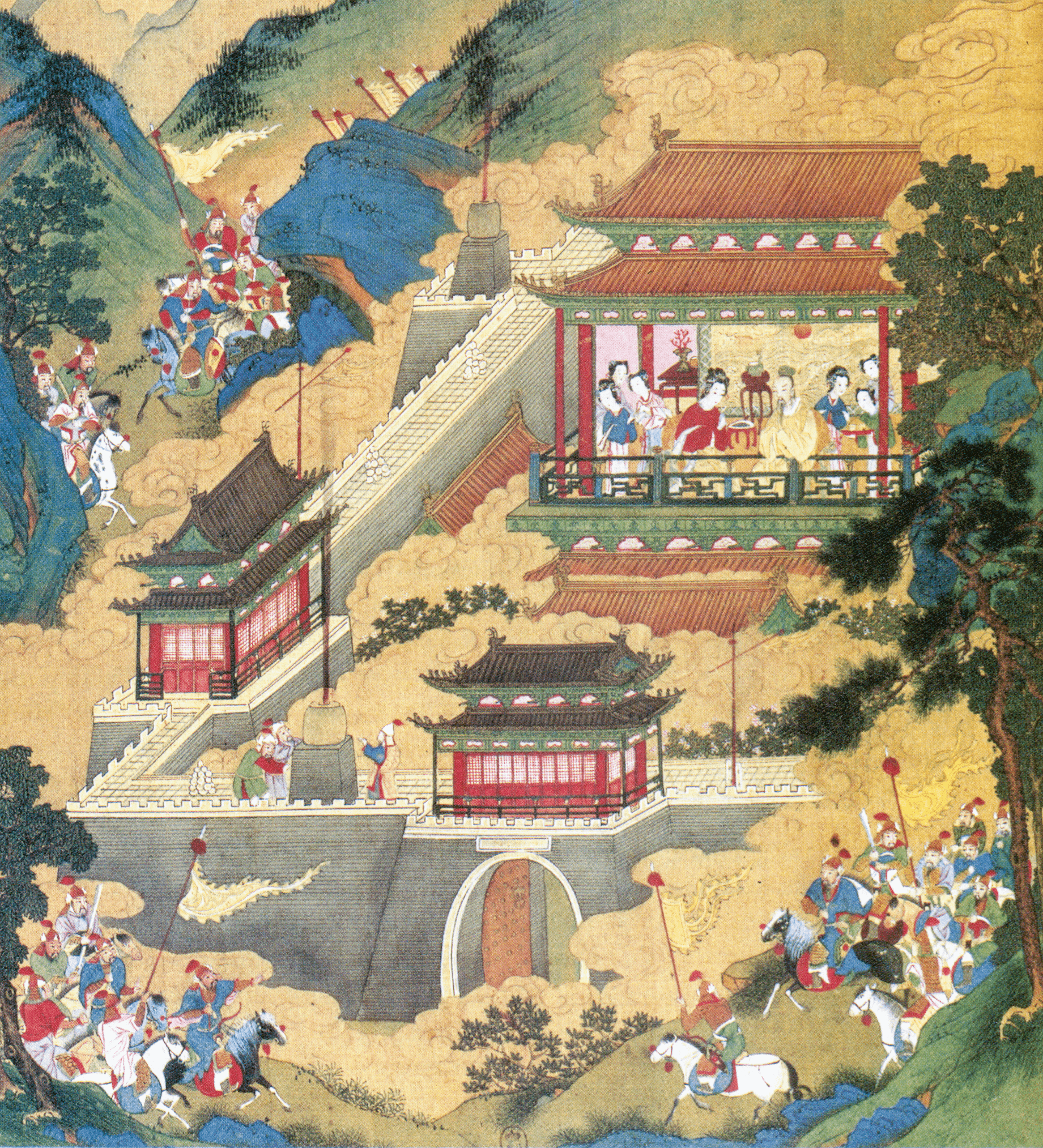
写在前面:本文和chatgpt合作完成。


公元前771年,中国。周幽王在都城镐京附近遭到攻破并身亡,周的旧都与宗庙体系受到重创。随后,周平王东迁到洛邑(后世称洛阳一带),传统上以公元前770年作为东周纪年的起点。

周幽王在位末年,周王室已经处在明显的结构性衰弱之中。镐京的权威背后,依托的是王畿直辖土地、宗族武装、诸侯援军与宗庙体系所形成的综合安全结构。“王畿”是周天子直接控制的核心区域,围绕都城展开。王畿土地直接供养王室、宗庙、军队和礼仪活动,不需要经过诸侯中转。王畿人口可被直接征发,形成王室自己的军事力量,而不是完全依赖诸侯。一旦王畿被蚕食、分割或控制力下降,王权就会立刻财政枯竭、军事空心化。而宗族武装,则是指西周的宗法政治。王室并非“孤立的君主”,而是一个庞大的姬姓宗族网络的中心。

周人以“姬”为共同姓氏标识,是一种政治、血缘的双重身份。被认定为姬姓成员,意味着你在宗法序列中占有一个明确位置,与你能获得的土地、爵位、军事义务和政治话语权直接挂钩。王室把土地分给同姓宗族成员和少量异姓功臣,但同姓优先、同姓为骨干。这些被分封出去的诸侯,并不是独立主权者,而是姬姓宗族的“分支节点”。他们在各自封国内是最高统治者,但在宗法意义上,仍然是周天子的晚辈、旁支或宗族成员,需要在重大政治与军事事务上回归宗族中心。宗族成员各自拥有封地与武装,对天子承担血缘—礼制义务:在战争中出兵,在都城危机时回援,在继承出现争议时站队。

而诸侯援军,则是说诸侯并非纯粹的地方自治者,而是被嵌入到“尊王—朝觐—征伐—封赏”的循环中。天子理论上拥有调动诸侯军队的权力,尤其在“外敌入侵”“宗周受威胁”这种情况下。但这个机制高度依赖信用:诸侯是否相信王命真实、紧急、值得冒成本执行。除此之外还有宗庙体系,王位继承是否合法,要在宗庙中确认;封侯、册命、盟誓,都要在宗庙秩序中完成;天命是否仍在周王室,也通过宗庙祭祀来不断“更新”。一旦宗庙遭到破坏,哪怕军队还在、土地还在,合法性就无法被稳定再生产。而周幽王的身亡,全方位的破坏了这四个体系。

事情发生在在宗周镐京一带。名义上的周天子是周幽王。当时,直接参与进攻的军事力量,被史书统称为犬戎,这是活跃在周西北边缘、长期与周人冲突又往来的部族集团。根据《史记》等传统记载,与犬戎形成政治、军事呼应的,是申国国君申侯。申侯是周王室重要外戚,其女原本是幽王正妻,她所生的太子,原本是按周礼确立的合法继承人。后来被立为王后的,是褒姒。做出这一决定的人,是周幽王。在宗法秩序里,正妻(嫡后)的地位是宗族、政治位置。她代表的是一个外戚集团与王室之间的制度性联盟。废后、废太子,等于同时否定两套秩序:父系继承秩序,和外戚联盟结构。

幽王之所以“要”废后,本质上不是因为他不知道后果,而是因为他已经不再把宗法秩序当作不可触碰的约束。到幽王时期,周王室仍然保有“天子”名分,但实际控制力已在下降。王畿的控制力已经被长期侵蚀,一部分土地被宗族与贵族实控,一部分被边缘势力蚕食,王室对资源的直接支配能力下降。而王室武力方面,王畿人口与动员效率下降,宗族内部因分封、继承与政治判断出现裂缝。诸侯出兵已经从“义务反射”变成“成本计算”。

周幽王仍然坐在“最高位置”上,但这个位置已经缺乏足够的物质支撑、强制能力与制度信用。他更像是在一个正在下沉的平台上,有可能是在明知不可为而为之,通过更激烈的个人动作,试图证明“我仍然能决定一切”。周幽王彼时,比起是一国之君,恐怕更像是笼子里的金丝雀。当然,这只是我的推测。于是,申侯因此与犬戎结盟,在王畿西侧打开了一个长期被内部政治维持的安全阀。

幽王死在镐京附近,意味着宗周作为都城的安全性被证明已经不可恢复。周天子作为“最高祭祀者与共主裁决者”,在本土被外力杀死。在这种情况下,周王室的首要目标已经不是“复仇”或“重建权威”,而是避免王统断裂。断裂一旦发生,所有诸侯的封号、继承与合法性都会失去锚点,整个系统会立刻滑向全面崩解。在诸侯,尤其是申侯等力量的推动与护送下,幽王之子被确立为新天子,即周平王。这个过程本身就具有高度象征性:周天子的继立,已经不再由王室内部自然完成,而是依赖诸侯军事与政治支持。从制度意义上说,这一步已经宣告:天子不再是诸侯的上位强制者,而是被诸侯“共同维持”的中心。

新王放弃已经暴露且难以防守的宗周地区,迁都至洛邑。这不是简单的避险,而是一次被迫的结构性降级。洛邑位于诸侯势力更密集、交通更便利的区域,安全性来自“被包围”,而不是“可防御”。换句话说,周王室从“依靠自身纵深与武力守卫中心”,转变为“嵌在诸侯网络中、靠平衡维持存在”。于是,王畿规模大幅缩水,王室财政与兵源进一步下降。宗周宗庙体系被留在西方或难以完全重建,礼制的物理中心断裂。周天子可以被更换、被保护、被迁移,但不再能单方面裁决他们的行为。

公元前 770 年,周平王东迁洛邑,东周开始;公元前 722 年,鲁隐公元年,《春秋》纪年起点,春秋时期开始。期间,虽然王位得以延续,诸侯的封号、疆界、继承就还能“说得通”。同时,实际操作上,天子可以被杀、都城可以被破、王室必须依赖诸侯护送才能生存。在东周之前,诸侯之间的冲突理论上由天子裁决。到了春秋初期,这个功能转移给了诸侯之间的会盟。会盟并不是外交礼仪,而是新的秩序生成机制:谁能召集、主持、执行盟约,谁就暂时成为秩序的中心。

西周时期形成的分封秩序,在幽王之死后被迫重新计算。哪些诸侯还值得信任,哪些边境需要自保,哪些联盟必须重建,都没有现成答案。这个阶段的诸侯行为呈现出明显的试探性:既不公开否认周王,也不再无条件响应周王。战争与冲突存在,但规模有限,目的更多是重新确认相互位置,而不是彻底消灭对手。我愿称之为,博弈教科书。

在这段过渡期,裁决功能开始悬空。问题并不是“谁说了算”,而是“如果没人说了算,怎么办”。最初的回应是临时性的:靠私人关系、靠短期联盟、靠道义口号。这些做法还不稳定,但已经在为后来的会盟机制探路。无论是尊王的语言,还是对礼制的坚持,都不是虚伪,而是真实的尝试。很多诸侯并不希望世界立刻进入赤裸的强权竞争,因为那意味着所有人的不安全感同时上升。正因如此,春秋那套“以礼包装实力”的秩序,需要时间慢慢被接受。

但到公元前722年前后,几件事情同时变得清晰:周天子不再被期待解决问题;诸侯开始默认通过会盟、霸主与协调来维持秩序;历史书写也开始以诸侯行动为中心,而不是以天子裁决为中心。这时,世界已经不再试图回到西周,而是学会在“没有真正共主”的条件下运转。而孔子,正是出生于这个乱世。

Prefatory Note: This article was produced in collaboration with ChatGPT.


771 BCE, China.

King You of Zhou was defeated and killed near the capital, Haojing. The former Zhou capital and its ancestral temple system suffered severe damage. Shortly thereafter, King Ping of Zhou moved the court east to Luoyi (roughly the area of present-day Luoyang). By convention, 770 BCE is taken as the starting year of the Eastern Zhou.

In the final years of King You’s reign, the Zhou royal house was already in a state of pronounced structural decline. The authority of Haojing rested on a composite security structure formed by four elements: royal-domain lands under direct control (the wangji), clan-based military forces, allied armies from the feudal lords, and the ancestral temple system.

The wangji was the core territory directly controlled by the Zhou king, centered on the capital. Its lands supplied the royal house, the ancestral temples, the army, and ritual activities without mediation by the feudal states. The population of the wangji could be directly conscripted, providing the royal house with its own military force rather than complete reliance on the feudal lords. Once the wangji was encroached upon, fragmented, or weakened in control, royal power immediately faced fiscal exhaustion and military hollowing-out.

Clan-based military forces, meanwhile, were rooted in Western Zhou kinship politics. The royal house was not an “isolated monarch,” but the center of a vast Ji-surname kinship network.

The Zhou people shared the surname “Ji” as a marker of both political and blood affiliation. To be recognized as a Ji clansman meant occupying a clearly defined position within the kinship hierarchy, directly tied to access to land, rank, military obligations, and political voice. The royal house distributed land primarily to same-surname kin and secondarily to a small number of meritorious outsiders; same-surname members were prioritized and formed the backbone. These enfeoffed lords were not independent sovereigns but branch nodes of the Ji kinship network. Within their own states they were supreme rulers, yet in kinship terms they remained juniors, collateral branches, or clan members of the Zhou king, expected to return to the clan center in major political and military affairs. Each clan member held lands and armed retainers and owed blood-and-ritual obligations to the king: to provide troops in war, to rush back to defend the capital in crisis, and to take sides when succession was contested.

As for allied armies from the feudal lords, the point is that the lords were not purely autonomous local rulers. They were embedded in a cycle of “honoring the king—court attendance—campaigns—rewards.” In principle, the king possessed the authority to mobilize feudal armies, especially in cases of foreign invasion or threats to the Zhou heartland. This mechanism, however, depended heavily on credibility: whether the lords believed the royal command to be genuine, urgent, and worth the cost of compliance.

Beyond this stood the ancestral temple system. The legitimacy of royal succession had to be confirmed in the temples; enfeoffments, investitures, and oaths were conducted within their ritual order; and whether the Mandate of Heaven still resided with the Zhou was continually “renewed” through temple sacrifices. Once the temples were damaged, legitimacy could no longer be reliably reproduced—even if armies and lands still existed. King You’s death shattered all four of these systems at once.

The events took place around Haojing in the Zhou heartland. The reigning king was King You. The attacking forces are collectively called the Quanrong in the historical records—tribal groups long active on the northwestern fringes, alternately hostile to and engaged with the Zhou. According to traditional accounts such as the Records of the Grand Historian, a key political and military counterpart to the Quanrong was Marquis Shen, ruler of the state of Shen. Marquis Shen was an important royal in-law: his daughter had been King You’s principal wife, and her son was the legitimate heir under Zhou ritual law. The woman later elevated to queen was Bao Si—by King You’s decision.

Within the kinship order, the principal wife (the legitimate queen) held a clan and political position, representing an institutional alliance between the royal house and an affinal power bloc. To depose the queen and the crown prince was to negate two orders at once: the patrilineal succession order and the structure of affinal alliances.

King You’s decision to depose the queen was not because he failed to grasp the consequences, but because he no longer treated the kinship order as an inviolable constraint. By his time, the Zhou house still retained the title of “Son of Heaven,” but its effective control was declining. Control over the wangji had been eroded over time: some lands were effectively held by clans and nobles, others encroached upon by peripheral powers, reducing the royal house’s direct command over resources. Militarily, the wangji population and mobilization efficiency fell; fissures opened within the clans over enfeoffment, succession, and political judgment; and feudal military participation shifted from an “obligatory reflex” to a cost calculation.

King You still occupied the “highest position,” but that position lacked sufficient material backing, coercive capacity, and institutional credibility. He appears to have been standing on a sinking platform—perhaps knowingly—making ever more dramatic personal moves in an attempt to prove that “I can still decide everything.” At that moment, he may have been less a ruler of a state than a gilded canary in a cage—this is my conjecture. In response, Marquis Shen allied with the Quanrong, opening on the western flank of the royal domain a security valve that had previously been held shut by internal politics.

King You’s death near Haojing proved that the Zhou heartland was no longer defensible as a capital. The Son of Heaven, as both supreme ritual officiant and arbiter, was killed by external force on his own soil. Under such conditions, the royal house’s first priority was no longer revenge or the restoration of authority, but preventing a rupture in the royal line. A rupture would have stripped all feudal titles, successions, and legitimacies of their anchor, plunging the system into immediate collapse. With the backing and escort of the feudal lords—especially figures like Marquis Shen—King You’s son was installed as the new king, King Ping of Zhou. This process was highly symbolic: royal succession no longer occurred autonomously within the royal house but depended on feudal military and political support. Institutionally, this step declared that the king was no longer a coercive superior over the lords, but a center jointly sustained by them.

The new king abandoned the exposed and indefensible Zhou heartland and moved the capital to Luoyi. This was not a simple tactical retreat, but a forced structural downgrade. Luoyi lay amid denser feudal powers and better transport routes; its security derived from being “surrounded,” not from inherent defensibility. In other words, the Zhou house shifted from “defending the center through its own depth and force” to “existing within a feudal network and surviving by balance.” As a result, the wangji shrank drastically; royal finances and manpower declined further; and the ancestral temple system of the old capital was left in the west or could not be fully rebuilt. The physical center of ritual order fractured. Kings could be replaced, protected, and relocated—but no longer unilaterally dictate feudal behavior.

770 BCE marks King Ping’s eastward move to Luoyi and the beginning of the Eastern Zhou; 722 BCE, the first year of Duke Yin of Lu and the opening year of the Spring and Autumn Annals, marks the start of the Spring and Autumn period. In between, although the royal line continued and feudal titles, boundaries, and successions still “made sense,” practice told a harsher story: kings could be killed, capitals breached, and the royal house could survive only by relying on feudal escorts. Before Eastern Zhou, disputes among lords were in principle adjudicated by the king; by the early Spring and Autumn, this function shifted to inter-feudal alliances. Alliances were not mere diplomacy but a new mechanism for generating order: whoever could convene, preside over, and enforce an alliance temporarily became the center of order.

The enfeoffment order formed under Western Zhou had to be recalculated after King You’s death. Which lords were trustworthy, which borders required self-defense, which alliances needed rebuilding—there were no ready answers. Feudal behavior in this phase was distinctly tentative: lords neither openly denied the Zhou king nor responded unconditionally. Warfare and conflict existed but on a limited scale, aimed more at reestablishing relative positions than at annihilating opponents. I would call this a textbook of strategic gaming.

During this transition, adjudicative authority hung in suspension. The question was not “who decides,” but “what do we do if no one decides.” Early responses were provisional: personal ties, short-term coalitions, and moral slogans. These were unstable, but they paved the way for the later alliance system. The language of honoring the king and adherence to ritual were not hypocrisy but genuine attempts. Many lords did not wish to plunge immediately into naked power politics, which would have raised insecurity for all. For this reason, the Spring and Autumn order—power wrapped in ritual language—required time to be accepted.

By around 722 BCE, several things became clear at once: the Zhou king was no longer expected to solve problems; the lords tacitly accepted alliances, hegemonic leadership, and coordination as the means of order; and historical writing began to center on feudal actions rather than royal judgments. At that point, the world ceased trying to return to Western Zhou and learned to operate without a true common sovereign.

Confucius was born into precisely this age of disorder.

Artist Statement

My work is not about explaining the world; it’s about dismantling the emotional structures that everyday life tries to conceal. What I focus on is not “story,” but the dynamics between people—the pull and tension of intimacy, the quiet control embedded in family, the fractures that come with migration, and how an individual maintains their boundaries within these systems.

I grew up between shifting cultures and languages, often in environments where I was expected—needed—claimed by others. I was asked to understand, to accommodate, to take care, to adjust. Even the gentlest relationships carried an undercurrent of consumption. That tension became the foundation of my creative work.

The characters in my stories are not moral types. They each carry a kind of private conflict: they want closeness but fear being swallowed; they long to be seen but can’t fully expose themselves; they are asked again and again to give—to family, to love, to work—without knowing how to keep space for themselves. These aren’t inventions; they’re reflections of lived experience. Writing, for me, is a way to unearth the emotions that have been suppressed, ignored, or normalized—and let them speak again.

I gravitate toward rhythmic narrative structures: compressed scenes, quick shifts, intentional gaps, silences between characters. These spaces reveal more truth than dialogue ever could. The themes I explore—migration, family, identity, trauma, intimacy, female autonomy—ultimately point to a single question: how does a person protect their boundaries in a world that constantly pulls at them, demands from them, watches them?

Creating is neither escape nor self-soothing. It is a way of reclaiming authorship over my own narrative. When I write a character’s silence, resistance, hesitation, or departure, I’m answering one essential question:

When the world insists on defining me, how do I choose to define myself?

艺术家陈述

我的创作不是为了解释世界,是为了拆开被日常掩盖的情绪结构。我关注的核心不是“故事”,而是人与人之间的力量关系——亲密带来的拉扯、家庭带来的隐性控制、身份在迁徙中的断裂,以及一个人在这些结构里如何保持自己的边界。

出生在不断变化的文化与语言之间,长期处在“被期待—被需要—被占用”的环境里。很多时候,我被要求理解别人、照顾别人、顺着环境。那些看似温和的关系里,也潜藏着吞噬性的需求。这种张力成了我创作的源头。

在我的故事里,人物不是善恶分明的类型。他们都带着某种困境:他们想靠近别人,但又害怕被吞没;他们渴望被看见,却无法完全暴露自己;他们在家庭、爱情、工作里不断被要求付出,却不知道怎样为自己保留空间。这并不是虚构,是现实经验的折射。我写作,把那些长期被压抑、被忽略、被习惯化的情感重新挖出来,让它们重新发声。

我倾向于使用节奏性的叙事结构:压缩的篇幅、快速切换的场景、留白的空间、人物之间的静默。这些“空隙”比对白本身更能暴露一个人的真实状态。我处理的主题是移民、家庭、身份、创伤、亲密、女性的自主性,但它们都指向同一件事:一个人如何在被拉扯、被要求、被凝视的世界里,维护自己的边界。

创作不是逃避,也不是自我疗愈,是重新夺回叙事权的方式。当我写下一个人物的沉默、反抗、犹豫或离开,我其实是在回答一个核心问题:
当世界不断定义我时,我选择如何定义自己?

Artist Statement

My work is not about explaining the world; it’s about dismantling the emotional structures that everyday life tries to conceal. What I focus on is not “story,” but the dynamics between people—the pull and tension of intimacy, the quiet control embedded in family, the fractures that come with migration, and how an individual maintains their boundaries within these systems.

I grew up between shifting cultures and languages, often in environments where I was expected—needed—claimed by others. I was asked to understand, to accommodate, to take care, to adjust. Even the gentlest relationships carried an undercurrent of consumption. That tension became the foundation of my creative work.

The characters in my stories are not moral types. They each carry a kind of private conflict: they want closeness but fear being swallowed; they long to be seen but can’t fully expose themselves; they are asked again and again to give—to family, to love, to work—without knowing how to keep space for themselves. These aren’t inventions; they’re reflections of lived experience. Writing, for me, is a way to unearth the emotions that have been suppressed, ignored, or normalized—and let them speak again.

I gravitate toward rhythmic narrative structures: compressed scenes, quick shifts, intentional gaps, silences between characters. These spaces reveal more truth than dialogue ever could. The themes I explore—migration, family, identity, trauma, intimacy, female autonomy—ultimately point to a single question: how does a person protect their boundaries in a world that constantly pulls at them, demands from them, watches them?

Creating is neither escape nor self-soothing. It is a way of reclaiming authorship over my own narrative. When I write a character’s silence, resistance, hesitation, or departure, I’m answering one essential question:

When the world insists on defining me, how do I choose to define myself?

艺术家陈述

我的创作不是为了解释世界,是为了拆开被日常掩盖的情绪结构。我关注的核心不是“故事”,而是人与人之间的力量关系——亲密带来的拉扯、家庭带来的隐性控制、身份在迁徙中的断裂,以及一个人在这些结构里如何保持自己的边界。

出生在不断变化的文化与语言之间,长期处在“被期待—被需要—被占用”的环境里。很多时候,我被要求理解别人、照顾别人、顺着环境。那些看似温和的关系里,也潜藏着吞噬性的需求。这种张力成了我创作的源头。

在我的故事里,人物不是善恶分明的类型。他们都带着某种困境:他们想靠近别人,但又害怕被吞没;他们渴望被看见,却无法完全暴露自己;他们在家庭、爱情、工作里不断被要求付出,却不知道怎样为自己保留空间。这并不是虚构,是现实经验的折射。我写作,把那些长期被压抑、被忽略、被习惯化的情感重新挖出来,让它们重新发声。

我倾向于使用节奏性的叙事结构:压缩的篇幅、快速切换的场景、留白的空间、人物之间的静默。这些“空隙”比对白本身更能暴露一个人的真实状态。我处理的主题是移民、家庭、身份、创伤、亲密、女性的自主性,但它们都指向同一件事:一个人如何在被拉扯、被要求、被凝视的世界里,维护自己的边界。

创作不是逃避,也不是自我疗愈,是重新夺回叙事权的方式。当我写下一个人物的沉默、反抗、犹豫或离开,我其实是在回答一个核心问题:
当世界不断定义我时,我选择如何定义自己?

Artist Statement

My work is not about explaining the world; it’s about dismantling the emotional structures that everyday life tries to conceal. What I focus on is not “story,” but the dynamics between people—the pull and tension of intimacy, the quiet control embedded in family, the fractures that come with migration, and how an individual maintains their boundaries within these systems.

I grew up between shifting cultures and languages, often in environments where I was expected—needed—claimed by others. I was asked to understand, to accommodate, to take care, to adjust. Even the gentlest relationships carried an undercurrent of consumption. That tension became the foundation of my creative work.

The characters in my stories are not moral types. They each carry a kind of private conflict: they want closeness but fear being swallowed; they long to be seen but can’t fully expose themselves; they are asked again and again to give—to family, to love, to work—without knowing how to keep space for themselves. These aren’t inventions; they’re reflections of lived experience. Writing, for me, is a way to unearth the emotions that have been suppressed, ignored, or normalized—and let them speak again.

I gravitate toward rhythmic narrative structures: compressed scenes, quick shifts, intentional gaps, silences between characters. These spaces reveal more truth than dialogue ever could. The themes I explore—migration, family, identity, trauma, intimacy, female autonomy—ultimately point to a single question: how does a person protect their boundaries in a world that constantly pulls at them, demands from them, watches them?

Creating is neither escape nor self-soothing. It is a way of reclaiming authorship over my own narrative. When I write a character’s silence, resistance, hesitation, or departure, I’m answering one essential question:

When the world insists on defining me, how do I choose to define myself?

艺术家陈述

我的创作不是为了解释世界,是为了拆开被日常掩盖的情绪结构。我关注的核心不是“故事”,而是人与人之间的力量关系——亲密带来的拉扯、家庭带来的隐性控制、身份在迁徙中的断裂,以及一个人在这些结构里如何保持自己的边界。

出生在不断变化的文化与语言之间,长期处在“被期待—被需要—被占用”的环境里。很多时候,我被要求理解别人、照顾别人、顺着环境。那些看似温和的关系里,也潜藏着吞噬性的需求。这种张力成了我创作的源头。

在我的故事里,人物不是善恶分明的类型。他们都带着某种困境:他们想靠近别人,但又害怕被吞没;他们渴望被看见,却无法完全暴露自己;他们在家庭、爱情、工作里不断被要求付出,却不知道怎样为自己保留空间。这并不是虚构,是现实经验的折射。我写作,把那些长期被压抑、被忽略、被习惯化的情感重新挖出来,让它们重新发声。

我倾向于使用节奏性的叙事结构:压缩的篇幅、快速切换的场景、留白的空间、人物之间的静默。这些“空隙”比对白本身更能暴露一个人的真实状态。我处理的主题是移民、家庭、身份、创伤、亲密、女性的自主性,但它们都指向同一件事:一个人如何在被拉扯、被要求、被凝视的世界里,维护自己的边界。

创作不是逃避,也不是自我疗愈,是重新夺回叙事权的方式。当我写下一个人物的沉默、反抗、犹豫或离开,我其实是在回答一个核心问题:
当世界不断定义我时,我选择如何定义自己?

sunny.xiaoxin.sun@doubletakefilmllc.com

Sunny Xiaoxin Sun's IMDb


©2025 Double Take Film, All rights reserved

I’m an independent creator born in 1993 in Changsha, now based in California. My writing started from an urgent need to express. Back in school, I often felt overwhelmed by the chaos and complexity of the world—by the emotions and stories left unsaid. Writing became my way of organizing my thoughts, finding clarity, and gradually, connecting with the outside world.


Right now, I’m focused on writing and filmmaking. My blog is a “real writing experiment,” where I try to update daily, documenting my thoughts, emotional shifts, observations on relationships, and my creative process. It’s also a record of my journey to becoming a director. After returning to China in 2016, I entered the film industry and worked in the visual effects production department on projects like Creation of the Gods I, Creation of the Gods II, and Wakanda Forever, with experience in both China and Hollywood. Since 2024, I’ve shifted my focus to original storytelling.


I’m currently revising my first script. It’s not grand in scale, but it’s deeply personal—centered on memory, my father, and the city. I want to make films that belong to me, and to our generation: grounded yet profound, sensitive but resolute. I believe film is not only a form of artistic expression—it’s a way to intervene in reality.

我是93年出生于长沙的自由创作者。我的写作起点来自一种“必须表达”的冲动。学生时代,我常感受到世界的混乱与复杂,那些没有被说出来的情绪和故事让我感到不安。写作是我自我整理、自我清晰的方式,也逐渐成为我与外界建立连接的路径。


我目前专注于写作和电影。我的博客是一个“真实写作实验”,尽量每天更新,记录我的思考、情绪流动、人际观察和创作过程。我16年回国之后开始进入电影行业,曾在视效部门以制片的身份参与制作《封神1》《封神2》《Wankanda Forever》等,在中国和好莱坞都工作过,24年之后开始转入创作。


我正在重新回去修改我第一个剧本——它并不宏大,却非常个人,围绕记忆、父亲与城市展开。我想拍属于我、也属于我们这一代人的电影:贴地而深刻,敏感又笃定。我相信电影不只是艺术表达,它也是一种现实干预。

sunny.xiaoxin.sun@doubletakefilmllc.com

Sunny Xiaoxin Sun's IMDb


©2025 Double Take Film, All rights reserved

I’m an independent creator born in 1993 in Changsha, now based in California. My writing started from an urgent need to express. Back in school, I often felt overwhelmed by the chaos and complexity of the world—by the emotions and stories left unsaid. Writing became my way of organizing my thoughts, finding clarity, and gradually, connecting with the outside world.


Right now, I’m focused on writing and filmmaking. My blog is a “real writing experiment,” where I try to update daily, documenting my thoughts, emotional shifts, observations on relationships, and my creative process. It’s also a record of my journey to becoming a director. After returning to China in 2016, I entered the film industry and worked in the visual effects production department on projects like Creation of the Gods I, Creation of the Gods II, and Wakanda Forever, with experience in both China and Hollywood. Since 2024, I’ve shifted my focus to original storytelling.


I’m currently revising my first script. It’s not grand in scale, but it’s deeply personal—centered on memory, my father, and the city. I want to make films that belong to me, and to our generation: grounded yet profound, sensitive but resolute. I believe film is not only a form of artistic expression—it’s a way to intervene in reality.

我是93年出生于长沙的自由创作者。我的写作起点来自一种“必须表达”的冲动。学生时代,我常感受到世界的混乱与复杂,那些没有被说出来的情绪和故事让我感到不安。写作是我自我整理、自我清晰的方式,也逐渐成为我与外界建立连接的路径。


我目前专注于写作和电影。我的博客是一个“真实写作实验”,尽量每天更新,记录我的思考、情绪流动、人际观察和创作过程。我16年回国之后开始进入电影行业,曾在视效部门以制片的身份参与制作《封神1》《封神2》《Wankanda Forever》等,在中国和好莱坞都工作过,24年之后开始转入创作。


我正在重新回去修改我第一个剧本——它并不宏大,却非常个人,围绕记忆、父亲与城市展开。我想拍属于我、也属于我们这一代人的电影:贴地而深刻,敏感又笃定。我相信电影不只是艺术表达,它也是一种现实干预。

sunny.xiaoxin.sun@doubletakefilmllc.com

Sunny Xiaoxin Sun's IMDb


©2025 Double Take Film, All rights reserved

I’m an independent creator born in 1993 in Changsha, now based in California. My writing started from an urgent need to express. Back in school, I often felt overwhelmed by the chaos and complexity of the world—by the emotions and stories left unsaid. Writing became my way of organizing my thoughts, finding clarity, and gradually, connecting with the outside world.


Right now, I’m focused on writing and filmmaking. My blog is a “real writing experiment,” where I try to update daily, documenting my thoughts, emotional shifts, observations on relationships, and my creative process. It’s also a record of my journey to becoming a director. After returning to China in 2016, I entered the film industry and worked in the visual effects production department on projects like Creation of the Gods I, Creation of the Gods II, and Wakanda Forever, with experience in both China and Hollywood. Since 2024, I’ve shifted my focus to original storytelling.


I’m currently revising my first script. It’s not grand in scale, but it’s deeply personal—centered on memory, my father, and the city. I want to make films that belong to me, and to our generation: grounded yet profound, sensitive but resolute. I believe film is not only a form of artistic expression—it’s a way to intervene in reality.

我是93年出生于长沙的自由创作者。我的写作起点来自一种“必须表达”的冲动。学生时代,我常感受到世界的混乱与复杂,那些没有被说出来的情绪和故事让我感到不安。写作是我自我整理、自我清晰的方式,也逐渐成为我与外界建立连接的路径。


我目前专注于写作和电影。我的博客是一个“真实写作实验”,尽量每天更新,记录我的思考、情绪流动、人际观察和创作过程。我16年回国之后开始进入电影行业,曾在视效部门以制片的身份参与制作《封神1》《封神2》《Wankanda Forever》等,在中国和好莱坞都工作过,24年之后开始转入创作。


我正在重新回去修改我第一个剧本——它并不宏大,却非常个人,围绕记忆、父亲与城市展开。我想拍属于我、也属于我们这一代人的电影:贴地而深刻,敏感又笃定。我相信电影不只是艺术表达,它也是一种现实干预。

PRODUCT

Design

Content

Publish

RESOURCES

Blog

Careers

Docs

About