Created on
Updated on
The Old World (X): The Legacy of Confucius
旧世界(X):孔子的遗产
写在前面:本文和chatgpt合作完成。
公元前 484 年,孔子结束周游列国,返回鲁国。这一年他大约六十八岁。此时鲁国的实权仍掌握在三桓手中。名义上的国君还在,宗庙、礼仪、年号都在运转,但真正能调动军队、控制财政、决定人事的权力,长期掌握在所谓的“三桓”手里。所谓“三桓”,指的是鲁桓公后裔分化出的三支强宗:季孙氏、孟孙氏、叔孙氏。这三家不是“外戚”“权臣”那种临时角色,而是通过世代积累,把国家结构本身变成了自己的资产。土地、附庸、家兵、仓廪、宗族网络都在他们名下,国君反而成了依附其上的合法性装饰。鲁国的关键官职长期由三家轮流或分割占据,军队事实上听命于家族而非国君,财政收入也先进入家族仓廪,再象征性上交国府。在这个背景下,孔子没有尝试重新进入权力核心,只被礼节性尊为“国老”一类的象征性人物,不承担实际行政事务。
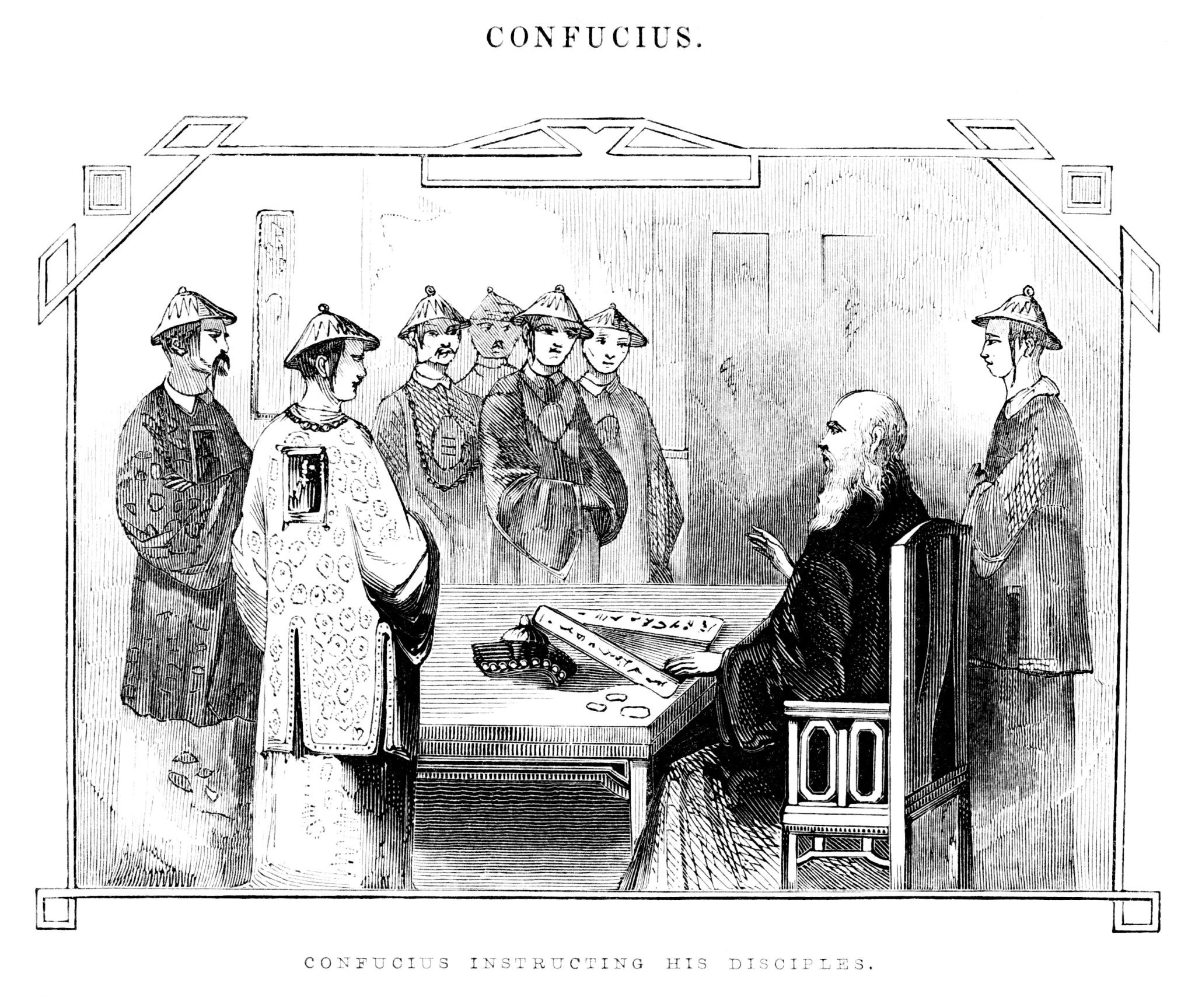
公元前 484—前 482 年之间,是孔子晚年教学最集中的阶段。他长期居住在鲁国,以私学形式授徒,与弟子反复讨论《诗》《书》《礼》《乐》及历史人物的是非得失。他们围绕具体文本、具体人物、具体行为展开的反复拆解。这一时期形成了大量后来被弟子记忆、转述的言行素材,是《论语》内容的主要时间背景之一。同时,这也是他系统性整理古代文献传统的阶段,通过口述、删选、排序与解释,逐步固定“经典”的边界。
《诗》,即《诗经》,是中国现存最早的一部诗歌总集,其成书与汇编过程横跨西周早期至春秋中期,大致覆盖公元前十一世纪到前六世纪的数百年。《诗》所记录的,并非宏大的史诗叙事,而是高度贴近日常与政治边缘的经验:农事、婚恋、离别、服役、怨怼、失落、忠诚与失衡。这些文本原本存在于非常具体的使用情境中,有的来自地方歌谣,有的用于宗庙与宴飨,有的出现在外交或朝会场合。传统上,《诗》被分为风、雅、颂三类。:风更多来自地方,反映基层情绪;雅与颂则与王室、贵族和宗庙相关,承担秩序确认与合法性叙述的功能。
孔子讨论《诗》的角度,有点类似现代的阅读理解、精神分析、及情绪管理建议的合体。他并不把《诗》当成纯粹的审美对象,而是视为一种社会可读的情绪表达机制。他强调“诗可以兴、观、群、怨”,这里的“怨”尤为关键——不是反叛,而是被允许存在、但被节制和编码的不满。一方面,它是理解人心的材料,通过对诗句的选择、引用与解释,可以判断一个人的处境、立场与分寸;另一方面,它也是一套表达训练工具,教人如何在不对等关系中说话,如何让真实感受被感知,却不被判定为失控或威胁。这个思路从现代的我看来非常奇怪,表达情感似乎是现代人的本能,然而在古代,居然被看做是不合时宜,而且需要仔细的讨论哪些可以表达,如果可以,又应该如何表达更得体。这在我看来太婆婆妈妈了,可能因为我不是鲁国人吧。
《书》,通常称《尚书》或《书经》,是一部以政治言说与历史记录为核心的文献汇编,内容大致形成于西周至春秋早期。它并不是连贯叙事的历史书,而是一组不同场合留下的文本集合,包括王命、誓辞、诰令、盟誓、政务说明等,原本服务于真实的政治操作,而非后世意义上的“史学写作”。《书》的语言高度正式、克制、抽象,几乎没有情绪抒发,也极少描写个人感受。它关心的是:谁在什么位置上说话,这番话是否“站得住”,是否符合当时被承认的政治与道德边界。换句话说,《书》记录了一些此前的帝王、重要人物的一些政治操作、行为,而孔子和他的学生们,则拆解这些行为、动机,讨论这些行为的合理性。有点像新闻评论员,但不是新闻,是旧闻。
《礼》则是更加细节的一些规矩。例如下面这一段:
“诸侯行而死于馆,则其复如于其国。如于道,则升其乘车之左毂,以其绥复。其輤有裧,缁布裳帷素锦以为屋而行。至于庙门,不毁墙遂入适所殡,唯輤为说于庙门外。大夫、士死于道,则升其乘车之左毂,以其绥复。如于馆死,则其复如于家。大夫以布为輤而行,至于家而说輤,载以輲车,入自门至于阼阶下而说车,举自阼阶,升适所殡。士輤,苇席以为屋,蒲席以为裳帷。”
这一段,用现在的话来说,就是:诸侯如果在外出途中去世,而是在宾馆中死亡的,遗体应当护送回本国;如果是在道路上去世的,就把他的遗体安置在所乘车辆左侧的车毂处,用车上的凭物招魂复魄。为遗体所设的輤车,要加设垂饰,用黑色布作下帷、用素色锦作车顶,继续前行。到达宗庙门口时,不拆毁围墙,直接进入停殡的地方,只有輤车要在庙门外卸下。大夫、士如果死在道路上,也同样把遗体安置在所乘车辆左侧的车毂处,用以招魂复魄;如果是在宾馆中去世的,就将遗体送回家中。大夫所用的輤车以布制作,行至家门口便卸下輤具,再改用輲车载运,从正门进入,到东阶下卸车,由东阶抬起,送入停殡之处。士所用的輤车,则以芦苇席作车顶,用蒲席作下帷。
因此,《礼》在课堂上的第一个功能,是标定边界。孔子不断用历史与现实的例子追问:什么叫“僭”?是形式相同,还是位置错置?同样的行为,诸侯可以做,大夫能不能做;大夫能做,家臣可不可以做。讨论的重点不是动作本身,而是谁在什么位置上做。子并不否认例外的存在,但他极其警惕“把例外常态化”。他与弟子反复讨论:在危机中破礼,是否是为了保住礼的整体;还是仅仅为了一己或一族的便利。区别不在于是否破例,而在于破例之后是否愿意承认这是问题、是否愿意为此付出代价。《礼》提供的是一套缓冲机制,把本来可能变成正面冲突的张力,转化为程序争议、形式争议、先例争议。
而《乐》在周代的原始结构中,不是个人审美活动,而是公共行为。音乐与舞蹈在宗庙、朝会、宴飨中成套出现,作用不是“表达自我”,而是让在场的人在节奏、强度与时序上重新对齐。你什么时候起、什么时候止、情绪走到哪里为止,都被音乐预先规定。孔子谈《乐》,关心的核心问题并不是“好不好听”,而是这种声音会把人带到什么状态。他明确区分“雅乐”与“郑声”,并不是审美偏好,而是社会判断。在他看来,某些音乐会放大欲望、刺激即时满足,让人沉溺其中而失去自我约束;而雅乐的特点恰恰是节制、对称、可预期,它不会把情绪推向极端,而是让情绪在可回收的范围内流动。
《乐》在孔子那里从不脱离政治语境。他并不相信“中性的音乐”。在他看来,每一种被反复使用、被制度化的音乐形式,都会塑造某种类型的人。音乐一旦被放任为纯粹感官刺激,群体就会变得短视、冲动、难以自持;而一旦音乐完全被工具化为威压,又会制造麻木与虚伪的顺从。《乐》的理想状态,是让人愿意自我约束,而不是被迫服从。
这些讨论的细节被整理成《论语》,也就是为啥《论语》都是以对话形式,因为这真的就是人课堂上的对话的总结。孔子一生就沉浸在对这些规范的理解和实践的研究和讨论中,虽然实践失败了,但还是可以讨论作为思想实验的。
公元前 481—前 480 年前后,孔子晚年接连经历弟子去世的打击,尤其是颜回之死,对其精神状态影响极大。史籍记载中,他在这一时期多次表达对生命有限、道未行的清醒认知,但并未转向宗教式的超越关怀,而是更集中于教学与言传身教。
公元前 479 年,孔子卒于鲁国,享年约七十三岁。去世时既无官爵,也无成文著作流传(《论语》是他弟子写的),留下的只有弟子群体、已被整理和反复讲授的文本传统,以及一种可以被继续模仿的教学与解释方式。其身后影响并非立即显现,而是在随后数代弟子不断整理、转述与制度化过程中逐步扩大。
Preface: This article was completed in collaboration with ChatGPT.
In 484 BCE, Confucius ended his long journey among the various states and returned to Lu. He was about sixty-eight years old at the time. Political power in Lu, however, was still firmly in the hands of the Three Huan families. The ruler of Lu remained in name, and the ancestral temples, ritual system, and regnal calendar continued to function, but the real power to mobilize troops, control finances, and decide appointments had for a long time been monopolized by the so-called “Three Huans.” These were three powerful lineages descended from Duke Huan of Lu: the Jisun, the Mengsun, and the Shusun. They were not temporary figures such as “imperial in-laws” or “strong ministers,” but families that, through generations of accumulation, had effectively turned the state structure itself into their private asset. Land, dependents, private armies, granaries, and kinship networks all belonged to them; the ruler had instead become a mere ornament of legitimacy attached to their power. Key offices in Lu were long held in rotation or divided among these three houses; the army in practice obeyed the families rather than the ruler, and fiscal revenues flowed first into family granaries before being symbolically remitted to the state treasury. Against this background, Confucius did not attempt to re-enter the core of political power. He was treated only with ceremonial respect, as a kind of “elder of the state,” a symbolic figure without actual administrative responsibilities.
The period from 484 to 482 BCE marks the most concentrated phase of Confucius’s late-life teaching. He lived for long stretches in Lu, taught students in a private capacity, and repeatedly discussed the Poetry (Shi), Documents (Shu), Ritual (Li), and Music (Yue), as well as the rights and wrongs of historical figures. These discussions revolved around close analysis of specific texts, specific people, and specific actions. Much of the speech and conduct later remembered and transmitted by his students dates from this period, making it one of the main chronological backgrounds of the Analects. At the same time, this was also the phase in which Confucius systematically organized the ancient textual tradition: through oral explanation, selection, omission, ordering, and interpretation, he gradually fixed the boundaries of what would later be regarded as the “classics.”
Poetry, that is, the Book of Songs, is the earliest extant anthology of poetry in China. Its composition and compilation span from the early Western Zhou to the mid–Spring and Autumn period, roughly covering several centuries from the eleventh to the sixth century BCE. What Poetry records is not grand epic narrative, but experiences closely tied to everyday life and the margins of politics: agriculture, marriage, separation, military service, resentment, disappointment, loyalty, and imbalance. These texts originally existed in very specific contexts of use—some as local songs, some for ancestral temples and banquets, others for diplomatic or court occasions. Traditionally, Poetry is divided into three categories: Airs (feng), Elegances (ya), and Hymns (song). The Airs are largely local in origin and reflect grassroots emotions, while the Elegances and Hymns are associated with the royal house, the aristocracy, and ancestral worship, serving to affirm order and articulate legitimacy.
Confucius’s approach to discussing Poetry is somewhat like a hybrid of modern reading comprehension, psychoanalysis, and emotional-management advice. He did not treat the Book of Songs as a purely aesthetic object, but as a socially legible mechanism for emotional expression. He emphasized that “poetry can arouse, observe, unite, and express resentment,” with “resentment” being particularly important—not rebellion, but dissatisfaction that is permitted to exist, yet restrained and encoded. On the one hand, poetry serves as material for understanding the human mind: through the selection, quotation, and interpretation of poems, one can judge a person’s circumstances, stance, and sense of proportion. On the other hand, it functions as a training tool for expression, teaching people how to speak within unequal relationships—how to let genuine feelings be perceived without being judged as out of control or threatening. From a modern perspective, this way of thinking feels quite strange: emotional expression seems instinctive to us today. Yet in antiquity it was considered inappropriate and required careful discussion of what could be expressed and how it should be expressed properly. To me, this seems excessively fussy—perhaps because I am not a native of Lu.
Documents, usually called the Book of Documents or Classic of Documents, is a compilation centered on political speech and historical records, with its contents largely formed between the Western Zhou and the early Spring and Autumn period. It is not a continuous narrative history, but a collection of texts produced in different contexts: royal commands, oaths, proclamations, covenants, and explanations of government affairs. These texts originally served real political operations rather than later notions of historiography. The language of Documents is highly formal, restrained, and abstract, with almost no emotional expression and very little reference to personal feelings. Its concern is: who is speaking from what position, whether what is said “holds up,” and whether it conforms to the political and moral boundaries recognized at the time. In other words, Documents records certain political actions and behaviors of earlier rulers and important figures, while Confucius and his students dissected these actions and motives, discussing their reasonableness—somewhat like news commentators, except the news is ancient.
Ritual deals with even more detailed rules. For example, the following passage:
“If a feudal lord dies while traveling and dies in a lodging place, his body is returned to his state. If he dies on the road, it is placed by the left hub of his carriage, and a token is used to summon the soul. The bier is furnished with pendants; black cloth is used for the lower curtains and plain silk brocade for the roof, and it proceeds onward. Upon reaching the gate of the ancestral temple, the wall is not dismantled; one enters directly to the place of temporary interment, while the bier alone is removed outside the temple gate. If a grand officer or a gentleman dies on the road, the same procedure is followed at the left hub of the carriage to summon the soul. If he dies in a lodging place, he is returned home. A grand officer’s bier is made of cloth and removed at the home, then transferred to a different cart, brought in through the gate to below the eastern steps, unloaded there, lifted from the steps, and carried to the place of interment. A gentleman’s bier uses reeds for the roof and rush mats for the curtains.”
Thus, the first function of Ritual in the classroom is to mark boundaries. Confucius repeatedly used historical and contemporary examples to ask: what counts as “usurpation”? Is it merely similarity of form, or a mismatch of position? If a feudal lord may do something, may a grand officer do it? If a grand officer may do it, may a retainer? The focus is not the action itself, but who performs it from what position. Confucius did not deny the existence of exceptions, but he was extremely wary of turning exceptions into norms. He repeatedly discussed with his students whether breaking ritual in a crisis was done to preserve the overall order, or merely for the convenience of oneself or one’s lineage. The difference lies not in whether an exception is made, but in whether one is willing to acknowledge it as a problem and pay the price for it. Ritual provides a buffering mechanism, transforming tensions that might otherwise become direct confrontation into disputes over procedure, form, and precedent.
As for Music, in the original Zhou structure it was not a matter of personal aesthetic experience, but a public activity. Music and dance appeared together in ancestral temples, court assemblies, and banquets. Their function was not “self-expression,” but to realign everyone present in rhythm, intensity, and timing. When to rise, when to stop, how far emotions should go—these were all pre-regulated by music. When Confucius discussed Music, his core concern was not whether it sounded pleasant, but what kind of state it led people into. His distinction between “elegant music” and “music of Zheng” was not an aesthetic preference, but a social judgment. In his view, certain kinds of music amplify desire and immediate gratification, causing people to lose self-restraint, whereas elegant music is characterized by moderation, symmetry, and predictability; it does not push emotions to extremes, but keeps them within recoverable bounds.
For Confucius, Music was never detached from its political context. He did not believe in “neutral music.” In his view, any musical form that is repeatedly used and institutionalized will shape a certain type of person. If music is allowed to become pure sensory stimulation, groups become short-sighted, impulsive, and difficult to restrain; if music is entirely instrumentalized as coercion, it produces numbness and hypocritical compliance. The ideal state of Music is to make people willing to restrain themselves, rather than being forced to obey.
The details of these discussions were later organized into the Analects, which is why the text takes the form of dialogues—it really is a summary of classroom conversations. Confucius spent his life immersed in the study, understanding, and discussion of these norms. Although his political practice failed, the discussions themselves could still proceed as thought experiments.
Around 481–480 BCE, Confucius in his old age suffered successive blows from the deaths of his disciples, especially the death of Yan Hui, which had a profound impact on his mental state. Historical records note that during this period he repeatedly expressed a clear awareness of the finitude of life and the fact that the Way had not been realized, yet he did not turn toward religious transcendence. Instead, he focused even more intently on teaching and instruction by personal example.
In 479 BCE, Confucius died in Lu at about seventy-three years of age. At his death he held no official rank and left no written works (the Analects were written by his students). What he left behind were a community of disciples, a textual tradition that had been organized and repeatedly taught, and a mode of teaching and interpretation that could continue to be imitated. His posthumous influence did not appear immediately, but gradually expanded through the continual organization, transmission, and institutionalization carried out by later generations of disciples.