Created on
1
/
28
/
2026
,
8
:
1
Updated on
2
/
1
/
2026
,
2
:
53
Location
Oakland, CA
United States (II): Seven Years’ War
美国 (II): 七年战争
写在前面:本文和chatgpt合作完成。
1740 年代的奥地利王位继承战争,深刻改变了欧洲的力量结构。奥地利王位继承战争的导火索,是 1740 年哈布斯堡皇帝查理六世去世、其女儿玛丽亚·特蕾莎继位。按照此前多年外交谈判形成的《国事诏书》,欧洲主要国家都已在文件层面承认女性继承权。
然而现实很快表明,欧洲列强并未把这一文件视为不可触碰的宪制底线,而是将“合法性争议”当作重新分配利益的机会。玛丽亚·特蕾莎的继承在文件上是成立的。《国事诏书》、哈布斯堡的家族法理、此前的国际承认都在。但法国、巴伐利亚、西班牙、普鲁士等国突然开始强调各种“疑点”:女性继承是否违背传统?帝国选侯是否另有权利?某些领地是否应当分割?这些问题并不是新出现的,它们此前一直存在,只是被压着不用。各国调动法学家、宫廷顾问和帝国法庭传统,重新解读旧条约、家族契约和神圣罗马帝国的宪制文本。
巴伐利亚是中欧历史上一个长期存在、但经常被低估的政治实体。它位于多瑙河上游与阿尔卑斯山北麓之间,地理上连接德意志腹地、意大利北部与中欧交通走廊,这使它从一开始就不是边缘地带,而是战略通道。中世纪起,巴伐利亚成为罗马帝国的一部分,并在 12 世纪后由维特尔斯巴赫家族长期统治。这个家族通过继承、分封与制度整合,使巴伐利亚在频繁分裂的帝国内部保持了相对稳定的政治连续性。1623 年,巴伐利亚获得选侯资格,正式进入帝国最高权力结构,拥有参与皇帝选举的权利。
当时,巴伐利亚方面强调巴伐利亚的统治家族 (维特尔斯巴赫家族) 与哈布斯堡(玛丽亚·特蕾莎就是哈布斯堡王朝本身的继承人)之间的婚姻继承关系,声称在某些领地上拥有“更早或更直接”的权利,并据此为其选侯提出皇位主张。同时,巴伐利亚联合法国,推动神圣罗马帝国的选侯权逻辑,强调皇帝并非自动继承,而是需要选举,从而把玛丽亚·特蕾莎的地位从“合法继承者”降级为“尚未被帝国政治完全确认的一方”。
各国在照会、备忘录和谈判中,刻意避免使用“奥地利女大公合法统治者”这类确定性称谓,而改用“声称继承权者”“相关当事方”等模糊表述。这种用词变化会直接影响盟友态度、贷款条件和军队宣誓对象。合法性不是被否认,而是被悬置。而普鲁士的当权者腓特烈二世并没有等待这些法理论证完成,而是选择其中一个被长期讨论、但从未被执行解决的灰色地带——西里西亚——宣称普鲁士对该地拥有旧有条约基础上的权利,然后立刻用军事行动“落实”这一主张。
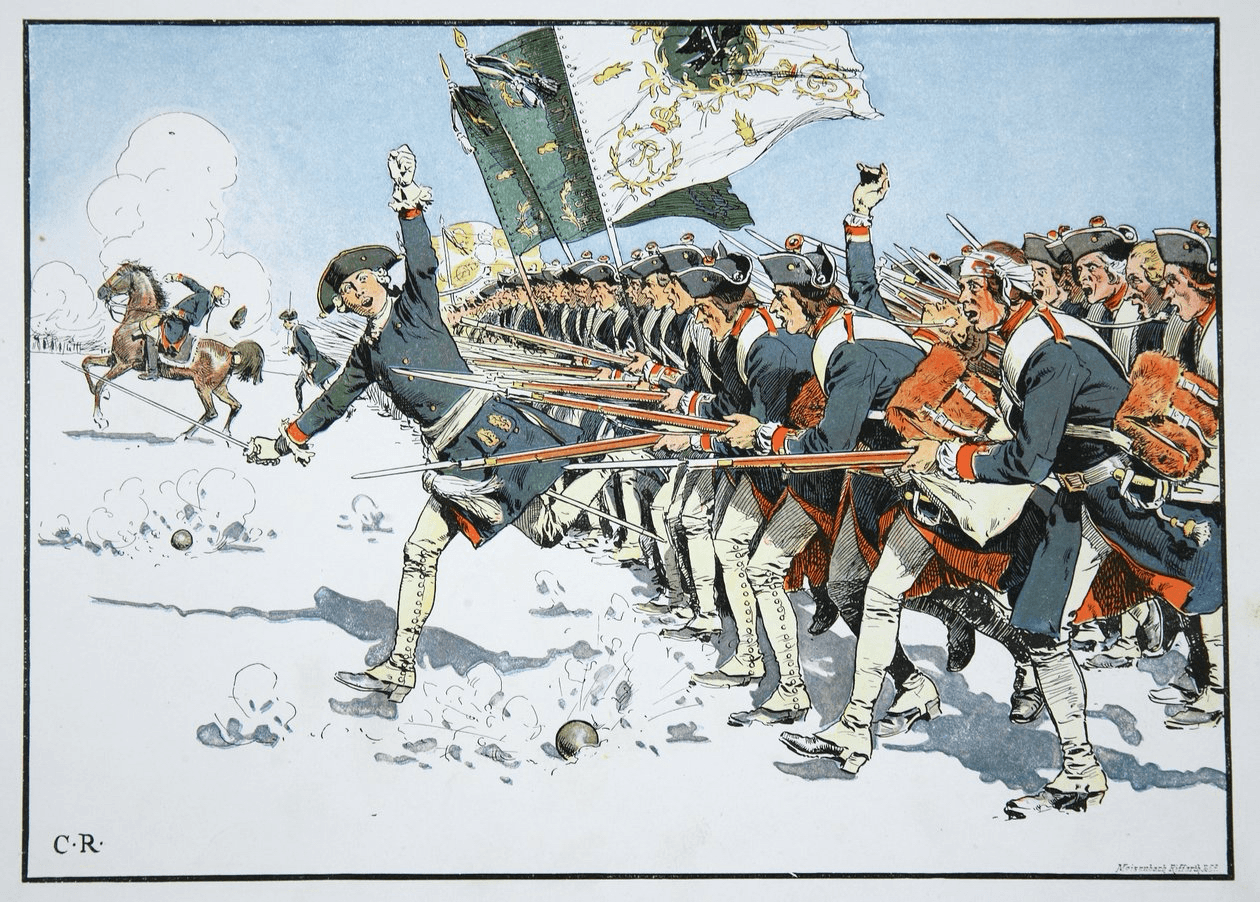
普鲁士并不是一个自然成长起来的大国,而是由一系列彼此割裂的领地拼接而成的军事型国家。它在人口规模、自然资源和传统合法性方面均不占优势,但在腓特烈·威廉一世时期,被打造出一支高度纪律化、长期备战的常备军。在传统王朝政治中,军队通常是王权的工具;而在腓特烈二世治下,这种关系被进一步倒转:国家机器被更彻底地围绕军队、财政与持续作战能力来组织。
1740 年对西里西亚的入侵,是高度机会主义、近乎现代的战略决策。腓特烈并非完全放弃法理语言,而是将其视为事后可使用的正当化工具;真正驱动行动的,是对这块地区现实价值的判断。西里西亚拥有密集人口、矿产资源、成熟的手工业和稳定的税基,能够反向支撑军队扩张和财政整合。这一步具有标志性意义:战争目标开始从“合法继承”向“资源—财政—军备闭环”转移。
更具破坏性的,是这一“违规者”最终未被欧洲体系纠正。战争持续近八年,联盟结构和战场重心多次变化,最终在 1748 年的亚琛和约中,奥地利被迫承认西里西亚的丧失。这一结果释放出一个危险信号:只要军事与财政能力足够强,王朝法理是可以被事后推翻并被国际体系接受的。规则并未被修复,而是被默许。
从这一刻起,欧洲力量结构发生了三重变化。普鲁士从区域性变量转变为系统性力量,任何重大冲突都无法再将其忽略。同时,奥地利逐渐意识到,单靠传统威望已不足以维持大国地位,必须推进财政、军制和官僚体系的深度改革。而法国与英国开始看清,欧洲大陆的均势正变得不稳定,未来竞争将越来越取决于资源动员能力,而非单纯的王朝联盟技巧。
七年战争结束后,英国在表面上成为最大赢家:击败法国,获得加拿大,在印度取得主导地位,海上优势进一步巩固。但这一胜利的代价同样清晰——这是一次高度依赖举债完成的胜利。战争期间,英国的国家债务规模大幅上升,财政承受能力被长期战争显著削弱。
在此之前,英国应对财政压力的方式相对温和。一方面,通过维持欧洲大陆的均势来避免被迫成为主要陆上作战国;另一方面,依靠贸易扩张和经济增长逐步消化债务。海军成本高,但边际效率也高;补贴盟友往往比直接参战更经济。这使战争支出具有可伸缩性:冲突升级时迅速投入,紧张缓解后及时收缩,而无需长期对国内社会进行高强度动员。
1694 年成立的英格兰银行,与议会税收担保和金融市场共同构成了公共信用体系。政府能够通过发行长期国债,为战争融资,并在市场相信偿付可预期的前提下不断滚动债务。关键不在于债务的绝对规模,而在于利息水平是否可控、偿付是否可信。在 18 世纪前半叶,这一机制总体上运作良好。贸易与殖民体系提供了持续的现金流。关税、航运、保险和殖民垄断利润,为财政提供了相对低摩擦的收入来源。与直接税不同,这些收入隐藏在商品价格与贸易环节中,不易引发社会对抗。只要全球贸易持续扩张,国家就能够在不显著重塑国内政治结构的情况下,支撑债务与战争支出。
18 世纪前半叶,全球贸易总量上升,北美人口快速增长,加勒比和印度的商业潜力不断释放。在这一背景下,“先借钱、后增长”并非纯粹赌博,而是一种基于经验与预期的判断。但七年战争改变了这一平衡。这场战争第一次呈现出真正的全球性和持续高消耗特征,未来增长被大量提前抵押。英国不得不面对一个此前可以回避的问题:如果贸易和信用已不足以覆盖安全成本,那么帝国防务应由谁来承担?答案迅速指向北美殖民地。
与此同时,法国在北美的威胁消失。加拿大被英国吞并后,殖民地对宗主国的安全依赖显著下降。在伦敦看来,这反而构成新的风险:一个不再依赖帝国军力、却拒绝承担财政义务的殖民地体系,本身就蕴含不稳定性。英国逐渐意识到,未来决定帝国竞争成败的,不再是单纯的外交操作,而是稳定、可预期、可动员的财政能力。而北美殖民地,正是帝国体系中内部税负与财政整合程度相对较低、尚未被全面纳入这一体系的关键区域。
由此,政策方向发生根本转变。印花税、糖税、茶税的核心意义,并不在于税额本身,而在于它们所传递的制度信号:殖民地必须从“高度自治的商业伙伴”,转变为“帝国财政体系的组成部分”。但北美殖民地的政治文化,早已在实践中与英国本土分化。对伦敦而言,这是合理的制度调整;对殖民地而言,则是未经同意的主权侵入。冲突由此不可避免。
Preface: This article was completed in collaboration with ChatGPT.
The War of the Austrian Succession in the 1740s profoundly reshaped Europe’s power structure. Its immediate trigger was the death of the Habsburg emperor Charles VI in 1740 and the succession of his daughter, Maria Theresa. Under the Pragmatic Sanction, formulated through years of prior diplomatic negotiations, Europe’s major powers had formally recognized the right of female succession.
Reality, however, quickly revealed that Europe’s great powers did not treat this document as an untouchable constitutional baseline. Instead, they regarded “legitimacy disputes” as opportunities to redistribute interests. On paper, Maria Theresa’s succession was valid. The Pragmatic Sanction stood, Habsburg dynastic law stood, and previous international recognition stood. Yet France, Bavaria, Spain, Prussia, and others abruptly began emphasizing various “doubts”: did female succession violate tradition? Did the imperial electors possess alternative rights? Should certain territories be divided? These questions were not new. They had existed all along but had previously been suppressed. Now states mobilized jurists, court advisers, and imperial legal traditions to reinterpret old treaties, family compacts, and the constitutional texts of the Holy Roman Empire.
Bavaria was a political entity that had existed for centuries in Central Europe but was often underestimated. Located between the upper Danube and the northern foothills of the Alps, it connected the German heartland, northern Italy, and Central European transit corridors. From the outset, it was not a peripheral region but a strategic passage. From the Middle Ages onward, Bavaria was part of the Holy Roman Empire and, from the twelfth century, was ruled for the long term by the Wittelsbach dynasty. Through inheritance, partition, and institutional consolidation, this family enabled Bavaria to maintain a relatively stable political continuity within an empire otherwise prone to fragmentation. In 1623, Bavaria obtained electoral status, formally entering the empire’s highest power structure and gaining the right to participate in the election of the emperor.
At the time, Bavaria emphasized the marital and dynastic inheritance ties between its ruling house—the Wittelsbachs—and the Habsburgs, of which Maria Theresa herself was the direct dynastic heir. Bavaria claimed that it possessed “earlier or more direct” rights to certain territories and, on this basis, advanced an imperial claim for its elector. At the same time, Bavaria aligned with France to promote the electoral logic of the Holy Roman Empire, stressing that the imperial crown was not automatically inherited but required election. This maneuver downgraded Maria Theresa’s position from “legitimate successor” to a party “not yet fully confirmed by imperial politics.”
In diplomatic notes, memoranda, and negotiations, the powers deliberately avoided definitive titles such as “the lawful ruler of Austria,” instead adopting vague expressions like “claimant to the inheritance” or “concerned party.” These shifts in language directly affected alliance behavior, credit conditions, and the object of military oaths. Legitimacy was not denied outright; it was suspended. Prussia’s ruler, Frederick II, did not wait for these legal debates to conclude. He selected one long-discussed but never fully resolved gray zone—Silesia—asserted Prussian rights based on old treaties, and immediately enforced this claim through military action.
Prussia was not a naturally evolved great power, but a militarized state assembled from a series of discontinuous territories. It lacked advantages in population size, natural resources, and traditional legitimacy. Under Frederick William I, however, it had been forged into a highly disciplined, permanently mobilized standing army. In traditional dynastic politics, the army was usually a tool of royal authority; under Frederick II, this relationship was further inverted. The state apparatus was organized ever more thoroughly around the needs of the army, fiscal extraction, and sustained war-making capacity.
The 1740 invasion of Silesia was a highly opportunistic, almost modern strategic decision. Frederick did not abandon legal language entirely, but treated it as a tool for post hoc justification. What truly drove action was an assessment of the territory’s material value. Silesia possessed a dense population, mineral resources, developed handicraft industries, and a stable tax base—assets capable of feeding back into military expansion and fiscal integration. This move was emblematic: war aims began shifting from “legitimate inheritance” toward a closed loop of resources, finance, and armament.
More destabilizing still was the fact that this “rule-breaker” was never corrected by the European system. The war lasted nearly eight years, with alliances and theaters repeatedly shifting. In the Treaty of Aix-la-Chapelle in 1748, Austria was ultimately forced to recognize the loss of Silesia. This outcome released a dangerous signal: if military and fiscal capacity were strong enough, dynastic legality could be overturned after the fact and still accepted by the international order. The rules were not restored; they were tacitly tolerated.
From this point on, Europe’s power structure underwent three transformations. Prussia shifted from a regional variable into a systemic force that could no longer be ignored in major conflicts. Austria came to recognize that traditional prestige alone was insufficient to sustain great-power status and began pushing deep reforms in finance, military organization, and bureaucracy. France and Britain, meanwhile, began to see that continental equilibrium was becoming unstable and that future competition would increasingly hinge on resource mobilization rather than dynastic alliance craft.
After the Seven Years’ War, Britain emerged on the surface as the greatest winner: France was defeated, Canada was acquired, dominance was secured in India, and naval supremacy further consolidated. Yet the cost of this victory was equally clear. It was a triumph financed heavily through debt. During the war, Britain’s national debt rose sharply, and its fiscal capacity was significantly strained by prolonged conflict.
Before this point, Britain’s response to fiscal pressure had been relatively restrained. On one hand, it sought to maintain the continental balance of power to avoid becoming a primary land combatant; on the other, it relied on trade expansion and economic growth to absorb debt gradually. Naval warfare was expensive, but its marginal efficiency was high. Subsidizing allies was often cheaper than direct engagement. This gave war spending elasticity: rapid escalation during crises, contraction once tensions eased, without sustained high-intensity domestic mobilization.
Founded in 1694, the Bank of England, together with parliamentary tax guarantees and financial markets, formed a public credit system. The government could finance war through long-term bonds and roll over debt as long as markets believed repayment was predictable. The key was not absolute debt size, but whether interest rates were manageable and credibility maintained. In the first half of the eighteenth century, this system functioned well. Trade and empire generated steady cash flow. Tariffs, shipping, insurance, and colonial monopolies provided relatively low-friction revenues, embedded in prices and trade flows rather than direct taxation, and thus less likely to provoke social resistance. As long as global trade expanded, the state could sustain debt and war expenditure without fundamentally restructuring domestic politics.
In the first half of the eighteenth century, global trade volumes increased, North American populations grew rapidly, and commercial potential in the Caribbean and India continued to expand. In this context, “borrow first, grow later” was not mere gambling but a judgment grounded in experience and expectation. The Seven Years’ War, however, disrupted this balance. It was the first conflict to display truly global scope and sustained high consumption, heavily mortgaging future growth. Britain could no longer avoid a question it had previously sidestepped: if trade and credit were insufficient to cover security costs, who should bear the burden of imperial defense? The answer quickly pointed to the North American colonies.
At the same time, the French threat in North America disappeared. With Canada absorbed by Britain, colonial dependence on metropolitan military protection declined sharply. From London’s perspective, this created a new risk: a colonial system that no longer depended on imperial force yet refused fiscal responsibility was itself unstable. Britain increasingly realized that future imperial competition would be decided not by diplomatic maneuver alone, but by stable, predictable, and mobilizable fiscal capacity. North America, with its relatively low internal tax burden and limited fiscal integration, became the critical zone yet to be fully incorporated into this system.
Policy direction therefore shifted fundamentally. The Stamp Act, Sugar Act, and Tea Act were not significant because of the sums involved, but because of the institutional signals they sent. The colonies were expected to move from “highly autonomous commercial partners” to “components of the imperial fiscal system.” Yet colonial political culture had already diverged in practice from that of Britain. To London, these measures were rational institutional adjustments; to the colonies, they represented an intrusion on sovereignty without consent. Conflict was therefore inevitable.