Created on
Updated on
United States (III): The Escalation of Conflict
美国 (III): 冲突加剧
写在前面:本文和chatgpt合作完成。
1763 年七年战争结束后,英国获得了更广阔的帝国疆域,同时也背负起沉重的战争债务和常备驻军成本。伦敦逐渐形成一个核心判断:既然北美已经成为帝国安全与扩张的关键区域,就必须被更紧密地纳入帝国的财政与行政体系之中。殖民地的判断则恰恰相反。他们普遍认为,自己作为英王臣民,确实承担公共义务,但按照长期实践,只有殖民地议会才有权对殖民地社会直接征税。议会在伦敦,而殖民地在大西洋彼岸,“未经代表的征税”本身就是一种宪制越界。
美国国会图书馆在整理大陆会议相关档案时,将 1764—1765 年界定为殖民地反对的起点,正是因为这一时期首次出现了跨殖民地的联合动员和相对统一的政治语言。这并不是因为那几年税负最重、冲突最激烈,而是因为反对开始突破单个殖民地的边界,变成一种彼此可识别、可复制、可联动的政治行动。
在此之前,殖民地与伦敦之间的摩擦虽然长期存在,却高度碎片化。航海法、关税和贸易限制从未消失,但反应大多局限于地方层面:某个港口抗议执行力度,某个殖民地议会提交请愿,某些商人转向走私。政治语言也非常克制,基本仍停留在“忠诚臣民—请求纠正”的框架内。无论是请愿书、抗议文本,还是殖民地议会的正式文件,几乎都以“忠诚臣民”的姿态出现。论证的重点不是权力对抗,而是申诉失衡:我们依然是国王忠实的臣民,只是某些政策被执行得过头了;我们请求的是纠正,而不是否认议会的权威。
殖民地政治精英在这一阶段大多将自己视为大英帝国体系的一部分。他们的身份、财产和贸易网络与伦敦高度绑定。直接挑战议会的合法性,等于动摇自身赖以获利的秩序。在法国控制加拿大之前,殖民地在安全上严重依赖英国,也缺乏政治上“掀桌”的现实条件。在经验层面,许多地方性问题确实能够通过地方性手段解决,没有必要升级为结构性对抗。
1764 年的《糖税法》及随后的财政改革,第一次触碰到这一底线:殖民地是否有权拒绝议会直接对其社会课税。《糖税法》在降低部分税率的同时,显著强化了执法机制。它扩大了海关权力,强化了副海事法庭在关税与走私案件中的适用范围,从而绕开陪审团审理。这切断了殖民地通过地方司法系统缓冲冲突的路径。议会正在以财政名义,绕过殖民地议会,直接向殖民地社会征税并裁决争议。
而1765 年的《印花税法》则更进一步。该法规定,凡是具有法律效力或公共传播功能的纸张——合同、诉状、执照、遗嘱、债券、报纸、传单、日历等——都必须使用缴税后的官方印花纸,否则将无法在法律与司法程序中被承认为有效。律师难以执业,法官难以审案,商人难以立约,出版人难以发行,普通人甚至难以完成合法继承。
这种税无法通过地方机制吸收。殖民地议会既不能代缴,也无法通过地方预算进行缓冲,因为印花税的合法性来源完全在伦敦。税吏的执行链条直接渗透到社会内部,绕开了殖民地政治结构本身。如果这一税制被接受,殖民地议会在财政上的存在意义将被掏空,自治将退化为行政便利而非实质权力。问题变成了,你是否能接受你的法律、财产与公共表达,最终必须向一个你无法参与的立法机关负责。
《印花税法》将反对运动自然地推向公共传播领域。报纸被征税,印刷品被征税,结果反而迫使政治不再只存在于议会与请愿书中,而是扩散到街头、咖啡馆、传单与报纸上。这一过程深刻塑造了后来美国政治文化的基本形态。咖啡馆与酒馆由此成为关键节点。它们原本就是商人、工匠、船员和印刷人交流信息的空间,如今则成为政策解读、立场形成与谣言扩散的场所。复杂的宪制争论在这里被口语化,转译成可以被复述、争辩和传播的简明论断。政治不再需要完整阅读请愿书,只需要听一次解释、看一张传单、参与一场争论。
在 1765 年之前,政治主要停留在殖民地议会、请愿书和官方通信中。讨论对象明确,语言克制,受众有限。即便存在不满,也多被包装为技术性问题,由少数代表处理。普通民众与政治之间,隔着一层厚厚的制度滤网。《印花税法》切断了这层滤网。由于它直接影响报纸、传单、法律文件和商业契约,政治讨论被迫下沉到社会日常之中。报纸是否停刊、律师是否继续执业、商人是否签约、牧师是否印制布道文,这些决定不再只是职业选择,而是政治立场。政治不需要被额外动员,它自然地出现在人们聚集、交换信息和做决定的地方。
正是在这一过程中,跨殖民地的“共同语言”开始成形。不同殖民地的政治文本迅速趋同,反复使用权利、宪章、同意、代表、英国人的自由等关键词。这些词并非由某个中心统一发明,而是在通信、转印小册子和相互引用中自然收敛。弗吉尼亚的决议、马萨诸塞的请愿和宾夕法尼亚的小册子,开始呈现出高度相似的论证结构。组织形式也随之发生变化。1765 年的印花税会议,是殖民地首次在未获伦敦授权的情况下,派代表集中讨论议会直接课税与殖民地权利问题,并形成相对统一的立场文本。会议规模有限、权力有限,但象征意义极强:殖民地开始默认一个前提——有些问题,已经不是单个殖民地能够独自解决的。这种“我们需要坐在一起”的意识,直接孕育了后来大陆会议的制度想象。
抵制不再只是商人策略,而逐渐演变为社会性行动;抗议也不再只是精英请愿,而开始吸纳手工业者、码头工人和印刷工。各地逐渐意识到,孤立行动容易被各个击破,只有同步与共振,才能形成有效压力。这种对“同步性”的自觉,本身就是政治成熟的标志。街头行动则把舆论转化为可见的力量。示威、抵制和象征性破坏,使政治从“意见”变成“事件”。这些行动并非随机爆发,而是依托已经形成的讨论网络进行协调。殖民地社会第一次清楚地看到,公共舆论不仅能够表达不满,而且确实可以迫使政策发生改变。
从伦敦的角度看,这一切在最初被严重低估。18 世纪早期,帝国内部从不缺抗议。商人抱怨关税、殖民地议会请愿、地方社会抵制执行过严的规定,在伦敦眼中都属于可被管理的噪音。历史经验反复证明,只要撤回某项具体措施、更换官员、给予象征性让步,地方通常会恢复合作。因此,当北美对《糖税法》和《印花税法》作出强烈反应时,伦敦最初的判断是:这不过是一次过激但短暂的地方反弹。
1765 年的危机中,不同地区在极短时间内使用高度相似的语言,采取彼此观察、彼此学习的行动模式。伦敦看到的是“很多抗议”,却没有意识到这些抗议已经构成一个相互连通的政治网络。在帝国官僚的报告体系中,它们仍被拆解为一系列地方事件,而非一个整体性的政治进程。
英国商人最先感到异常。订单突然取消,库存开始积压,原本按季度滚动的贸易节奏被打断。很多货物已经装船、甚至已经抵达殖民地港口,却卖不出去,只能滞留在码头或仓库。紧接着受冲击的是信用体系。英—美贸易并非现金交易,而是高度依赖赊账、汇票和长期信用。殖民地商人通常以未来销售收入为基础,向英国商人订货;英国商人再用这些预期收入,向银行或私人放贷者融资。一旦殖民地停止购买,不是“少赚”,而是账收不回来。应收账款变成坏账,汇票无法兑现,信用链条开始断裂。
伦敦的银行家和金融中介发现,原本被视为“低风险、可预期”的殖民地贸易债权,突然变得不稳定。保险费率上升,放贷条件收紧,短期信用变贵。码头工人工作减少,航运公司闲置船只,相关行业——装卸、保险、造船、金融服务——同时受挫。商人团体向议员递交请愿书,明确指出《印花税法》正在“伤害英国自身的商业与信用”。贸易额下滑多少、坏账比例上升多少、港口损失多少就业。这些声音在议会中极具分量,因为英国国家财政本身,也依赖贸易与信用体系运转。
到 1766 年初,问题已经非常清楚:《印花税法》没有带来稳定收入,却在削弱支撑国家财政的商业基础。英国议会对《印花税法》展开了大规模听证与辩论。殖民地事务委员会传唤了大量证人,其中包括伦敦和主要港口城市的商人、银行家、保险业者,直接陈述英国经济正在承受的损失。议会内部形成了一种务实共识:继续执行《印花税法》,并不能证明议会的权威,反而可能暴露权威的无力。如果法律必须靠军队和持续镇压才能征收,那它本身就已经失败。
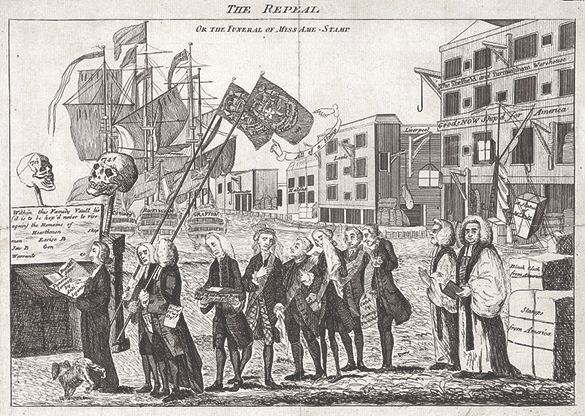
1766 年 2 月,议会正式提出废除《印花税法》的法案草案,进入辩论与表决程序。支持废除的一方强调的是经济现实与社会稳定,而不是殖民地权利。反对者则警告这会鼓励反抗、削弱主权。但在当时的力量对比下,前者明显占优。最终,议会通过了废除法案,国王批准,印花税在法律意义上被正式取消。就在同一天,议会同步通过了另一项法案——宣言法。这部法律明确宣称,议会“在一切情况下”拥有对殖民地立法的权力,包括征税权。换句话说,议会撤回了具体税制,但用更强硬的法律语言重新锁定了主权原则。
1766 年废除《印花税法》,在英国议会内部被视为务实妥协:缓解紧张,同时保留原则。但在殖民地社会中,这一组合被解读出完全不同的含义:撤税证明联合行动确实有效,而《宣言法》则意味着未来冲突不可避免。一个关键的经验被确认下来——只要殖民地能够联合行动,就能够对帝国决策产生实质影响。
Preface: This article was produced in collaboration with ChatGPT.
After the Seven Years’ War ended in 1763, Britain emerged with a vastly expanded empire—but also with heavy war debts and the ongoing cost of maintaining a standing army. In London, a core judgment gradually took shape: since North America had become a key region for imperial security and expansion, it had to be more tightly integrated into the empire’s fiscal and administrative system. The colonies reached the opposite conclusion. They generally accepted that, as subjects of the British crown, they bore public obligations, but according to long-established practice, only colonial assemblies had the right to levy direct taxes on colonial society. Parliament sat in London, the colonies lay across the Atlantic, and “taxation without representation” was itself a constitutional overreach.
When the Library of Congress later organized the archives of the Continental Congress, it identified 1764–1765 as the starting point of colonial resistance precisely because this period saw the first instances of coordinated, intercolonial mobilization and a relatively unified political language. This was not because taxes were heaviest or conflict most violent in those years, but because opposition began to break beyond the boundaries of individual colonies and take the form of political action that was mutually recognizable, replicable, and capable of coordination.
Before this point, friction between the colonies and London had been long-standing but highly fragmented. The Navigation Acts, customs duties, and trade restrictions never disappeared, yet responses were usually local: a port protested strict enforcement, a colonial assembly submitted a petition, merchants turned to smuggling. Political language was restrained and remained largely within a “loyal subjects seeking redress” framework. Whether in petitions, protest texts, or formal assembly documents, colonists almost always presented themselves as loyal subjects. The emphasis was not confrontation over power but claims of imbalance: we remain faithful to the king, but certain policies have been carried too far; what we seek is correction, not a denial of parliamentary authority.
At this stage, colonial political elites largely saw themselves as part of the British imperial system. Their identities, property, and trade networks were deeply tied to London. To directly challenge Parliament’s legitimacy would have undermined the very order from which they benefited. Before France lost control of Canada, the colonies depended heavily on Britain for security and lacked the practical conditions for a political “table-flip.” In experience, many local problems could indeed be handled through local means, without escalating into structural confrontation.
The Sugar Act of 1764 and the fiscal reforms that followed were the first to touch this underlying boundary: did the colonies have the right to reject Parliament’s direct taxation of colonial society? The Sugar Act lowered certain tax rates while significantly strengthening enforcement. It expanded customs authority and broadened the use of vice-admiralty courts in customs and smuggling cases, thereby bypassing jury trials. This cut off the colonies’ ability to buffer conflict through local judicial systems. Parliament was using fiscal measures to bypass colonial assemblies and directly tax colonial society while adjudicating disputes outside local institutions.
The Stamp Act of 1765 went even further. It required that all paper with legal validity or public communicative function—contracts, lawsuits, licenses, wills, bonds, newspapers, pamphlets, calendars—use officially stamped paper on which a tax had been paid; otherwise, such documents would not be recognized as legally valid. Lawyers could not practice, judges could not hear cases, merchants could not contract, publishers could not publish, and ordinary people could scarcely complete lawful inheritance.
This tax could not be absorbed through local mechanisms. Colonial assemblies could neither prepay it nor buffer it through local budgets, because its legal authority originated entirely in London. The chain of enforcement penetrated directly into society, bypassing colonial political structures themselves. If such a tax were accepted, colonial assemblies would be hollowed out fiscally, and self-government would be reduced to administrative convenience rather than substantive power. The question became whether one could accept that law, property, and public expression must ultimately answer to a legislature in which one had no participation.
The Stamp Act naturally pushed opposition into the realm of public communication. Newspapers were taxed; printed materials were taxed. The result was not silence, but the forced diffusion of politics beyond assemblies and petitions into streets, coffeehouses, pamphlets, and newspapers. This process profoundly shaped the basic contours of later American political culture. Coffeehouses and taverns became critical nodes. Already spaces for merchants, artisans, sailors, and printers to exchange information, they now became sites for policy interpretation, position formation, and rumor circulation. Complex constitutional arguments were rendered colloquial, translated into concise claims that could be repeated, debated, and spread. Politics no longer required reading a full petition; it required hearing an explanation once, seeing a pamphlet, or joining an argument.
Before 1765, politics largely remained within colonial assemblies, petitions, and official correspondence. The audience was defined, the language restrained, and participation limited. Even discontent was often packaged as technical issues handled by a few representatives. A thick institutional filter separated ordinary people from politics. The Stamp Act tore through that filter. Because it directly affected newspapers, pamphlets, legal documents, and commercial contracts, political discussion was forced down into everyday social life. Whether newspapers suspended publication, whether lawyers continued to practice, whether merchants signed contracts, whether ministers printed sermons—these decisions became political stances rather than mere professional choices. Politics no longer required special mobilization; it appeared naturally wherever people gathered, exchanged information, and made decisions.
It was in this process that a cross-colonial “common language” began to take shape. Political texts from different colonies rapidly converged, repeatedly invoking rights, charters, consent, representation, and the liberties of Englishmen. These terms were not invented by a single center but emerged through correspondence, reprinted pamphlets, and mutual citation. Resolutions from Virginia, petitions from Massachusetts, and pamphlets from Pennsylvania began to share strikingly similar argumentative structures. Organizational forms evolved as well. The Stamp Act Congress of 1765 marked the first time colonies sent representatives—without authorization from London—to jointly deliberate Parliament’s direct taxation and colonial rights, producing a relatively unified statement of position. The meeting was limited in scale and authority, but its symbolic significance was immense: the colonies began to assume that some problems could no longer be resolved by individual colonies alone. This sense that “we need to sit together” directly nurtured the institutional imagination that would later become the Continental Congress.
Boycotts ceased to be merely merchant tactics and gradually became social movements; protests ceased to be elite petitions and began to incorporate artisans, dockworkers, and printers. Colonists increasingly recognized that isolated action could be easily suppressed, whereas synchronization and resonance could generate real pressure. This growing awareness of “synchrony” was itself a sign of political maturation. Street actions converted opinion into visible force. Demonstrations, boycotts, and symbolic destruction turned politics from “views” into “events.” These actions were not spontaneous eruptions but coordinated through networks of discussion already in place. Colonial society saw, for the first time, that public opinion could not only express dissatisfaction but actually compel policy change.
From London’s perspective, all of this was initially underestimated. In the early eighteenth century, the empire was never free of protest. Merchants complained about tariffs, colonial assemblies petitioned, local societies resisted overzealous enforcement—all of this appeared to London as manageable noise. Historical experience suggested that withdrawing a specific measure, replacing officials, or offering symbolic concessions would usually restore cooperation. Thus, when North America reacted strongly to the Sugar Act and Stamp Act, London’s initial assessment was that this was merely an excessive but temporary local backlash.
In the 1765 crisis, different regions used highly similar language and adopted patterns of action that were mutually observed and learned in an extremely short time. London saw “many protests” but failed to grasp that these protests already formed an interconnected political network. Within imperial bureaucratic reporting systems, they were still broken down into local incidents rather than understood as a unified political process.
British merchants were the first to sense that something was wrong. Orders were suddenly canceled, inventories began to pile up, and the quarterly rhythm of trade was disrupted. Many goods had already been shipped, even arrived in colonial ports, but could not be sold and remained stuck on docks or in warehouses. Next came the shock to the credit system. Anglo-American trade was not conducted in cash but relied heavily on credit, bills of exchange, and long-term financing. Colonial merchants typically placed orders based on anticipated future sales; British merchants then used those expected revenues to borrow from banks or private lenders. When colonial purchasing stopped, it was not a matter of “earning less,” but of accounts becoming uncollectible. Receivables turned into bad debt, bills of exchange could not be honored, and the credit chain began to fracture.
London bankers and financial intermediaries discovered that colonial trade debts—once seen as low-risk and predictable—had suddenly become unstable. Insurance premiums rose, lending terms tightened, and short-term credit grew more expensive. Dockworkers saw fewer hours, shipping firms left vessels idle, and related sectors—stevedoring, insurance, shipbuilding, financial services—were simultaneously hit. Merchant groups submitted petitions to Parliament, explicitly warning that the Stamp Act was “damaging Britain’s own commerce and credit.” They detailed declining trade volumes, rising bad-debt ratios, and job losses in port cities. Such voices carried weight in Parliament because Britain’s national finances themselves depended on the smooth functioning of trade and credit.
By early 1766, the situation was clear: the Stamp Act had failed to generate stable revenue while undermining the commercial foundations that sustained state finance. Parliament launched large-scale hearings and debates on the Act. Committees summoned numerous witnesses, including merchants, bankers, and insurers from London and major ports, who directly described the economic harm being suffered. A pragmatic consensus emerged within Parliament: continued enforcement of the Stamp Act would not demonstrate parliamentary authority but risk exposing its impotence. A law that could only be collected through military force and constant repression was, by definition, a failed law.
In February 1766, Parliament formally introduced a bill to repeal the Stamp Act, moving it through debate and votes. Supporters of repeal emphasized economic reality and social stability rather than colonial rights; opponents warned that repeal would encourage resistance and weaken sovereignty. Given the balance of forces, the former clearly prevailed. Parliament passed the repeal, the king assented, and the stamp tax was formally abolished. On the same day, Parliament passed another act—the Declaratory Act—which explicitly asserted Parliament’s authority “in all cases whatsoever” to legislate for the colonies, including taxation. In other words, Parliament withdrew the specific tax while using stronger legal language to lock in the principle of sovereignty.
Within Parliament, the repeal of the Stamp Act in 1766 was seen as a pragmatic compromise: easing tension while preserving principle. In colonial society, however, the package was read very differently. Repeal proved that coordinated action worked; the Declaratory Act signaled that future conflict was inevitable. One crucial lesson was confirmed: as long as the colonies could act together, they could exert real influence over imperial decision-making.