Created on
Updated on
1870s, Russia | The Narodniks
What is to be done? Maybe nothing
Preface: continued from the last post.
The Narodniks (Народники / Narodniki)
The name comes from "narod" — the Russian word for "the people," meaning specifically the common people, the peasantry. Narodnichestvo is usually translated as Populism, but the Russian version has a specific character that the English word doesn't fully capture. Russia in the mid-19th century had a particular problem that Western European radical thought didn't quite address. Marx's analysis was built around the industrial proletariat — factory workers, the urban working class created by capitalism. Russia had almost none of that. What Russia had was peasants. Tens of millions of them, recently freed from serfdom in 1861 but still bound to the land by debt and the communal village structure.
The Narodniks argued that Russia's path to social transformation ran through the peasant commune — the obshchina — rather than through industrial capitalism. They believed the commune, which held land collectively and made decisions collectively, contained the seed of a genuinely socialist social organization. Russia didn't need to pass through capitalism to reach socialism. It could leap directly from peasant communalism to a just society, bypassing the stage of industrial exploitation that Western Europe was living through(same speech later used by CCP). This was partly a political argument and partly a romantic one. The intelligentsia felt guilty about the gap between their educated, privileged lives and the crushing poverty of the peasantry. Going to the peasants was also an act of atonement.
The movement's most famous episode was a literal mobilization. In the summer of 1874, thousands of young educated Russians — students, the children of nobles and merchants and clergy — left the cities and went into the countryside(this was later copied by CCP). They dressed as peasants, learned trades, took work as teachers and doctors and blacksmiths in rural villages. They wanted to live among the narod, educate them, and eventually organize them for political change. It failed almost completely.
The peasants were suspicious of these strange educated people who had suddenly appeared in their villages speaking awkwardly about revolution. Many turned the Narodniks in to the police. The Tsarist government arrested roughly 1,500 people. The trials that followed — the Trial of the 193, the Trial of the 50 — dragged on for years and produced harsh sentences. The Narodniks had discovered that the peasants they had idealized didn't share their revolutionary consciousness and weren't interested in being organized by people they didn't know(no shit).
The failure of peaceful agitation produced a split. One faction concluded the movement needed to go deeper into patient educational work, build genuine connections over years, wait. Another faction concluded that persuasion was futile and that direct action against the state was the only path. This second faction formed Narodnaya Volya — the People's Will — in 1879. Their position was that killing the Tsar would trigger a political crisis that would force fundamental change. Whether the peasants were ready or not, removing the head of the autocracy would create the conditions for transformation.
The failure of 1874 forced a reckoning with a fundamental question the movement had avoided: what does political change actually require? Patient education assumed the peasants needed consciousness-raising before they could act. Direct action assumed the problem was the state's repressive apparatus, which education couldn't touch. These weren't just tactical differences. They implied completely different theories of how history moved. The debate crystallized inside a new organization that formed in 1876 called Zemlya i Volya — Land and Liberty. This was more structured than the first wave, more conspiratorial, with permanent settlement in villages rather than the summer excursions of 1874. Some members stayed in rural communities for months or years. The results were only marginally better. The peasants remained suspicious, indifferent, or actively hostile to what the intelligentsia was offering. By 1879, Land and Liberty was fracturing. The argument was about terror — specifically whether political assassination was a legitimate tool, and whether killing the Tsar could change anything. In June 1879 the organization held a congress at Voronezh to try to resolve the question. It couldn't. The two factions were irreconcilable and separated formally.
The faction that rejected terror took the name Cherny Peredel — Black Repartition, referring to the peasants' demand for redistribution of the black earth, the fertile agricultural land. Its leading figure was Georgi Plekhanov, alongside Pavel Axelrod and Vera Zasulich. Their position was that terrorism was a strategic mistake. It would alienate the peasants, invite overwhelming repression, and substitute the heroics of a small conspiratorial elite for the genuine mass movement that actual change required. The path was still through the narod — the work just needed to be longer, deeper, more patient than anyone had managed so far.
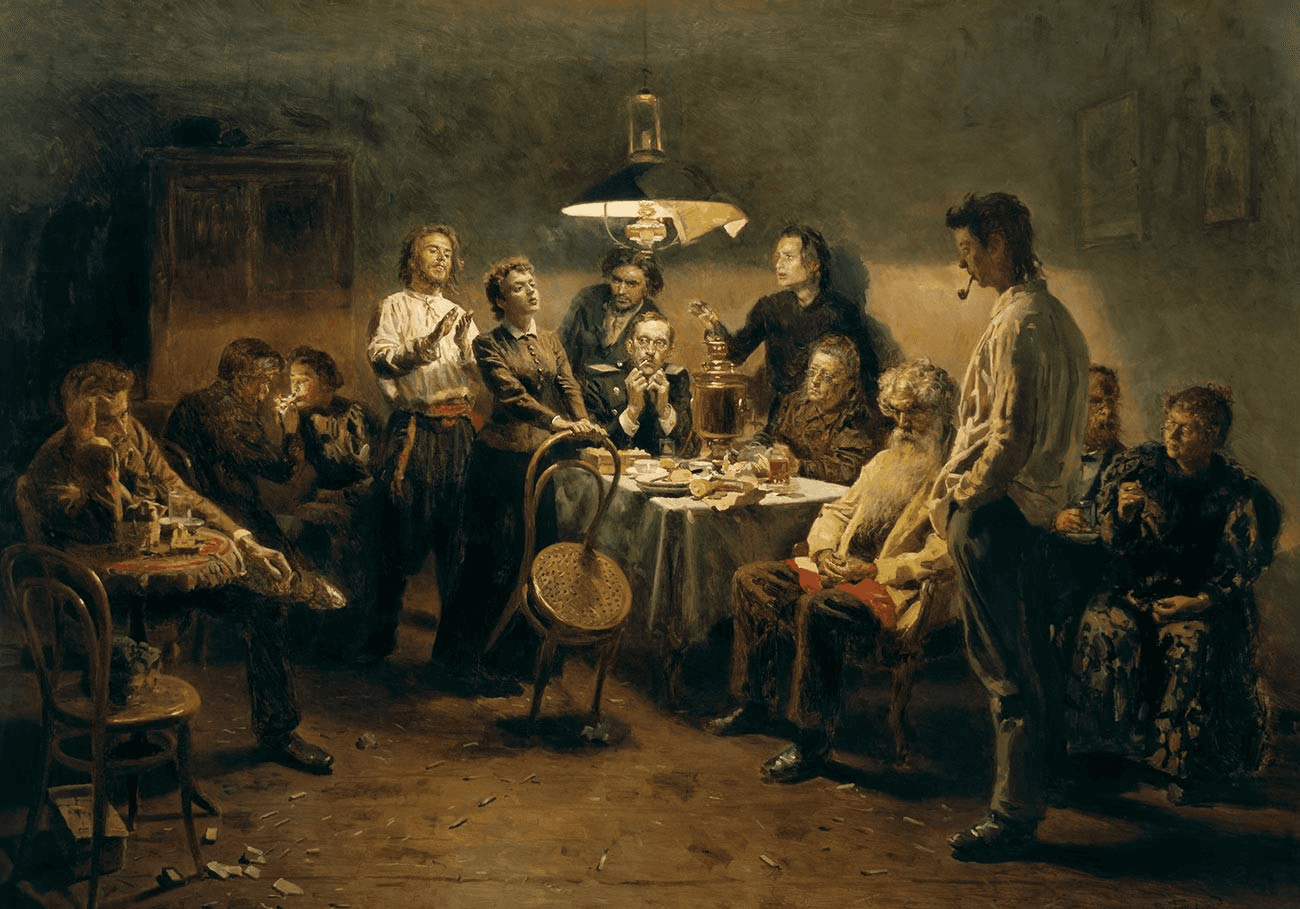
The faction that embraced terror was more sophisticated in its reasoning than the label suggests. Their theory wasn't simply that violence was justified by desperation. It was a specific argument about the structure of Russian autocracy. The Tsarist state was so concentrated, so dependent on a single figure at the apex, that killing the Tsar could destabilize the entire system in a way that was impossible in Western European constitutional states. In England or France, removing a head of government changed nothing fundamental — the institutions continued, the class structure continued, the state apparatus continued. In Russia, the argument went, the Tsar was the keystone. Remove him and the arch collapses. Or at minimum cracks — badly enough to force concessions, a constitution, a general amnesty, some opening of political space that mass organizing could then fill. They also believed — and this was the crucial miscalculation — that the Russian people were waiting for exactly this signal. The assassination would demonstrate that the autocracy was not invincible, that it could be struck and struck again. The people would understand this as permission to act.
The organization was built around an Executive Committee, small and conspiratorial, compartmentalized so that arrest of any member couldn't destroy the whole. Security was the obsession of Alexander Mikhailov, who served as the group's internal counterintelligence chief — vetting members, monitoring police infiltration, enforcing discipline. He kept Narodnaya Volya operational and uncaptured longer than should have been possible given the scale of what they were attempting. Between 1879 and 1881 they tried to kill Alexander II four times before succeeding on the fifth. In April 1879, a member named Alexander Soloviev — acting semi-independently — fired five shots at the Tsar on a St. Petersburg street. He missed all five. He was arrested and hanged. In November 1879 they went after the imperial train. Alexander was returning from the Crimea and two teams were positioned along the route — one at Alexandrovsk, one at Moscow. The Alexandrovsk bomb failed to detonate. The Moscow bomb destroyed a train, but it was the wrong train — the luggage train had run ahead of the imperial train, and they blew up the luggage. Alexander was on the other one.
In February 1880 a man named Stepan Khalturin got himself employed as a carpenter in the Winter Palace. Over several months he smuggled explosives into the basement of the palace in small quantities, hiding them in his bedding. He detonated them during dinner. The explosion killed eleven soldiers of the palace guard and wounded fifty-six others. Alexander was late coming down to the dining room — he was in another part of the palace when the bomb went off. Unhurt. The Winter Palace bombing should have been impossible. The fact that a revolutionary had spent months living and working inside the Tsar's residence, accumulating explosives under the nose of palace security, and had nearly killed the Tsar at dinner — this shook the government profoundly. Alexander II created a Supreme Executive Commission and appointed Mikhail Loris-Melikov to head it, with near-dictatorial powers to deal with the revolutionary threat. Loris-Melikov's approach was a combination of intensified repression and limited reform — trying to remove the grievances that produced revolutionaries while crushing the revolutionaries themselves.
March 1, 1881
Andrei Zhelyabov, Narodnaya Volya's operational leader, had been arrested two days earlier. Sofia Perovskaya took over command of the operation. She had grown up in the St. Petersburg aristocracy — her father had been Governor-General of the city — and had walked away from that world entirely for the revolutionary movement. She was thirty years old. The plan was to attack the Tsar's carriage on the Catherine Canal in St. Petersburg, a route he used regularly. Four bomb-throwers were positioned along the route. The bombs had been designed and built by Nikolai Kibalchich, who while awaiting execution afterward wrote out the specifications for a rocket-propelled aircraft — the design was suppressed by the authorities and only found in the archives decades later. The first bomb, thrown by Nikolai Rysakov, hit the carriage but didn't kill Alexander. It killed two Cossack escorts and wounded others. Alexander got out of the damaged carriage to check on the wounded — which was either bravery or a catastrophic failure of self-preservation instinct. As he stood in the street, Ignacy Hryniewiecki stepped forward and threw a second bomb at his feet. The explosion was between them. Both Alexander II and Hryniewiecki died of their wounds within hours.
Narodnaya Volya sent a letter to Alexander III laying out their position: they were prepared to stop if he granted a general amnesty for political prisoners and convened a constituent assembly. Alexander III did not negotiate. Pobedonostsev — who became the dominant ideological voice of the new reign — told him that any concession would be the beginning of the end. The document Alexander II had signed that morning, the consultative commission, was immediately shelved. The direction of policy reversed completely. Five people were hanged in May 1881: Zhelyabov, Perovskaya, Kibalchich, Rysakov, and a fifth member named Timofei Mikhailov. Zhelyabov, still in prison when he heard the assassination had succeeded, demanded to be included in the trial and given the same death as his comrades. The request was granted. Perovskaya became the first woman executed for a political crime in Russian history. The organization was dismantled through arrests over the following two years. Vera Figner, one of its last active senior members, was captured in 1883, sentenced to death, had her sentence commuted to life imprisonment, and spent twenty years in Shlisselburg fortress before being released in 1904. She lived until 1942.
The assassination produced the opposite of what Narodnaya Volya had predicted. There was no popular uprising. The peasants, far from being liberated, mourned the Tsar — Alexander II had freed the serfs, and in the peasant imagination he was a liberator, whatever his autocratic limitations. The revolutionaries had misread their own constituency entirely. Alexander III came to power and implemented the most repressive government Russia had seen in generations. Pobedonostsev — the man who later tried to ban Repin's Ivan painting — was the ideological architect of this repression. Press censorship tightened. Political activity was crushed. Hundreds of Narodniks were arrested, exiled, executed. In 1887 a successor group — much weaker and less capable than the original Narodnaya Volya, operating in its shadow rather than with its organizational sophistication — planned another assassination attempt against Alexander III. The group was discovered before it could act. Several members were arrested and hanged, including a twenty-one year old student from Simbirsk named Alexander Ulyanov. His younger brother Vladimir was seventeen. He had just been accepted to Kazan University. The family's social position collapsed — relatives refused contact, the Ulyanov name was now politically contaminated. Vladimir Ulyanov spent the next thirty years thinking carefully about why his brother's approach had failed and what a different approach would require. Vladimir Ulyanov is better known as Lenin. The conclusions he reached are the next chapter of the story.
The Narodniks and the Wanderers were drawing on the same source — the same guilty conscience of the Russian intelligentsia about the gap between educated privilege and peasant poverty, the same conviction that the narod were the authentic Russia that the Westernized elite had lost contact with. Kramskoi's argument that art should show Russians their own reality was the aesthetic version of the Narodniks' argument that educated Russians needed to stop looking toward Europe and turn toward the village. Both movements discovered that the people they were trying to reach had different priorities than the people trying to reach them. The peasants wanted land and relief from debt. They didn't particularly want paintings of themselves or revolutionary pamphlets. This gap — between the intelligentsia's image of the narod and the narod themselves — runs through Russian intellectual history all the way to 1917, when a revolutionary movement finally succeeded not by going to the peasants but by organizing the industrial workers the Narodniks had ignored, in cities the Narodniks had turned their backs on.
Ivan Kramskoi (1837–1887)
Ivan Kramskoi was the intellectual leader of the Wanderers, the one who articulated the position: art had a moral and social obligation. It should show Russians their own reality. Not mythological allegory, not flattering portraiture of aristocrats, not scenes from ancient history. The stuff happening outside the window. Kramskoi wasn't from the nobility or the educated Moscow intelligentsia. He was born in Ostrogozhsk, a small provincial town in Voronezh — the kind of place the Academy's traveling exhibitions would eventually reach. His family had no money. Before he got to St. Petersburg he worked as a photographer's retoucher, a technician's job, hand-coloring portrait photographs for paying clients. He arrived at the Imperial Academy in 1857, twenty years old. He was already several years older than most entering students, already formed in ways that made the Academy's framework feel constraining rather than liberating. By the time of the 1863 walkout he was the natural center of the dissident group — older, more serious, more articulate about what he believed and why. He understood from direct experience that art was a class privilege, that the infrastructure around it — the schools, the galleries, the collectors, the commissions — existed for and served a specific stratum of Russian society and nobody else.
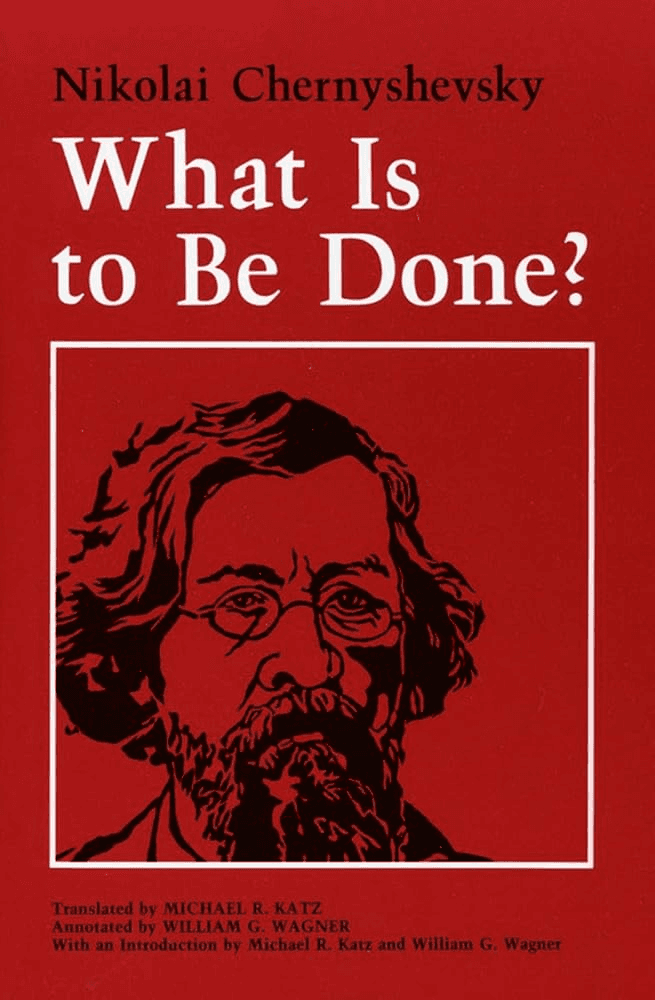
After the walkout, the fourteen students had an immediate practical problem: how to survive economically without the Academy's patronage network. Kramskoi organized them into the St. Petersburg Artel of Artists — a cooperative commune in which the members lived and worked together, took on commissions collectively, pooled resources, made decisions collectively. Chernyshevsky's novel What Is to Be Done? — published the same year as the walkout — described exactly this kind of rational cooperative commune as the model for the new people, the progressive generation building a different kind of social organization inside the shell of the old one. The Artel was the Wanderers' attempt to live the principles they were advocating before they'd even formulated them clearly.
What Is to Be Done? (Что делать?) — Nikolai Chernyshevsky, 1863
One of the most consequential novels ever written in terms of direct political impact, and by most literary standards not a particularly good novel. These two facts coexist and are both important. Chernyshevsky wrote it in prison — in the Peter and Paul Fortress in St. Petersburg, where he'd been sent in 1862 awaiting trial for revolutionary agitation. The manuscript was passed out page by page to censors who somehow approved it, and it was published in a literary journal in 1863. The censors who let it through were later fired. By the time the authorities understood what they'd approved, it had already circulated widely and couldn't be recalled.
The novel follows Vera Pavlovna, a young woman from a lower-middle-class family who escapes an arranged marriage through a fictitious marriage to a medical student named Lopukhov — he marries her on paper to free her from her family's control, with no expectation of a real relationship. She then organizes a sewing cooperative with other working women, runs it on collectivist principles, falls genuinely in love with Lopukhov's friend Kirsanov, and Lopukhov gracefully steps aside by faking his own death so she can remarry freely. Later he resurfaces under a different name, having also found someone else. Woven through this domestic plot is a series of dream sequences in which Vera sees visions of liberated women across history, culminating in a vision of the future — a crystal palace, communal life, free labor, equality between men and women, the rational organization of society on scientific principles.The novel's hero, held slightly apart from the main plot, is a man named Rakhmetov. He is the model of the new revolutionary person: he sleeps on a bed of nails to train himself against physical weakness, eats only what a laboring man eats, has renounced personal relationships because they would distract from the cause, reads only books that contain practical knowledge, and is described as having the strength of ten ordinary men. He appears briefly, makes an impression, and disappears. What Chernyshevsky was arguing are several things simultaneously, which is why the novel produced such different effects on different readers.
First, a direct argument about women's liberation. The novel was the first major Russian work to take seriously the position that women had the right to education, economic independence, free choice in relationships, and work that wasn't domestic servitude. The sewing cooperative was a practical model — not a utopian fantasy but a thing that could be organized right now, in 1863, in St. Petersburg, by actual women. Second, an argument about rational egoism — Chernyshevsky's philosophical position, drawn from the utilitarian tradition, that self-interest properly understood leads to cooperative, socially beneficial behavior. The "new people" in the novel — Lopukhov, Kirsanov, Vera — are not self-sacrificing idealists. They are rational actors who have understood that their genuine interests align with the interests of others. They help each other not from sentiment but from clear-eyed calculation about what produces good outcomes. The cooperative is not charity. It is rational organization. Third, the novel as a manual. Chernyshevsky was not primarily interested in fiction as an art form. He wanted to show readers how to live — specific arrangements of domestic life, work, relationships, intellectual development that the new generation could actually replicate. The Kramskoi Artel was partly modeled on it. Communes of young people across Russia organized themselves along lines the novel described.
The bed of nails is the detail everyone remembers, but what Rakhmetov represents is worth being precise about. He is a person who has fully subordinated every private desire, every personal relationship, every physical comfort to the demands of the revolutionary work. He has become, voluntarily, a tool with no remainder. His personal life has been eliminated because personal life is a distraction from what matters. Chernyshevsky presents this as admirable — as the highest development of the rational new person. Most readers find it either inspiring or terrifying depending on their disposition, and both responses are appropriate. Rakhmetov is the blueprint for a certain kind of revolutionary asceticism that would run through Russian radical culture for the next sixty years. Lenin read What Is to Be Done? as a young man and called it one of the most influential books of his life. In 1902 he titled his own major theoretical pamphlet What Is to Be Done? — deliberately invoking Chernyshevsky, not Tolstoy, not Marx. The pamphlet argued for a tightly organized, professional revolutionary party rather than a broad democratic movement — a small elite of disciplined revolutionaries acting on behalf of the working class rather than waiting for the working class to develop its own consciousness spontaneously.
Going Back to Kramskoi
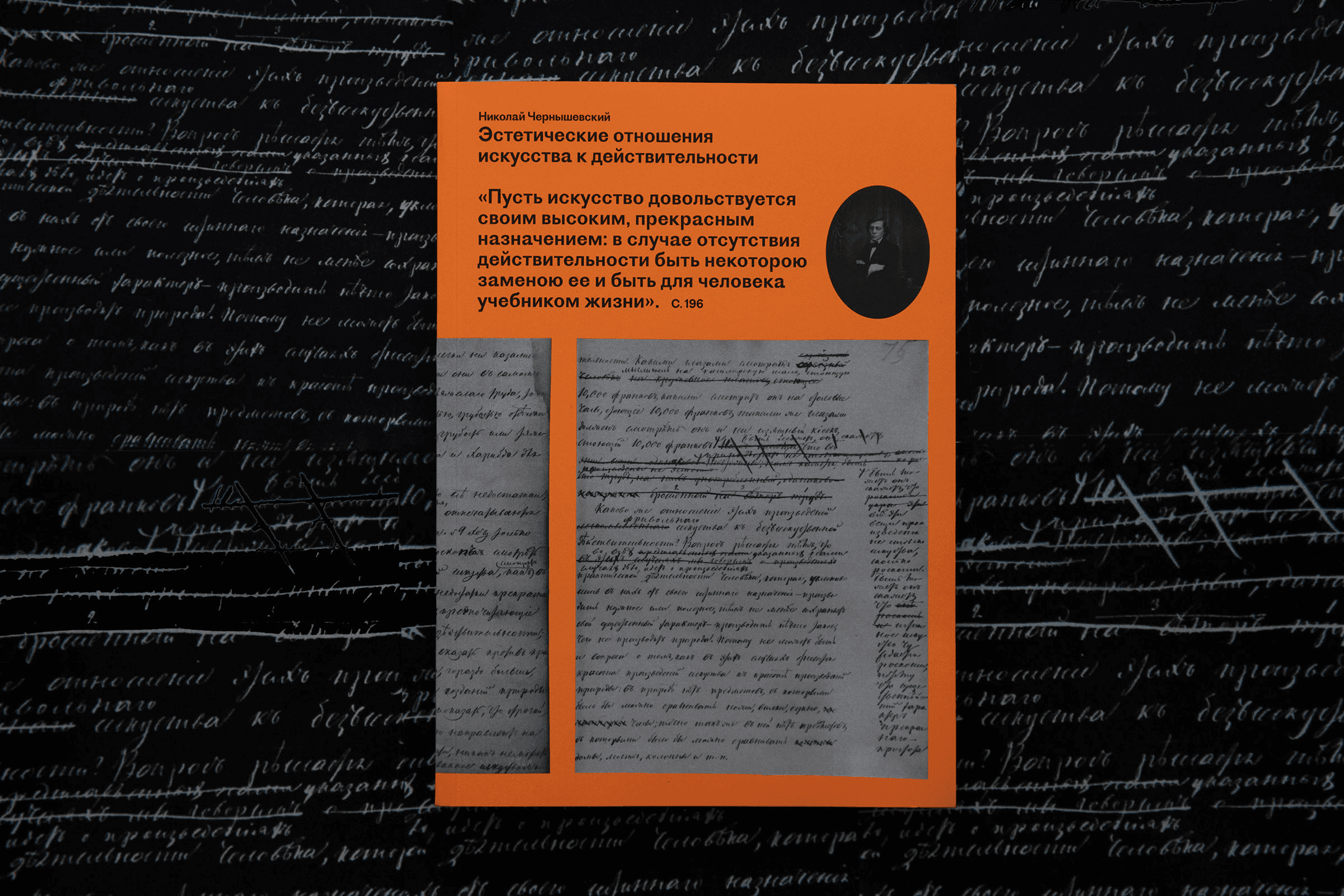
Chernyshevsky's 1855 dissertation The Aesthetic Relations of Art to Reality was the document that made this whole Kramskoi conversation possible. Chernyshevsky's central argument was deliberately provocative: reality is more beautiful than art. Not because art is bad, but because art is always a reproduction of something that already exists more fully in the world. A painting of an apple is inferior to an apple. A portrait is inferior to the person. The moment you accept this, the question "what is art for?" has to be answered differently. It can't be for the production of beauty, because reality already contains more beauty than art can replicate. So it must be for something else — for making people see, understand, and think about the world they actually inhabit. From this it followed that art which turns away from reality toward myth, allegory, and classical subject matter is doubly useless: it produces inferior beauty AND it refuses to engage with what's actually happening.
The Academy's hierarchy said history painting was the highest form because it required the most intellectual and technical sophistication — you had to know classical literature, mythology, anatomy, compositional traditions going back to the Renaissance. Landscape and genre scenes were lower because they just required looking at things. Kramskoi flipped this. He argued that honest observation of real life required a more rigorous engagement with the world than mythological illustration. Anyone could paint Zeus throwing a thunderbolt because Zeus doesn't exist and can't contradict you. Painting a specific peasant woman in a specific moment of grief required you to actually look, actually understand, actually have something to say about the human being in front of you. The apparent simplicity of subject matter was harder, not easier, if you were doing it seriously. He argued that an artist had to have a genuine worldview. Technical skill without a point of view produced decoration. The Academy trained technicians who could execute prescribed subjects with competence. What it didn't train, and actively discouraged, was an artist who had something to say. Kramskoi thought having something to say was the precondition for making serious art, not an optional extra. This position put him in direct opposition to the "art for art's sake" tendency — the idea, coming primarily from French symbolist and Parnassian poets, that aesthetic form was self-sufficient and didn't need to justify itself through social function. For Kramskoi this was abdication. An artist who retreated into pure form was refusing the responsibilities that came with the ability to make people see things. Let's look at his most famous work to understand this better.
Christ in the Wilderness (1872)
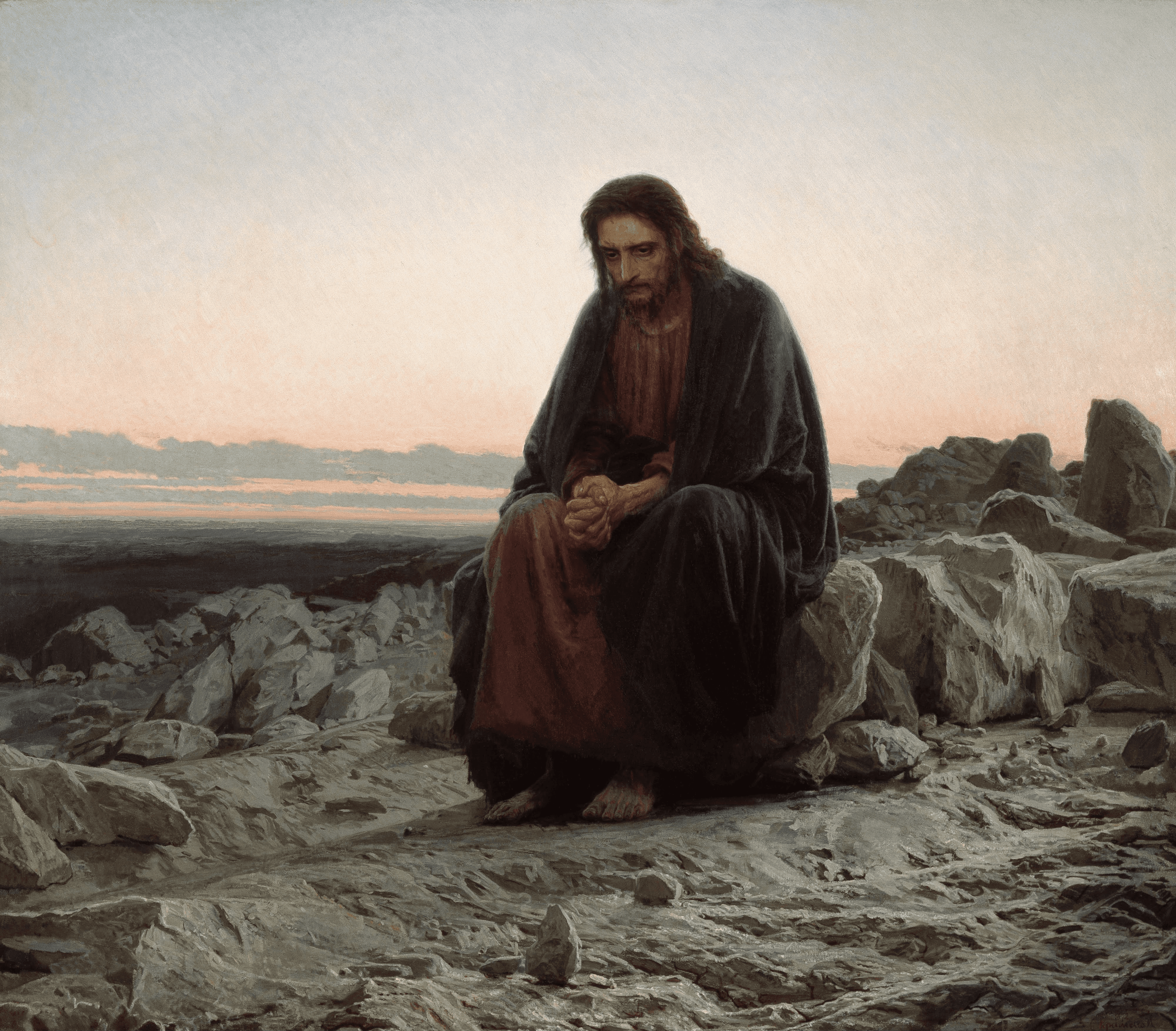
His most important painting, and the one that made his reputation at the second Wanderers exhibition in 1872. A single figure sits on bare rocks in an open landscape at what might be dawn or dusk — the light is cold and gray, neither. The figure is identifiably Christ by convention, but nothing in the painting confirms the identification through miracles, iconographic symbols, divine light, or narrative context. He sits with his hands clasped between his knees, looking at nothing in particular, in a posture of deep interior attention. The landscape is bleak in a way that reads as specifically Russian rather than Judean — vast, cold, stripped of anything picturesque. There is no other figure, no setting, no story. Kramskoi wrote about the painting in letters at length, which is unusual — he was not given to explaining his work. What he described was a man at the moment of a decision that will cost him everything, before the decision has been made. The psychological content he was after was not faith, not martyrdom, not holiness — it was the interior experience of someone who has understood what is required of them and is sitting with that understanding before acting on it. He explicitly did not describe this as a specifically religious painting. He described it as a painting about a universal human experience — the moment of moral reckoning that comes before a serious choice. The figure happened to be Christ because the story of Christ contained that moment most completely. But the experience itself belonged to anyone who had ever faced an irreversible decision. This caused discomfort in multiple directions. Religious conservatives felt it was insufficiently reverent — where was the divinity? Secular progressives weren't sure what to make of a radical painter who had spent years painting Christ. Tolstoy(War and Peace) wrote about it. Dostoyevsky wrote about it. Both responses were complicated. The painting refused to resolve into any available category — it wasn't religious art, it wasn't anti-religious art, it was something harder to argue with.
The Unknown Woman (1883)
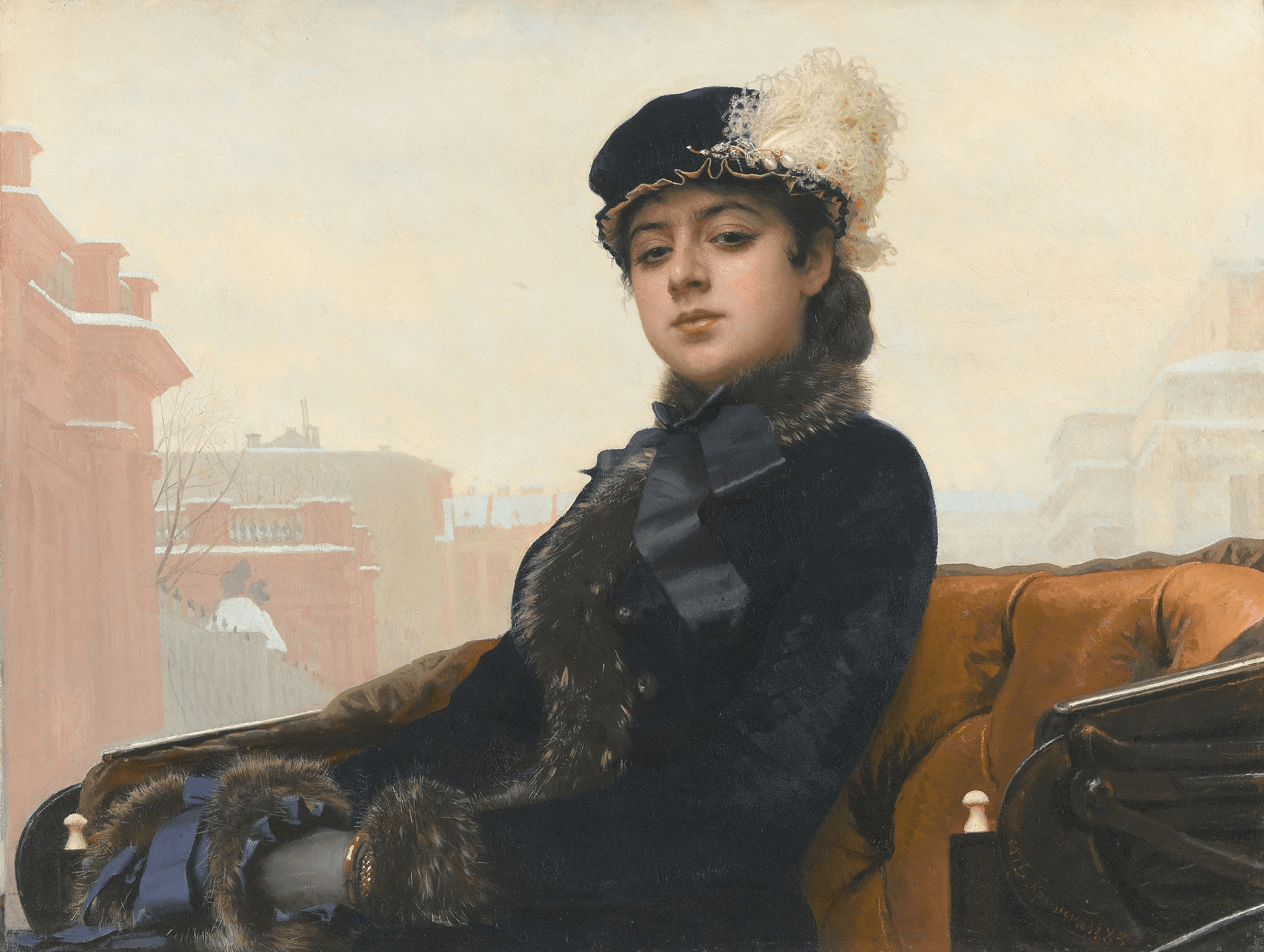
Almost the opposite of Christ in the Wilderness in every formal sense, and equally resistant to easy categorization. A woman sits in an open carriage on the Nevsky Prospect in St. Petersburg, dressed with expensive precision — fur-trimmed coat, velvet hat, gloves. She looks directly at the viewer with an expression that refuses to be read as any single thing: composed, self-possessed, slightly contemptuous, possibly defiant, possibly simply private. She is not identified. The title tells you nothing — The Unknown Woman, neznakomka, which is both a description and a statement that no description is forthcoming. Kramskoi never explained who she was or what he intended. Various theories accumulated: she was a demimondaine, a kept mistress of a merchant, an aristocrat who had fallen from grace, Anna Karenina — Tolstoy's novel had just been published and the type was in circulation. The Academy refused to exhibit it, which confirmed that something about it was understood as provocative. What makes the painting disturbing is the gaze. Portrait conventions in the 19th century gave women certain options for how to be looked at — modest avoidance of the viewer's eye, or composed reception of attention in a way that acknowledged the social transaction. This woman is doing neither. She is looking back at you as someone who has decided, for her own reasons, what she thinks of you, and is not particularly interested in your response. The painting refuses to tell you what she is — respectable or not, victim or agent, elevated or fallen — and it refuses to let you decide from a position of superiority. You look at her. She looks back. The situation is equal and she knows it.
Inconsolable Grief (1884)
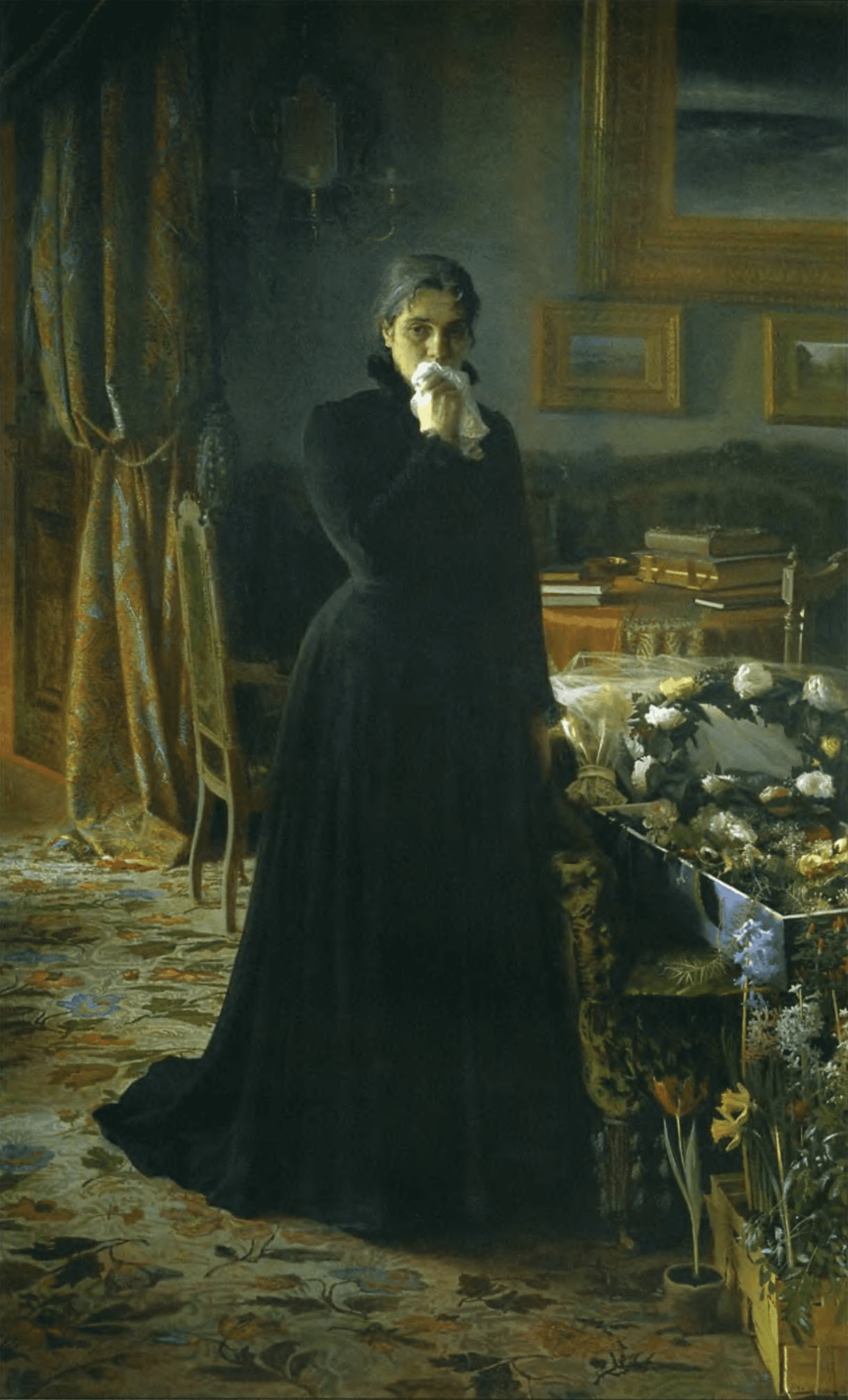
A woman stands before an arrangement of flowers, dressed entirely in black. Her face is partly turned away. The grief is not performed for the viewer — she is not looking at you, not positioning herself in relation to your sympathy. She is simply inside the grief, and you are beside it rather than in front of it. Kramskoi had lost his son. The painting is understood as autobiographical in the sense that it came directly from that experience, though the figure is a woman, not himself. What distinguishes it from conventional mourning imagery is the refusal of consolation — there is no religious symbol, no suggestion of reunion, no framing that places the grief inside a larger meaning. Just the grief itself, in a specific body, at a specific moment, private and without exit. He was working at the edge of his health when he painted it. The series of losses in his later life — his son, his own deteriorating condition — pressed the work in a direction that has less of the intellectual architecture of the earlier paintings and more direct emotional exposure.
Portraiture was Kramskoi's primary income and one of his deepest commitments. He believed a portrait should capture the interior life of its subject — not the social position, not the flattering arrangement of features, but something about how the person actually thought and existed in the world. His working relationship with Pavel Tretyakov defined what Russian national portraiture looked like for a generation. Tretyakov was the Moscow merchant building what became the Tretyakov Gallery — the canonical collection of Russian art — and he commissioned Kramskoi to paint portraits of the major cultural figures of the era. Tolstoy, Saltykov-Shchedrin, the poet Nekrasov dying in his final illness, Shishkin the landscape painter, Repin himself, dozens of others. These portraits became the faces through which the 19th century Russian intelligentsia remembered itself.
Kramskoi was one of the great letter writers of 19th century Russian culture, and his correspondence is a primary source for understanding the intellectual life of the Wanderers. He wrote to Tretyakov, to Repin, to Stasov, to other artists, at length and with unusual precision about what he believed art was for and why. The letters return repeatedly to a few core preoccupations: the tension between tendentiousness and artistic integrity — how do you make art that takes a position without becoming didactic? The question of whether the Russian intelligentsia were fooling themselves about the peasantry — he was more skeptical than many of his contemporaries. The problem of the Academy's continued dominance — even after the Wanderers' success, the institutional structure remained largely unchanged. The question of whether any of it mattered. The letters from the 1880s have a quality of exhaustion alongside the continued seriousness. He kept working because he couldn't conceive of not working, not because he was confident the work was accomplishing what he'd hoped it would.
Kramskoi was Repin's mentor, and the relationship shaped Repin's entire formation as an artist. Repin arrived at the Academy from Chuguev in 1864, the year after the walkout, and immediately fell into Kramskoi's orbit. The older man recognized the younger's talent and took the relationship seriously — not as patronage but as genuine intellectual engagement. Kramskoi pushed Repin to think about why he was painting, what he was painting for, what the work owed the subject. The documentary seriousness of Repin's major works — the individualization of each figure, the refusal to aestheticize suffering — runs directly from Kramskoi's influence. Repin painted Kramskoi's portrait. Kramskoi painted Repin's. They argued. The argument was productive. When Kramskoi died, Repin wrote about it as the loss of the person who had understood most clearly what the whole enterprise was supposed to mean.
Kramskoi didn't produce a single masterpiece on the scale of Repin's Barge Haulers or Religious Procession. His importance is distributed differently — across the organizational work that made the Wanderers possible, the portraiture that documented the intellectual generation, the theoretical position that gave the movement its intellectual backbone, and two or three paintings that refuse to be settled into comfortable categories. Christ in the Wilderness is the one that persists most fully. It keeps getting looked at because it refuses to tell you what it is — religious, humanist, political, personal — and because the experience it depicts, the experience of sitting alone with the full weight of what you're about to do, hasn't become historical. It keeps being true. He died working. That's the right ending for the story he was telling. More on Wanderers in the next post.
🖼️