Created on
Updated on
Cinematographers
Deakins + van Hoytema + Storaro + Lubezki
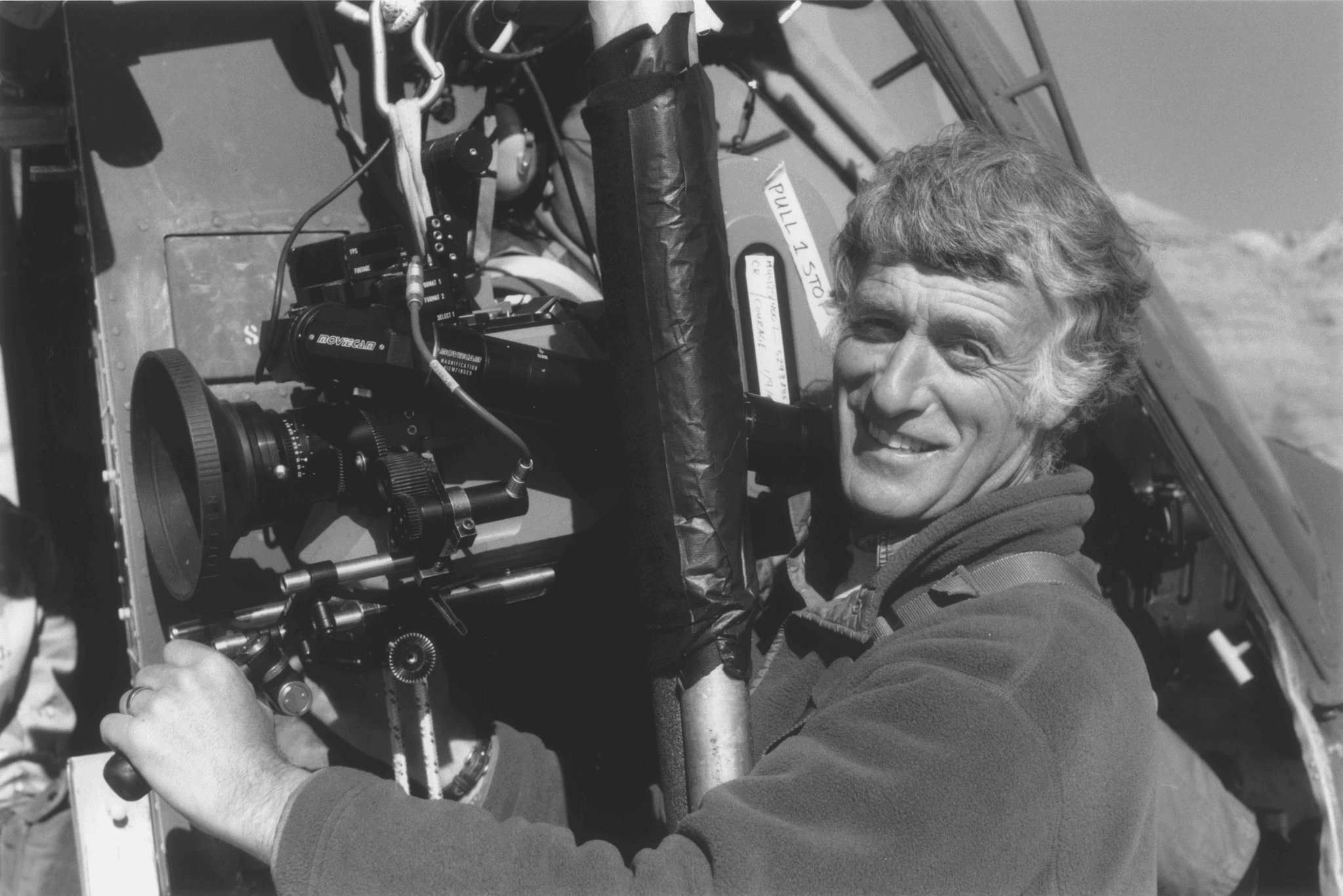
Preface: Welcome to this very long series of filmmaking in the age of AI(2026).
Roger Deakins — The Extreme of Restraint
Deakins's central principle is motivated light — every source in the rig should have a corresponding justification in the world of the scene. Not necessarily a visible lamp or window in the frame, but something the audience could plausibly infer is there. This is not a rule he follows because he was taught it. It is a philosophical position about what cinema is for: the image should feel like it was found, not constructed. The craft is in making a constructed image feel inevitable.
This principle has practical consequences at every stage of production. Deakins scouts locations partly to understand what natural and practical light sources exist and how they behave at different times of day. He designs lighting rigs around those sources — augmenting what is already there rather than replacing it with something artificial. He develops a LUT (a color lookup table, essentially a translation between the raw camera output and the final image's color and contrast) before shooting begins and uses it on set, so that what the director and actors see during filming is close to what the audience will see in the finished film. There are no surprises in post, no discovered looks — the image is locked before principal photography starts.
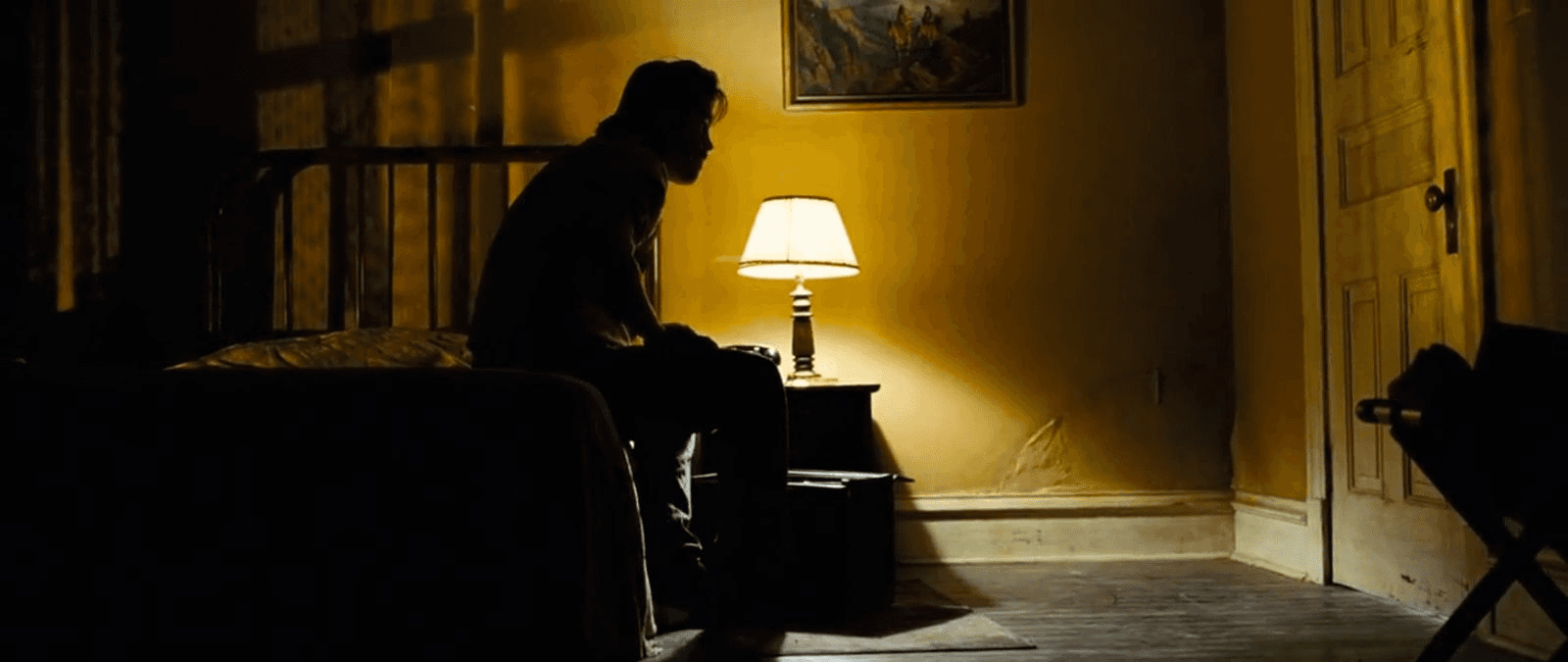
No Country for Old Men contains what is arguably his most extreme application of the single-source principle. The motel corridor sequence — Chigurh moving toward a door, the occupant visible in the gap of light beneath it — uses a single practical lamp at the end of the corridor. No fill, no rim light, no supplementary sources. The hard directional light from that single lamp means that as Chigurh moves, the lit and shadowed portions of his face redistribute with every step and turn. He is never fully lit and never fully dark. His moral status is written in that instability — a man who cannot be placed on any moral spectrum because the light itself refuses to fix him in one reading.
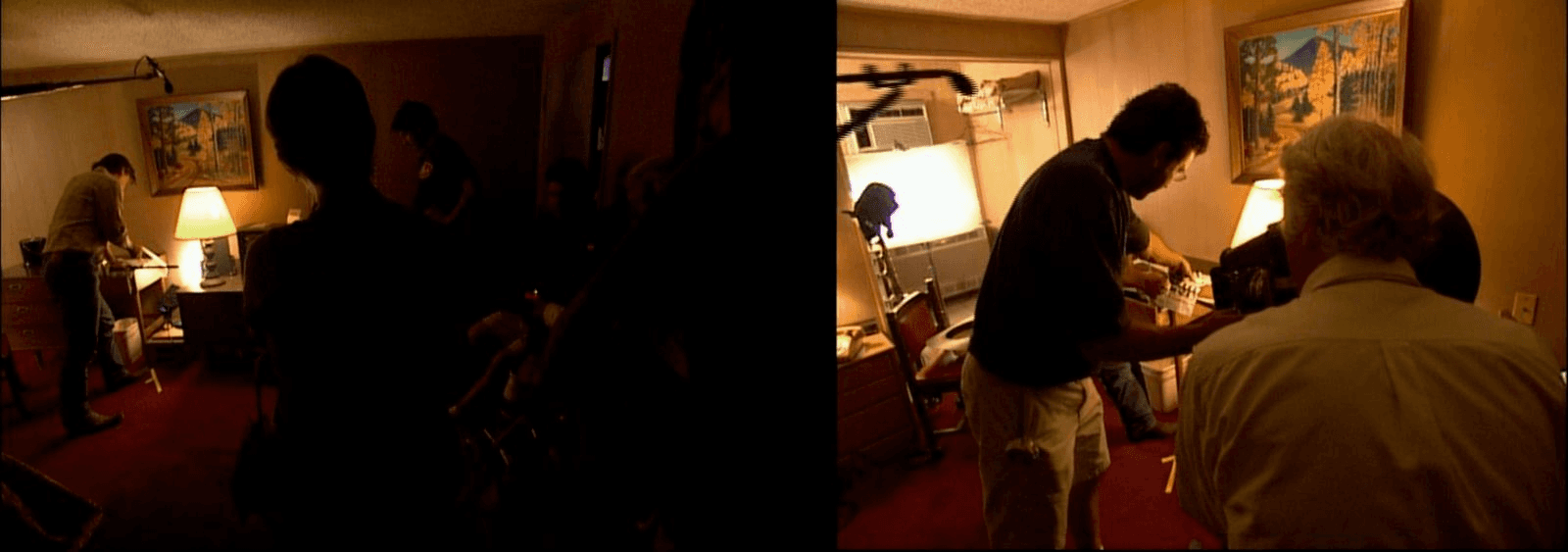
The decision to not add fill light is a decision most cinematographers would not make. Fill is how you keep a character legible. Removing it means accepting that the audience will sometimes lose the face, that the performance will sometimes disappear into shadow. Deakins made that trade because the shadow was doing something the light could not.
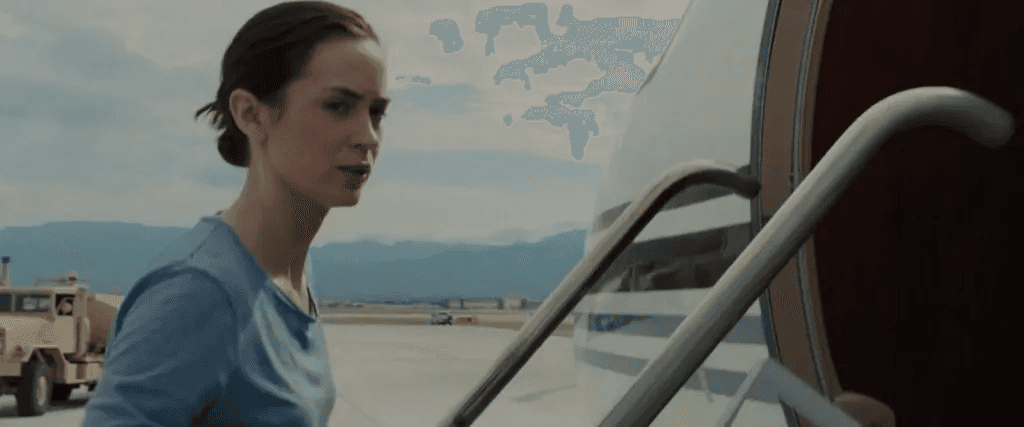
Sicario contains one of the most celebrated lighting sequences in recent cinema: the border crossing at golden hour. The convoy of vehicles moving through the gridlocked border traffic between Mexico and Arizona, shot in the last forty minutes of sunlight, when the sun is low enough to produce long, hard shadows and a specific quality of orange-gold illumination that saturates the frame. Deakins waited for that light specifically — the production held until conditions were exactly right. The sequence lasts several minutes. In it, the quality of the light communicates something that neither the script nor the score could produce on their own: this is a beautiful place where terrible things are about to happen, and the beauty is not ironic, it is the point. The landscape does not know what is occurring in it. The light continues.
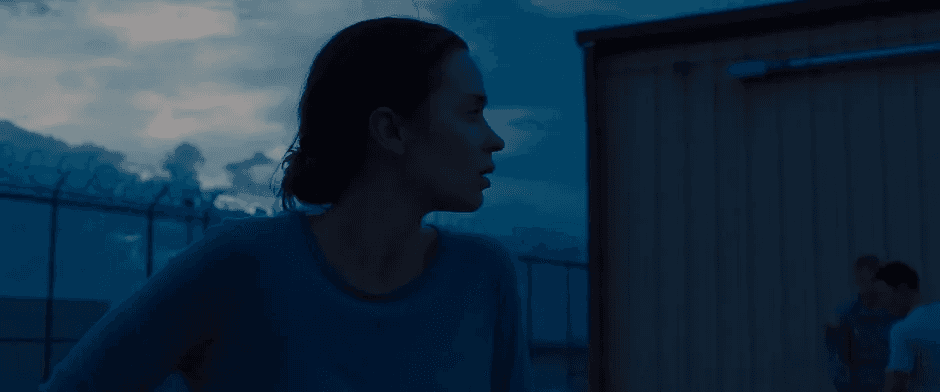
The tunnel sequence that follows — the night-vision assault through underground passageways — inverts everything. The world reduces to green-grey monochrome. The same characters who moved through golden light now move through something that looks like a surveillance tape, clinical and detached. The shift in the visual register is a shift in moral register: the golden hour was the world as it appears; the tunnel is the world as it operates.
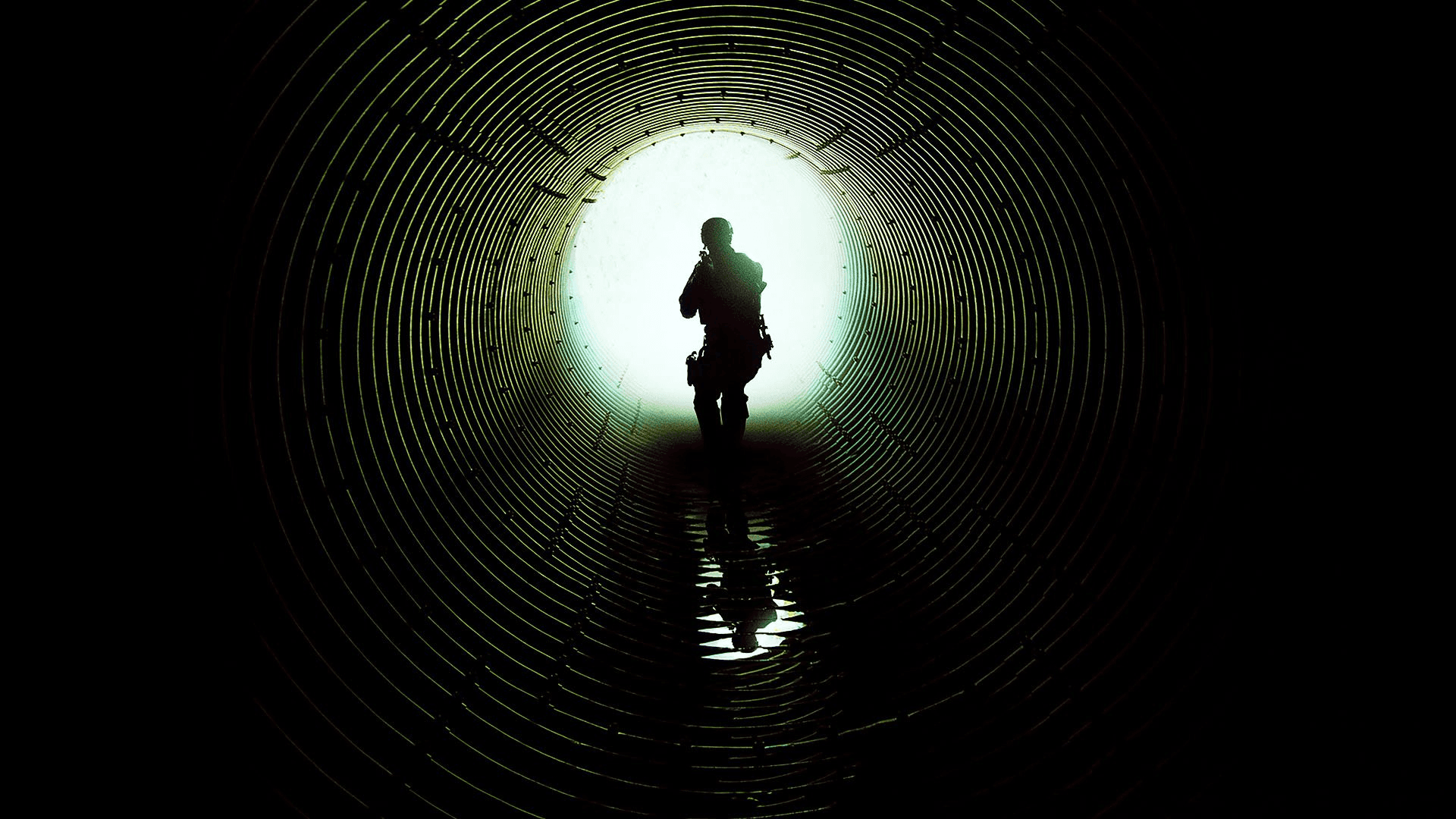
Skyfall's Shanghai sequence demonstrates his approach to found light at architectural scale. The sequence is set in a glass tower at night, with a fight happening on an upper floor while enormous illuminated advertising projections play on the building facade outside — massive, colored, moving light sources that transform the interior through the glass. Deakins used those projections as the primary light source for the sequence. The actors move through shifting colors — blue, red, amber — as the advertisements cycle. No additional light was placed to supplement them. The result is a fight scene lit entirely by the external world bleeding through glass, which gives it a quality of ambient surreality that no placed light could have produced.
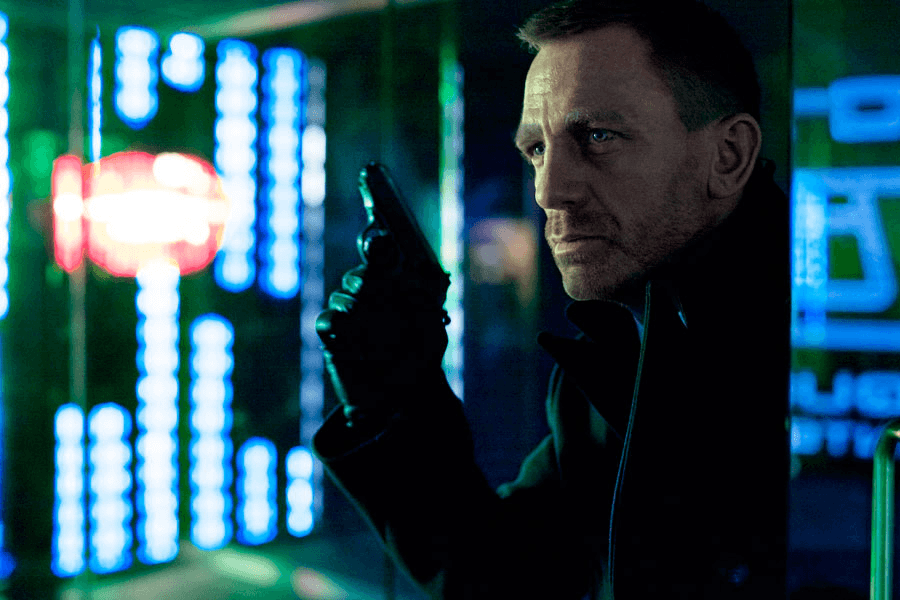
The finale on the Scottish moorland works on opposite principles — overcast natural light, flat, grey, omnidirectional. After the visual richness of the preceding sequences, the flatness is deliberate. The moorland strips everything down. There is nowhere to hide and no beautiful light to provide consolation.
1917 presented the defining technical challenge of his career: a film designed to appear as a single continuous shot, which meant every location had to be lit in a way that would hold as the camera moved continuously through it, in real time, without cuts that would allow lighting adjustments. For most of the film this meant working with natural light during the day and with practicals — fires, flares, lamps — at night.
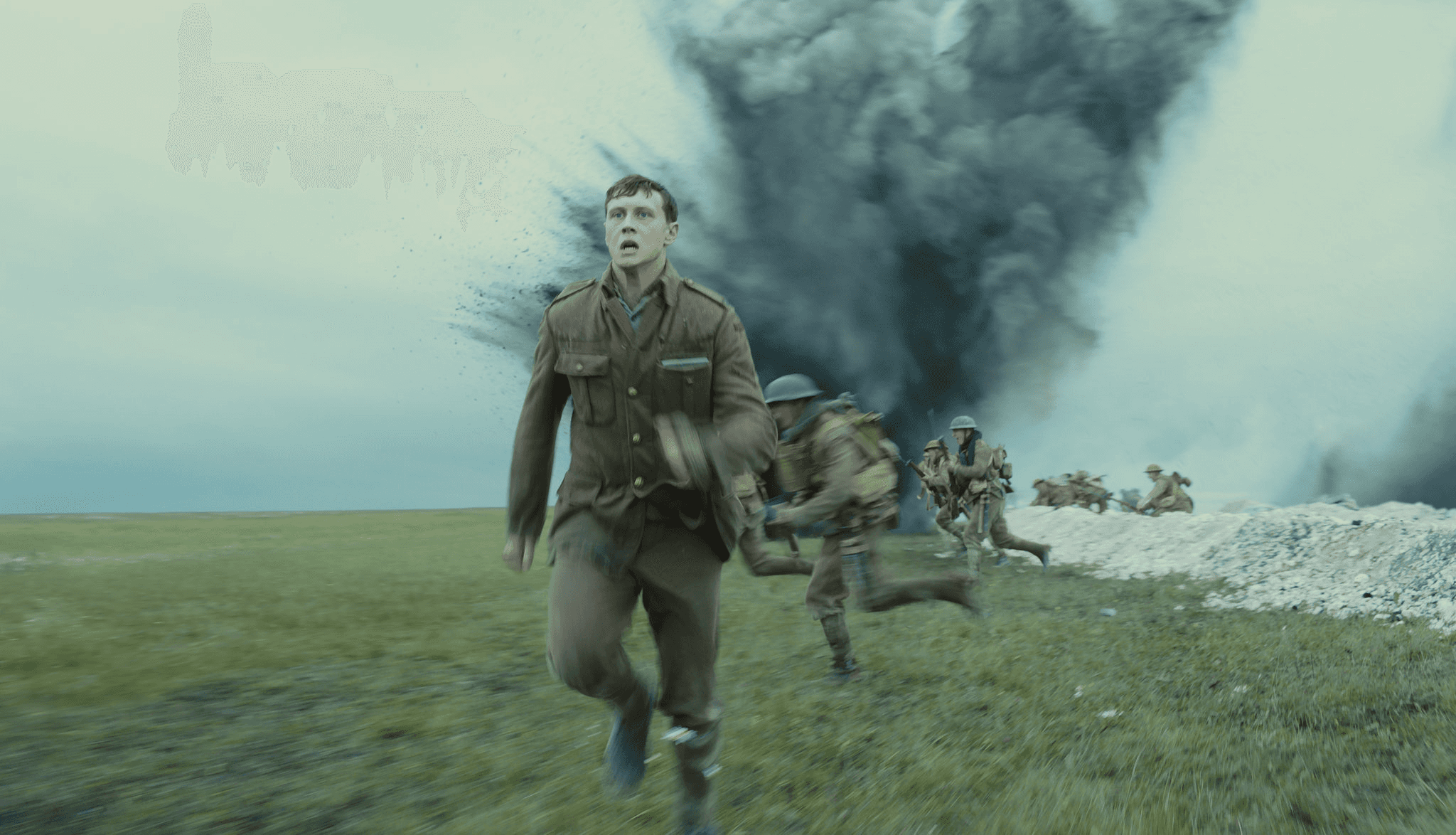
The sequence in the burning town of Écoust at night is the most sustained demonstration of Deakins's work with fire and flare light. The town is lit by fires burning in and around the buildings, and by German signal flares falling from the sky — each flare producing a few seconds of hard, directional light before burning out and being replaced by another from a different angle. The light is therefore constantly changing direction and intensity in ways no rig could replicate, because the flares are real burning objects falling through real space. Deakins designed the sequence around the flare rhythm: understanding how long each flare would last, where the next would come from, what the actor's position would be relative to each source at each moment. The camera operator rehearsed the sequence to understand the light the same way a choreographer understands music. The result is a sequence that looks like no studio lighting because it is not studio lighting — it is fire and chemical flares and the actor moving through their changing geometry.
The through-line across Deakins's work is the rejection of light as spectacle. Where other cinematographers use light to produce images — to create a visual signature, to make shots beautiful — Deakins uses light to produce space. His frames feel inhabitable because the light in them feels like the light of actual places: specific, directional, with a logical source, behaving the way light in that place at that time would actually behave.
Hoyte van Hoytema — Natural Light Extremist
Van Hoytema, known as Hoyte, is one of the most important cinematographers working today, in a long collaboration with Christopher Nolan. His philosophy is close to Kubrick's — use light that genuinely exists whenever possible, avoid any artificial feeling.
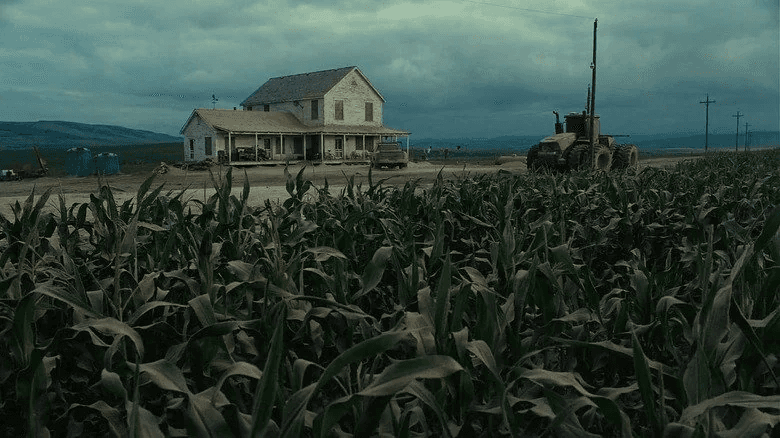
The farmhouse sequences in Interstellar were shot almost entirely in natural light, during golden hour; Nolan would wait an entire afternoon for the right light. That quality — low-angle, warm, dusty — gives that dying Earth an irreversible beauty. Van Hoytema recalled that Nolan wanted a muted palette: "We planted corn and put dust in the air, which makes the radiant green disappear." The landscape was engineered to look exhausted, and then photographed in the most beautiful light of the day. The contradiction is the point.
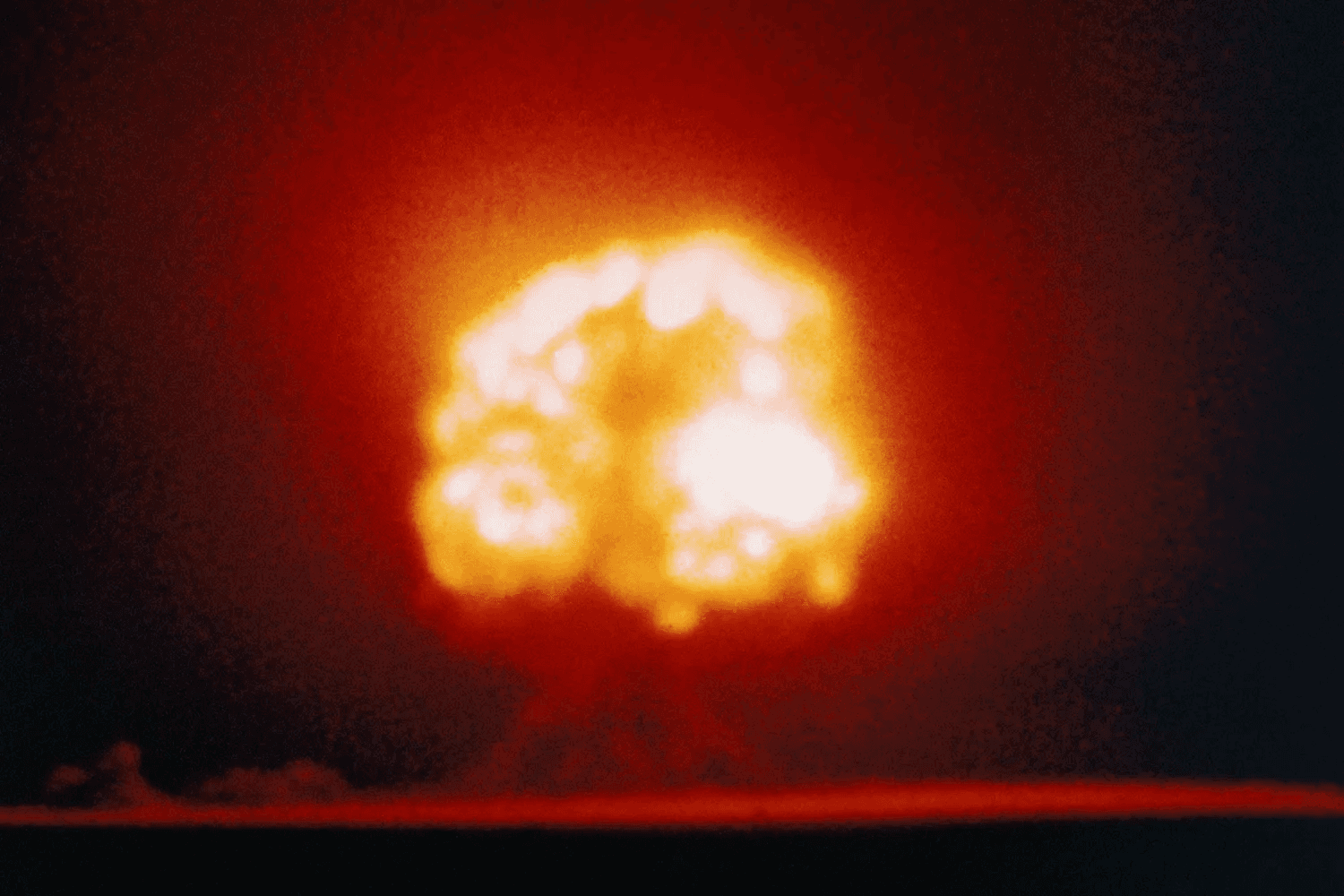
For Oppenheimer (2023), he shot the Trinity test sequence on IMAX film without any CGI. The approach was not simply to detonate explosions and roll camera — it was far more inventive than that. Van Hoytema and the team ran months of practical experiments: aquariums filled with silver particles dropped into water, metallic balloons illuminated from the inside, objects slamming and spinning in front of the lens, controlled chemical explosions in the desert using gasoline, propane, black powder, aluminum powder, and magnesium flares, alongside miniature models captured at various frame rates and exposures. The goal was to preserve the absolute resolution of IMAX film — scanning for VFX loses half that resolution, which for Nolan was unacceptable. What came back from those experiments was assembled into the sequence. The overexposure, grain, and unpredictability of those images cannot be replicated digitally because they are the actual light records of actual physical events, photographed on film. It should be noted that Oppenheimer does contain many visual effects shots — just not those explosions.
Vittorio Storaro — Color Theory of Light
Storaro (Apocalypse Now, The Last Emperor) is the cinematographer with the most systematic theoretical framework for the color of light. He believes warm colors — orange, red, yellow — represent human instinct and wildness, while cool colors — blue, green — represent reason and civilization, and that the tension between the two can express a character's inner conflict.
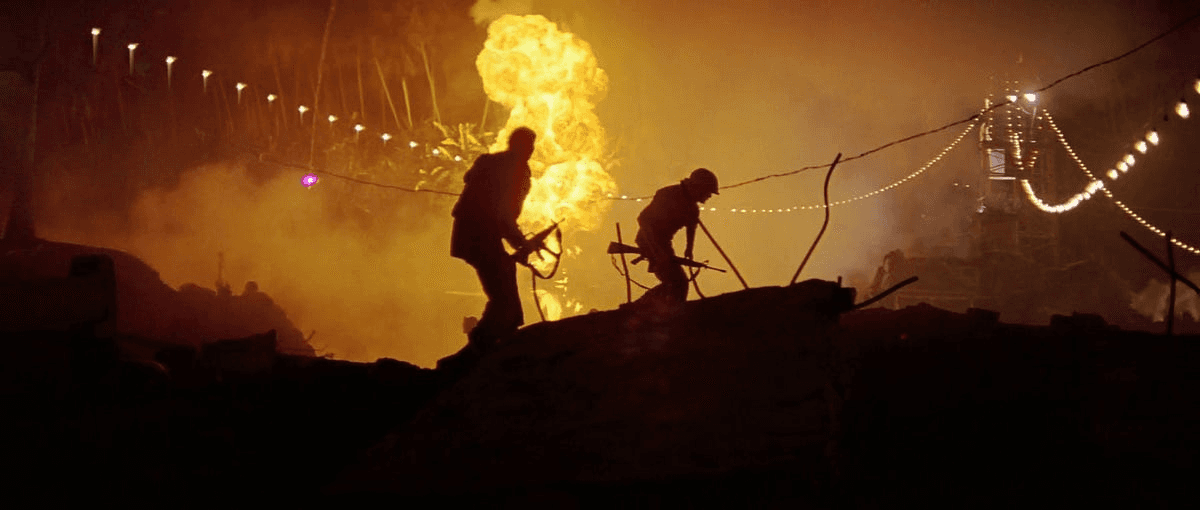
Apocalypse Now is a chromatic journey from cold to warm across its entire length. The deeper into the jungle, the closer to Kurtz, the more orange and red the light becomes, and the thinner civilization grows. This is not production design — it is the color of light doing narrative work. The film begins in the institutional cool of military operations and ends in firelit amber at the edge of the world. Storaro didn't use color as decoration. He used it as argument.
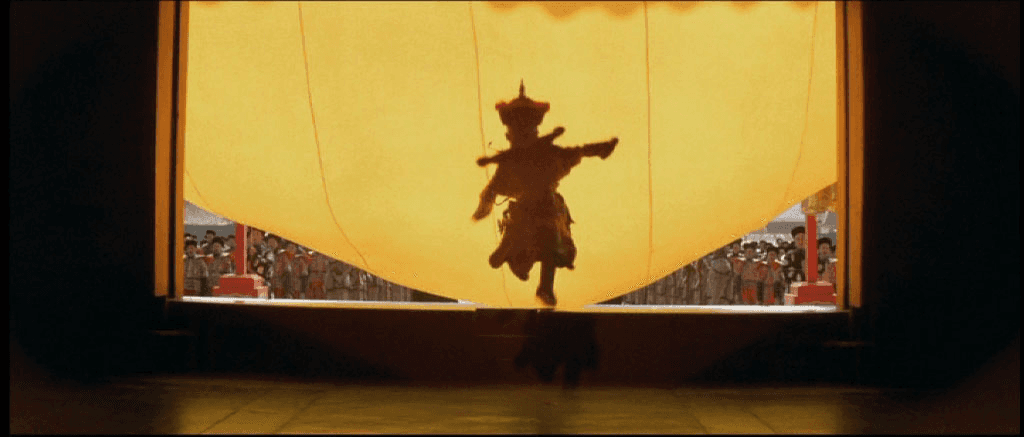
The Last Emperor (1987) makes the same argument across a different axis — not geography, but time. The early sequences inside the Forbidden City are drenched in warm gold, amber, and red. This is the visual language of imperial divinity: Pu Yi is the Son of Heaven, and heaven is warm. As the film moves through the decades — the abdication, the Japanese puppet state, the Communist reeducation camps — the palette cools and drains with systematic precision. The prison sequences are institutional grey-blue, nearly colorless. The same man who once moved through gold now moves through fluorescent cold. Storaro designed the entire color arc before shooting began, mapping each chapter of Pu Yi's life to a specific temperature and saturation. The color tells the story of a man stripped of everything he was born into, decade by decade, until nothing of the original warmth remains.
Emmanuel Lubezki (Chivo) — Long Takes and Natural Light
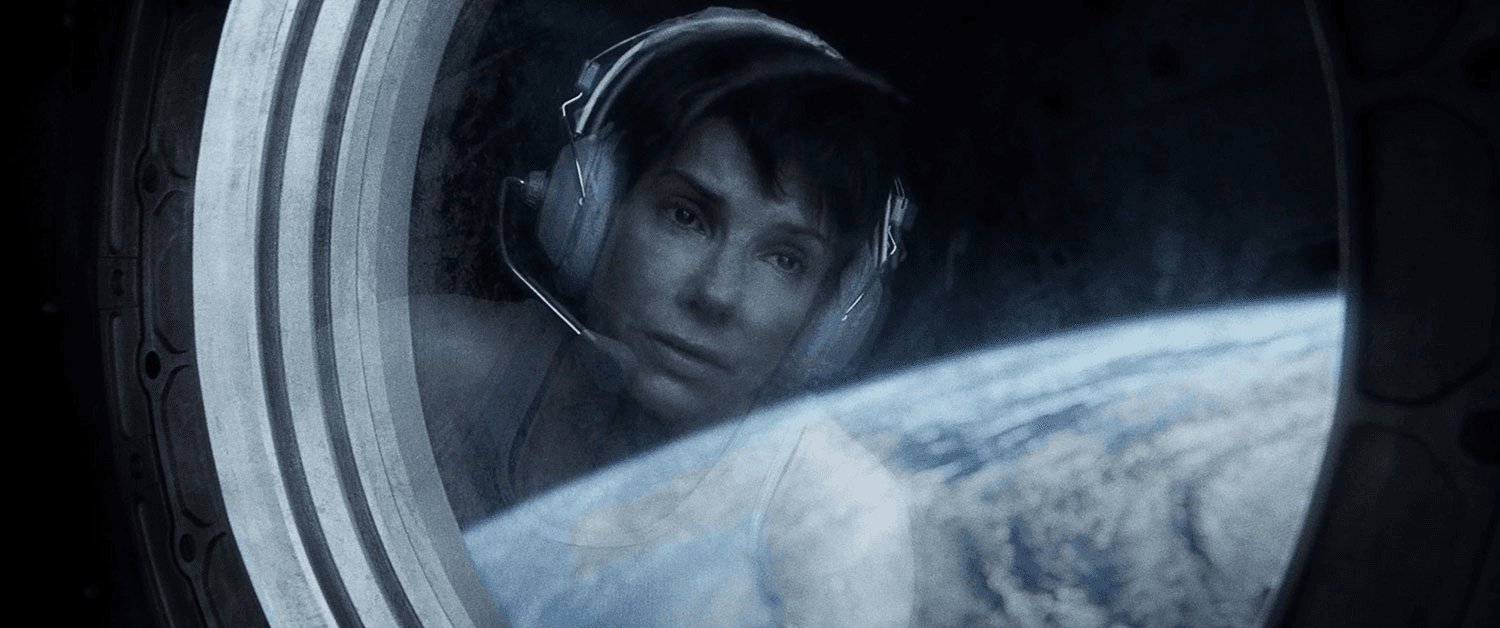
Lubezki is the most extreme natural-light practitioner working today, in long collaborations with Terrence Malick and Alejandro González Iñárritu. He won the Academy Award for Best Cinematography three consecutive years — Gravity (2014), Birdman (2015), and The Revenant (2016).
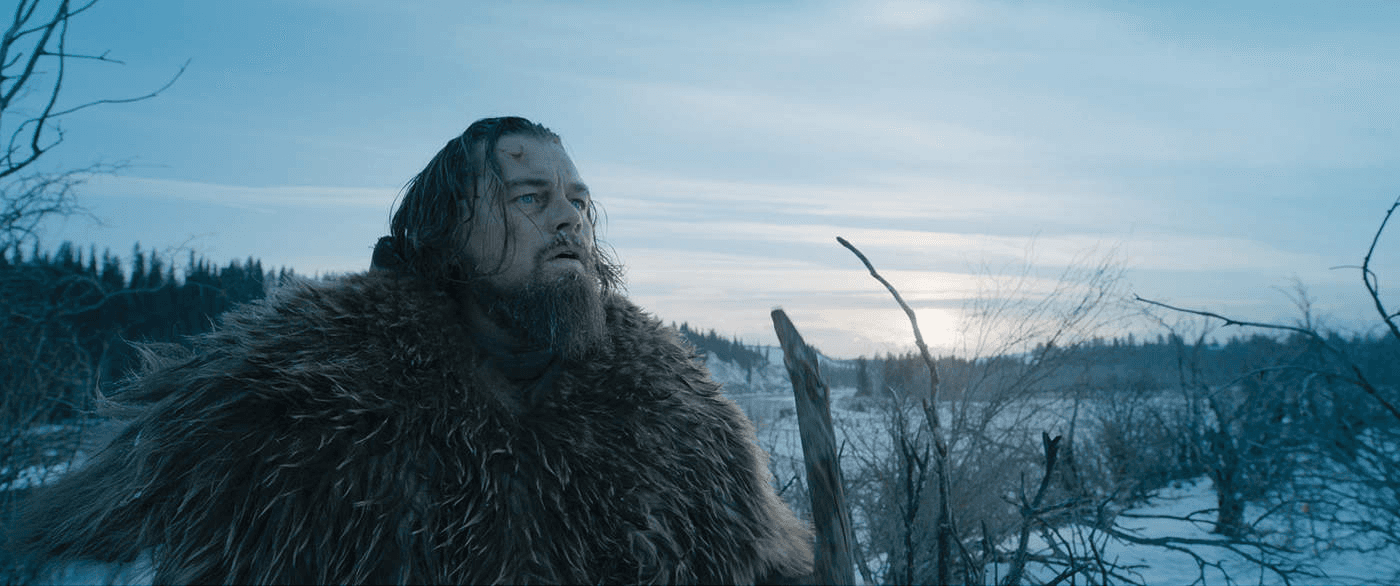
The Revenant was shot entirely in natural light. In the Canadian winter, the usable natural light window was roughly 9:30am to 4pm — about six hours per day — and the production had to plan every shot around it. Lubezki originally wanted to shoot on film, but the low light levels required the Arri Alexa 65 digital camera, whose high dynamic range could handle the subtle gradients of a winter sky without blowing out the highlights. For after-dark scenes, the production used actual campfires and torches. No LED panels. Lubezki's reasoning was direct: "We wanted to make a movie that was immersive and visceral. The idea of using natural light came because we wanted the audience to feel, I hope, that this stuff is really happening."
🫶🏼
Roger Deakins — The Extreme of Restraint
迪金斯的核心原则是motivated light source, 也就是说布光里的每一个来源都应该在场景的世界里有对应的依据。不一定是画面里可见的灯或窗户,但应该是观众可以推测真实场景里有的东西。他觉得,画面应该感觉是被发现的,而不是被构建的。迪金斯勘景时,部分目的是理解现有的自然光和实体光源是什么,以及它们在一天不同时段的表现。他围绕这些来源设计布光方案,补充已有的东西,而不是用人工光替代它。他在开拍前开发一个LUT(色彩查找表,本质上是摄影机原始输出和最终画面色彩对比度之间的转换),并在片场使用它,让导演和演员在拍摄期间看到的画面接近观众最终在银幕上看到的。
《老无所依》包含了他对单光源原则最极端的应用。汽车旅馆走廊序列,Chigurh向一扇门走去,门缝透出的那片光里可以看到房间里的人,用的是走廊尽头的一盏实体灯。没有补光,没有轮廓光,没有任何辅助光源。不加补光的决定不是大多是摄影师会做的决定,一般来说,补光是让角色保持可读性的方式,移除它意味着接受观众有时会失去对那张脸的感知,表演有时会消失进阴影里。单灯产生的硬质定向光意味着随着Chigurh的移动,他脸上亮部和暗部的分布随着每一步和每一次转身重新分配。他没有完全被照亮的,但也不是完全在黑暗里,对应了他的道德处境。
《边境杀手》包含了近年来最被称道的光的序列之一:黄金时段的边境通关场景。车队穿过墨西哥和亚利桑那之间拥堵的边境交通,在最后四十分钟的日光里拍摄,太阳足够低,产生长而硬的阴影,以及一种特定质量的橙金色照明,让画面饱和。迪金斯专门等待那种光,剧组推迟拍摄,直到条件完全就绪。这个序列持续了几分钟。在这几分钟里,光的质量传递了剧本和配乐都无法单独产生的东西:这是一个美丽的地方,但可怕的事情即将发生。这片土地不知道它身上正在发生什么,光继续照耀。紧随其后的隧道序列把这一切完全倒转。世界缩减为绿灰单色的夜视画面,像监控录像。同样的角色,刚刚在金色光线里移动,现在在一个看起来像情报录像的东西里移动。这样视觉语境的转换也是道德语境的转换,黄金时段是世界呈现的样子,隧道是世界运作的方式。
《天幕杀机》的上海的几场戏展示了他在建筑尺度上处理现有光线的方式。这几场戏发生在夜晚的玻璃塔楼里,一场搏斗在高层进行,建筑外墙上有巨大的发光广告投影在播放,巨大的、彩色的、移动的光源,通过玻璃改变室内环境。迪金斯把这些投影用作序列的主要光源。演员在变换的颜色里移动,蓝色、红色、琥珀色,随着广告循环播放。苏格兰旷野的结尾场景则在相反的原则上运作,阴天自然光,平,灰,无方向性。在前面序列的视觉丰富性之后,这种平淡是刻意的,旷野把一切剥离。
《1917》呈现了他职业生涯中最决定性的技术挑战:一部被设计成看起来像单一连续镜头的电影,这意味着每个场景都必须以能够在摄影机实时连续穿越时保持稳定的方式被照亮,不能依靠剪切来进行布光调整。影片大部分时间,这意味着白天使用自然光,夜晚使用实体光源——火、照明弹、灯。
埃库斯特燃烧小镇的夜间序列是迪金斯处理火光和照明弹光的最持续的展示。小镇被建筑物内外燃烧的火焰照亮,德军信号照明弹从天空落下——每颗照明弹产生几秒钟的硬质定向光,然后燃尽,被另一颗从不同角度射来的照明弹取代。光因此以任何布光方案都无法复制的方式不断改变方向和强度,因为照明弹是真实的燃烧物体,在真实的空间里下落。迪金斯围绕照明弹的节奏设计了这个序列:理解每颗照明弹会持续多久,下一颗从哪里来,演员在每个时刻相对于每个光源的位置。摄影机操作员以理解音乐的方式排练了序列中的光线。结果是一个看起来不像棚内布光的序列,因为它确实不是棚内布光——它是火焰和化学照明弹,以及演员穿越其不断变化的几何关系而移动。
贯穿迪金斯全部作品的是对"光作为奇观"的拒绝。其他摄影师用光来制造画面——创造视觉签名,让镜头变得美丽——迪金斯用光来制造空间。他的画面感觉可以被人置身其中,因为其中的光感觉像真实地方的光:具体的、有方向性的、有合乎逻辑的来源,按照那个地方在那个时刻真实存在的光的方式运作。
Hoyte van Hoytema — Natural Light Extremist
范·霍泰玛,通称Hoyte,是当今最重要的摄影师之一,与克里斯托弗·诺兰长期合作。他的哲学接近库布里克,尽可能使用真实存在的光,避免任何人工感。
《星际穿越》的农场序列几乎完全在自然光下拍摄,在黄金时段进行;诺兰会为了等待合适的光等待整个下午。那种质感——低角度、温暖、带尘埃——给那个即将消亡的地球带来了一种无可挽回的美。范·霍泰玛回忆说诺兰想要一种沉闷的色调:"我们种了玉米,在空气中加入了灰尘,这让那种鲜亮的绿色消失了。"这片土地被刻意设计成看起来已精疲力竭,然后在一天中最美丽的光线下被拍摄下来。这种矛盾正是重点。
在《奥本海默》(2023)中,他在没有任何CGI的情况下用IMAX胶片拍摄了三位一体核试验序列。这个方法绝不是简单地引爆炸药然后开机拍摄——它比这复杂得多。范·霍泰玛和团队进行了数月的实体特效实验:注入银粒子的水族箱、从内部点亮的金属气球、在镜头前相互碰撞和旋转的物体、在沙漠中使用汽油、丙烷、黑火药、铝粉和镁光弹进行的可控化学爆炸,以及以不同帧率和曝光拍摄的微缩模型。目标是保留IMAX胶片的绝对分辨率——扫描用于VFX会损失一半分辨率,这对诺兰来说是不可接受的。这些实验的成果被组合成最终序列。那些画面的过曝、颗粒感和不可预测性是无法用数字技术复制的,因为它们是真实物理事件在胶片上留下的实际光影记录。值得注意的是,《奥本海默》确实包含许多视觉效果镜头——只是那些爆炸不是。
Vittorio Storaro — Color Theory of Light
斯托拉罗(《现代启示录》、《末代皇帝》)是对光的色彩拥有最系统性理论框架的摄影师。他相信暖色——橙色、红色、黄色——代表人类的本能和野性,而冷色——蓝色、绿色——代表理性和文明,两者之间的张力可以用来表达角色的内心冲突。
《现代启示录》是一段贯穿全片的从冷到暖的色彩旅程。越深入丛林,越接近库尔茨,光就越橙越红,文明也越来越薄。这不是美术设计——这是光的颜色在做叙事工作。影片从军事行动的机构性冷色调开始,在世界边缘的火光琥珀色中结束。斯托拉罗不是把色彩当作装饰来使用,他把它当作论点。
《末代皇帝》(1987)在不同的坐标轴上做出了同样的论点——不是地理,而是时间。紫禁城内的早期场景沉浸在温暖的金色、琥珀色和红色中。这是皇权神圣的视觉语言:溥仪是天子,而天是温暖的。随着影片穿越数十年——退位、日本傀儡政权、共产党再教育营——色调以系统性的精确度变冷、褪色。监狱场景是机构性的灰蓝色,几乎失去色彩。曾经在金色中移动的同一个人,现在在荧光冷色中移动。斯托拉罗在开拍前就设计好了整个色彩弧线,将溥仪生命的每个章节映射到特定的色温和饱和度。
Emmanuel Lubezki (Chivo) — Long Takes and Natural Light
卢贝兹基是当今最极端的自然光实践者,与泰伦斯·马力克和亚历桑德罗·冈萨雷斯·伊纳里图长期合作。他连续三年获得奥斯卡最佳摄影奖——《地心引力》(2014)、《鸟人》(2015)和《荒野猎人》(2016)。
《荒野猎人》完全在自然光下拍摄。在加拿大北部的冬天,可用的自然光窗口大约是早上9:30到下午4点——每天约六小时——整个制作必须围绕这个窗口规划每一个镜头。卢贝兹基最初想用胶片拍摄,但低光照条件要求使用Arri Alexa 65数字摄影机,其高动态范围可以处理冬季天空的微妙渐变而不让高光过曝。夜间场景,剧组使用真实的篝火和火把。没有LED灯板。卢贝兹基的理由很直接:"我们想拍一部沉浸式的、有内脏感的电影。使用自然光的想法来自于我们希望观众感受到,这一切真的正在发生。"
🫶🏼