Created on

1

/

26

/

2026

,

0

:

16

Updated on

2

/

1

/

2026

,

2

:

37

Location

Oakland, CA

Minneapolis (IV): After World War II

明尼阿波利斯 (IV): 二战后
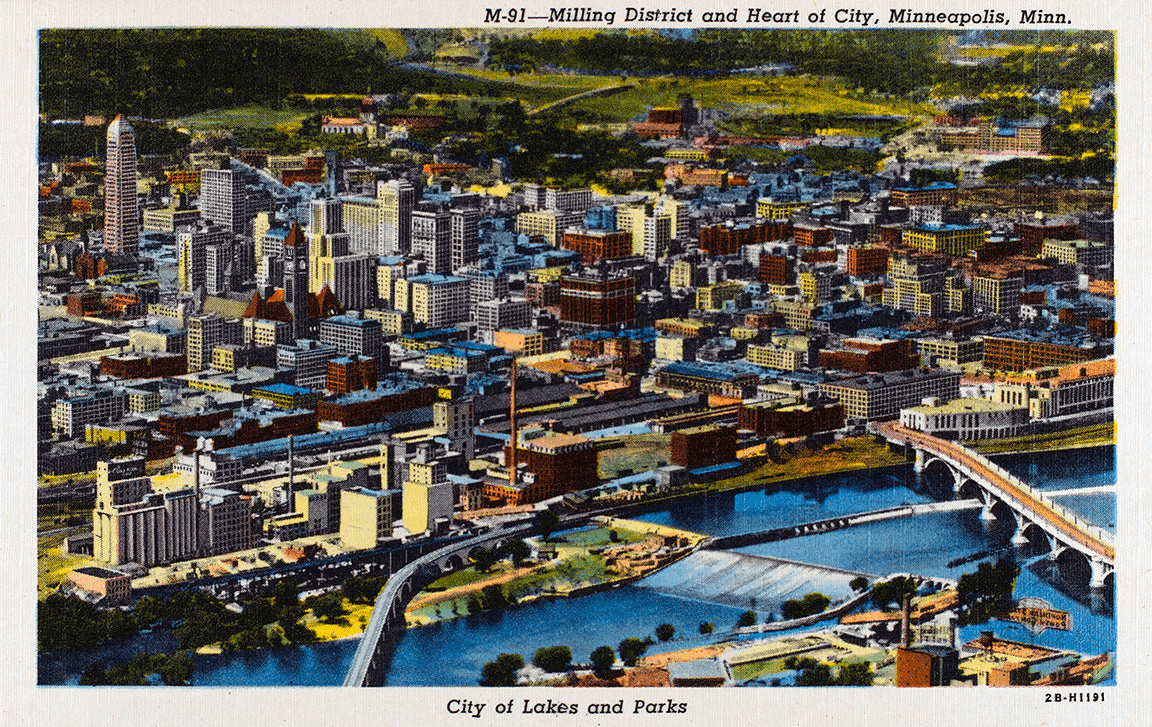
写在前面:本文和chatgpt合作完成。


二战之后,Minneapolis 进入了一种“看似向前、实则内卷”的阶段。城市更新与高速公路建设被包装为现代化工程,使用的语言是效率、卫生、通勤与增长,但其实际运作逻辑,延续的仍然是旧秩序中的选择机制:谁可以被牺牲,谁必须被保护。

在战后美国城市中,高速公路从来不只是交通工程,而是一种国家层面的空间重排工具。在 Twin Cities 地区,I-94、I-35W 等高速走廊的选线,并非单纯的技术最优解,而更接近于政治阻力最小解。修路意味着拆迁、噪音、污染、土地贬值与社区破坏,任何一条路线都会制造输家。真正的筛选标准在于:哪些社区有能力组织反对、拖慢审批、制造政治成本,哪些社区没有。

被选中的区域,往往具备相似的结构性特征。第一,土地价值长期被压低。红线政策、种族限制性契约以及长期公共与私人投资撤离,使这些街区在财政评估中显得“便宜”。第二,居民的政治资源有限。租户比例高、族群被边缘化、与市政决策层联系薄弱,使社区即便反对,也难以形成持续有效的压力。第三,社区形象已被问题化。在官方话语中,这些地方更容易被描述为“衰败”“需要更新”“已经受损”,从而使进一步破坏被合理化为“反正已经不好了”。

在 Twin Cities 的尺度上,最典型的案例是圣保罗的 Rondo 社区——一个成熟的黑人居住与商业网络,在 1950—60 年代被 I-94 直接切开。高速公路并非穿过“空地”,而是摧毁了一个已经运作良久的社会系统。Minneapolis 一侧的情况虽不完全相同,但逻辑高度相似:Near North 等社区同样被高速路与立交系统切割,原本连续的生活半径被强行中断。

街道并不是抽象的线条,而是日常生活的通道。教会、杂货店、理发店、餐馆、修理铺和社区组织,原本通过步行距离彼此连接。一条高速公路落下去,这些连接并不是“慢慢衰退”,而是瞬间失效。

关键在于,当时的城市规划并未把“社会网络”视为需要补偿的资产。被纳入计算的,只有房屋数量、土地价格和通行效率;社区内部的互助关系、就业通道、照料网络和信息流通,并不在成本核算之内。当这些网络被摧毁之后,后果往往被重新命名为“人口问题”“治安问题”或“贫困集中”,而不是被承认为规划决策造成的结构性破坏。空间暴力由此被转译为社会缺陷。

这种选择性穿越还产生了长期的物理隔离效应。高速公路不仅是一次性的拆迁事件,更是一道持续存在的边界。噪音、匝道、立交桥和高速车流显著降低了跨区流动的可能性。原本可以自然向城市核心延伸的生活半径,被压缩在高速路一侧。北 Minneapolis 与城市核心的关系,从“邻近”变成了“被隔开”。

高速公路向社区传递的是一个极其清晰的信号:这片土地是可以被穿过的,而不是需要被保护的。它告诉居民,这里不是城市愿意为之绕路的地方,而是可以被用来换取效率的地方。这种信号在随后的几十年中,持续影响投资决策、公共服务配置以及居民对自身处境的预期。

小型商业、修车铺、餐馆、教会和社区组织原本承担着就业、互助与信息流通的功能。当这些被基础设施吞噬之后,城市并未提供等价替代,而是将后果重新表述为“社会问题”。空间破坏被转译为人群缺陷,责任由此完成转移。城市获得了更快的通勤与资本流动,而社会成本被长期固化在同一批社区中。

与此同时,工业时代的经济基础也在发生结构性变化。以面粉工业为代表的传统制造业,实际上早在一战后就已开始走下坡路,20 世纪中叶,这一趋势在自动化、集中化与产业重组中被进一步巩固。更广义的制造业岗位在战后逐步减少或迁出城市核心,大量原本依赖中等技能、稳定体力与纪律性的工作机会随之消失。

这类工业岗位曾构成重要的上升通道:不需要高等教育,却可以换取稳定收入、家庭供养与社区扎根。对移民工人以及后来进入城市的非裔美国人而言,这是少数可持续的经济路径之一。但进入战后时期,这套路径被系统性削弱。

对白人中产阶层而言,这一变化与另一组机会同时出现。郊区化提供了新的居住空间,联邦住房金融与高速公路体系降低了迁移成本;高等教育迅速扩张,退伍军人法案和公共大学体系为职业转换提供了现实可能;服务业、管理岗位和专业技术岗位在新经济部门中增长。这意味着,对他们来说,岗位消失并不必然等同于出路消失。

但对北 Minneapolis 的居民而言,这些路径在结构上受到严重限制。住房金融与种族隔离政策限制了向郊区迁移的可能;教育资源的不平等提高了进入高等教育的门槛;新兴产业的招聘网络本就与他们所在的社区、学校和社会关系脱节。当传统岗位消失时,并不存在一个清晰的“下一站”。失业不再是周期性的等待,而是一种被长期切断的连接状态。

这种断裂具有自我放大的效应。长期失业削弱家庭积累能力,影响子女教育路径,也进一步削弱社区在政治和经济上的谈判能力。下一代进入劳动力市场时,面对的已不是“正在转型的城市”,而是一个早已将他们排除在核心机会之外的结构。非正式经济、低薪服务业和高度不稳定的工作,逐渐成为主要选项,并反过来巩固了“问题社区”的标签。

从城市治理角度看,这一时期形成了一种危险的错位。经济发展策略在吸引资本、企业和高端人才方面取得成功,但社会政策未能同步建立从旧经济通往新经济的桥梁。一座城市可以在 GDP、行业结构和就业总量上被视为“转型成功”,却同时在空间和族群层面制造长期失业与排斥。

在这样的结构背景下,警察系统的角色被不断推到前台。当就业、教育和公共投资无法承接社会风险时,越来越多原本属于社会服务或公共卫生的问题,被压缩为“治安管理”。在北区,执法成为最稳定、最可见的政府存在,而住房修复、学校改善和就业项目则长期不足。这种不对称,使警察既承担了本不属于他们的责任,也成为结构性失败最直观的出口。

这种张力在 2010 年代逐步逼近临界点。警察致死事件并非首次发生,但制度回应长期停留在调查、培训和流程修补层面,结构本身并未被重写。2020 年 George Floyd 在公开街头被杀,使这一长期积累的矛盾在极端条件下显影。抗议之所以迅速升级,并非单纯的情绪失控,而是因为承载现实压力的容器终于破裂。

Preface: This article was co-created with ChatGPT.


After World War II, Minneapolis entered a phase that appeared progressive on the surface but was, in practice, internally self-consuming. Urban renewal and highway construction were framed as projects of modernization, justified through the language of efficiency, sanitation, mobility, and growth. Yet the logic guiding their implementation largely reproduced an older order of selection: who could be sacrificed, and who had to be protected.

In postwar American cities, highways were never merely transportation infrastructure. They functioned as instruments of state-led spatial reordering. In the Twin Cities region, the routing of corridors such as I-94 and I-35W was not simply the result of technical optimization, but more closely resembled a search for minimal political resistance. Road construction entailed displacement, noise, pollution, land devaluation, and community destruction. Any route would produce losers. The decisive filter was which communities had the capacity to organize opposition, delay approvals, and impose political costs—and which did not.

The areas selected for disruption tended to share structural characteristics. First, land values had been systematically depressed. Redlining, racially restrictive covenants, and long-term withdrawal of public and private investment made these neighborhoods appear “cheap” in fiscal assessments. Second, residents possessed limited political resources. High proportions of renters, racial marginalization, and weak ties to municipal elites meant that even when opposition emerged, it was difficult to sustain effective pressure. Third, these neighborhoods had already been problematized in official discourse. They were more easily described as “blighted,” “in need of renewal,” or “already damaged,” allowing further destruction to be rationalized as inevitable.

At the Twin Cities scale, the most widely cited example is St. Paul’s Rondo neighborhood—a mature Black residential and commercial district that was directly cut through by the construction of I-94 in the 1950s and 1960s. The highway did not pass through empty land; it dismantled a functioning social system. Conditions on the Minneapolis side were not identical, but the underlying logic was similar. In North Minneapolis, neighborhoods such as Near North were likewise fragmented by highway corridors and interchanges, forcibly severing what had once been continuous living spaces.

Streets are not abstract lines; they are conduits of daily life. Churches, grocery stores, barbershops, restaurants, repair shops, and community organizations had once been connected within walkable distance. When a highway was imposed, these connections did not gradually erode—they failed abruptly.

Crucially, urban planning at the time did not treat “social networks” as assets requiring compensation. What was counted were housing units, land values, and traffic efficiency. Internal systems of mutual aid, employment access, caregiving, and information circulation were excluded from cost calculations. When these networks collapsed, the consequences were often relabeled as “population problems,” “crime problems,” or “concentrated poverty,” rather than acknowledged as structural damage caused by planning decisions. Spatial violence was translated into social deficiency.

This selective routing also produced long-term physical isolation. Highways were not one-time displacement events; they became enduring boundaries. Noise, ramps, overpasses, and constant traffic sharply reduced cross-neighborhood movement. Living radii that might otherwise have extended organically toward the city core were compressed onto one side of the highway. The relationship between North Minneapolis and the city center shifted from proximity to separation.

Highways sent a clear signal to the communities they cut through: this land was meant to be passed over, not protected. It told residents that this was not a place the city would go out of its way to preserve, but a place it was willing to trade for efficiency. Over subsequent decades, this signal shaped investment decisions, public service allocation, and residents’ expectations of their own futures.

Small businesses, auto shops, restaurants, churches, and community organizations had once provided employment, mutual support, and channels of information. When these were erased by infrastructure projects, the city did not offer equivalent replacements. Instead, the outcomes were reframed as “social problems.” Responsibility shifted accordingly. The city gained faster commutes and smoother capital flows, while the social costs were permanently embedded in the same communities.

At the same time, the economic foundations of the industrial era were undergoing structural change. Traditional manufacturing sectors—flour milling among them—had already begun to decline after World War I, and by the mid-twentieth century this trend was reinforced through automation, consolidation, and industrial restructuring. More broadly, manufacturing jobs steadily disappeared from or relocated out of the urban core, eliminating large numbers of positions that had once relied on mid-level skills, physical labor, and discipline.

From the late nineteenth to the early twentieth century, such jobs had provided a crucial upward pathway. They did not require higher education, yet they offered stable income, family support, and the possibility of long-term community rootedness. For immigrant workers and, later, Black Americans entering the city, these industries represented some of the few viable routes to economic security. In the postwar period, however, this pathway was systematically weakened.

For white middle-class residents, these changes coincided with the opening of alternative routes. Suburbanization offered new residential options; federal housing finance and highway systems lowered the cost of relocation; higher education expanded rapidly, with the GI Bill and public universities enabling career transitions; service, managerial, and professional jobs grew in emerging economic sectors. For them, the disappearance of old jobs did not necessarily mean the disappearance of opportunity.

For residents of North Minneapolis, by contrast, these routes were structurally constrained. Housing finance systems and racial segregation limited access to suburban mobility. Educational expansion did not eliminate school inequality or economic barriers. Recruitment networks in emerging industries were largely disconnected from their neighborhoods, schools, and social ties. When traditional jobs disappeared, there was no clear “next stop.” Unemployment ceased to be cyclical waiting and became a condition of prolonged disconnection.

This rupture was self-reinforcing. Long-term unemployment undermined household wealth accumulation, narrowed children’s educational trajectories, and weakened communities’ political and economic bargaining power. By the time the next generation entered the labor market, they no longer faced a city in transition, but a structure that had already excluded them from core opportunities. Informal economies, low-wage service work, and unstable employment became dominant options, reinforcing the label of “problem neighborhoods.”

From the perspective of urban governance, this period produced a dangerous misalignment. Economic development policy succeeded in attracting capital, firms, and high-skilled talent, but social policy failed to build bridges from the old economy to the new one. A city could be considered a success in terms of GDP, sectoral composition, and aggregate employment while simultaneously generating long-term unemployment and exclusion along spatial and racial lines.

Within this structural context, the role of policing was increasingly pushed to the foreground. When employment, education, and public investment failed to absorb risk, problems once addressed by social services or public health were compressed into the category of “public order.” In North Minneapolis, law enforcement became the most stable and visible presence of government, while housing repair, school improvement, and job programs remained insufficient. This imbalance placed responsibilities on police that they were never meant to carry, while making them the most visible outlet for structural failure.

These accumulated tensions approached a critical threshold in the 2010s. Police killings were not new, but institutional responses remained confined to investigations, training, and procedural fixes. The structure itself was never rewritten—only repeatedly explained. When George Floyd was killed in public in 2020, the video rendered visible what had long been embedded in the system. The rapid escalation of protest was not the result of emotional volatility, but of a long-contained reality losing its capacity to be absorbed.

Artist Statement

My work is not about explaining the world; it’s about dismantling the emotional structures that everyday life tries to conceal. What I focus on is not “story,” but the dynamics between people—the pull and tension of intimacy, the quiet control embedded in family, the fractures that come with migration, and how an individual maintains their boundaries within these systems.

I grew up between shifting cultures and languages, often in environments where I was expected—needed—claimed by others. I was asked to understand, to accommodate, to take care, to adjust. Even the gentlest relationships carried an undercurrent of consumption. That tension became the foundation of my creative work.

The characters in my stories are not moral types. They each carry a kind of private conflict: they want closeness but fear being swallowed; they long to be seen but can’t fully expose themselves; they are asked again and again to give—to family, to love, to work—without knowing how to keep space for themselves. These aren’t inventions; they’re reflections of lived experience. Writing, for me, is a way to unearth the emotions that have been suppressed, ignored, or normalized—and let them speak again.

I gravitate toward rhythmic narrative structures: compressed scenes, quick shifts, intentional gaps, silences between characters. These spaces reveal more truth than dialogue ever could. The themes I explore—migration, family, identity, trauma, intimacy, female autonomy—ultimately point to a single question: how does a person protect their boundaries in a world that constantly pulls at them, demands from them, watches them?

Creating is neither escape nor self-soothing. It is a way of reclaiming authorship over my own narrative. When I write a character’s silence, resistance, hesitation, or departure, I’m answering one essential question:

When the world insists on defining me, how do I choose to define myself?

艺术家陈述

我的创作不是为了解释世界,是为了拆开被日常掩盖的情绪结构。我关注的核心不是“故事”,而是人与人之间的力量关系——亲密带来的拉扯、家庭带来的隐性控制、身份在迁徙中的断裂,以及一个人在这些结构里如何保持自己的边界。

出生在不断变化的文化与语言之间,长期处在“被期待—被需要—被占用”的环境里。很多时候,我被要求理解别人、照顾别人、顺着环境。那些看似温和的关系里,也潜藏着吞噬性的需求。这种张力成了我创作的源头。

在我的故事里,人物不是善恶分明的类型。他们都带着某种困境:他们想靠近别人,但又害怕被吞没;他们渴望被看见,却无法完全暴露自己;他们在家庭、爱情、工作里不断被要求付出,却不知道怎样为自己保留空间。这并不是虚构,是现实经验的折射。我写作,把那些长期被压抑、被忽略、被习惯化的情感重新挖出来,让它们重新发声。

我倾向于使用节奏性的叙事结构:压缩的篇幅、快速切换的场景、留白的空间、人物之间的静默。这些“空隙”比对白本身更能暴露一个人的真实状态。我处理的主题是移民、家庭、身份、创伤、亲密、女性的自主性,但它们都指向同一件事:一个人如何在被拉扯、被要求、被凝视的世界里,维护自己的边界。

创作不是逃避,也不是自我疗愈,是重新夺回叙事权的方式。当我写下一个人物的沉默、反抗、犹豫或离开,我其实是在回答一个核心问题:
当世界不断定义我时,我选择如何定义自己?

Artist Statement

My work is not about explaining the world; it’s about dismantling the emotional structures that everyday life tries to conceal. What I focus on is not “story,” but the dynamics between people—the pull and tension of intimacy, the quiet control embedded in family, the fractures that come with migration, and how an individual maintains their boundaries within these systems.

I grew up between shifting cultures and languages, often in environments where I was expected—needed—claimed by others. I was asked to understand, to accommodate, to take care, to adjust. Even the gentlest relationships carried an undercurrent of consumption. That tension became the foundation of my creative work.

The characters in my stories are not moral types. They each carry a kind of private conflict: they want closeness but fear being swallowed; they long to be seen but can’t fully expose themselves; they are asked again and again to give—to family, to love, to work—without knowing how to keep space for themselves. These aren’t inventions; they’re reflections of lived experience. Writing, for me, is a way to unearth the emotions that have been suppressed, ignored, or normalized—and let them speak again.

I gravitate toward rhythmic narrative structures: compressed scenes, quick shifts, intentional gaps, silences between characters. These spaces reveal more truth than dialogue ever could. The themes I explore—migration, family, identity, trauma, intimacy, female autonomy—ultimately point to a single question: how does a person protect their boundaries in a world that constantly pulls at them, demands from them, watches them?

Creating is neither escape nor self-soothing. It is a way of reclaiming authorship over my own narrative. When I write a character’s silence, resistance, hesitation, or departure, I’m answering one essential question:

When the world insists on defining me, how do I choose to define myself?

艺术家陈述

我的创作不是为了解释世界,是为了拆开被日常掩盖的情绪结构。我关注的核心不是“故事”,而是人与人之间的力量关系——亲密带来的拉扯、家庭带来的隐性控制、身份在迁徙中的断裂,以及一个人在这些结构里如何保持自己的边界。

出生在不断变化的文化与语言之间,长期处在“被期待—被需要—被占用”的环境里。很多时候,我被要求理解别人、照顾别人、顺着环境。那些看似温和的关系里,也潜藏着吞噬性的需求。这种张力成了我创作的源头。

在我的故事里,人物不是善恶分明的类型。他们都带着某种困境:他们想靠近别人,但又害怕被吞没;他们渴望被看见,却无法完全暴露自己;他们在家庭、爱情、工作里不断被要求付出,却不知道怎样为自己保留空间。这并不是虚构,是现实经验的折射。我写作,把那些长期被压抑、被忽略、被习惯化的情感重新挖出来,让它们重新发声。

我倾向于使用节奏性的叙事结构:压缩的篇幅、快速切换的场景、留白的空间、人物之间的静默。这些“空隙”比对白本身更能暴露一个人的真实状态。我处理的主题是移民、家庭、身份、创伤、亲密、女性的自主性,但它们都指向同一件事:一个人如何在被拉扯、被要求、被凝视的世界里,维护自己的边界。

创作不是逃避,也不是自我疗愈,是重新夺回叙事权的方式。当我写下一个人物的沉默、反抗、犹豫或离开,我其实是在回答一个核心问题:
当世界不断定义我时,我选择如何定义自己?

Artist Statement

My work is not about explaining the world; it’s about dismantling the emotional structures that everyday life tries to conceal. What I focus on is not “story,” but the dynamics between people—the pull and tension of intimacy, the quiet control embedded in family, the fractures that come with migration, and how an individual maintains their boundaries within these systems.

I grew up between shifting cultures and languages, often in environments where I was expected—needed—claimed by others. I was asked to understand, to accommodate, to take care, to adjust. Even the gentlest relationships carried an undercurrent of consumption. That tension became the foundation of my creative work.

The characters in my stories are not moral types. They each carry a kind of private conflict: they want closeness but fear being swallowed; they long to be seen but can’t fully expose themselves; they are asked again and again to give—to family, to love, to work—without knowing how to keep space for themselves. These aren’t inventions; they’re reflections of lived experience. Writing, for me, is a way to unearth the emotions that have been suppressed, ignored, or normalized—and let them speak again.

I gravitate toward rhythmic narrative structures: compressed scenes, quick shifts, intentional gaps, silences between characters. These spaces reveal more truth than dialogue ever could. The themes I explore—migration, family, identity, trauma, intimacy, female autonomy—ultimately point to a single question: how does a person protect their boundaries in a world that constantly pulls at them, demands from them, watches them?

Creating is neither escape nor self-soothing. It is a way of reclaiming authorship over my own narrative. When I write a character’s silence, resistance, hesitation, or departure, I’m answering one essential question:

When the world insists on defining me, how do I choose to define myself?

艺术家陈述

我的创作不是为了解释世界,是为了拆开被日常掩盖的情绪结构。我关注的核心不是“故事”,而是人与人之间的力量关系——亲密带来的拉扯、家庭带来的隐性控制、身份在迁徙中的断裂,以及一个人在这些结构里如何保持自己的边界。

出生在不断变化的文化与语言之间,长期处在“被期待—被需要—被占用”的环境里。很多时候,我被要求理解别人、照顾别人、顺着环境。那些看似温和的关系里,也潜藏着吞噬性的需求。这种张力成了我创作的源头。

在我的故事里,人物不是善恶分明的类型。他们都带着某种困境:他们想靠近别人,但又害怕被吞没;他们渴望被看见,却无法完全暴露自己;他们在家庭、爱情、工作里不断被要求付出,却不知道怎样为自己保留空间。这并不是虚构,是现实经验的折射。我写作,把那些长期被压抑、被忽略、被习惯化的情感重新挖出来,让它们重新发声。

我倾向于使用节奏性的叙事结构:压缩的篇幅、快速切换的场景、留白的空间、人物之间的静默。这些“空隙”比对白本身更能暴露一个人的真实状态。我处理的主题是移民、家庭、身份、创伤、亲密、女性的自主性,但它们都指向同一件事:一个人如何在被拉扯、被要求、被凝视的世界里,维护自己的边界。

创作不是逃避,也不是自我疗愈,是重新夺回叙事权的方式。当我写下一个人物的沉默、反抗、犹豫或离开,我其实是在回答一个核心问题:
当世界不断定义我时,我选择如何定义自己?

sunny.xiaoxin.sun@doubletakefilmllc.com

Sunny Xiaoxin Sun's IMDb


©2025 Double Take Film, All rights reserved

I’m an independent creator born in 1993 in Changsha, now based in California. My writing started from an urgent need to express. Back in school, I often felt overwhelmed by the chaos and complexity of the world—by the emotions and stories left unsaid. Writing became my way of organizing my thoughts, finding clarity, and gradually, connecting with the outside world.


Right now, I’m focused on writing and filmmaking. My blog is a “real writing experiment,” where I try to update daily, documenting my thoughts, emotional shifts, observations on relationships, and my creative process. It’s also a record of my journey to becoming a director. After returning to China in 2016, I entered the film industry and worked in the visual effects production department on projects like Creation of the Gods I, Creation of the Gods II, and Wakanda Forever, with experience in both China and Hollywood. Since 2024, I’ve shifted my focus to original storytelling.


I’m currently revising my first script. It’s not grand in scale, but it’s deeply personal—centered on memory, my father, and the city. I want to make films that belong to me, and to our generation: grounded yet profound, sensitive but resolute. I believe film is not only a form of artistic expression—it’s a way to intervene in reality.

我是93年出生于长沙的自由创作者。我的写作起点来自一种“必须表达”的冲动。学生时代,我常感受到世界的混乱与复杂,那些没有被说出来的情绪和故事让我感到不安。写作是我自我整理、自我清晰的方式,也逐渐成为我与外界建立连接的路径。


我目前专注于写作和电影。我的博客是一个“真实写作实验”,尽量每天更新,记录我的思考、情绪流动、人际观察和创作过程。我16年回国之后开始进入电影行业,曾在视效部门以制片的身份参与制作《封神1》《封神2》《Wankanda Forever》等,在中国和好莱坞都工作过,24年之后开始转入创作。


我正在重新回去修改我第一个剧本——它并不宏大,却非常个人,围绕记忆、父亲与城市展开。我想拍属于我、也属于我们这一代人的电影:贴地而深刻,敏感又笃定。我相信电影不只是艺术表达,它也是一种现实干预。

sunny.xiaoxin.sun@doubletakefilmllc.com

Sunny Xiaoxin Sun's IMDb


©2025 Double Take Film, All rights reserved

I’m an independent creator born in 1993 in Changsha, now based in California. My writing started from an urgent need to express. Back in school, I often felt overwhelmed by the chaos and complexity of the world—by the emotions and stories left unsaid. Writing became my way of organizing my thoughts, finding clarity, and gradually, connecting with the outside world.


Right now, I’m focused on writing and filmmaking. My blog is a “real writing experiment,” where I try to update daily, documenting my thoughts, emotional shifts, observations on relationships, and my creative process. It’s also a record of my journey to becoming a director. After returning to China in 2016, I entered the film industry and worked in the visual effects production department on projects like Creation of the Gods I, Creation of the Gods II, and Wakanda Forever, with experience in both China and Hollywood. Since 2024, I’ve shifted my focus to original storytelling.


I’m currently revising my first script. It’s not grand in scale, but it’s deeply personal—centered on memory, my father, and the city. I want to make films that belong to me, and to our generation: grounded yet profound, sensitive but resolute. I believe film is not only a form of artistic expression—it’s a way to intervene in reality.

我是93年出生于长沙的自由创作者。我的写作起点来自一种“必须表达”的冲动。学生时代,我常感受到世界的混乱与复杂,那些没有被说出来的情绪和故事让我感到不安。写作是我自我整理、自我清晰的方式,也逐渐成为我与外界建立连接的路径。


我目前专注于写作和电影。我的博客是一个“真实写作实验”,尽量每天更新,记录我的思考、情绪流动、人际观察和创作过程。我16年回国之后开始进入电影行业,曾在视效部门以制片的身份参与制作《封神1》《封神2》《Wankanda Forever》等,在中国和好莱坞都工作过,24年之后开始转入创作。


我正在重新回去修改我第一个剧本——它并不宏大,却非常个人,围绕记忆、父亲与城市展开。我想拍属于我、也属于我们这一代人的电影:贴地而深刻,敏感又笃定。我相信电影不只是艺术表达,它也是一种现实干预。

sunny.xiaoxin.sun@doubletakefilmllc.com

Sunny Xiaoxin Sun's IMDb


©2025 Double Take Film, All rights reserved

I’m an independent creator born in 1993 in Changsha, now based in California. My writing started from an urgent need to express. Back in school, I often felt overwhelmed by the chaos and complexity of the world—by the emotions and stories left unsaid. Writing became my way of organizing my thoughts, finding clarity, and gradually, connecting with the outside world.


Right now, I’m focused on writing and filmmaking. My blog is a “real writing experiment,” where I try to update daily, documenting my thoughts, emotional shifts, observations on relationships, and my creative process. It’s also a record of my journey to becoming a director. After returning to China in 2016, I entered the film industry and worked in the visual effects production department on projects like Creation of the Gods I, Creation of the Gods II, and Wakanda Forever, with experience in both China and Hollywood. Since 2024, I’ve shifted my focus to original storytelling.


I’m currently revising my first script. It’s not grand in scale, but it’s deeply personal—centered on memory, my father, and the city. I want to make films that belong to me, and to our generation: grounded yet profound, sensitive but resolute. I believe film is not only a form of artistic expression—it’s a way to intervene in reality.

我是93年出生于长沙的自由创作者。我的写作起点来自一种“必须表达”的冲动。学生时代,我常感受到世界的混乱与复杂,那些没有被说出来的情绪和故事让我感到不安。写作是我自我整理、自我清晰的方式,也逐渐成为我与外界建立连接的路径。


我目前专注于写作和电影。我的博客是一个“真实写作实验”,尽量每天更新,记录我的思考、情绪流动、人际观察和创作过程。我16年回国之后开始进入电影行业,曾在视效部门以制片的身份参与制作《封神1》《封神2》《Wankanda Forever》等,在中国和好莱坞都工作过,24年之后开始转入创作。


我正在重新回去修改我第一个剧本——它并不宏大,却非常个人,围绕记忆、父亲与城市展开。我想拍属于我、也属于我们这一代人的电影:贴地而深刻,敏感又笃定。我相信电影不只是艺术表达,它也是一种现实干预。

PRODUCT

Design

Content

Publish

RESOURCES

Blog

Careers

Docs

About