Created on
Updated on
United States (VI): Freemasons
美国 (VI): 共济会
写在前面:也算是urban legend了,本文和chatgpt合作完成。
通常被视为现代共济会制度化起点的时间是 1717 年。这一年,伦敦的四个地方会所在聚会后联合,成立了一个新的总会体制(后世称为 Premier Grand Lodge of England)。这是历史上第一次出现以“总会(Grand Lodge)”形式存在的共济会中央机构,也标志着共济会从松散、地方化的行会式聚会,转变为一种具有统一框架和章程意识的现代结社形式。
在此之前,共济会的存在形态相当不稳定。中世纪以来的石匠行会本质上是职业组织,其聚会围绕具体技艺、工资、师徒关系和行业规范展开。17 世纪以后,随着大型宗教建筑项目减少,这些行会逐渐吸纳不再从事石工劳动的“接受会员”。但即便如此,这些聚会仍高度地方化,规则依赖习惯与传统,权威来自资历和声望,而非成文制度。它们缺乏统一章程,也不存在跨会所的协调机制,更接近熟人社交,而非一种可被稳定复制的组织形态。
1717 年,伦敦四个会所选择联合,是一个制度意义上的转折点。它们承认了“总会”这一不依附于具体个人或地点的抽象权威。换句话说,会所第一次集体同意:可以存在一个高于地方会所的组织层级,由其制定通用规则并协调整体运行。这一步体现的正是早期现代治理逻辑——权威开始从个人、资历与传统,转移到制度、程序与文本。
随之而来的,是对原本依靠口耳相传的习惯与仪式进行整理、书写与规范。1723 年公布的《安德森宪章》正是在这一背景下出现的。它并非宗教经典,也不是政治宣言,而是一套组织运行说明书,明确界定了成员资格、等级关系、内部纪律、纠纷处理方式,以及共济会应当如何与国家权力和宗派宗教保持距离。这使共济会第一次具备了被外部理解、被内部执行、并在不同地区被复制的条件。
《安德森宪章》(Anderson’s Constitutions,1723)由长老会牧师 James Anderson 起草,经当时的伦敦总会批准,并于 1723 年以印刷形式公开发行。这一点本身就说明,共济会在制度化之初并未选择完全隐秘的存在方式,而是采取了一种半公开的组织姿态。
宪章在原则上明确反对将宗派宗教争论和现实政治冲突带入会所生活。它要求成员遵守“道德法则”,并提出只需认同一种“所有人都能同意的宗教”,从而把具体教义分歧隔离在组织之外。这在当时具有相当激进的意味。17 世纪的英国刚经历宗教战争、王权更替与内战余波,几乎所有公共结社都带有明确的政治或宗教立场。《安德森宪章》事实上划出了一块中立区:个人可以拥有立场,但不得把由此引发的争执带入组织内部。
宪章反复强调顺法、守信、节制、忠诚与勤勉,却几乎不讨论救赎、末世或神学真理。它关注的不是灵魂的纯洁性,而是一个人在现实社会中的可预期性与可靠性。这种道德观高度世俗,却非常实用,正好契合新兴商业社会与官僚体系对稳定合作的需求。
在组织层面,宪章对会所与总会的关系、官职设置与轮换、会议流程和纪律原则作出了成文规定。权威不再来自最年长或最具个人魅力的人,而来自职位与程序本身。即便是总会会长,也只是有任期限制的角色,而非终身领袖。这种将权力程序化、去人格化的思路,与后来美国宪政中对权力的制度性约束,在精神结构上高度相似。
随着仪式和规则被标准化,共济会不再依赖某一会所的记忆或传统,而可以在不同城市和殖民地被复制。只要具备合适的成员、一套文本和一个仪式空间,就可以建立新的会所。这正是共济会在 18 世纪迅速扩散至北美、加勒比和欧洲大陆的重要原因。《安德森宪章》的关键创新,在于把一种原本依靠熟人关系和传统维系的结社,转化为依靠文本、流程与自我约束运作的组织。它既不试图统治社会,也不试图拯救灵魂,而是回应了一个极其现实的问题:在高度分裂、信任稀缺的社会环境中,陌生人如何实现长期、稳定、低风险的协作。
从一开始,共济会就不是大众组织,而是由成年男性组成的自愿结社,这些人被认为具备基本的道德可靠性,并有能力承担时间与经济成本。在 18 世纪,这本身就意味着排他性:识字能力、稳定职业与社会信用。共济会最核心的象征等级只有三个——入门、同伴与大师。这些等级并非权力晋升,而是认知与责任阶段的隐喻。
在许多传统中,入会与晋级仪式大量使用黑暗、失去方向、被引导、被提问以及最终“重见光明”的结构。这种设计并非为了传递具体知识,而是在身体和感知层面制造一种从不确定到秩序的体验,从而强化自我约束与程序意识。这一理解属于象征学和组织文化层面的分析,而非对所有共济会仪式细节的统一描述。
通常,候选者会被遮蔽视线,进入一个陌生且不可预期的空间。当视觉被剥夺,依赖感、不安与警觉会迅速上升,理性控制退居次位,身体反应占据主导。这一步的目的并非羞辱,而是暂时中断日常身份:社会地位、职业角色与自我叙事在此阶段失效。候选者不再以既有身份行动,而是作为一个需要被引导的人存在。
仪式刻意制造空间和方向上的不确定性,使人无法判断位置、朝向与即将发生的事情。这并非混乱,而是一种对条件的控制。它在体验层面传递一个前提:在缺乏规则与坐标的情况下,个人判断力是脆弱的。候选者不会被要求自行判断,而是被明确地引导、停止、转向与前进。这里强调的不是服从某个具体的人,而是服从程序本身——引导者可以更换,但流程不能随意破坏。
提问环节通常围绕道德与责任展开,问题并不追求“正确答案”。真正被测试的是:在不确定、被注视和被期待回应的状态下,个体是否能够克制冲动、组织语言,并对自己的表述负责。这是一种在压力下训练自我控制的机制,而非智力展示。
当光线恢复、空间被解释、符号被指认时,候选者往往会体验到秩序带来的稳定感。这里的“光”并非知识本身,而是规则被理解、位置被确认后的心理安定。这一阶段完成的是内化过程:秩序与安全、自控与清晰被自动联结。对 18 世纪的精英男性而言,这种训练具有高度现实意义,服务于官僚治理、商业信用、军事纪律与政治协作。
除此之外,还有誓言,通常围绕守信、互助与克制展开。在现代视角下,这些誓言并不激进,但在国家机器薄弱、法律执行不稳定的时代,它们构成了一种内部信用机制。许多被后世渲染为“可怕惩罚”的誓词,更接近戏剧化语言,其主要功能是强化心理印象,而非实际执行。
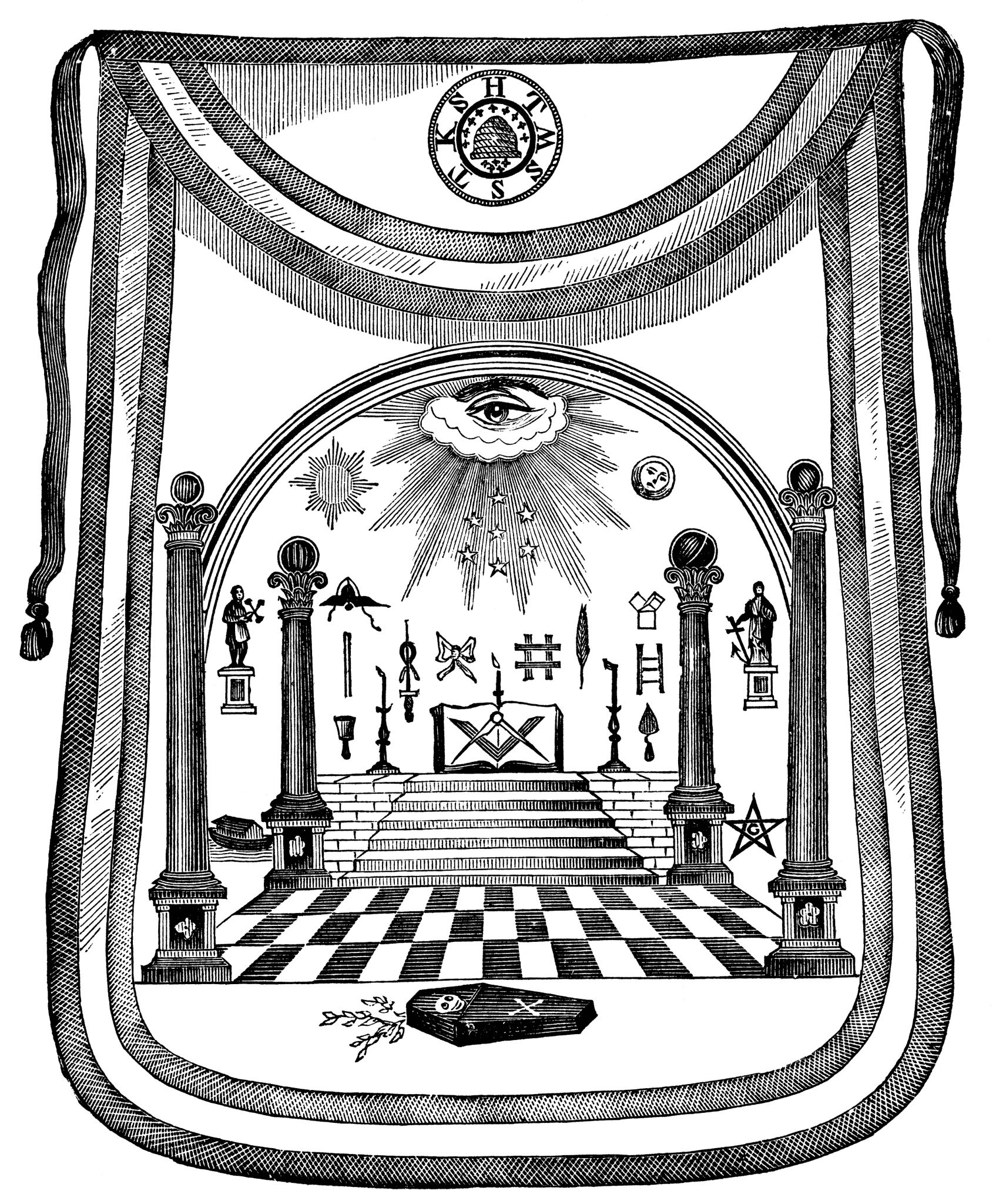
共济会并不依赖系统神学,而使用工具与劳动的隐喻。圆规象征节制欲望,角尺象征行为端正,水平尺象征成员之间的平等,围裙象征劳动的尊严。所谓“秘密”,更多体现在象征解释的私密性,而非信息内容本身。
在组织实践中,共济会高度强调秩序感:固定流程、固定用语与固定空间布局。会所空间通常严格区分方位,主持者的位置、发言顺序乃至敲槌次数都具有象征意义。这种对形式的坚持并非迷信,而是一种纪律训练,它在潜意识层面不断提醒成员:这里是一个规则先于个人的空间。
传统共济会长期排除女性和非白人,这并非偶然,而是其作为 18 世纪精英男性社交结构的历史局限。在北美,这种排斥也直接促成了以 Prince Hall 为代表的黑人共济会体系的形成。这一结构性限制,同样解释了共济会后来影响力的自然衰退——当现代国家、政党、公司与专业协会提供了更高效、更开放的组织形式后,依赖仪式维系信任的机制逐渐显得缓慢而过时。
共济会确实为精英提供了信任网络,但它并不直接产生公共政策,也不作为统一政治行动的指挥系统。像 George Washington 或 Benjamin Franklin 这样的人,带入政治领域的是他们既有的社会资本,而非来自共济会的指令。共济会放大的,是成员之间的可预期性,而不是秘密命令。如果它真是一个高度集权、能够压制异议的地下权力体系,19 世纪美国公开而持续的反共济会政治运动就不可能出现。
Preface: This article was produced in collaboration with ChatGPT.
The year most commonly regarded as the institutional starting point of modern Freemasonry is 1717. In that year, four local lodges in London chose to unite after a gathering and formed a new grand lodge system, later known as the Premier Grand Lodge of England. This was the first time in history that a central Masonic authority existed in the form of a “Grand Lodge,” marking the transition from loose, localized, guild-like assemblies to a modern voluntary association with a unified framework and a sense of formal statutes.
Before this moment, Freemasonry existed in a highly unstable form. Medieval stonemasons’ guilds were essentially occupational organizations, with meetings centered on specific skills, wages, apprenticeship relations, and trade norms. After the seventeenth century, as large religious building projects declined, these guilds gradually began admitting “accepted” members who were no longer practicing stonemasons. Even so, their gatherings remained intensely local. Rules relied on custom and tradition, authority derived from seniority and reputation rather than written law, and there was no unified constitution or mechanism for coordination across lodges. They functioned more like networks of acquaintances than an organizational form that could be reliably replicated.
The decision by four London lodges to unite in 1717 represented a decisive institutional turning point. They acknowledged the existence of a “Grand Lodge” as an abstract authority not tied to any specific individual or location. In other words, lodges collectively agreed, for the first time, that a level of organization could exist above individual lodges, empowered to set general rules and coordinate overall operations. This step embodied an early modern logic of governance: authority began to shift away from persons, seniority, and tradition toward institutions, procedures, and texts.
What followed was the systematic compilation, writing, and standardization of practices and rituals that had previously been transmitted orally. The Constitutions of Anderson, published in 1723, emerged in precisely this context. It was neither a religious scripture nor a political manifesto, but an operational manual for the organization. It clearly defined membership qualifications, hierarchical relations, internal discipline, dispute resolution mechanisms, and how Freemasonry should maintain distance from both state power and sectarian religion. For the first time, Freemasonry became something that could be understood externally, enforced internally, and replicated across regions.
Anderson’s Constitutions (1723) were drafted by the Presbyterian minister James Anderson, approved by the Grand Lodge of London, and published openly in printed form in that same year. This fact alone indicates that, at the moment of its institutionalization, Freemasonry did not choose complete secrecy but instead adopted a semi-public organizational posture.
In principle, the Constitutions explicitly opposed bringing sectarian religious disputes and real political conflicts into lodge life. They required members to obey the “moral law” and to affirm only a religion “in which all men agree,” thereby isolating doctrinal differences outside the organization. This was a relatively radical stance at the time. Seventeenth-century Britain had just endured religious wars, regime changes, and the aftershocks of civil war; nearly all public associations carried clear political or religious positions. Anderson’s Constitutions effectively carved out a neutral zone: individuals could hold personal views, but were forbidden from importing the conflicts arising from those views into the organization.
The Constitutions repeatedly emphasized obedience to the law, fidelity, moderation, loyalty, and diligence, while saying almost nothing about salvation, the end times, or theological truth. Their concern was not the purity of the soul but a person’s predictability and reliability in social life. This moral outlook was deeply secular yet highly practical, aligning neatly with the needs of an emerging commercial society and bureaucratic systems that depended on stable cooperation.
At the organizational level, the Constitutions laid out written rules governing the relationship between lodges and the Grand Lodge, the creation and rotation of offices, meeting procedures, and disciplinary principles. Authority no longer flowed from the oldest or most charismatic individual, but from offices and procedures themselves. Even the Grand Master was a role with a limited term rather than a lifelong leader. This proceduralization and depersonalization of power closely resembles, at the level of underlying structure, the later constitutional constraints on power in the United States.
Once rituals and rules were standardized, Freemasonry no longer depended on the memory or traditions of any single lodge and could be replicated in different cities and colonies. With suitable members, a set of texts, and a ritual space, a new lodge could be established. This replicability was a key reason Freemasonry spread rapidly across North America, the Caribbean, and continental Europe in the eighteenth century. The core innovation of Anderson’s Constitutions was transforming an association once sustained by personal familiarity and tradition into one that operated through texts, procedures, and self-discipline. It did not aim to govern society or to save souls, but to address a very practical problem: how strangers could achieve long-term, stable, low-risk cooperation in a fragmented society marked by scarce trust.
From the outset, Freemasonry was not a mass organization. It was a voluntary association of adult men deemed to possess basic moral reliability and the ability to bear the time and financial costs of participation. In the eighteenth century, this already implied exclusivity: literacy, stable employment, and social credit. Freemasonry’s core symbolic structure recognized only three degrees—Entered Apprentice, Fellow Craft, and Master. These were not stages of power accumulation, but metaphors for stages of understanding and responsibility.
In many traditions, initiation and advancement rituals make extensive use of darkness, disorientation, guidance, questioning, and the eventual return to “light.” This design is not meant to transmit specific knowledge, but to produce an embodied experience of moving from uncertainty to order, thereby reinforcing self-restraint and procedural awareness. This interpretation belongs to the analysis of symbolism and organizational culture rather than to a uniform description of all Masonic ritual details.
Typically, a candidate is deprived of sight and led into an unfamiliar and unpredictable space. When vision is removed, dependence, unease, and vigilance rise quickly; rational control recedes and bodily responses take precedence. The purpose of this step is not humiliation, but the temporary suspension of everyday identity. Social status, professional roles, and personal narratives lose their validity. The candidate no longer acts as who he “is” in society, but as someone who must be guided.
The ritual deliberately creates spatial and directional uncertainty, preventing the individual from judging position, orientation, or what will happen next. This is not chaos, but controlled conditions. At the experiential level, it conveys a premise: without rules and coordinates, individual judgment is fragile. The candidate is not asked to decide independently, but is clearly guided—told when to stop, turn, and proceed. What is emphasized here is not obedience to a particular person, but obedience to procedure itself. Guides can be replaced; the process cannot be arbitrarily broken.
The questioning phase usually centers on morality and responsibility, and the questions are not designed to elicit “correct” answers. What is actually being tested is whether, under uncertainty, observation, and the expectation of response, an individual can restrain impulse, organize speech, and take responsibility for what he says. This is a mechanism for training self-control under pressure, not an exhibition of intelligence.
When light is restored, space explained, and symbols identified, candidates often experience the stabilizing effect of order. The “light” here is not knowledge itself, but the psychological security that comes from understanding rules and confirming one’s position. This stage completes an internalization process: order becomes automatically associated with safety, and self-control with clarity. For eighteenth-century elite men, such training had immediate practical value, serving bureaucratic governance, commercial credit, military discipline, and political cooperation.
In addition, there are oaths, usually centered on fidelity, mutual aid, and restraint. From a modern perspective, these oaths are not radical. In an era when state capacity was weak and law enforcement unreliable, however, they functioned as an internal credit mechanism. Many oath formulations later portrayed as “terrifying punishments” are closer to theatrical language, designed to reinforce psychological impact rather than to be literally enforced.
Freemasonry does not rely on systematic theology, but instead uses metaphors drawn from tools and labor. The compass symbolizes the restraint of desire, the square upright conduct, the level equality among members, and the apron the dignity of labor. The so-called “secrets” lie more in the private interpretation of symbols than in the information itself.
In practice, Freemasonry places heavy emphasis on a sense of order: fixed procedures, fixed language, and fixed spatial arrangements. Lodge spaces are typically organized by strict orientation, and the positions of officers, speaking order, and even the number of gavel strikes carry symbolic meaning. This insistence on form is not superstition, but a form of discipline training that constantly reminds members, at a subconscious level, that this is a space where rules precede individuals.
Traditional Freemasonry long excluded women and non-white people. This was not accidental, but a historical limitation rooted in its role as an eighteenth-century elite male social structure. In North America, this exclusion directly contributed to the formation of Black Masonic systems such as Prince Hall Freemasonry. The same structural limitation also explains Freemasonry’s later decline in influence. As modern states, political parties, corporations, and professional associations offered more efficient and more open organizational forms, trust mechanisms maintained through ritual gradually came to seem slow and outdated.
Freemasonry did provide elites with networks of trust, but it did not directly generate public policy or function as a unified command system for political action. Figures such as George Washington or Benjamin Franklin brought into politics the social capital they already possessed, not instructions issued by Freemasonry. What Freemasonry amplified was mutual predictability among members, not secret directives. If it truly had been a highly centralized underground power capable of suppressing dissent, the open and sustained anti-Masonic political movement of nineteenth-century America would not have been possible.